Eric Angel Bessel Expresses the Convergence of Natural Patterns on Cosmic Ambient Single “Book of Astrology”

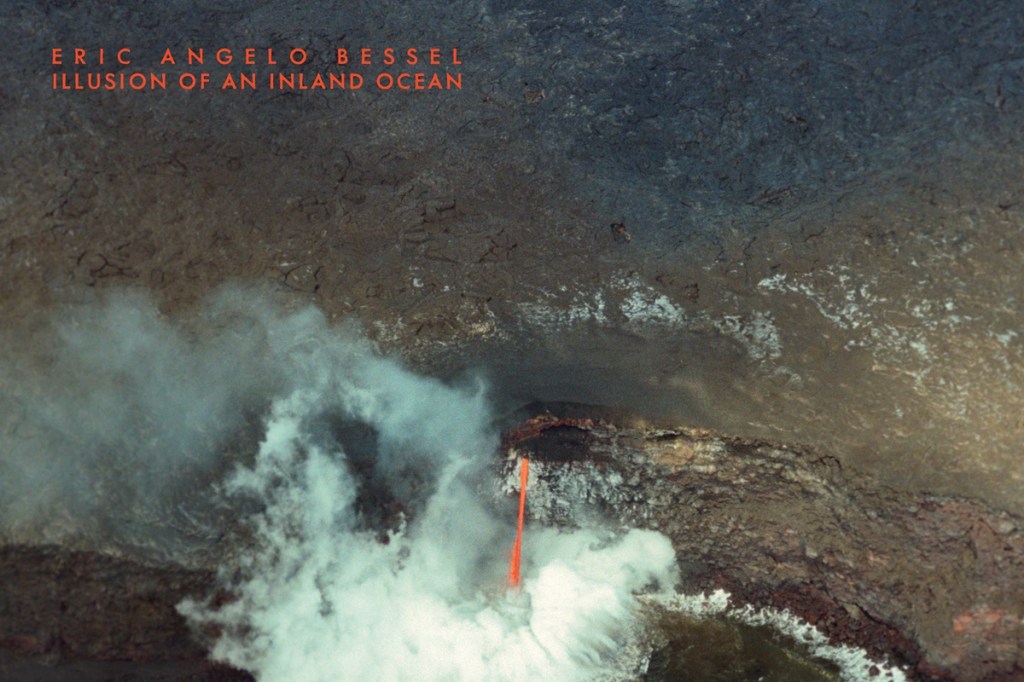
Eric Angelo Bessel utilizes a more low key production style on “Book of Astrology” from his forthcoming new album Illusion of an Inland Ocean (out October 30, 2026 on double LP vinyl, digital download and streaming). Often Bessel’s compositions are immediately immersive but this time it’s a little in the distance but this works with layers of harmonic sounds flowing together and bell tone sounds resonating within that evolving ambient convergence of frequencies. In the music video we see waters like the incoming tide rippling in elegant active motion creating physical distortion and the manifestation of standing waves. Bessel orchestrating this with his music is the perfect expression of a natural phenomenon and making it comprehensible in a different way than just scientific terms and numbers much as the title of the song attempts to make sense of patterns in the universe. Fans of Brian Eno’s early 80s ambient works will likely find this track to be in line with what Eno was attempting to express with Apollo: Atmospheres and Soundtracks and Ambient 4: On Land. Watch the video for “Book of Astrology” on YouTube and follow Eric Angelo Bessel at the links below.

lorecitymusic.com

Eric Angelo Bessel on Twitter

Sova Coaxes Us Into Taking Our Experiences On Our Own Analog Terms on Modern Classical Ambient Song “Hymn for Slowing”

Sova, photo by Kiki Vassilak

In the visualizer video for Sova’s “Hymn for Slowing” we get to see a visual representation of the inside of the piano at work striking the moody and melancholic side of the song as saxophone wafts in to provide a touch of vivid brightness as if to accent what the piano textures are doing. One feels the presence and analog, tactile quality of the piano even as the recording is both lightly processed because the granular detail of the piano hammers striking the strings and the physical resonance of those strings with the slight distortion coming through. It all lets you know a human being was involved in making this music and putting those emotions and thoughts into the elegant composition that challenges the listener to not be so caught up in the everyday world demanding we all do everything faster and more efficiently because many things are done better and experienced with more respect for our natural human emotional states when we can take our time and not try to fit it all into arbitrarily monetizable fragments. Watch the video for “Hymn for Slowing” on YouTube and follow Sova at the links below. The new album Alight! released September 4, 2026 on Hout Records.

sova.music

Sova on Instagram

Sova on Bandcamp

Abe Seiferth’s Analog Synth Infused Ambient Song “Vibrometry” is the Sound of a More Tranquil and Nurturing Future

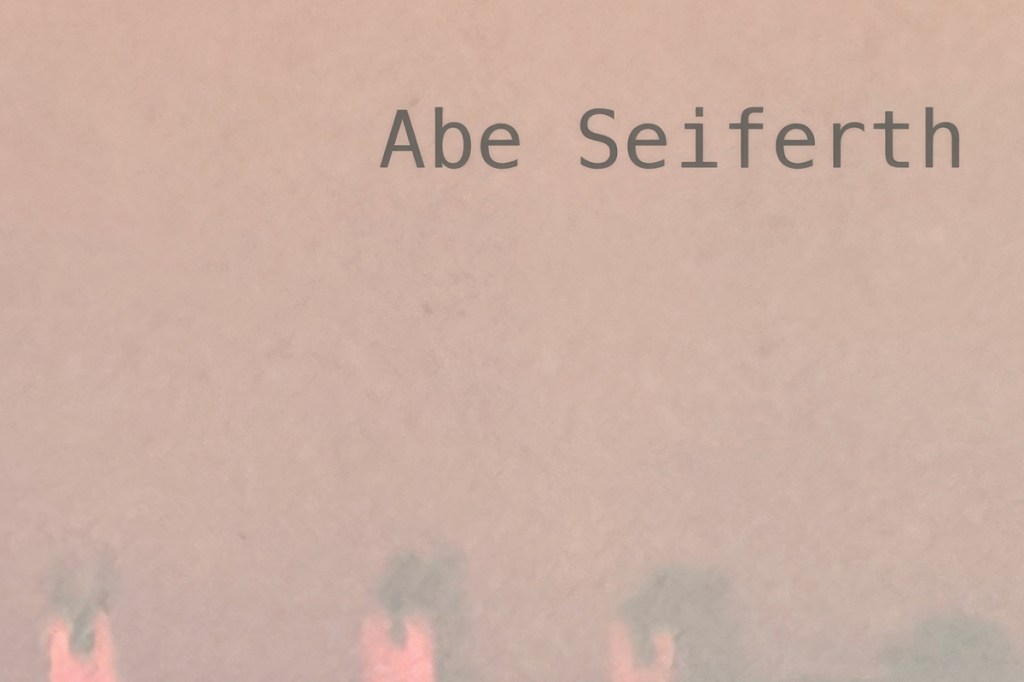
There is a great sense of space and playfulness to Abe Seiferth’s “Vibrometry” from his new album Halo (out August 19, 2026 via Noble Circuit Records). A spare and overlapping rhythm with a melodic, wide-ranging sequence in vibrant, lightly distorted tones cycles through with touches of modulation in the higher frequency register that provides an evolving texture and a sense that the song isn’t simply a programmed piece that runs without variation. The song also evolves while maintaining a sense of uplift established from the beginning. Fans of Norm Chambers particularly 2012’s Soft Terminal will appreciate how the song sounds like a future time when we’ve shed inherently destructive technologies and social constructs and have the psychological and physical space and sense of wholeness to explore further the subtle grandeur of the universe and the possibilities of the human imagination. With modular synths employed there is an analog quality to the sound that conveys a tranquil energy throughout with an almost tactile gentleness. Listen to “Vibrometry” on YouTube and follow Abe Seiferth on Spotify.

Fumiro Kaneko’s Retro New Age Single “who is behind me” is Like Upbeat Theme Music For a Thriller Montage

Fumiro Kaneko evokes the sounds of late 80s New Age music on “who is behind me.” But with an update on the rhythms with low key trap beats providing some texture and solidity to the bright layers of electronics. Percussive crystalline tones carry the main ascending melody alongside some electronic flute. It could sound like some kind of corporate instructional video music except the title suggests a different interpretation like upbeat music to contrast with a sense of menace and surveillance in a thriller. It has the pacing of a montage scene in which the protagonist notices they’re being followed by someone but not sure who that is or what their intentions might be so a path is pursued to give time to pick up any identifying details before realizing maybe it was a coincidence and not a nefarious encounter. But the contrast between the title and the light and playful mood of the music and its almost retro New Age aesthetic lends it a complex emotional resonance one doesn’t often encounter. Listen to “who is behind me” on Spotify and follow Fumiro Kaneko on Instagram.

“FRISSON” by 1201770 is an Industrial Ambient Lament For a Fallen Civilization

The distorted streaming sounds echoing throughout “FRISSON” by 1201770 are like the voices of a forgotten subway bemoaning the neglect and seething in its accumulated environmental memory. Or the soundtrack to a near future urban exploration video in which intrepid urbexers travel through the tunnels and streets of cities abandoned in the wake of humanity’s folly and abuse of the environment resulting in mass depopulation of parts of the world once teeming with activity that can only be speculated about from accounts gleaned from still extant media artifacts. The industrial ambient sounds of the song have a melancholic menace and urgency that suggest a warning against the kinds of civilizational habits that lead to tragic widespread collapse. It’s a thought-provoking track that embodies a full expression though less than two minutes in length. Listen to “FRISSON” on Spotify and follow 1201770 on Instagram.

Queen City Sounds Podcast S6E10: Leila Abdul-Rauf

Leila Abdul-Rauf, photo by Gregory C. Hagan

Leila Abdul-Rauf is a multi-instrumentalist based in Oakland, California who re;eased her latest, and sixth, studio album Andros Insidium on April 17, 2026 via 20 Buck Spin. The record, with its cinematically resonant titles, is like a mythical and ritualistic exploration of themes of resistance to oppression, external and internalized, and the liberation of self from the patriarchy in culture, psychology and our conceptualization of the universe and an embrace of concepts of the divine feminine. Its songs cast in ambient, industrial, dark folk and post-punk like something that sounds like it has drawn some influence and inspiration from late 80s Dead Can Dance, Jarboe and Diamanda Galas. It’s also reminiscent of older musical forms like medieval choral music, Middle Eastern classical, devotional and folk. The effect is an album that feels like its outside normal time and space but anchored in sounds and rhythms that feel familiar yet mind-expanding. With imaginative poetry Abdul-Rauf comments on the cycle of societal pressure to strive for unrealistic expectations as goals defined by one’s utility to the machinery of capitalism. The songs feel like a story arc like something out of the initiation rites of ancient mystery cults but with the end including the cultivation of a consciousness of the world as it is and how it could be. It all sounds like it has to be a recording project only but Abdul-Rauf has performed the music live.

Listen to our interview with Leila Abdul-Rauf on Bandcamp and follow her at the links below. Andros Insidium is currently available on vinyl, CD, digital download and for streaming via 20 Buck Spin.

Leila Abdul-Rauf on Bandcamp

Leila Abdul-Rauf Linkr.ee

Leila Abdul-Rauf on Instagram

Akiyoshi Yasuda’s Ambient Piece “day4 by memento” Induces the Listener Into a Deep and Transformative Environmental Awareness

Akiyoshi Yasuda, photo courtesy the artist

Akiyoshi Yasuda immediately puts us in a time and place that feels familiar yet enigmatic from the beginning of “day4 by memento.” The constantly present harmonic drone is like the background energy of an urban environment like a steady presence of the human collective. The layers of textural rhythm and resonating tones and swells of abstract sounds all interact to create a tapestry of noise that flows into your brain like becoming fully aware of the world around you that you normally take for granted which could be startling but Yasuda’s composition is more soothing and it causes you to pay attention to details you might not otherwise and notice things like the occasional processed piano work through the haze of closer sound sources mixing with all other sensory elements. The song is like a musical Zen experience in which one becomes present and accepting of what is around you without judgment or becoming overwhelmed by one’s hyper awareness. And then the sonic energy recedes seeming to have taken no time but in fact brought you along for that journey for over five minutes. The production on the piece itself is impressive for how Yasuda placed each sound component and orchestrated them all for a singular listening experience that conveyed experiences beyond what music often does. Listen to “day4 by memento” on Spotify and follow the Japanese composer at the links provided.

studioselfish.com

Akiyoshi Yasuda on Instagram

Stray Theories Ambient, Post-Rock Single “Catalyst” is Like the Closing Music For a Science Fiction-Themed Cosmic Horror Film

Stray Theories, photo courtesy the artist

The atmospheric drift and flow of “Catalyst” by Stray Theories is anchored by a minimalist piano line and processional drums with a hovering guitar drone that traces the outer edges of where the tones expand outward. The project incorporates a touch of discordance in the decaying harmonics while bell tones warm the melancholic mood of the piece. All distinct musical elements dissolve into the slow-modulating haze of sounds peeking through white noise like the musical analog of the end of the universe in a uniform state of entropy. The track has a sense of unease yet soothing at the same time like an acceptance of the inevitable. Think the closing sequences of a science fiction/cosmic horror film. Although the song title suggests the ending of one thing or cycle and the beginning of another. Listen to “Catalyst” on YouTube and follow Stray Theories at the links provided.

Stray Theories on Tumblr

Stray Theories on Twitter

Stray Theories on Facebook

Stray Theories on Instagram

Stray Theories on Bandcamp

Ana Hausmann’s “nausea-stalgia” is an Organic Ambient Articulation of the Dark Mysteries of Nighttime Streets

Ana Hausmann, photo courtesy the artist

In the organically immersive flow of Ana Hausmann’s “nausea-stalgia” one hears not just intermittent textures like hearing the detritus in the breeze of nighttime streets on the edges of an urban sprawl. The oddly harmonic scraping of hinges articulated by processed violin harmonics, the plinking of kalimba like sonically stylized droplets of rain and the low rumble of bowed guitar like the barely felt but always present thrum of aircraft from an airport in the distance. The field recordings of wind and environmental noise is used with such care it is impossible to fully tell the difference between that and an intentionally generated sound such is Hausmann’s care in the mix and layering of elements in the aim of crafting a unique listening experience. It is a “song” in an expanded understanding of the term as a composition that evokes emotion and provokes a psychological response. In this case it is a sense of mystery and distant menace, of a haunted landscape nearby whose tendrils of mood are in a constant drift to draw you in to something that might be fascinating if not dangerous. Listen to “nausea-stalgia” on YouTube and follow Ana Hausmann on Spotify.

Errunhrd’s Ambient Slowcore Single “Don’t Drink Chemicals” Vividly Sketches the Inner Edges of Romantic Dysfunction

Errunhrd, photo by Jon Lepp

The hazy, cycling drone creates a dreamlike resonance throughout Errunhrd’s “Don’t Drink Chemicals.” It and the melancholic vocal processing is fitting for a song about how it feels to be in any kind of relationship that seeks to reign you in and smother your full dimensions as a human in a warped and unsustainable co-dependent dynamic with love engaged in as an act of control and possession. To be in that situation and to perhaps convince yourself that this person is the right one when the whole situation stifles you and prevents both people from developing. Noah Brown’s video for the song is reminiscent of the work of Phil Tippett and the way it is both intimate and haunting, perfect for this song that captures a headspace many people have found themselves within not allowing themselves the knowledge that they can aspire and have for themselves a life that nurtures joy and encourages growth. Yet being able to articulate these feelings means having a greater chance of overcoming the psychological blocks that oppress and repress. Musically it’s like hearing a more ambient, witch house-adjacent iteration of HEALTH and Crystal Castles collaborating on a hypnogogic pop track. Watch the video for “Don’t Drink Chemicals” on YouTube and follow Errunhrd at the links provided. The new Errunhrd album Everything I’ve Ever Known releases May 14, 2025 on all stream platforms and CD.

errunhrd.com