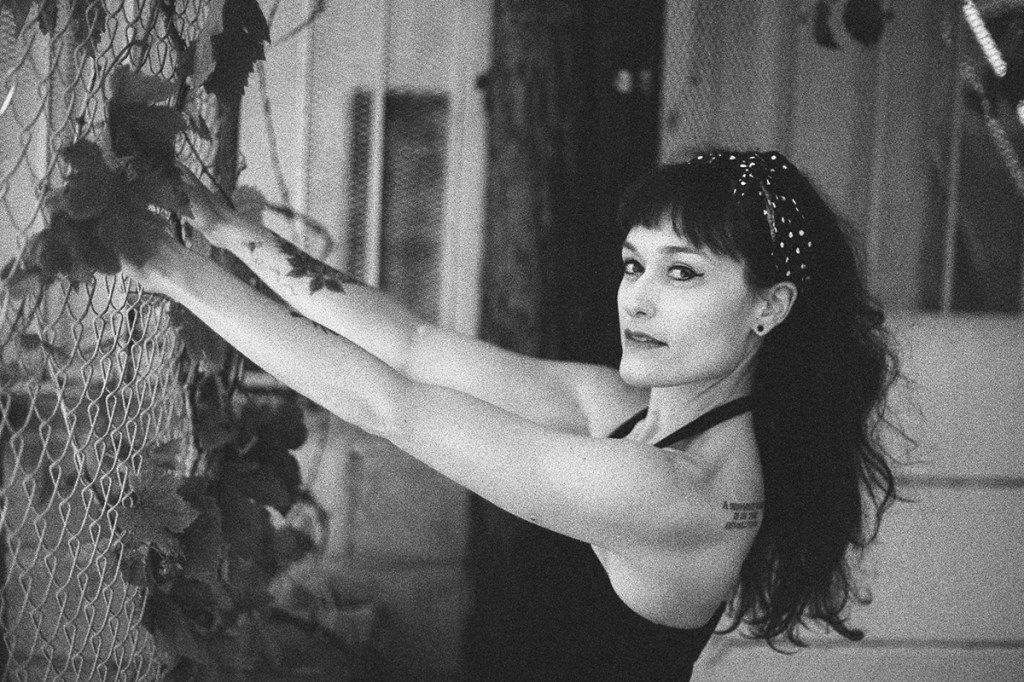
Late Slip released its debut full-length record I Love You on June 7, 2024 via Party Mermaid Records on 12” LP vinyl, CD, digital download and on streaming platforms. Lead by singer, songwriter and guitarist Chelsea Nenni the retro-pop group offers tightly crafted songs reminiscent of 60s girl groups, 70s period Dolly Parton and Josie Cotton. Nenni was East Coast born but grew up in California a fan of Elvis Presley and Tom Petty and studied opera in college. But it was Gwen Stefani that inspired Nenni to finally try to start a band. She moved to NYC in her mid-20s in pursuit of that goal and during a particularly bleak winter taught herself guitar and wrote the musical foundations of the earliest Late Slip songs. Before fully developing the project Nenni moved to Los Angeles and almost immediately found herself working at the legendary Amoeba Music record store where she made friends and connections that helped her more fully achieve her creative goals. The group recorded its first EP Other Men (2016) at Barefoot Studios with Cian Riordan (who has worked with Sleater-Kinney, St. Vincent and others) and through Amoeba Nenni met with store regular Bobb Burno of Best Coast fame (and Polar Goldie Cats renown to those more underground and experimentally-minded). Bruno connected Nenni with Lewis Pesacov who produced the new record. Although the sounds and visual aesthetic of yesteryear inform the music of Late Slip there is a warm spiritedness to the performances that anchor it very much in the vital present.
Listen to our interview with Chelsea Nenni on Bandcamp and follow Late Slip at the links below.
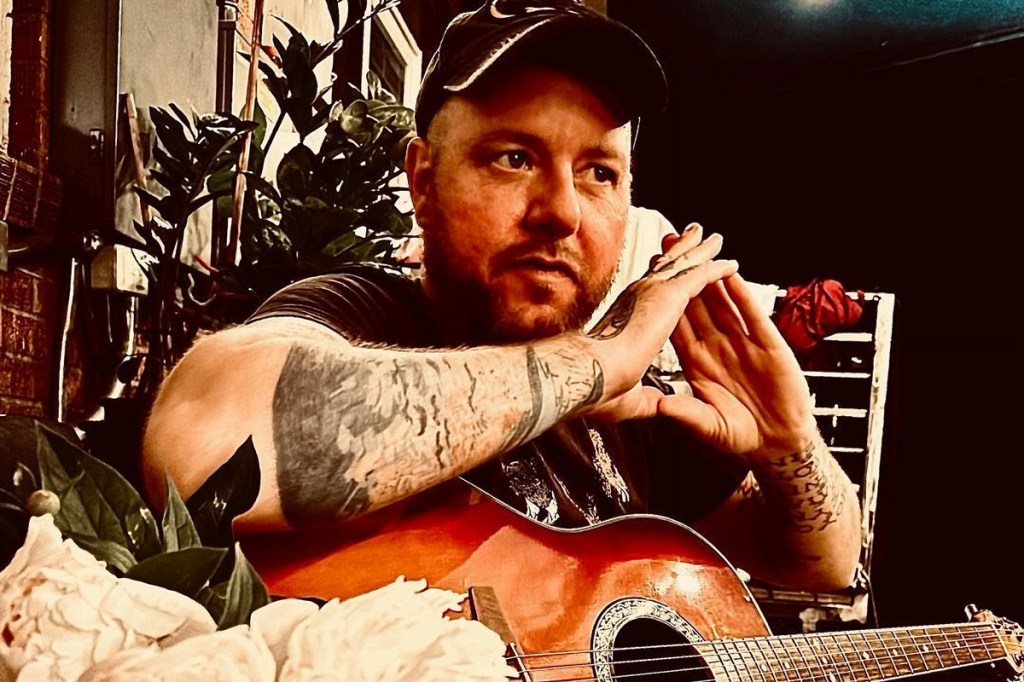
Singer / Songwriter Steve Dawson, photo by Matthew Gilson
Steve Dawson is a Chicago-based songwriter who released his most recent, and sixth, solo album Ghosts on June 7 via Pravda Records on CD, LP vinyl, digital download and streaming. Though perhaps best known for his membership in alt-country band Dolly Varden, Dawson’s solo work on the new record infuses his songwriting with power pop sensibilities, fitting for ten songs that explore ideas of how the past weighs on the present and influences how we live life and understand the world around us as well as the people we’ve lost along the way whose presence lingers in our hearts whether they have passed on to the great beyond out simply out of our lives. Dawson also examines times in his life that he remembers vividly that impacted the course of his own path as a human as an artist. For instance “Leadville” which so accurately captures life in various small towns in America that it could be about some place you’ve lived and not the songwriter’s hometown in Idaho. Dawson doesn’t romanticize that time in his life even as the country rock song has a touch of nostalgia to its sound. Each song is a poignant portrait of a space and time and the people that make up where we come from, where we’ve been and to some extent guide where we’re going.
Listen to our interview with Dawson on Bandcamp and follow the songwriter and musician at the links below.
The Ocean is an experimental metal band from Berlin formed in 2000. Primary songwriter and guitarist Robin Staps has a constant presence in the group which often operates as a collective with an evolving group of contributors and regular musicians. Its albums are often loose concept albums named after eras of the earth’s geologic history. Though the songs aren’t short on guitar driven heaviness but often employed to create dense and dynamic soundscapes. The most recent album, 2023’s Holocene, saw The Ocean more fully integrating synths and the aesthetics of electronic music into its ambitious compositions with songs that depict scenes from a dystopian near future and with lyrics that demonstrate the impact of the ideas behind The Situationist International and its prescient critique of consumer culture and the deleterious effect of late capitalism on human society and civilization.
Listen to our interview with Robin Staps on Bandcamp and follow The Ocean at the links below.
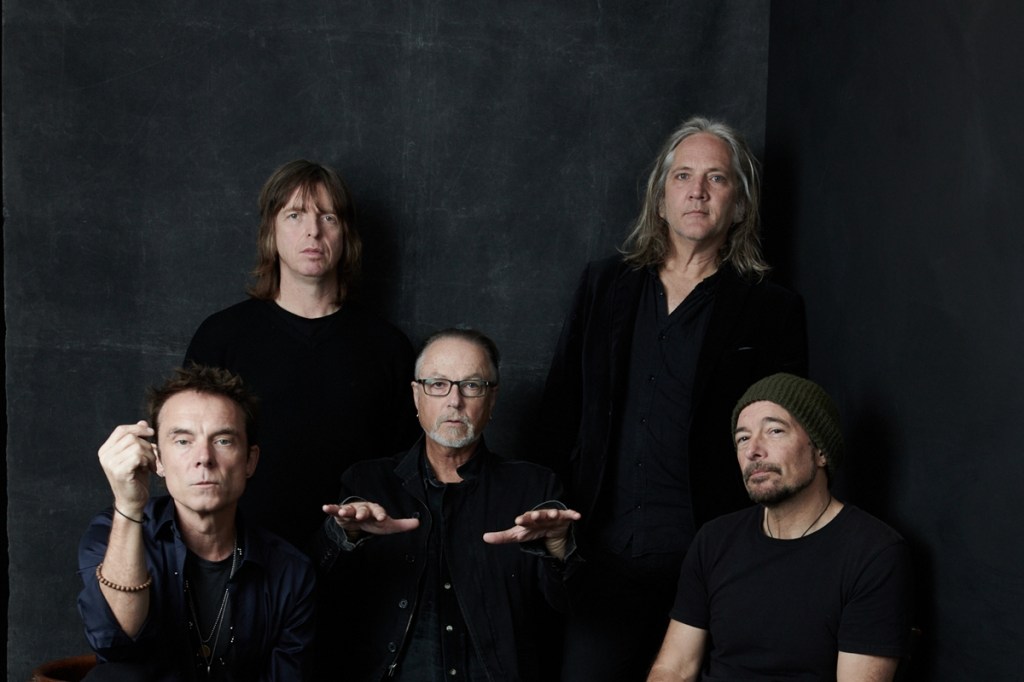
The Church formed in Sydney, Australia in 1980 as a post-punk band with psychedelic rock leanings that over the course of its long career has evolved in consistently fascinating directions. Its early records proved to be the sound of a band slightly ahead of its time and embodying the sound of what came to be known as dream pop with moody guitar and synth and literary lyrics that told stories and commented on human experiences in a way that wasn’t standard faire for a rock band. The group had breakthrough international success with the release of its 1988 album Starfish and hit single “Under the Milky Way” which had an echo impact in 2001 when it featured prominently in the psychological thriller Donnie Darko. 26 albums and numerous other releases along the way The Church firmly established itself as a band with creative ambition and emotionally refined sensibilities paired with a powerful live performance that it maintains to this day. Its later albums are among the best of the band’s career including its two most recent, The Hypnogogue (2023) and Eros Zeta and the Perfumed Guitars (2024), companion albums telling the story of a future in which humanity struggles to hold onto its identity and reinvent itself for survival in even more uncertain times. The Church is still very much a guitar rock band but one that hasn’t failed to pay keen attention to where music has gone or keep track of its own vision and direction as a creative collective.
Listen to our interview with guitarist Ian Haug on Bandcamp and follow The Church at the links below. The group is currently on tour in the US with The Afghan Whigs and Ed Harcourt including a stop at Denver’s Ogden Theatre on Tuesday, July 2, 2024.
Steven Lee Lawson is a singer-songwriter from Denver whose musical exploits date back to the late 90s and early 2000s when as a fledgling musician he was involved in a variety of styles of music including the experimental/krautrock of Zubabi before finding his lane at the edges of Denver’s indie rock scene in the mid-2000s with the more classic pop and Americana-inflected projects like Oblio Duo and its multiple incarnations with then songwriting partner Will Duncan (now of Pleasure Prince). Lawson’s poetic lyrics shed a light on his attempts to come to terms with life challenges and struggles with a society and culture seemingly stuck on boosting dull and crass commercialism and anti-human systems of politics and economy. Lawson also spent some time as a sideman in bands like Ross Etherton and the Chariots of Judah before dropping out of actively being involved in music for a handful of years and then getting back into the joy of creating music again in recent years. Obvious touchstones like Harry Nilsson, Townes Van Zandt, Sparklehorse and Neil Young can be heard in Lawson’s musical DNA but his songs have always seemed deeply personal and idiosyncratic including his new EP Help Is On the Way due out June 27, 2024 and available as a limited edition 7″ through Snappy Little Numbers.
Listen to our interview with Steven Lee Lawson on Bandcamp and follow the songwriter at the links below. There will also be an EP release show with Blacktop Musical at The Broadway Roxy in the downstairs speakeasy on June 27, 2024 at 7pm.
Stephen Bluhm is a songwriter based out of Hudson, New York who released his latest album Out of the Nowhere. Into the Here on April 19, 2024. It is the second full-length from Bluhm and one whose sophisticated, orchestral arrangements lend the songs a cinematic and storybook quality with exquisite details and attentiveness to aspects of production and composition that reminiscent of a The Magnetic Fields or Belle & Sebastian record or the level of richness of aesthetics one associates with a Wes Anderson film. It sounds like something from another era with deeply personal and idiosyncratic yet instantly relatable lyrics. The songs are literate art pop gems with an autumnal flavor that hits as old timey in its sensibilities but not in the folk Americana tradition so much as more in the vein of Rodgers & Hammerstein on the chamber pop and indie folk scale.
Listen to our interview with Stephen Bluhm on Bandcamp and follow the songwriter at the links below. Out of the Nowhere. Into the Here is now available for streaming, digital download and on vinyl.
bellhoss, photo courtesy the artists and taken at JCPenney
Bellhoss is an indie rock band from Denver, Colorado that began in 2017 as the solo act of Becky Otárola that grew to a full band within a couple of years. The songwriter came up in Southern California immersed in folk and bluegrass and underground music of the 90s and 2000s. Otárola moved to Denver in the first half of the 2010s and in the early days of the project she played open mics at Syntax Physic Opera and as perhaps a natural progression from there fell in with the local indie scene and as the band developed so did the songwriting and by the time of the release of the 2019 EP Geraniums bellhoss its sound had taken on aspects of slowcore with delicately rendered melodies and a warmth of expression reminiscent of Waxahatchee and Jay Som. With the release of the 2024 EP A Rose, a Thorn, bellhoss revealed a knack for blending vulnerable and thoughtfully observant songwriting with luminous dream pop and a bit of musical edge. 2024 also sees Otárola organizing the inaugural SarahFest, an all ages music festival designed to give a platform to female and female-fronted bands along Colorado’s Front Range taking place at The Mercury Cafe on Saturday, June 15.
Listen to our interview with Otárola on Bandcamp and follow bellhoss at the links below. Also linked is the ticket link for SarahFest.
SarahFest featuring Bellhoss, The Milk Blossoms, Luna Nuñez, Dream of Time, Gartener, Summer Bedhead, Tammy Shine, Nina De Freitas and Demigod (DJ set) at Mercury Cafe, June 15, 2024, all ages $20 6PM.
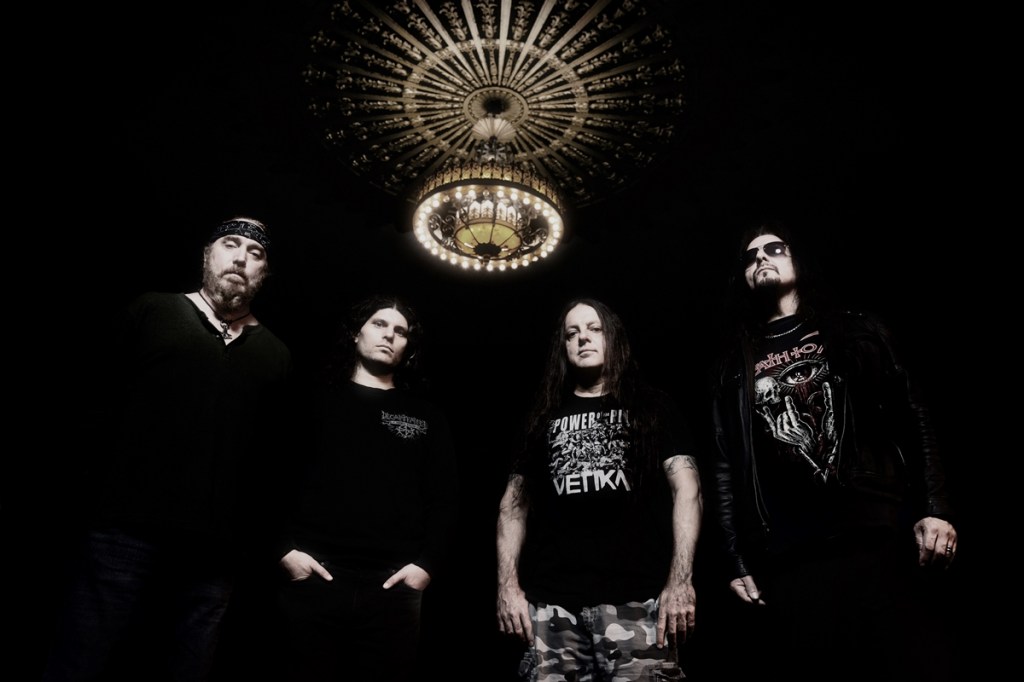
Death was one of the foundational bands in the metal subgenre sharing its own moniker. Along with Possessed and Necrophagia, all of which started in 1983, Death created an extreme form of guitar-driven music that combined speed with a heaviness and aggression that served well its often horrific subject matter. Its debut full-length Scream Bloody Gore (1987) set a high bar for the genre with convoluted guitar work courtesy the band’s de facto leader and sole consistent member until his 2001 untimely passing Chuck Schuldiner. Its horror cinema themes and intensity wasn’t for every metal fan of the time but the influence of the record on what would come in its wake in extreme metal and the genre of death metal itself is undeniable. Subsequent albums built upon the technical aspects of the music and its lyrics moved on from horror themes and by the time of 1990’s Spiritual Healing the lyrics engaged in social commentary and horrors of the real world and its own breed of monstrous human behavior. Across its subsequent albums the songwriting blossomed in technical complexity and focus in lyrical themes in expressing poetic personal perspectives. Tragically Schuldiner passed in 2001 of a brain tumor but the legacy of Death lives on in its obvious and deep influence on modern heavy metal. Drummer Gene Hoglan was acontributor to the albums Individual Thought Patterns (1993) and Symbolic (1995) and one of the driving forces behind Death To All, a project paying tribute to the creative achievements of the band and its primary songwriter, Chuck Schuldiner.
Caterwaul is a music festival that showcases of paragons of the weird, loosely defined, in underground music. The organizers of the event have been steeped in left field music going back decades as musicians, bookers, record label employees, running labels and otherwise active participants throughout the ecology of the subculture. Since 2022 Caterwaul has hosted a finely curated and small scale event across two venues so that attendees can realistically catch every act if they so choose. This has meant lineups featuring the likes of Chat Pile, Multicult, Kal Marks, Big Business, Tunic, The Grasshopper Lies Heavy, Moon Pussy, Animal Bite, A Deer A Horse, Big’n, Heet Deth and Cherubs. All of which represent not just representative of a spectrum of the best of underground weird music but also active participants in their local, national and international communities in keeping non-mainstream music not just a vital, viable but rewarding milieu in which to operate. Organizers Conan Neutron (Conan Neutron & the Secret Friends), Rainer Fronz (Learning Curve Records) and Melanie Thomas have all helped to establish and maintain the connections that make the festival possible but going through to its third year in 2024 when the event runs Friday, May 24 through Monday, May 27 at Mortimer’s and Palmer’s in Minneapolis, Minnesota. This year’s festival will include performances by Brainiac, Oxbow, Flooding, Whores., Part Chimp, J. Robbins Band, Couch Slut, Gaswar, Thrones, Ganser, Almanac Man, Quits, CNTS and powertakeOFF. For more information, the full schedule and to buy tickets please visit caterwaul.org.
Listen to our interview with Conan Neutron and Rainer Fronz on Bandcamp.
Swans are the influential, experimental rock band formed in New York City in 1982 as one of the standout acts of the no wave scene. Fronted by singer, songwriter and multi-instrumentalist Michael Gira, the group’s ever-evolving lineup and sound has helped pioneer and in many ways define aspects of noise rock, industrial music, post-punk and in later eras of the band post-rock. Its earliest records were brutal affairs of a stark beauty and unsettling intensity. By the last half of the 80s singer and keyboardist Jarboe had joined the band and its music began to increasingly incorporate a musical intricacy, melodic ambiance and emotionally nuanced delicacy that became a regular feature of the songwriting. And for years the constant members of the band were Gira, Jarboe, and longtime guitarist Norman Westberg. Swans might have come to an end on a high note following the tour for the sprawling epic of the masterful 1996 album Soundtracks For the Blind. But in 2010 Swans reconvened and began another great arc of songwriting with songs that had an even more orchestral aesthetic than in the past and a series of albums that have delved into themes of existential terror, mortality, death and the search for meaning later in life in a world seemingly on the brink of unraveling. The latest Swans record, 2023’s The Beggar, finds Gira and his collaborators manifesting some of the songwriter’s most personal statements in songs that experiment even more deeply into modes of expression that disregard conventional notions of song structure and length in favor of experiential truth.
Swans is currently on tour in support of The Beggar for its first full North American tour since 2019 (band member Kristof Hahn Is the opening act) with a stop at the Gothic Theatre in Englewood, Colorado on Tuesday November 7, 2024 (7pm doors/8pm show). We recently had a chance to interview Gira via email about the music, his interactions with the public and the works of other artists and the new album.
Tom Murphy: In your social media presence you frequently share films, other works of visual art, music and literature that you’ve been taking in that has had an impact on you. Do you find yourself drawn to particular works that you encountered earlier in your life that resonate especially strong with you now and why so?
Michael Gira: I share as little as possible about Swans and myself on our social media accounts. I only post about Swans when it’s pertinent to a new release or a tour etc. I find the medium appalling and disgusting, but I recognize it’s one of the few ways we have of letting people who are interested know when there’s something happening with the music they might like to know about. In the meantime, I post about visual artists or writers or music that I find compelling. More specifically to your question, on a personal level I often find myself returning the art of Francis Bacon, the writing of Jorge Luis Borges, and the music of Nico.
What newer artists and work have you found especially fascinating and even inspirational of late and why does it resonate with you so strongly?
The music of Maria W. Horn is fantastic and I recommend it highly, as well as her work with the singer Sara Parkman (as Funeral Folk).
As a writer of music and literature do you find encountering and absorbing the creative work of others an essential part of your process?
No. It’s enough of a struggle to make something that seems worthwhile without thinking about other people’s work.
Swans albums, especially those since reconvening, seem like quite a production. Do you approach writing and recording them in a method similar to a film director in assembling the talent and collaborators to realize them and then perform them live?
No matter how strongly I vow to keep things simple, each album inevitably burgeons into a cascade of chaos and conflicting forces and then ultimately the creative act is figuring out how to find order in the mess I’ve made for myself.
The Beggar feels like a bit of a different record for Swans. Its tensions, pastoral daydreamy sounds and spirit of unease in certain songs feels like its coming from a different place. Like a musical Ecce Homo. Were there personal insights that have come to you recently in your life that helped to shape the songs you wrote for the album?
The music and the words grow organically somewhere inside my experience and I shape them as dispassionately as I can into a form that seems compelling and irreducible. I don’t think about content much, per se, though I presume it’s there.
You have lived on both coasts of the USA and abroad but are now based out of New Mexico. Has living in The Land of Enchantment had an influence on your creative work?
Not at all, no. I’m never home anyway.
You have said that when you were finally able to work on The Beggar that it was like “he moment in The Wizard of Oz when the film changes from Black and White to Color” and now you’re feeling optimistic. What do you think accounts for what might seem like a shift in outlook for you?
I’ve realized that I feel most alive when I’m doing what I was put on earth to do, which is to make music as best I can. The period of isolation during the pandemic was a prolonged suffocation. I’m sure it was the same for many people.
The artwork for The Beggar includes images of a heart and lungs. What is the significance of that imagery for the record?
These are the internal organs that I have found to be most crucial, personally.
Perhaps you’ve discussed this elsewhere but the sleeves/CD covers for many of the current editions of Swans albums available seem to be printed on paper that looks unbleached. What about that look and texture do you think suits your music and its presentation?
I like for the work to be tactile, a palpable physical object.
Live you seem to perform longer pieces of music like “The Seer” and “Bring The Sun Toussaint L’Overture” (which is a choice historical reference). Might we see “The Beggar Love (Three)” on this tour? What is the appeal for you of performing these longer compositions on tour?
Live, the music grows and grows and grows over the course of a tour. The opening piece of our current set has now morphed into something like an hour and 20 minutes. Don’t ask me why this happens. We follow the music; it leads us. We’re inside it and it controls us, I guess would be the best way of putting it.
You must be logged in to post a comment.