Spunsugar from Malmö, Sweden released its debut album Drive-Through Chapel in October 2020 on Adrian Recordings. Rather than the ethereal post-rock that passes for entirely too much shoegaze and psychedelic rock of late, Spunsugar’s music has a grittiness and emotional urgency that pairs well with elements of an industrial aesthetic. In that way Spunsugar has more in common with groups like Curve and A Place to Bury Strangers that have embraced a similarly hybrid approach to songwriting and soundscaping. We recently sent some questions to the band about its origins, the subjects of its songs and its decision to sing in English. Connect with the band at the links following the Q&A. Article and interview by Tom Murphy.
Queen City Sounds and Art: Cordelia and Elin met at 13. What did a small town outsider clique look like at that age and what mutual interests draw people who are part of that together?
Elin Ramstedt: We mostly hung out with the weirdos and bonded over music, alcohol and alienation.
Cordelia Moreau: We also had less parental supervision than a lot of the kids at our age so that made it easier for us to do mischief at nights without repercussions!
Q: Cordelia and Elin spent some time hardly speaking to each other and not writing music for several years. What were they discovering and exploring separately that seemed to inform what they would do with the new band?
E: I wrote music by myself but always felt that I wanted Cordelias input because of the way that we complement each other when writing music. I felt restrained. I listened to a lot of music and went to concerts and built up the eagerness to play music with others. I mean it is not easy to be a female in a male dominated industry and I guess it took some time before I realised that this was actually something that we could do as well.
Q: In what ways do you think coming up as the children of farmers and fundamentalists and “trailer trash” in small towns in Sweden shaped your view of and approach to making your music?
E: Maybe that we don’t really take anything for granted. We don’t really feel the urge to be famous or anything, we are just very thankful that we make music that people like and can relate to.
C: It makes us less snobby, I think.
F: Yeah, and it’s something to be proud of. Pride is a feeling we haven’t got an abundance of growing up. I spent a lot of time in my teens being somewhat ashamed of the circumstances around my upbringing, family etc. So to have this thing (the band) that is 100% our own is a great source of pride.
Q: What kinds of places did you play before moving to Malmö and how did that environment influence your early development as musicians?
E: Spunsugar didn’t exist before we all lived in Malmö, from 2018. Cordelia and I played in a band when we were teenagers. We mostly played at youth centers. One time we participated in some kind of music competition and the judges told us that we looked like we were dead on stage.
F: Haha, the same here. I played in several metal bands and also a cover band. We played Creedence, Rollings Stones and Ted Gärdestad songs. That kind of stuff. We played shows at small pubs in front of audiences of a bunch of 50-year old women trying to hit on us. Which was strange for me being 18 at the time. I mean, these gigs weren’t the most inspiring but it gave me a lot of experience of playing live and solving situations revolving playing live.
Q: Knowing virtually nothing about the music world of Malmö myself, I wonder what it’s like for an independent even underground band to develop, book shows and connect with other bands to perform and cultivate an audience? Are there places to play that were integral to your growth as a band? Publications/media outlets that write about local band that were helpful to Spunsugar and other groups?
E: Malmö is a city with a lot of really great pop and rock bands! There are a few places that we have been playing at in Malmö. I think that it is kind of easy to get to play small gigs around Malmö, even if you are a new band. We have played at Plan B like four times haha. We haven’t really had any contact with local media outlets. I mean 2020 has been shitty and we haven’t really played that much live at all since we started the band, but we’re aiming at replacing COVID-19 in taking over the world.
F: Yeah, like Elin said, Plan B has been important to us. They gave us a chance for our first gig and our relationship with them has kind of developed with the growth of the band. We had our release-show for our album there and it was a fantastic night. The local media has been awfully quiet to be honest, but that’s not a problem really. There is a big scene of alternative bands and venues that talked to and about each other so I feel that bands can evolve anyway.
Q: You once opened for Nothing. When and where was that? In what ways do you feel Nothing is an influence on your own art?
E: It was at Plan B in Malmö November 2018. It was our first gig ever!! I think Nothing inspired and inspires us to write heavier music. When we started playing music together our music was much poppier but then we realised that we wanted to play music that is a mix of Britney Spears and Slayer.
C: Also, the soundscape of their latest album is really inspiring. Melodically, their geniuses, and they have a certain atmosphere in their songs that are gentle but hard, depressing but catchy. That’s a great way to write music.
F: I think that gig was a bit of an eye opener too. It was quite daunting to play with a band that we respect so much on our first show. It made me realise that this is real and experiences like this actually could happen to us as well, not only to other more fortunate people. I think we put in a higher gear after that. We took things a bit more seriously.
Drive-Thru Chapel cover (cropped)
Q: Your songs are in English. What informed that decision and what helped you coming up to learn and connect with the language in a way that makes it a comfortable choice for creative expression (assuming it is)?
C: I guess it’s because pretty much every song, movie and TV-show we consume is in English. It’s personal enough since it’s a language we speak but if I wrote lyrics in Swedish I’d sometimes lack the ability to reference things I want to reference, as well as a vast enough vocabulary. But I sometimes write in Swedish but not for Spunsugar.
E: It would be too embarrassing for me to sing swedish lyrics. You really can sing about nothing when it is not your native language and it sounds cool anyway.
Q: The title Drive-Through Chapel suggests much like the nature of religion and its role in society. What inspired giving the album that title?
E: You could actually say that we are antichrist himself, kind of, and I think that we are fascinated about commercialization of religion and how it can be expressed.
F: And it’s a good title. I mean, I like how it sounds and looks.
C: I grew up in a religious village, it shaped me a lot. When I moved with my mom I got to see something different while my dad was still in that southern religious world. My mom was heavy into rock music and dark movies so she showed me a lot of dark stuff at a young age. That was a scary, intriguing contrast, but it gave perspective that helped me question organized religion. If that music and those books and films were so evil, why did they make me feel so nice? It planted the seed for my obsession with the plastic workings behind these small time churches.
Q: “Video Nasty” is an interesting title to a song as it references a category of film given that designation in the UK in the early 1980s. How did you become familiar with that concept and do you have particular video nasties you like and why?
C: I’m a horror movie buff and have always been fascinated with the idea of media ruining young peoples minds and making them violent, because I was scared into believing that was how it worked as a child. It doesn’t, by the way. In that song I use this concept as a metaphor for peoples invasion and fear of the sexualities of others. I haven’t done many deep dives into the most obscure ones but I absolutely love I Spit On Your Grave, The Last House on the Left and The Beyond.
Q: There is a real synthesis of electronic music and rock in your songwriting with the drum machine fully integrated. What about that sort of sound have you appreciated in other artists?
E: I like the contrasts.
C: I think it blurs the lines of what time the music belongs to. It’s a little bit 80s, a little bit now and a little bit future sounding. I am a big fan of late 80s to late 90s electronical/industrial sounding metal. Everything from Type O Negative, Marilyn Manson and Rob Zombie, it has a certain type of grit to it while at the same time being cheesier and more mellow than other types of metal.
F: It’s very much a mix of all the things we like. I was a big heavy metal kid growing up, and a quite conservative one too. It was a big eye opener when I found bands that could blend that intensity with other influences. That you didn’t need to sound like Entombed or Sleep to sound heavy or that you could sound beautiful and heavy at the same time.
The Ocean Blue performs tonight, December 5, at Soiled Dove Underground. Hailing from Hershey, Pennsylvania, The Ocean Blue didn’t blow up into a household name when it first came to the attention of an international audience by the late 80s but like many bands of the era this has perhaps accounted for some of its enduring longevity. Its sound was a lushly melodic rock music that was fairly sophisticated by the time the fledgling band released its earliest singles in 1986, the year it formed. The members of the group had known each other since middle school and had learned to play together in that organic way a group of friends who more or less grew up together do with a natural chemistry that makes the songs most other people get to hear seem effortless and polished.
Looking back to the 80s from the perspective of today it can be a bit of a mystery to suss out where bands might have played and honed their craft outside of garages and bedrooms unless it was a punk band. The Ocean Blue didn’t play out much other than a birthday party and a school dance until the band got a manager who advised the group to play out and work on the live show. “At that point, we started playing small clubs and colleges in the mid-Atlantic area,” says guitarist and lead vocalist David Schelzel.
The young band also connected with older musicians who were coming to be known in the pre-alternative rock underground music world who enjoyed some degree of success on college radio, which was a far more important factor in the success of a band beyond the local scene up through the 2000s. Most significantly for The Ocean Blue in this regard was dream pop legends The Innocence Mission.
“We met the Innocence Mission when we did a radio station benefit record, and I became fast friends with Don and Karen,” says Schelzel. “They were a bit older and way ahead of us musically, but they were super kind and became great encouragers and friends as we both started to get a wider audience and later on, record deals. They are kindred spirits for sure. Music in the late 80s locally was dominated by hair metal and blues bands, along with peppy pop stuff. We stood out, and thus didn’t get lost in a big city or scene. We found a bit of a circuit at clubs and colleges that supported original, local music, in nearby cities, like Lancaster, Philadelphia, and Washington, DC.”
Undoubtedly The Innocence Mission helped to mentor The Ocean Blue in the ways of the music industry including dealing with labels and publishing. Fortunately the group had a team of people including a manager, a good lawyer and a music publisher by the time it signed, in 1988, a three record deal with respected independent label Sire for the release of its 1989 debut, self-titled full length. At the time of signing the band was still in high school but were savvy enough to know what label they might like to be a part of as Sire had released important records by Ramones, Talking Heads, Ministry, Pretenders, Wild Swans, The Cult and Echo & The Bunnymen. The latter is a group that the first The Ocean Blue album gets compared to the most.
“Sire was always where we wanted to be,” says Schelzel. “So many bands we loved were on that label. I realize now how extraordinary it was to get signed to Sire, let alone as teenagers and to a long term deal that allowed us to develop. As for how, we were lucky to have a good manager, that knew how to get our music to the right people, get people out to see our shows, and drum up a buzz. And of course the key to any signing is that there is music and something as a band that people are drawn to, and from a label’s perspective, that will do well.”
The band evolved rapidly and its subsequent albums for Sire, 1991’s Cerulean and 1993’s Beneath the Rhythm & Sound, broke from the obvious influences and aligned more with the kind of music that was on the ascent at the time and seemed to vibe well with some of the “Madchester” bands like The Charlatans UK, C86 groups like Felt and Sarah Records outfits like The Field Mice and The Sundays. That style of dream pop grounded in classic songwriting that has interestingly enough exerted a great deal of influence on contemporary bands trying to mine for ideas and sounds that haven’t been shoved down their throats by ubiquitous commercial popularity.
By the mid-90s, The Ocean Blue suffered from the usual corporate mergers of the day and the conservative trend of record labels after scrambling to capitalize on the alternative rock wave of the early part of the decade. But the band persevered and by 1999 self-released its then new album Davy Jones Locker. By the 2010s The Ocean Blue was back to being more active than it had been in many years (at least as far as anyone outside the band and its immediate associates might know) with its first new album in over a decade, Ultramarine, out in 2013 on Korda Records followed by Waterworks in 2014 and 2019’s strikingly gorgeous Kings and Queens / Knaves and Thieves. It’s bright tones and transporting melodies in high form, The Ocean Blue has never sounded better. Like certain bands from its original era the group has retained a good deal of its original artist as well as having an appeal to a younger audience for whom the group might have a bit of cult cachet, Schelzel also says the band didn’t know it had fans in South America until the past ten years.
“I think what has kept us together and doing what we do is our love for music and each other,” offers Schelzel regarding the band’s having stayed together. “I am always making music, and I love the guys I make music with. There were things that were much easier when we were on major labels and had a team of people handling management, promotion, production, touring, etc. But there has been something very refreshing about doing things as an independent artist. Things are way less complicated and the focus is almost entirely on making music. We try to maximize the aspects of what we do that are pleasant and rewarding, and minimize those things that are unpleasant and draining. It is the satisfaction of making music. Personally, I think it’s part of who I am and what I find meaningful and joyful in life. I don’t say that lightly. Life is hard and dark and full of a lot of pain. Music is a hugely important counterweight to all that.”
The title of the new album suggests political commentary but for The Ocean Blue the lyrics have always been more observations about human nature and personal reflection. “I see that line and that song, and maybe the whole record, as more of a musing on the human condition, particularly questions of existence, meaning, relationships with each other, the world, etc. and love,” says Schelzel. “I think the human problems of the modern world are pretty much the same as they were 100 years ago.”
Kyle Emerson just released his second album as a solo artist, the introspective and thought-provoking Only Coming Down. The songwriter recently relocated back to Los Angeles in August 2019 after a stint back in Denver where he originally came to the attention of fans of psychedelic pop during his stint in the band Plum. For a couple of years, the latter was a bit of a buzz band before it realized that maybe Denver wasn’t the best place to base a band that seemed to have the opportunity expand its reach beyond the local scene, beyond being nominated for local awards and playing the same gauntlet of small clubs and occasionally playing bigger venues like the 550 capacity Bluebird Theater or graduate in draw and popularity to the Gothic Theatre at 1,100. Plum moved to Los Angeles in 2016 and within about a year Emerson had left the band and not long after Plum fizzled out. For some that would have been discouragement enough but not for Emerson who had already relocated once to pursue his dream of being a musician with a career.
Emerson was born in Northern Ohio not far south of Detroit where his father was a worship leader at a non-denominational church. While involved in a worship band Emerson learned some music theory from the group’s leader who also shared his love of Radiohead, indie rock and later era alternative music. Emerson also connected with and studied guitar under a music teacher of a local private school, Patrick Paringer, who had grown up in Seattle and known Elliott Smith. At that time Emerson the current bassist in his live band Dan Volmer who also played in the youth group band.
After high school a number of Emerson’s friends moved to Colorado and Brooklyn. Those that moved to the latter offered to let him join their band and sleep on their couch until he got on his feet. But life in NYC was daunting and Emerson didn’t feel like he was ready to live in the city on his own.
Colorado beckoned in 2014 and before moving to Denver Emerson was blithely unaware of happenings in the state and city. He did not know about the legalization of recreational cannabis or that the city was experiencing its largest and longest period of population growth in many years with many musicians moving to Denver seeking out the opportunity for perceived overnight success of acts like The Lumineers and The Fray or at least to be in a place where music was happening and the scene not yet oversaturated. Emerson’s friend Andrew Bair (now of dream pop phenoms Tyto Alba and other projects), son of the pastor of Emerson’s church in Ohio, had moved to Denver and he felt like with Bair and other friends around he could keep his footing in a less expensive city than New York. So he moved into a two bedroom apartment at Thirteenth Avenue and Marion St. near the former location of the Gypsy House Café and shared a room with Volmer for a few months before moving in with the guys from Plum in the Villa Park neighborhood of west central Denver.
The fledgling band had a lot going for it aside from musical and songwriting talent. Ty Baron was a music business major and did some talent buying at Larimer Lounge, a club where many up and coming acts perform weekly, and Jake Supple had been also playing in Abandin Pictures, a group with some cachet in the local psychedelic rock world (he now performs in Flaural). Both had navigated the local music world both as artists and on the less romantic business end of what it actually means to be in a band that might want to do more than play for a few dollars and free drinks.
But like a lot of bands Plum ran into that often unspoken barrier to a lot of bands from Denver and Colorado generally that prevents most from reaching beyond the local band status. Sure, there are anomalies like the aforementioned Lumineers, The Fray and Nathaniel Rateliff and the Night Sweats and on a smaller scale, Tennis. But outside of jam bands and the EDM world, not a lot of in between being bonafide famous and “local band” status regardless of one’s artistic merits. So even though the move and living in cramped quarters in what was essentially a practice space in L.A. lead to the band breaking up, the decision to relocate was understandable. When you have some hype at home it stands to reason you can build that elsewhere, especially when you’re young.
When Emerson left Plum in 2016 he moved back to Denver where he had some roots and connections and wrote and recorded his moving debut solo album, 2017’s Dorothy Alice. It combined Emerson’s insightful lyrics and storytelling with a folky psychedelia and almost textural atmospheric melodies. The sound has become a bit of the songwriter’s signature sound. Emerson had recently split with his then girlfriend and on top of the other experiences it’s no wonder there is more than a bit of a melancholic vibe to Dorothy Alice that is part of its deep appeal. But recorded with Jeff Cormack of pop band South of France and Justin Renaud of psychedelic rock outfit Sunboy the record reflects Emerson’s renewed hope for his music and his affection for the Mile High City.
“It felt very Denver, very Colorado and it felt great to be back,” says Emerson. “I was living back in that old house where Plum was living. It was like picking up where I had left off in a weird way.”
Emerson didn’t waste any time in writing for his sophomore record nor did he intend for it to come across like a journal entry of the last few years as he moved from Denver to Los Angeles, then repeating that same move and the experiences that framed those moves but it does. In writing the new material Emerson had no working title, which he feels might influence the sound of a record and songs chosen for better or worse, it just came to him one day. “You talk about the come down from anything, a natural high or drugs or alcohol or whatever,” says Emerson. “The more I conceptualize it I don’t know if it gets cooler or more lame but I just think there’s something about if you’re only ever coming down then there was no high on the other side of it.”
Emerson also suffered from a bit of Obsessive Compulsive Disorder as a kid and the acronym has the same letters as Only Coming Down. It reflects the fact that Emerson feels that music was the only thing that got him out of that head space of focusing so much on minutiae to the detriment of a productive life. Now in the process of writing his third record Emerson realized that he had to grow up.
“It’s not a conscious thing for a lot of people and you dabble in things you know you need to move on from,” explains Emerson. “The last two records are about the woes of growing into yourself. You’re always growing up your entire life. It’s not like you get to a certain place and you’ve arrived. There was something about putting a bookend on a lot of the themes I was writing about and the things I was feeling. The title summarized that feeling in so many ways with just three words.”
The heaviness that many listeners heard on Dorothy Alice is still there on Only Coming Down but the early feedback has remarked on it being upbeat. Whether it’s Emerson’s recent decision to use more electronics on the new record since discarding a purist’s disdain for technology or the more than a hint of hope in his songs that often contrast hope and despair, or the songwriter’s compassionate take on his role as a musician, the new album definitely tilts toward the positive.
“I don’t play party music, it’s not like that,” says Emerson. “But it’s like I stand in front of a room full of people who at the end of the day are just there to have a good time and as artistic as this can get and as some songwriters and musicians think they are I do believe in the power of positivity. I didn’t think about that so much when I was younger but now if you can say yeah this sucks but I’m here for you, it’s going to get better. I think that’s more worthwhile to say than it’s all shit and then we die. I think there’s power and reality in both of those, I just find it a little bit easier living in the first one a little easier.”
Catch Emerson live during his run of shows in Colorado with Houndmouth:
Torche (performing tonight, September 18, at Larimer Lounge) started in Miami in 2004 after the dissolution of Floor, the band guitarist/vocalist Steve Brooks and former guitarist Juan Montoya had played in through much of the 90s and early 2000s. Torche picked up some of where Floor left off but took the heaviness in a more melodic and experimental direction across several albums including 2019’s Admission (N.B., Floor has reunited since its 2004 split and is technically still active). The new record reflects the band’s eclectic influences and roots as a band. New bassist Eric Hernandez or heave noise rock weirdos Wrong has played with Torche on and off filling in for drummer Rick Smith when the latter was not able to tour including, according to Brooks, a 2006 European tour. So the new role simply meant Hernandez was still playing with his friends in a new capacity. “After we lost two guitar players Jon [Nuñez] started playing guitar and he said we should get Eric to play bass,” comments Brooks.
Torche has never really fit the mold of a heavy metal band and Admission sounds more like a heavier neo-shoegaze album or noise rock record than heavy metal even though there are plenty of moments when the band plumbs those sonic depths that are part of its overall aesthetic. Part of this is accounted for by the fact that Brooks and the other members of Torche came up in Miami. Earlier in life, according to Brooks, he saw Melvins in 1991 and Godflesh on its early tours in 1989 or 1990. “I thought this was the type of stuff I wanted to do,” says Brooks. But finding like-minded musicians was a challenge and the guitarist moved to Atlanta in 1995 for a few years because the drummer of Floor lived there. Then the band got another drummer who lived in central Florida posing another challenge in the commute and Brooks “would drive three to four hours to practice on weekends.”
Locally Floor would play a club called Churchill’s often and frequently drove to Gainesville, Florida to play where a sizable audience might be found but back home it was playing to friends. So Floor and then Torche built up an audience well beyond their respective home towns out of necessity and have since cultivated a national and international fan base on a fairly grassroots basis.
Perhaps reflective of Torche’s non-genre purist sound is its current tour with experimental synth and heave drone band Pinkish Black for the bulk of the journey and ethereal yet emotionally charged darkwave project SRSQ (Kenndy Ashlyn formerly of Them Are Us Too) for the first leg of the tour. Torche’s current sound seems more introspective than one would expect from its previous offerings and when bringing Hernandez up to speed for the kinds of things to have in mind for moods and tones, Torche recommended listening to the first three Gary Numan albums for inspiration.
“We write a lot of riffs inspired by synths,” says Brooks. “Gary Numan is a big influence on us. So we threw that out. It’s the same thing except we’re playing guitars. The vibe.”
Admission has the evocative Richard Vargas cover art with a simple design favored by Torche this time out rather than anything too intricate. The image is of a head with the lower face intact but the upper head having exploded into the aftermath of a volcanic eruption suggesting either blowing minds of having one’s mind blown.
Although Torche has been around for fifteen years and toured internationally and it supports the members of the band, the group still operates like an underground outfit but one with the cachet to have albums released on the likes of Relapse with its two most recent records. But as with a lot of bands who are still playing small clubs and theaters Torche does its own driving and selling its own merch most of the time. Although its name is known among connoisseurs of heavy music the band isn’t so far removed from the challenges of its early days.
“It was really challenging when we first started because we weren’t making any money,” says Brooks. “Now we’re able to survive. The challenging part is actually all the traveling, trying to get sleep. Last night we partied and then I ended up going home and woke up at six o’clock in the morning and my band was in my room and I was like, ‘What the fuck are you all doing here?”’They were staying with friends before but they were in my house. They had broken into my house because I wasn’t waking up. I woke up naked because I took an Uber home, took a shower and went straight into bed. I woke up thought ‘Fuck, there are people in my room!’ The challenge is having privacy.”
Bernard Fowler is a singer and musician who grew up in New York City who has been a touring member of the Rolling Stones since 1989 when he was asked to come on board as a singer for the Steel Wheels tour. In fact, Fowler will join the Stones on stage at Mile High Stadium on Saturday, August 10 for the No Filter Tour . But by the time Fowler became involved with the Stones, he had already been hired to do backing vocals on Mick Jagger’s first solo album, 1985’s She’s the Boss through the auspices of his friend and professional associate musician and producer Bill Laswell. Prior to that Fowler had worked with Laswell on the 1982 Material album One Down as well as various other of Laswell’s projects including the 1985 Compact Disc by Public Image Limited and, later, avant-garde composer Philip Glass’s 1986 record Songs from Liquid Days. Fowler’s power, versatility and taste has made Fowler an in demand talent in music for decades and his discography also includes performances on records and live with artists as diverse and respected as Herbie Hancock, Yoko Ono, Sly & Robbie, Ryuichi Sakamoto, James Blood Ulmer, Alice cooper and Bootsy Collins. Fowler has been around.
In 2019 the singer released a project that has been in the works for a few years now as an idea that had to become a reality and that is the album Inside Out comprised of Rolling Stones covers. But it isn’t merely a covers album. Fowler went through the Stones’ catalog and selected songs whose words struck deep and resonated with issues of racism, political corruption and class that were in the forefront of public consciousness at the time of their writing and the ways in which those cultural issues are very much at the heart of political discourse today not just in the United States but in the world generally. That approach to finding the songs with the appropriate words went hand in hand with doing the music in an almost entirely different style in the form of jazz and the spoken word and jazz fusion that was embodied by the East Harlem, New York City collective, The Last Poets. But unlike one of the other progenitors of hip-hop, Gil Scott-Heron, The Last Poets’ music wasn’t as widely accessible.
“Gil Scott-Heron, lucky for him, he was one of the spoken word artists that actually got played on the radio,” says Fowler. “So I heard him on the radio like everybody else did. But The Last Poets was a different story. The Last Poets was not something we heard on the radio. People learned about The Last Poets by word of mouth and the music played on the street. My older brother brought those records home. So we played The Last Poets at my house.”
Fowler was just slightly to young to have seen The Last Poets when he was coming up but in later years he met and hung out with Jalaluddin Nuriddin, one of the founders of the group before he passed away in June 2018. The collective still operates today with a 2019 album Transcending Toxic Times produced by Philadelphia-based bass player Jamaaladeen Tacuma. For connoisseurs of rap, The Last Poets are some of the founding fathers of the art form starting as spoken word poetry with a backdrop of percussion until 1973’s Hustler’s Convention where other instruments were added and gave the group’s music a more jazz and funk vibe. But the whole time, The Last Poets wrote sharply observant songs about life in the inner city in ways that hadn’t quite been articulated in the arts the same way up to that time.
“The things they were talking about were the things we were going through in the black community,” says Fowler. “Things are rough now but it was even rougher back then. And they talked about those things—poverty, corrupt government and children being hungry. It is also part of what influenced me to do this record. I just wanted to do something different. Someone wrote a comment about it being a vanity project. A vanity project? What’s so vain about doing something different? When I saw that the first thing that came to my head was ‘Fuck you, you don’t even know what you’re talking about.’ It’s like telling an artist known for abstract painting to not do portraits. Don’t paint portraits because we only want to see you doing abstract painting. People just want to put you in a box and if you step outside that box, oh, it’s a vanity project. This record is important for a lot of reasons, I think. It’s important because it mirrors the time we’re living in now and more important than that it shows how strong a songwriters that the [glimmer] twins are.”
Give Inside Out a listen and discover the real impact of the words written by Mick Jagger and Keith Richards. Fowler stayed away from most of the big hits and chose songs that maybe some fans glossed over but whose lyrics struck Fowler deeply. In the liner notes of the album Fowler writes “Could it be that the Stones are actually some black guys disguised as English gentlemen?” And why so?
“Because the lyrics could have been written by a black cat from the inner city of New York,” offers Fowler. “Those lyrics were that strong. Obviously to be able to write and relate the way that they wrote they had to be going through something similar where they were. We didn’t have the internet back then so I’m sure they had an idea what was happening here but didn’t see it first hand. When you think about it, they did go through some shit. That’s where Exile On Main St. came From.”
Perhaps the only radio friendly song Fowler chose for Inside Out is “Sympathy For the Devil,” which is an oddity in radio play due to its length alone. It’s also the only song for which Fowler used the original chord changes and played by keyboardist Mike Garson. Otherwise the songs are rhythm driven and performed by some ace players in the jazz world including Ray Parker Jr. who many people really only remember for the 1984 hit song “Ghostbusters,” a song he also wrote and produced. Parker Jr., though, has had a storied career worth delving into including writing with Marvin Gaye, session work with Aretha Franklin, Stevie Wonder, Jean-Luc Ponty, Tina Turner and Herbie Hancock, to name a few. Parker Jr.’s guitar chops and creativity have graced numerous records including Inside Out and brought the jazz sensibility Fowler was looking to create in homage to The Last Poets’ style. So he also brought in other Midwestern jazz musicians like George Evans, Vince Wilburn Jr. and Darryl Jones – the latter two of which performed with Miles Davis – as well as jazz horn players like Keyon Harrold and Tim Ries. The result is an interpretation of Rolling Stones songs unlike any you’ve ever heard and which highlight the heft of the poetic clarity and heft of the lyrics of The Glimmer Twins. What do the Rolling Stones think of the album?
“They love the record,” says Fowler.
Catch Fowler on the road now with The Rolling Stones but keep an eye out for live performances of tracks from Inside Out when Fowler takes that music on the road to perform live beyond his home town of New York City.
The Alarm is currently touring North America with Modern English and Jay Aston’s Gene Loves Jezebel with a stop in Denver at the Oriental Theater on Friday, August 9. All three bands came up at around the same time and were on even mainstream radio in the early 80s. At that time post-punk bands of various stripes were enjoying varying degrees of popularity and commercial success. In addition to the above groups like U2, Simple Minds, Echo & The Bunnymen, The Cure, Bauhaus and Siouxsie and the Banshees helped to define the sounds and look of that style of music for decades to come.
The Alarm’s roots in music go back to Wales where singer and guitarist Mike Peters cut his teeth as a live band playing in the punk band The Toilets in 1977. Peters says the fledgling group played with bands like The Clash, The Buzzcocks and Sioxsie & The Banshees. The band would go to London’s now legendary The Marquee Club, where the Rolling Stones played their first live show in 1962, to see bands including Chelsea whose James Stevenson once drove original Alarm guitarist Dave Sharp home one night because he’d had a bit to drink. Stevenson now plays in The Alarm as well as Jay Aston’s Gene Loves Jezebel. The same social milieu meant that Peters went to a clothing store on London’s King’s Row where Billy Duffy worked before the latter joined The Cult. At that time The Toilets had dissolved or rather evolved into a group called Seventeen. “That was fairly directionless in a way and we experimented with echo, power pop, rockabilly and we got lost in the learning curve,” comments Peters. “But we got a tour with the Stray Cats by pretending to be a support band at gigs and we played The Marquee Club and the guy who ran the club thought we were horrible.”
That club manager refused to book Seventeen from thereon out from one of the premier venues of the era. But a year later Peters and company had reconfigured and focused its ideas into The Alarm. And still the guy at the club recognized the members from being Seventeen. “[He] said, ‘I’m not gonna have them play,’” recalls Peters. But Chelsea Singer Gene October offered to get The Alarm a gig as a support band but needed an alternate name so The Alarm played The Marquee Club for the first time as The Black Sheep and the club manager said, “That band’s going places.” At that The Alarm’s manager quipped “That’s the band you wouldn’t book. That’s Seventeen!” And from there The Alarm became a popular band throughout the 80s even though savaged by the English music press. It’s 1983 single “Sixty-Eight Guns” broke into the top twenty in England and it’s 1987 single “Rain in Summertime” cracked the American top ten Mainstream Rock chart, the latter remaining a staple of college and Modern Rock playlists for decades.
Though known for unabashedly positive up-sweep to its music, The Alarm’s catalog runs the gamut of emotions with luminous songwriting that sounds like the band is striving to connect with something bigger than themselves. By 1991 in the wake of the then new album Raw, The Alarm called it quits. Peters went on to a respectable solo career but also engaged in a short-lived project in the late 90s with his previous acquaintance and now then friend Billy Duffy—Coloursound. The group recorded demos, no official releases, but it did perform live. “Pardon me saying so but those recordings have a kind of cult status for fans of the bands,” jokes Peters. The band sounded like a fusion of the great sounds of mid-80s post-punk and Peters says that in the audience of that first show were Ian Astbury, The Cult’s singer, and Eddie MacDonald formerly of The Alarm.
“The next morning the phones were ringing off the hook, says Peters. ‘Let’s get The Cult back together! Let’s get The Alarm back together.’” By the turn of the century or so both groups were back and active.
But by then Peters had already recovered from a bout of lymph cancer only to discover in 2005 that he had chronic lymphocytic leukemia. He formed the Love Hope Strength Foundation shortly after to support people suffering from cancer and leukemia. Peters and The Alarm continued to write and perform music perhaps more actively than in its previous iteration and in the wake of Peters’ wife/band mate, keyboardist Jules, diagnosis of breast cancer in 2016 The Alarm has put out four albums in three years beginning with Blood Red and Viral Black in 2017, Equals in 2018 and Sigma in 2019. It wasn’t just the urgency of health issues that has inspired this flurry of creative activity either. Peters took on the challenge of his creative legacy as well and not to just rest on past laurels like a band celebrating live a kind of museum.
“I think a lot of that stems from arriving at that point in 2010 or 2011 and an era of fortieth anniversaries for The Alarm,” says Peters. “And I like to look forward so I took that as an opportunity to re-present ourselves as a modern band even given the dynamics of who we are, our age, and even though we have active and inactive members but all part of the family—you become a history of the band. You go away but you never really leave. So I wanted to re-establish the band in the modern era given the weight of our history and make music that can stand up to that and live up to that and represent itself through itself against that history. With the new records it challenged us to re-establish ourselves. That’s a stronger calling, I think, and that’s what’s fueled all the new music we’ve made. And more the will to survive, my wife diagnosed with breast cancer and my leukemia relapsed. There was a lot of reason in the air and to make music that could be a soundtrack for us not just as human beings but as a band as well.”
With the new configuration of the band Stevenson, a versatile instrumentalist, has taken on a greater role playing bass pedals as well as guitar as Peters plays a special guitar called The Deceiver which looks like an acoustic guitar but has greater capabilities than the standard instrument. Peters also has microphones set up across the stage so he can move about and in general the music can be presented in ways that had not been possible previously. To perform live for the anniversaries of their respective releases, the first two albums 1984’s Declaration and 1985’s Strength have been revisited and reinvented given the new live format and not hemmed in by the technological and creative limitations of the time of their original release.
In 2017 The Alarm performed on the Vans Warped Tour side by side with much younger bands but earned the respect of musicians and audiences who, given the era, shared The Alarm via social media platforms and giving the group a new audience that only truly knows the modern band and not influenced by expectations of years past. And the younger audience is having an impact on The Alarm’s older fans through social media.
“That’s re-invigorated our old audience and they see younger people talking about the music in social media. And they can say this band is making music today and it validates their reason to like the band in the first place. As long as we’re enjoying it and our success isn’t getting number one on the Billboard charts but maybe to still be there. It’s about longevity and creating a life in music. We’re still learning what we’re capable of. In the 80s we had big hair and western clothing but that’s only one facet of our history and people can discover other facets of us and doors open for us as we play and opportunities arise when we stay true to the core values of the band which is to to be restless, never be happy with what you’ve be created, make things better, make it around the next musical corner, live for the day to find that chord and keep on dreaming and the thrill of the music.”
Modern English and Jay Aston’s Gene Loves Jezebel have also been releasing some of the best music of their careers with 2016’s Take Me to the Trees with the former and the latter’s 2017 album Dance Underwater. Modern English in particular has always made interesting and moodily haunted post-punk but most people probably only remember the band for “I Melt With You,” which was commercially beneficial but has perhaps eclipsed its other fine offerings.
“A lot of bands can get overshadowed by a massive hit,” comments Peters. “I remember playing with Radiohead in Albany, NY in 1995. They were massive Alarm fans and struggling with the weight of ‘Creep.’ It became a sleeper hit in a way and they’d just released The Bends. And they were saying no one wants to hear The Bends, ‘They only want to hear ‘Creep!’ And it was killing them. Thom Yorke was really struggling and I talked with Jonny Greenwood and told him you’ve got to put your arm around this guy and stick to what you believe in and keep playing your music and it will come out from under the shadow. They stopped playing ‘Creep’ for awhile and I admire them for that because that’s what bands have got to do sometimes. That’s what’s great about seeing Modern English on this tour and spreading their wings and playing the music they love and playing ‘I Melt With You’ at the end of the night. It’s great seeing them and Jay and James playing songs from Dance Underwater. It’s as good as anything they’ve done. What’s good about this tour is that all three bands are as much about tomorrow and we’re all bands that have survived but the ethic of the band has stayed intact and that’s what people are experiencing when they come and see the tour.”
The term “supergroup” gets thrown around a lot, but few bands are as deserving of the title as Old Man Gloom. With members whose day jobs have included Cave In, Converge, ISIS, Sumac, Doomriders, Mutoid Man and myriad other projects, the band has become one of the most enduring enigmas in the world of heavy music, simultaneously stunning fans and critics with jarring and creatively extraordinary releases while confusing nearly everyone with bizarre social media posts and even taunting the music press. After all, this is the band that slipped review copies of its album Ape of God to music journalists only to reveal months later on release day that what they’d distributed wasn’t the actual record.
“There’s been so many things that if any other band had done the things that I do they would be slaughtered for it, and they would lose fans and people would be outraged,” says Santos Montano, Old Man Gloom’s drummer and the band’s primary online presence. “But because we do it so consistently people don’t even think about it for more than a day. When we did the Ape of God thing,” any other band that did that, publications would be like ‘fuck these guys.’ The labels would be like ‘fuck these guys.’ There’s so many people that would be like ‘Great, you want to play jokes? Go fuck yourself and fuck your stupid band.’ With us, we’re so consistent in our bad behavior that it didn’t affect us in any way.”
Old Man Gloom began in 1999 in Santa Fe, New Mexico as a project between a group of friends who all happened to be professional musicians. Aaron Turner (guitar, vocals) was the frontman of the band ISIS at the time and now fronts the art-metal group SUMAC. Nate Newton (guitar, vocals) plays bass in the frenetic metalcore band Converge. Caleb Scofield (bass) was a member of Cave In and the Old Man Gloom side project Zozobra.
After releasing a handful of sporadic recordings in the early 2000s, the band went completely dark for nearly a decade, only to reemerge seemingly out of nowhere to release a new record, NO in 2012. The record was barely advertised but still got a lot of attention from fans and the press and was followed in 2014 by the now-infamous Ape of God.
By any measure, Old Man Gloom has done a terrible job promoting itself. The band doesn’t tour and largely eschews the typical PR relationship for Montano’s bare-bones self-promotion techniques. That’s by design according to Montano. Because Old Man Gloom is a side project for all its member (Montano is a set dresser for television and films), there’s little pressure to tour, release albums or even behave professionally.
“We don’t need people to listen to us or come see us play live or do anything,” he says. “We don’t need any of it. We just do it on an as-needed-by-us basis. It just so happens that it works for everyone else. If it all stopped tomorrow, we’d all be like ‘Well that was pretty good. Too bad it’s not all still happening.’ There’s just no consequences for us and it’s pretty great.”
That same attitude follows the band into all aspects of its existence, he says, including the studio. Montano says sometimes he’s as surprised as everyone else when he hears the band’s completed records.
“Have you heard our albums?” says Montano. “It’s like 70 percent gobbledygook. There’s literally moments in the studio where we look at each other, and Aaron’s in there doing something really fucking weird, and we’ll look at each other like ‘Is this real? Is he serious right now or is he fucking with us?’ Sometimes it sounds really terrible and we’re not sure it’s going to work, then Aaron takes it away for six months and comes back and it just so happens it’s really good stuff. We never know what it’s going to be or if it’s any good while we’re doing it. And we don’t really care. Whatever it ends up being is just fine by us.”
That’s not to say the band has had an easy go of things. In March of 2018 the band and the heavy music community at large was dealt a terrible blow when, on a highway near his home in New Hampshire, Scofield hit a concrete barrier with his truck and died from his injuries. It’s hard to put into words how devastating the loss was to Scofield’s family and friends. Aside from his musical family, he left behind a wife and two young children. He was 39.
Caleb Scofield, who played bass in Old Man Gloom and Cave In, died in a car accident in New Hampshire in March of 2018. His bands have forged on, with Nate Newton taking over bass duties in Cave In and Steve Brodsky doing the same in Old Man Gloom. Photo by Josh Withers.
Montano, like the others, still struggles to talk about Scofield’s death.
“It’s just so hard to imagine that it’s real” he says. “I guess it’s a little over a year now and it still feels pretty surreal. It still feels like it’s not really possible that what’s happened has really happened. But then obviously it has.”
Montano says his feeling go up and down, from extreme grief to fondly remembering funny things Scofield said or did. It’s a rollercoaster that more often than not ends with an empty feeling that’s hard to escape. Keeping the band going, he says, helps.
“On a day to day, I could not think about it for however long and then something happens and something will hit me and all the synapses will start connecting and I’ll sort of remember the reality and get really fucking bummed out,” he says. “But then we’ll get together and we’re all in the same place and we’re all going through it together. It’s really healing to get together and talk and laugh and tell Caleb stories. It’s what we all need. Saying all that, none of that speaks at all to what his family is going through. What we’re feeling is just a drop in the bucket, which leads us to keep doing things to support his wife and kids however we can. It’s what we’re all kind of focused on right now.”
That focus has not only helped friends and bandmates honor Scofield’s legacy, it has made a very real impact for his family. A GoFundMe campaign in Scofield’s memory raised more than $100,000 and ongoing efforts including auctions of memorabilia and music-related items continue to bring in money for the family. Montano says the outpouring of help has been mind blowing.
“It’s been pretty crazy, the amount of support” says Montano, adding he was particularly shocked by what fans and even relative strangers were willing to offer just to help out.
“I had all this old Hydra Head (Turner’s record label) stuff and we marked it up really high and all of that money went to Caleb’s family,” he says. “I met a woman who bought this ISIS sawblade, like a CD attached to a sawblade. I think we made like ten copies, and she bought it for 300 bucks. And you know, she didn’t want to spend $300 for a CDR attached to a sawblade, but she was like ‘hey, it’s a cool thing to have, it’s yours and all that money goes to Caleb’s family.” And it’s like, you don’t know me, and you still want to funnel that 300 bucks to [the family]. We did these raffles and you know people didn’t give a shit about the stuff we were raffling. They thought it would be cool, but the bags were just overflowing. They bought all the raffle tickets and the raffle people started having to make [tickets] on napkins just to keep it going. And again, it wasn’t because they wanted a fucking signed drum head. It’s because they wanted to give that money and give support. It was unbelievable. People really came through.”
Losing Scofield, he says, made the idea of continuing Old Man Gloom both sad and exciting: no one ever wanted to do the band without their friend, but continuing was something they all knew he would want. In the end, Montano says, they decided as a group to push on.
“It’s really made this all feel important again in a way that it hasn’t,” Montano says, “and I think we all have sort of a renewed enthusiasm for Old Man Gloom. It’s like we’re here and we have the ability to spend this time together and we’re so grateful for the time that we got to spend with Caleb through Old Man Gloom.”
Newton says it’s been hard to write and record the new Old Man Gloom record, in large part because they are using ideas Scofield sketched out before he passed. Finishing Scofield’s songs has been fun, weird, sad and challenging, sometimes all at once.
“It’s crazy,” says Newton, obviously emotional about the situation. “It’s hard to put that one into words. It’s difficult on an emotional level, but it’s also hard because his stuff isn’t easy play. He definitely had his own voice.”
In the end the band decided to do things the only way they know how.
“We’re kind of approaching it the way we do every record,” he says. “Everybody brings a bunch of ideas to the table and we just see what works. Because they aren’t fully formed songs, we’re taking some of those ideas and figuring out how to make them work. Then trying to stay true to what he would have done.”
This, he says, is where things get emotionally tricky, but also brings them the closest they can get to paying homage to their friend.
“Every record, Caleb would write a bunch of songs and we’d take one and do it a totally different way,” says Newton with a chuckle. “We’d take a day when he wasn’t there and completely redo his song so when he showed up to record, it would be a totally different song. How do you do that in this situation? It’s new territory, trying to do things in a way that honors Caleb’s memory, but without Caleb.”
One of the overarching themes in Old Man Glooms music has always been how much the members enjoy playing music together. To keep that spirit alive, they enlisted Cave In frontman Steve Brodsky. He’s one of their oldest friends, Newton says, and the only person who could even begin to step into Scofield’s shoes. Newton, however reticently, assumed Scofield’s spot in Cave In for the same reason.
“It is still fun,” he says. “And with Steve involved, he’s part of the family. I don’t know if anybody else could have done it, just like nobody else could have stepped into Caleb’s shoes in Cave In. We needed someone else who knew Caleb like we did. Being able to relate on that level is important because once we relate on that level we can start making jokes about it.”
It would have been easy, Montano says, to focus solely on other things – family, work, other bands – and let Old Man Gloom fade away. But no matter what has happened, the members have always managed to get together, however irregularly, and make music.
“We’re all over 40 and we all have kids and Old Man Gloom was really the only time we saw each other,” says Montano. “Now, in retrospect, thank God we pestered [Caleb] into doing this with us. Otherwise we probably wouldn’t have seen him in the last five years. This was a great excuse to be together.”
And now, he says, the band is an even greater excuse for the remaining members to keep that passion alive and do what they love, as a family.
“We’ve never had the shitty times that other bands have had,” says Montano. “We’ve just never gone through that, like getting sick of each other, all that stuff. We’ve never had it because we’ve never been a full-time band. It’s special and we’re pretty grateful.”
Laraaji was born Edward Larry Gordon and as a youth he learned to play a variety of instruments and did voice training before going to college at Howard University. In the 70s Gordon was living in New York City and studying Eastern spirituality and mysticism when he picked his first zither in a pawn shop. From there he modified the instrument to be electronic and performed and composed with the zither in unconventional ways. He was busking in Washington Square Park when he met Brian Eno and the two came to work on one of the first several albums in the “Ambient” series released by Eno in the 70s and 80s. 1980’s Ambient 3: Day of Radiance was markedly different from other entries in the series as the zither as processed through effects was still fairly organic and brought endlessly fascinating textures to the collaboration.
Laraaji has gone on to have quite a prolific and varied career as an artist and spiritual practitioner. He has done albums with Michael Brook, the inventor of the “infinite guitar,” with Roger Eno, Bill Laswell, Jonathan Goldman (a practioner of healing through sound) and avant-garde noise folk sculptors Blues Control. In the mid-80-s Laraaji released recordings collectively called Vision Songs and broadcast on his public access television show as a practice and example of raising spiritual consciousness through music. He also holds workshops in Laughter Meditation worldwide. Laraaji will perform at Rhinoceropolis on Saturday, July 12 with Free Music, J. Hamilton Isaacs, Goo Age and Fragrant Blossom.
We recently interviewed Laraaji via email and discussed his blending of music and spirituality, the aforementioned Vision Songs and Laughter Meditation as well as his more high profile collaborative projects.
Tom Murphy:When you were studying Eastern mysticism did you find any connections between what you learned that route and the music around you at the time? How would you describe those connections?
Laraaji: I observed that drone music at that time reflected the sensation of eternal present time which is emphasized in eastern philosophy—the continuum of consciousness. Also deep yogic level relaxation and meditation as reflected in the music of Stephen Halpern. The heightened sensation of bliss and ecstasy as reflected in the music of Iasos at the time in the late 1970’s. Terry Reilly.
How did you turn a zither into an electronic instrument? Was anyone doing anything comparable at the time you started doing that? Did you process those sounds early on or was it more for amplification?
My first autoharp/zither was acoustic. And after exploring alternative tunings I investigated ways to amplify it. [I then purchased] an electric pickup made especially for autoharps. I dove into amplified autoharp/zither research and decided to add sound treatment with the MXR 90 Phase shifter. After recording the album Day of Radiance with producer Brian Eno my interest in other [effects] pedals expanded to include chorus, delays, flangers and reverb.
How did you meet Brian Eno and as a producer how involved was in shaping the sound of Day of Radiance?
Brian introduced himself to me while I was playing Washington Square Park [in New York City in] 1978 and extended the invite to join him in his Ambient album productions. His suggestions to depend more on live studio microphones and Eventide effects, mixing as well as overdubbing a second zither helped to shape the Day Of Radiance sound.
You’ve worked with Michael Brook. How did you become familiar with his music and what lead to that collaboration?
Michael Brook was involved in my initial collab performance tours with Opal Evening, a tour project in the late 1980s to mid 1990s. Michael was a performer as well as sound engineer for the tour. As a result his live recordings of all the shows contributed to eventual record releases.
Tell us about Laughter Meditation and why you think it is beneficial to people in practicing it.
Daily Laughter as a mindful practice treats our energy presence to heightened functioning. Included in this is our immune system, our blood flow, our hormone flow, our breath flow. The reduction of stress and emotional tension through mindful laughter prepare us for meditative relaxation and stillness. In this practice our focus is not to find something funny at which to laugh but to explore self-willed laughter as a force for therapeutic recreation and and inner spiritual self connection.
Vision Songs seems like a further expansion of music and art as spiritual practice. Did you broadcast performances of that music on your public-access show in New York? Why were you drawn to that way of putting the music and those ideas out there? What about performing Vision Songs in the live show format do you find interesting and powerful now?
Vision Songs is where I was at the time in the early 1980s seriously investigating spiritual consciousness and sharing my awakening through [spontaneously] inspired songs and music with an expanding spiritual community in the USA. Sharing the songs in live show allows me to free sing the themes and lyric contents of these songs into fresh listening.
Certainly artists like John Coltrane and Alice Coltrane have had their music described as spiritual in philosophy, practice and in the impact of the music itself. Nusraat Fateh Ali Khan and others have been practitioners of Qawwali as part of their fusion of musical and spiritual practice. Who are some artists now that you feel are operating in those modes that you find compelling?
Artists who seem to be performing in these deep intentional spiritual modes [include] Don Conreux, Gong Master, Jon Serrie, Constance Demby, Stephen Halpern and Pauline Oliveros to name a few.
The Dandy Warhols are celebrating their twenty-five years together as a band with its current tour with a date on Tuesday, May 14, at The Gothic Theatre in Denver. In the 90s, The Dandys were undeniably one of the hippest bands in the American indie/underground whose imaginative records were always decidedly outside prevailing trends with a keen awareness of what was already being overdone. The band had then and has now a knack for discovering methods and sounds that could inspire themselves into consistently creating music that combined experimental elements with solid pop songcraft. Its psychedelic glam sound fused with electronic composition catapulted the band into the mainstream abroad and indie success in the USA by the turn of the century. Who hasn’t heard “Bohemian Like You” at some point? But the group’s entire catalog is worth exploring as the band has always tried to do something different with each album rather than stick with the dubious virtue of duplicating a previously successful formula.
The group’s new record, 2019’s Why You So Crazy, finds the band pushing its boundaries in an even more experimental direction with the electronic side of the songwriting taking center. At times the songs sound like a weirdo 70s library music funk track, other times like country folk rendered in futuristic tones, then minimalist ambient post-punk and all around one of the band’s most rewarding listens. Perfect for a band over two decades into its career and still endeavoring to forge new paths.
We recently had a chance to speak with the band’s frontman, the engaging and thoughtful Courtney Taylor-Taylor while he was at the 930 Club in Washington DC ahead of the group’s gig there. As you’ll read below, we talked about his days as a young musician and developing his craft of recording. We also discuss the inspirations behind the band’s recording/production space The Odditorium, how Why You So Crazy is a departure from earlier records, how the 70s was an era where no one seemed to know the rules of what was acceptable as widely accessible weirdness in music, film and television and Courtney’s thus far only graphic novel, the Baader-Meinhof and German art noise inspired One Model Nation.
Tom Murphy:You had bands before The Dandy Warhols.
Courtney Taylor-Taylor: But none that toured or released anything. I was a drummer who produced recordings and I would produce and write songs sometimes. So I learned to do all this stuff from the position of being a drummer. Pete moved back from New York City and moved in with me and talked me into making a band where I was singing, finally.
Did you grow up in Portland?
Yeah, we’re all Portland kids.
Where did you go to see stuff coming up?
Satyricon and Starry Night. Which is now called Roseland Theater. There was a great club called the Pine Street Theater which became an internationally known club called La Luna in the 90s during the grunge and indie era.
Did you see the Wipers.
No, I never saw the Wipers. Or maybe I did and didn’t remember. As a kid I was going downtown at fifteen at the time. It was a blur trying to get in and not get carded, sneak in the back. Just hanging out. So many bands, constantly seeing bands. My whole life has been devoted to rock and I have a lot of back stage and club…a whole lifetime. If I counted up the hours it would probably be fairly gross.
Obviously your band started up the Odditorium awhile back. Was it inspired in any way by DIY spaces in Portland?
That was completely inspired by two things. Andy Warhols Factory and Trent Reznor’s studio in New Orleans.
What about the Factory that inspired you?
When you know about the Factory it’s in your head forever. We had an apartment, Peter and I, that pretty much had people in and out of it all the time. Our freaky friends and our whole team was very Andy Warhol Factory-like, which is why we named our band that in the first place. So you always think of that, “We’ll have a Factory one day too.” When we went to Trent Reznor’s studio I was expecting some kind of really freaky, tripped out design. I walked in and it looked kind of like a suburban dentist’s office. Periwinkle trim and light mauve, beige and gray patterned wallpaper. Went into the kitchen and it definitely had a real suburban hotel-ish look to it, fluorescent lights. Except there’s all these dudes covered in tats with shaved heads wearing cowboy hats and black camo pants. They’re all just sitting on the counters and talking in super angry voices. That’s how they chit chat—angry, pissed off. I was like this is the most laden with irony rock and roll mullet I’ve ever experienced.
Just to be funny to break the ice with these guys, because I was introduced like, “Hey man, this is Courtney from The Dandys, you guys.” They look and don’t say anything and look back at Trent and keep barking at each other. I said, “Jeez, man, this is really nice, I wasn’t expecting this, did your mom decorate this, do the décor?” He said, “No, my girlfriend’s mom.” So I knew I that if I ever did have my own Factory going it was going to look like something off a 60s Star Trek set. I wanted extreme, I wanted super intense style in each room. That’s kind of what we did. The gray all lit by red rectangles set in the walls and hanging from the ceilings was my mixing room and I always referred to that as The Trent Reznor Room because I thought that would be his ultimate mixing room. The roof fell in on that a few years ago and I redesigned it to have amazing features in the geography of the room. It’s a lighter color because Zia was like, “Okay, that was fifteen years of that. Can I have a room that I can walk into and not go immediately to sleep?” “Oh, alright, I’ll lighten it up a bit.” So now it’s gray lit by amber rectangles of light. It’s a more clement shade of gray for getting things done in the afternoon.
You’ve opened the space to bands that aren’t famous.
Yeah, if they’re poor and cool and local. The Strokes have practiced there and recorded there. New York Dolls, Sylvain has recorded there. It’s just a place to go if you’re a band and you come through. A rock band. I don’t think a lot of pop bands have ever heard of us. Cage the Elephant and Foster the People were there on the same night. All the rockers from The Black Angels, obviously The Jonestown, Dinosaur Jr—everyone hangs out there. I also built a wine bar. We haven’t had in house management for a decade and I noticed the management offices had access to the sidewalk so I built a wine shop in there so that I have a place to go get drunk every once in awhile if I want to because I don’t waste my liver on hard spirits or beer. You’ve only got so much time in your life for alcohol in your body. I get wholesale prices and people bring me catalogs hoping I’ll buy wine from them at half of what it costs at the store so that’s been fun.
What part of town is it in?
It is in the Pearl District. I’m a West side kid and never really had a residence on the East side. It’s different over there. It’s where suburban kids’ bands come from so really not a lot of really great bands have come the West side. Back in the day the Hell Cows and Heatmiser and all those East side bands, Spinanes, the bands that would have most likely been on Kill Rock Stars. When those guys wore makeup they would have eyeliner and lipstick and smear it to be ironic. On the West side boys wore makeup to be pretty. I’ve managed to keep my life on that side. It’s sweet and cute and it’s safe for grandmas to retire there. I’m in the industrial part of it which has gone through a big change. Now it’s condo world around me. So instead of it’s the only building that looks like it’s kept up at all and now I look like the ghetto building compared to these new buildings, the Rock Gym, the space age event space and of course the massive, towering condos.
Portland probably looks different now compared to when I was last there a decade ago.
I think everywhere does. I’m sitting at the 930 Club now [in DC] and I don’t think we’ve been here for two years. This is sketch. I’ve seen really horrible fights between cabbies and pedestrians here. Now it’s condo world.
You’ve probably seen cities change a lot across your career.
Yeah, it’s our twenty-five year anniversary so I’ve seen the world grow more intensely upper middle class, it feels like. The Western world. London is so much nicer. New York is so much more cleaned up. I don’t know if the Midwest…I’ll see Chicago and Minneapolis soon.
Chicago is very different. I was there a few years back on tour with a band and they played at a place near where Cabrini Green used to be and it’s been torn out.
And they put up condos.
Yeah and I was thinking, “You’ve got to be kidding me!”
I probably never would have gone to Cabrini Green right because you’d get a cap busted in your ass.
Denver’s been going through something similar for awhile now too.
Denver got Portlanded really bad because you were the first state to have weed legalized. So you got hipstered super hard. Which is great because you have hipster food and hipster style. Unfortunately, finding an old cool house for $180,000 and rehabbing it is just not ever going to happen ever again in the United States unless you move to Tulsa.
Why You So Crazy seems fairly electronic in a lot of ways with almost sound design elements.
For sure. Peter and Brent have gone slowly deeper and deeper into super modern laptop methods of recording. We haven’t had a really electronically driven record since Welcome to the Monkey House. That, besides The Faint, Monkey House was the first major label kind of 80s throwback in the age of The White Stripes, The Strokes, Jet and The Vines and those great guitar bands going on. I was feeling a little tired of that so I went 80s electronic and really got into Gary Numan and Duran Duran’s first record. This record, Fat Head showed up with a bunch of songs that had Dr. Dre elements and Scientist dub electronic elements. We work the song for months or years and we’re always working in the studio. And we got to where it started to look like a record. I laid down the classical instruments with horns and lots of string instruments and hand drums and took it in a more organic direction. Then Pete came in and he had a bunch of new pedals that were super futurism in them and dirty as well. I guess the icing on the cake was going to be electronic too. It’s interesting how it made it possible to remove tons of redundant guitar tracks. Our record doesn’t sound like anybody else even though everybody is using electronics and real bass and guitar. We somehow managed to have a very outside the box sound.
With the band you’ve managed to stay ahead of the curve and even with mixing the electronic with the rock in the past. This is like a really different permutation of that.
Yeah, and I’m very excited that it wasn’t me doing it. Zia also playing real bass on half the record was great. She’s in a band with three pretty sick bass players for her to pick up the real bass and coming up with bass lines for these songs she had to be awesome at it. She just laid down the sickest bass lines of her life. Having sick bass lines makes mixing so much easier. You let the bass line carry it. You can thin out all the other instruments and you can really gauge what it’s going to sound like other stereos if it’s driven by nice, and tidy low end. If you have to bury the bottom end and if you’re using for warmth the low end of guitar or string pads or cellos or whatever it doesn’t tend to reproduce on the stereos of the world and the ways people listen to music is infinite. Also a synth bass is very uneven. When she plays the Korg it’s a beautiful sound but it’s fairly uneven sound and that’s a bear for me to get even mixes. The prime directive of the band is to not do or reflect anything that’s idiosyncratic of the current era. During the Jack White era with The White Stripes you listen to the radio and everyone sounds like The White Stripes. Wolfmother, everyone’s doing The White Stripes. And we didn’t really want to sound like that or The Strokes. Or The Shins—make sure you avoid any Shins-like elements at all. The Strokes provided a very difficult hi-hat couple of years for us. We can’t have a hi-hat because people will think The Strokes.
We didn’t want to have current references in our music. And you still have to create emotional power. It’s the other side of same side of the coin of the need to be unique, it dulls the emotional power when you hear something else current. At least for me it does and I’m pretty sure it does for Peter, Fat Head and Zia too. It makes you go, oh, you hear music and it immediately engages you and the guy comes on and he sounds like another famous singer and the guitar comes in and it sounds like someone else’s guitar. I don’t know who would have a huge guitar sound now except maybe Greta Van Fleet but then of course you think they’re just doing Jimmy Page. If it’s keyboard-y it’s like “That’s Imagine Dragons” because of the vocal production. Everyone’s a producer now having grown up with Garage Band and having access to powerful recording equipment.
I grew up with a cassette four-track as a teenager and that’s how I learned the job of making cool records. Just finishing a song at three in the morning and taking a huge bong rip, rewind and hit play and lay on my bed and close my eyes and have this perfect song that made me feel elevated, pure and clean of any problems or mistakes that I’ve made or are making or social foibles and resentments—that all went away. I could get five or seven minutes out of that with songs with vocal harmonies, doing that from fourteen-years-old to twenty-five when I formed The Dandys is why we had a completely developed sound out of the box with our first record. Clearly somebody knew their way around a studio. Back then it was myself and we built our own studios and recorded in them. We’ve never really made a record in a real studio. We mix in them but we never bothered to waste money to record in them. We cobbled together the gear would need and we used to find an empty warehouse and rent it for a grand a month and just start recording and spend a couple of years recording in there.
In ’02 we built our own studio. I bought a quarter of a city block in the homeless, shitty, no sidewalk part of town then remodeled it and that’s The Odditorium. We did videos in it, photo shoots, all the installations you need to get the job done—studio, recording rooms, mixing rooms, a bar, a smoking room, green screens, live performance room. We have an industrial kitchen and a dining room that seat about twenty so if we have friends over we have some chefs we can draw from.
Like a far more expanded version of what you were doing as a teenager.
Yup. Oh yeah, that is interesting. I remember taping sheets together to get a white, psych background. When I was in college I took dark room photography and studio photography and I did film and all that stuff so I kind of knew what I needed to do this job. Particularly for back then TV era when you needed to make a video for cheap that they would play on their alternative late night show. You need to be able to make a record that didn’t sound like it was trying to be slick and failing. If you were going to fail at being slick because you didn’t have the gear then great! Then you don’t have a choice, you can only be expected to make a cool record that you think is cool and have a strong opinion involved in the sound and that worked. It got us exactly where we wanted to be in the late 90s with bad kids staying up late watching MTV shows.
120 Minutes or whatever.
Yeah, those were the days.
You probably remember Night Flight as well.
Night Flight was great because they would show indie movies. So you could get more culture than just, “Oh, The Jesus and Mary Chain. Awesome.”
That and stuff like Fantastic Planet.
That was cool. A mind fuck.
Maybe something like Night Flight exists now but I don’t know about it.
Well, you have to dig. Dig through all the YouTube. Fortunately there is the genius connector elements that if you put in “Heavy Metal” you’ll also find Fantastic Planet which will come up underneath it. Do you remember Twentieth Century Oz? It’s The Wizard of Oz as an indie, 1976 Australian film. I think it’s this chick goes to see a local band and gets in the Volkswagon bus with them and she hits her head and the band is gone when she wakes up. She walks down the street trying to get back to where she’s from and she goes into a second hand clothing store and this big, queenie guy tells her she has to go see Oz because he’s playing his last concert and he can get her home. So she has to travel across Australia to see this guy called The Wizard, that’s his name. This trucker is trying to rape her the whole time trying to get her into his truck. She hitchhikes with this mechanic who’s the Tin Man and they accidentally run into this biker’s bike and he’s a nasty guy and she slaps him and he cries. It’s amazing. There’s something almost heartbreaking about the production level. Bruce Spence is the main guy she’s traveling with and he’s the scarecrow. He played the guy with the whirly copter in The Road Warrior. It’s a really interesting little peek into what the 70s were in a way I haven’t really seen ever.
It’s hard to convey exactly what it was like back then to anyone who grew up with having a lot of access to so much on the internet. Yellow Submarine would come on TV on one of maybe four or five television stations or Sid and Marty Krofft shows being so out there.
Right, Sid and Marty Krofft, Sigmund and the Sea Monsters. Nobody knew what the rules were. In the early 70s you had AC/DC and you had disco. You had Bowie, The Sweet. It was fucking pretty wacko. You’ve seen The Warriors? A queer gang movie. A hairdresser’s fantasy of what New York City gang world was like. How did that get made? And how did it get huge? It’s awesome. It’s more camp than a tent. It is unbelievable. There’s nothing else at all like it. Was it because of the cult of success of Rocky Horror Picture Show? Somehow gangs were a hot item and so “Rocky Horror Gangs.”
It is that level of weird. Like bizarre gangs that would never work in the real world.
Yeah, no. The Orphans. They’re all weak and pathetic and emaciated. I would hang out with that gang, I would go play Dungeons & Dragons with them.
You did a graphic novel called One Model Nation in 2009?
Me and my friend Donovan Leitch invented a German, art noise band that disappeared in 1978. Have you seen Rosencrantz & Gildenstern Are Dead? I took that theory, I told the story of the arc of the demise of the Baader-Meinhof Gang from the point of view of a rather insignificant or not remembered, historically forgotten band that was involved with them. And what their lives were like because of the existence of the Baader-Meinhof Gang and the increased government and police control over Germany because of it. They were like an industrial, electronic and noise band and they’re constantly being hassled and harangued and they start to believe they’re public enemy number one. They start to make decisions in the decisions they make because now they’re not just trying to be a band and artists and fulfill their vision of what they want themselves to be and how they want to be perceived. It’s sort of my “Here’s what I’ve learned as an artist” on a big scale. Just don’t listen to anyone else. Don’t try to control the press. You can’t control what other people do so don’t really get involved. Don’t let people make movies about you. Don’t do interviews with big press which has an ax to grind against you. It’s a lot of that stuff and lessons for life and how to make decisions about what’s really impossible. Is your ego and ambition getting the best of you or is it not? I let this band to be a platform to launch a subtext about how one should live if you’re a committed artist for life.
I did a good but spotty job on the dialogue and adapting it to graphic novel form. A lot of the quips come off pretty ham fisted. But I tried to have little dialogue and no exposition at all. No, “Meanwhile, blah blah blah.” No, fuck it, let the subtext do the talking. I wanted the thing to be told in pictures mostly and it has to be in a graphic novel. The version that came out on Titan Books is the good one. It’s the better one that got a little tighter with the dialogue and it has a lot of great extra stuff. That is all exposition, it’s just me stoner blabbing how it went down, why we did this and what was going on in my life. I’ve been told that’s more fun to read than the dialogue in the book. But the story is phenomenal and historically accurate too, the end of the terrorist era in Germany.
It’s also Nina Hagen, Klaus Nomi, Kraftwerk, Can, Neu, all those guys. We made the record as well. We went out to my country house and set up a lot of bicycle frames, pots and pans and hammers and made this clangy, bangy electronic record that’s supposed to be “The Collected Known Works 69-77” [released as Totalwerks, Vol. 1 (1969-1977)].
I read reviews of the record and I thought, “Did these people get it at all?” I thought it was pretty good.
Yeah, I listened to it the other day and its so good! The reviews from ten years ago? Now the dude from Thee Oh Sees made an electronic record, Malkmus just made an electronic record, The Decemberists. Everyone knows about German, electronic art noise now. Back then it was “Ten minutes of a bicycle going around and Russian numbers being randomly spoken into a microphone? This record sucks!”
One Model Nation’s music has some resonances for the new record with how electronic and different it was.
Definitely. When we made that record ten years ago no one was making anything noisy. A lot of people were sounding like Coldplay. I guess they still do if you listen to commercial radio. Coldplay is probably the biggest influence on how light in the loafers guitar bands have become now. A friend of mine, who is an engineer, calls it The Generation That Never Rocked. There is no Sabbath or Priest or not even cheese metal like Motley Crue.
I think there is a generation of musicians who have embraced that but it’s not too much in the more mainstream music realm.
I do love that. That anyone who’s good at a certain sound can make enough fans around the world to get in the van and go see it, go rock it, or trance it or house it or whatever they do. Coldplay it.
There’s a whole swathe of music that’s very polished in a way that I wouldn’t expect to come out of someone working on music in their bedroom.
Lotus performs tonight, April 26 at Summit Music Hall and tomorrow, April 27, at Red Rocks. The five-piece has been playing the jam band/livetronica circuit since near the turn of the century. But its compositions and sets transcend clichés and have more in common with the early 70s experimental jazz and Krautrock that informs its sound and song structures. Its imaginative use of tone and texture and incorporation of the methods and aesthetics of electronic music production has pushed the band out of being stuck in a creative rut resulting in a fairly consistent run of fascinating records and live shows.
Formed in 1999 at Goshen College in Indiana, Lotus didn’t have much in the way of an outlet nearby to perform or like-minded peers. Certainly the jam band and improvisational music world existed and groups of no small artistic merit like Widespread Panic and Gov’t Mule had already established themselves. But groups that had the electronic element were not yet so, pardon the reference, widespread. Two years prior Umphrey’s McGee had formed at the University of Notre Dame. And there was a bit of a circuit Lotus cultivated, recalls bassist Jesse Miller, a circuit playing in college towns like Kalamazoo and Grand Rapids, Michigan. In Goshen, “[there] was terrible hard rock and rap rock,” says Miller. “At the school it was more people doing folk music.”
“The local place we played was this really dumpy bar called Courthouse Pub,” says Miller. “It’s crazy to think about how people just smoked everywhere back then and that that would never change. Instead of ventilation it would be fans blowing cigarette smoke back down at you.”
Miller’s description of Courthouse Pub could apply to many dive bars and other small clubs across America regardless of the style of music you played in the late 90s through about the middle of the 2000s. But Lotus had some options for relocating to where it could easily tour the east coast and cultivate a regular audience and Philadelphia seemed like a place where they group could get some momentum going. Disco Biscuits had established itself and played bigger places. Brothers Past was active during that early 2000s period. The Ally, with whom Lotus drummer Mike Greenfield once played was also based in the Philadelphia area. Lotus went from a place with few like-minded artists to a place that seemed to have a genuine scene where it could develop and expand its fanbase. And, of course, Lotus has has since built itself into one of the most innovative and popular acts in all of the realm of livetronica.
Miller and his brother Luke, the guitarist and keyboardist in Lotus, had grown up in Lakewood, Colorado where they had a high school ska band called Put That Down, Chris that in the late 90s played events like People’s Fair, shows in the park, gigs at church community spaces. But it was nothing too serious, just friends playing and having fun, and Miller’s own interest in composition was something he pursued when he went to college. Miller garnered a healthy appreciation for jazz, particularly the late 60s and early 70s era including the spiritual jazz of Alice Cooper, the fusion era of Miles Davis (especially Bitches Brew from 1970) and Joe Henderson. Miller particularly enjoys “the textural stuff they were doing with percussion but also the groove, and trance-like nature of that.”
However, unlike, say, the Dap Kings, Lotus has never been the band to try to recreate a faithful rendering of a studio sound or era. There is a fluidity and well crafted layers of sound and dynamics that is almost its own kind of fusion—that of the aforementioned era of jazz but one that includes not just jazz, rock and funk but also more modern electronic sounds and hip-hop production. Its 2018 album Frames Per Second is a fine example of the way Lotus integrates its musical interests with its unique alchemy of ideas.
From early on in the band, Miller’s imagination was impacted by music that doesn’t seem to fit in with the image of a jam band and yet The Orb, the legendary UK production duo, exerted a strong and early influence.
“The stuff we were hearing from the Orb were so different from a rock band but we heard a lot of similarities in how they would extend things and the idea of minimalism and using sounds as part of the composition process,” says Miller.
On the new record one can hear a scintillating collage of sounds and textures that are reminiscent of the likes of Flying Lotus’ wide rangingly ethereal sounds and Daft Punk’s smooth yet renegade beats. “When I think of Daft Punk compositionally they’re very into this idea of looping, really short loops, sometimes one bar or two beats,” says Miller. “When I was writing ‘Cold Facts,” it was based around this simple bass line that’s one bar long but the way it’s set up rhythmically you can almost be fooled as to where the downbeat is. Those kinds of loops can go on for so long because what’s interesting about it is already built into the loop and it doesn’t ever need to change. That simple bass line and very simple beat frees up the space for the more complex harmonies that are happening with the keyboards and the guitar.”
As a bassist Miller is bit unorthodox in he becomes a bit of a lead player while also holding down the rhythm. Rooted in funk, Miller and his band mates approach the writing process more like Krautrock.
“[We keep] this propulsive thing going and [break] off from that and [come] back,” says Miller. “Sometimes I think of it as a sequence that’s running and I’m manipulating the synth. I’ll keep a pattern going and I’ll make subtle changes to the effects or how I’m articulating the line. Give it the idea of filtering in and out.”
In building in that ability to go off the map yet maintain a dynamic center, Lotus’ songs can sprawl where they will without losing coherence. The hallmark of a great jam band of any kind. And Miller doesn’t mind being put under that umbrella.
“I’m fine with being slotted in with that,” says Miller. “There are advantages and disadvantages to that. I think to have a unique voice you need to look for influences outside of that stuff. Honestly I can’t really stand listening to jam bands even though we are one. Once you’re inside of that you’re really exposed to the excesses and flaws that style can be and hopefully avoid them. The downside is that people have this idea that they know what you sound like without actually listening to you. That’s frustrating for any artist.”



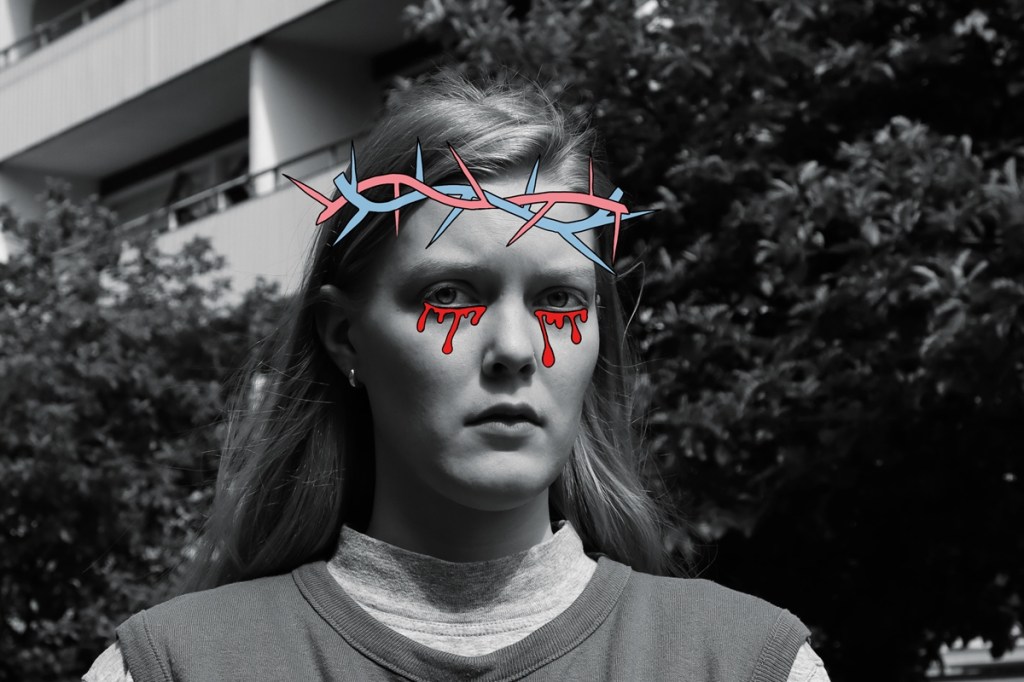
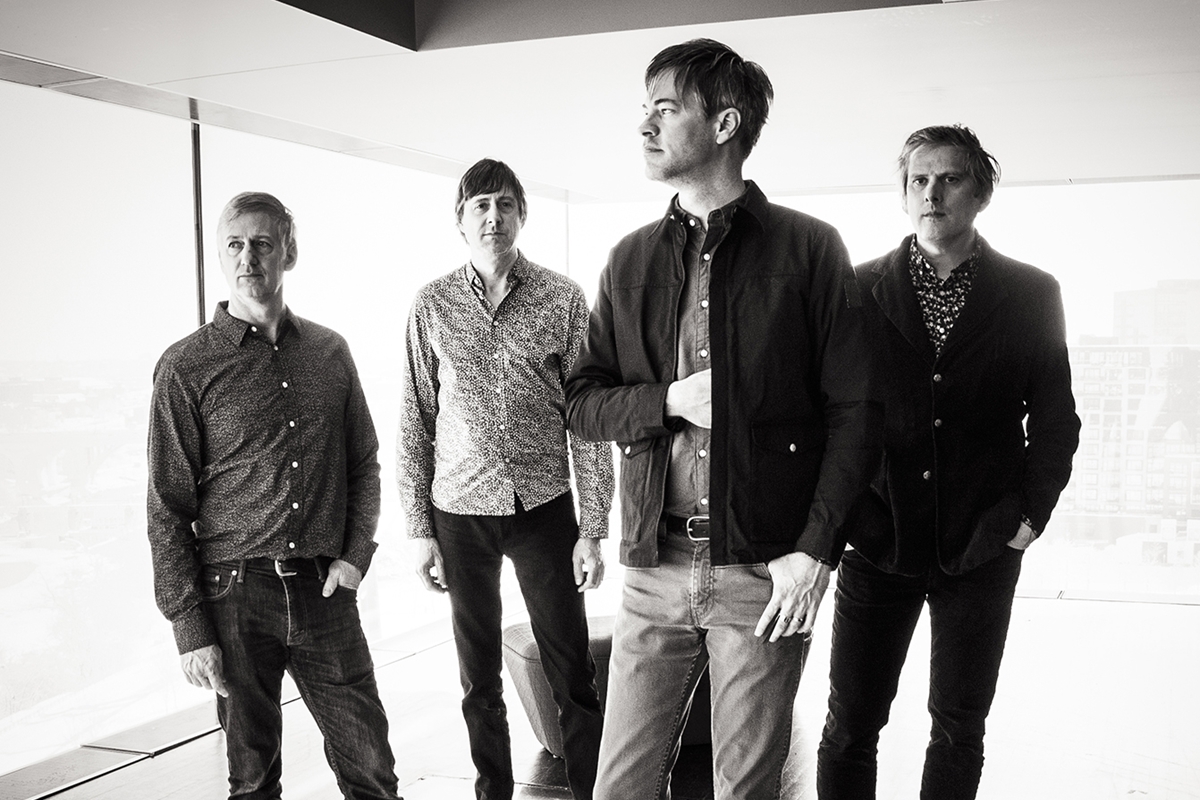
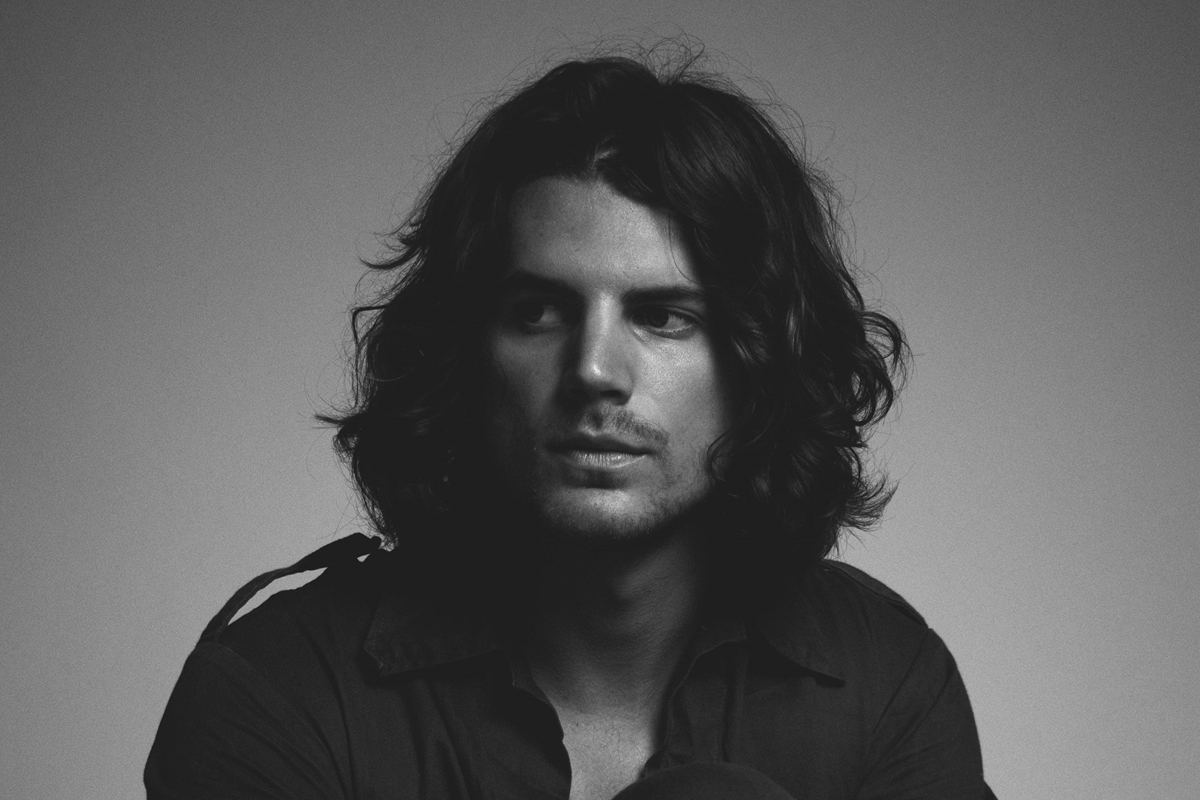

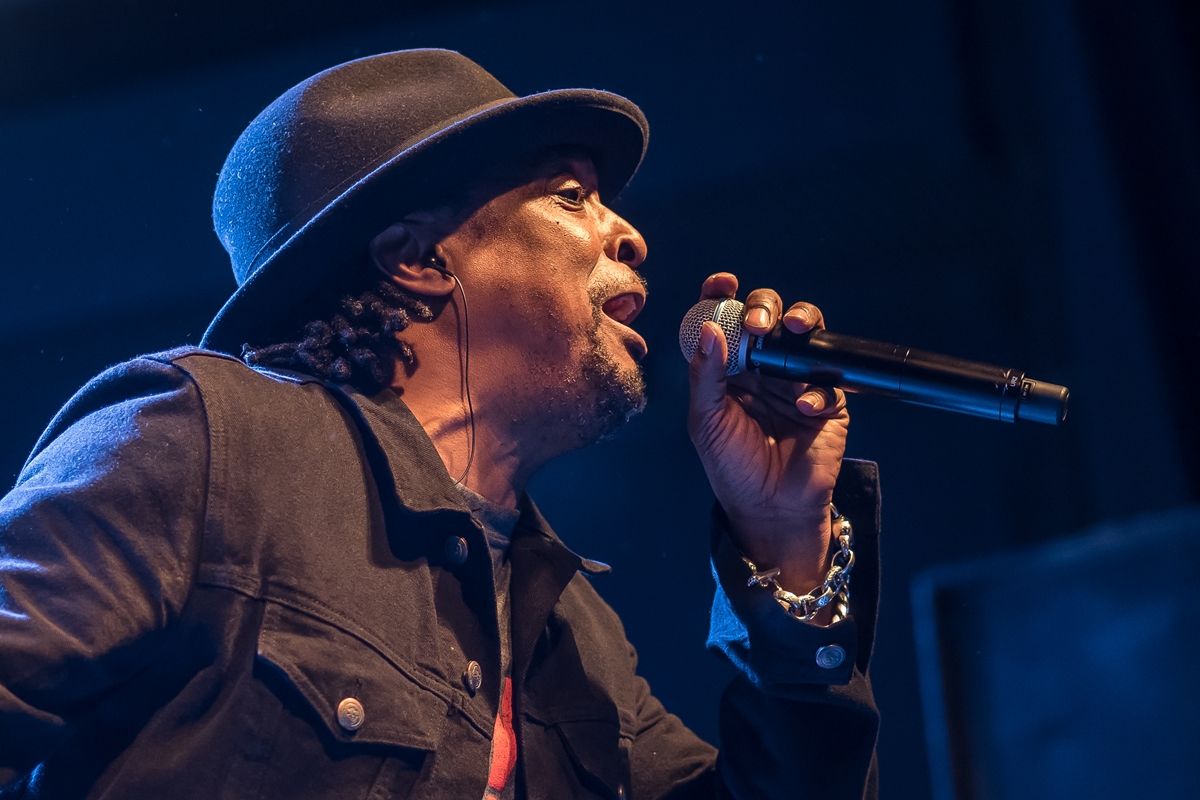

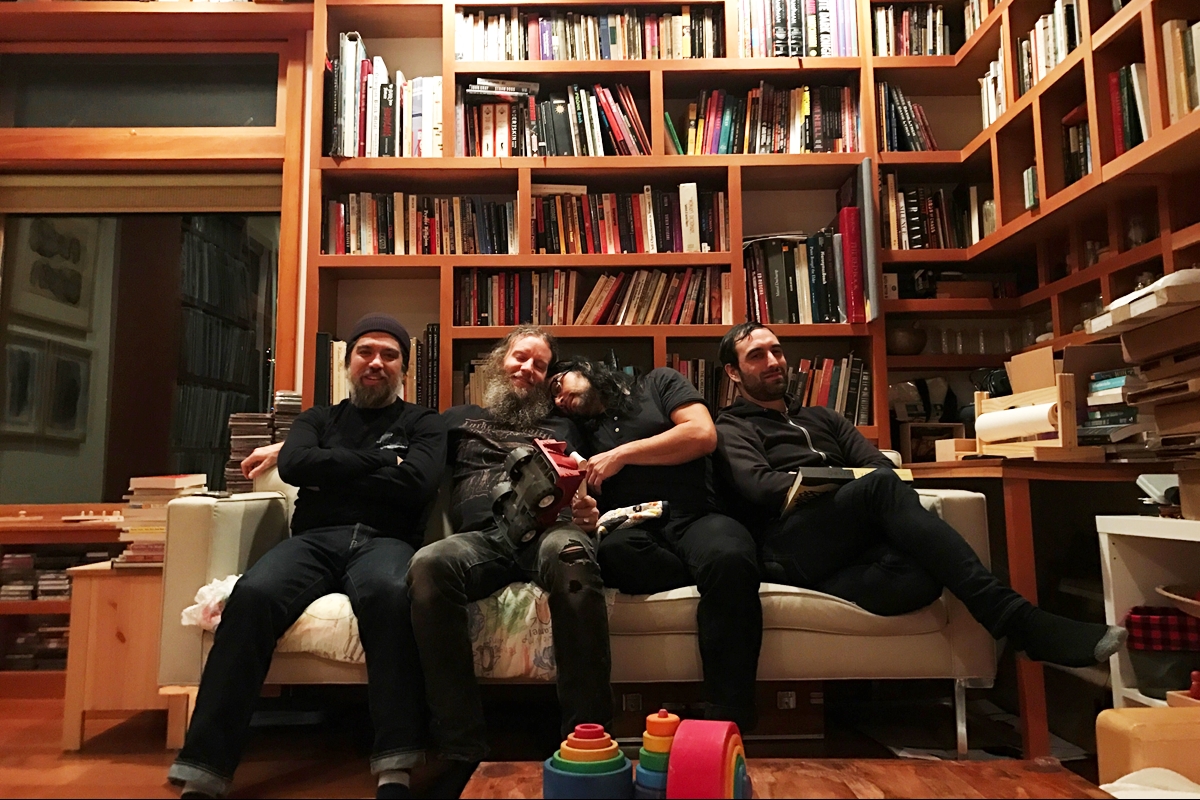
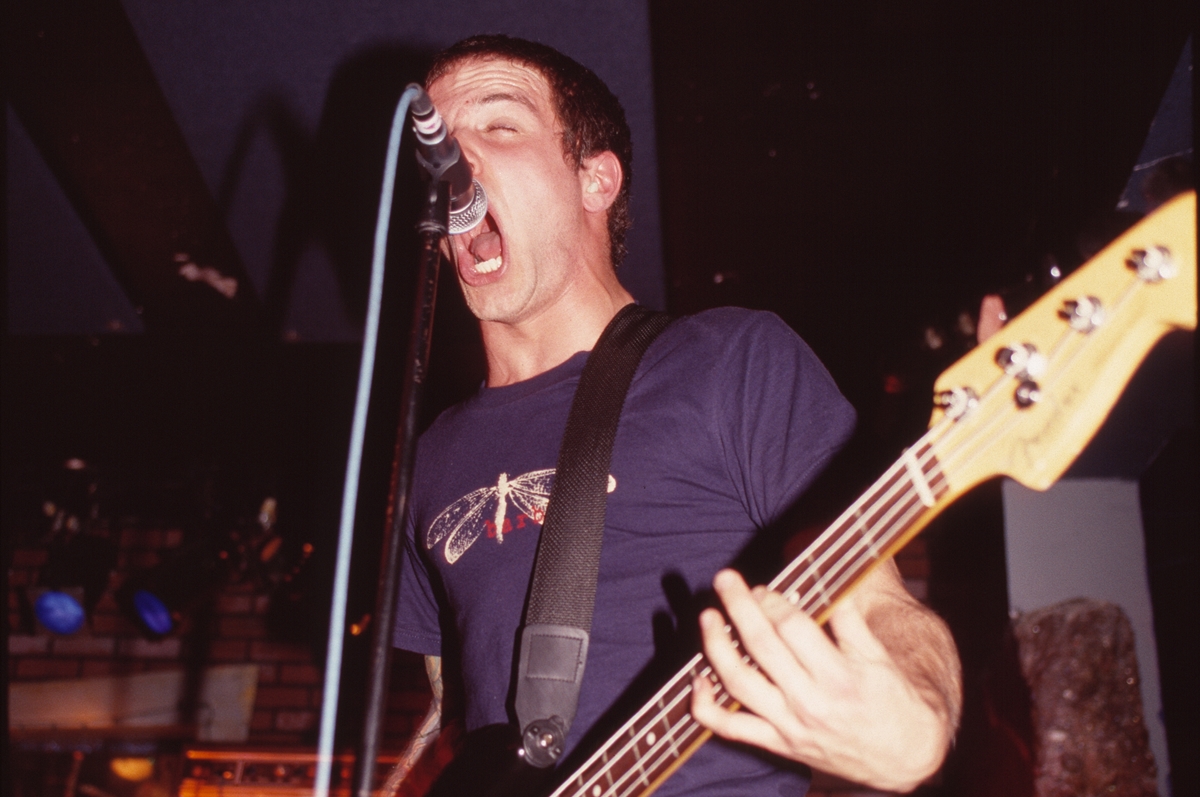


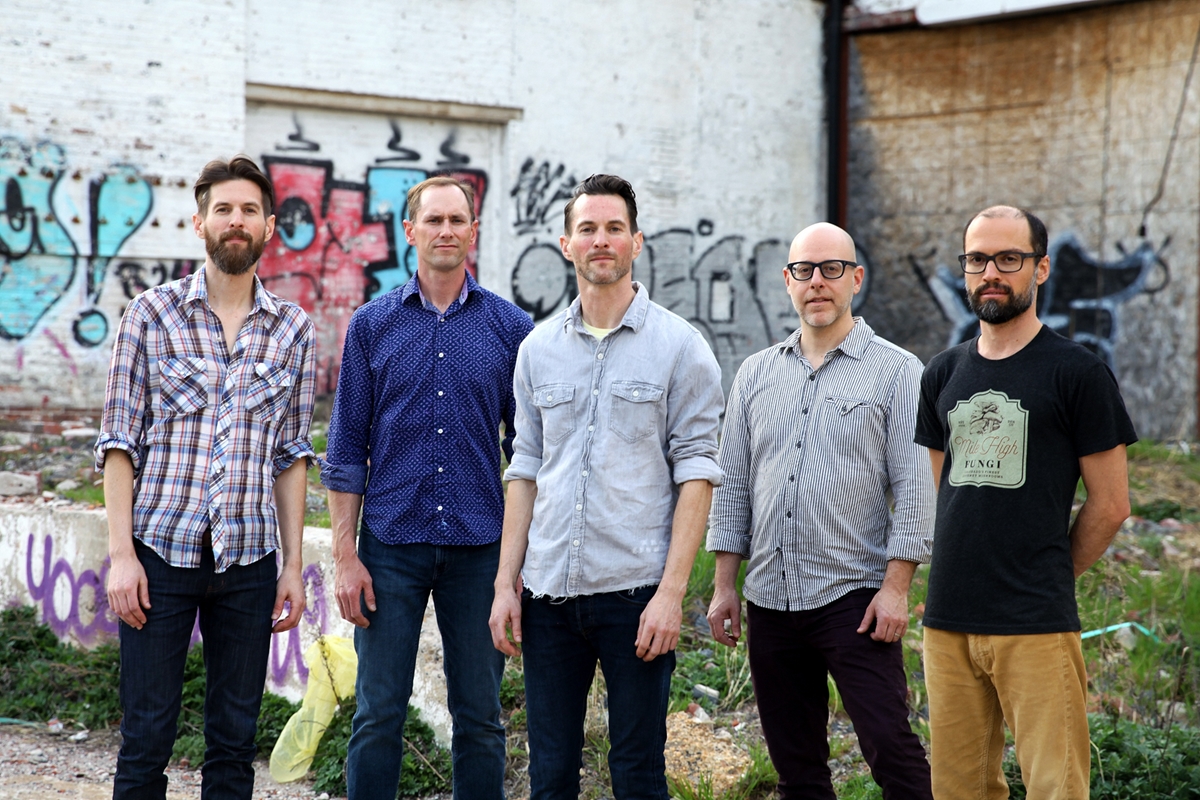


You must be logged in to post a comment.