Meet Post-Punk Band Lot Lizard from Sioux Falls

LotLizard_JamesDean2
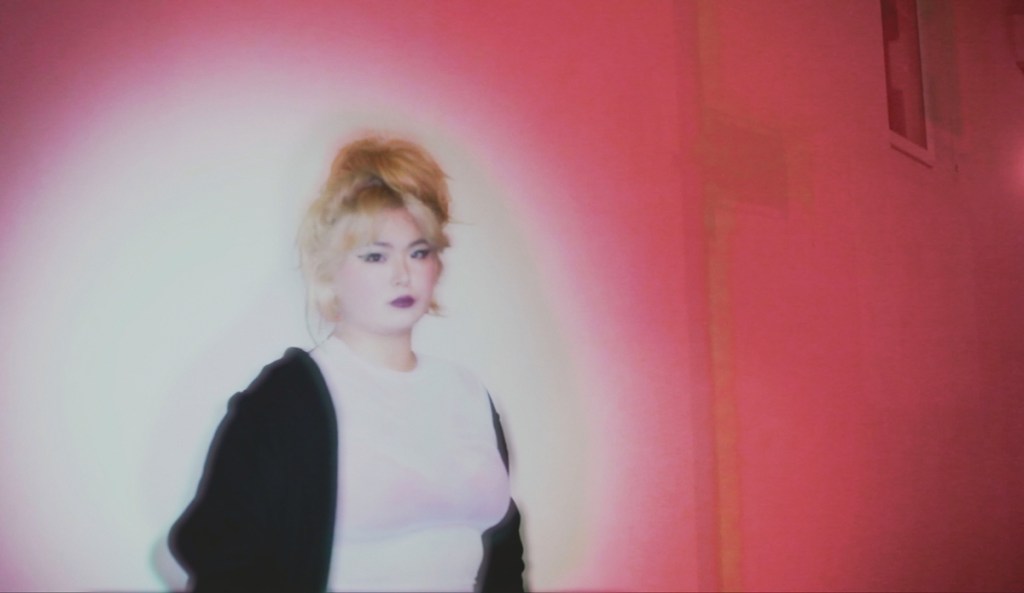
Lot Lizard, photo by James Dean

Lot Lizard is a post-punk band from Sioux Falls, South Dakota. If you’ve not been to South Dakota maybe you only think of the Badlands or Mount Rushmore and that scene from North By Northwest and not a place from which interesting music hails but it’s long been a fact that relatively isolated areas is where you find a good deal of spark and originality as creative people there have to be more or less self-inspirational. Also, one of America’s great record stores is located in Sioux Falls: Total Drag. The latter has been the regional stop for touring bands on the underground/DIY circuit since opening its doors around half a decade ago.

Lot Lizard’s sound is haunted, ethereal yet brooding and urgent. Like a goth-y Pere Ubu or resonant with the eclectic roots of newer bands like later period Iceage and Protomartyr. Currently the group is on a tour with Frankie and the Witch Fingers with dates in Colorado listed below before the interview. The band is nearly finished with its debut full length with an anticipated release on vinyl through both Different Folk Records and Total Drag Records. Patrick Nelson, the group’s bassist, recently answered some questions for Queen City Sounds illuminating some of the band’s history and how he got into post-punk.

February 25 | Lot Lizard with Charioteer at Side Door | Colorado Springs

February 26 | Lot Lizard with Frankie and the Witch Fingers and Eye and the Arrow at Hi-Dive | Denver

February 27 | Lot Lizard with Frankie and the Witch Fingers and Its Just Bugs at Surfside 7

Queen City Sounds: Sioux Falls, South Dakota is not the first place people think of when it comes to post-punk. What brought your band together and what kinds of places did you play locally before branching beyond?

Patrick Nelson: It’s true, South Dakota is not a place know for its post-punk (or insert any genre) bands or for its boundary pushing culture in general. This band was brought together essentially by our drummer Brogan who basically reached out to all of us separately about the idea of starting a new band. All of us, at the very least, knew of each other and had seen each other around at shows and/or in other bands. We started playing the typical places available to bands: small clubs/bars, basement shows, and most importantly our local record store that doubles as an all ages DIY space.

How did you get into post-punk and noise rock (referencing Lord Bronc’s mention of Jesus Lizard on your Bandcamp page)?

That’s a good question.. I’m sure the answer would vary greatly per member. Post-punk was a weird one for me as it took me quite a while to “grow into.” An acquired taste if you will. To a 15-year-old me it was just kind of weird boring music that I didn’t get at the time. When you’re that age and full of youthful insanity blasting, I don’t know, classic early punk from NY, LA and the UK or early hardcore stuff like Minor Threat or Black Flag, bands like The Fall or Joy Division are just kind of weird and out there sounding. Not energetic or shocking enough. Of course you grow up a little bit and figure it out and realize you were totally wrong.

Noise rock on the other hand was something that grabbed me right away and was part of my musical experience at a young age. I think that has to do with that it was having a sort of heyday in my formative years. Like that whole Amphetamine Reptile scene or bands like Butthole Surfers, Sonic Youth or Jesus Lizard. All super abrasive in their own way but were getting press, major label contracts etc.. I was lucky enough to see Jesus Lizard AND Sonic Youth at Lollapalooza in 1995. It’s always interesting to see what other bands people link your band to. I don’t really see the Jesus Lizard but we’ve gotten it more than once. Although I won’t deny the influence of that rhythm section on my playing and I can see a connection with Ben’s guitar work as well.

Did you play different kinds of music before starting this band? What bands? What kind of music?

Oh yeah. I’ve played in plenty. In addition to this project I’m currently involved in a moody post-hardcore project called Roman Ships. Prior to that I’ve played quite a bit of guitar and a little bass in projects that range from street-punk/power-pop to new-wave/space rock, to even a ska band back in the 90s. I can honestly say I’ve been a fan of at least one band every one of the other guys has been in. Lindy had this killer Goth/death-rock project called Angie Hosh. Ben fronted a cool noisy post-rock band called Talk Rock. Brogan’s been involved in a ton of bands (as drummers in this town, and presumably most towns, are known to do). Most recently a garage project called Weathers Rest and in the early 2000’s a chaotic screamo band called Sinking Steps…Rising Eyes.

What made what you do now more interesting for you initially? I know, it’s not as cut and dry and by the numbers like that. That live video you sent and your demos reminded me a little of another band whose post-punk and other musical roots come from a little different direction as well and that is Protomartyr. Did you start out sounding sort of like that? Did you evolve into that sort of sound?

This has been an interesting ride so far for many reasons including the fact that song writing has been very organic. We didn’t go into this with the idea that we would create something that sounds like band A crossed with band B sprinkled with layers of C and D. Of course we talked a bit about bands we liked and such… but that can be an exhaustive conversation with this crew as we all like a huge variety of music and have a lot of respect for different styles. The Protomartyr connection is interesting to me in the fact that I think most of this first record was created without everyone in the band really knowing about that band and their records…. That being said I can see some similarities particularly the idea that much of the music is rhythmically driven via the bass and drums while the guitar often textures in these tasteful atmospheric licks. I think at this point I can speak for everyone and say we are indeed fans of that band now though. Recently saw them live, they killed.

Is there an active local music world that you connect to right now? What is life like for a band like yours in South Dakota in terms of playing shows and connecting with other artists to share bills? How did you get hooked up with those shows in Colorado?

The Sioux Falls music scene is doing pretty well currently. In terms of venues/spaces hosting live original music I think we’re thriving, the best we’ve been in over a decade! Whether people realize that and get out to support live music as much as they should is certainly up for debate. We’re a small city and so it’s tight knit and for the most part I think we try to support each other. The city is growing fast, and has been for [many] years now, so I’m very interested to see where we end up in 5 or 10 years.

As for connecting with other artists and how we got connected to the Colorado shows, we played a gig with Frankie and the Witch Fingers in Sioux Falls a little over a year ago. They dug our band and on top of that had the next day off so we became friends and were lucky enough to connect with them in Denver and Ft. Collins.

Like-minded or at least adjacently-minded bands we should know about or hear that maybe no one outside of South Dakota or regionally?

There’s plenty of talented musicians here that’s for sure. Two I’m particularly excited about are Bodega Sushi and Velcro Ultrasound (both are in the middle of full length albums). Rifflord and Green Alter are some other friends, both in the heavier realm of things, that are working hard and deserve a shout.

“Lot Lizard” is a term I grew up knowing (as a child of the 70s and 80s), is there a story behind why you chose that name or a significance to the name that has come to fit your band and its music?

Ha, yeah there’s a bit of a story. So I had written this bass line and had an idea in mind for how I wanted the song to sound sonically. I was describing it to the guys at practice and tried to put them into this landscape, this frame of mind. I believe it went, “Like some lot lizard out of gas and stranded in the middle of nowhere on some desert highway.” To which Brogan said, “What did you say? What’s a lot lizard?” And after a laugh and an explanation on my end he responded, “That’s it, that’s the band name.” There was definitely a little apprehension as we weren’t trying to be overtly offensive or whatever. We asked for outside opinions, including those of our girlfriends/wives. It stuck. And I think it fits. It’s also fun to forget about the social term and just use it as more literal in terms of reptiles. And the alliteration. I mean heck, it might just be the perfect band name.

How did you get connected with Total Drag and why is that a significant place for your band and maybe for the local underground music world?

Brogan [Costa], our drummer, actually helped open and is a part owner of Total Drag. On top of that I’ve know Dan and Liz [Nissen] for as long as I can remember. We’ve attended and played a lot of gigs together over the years. Total Drag is an integral part of what is happening in Sioux Falls. Lot Lizard played our first gig there and it continues to be the place we most often play locally.

In any city the importance of a space that hosts all ages shows cannot be stressed enough. At a most primal level, a music scene will have a hard time surviving without it. Music is evolved by the youth. A scene being engaged by youthful energy and ideas will hopefully foster growth and longevity.

Q&A: Alien Boy

AlienBoy_SamGehrke2
Alien Boy, photo by Sam Gehrke

Since 2015, Portland, Oregon’s Alien Boy has been establishing itself as one of the most intriguing guitar rock bands in the American underground. Its sound could be roughly described as a mixture of pop-punk, post-punk and shoegaze. The jangle-y riffs and melt-y, fiery tones propelled by urgent rhythms could certainly be considered to be an amalgamation of all of those styles of music. But Sonia Weber’s vocals, expressive, poignant, unafraid to go off of conventional and sanitized melodies anchors the songs in relatable human experiences which aren’t ever perfect. But that willingness to embrace flaws is its own perfection by speaking to emotional truth and it’s what makes Alien Boy more compelling than many bands that seem to write music where everything is ultimately okay. This band’s music isn’t about bravado, it’s about being real and honest with oneself and others.

In 2018 the group released its debut LP Sleeping Lessons on Tiny Engines [soon to be included on Queen City Sounds’ Best Albums of 2018 list]. Currently the group is on another iteration of touring in the wake of the release of the record including tonight February 20 at Larimer Lounge. We recently sent some questions to Alien Boy which vocalist/guitarist Sonia Weber was gracious enough to indulge.

Queen City Sounds: Since hearing about Alien Boy a few years ago I’ve thought of the band as punk even though your songs are musically not reducible to a single genre. Do you think punk as music, culture and ethos informs your own music? If so, how so? If not, why not?

Sonia Weber: Yes, absolutely. That’s the first type of music I felt really passionate about when I was younger and I think it always shows no matter what. No matter what I’m always kind of searching for that heaviness/energy and style even though I don’t listen to that kinda stuff as much anymore. Ethos too, I think punk taught me so much about how I want to interact with the world and it has a lot to do with why it’s important to me to express that this is a queer band. I think if you’re going to have any kind of platform it’s important to acknowledge it and use it for some kind of good.

When your band, or previous bands when you were younger, started out, where were you able to play? Was there a scene you were able to plug into?

Yeah! I started playing in bands when I was 16ish and played a lot of shows at Satyricon, Backspace, and Laughing Horse Books when I was a little older. We got really lucky, there were a lot of people my age starting bands at the same time and when I think back I think that time was really special.

Was there and is there an active realm of DIY or unconventional spaces where you were able to develop and where newer bands can come up?

Yeah, absolutely! I think there was and is and will always be somewhere even if you’re not plugged into it there’s always stuff you don’t know about and people doing inspiring stuff for DIY to make it happen. Laughing Horse Books was big for me when I was younger, then Anarres Infoshop, and now places like Black Water and houses in Portland are doing really great stuff for DIY.

The Ghost Ship fire had a direct connection to Denver and many other places and the aftermath of the tragedy deeply affected our underground art and music community including harassment from alt-right types. Did that event affect you and your band at home and in terms of trying to tour?

You couldn’t go somewhere without knowing someone who knew someone that was there or affected by it. It was a huge dark cloud over something that was usually a place that made us all feel so good and safe. [It] and was just so, so, so, so sad. As far as how it affected tour stuff it lead to a lot of DIY spots closing down or being harder to access but on the other side of that I think it made spaces that were able to keep going realize things they could do to make it safer for everyone and I appreciate that. Mostly it just devastated so many people including myself, I felt hard to get through and we’re all still working on it.

The 2018 KEXP article on your band mentions how being devastated was a feeling that inspired many of the songs on Sleeping Lessons. Why do you think that emotional state leads to vital songwriting?

I think music and art are at its best when you’re feeling a type of extreme emotion and can be honest about it. The stuff you’re too afraid to say yourself but then you hear it in a song and it feels important. I think that’s where a lot of connection comes from.

Your Facebook pages lists a band not many people these days cite as an influence (maybe in Portland it’s more likely) and that’s the Wipers. What is it about that band that you find inspirational and affecting?

I love the Wipers so much. We draw a lot from their guitar sound which is I think where the influence shows the most, especially on our first few EP’s. I think that band is so emotional in a way a lot of punk bands weren’t back then, I think we’re similar in that way too even if it doesn’t sound that way immediately. I really relate to the song “No One Wants An Alien” and obviously “Alien Boy” which is where the name is ripped from. It’s all about being isolated and lonely and different from other people and I think it’s done in a really beautiful way. That’s the kind of punk I hope shines through a little in our stuff.

“Only Posers Fall In Love” has a long lost Smiths with Robert Smith guesting like he did with Siouxsie and the Banshees sound. What is it about that sort of guitar style do you find appealing and interesting to play?

It’s my absolute favorite kind of guitar playing. I’m totally obsessed with how Johnny Marr plays guitar and got that way right before I started Alien Boy. I can’t even really describe what I love about it but it was the first time since being younger that I was super excited about guitar again. I’m obsessed with chorus pedals.

Why do you think shoegaze and pop punk compliment each other so well? Your music demonstrates they definitely do.

Most of the song structures are the same! I feel like I realized most songs are similar it just depends on how you play them and that if I felt like mostly pop punk was coming out but I wanted it to feel a different way it was totally possible. I want the same thing from both genres, they’re both so emotional I think that’s the main reason why it works so well together.

Your songs fulfill a similar function to writing a journal in terms of externalizing feelings and thoughts so they don’t just, or no longer, sit in your body. What does the process of doing so look like for you?

When I was writing sleeping lessons it was really the only way the feelings were being expressed in a genuine way. They would come out in little bursts and I’d forget and re-listen and be like, “Damn that’s how I feel about that? Okay”. And then once the record was done it really felt like I had gotten it out of my body. I felt a lot lighter it was pretty unbelievable to feel it in that way.

A long time ago “pop” used to be kind of a dirty word in punk and underground music. Did you ever have to reconcile pop with the music you came to love as an adolescent and beyond? What are examples of, conventionally or unconventionally so, perfect pop songs?

When I was younger I definitely felt super ashamed liking pop music but as I got older there was a point where I was just like, “Fuck that this isn’t fun at all I’m gonna like whatever I want,” and seemingly everyone got the memo at the same time, haha. Music has been much more exciting since then. Coming back to the idea again that most music is structured the same way, I like the same things about all the different types of music I like and most of it comes down to chorus pedals and relatability.. What I can relate to changes all the time too! So it’s always changing.

Examples of perfect pop songs to me? There’s so many! “In A Big Country” by Big Country, “Celebrity Skin” by Hole, “Blank Space” by Taylor Swift, “Baba O’ Riley” by The Who, “I Wanna Be Adored” by The Stone Roses, “The Jerk” by Joyce Nanor. Conventional and not all those songs are perfect.

Q&A: Hackedepicciotto

hackdepicciotto_sylviasteinhäuser
hackedepicciotto performs January 30 with DBUK at Lost Lake. Photo by Sylvia Steinhäuser

Hackedepicciotto is an avant-garde, multimedia project formed out of the collaboration between Alexander Hacke and Danielle de Picciotto. Hacke is the bassist and one of the sound designers in influential industrial band Einstürzende Neubauten and de Picciotto is an internationally renowned author and musician in her own right as well as a co-founder of the now defunct electronic music festival the Love Parade in Berlin. Their work in various projects across the past few decades has been rich, diverse and prolific. As Hackedepicciotto the duo has produced a body of work that explores the ways in which what some call late capitalism and its fallout with widespread gentrification in cities and the consequences for those who have carved a niche as creative people and those who are drawn to doing so.

De Picciotto wrote a remarkable graphic novel published in Europe in 2013 and in the USA in 2015 called We Are Gypsies Now in which she outlines how she and her husband, Hacke, came to realize they were basically being priced out of their longtime home of Berlin and how it was becoming a city that was increasingly losing some of its character, of decades if not centuries, as a place generally open to and welcoming creative types and lateral thinkers of all stripes. That realization inspired the couple to travel around where they could perform in search of a new place to call home. In the end, as you will read below, de Picciotto and Hacke came to some conclusions about the state of the world and their hometown. That subject and their discoveries since have been the subject of at least two albums, 2016’s Perseverantia and 2017’s Menetekel. A powerful expression of despair can be felt throughout both albums but in the end, Hackedepicciotto believe not the platitude that things will all work out but that hope for making a better future is not a naive concept. We interviewed Hackedepicciotto via email in 2018 following their 2017 tour of North America.

Queen City Sounds: How did you come to record Perseverantia in the Mojave desert? Is there anything about that setting or the circumstances of being there then that inspired documenting your travels up to that point?

Danielle: We have been traveling art nomads for over seven years now and at one point we ended up in Joshua Tree. I fell in love with the starkness of the desert. It is incredibly inspiring because it brings you back to life’s basics so we recorded not only “Perseverantia” there but I also recorded my solo album “Tacoma” during the same time period. I would have loved moving there immediately but Alexander does not have a drivers license which would have made it difficult for him to move around freely and it is very far from Europe where we do need to be quite often so we decided to put it on hold for the time being. I still do have the dream of owning a small cottage there to retreat whenever possible.

Alexander: The desert is vibrating with energy. You might say that it’s a barren and lifeless landscape, but it really is radiant with life. There’s hundreds of plants and creatures within every square inch. Also there’s no apparent boundary, few geographical features blocking your view. All of that does have a very inspiring effect and gave us the opportunity to look at our work from a different angle. We gave up traditional song structures and arrangements thankfully due to those surroundings.

QCS: What seemed like the most likely places to find a sanctuary for creative types as you had in Berlin in the 80s and to some extent in the 90s? What ultimately made those places not quite what you were looking for?

Danielle: Joshua Tree and the Hudson Valley both seemed like the perfect places because they are not overpriced yet, have a great artists community and are beautiful nature-wise. Hudson Valley was basically the decision we made after five years of contemplation. In the end effect we did not move there for two reasons: 1) we were originally invited to do an artists residency in a private art space there for a year and had planned to use that as a starting point from where we could look for work and connections. After we told the curator that we would accept his offer he informed us that as we had stopped drinking his invitation was not open anymore as that would bother him whilst drinking. (!) The art residency was obviously a very unprofessional one and we are happy it did not go through but it did shock us to be confronted in such a manner on something we were rather proud of having achieved so we started looking around once more when 2) the elections happened. That was the second shock which brought us back to Berlin to try and understand what is happening in the world at the moment.

Alexander: Well, ultimately we didn’t manage to discover a place, a city or a community that would live up to the West-Berlin standards and we realized that it would be silly to even try looking for that. Instead it is imperative to understand what “[survival of the fittest” really means, because it is not about strength, or appetite or ambition, it’s about being able to adapt, so we should all let go of the romanticized, sentimental and awfully nostalgic notion that anything could be the way it once was again and rather try to make things happen in any given place. Not being twenty anymore sort of reduces the options though, of what I am willing to invest myself into.

QCS: What circumstances do you think made Berlin such a great place as a sanctuary for artists? How might such a situation be attained now even given the dire state of the world?

Alexander: Not only were we perfectly secluded from the rest of the west, the special status of our elitist little village informed the selection of people, who would go there. You wouldn’t be drafted into the [mandatory] year of military service if you were a registered citizen of West-Berlin, so all the freaks who’d have a problem with the system represented by the army and whatnot, could safely realize their personal utopia there and because of the presence of the allied forces stationed by the winner nations of the Second World War, we had quite a good connection to what was happening abroad internationally, in London, New York and Paris to some extent, if you will.

Danielle: In the 80s Berlin was an island which was completely subsidized because of being an island within cold war communism. That meant that everything was very cheap and money was not an issue. You could work in a cafe two times a week and pay your rent and food from that so art and music were not done with commercial interest in mind. This brought about that Berlin became a madcap laboratory of unusual sounds, ideas and experiments which would nourish creativity all over the world. Personally I think that this is the key to being able to live a healthy, humane life and make oneself free of our insane world: find a place to live which is cheap and spend your time not trying to earn money but to do things that really mean something.

QCS: Have you found havens to stay while you travel? How has being on the move regularly now impacted the legal aspects of being able to travel and other mundane matters most people take for granted?

Danielle: We have many homes now and they are mainly influenced by our friends. We have discovered that the saying “home is where the heart is” is true and that the heart is mainly there where one has good friends. Because of traveling so much we have met incredible people all over the world and those havens are places that give us strength and hope. We try to travel to their cities regularly to create a net connecting all of them with like minded people and in this way spread the strength that we receive.

Alexander: I used to enjoy air travel a lot more than I do now with all those security and luggage regulations “The Man” is imposing on us. What equipment we are able to bring and what not is having considerable impact on our work. That is maybe a good thing, because we have to calculate and re-adjust the weight and efficiency of every detail in our cases over and over. We travel with a scale and make sure that all our checked luggage is maxed out.

hackedepicciotto_wearegypsiesnow_aug19_2015_tommurphy
Hackedepicciotto, We Are Gypsies Now tour 2015, photo by Tom Murphy

QCS: Why do you feel times have changed and it seems more like a dog eat dog world? That makes it sound like you gave up on the idea of finding a sanctuary like Berlin used to be. Have you?

Alexander: I am grateful to still be able to make a living with music. We are doing pretty well in comparison to almost every other profession. I do really cherish to get to put my energy into creating something meaningful, rather than having to do some kind of slave labor or, even worse, to get paid for being a heart-[less] and soulless corporate prick, in order to pay the fucking rent. And yes, thank God for our wonderful friends who have our backs.

Danielle: Negative news is everywhere and reading it all the time can be very depressing. But there are very many positive things happening all the time and it is important to concentrate on them and give them your support. It just takes more time to find out about them—I try to keep my Facebook page free of negative news and post as much positive news as possible to prove this. There are a lot of small communities getting together everywhere, in the US and Europe, connecting people that are environmentally aware and that actively work on changing things. These communities are incredibly inspiring and one can either join them or learn from what they do and try to integrate this into daily life. All of them are as inspiring as Berlin used to be but in different ways. Berlin’s most creative times were in the 80s and 90s which is now quite some time ago and it would not make sense to turn back time. The world has changed and we need to look into the future not into the past.

QCS: When you speak of displaced people, the thousands of homeless souls you speak of in your press release, what is the essence of what you think many of us have lost in the wake of what made Berlin unaffordable in the way it used to be but also many other cities in the world where creativity found a home?

Danielle: Society has become corrupted. We all seem to believe that what the companies want us to think and we need to become free of this because it is not only killing our health but also our souls.

Alexander: Change, transcendence and reform [are] imperative for the survival of mankind. Luckily it can’t be avoided and will happen anyway no matter how hard reactionaries will cling to their valuables. You have to start with yourself and try not to be too frustrated with the ridiculous amount of time it seems to take for everyone else to get into it.

hackedepicciotto_menetekel_dec6_2017_tommurphy
Hackedepicciotto, Menetekel tour 2017, photo by Tom Murphy

QCS: The word “Menetekel” means “the writing on the wall” and I take that to mean that what was happening to the creative community and the social and physical infrastructure that made a creative life a viable option and possible to thrive is now happening to everyone. That is to say, in our capitalistic world where rampant greed is the only protected value, creative work is not valued and seen as a luxury and thus more or less the first thing to go, to be sacrificed. My melodramatic language aside, what made the collective despair of the world seem like particularly fruitful material for your new record?

Danielle: When we record it happens instinctively and we were quite surprised how dark some of our tunes had become. It is always interesting to record first and then speak about what happened because that way you can see what your subconscious is saying. Here in Berlin we work in an area that is very poor and in which a lot of refugees are put. Their collective despair can be felt palpably, being displaced is terrible. Living in a country after having lost your family, your job, your home only to arrive somewhere where you are considered a subhuman, cannot speak the language and have almost no prospects besides being alive is unimaginable for anybody that has not experienced it. I think we felt a lot of this despair besides the feeling of homelessness we felt whilst traveling ourselves. When you travel a lot you can experience transcontinental shifts on a one to one daily basis and our world is changing at a breakneck speed. Most people do not think it will affect them because they refuse to see the writing on the wall and go on numbing their minds with fatty foods, alcohol and non stop media. If people do not wake up it will soon be too late.

Alexander: Menetekel is about waking up to the reality of our condition.The reference to the word as it is used expressing impending doom in German, is a biblical story found in the book of Daniel, chapter five.

QCS: Obviously the dark intensity of the album matches the subject matter. How does performing this music along with your visuals affect you revisiting the music and channeling that kind of vibe?

Danielle: It makes me want to find as many ways as possible to help change things to a brighter future.

Alexander: Ideally we create with the vibrations of our music and Danielle’s imagery (if we have it) a bond between the audience and us, the performers. By sharing the moment together in the given venue, we get to connect and experience reality as a unit, a community. Separation is an illusion and with our art we try to overcome that false view of the world.

QCS: The final song is “Crossroad.” What kind of crossroad do you feel humanity and human culture may be at this time? What do you see as possible paths that seem likely before us?

Danielle: I think that people have to realize that they cannot wait for others to save us. We are the others. Every single person is responsible to make change possible. As we can see with elections: every body that does not vote makes evil possible.

Alexander: Know thyself. Stop buying into consumerism. Quit drinking and go vegan. Meditate. That’s a start.

Buzz Osborne On Butthole Surfers

MelvinsphotocreditO1
Melvins [L-R: Steven Shane McDonald, Dale Crover, Buzz Osborne, Jeff Pinkus], photo by O1
Depending on how you’re counting it, Melvins released its thirtieth album, Pinkus Abortion Technician in April 2018. The title of the record an obvious, and humorous, reference to the 1987 Butthole Surfers classic Locust Abortion Technician. It should be noted that Butthole Surfers’ longtime bassist Jeff Pinkus has been a member of Melvins since 2013. The record is bookended by two Surfers songs, “Stop Moving to Florida” and “Graveyard.” While a testament to the impact the Butthole Surfers had on Melvins, both bands proved influential on 80s underground rock and the musicians who would break that parallel vision of interesting and exciting music, likely considered largely uncommercial at the time, to the world in the early 90s when alternative rock bands took the foundation built by bands like Butthole Surfers and Melvins to a massive audience.

Though Butthole Surfers had two left field hits in the 90s with “Who Was In My Room Last Night” and “Pepper,” neither Butthole Surfers or the Melvins were aiming to appeal to any trends, their respective music too weird and idiosyncratic for most people with mainstream tastes and otherwise casual music fans. Because of that both bands have a body of work that has aged well and in the case of Melvins, work that continues to evolve organically, regularly yielding interesting records. This weekend, Melvins are playing a pair of shows in Colorado, the first on Friday, August 10 at The Gothic Theatre in Englewood and Saturday, August 11 at The Aggie Theatre in Fort Collins, both with WE Are The Asteroid. We spoke with Melvins guitarist Buzz Osborne ahead of the show and talked about Butthole Surfers and his pragmatic attitude toward the appeal of his own music.

Tom Murphy: When did you first hear about Butthole Surfers?

Buzz Osborne: ’82 or ’83. I think I saw them first in ’83. Seattle.

How did you hear about them?

Same way I heard about every other band. I listened to underground music, I heard the EP and I really wanted to see them. I heard about them long before I saw them, like the year before.

What is it about that music that appealed to you?

It was left of center, it didn’t sound like anything else. They had a nice way of expressing their melodies that I found to be quite exciting and refreshing. I thought they were extremely good players. It was weird to the point that I could get into it and not feel like I was listening to a fucking REO Speedwagon record. It was everything I enjoyed about underground music. But having said that, honestly, if REO Speedwagon put out a record I liked, I would buy it. I’m not going to hold my breath but I’m not being perverse, you know. I never have been. I feel things are good or bad and that’s the end of it.

When you saw them the first time was it more the stripped down thing or the multimedia thing they did later on?

It was stripped down. I’m not sure what you mean. To me it was super punk rock but it wasn’t 7 Seconds, you know? It wasn’t no jive bullshit like that. It was really good in every sense of the word. Not normal but I was okay with that. I embraced that.

Do you feel like they were influential to you then?

Of course! They always were. That’s why at this point now, when I think about what we’re doing and who we’re doing it with, I can’t even really believe it. The idea that I’m in a band now with two guys that I’ve been fans of for literally decades is really quite amazing to me. It’s second to none and I feel like the happiest boy on earth.

The album is bookended by two Butthole Surfers songs? Was there an inspiration for the choice of eras of the band?

I don’t know. It could have been any era. We have been touring around playing both of those songs live a long time prior to recording them. And when we got in the studio with Jeff it just seemed like the right thing to do. An obvious choice. There’s no more to it. There isn’t an era of the Butthole Surfers that I don’t like.

Did you tour with them way back when?

We did shows with them but never toured with them. Three or four shows.

Is there a specific era of the Butthole Surfers you favor?

Like I said, I like every era of the Butthole Surfers. But if I had to get particular, I guess I would pick Hairway to Steven, [Psychic…Powerless…] Another Man’s Sac and Brown Reason To Live.

How do you think they impacted the world of music?

I never thought about how they influenced music in general. Maybe their weirdness. They influenced me. They did have an album that sold a lot of copies but I can’t say how well-versed a lot of the people that bought that album were in what [Butthole Surfers] did before that. Or if they had explored the earlier records if they would have been as excited about it. Maybe they would have loved Another Man’s Sac as well, it remains to be seen. Yeah, these guys are going to love the Brown Reason to Live EP, they’re going to be super into it. But who knows? I have no idea why people like what they like. I only know what I like and I’ve always figured that I operate with the assumption that I have good taste and I will make music I think is good without thinking in terms of how it will be perceived by anyone else. Just figure that if I like it, other people will like it but it probably won’t be millions of people and I’m okay with that. It’ll be enough. I’m not concentrating on selling records or not selling records. I’m concentrating on making music that’s good.

T-Rextasy Brings Its Exuberantly Irreverent Pop Punk to Colorado

T-Rextasy-UlloaPhotographyStudio
T-Rextasy, photo by Ulloa Photography Studio

T-Rextasy will perform two shows in Colorado this week with Blacker Face. Monday, August 6 at Your Mom’s House in Denver  [show canceled and relocated to TBA, ask a punk] and Tuesday, August 7 at Surfside 7 in Fort Collins. The New York City-based band has garnered a bit of a following in the past few years for its spirited and unconventional pop punk. Formed in 2013 while its members were still in high school, T-Rextasy demonstrated an astute and thoughtful take on social issues and identity from a young age imbued with a genuinely clever and irreverent sensibility.

Drummer Ebun Nazon-Power had been playing in bands prior to T-Rextasy when she heard about Lyris Faron from a friend. “We first met at my show at my high school,” dsays Nazon-Power. “After she saw me play she said, ‘I want to start a band with you.’ She wanted an all girl band, you know, to play some rock and roll music. I was down with that. Within a couple of weeks we started practicing together.”

The group’s first performance was at a house show and one of its earliest gigs at a more conventional venue was opening for the great New York City indie pop band Frankie Cosmos at the DIY space Shea Stadium. “That was a big deal for us because it was our first opportunity to play before this big group,” says Nazon-Power.

Critics have referred to the band’s lyrics as radically political in the best sense—mincing no words yet creatively engaging.

“So educational but not didactic?” asks bassist Annie Fidoten. “As songwriters we’re rooted in thinking about things that are happening in our immediate periphery, to ourselves and our friends. ‘Chick’n’ is a song I wrote when I was 17 and now I’m 22. I was literally sitting around with people at the cafeteria and talking about how pet names annoy me as much as cat calling does. There’s something creepy about it. I thought it would be clever to put that into a song. A lot of people probably feel the same way and it becomes social commentary that resonates for other people. We’re always trying to write songs that we think might resonate with other people who have experienced those things themselves. If something happens in adolescence and we’re still thinking about it? I think that’s pretty universal.”

“Chick’n” appeared on the group’s 2016 debut full-length Jurassic Punk, a record filled with exuberant songs that offer a perspective looking to encourage the transformation of the present into a better future by critiquing regressive mindsets and behaviors with humor and psychological insight.

Since all the members of T-Rextasy are currently enrolled in college in different parts of the United States, it has undertaken sporadic touring and took some time off in 2017 to go on a bigger tour. And in summer 2017, the band took time out for a kind of songwriting retreat to compose its sophomore album, as yet unnanounced, due later this year on Danger Collective.

“We stayed together in New York for four days or something like that and wrote songs and relaxed,” says Fidoten. “Some were songs we had pieces of or almost songs. Some were completely written while we were there. All those songs we wrote together. It was very collaborative, all of our songwriting is. I can’t imagine us writing songs remotely and sending each other parts. We operate as a unit. Half of the songs we had before and the other half are from that writing experience.”

The new record contains much of the striking and affecting lyrics one would expect as well as songwriting that could never be truly pigeonholed with the confessional, personal quality of the best pop punk and eclectic use of sound including bits of ska.

“I’m a big ska fan so I think the formula for what a ska song is we can sprinke into places to spice them up a little,” says Lyris Faron. “When we do covers, we can do an instant ska cover, bass on the 1, 5, 8, guitars on the off beat, super easy to spice it up lke that and make it recognizable and give it a kitschy feeling.”

Whatever its exact alchemy, for certain, T-Rextasy’s version of punk is not only good but good for you.

Yvette Young of Covet on the Use of Technique as a Tool to Transport Listeners

Covet_HowieChen
Covet, photo by Howie Chen

When Yvette Young of math rock band Covet started posting videos of her guitar sketches on Facebook and then on YouTube and other online outlets several years back she didn’t necessarily see herself doing music professionally. “I started posting those songs as an incentive to finish songs and share them with friends,” says Young. “There were a lot of cool communities on Facebook of people that liked the same music I did. I posted the videos just to keep track of my progress. I did it for the same reasons I post riffs on Instagram—to incentivize finishing them.”

Young earned herself a well-deserved reputation as a guitar shredder on par with the math rock inspirations in bands like Don Caballero, Pelican, TTNG, Tera Melos and Enemies. But her musical technique has never been done for its own sake and never really learned to merely show off technical skill. Young is also a visual artist and views musical technique in the same was she does artistic technique.

“I see technique as a tool kit,” says Young. “The more technique you have and applications you have for guitar—for instance two handed tapping, picking chords, tugging—it’s like a painter’s toolbox , [to use] the visual artist analogy. To me music is sonic painting and I want to transport someone with my music. I want as many colors and as many tools as I can. That’s my incentive for figuring out my technique—to get to the closest to what I want to achieve. For a lot of people they hear stuff in their head but their hands aren’t there. You have the potential to do this thing but you don’t have the tools so you have to learn the tools.”

“I write with my ears and then I find it on the guitar,” continues Young. “Usually I don’t know how to play it yet or how to do what I heard. I know where the notes are but I don’t know how to connect it all yet. So I’ll keep practicing until I get it down. That’s how I get my technique. I try doing stuff I think is impossible and once I do it, it feels good. Then I can apply that technique to any other song I want to write in the future. I always write songs I can’t play yet. I don’t go to comfortable shapes, I always try to push myself to do weird stuff that is uncomfortable at first. That’s a good way if you want to break out of your routine. Change your tunings so you can’t do those shapes anymore. Totally disable yourself so you have to use your ears and you’ll be able to write stuff that sounds totally natural because you end up having to write with your head and not just with technique itself. You can’t just do an arpeggiated sweep, the shape is gone. So you have to find something that’s much more creative.”

Young’s music is like her drawings and paintings—diverse, rich in style and evocative power. She does the artwork for all of her albums and there is an element of what Young refers to as “escapist” or fantastical, intended to transport the viewer to another place or another time in their lives. Whether it’s the albums or the artwork Young has shared on various online outlets, her development as a visual artist is seemingly in parallel with her development as a musician. The group’s new EP, 2018’s Effloresce, is Covet’s most fully-realized work to date with an appeal beyond what might be immediately to the taste of connoisseur’s of math rock. As Young discussed earlier, her method of learning and employing technique is a bit unorthodox but which has resulted in music that steps creatively out of what one might expect of the genre or of what Covet has done before.

The EP is named as a kind of tribute to British post-rock band Oceansize and its own debut full-length, Effloresce. “It kind of means to bloom and flour and in chemistry it means to dry up to a point to powderize and disappear,” says Young. “I like the idea of blooming. I feel this is a departure from our last album production-wise and songwriting-wise. We all have different influences and we want to take all our passions, influences and backgrounds and mesh them into one sound. This album is like a person with a bunch of flowers as a face because we’re growing.”

At moments the songs on Effloresce employ the familiar, elegantly melodic guitar tapping compositions and other techniques Young has mastered but Covet never seems to get stuck in a particular technique across the EP’s six tracks and the inventive creation of atmosphere and dynamics take the music beyond math rock and beyond rock itself into more experimental musical territory. The tracks “Glimmer” and “Gleam” in particular all but cross over into the realm of ambient music at points.

“I’m fascinated with how much you can push a sound and how many different genres you can [combine],” says Young. “Also, on a practical level, it makes touring a lot easier. I think metal is a cool genre but is unfortunately a niche genre. There’s only so many huge metal bands and you end up going out with the same kinds of bands all the time. If you are more like a chameleon you open yourself up to more touring opportunities. I don’t write to open up more touring opportunities, I write because I really enjoy multiple styles of music and I want to do all of it in one.”

Yvette Young may have initially seen a career for herself in the sciences, at least according to what she hints at in her refreshingly candid interview with Sidewalk Talk in May 2018, but for now she has carved out for herself a life as a professional musician.

“Essentially I became my parents’ nightmare but it’s working out,” says Young in typically humorous fashion. “I might as well join a gang.”

See Covet in Denver on Tuesday, July 24, 2018 with Vasudeva and Quentin at Lost Lake, 7 p.m., 16+, $12-15

Marisa Demarco to Perform at Titwrench Stockholm 2018 This Weekend

MilchJul28_2012_TomMurphy2
Milch De La Máquina at Titwrench 2012, photo by Tom Murphy

Titwrench travels to Stockholm Sweden for Titwrench Stockholm, which happens this weekend running Thursday June 14 through Saturday June 16 (find details here). The festival, which celebrates experimental music and art created by female identified people and LGBT folk, has been going on since 2009, usually in Denver, Colorado. The edition in Stockholm starts off with will include European and US artists including the likes of Denver’s Rachael Pollard, R A R E B Y R D $, Church Fire and Mirror Fears as well as Albuquerque artists Cthulha, Weedrat, Chicharra, Bigawatt and performance troupe extraordinaire Milch De La Máquina. The US artists in particular could use your help to defray the costs of performing at the festival and you can contribute to the cause here or to the individual artist funds linked above.

Before Titwrench last happened in Denver in August 2017, we had the chance to speak with Marisa Demarco of Milch De La Máquina, Chicharra and Bigawatt. Demarco has long been a significant artist and journalist in Albuquerque and we spoke with her about becoming involved in DIY and underground music and art and her evolution from pop/rock musician to noise and visionary avant-garde performance artist.

Milch_Aug26_2017_TomMurphy1
Milch De La Máquina at Titwrench 2017, photo by Tom Murphy


Queen City Sounds: You grew up in Albuquerque, is that right? Or did you grow up elsewhere?

Marisa Demarco: Yeah, no, born in Farmington, NM but lived my whole life in Albuquerque, NM.

How did you become aware of underground and DIY culture growing up?

I was performing in just like a regular pop-rock band or whatever called Ya Ya Boom since I was in high school. I was in that band a long time when I was really feeling like I wanted to stretch my ability level and my creativity a little bit. So, I saw this ad on Craigslist where they were looking for players for Cobra Game, which is a game invented by John Zorn. I’ve heard it described as somebody who’s flipping a radio really fast through the stations. I don’t think that’s totally exactly it but that’s maybe the quickest shorthand. So I joined Cobra as a vocalist, which also I didn’t realize at the time was maybe kind of odd. I don’t think there were any other vocalists in the group at that time.

From there, I just kind of met a lot of people who became big experimental players down here and the Cobra group eventually became Death Convention Singers, which is still something that I’m involved in. It no longer performs necessarily John Zorn’s compositions or John Zorn’s game, Cobra, but it does perform compositions, like contemporary experimental compositions. We also are an art collective and do installations and that’s over many years. So, I think I joined [that] Cobra group when I was 25 and I’m 36 now, so it’s over like 11 years I kind of evolved with those other performers and through them kind of found all the faces that in Albuquerque pop up for experimental noise music and performance.

For a long time, what was happening out here was like a space would open up and be around for just a little while, like maybe a year, until, I don’t know, cops start showing up or something, and then we would go to another spot. So for a while it was just a migratory DIY scene culture out here. We also did performances that were not in established venues at all, like we did this one performance on top of the abandoned courthouse in downtown Albuquerque. You know, we were just trying things in different kinds of spaces. That’s kind of how I got connected to all that stuff.

That’s really interesting, I had no idea. I remember Ya Ya Boom played up here I believe. At Glob or someplace like that?

We played at Glob. I think the first place we played was at 3 Kings and I think there’s still a sticker in the bathroom, of our band. [Titwrench founder] Sarah Slater recently took a photo in the last 5 years or something and showed me that it was still in there.

Did you know Raven Chacon from early on?

Yeah, Raven was in the Cobra group. I think he’s one of the two founders of the Cobra group or maybe the founder and he turned it into Death Convention Singers. And there’s another offshoot of that that happens periodically, called Dirty Birdies, which is this kind of long form improvisation with many players. So there’s Dirty Birdies, Death Convention and Cobra group and those are all kind of part of the same tree branch I guess.

Milch_Oct3_2015_TomMurphy
Milch De La Máquina at Titwrench 2015, photo by Tom Murphy


One of the best things that happens at Titwrench every year is Milch, of course. Is that something that you kind of got going to play that, or is it something you do there, as well, in Albuquerque?

Yeah, we started it – I mean, I gathered performers together when I even just heard that Titwrench was maybe a possibility. I didn’t even know if it was for sure happening or what but Raven Chacon, who you mentioned, actually sent me Sarah Slater’s contact info and was like, “Hey, I think she’s thinking about doing a festival.” And so I sent her an email and I was like, “Hey, I would super want to come up there to that” and so I kind of got a few friends together to make a group to play Titwrench. So we formed to play the festival. And then every year since then we’ve played every single one of them. We also always do the set here at home in Albuquerque and sometimes we’ve done even more elaborate versions of the set we do up in Denver. For instance, one year Milch did a set that I think had 6 people in Denver and then we came back here and I managed to rope like 30 people into performing it. Just cuz it’s easier to travel with 6 people than it is 30.

Is it “Milsh de la Makeena,” am I pronouncing that right?

Milch de la Máquina (with emphasis on the first a in Máquina)

Pardon me for not knowing, but what’s the meaning of that name?

It means Milk of the Machine and the name is in German and Spanish. The reason is because that very first group of people that I gathered together to head up to Titwrench included a woman from Germany and also, you know, lots of people in New Mexico are bilingual and I think a couple of our members at that time spoke Spanish and English so that’s why the name is in German and Spanish, making it really challenging for just about anyone to pronounce it or understand but, you know, what are you gonna do?

Every year is a new performance and concept?

A different performance every year. There’s some people who’ve done most of the sets. I think I’m the only person who’s done all of them and I actually randomly just listed all the sets today, which I’ve never looked back and considered what each one was but I did it today because I was hunting around for some photos for something else like, “Oh I can see what all the different sets have been through all the 9 years,” you know?

You had a characterization or an idea or a concept behind all the performances you’ve had?

I was just even trying to remember all the things we’ve done and built and who was in it, what we were working into, what was going on that year. I think a lot of times Milch is sometimes intentionally and unintentionally informed by whatever’s happening in the city. There was one year, the one that’s the dress piece, the great big dress.

I remember that, at the Mercury.

Milch_Aug10_2011_TomMurphy
Milch De La Máquina at Titwrench 2011, photo by Tom Murphy

Yeah, all these areas around Albuquerque were on fire. There were big wildfires and we were in the middle of this super intense drought and then at night the smoke would settle all over the whole city as if the city was on fire and the moon was this crazy red color, you know? And we just ended up writing a lot about drought. Initially, not on purpose, like not in a really intentional way but in more of a subconscious way and then as the smoke continued for weeks we were writing about it pretty directly. So that dress piece I always think of as having a lot to do with water and drought and fire. Everybody remembers the dress but there were also waterproof microphones that we had in these big jugs of water that we were using to generate a lot of the sound.

Oh yeah, okay. I didn’t make that connection when I saw that back then. I remember the frames, like the illuminated picture frames or whatever they were from another year.

Yeah, the light frame pieces, yeah.

MilchJul28_2012_TomMurphy1
Milch De La Máquina at Titwrench 2012, photo by Tom Murphy


The Living Bird thing from Titwrench 201. I don’t know if you want to call it that but the performers were wearing hoods or something, and I had the impression you were simulating taking off in flight.

There was a big parade puppet, the Albatross, that’s the first one I think.

Milch is not necessarily a musical thing, it’s more like an experience in sound integrated full with a visual component.

Yeah, and it’s not like we’re like, “Hey let’s do a sound piece that includes a giant puppet” or something, it just all kind of came together that way. And I remember we were at Titwrench, the first Titwrench, and I was just like, “Aw man, did we bring something totally weird that no one’s going to understand or like?” You know what I mean? As it was getting closer to our time to perform I was like, “Did we just, like, venture way out there? Like, go too far?” You know? So I was nervous as heck that first year that we were just in some other – just not on the right trip, you know? And then we did it and it was great and everybody was really great about it. We kind of flew that really big Albatross puppet out of the building, and I remember people followed us! And I was just like, “Okay well let’s keep going until they stop following us” and we were walking down the street and it was cool, it was one of those really cool experiences, and formative for me for sure.

Milch_Jul10_2010_TomMurphy
Milch De La Máquina at Titwrench 2010, photo by Tom Murphy

I was really surprised by how interesting it is every year. I don’t really see anybody doing anything like that. I don’t know about you, but maybe that happens in Albuquerque a lot but around here, no, not at all. Nothing like that.

No? I don’t really see stuff like that out here too much, either. Although, a lot of really creative people perform all kinds of different ways, you know?

Had you done anything like that before, even remotely, performance-wise?

Like the first Milch set that happened at Titwrench?

Yeah, that kind of performance art.

Yes, the set I was telling you about the show that happened on this rooftop of this old courthouse in downtown Albuquerque. So it was supposed to be, I think, everyone performing a really quiet piece. Albuquerque’s experimental noise community worked toward really small quiet pieces and I built this rig where I was wearing all hand-built little microphones and I put my sister in all these, kind of, speakers, and theoretically the idea was, and I don’t know how successful it was ultimately, but the idea was that when we were closer together we would be feeding back and then when we were further apart we wouldn’t be. So we developed this whole choreography and system around our proximity to one another and wore these robes and face paint and did it on top of the roof and I think I was just kind of inspired by the idea of being on a roof. That was before the first Milch set and I think Raven, who you mentioned earlier, kind of considered that to be the first actual Milch set, was the one that popped out on the rooftop before I had even ever heard of Titwrench or anything.

Milch_Aug26_2017_TomMurphy2
Milch De La Máquina at Titwrench 2017, photo by Tom Murphy

You and your sister Monica are in Chicharra together and somewhere the band is described as insect metal or something or other?

Glam insect metal.

That’s great. It’s pretty difficult to describe something like that.

Yeah, it sure is. I super hate describing things, which is funny because I’m also, like you, a writer and a reporter, you know? I find music to be so challenging to describe. I feel like we have a million adjectives that are about visual concepts and relationships and we have like, I don’t know, about 30 about sound. I’m just hazarding a guess again but sound is so hard to put into language so glam insect metal is imprecise.

Chicharra_Feb5_2016_TomMurphy
Chicharra at Sister Bar in Albuquerque, NM, February 2016, photo by Tom Murphy

It evokes a creative image that kind of fits the music.

Yeah, so mostly I just describe [it by saying] that the instruments are all basses so they’re all using low frequency and then we organize more intricate vocal harmonies up top. And then we have either two drummers or one drummer. For Titwrench this year we’re just going to have one, unfortunately. We thought we were going to manage to get them both up there but somebody has a work conflict. But our single drummer, Chris Newman, is amazing and does the job quite nicely. We’re going to play tracks from our album [Let’s Paint This Town in Craters] that’s coming out in October [2017] so it’ll be a lot of newer material that is different from what we played last year.

You have a solo project called Bigawatt. Is that something that you haven’t done in a while or is that something you do pretty regularly?

I did a Bigawatt set on Friday night. It’s the name of my solo project, which has always been really heavily influenced by R&B and hip-hop and also noise. But I interpret that quite a bit differently than a lot of the things that I’m hearing right now that are defined also as being like noise hip-hop. So, sorry to say I don’t know if those are great descriptors for Bigawatt now, either.

Bigawatt_Sep6_2013_TomMurphy
Bigawatt at Titwrench 2013, photo by Tom Murphy

Meet the Giant’s Sublimely Moody Debut Album Was Worth the Wait

MeetTheGiant3_May15_2018_TomMurphy
Meet the Giant, photo by Tom Murphy


In an era when any musician, regardless of talent or ability, can release whatever, figuratively speaking, falls out of their head with no quality control impeding its release, Meet the Giant is a bit of an anomaly. The rock trio formed in 2009 and released its self-titled debut album on May 29, 2018. Most bands wouldn’t incubate for that long in any way. “Our first album from the beginning is basically ten years,” says bassist/vocalist Micaela Naranjo. “But we’re not on anybody else’s agenda. It’s tempting to fall into the traps of doing a genre based approach or marketing to people. But it’s not for us.”

“We were of the mindset of let’s just make music for us,” says guitarist Erin Cisney. “Keep it in the basement.”

The group germinated initially when drummer Lawrence Snell, whose shoegaze-rimmed Americana band Colder Than Fargo had recently split, talked to his friend Cisney about jamming for fun. The two would get together from 1 to 3 p.m. with electronics rigs set up facing opposite walls. In Colder Than Fargo Snell had triggered electronics as well as played drums and Cisney had extensive production work under his belt having worked for a label in England that did reissues and released albums by classic bands in their later era in which, say, the lineup might only include the original bass player. After several sessions jamming and creating some of the threads that would become Meet the Giant, Cisney mentioned he had a friend who was a bass player that might be interested in coming in to play. Naranjo heard some of the recordings, liked them and the three formed a band with no stated or unstated intention of making music to share with anyone else.

MeetTheGiant1_May15_2018_TomMurphy
Meet the Giant, photo by Tom Murphy

The English connection was something Cisney and Snell had in common. Cisney was born in Salida, Colorado but grew up in Littleton and had played in local bands like Whirling Dervish and Vena Cava before getting a production job overseas. Snell grew up near Leicester, England in a working class family but one that had an appreciation for music. Snell’s father was not into the Rolling Stones so much as American songwriters like Buddy Holly, Waylon Jennings and Johnny Cash. Though Snell’s family sold potatoes at nearby music festivals including one memorable year at Reading when the 1986 headliners were Killing Joke, Saxon and Hawkwind.

“My dad said the first night is going to be the punk rockers, the second night is going to be heavy metal and we’re going to have trouble,” recalls Snell. “The third night it’s going to be all peace and love. But people were on acid and they robbed my mom and dad’s potato wagon and lit the speakers on fire.”

Soon after, though, Snell was taken with American music in the form of hip-hop and Public Enemy and the art pop funk of Prince. It was a heady time in the late 80s and early 90s and Snell found himself swept up in the momentum of the cross-Atlantic musical co-influence as New Order borrowed hip-hop production techniques and the Manchester “Baggy” scene synthesized the aesthetics of dance music and post-punk. That music was in all the pubs on jukeboxes in a way that might seem odd to Americans. Britpop became almost ubiquitous. “ Everybody had that first Oasis album in their car,” quips Snell. “:Even your grandma had a Liam Gallagher haircut.” That monocultural wave is what made Snell appreciate America’s proclivity for regional scenes that weren’t so closely connected. Especially at that time when not all music and culture was so easily accessible as it is now.

Colorado in the 80s and 90s seemed pretty far removed from centers of culture in general. But as with many places so relatively isolated, idiosyncratic creative endeavors develop in spite of having not much support from the immediate culture and government. Cisney played in a band starting in high school called Guru Picnic that played pep rallies and football games. But after a few months that project dissolved and Cisney formed Wasteband, which recorded an album in 1989 at Freewheelin’ Recording Studio where Denver New Wave band The Corvairs had recorded its five song demo a decade prior.

It was during his college years in Boulder that Cisney played with Platypus and shared stages with the likes of Fat Mama and Chief Broom. Boulder funk/jam/rock band The Motet was just starting up. Soon enough Cisney joined Vena Cava and his circle of friend bands would play The Fox and come down to Denver to play The Bluebird thinking it was a common occurrence within the reach of any band. But he was soon disabused of such notions.

“One show it was half full and we thought that was a shitty gig,” says Cisney. “I’ve never had a gig like that since.”

Naranjo was later in life getting into bands than many people. Coming in and out of town during colllege, Naranjo became involved in what was called the “Broken Mic Scene” which included the venues The Bank, The Park Tavern and The Flying Dog. Naranjo, who grew up in a musical family but never considered themself talented enough to be in the music scene, joined The Late Jack Redell and played with Garrett Carlin, now in art noise rock band Jane Doe. Naranjo found playing with the band comfortable and that gig led to playing in other bands like Fallout Orphan, Legendary Beep Beeps and Penelope Project. “For me being in the local scene is more about people who have the same malfunction you do,” says Naranjo.

Around 2015, Meet the Giant had written and recorded various songs occasionally sharing them with close friends and the trio felt some momentum in the band that inspired an interest in playing a debut show. The proper environment for doing so came with two shows at Rocky Mountain Sound Garden, a now defunct recording studio and rehearsal space. It seemed safer to do that more DIY type of show before heading back into the waters of bar and small venue shows that is the common experience of most bands in any city. The opportunity to break that egg was a barbecue show on a Sunday at Larimer Lounge where Meet the Giant played after a jug band and a Christian worship band.

“I like getting on a bill like that to get exposed to different sides of the scene but sometimes its a shitshow,” says Naranjo. “We chased everyone out of the bar quickly.”

But Meet the Giant persevered and found appreciative audiences in the metal scene because its own sound has a bit of grit and heaviness to it despite being atmospheric, melancholic music. Then again, bands like Kylesa, True Widow, Emma Ruth Rundle, Myrkur and Chelsea Wolfe have a crossover appeal in that way. In fact, Bart McCrorey of Throttlebomb, offered to do some recording for the band at his Crash Pad studio where he is best known for recording hard rock, punk and metal records including the fantastic 2017 Weaponizer album Lawless Age.

“The metalheads were good to us on the scene,” comments Snell. “To me they’re the last people that are genuinely into music. It’s like ska, reggae, two-tone and punk. Different music but the same ideals.”

MeetTheGiant2_May15_2018_TomMurphy
Meet the Giant, photo by Tom Murphy

For the new record, the band recorded two tracks with McCrorey and others with Danny Ke at Orchid Studios and Dave Schleitwiler at Sunnyside Recording Studio. But the whole album was mastered by Brad Smalling who assembled the various recordings into a sonically cohesive whole at Evergroove Studio, the place where enigmatic, experimental, instrumental band Itchy-O has been recording of late. And it is with Smalling in a studio in Taos, New Mexico that Meet the Giant recently recorded its follow-up album prior to heading out on its first tour in spring 2018 spanning June 3 through June 8.

After years of playing in bands and spending over half a decade developing its music, Meet the Giant has no illusions of rock stardom in the making or hitting it big in the local scene either. Its dark, lush, sometimes scrappy music doesn’t fit in an easily marketable genre box. It reflects a hybrid rock and electronic aesthetic that happened naturally given the band’s musical interests going in. In fact, the group has an electronic side called Shadow of the Giant that is all electronic that it may someday unveil.

There was a time, not so long ago, when the rock and electronic blend in the dark, atmospheric way that Meet the Giant does so well was out of style in a climate where entirely too much dry earnestness. Modern takes on classic rock, garage rock, garage punk and pretty but not really mind-altering psych rock seemed fairly trendy not just in Denver but nationally. Odd for Denver which long had a tradition of moody, brooding, majestic, heady bands. Given the growing popularity of bands like Black Marble, Drab Majesty and Wye Oak those tides have been turning for a few years and Meet the Giant may be emerging in the right climate for its sound.

“We’re really into the Bristol scene and common elements and retrospectively there’s probably this sort of emotional expression that’s consistent in the music that we like,” says Naranjo.

“What we’re writing is dark, for the most part. There’s an introspection and tenderness there that we all like,” says Cisney. “The spectrum for us is typically on the sadder, darker side of things but we have some throw your fists in the air rockers.”

“We’ve been together nine years,” says Snell. “We’ve been through deaths, break-ups and a myriad of stuff and the thing that has kept us together is the music, even though that’s a bit of a cliché.”

Meet the Giant’s debut album is available digitally through the usual outlets including Bandcamp, iTunes, Spotify, Google Play and Amazon. The band will have a vinyl release show on August 10, 2018 at Syntax Physic Opera where it will celebrate the occasion sharing the stage with Church Fire and The Patient Zeros.

102 Wires, An Celebration of Atypical Guitar Art Tonight at Bar Max

Equine_Nov22_2017_TomMurphy
Kevin Richards of Equine circa 2017, photo by Tom Murphy

Tonight, May 26, 2018, at 5 p.m. (and running until 11:15) several of the Denver area’s most sonically adventurous musicians will assemble in the basement of Bar Max for 102 Wires. The event was organized by Kevin Richards who is known in local underground music circles for his most recent experimental guitar and electronics project Equine, which has been very prolific of late with the release of a handful of 2018 albums so far including White Majick, Der Howling, Equencing and Twins. In years past, Richards brought his knowledge of jazz chord theory to the too-post-hardcore-for-noise rock/too-weird-for-post-hardcore band Motheater, the quasi-performance art Hogsplitter, noise project Epileptinomicon and solo guitar drone band Temples. We recently sent some questions Richards regarding 102 Wires, it’s inspirations, aims and what Richards hows will be the aftermath.

Queen City Sounds: What inspired doing an event like this? Have you seen anything like this before putting the event together? Perhaps one of the late Glenn Branca’s guitar orchestra events.

Kevin Richards: I don’t know that I’ve actually seen something quite like this before, although I have heard of somewhat similar festivals. The large ensemble aspect was definitely inspired by Branca and Rhys Chatham. Generally speaking, I was hoping to gather as may atypical guitarists (or guitarists doing something atypical for themselves) in one room with minimal instruction and see what happens. This fest is curated in a form, but has been intentionally fairly hands off as far as what people are bringing to the table. Hopefully this yields surprises for us all.

What will the show look like/be like and what kind of logistics and gear did you need to bring together to make it happen?

I am hoping to have people around the perimeters of the room performing, and the audience in the middle. there may be people performing solo sets, Steve Reich repertoire, original compositions, perhaps some prepared guitar, ambient loops, large ensembles, and some things that even I don’t quite know what they will be like. This should be six hours of guitar-centric musical fascination. As for the gear, I will of course be bringing multiple guitars and amps. We have performers who don’t generally play guitar and so there is a bit of borrowing happening. Logistics wise, this came together much more smoothly than I had anticipated. Max at Bar Max was great about letting us use the space for the event and all of the performers are putting in a decent amount of work to help this thing all come together. So in the end I can barely take credit for this team effort, as it should be.

With a diverse set of talents, skill sets, aesthetics and so forth, did you put any rules on how things will go and if so why so?

]The general concept/rules of the things were one, you must do something either atypical for how the instrument is generally approached, or you had to do something a bit out of your wheelhouse. Two, as much as possible this should be guitar only, so no drums, or other instruments. I think this event will for the most part adhere to both of these rules, with a couple well-reasoned exceptions. I tend to like working within musical restrictions myself as a means to foster creativity, and I was hoping this had a similar effect on others in this setting.

Why did you think bringing together a broad spectrum of musicians and guitars and whatnot would prove interesting?

How could it not? I have a certain love of the creative chaos that this type of gathering could bring. The joy from this will come from all of the things I didn’t anticipate.

What do you hope is the outcome of this show for both the people there and what might happen in post with you and other participants?

I hope that the primary outcome of this show is that we all gather together and enjoy each others company and creativity. I do hope that this gathering spawns other creative endeavors among the participants. Many have never met each other and may not even know the other exists in the same town, so that aspect should foster some interesting encounters at the very least. For the audience, I hope they see something that they have never seen before, and leave rethinking the instrument in some way.

The official schedule of events
Drew Miller 6-6:30
Large ensemble 1 6:30-7:00
Russ Callison 7:00-7:30
Large ensemble 2 7:30-7:45
Julien Miller/ Kevin Richards collaborative set 7:45-8:15
Stakes-8:15-8:35
Vahco Before-Horses 1 minute set 8:35
Sean Patrick Faling doing Glenn Branca memorial solo set 8:35-8:40
Large ensemble 3: branca memorial ensemble 8:40-8:55
Farrell Lowe 8:55-9:15
Aleeya Wilson 9:15-9:9:35
Joe Mills 9:35-10:00
Never Kenezzard Lite with Ryan Peru 10:00-10:15
Jacob Isaacs 10:15-10:35
Shawn Mlekush10:35-10:55
Equis Sub Templum – 2 large ensemble compositions 10:55-11:15

Daphne Willis and Dave Tamkin Take the Stigma Out of Talking About Self-Care, Addiction and Mental Health Issues

dave_daphne-promo_web
Daphne Willis and Dave Tamkin, photo courtesy Big Fish Booking

Songwriters Daphne Willis and Dave Tamkin will share a bill tonight, Friday May 18, at eTown Hall (for more information and to buy tickets click here). The two veteran musicians, who met twelve years ago playing local clubs in Chicago when both were living in the Windy City, have recently released songs with themes related to mental health and issues of self-care. As artists who have or still are involved in heavy touring, Willis and Tamkin have witnessed issues of mental health and addiction firsthand and the tone of their music seems grounded in experience rather than an abstraction of real life struggle. With their music both artists aren’t just trying to raise awareness but to humanize issues that can seem overwhelming and insurmountable.

Right out of college at DePaul, where by coincidence Willis also attended several years later, Tamkin found himself carving out a live music career tapping into the National Association of Campus Activities circuit and performing at colleges and towns across the country for eight years before meeting his future wife, Anne, and asking her to have a drink one night but she told him she didn’t have time for that because she was moving to Boulder. The couple has now been married for a decade. And Tamkin found, around that time, that he had to retool his music career considerably when changes in digital marketing were coming his way.

“Business marketing was my major and I was pretty good at getting people to Myspace at the time” says Tamkin. “Even with your website, owning those emails was your career—being able to have contact with your audience at any time. As soon as Myspace went away, I think I had thirty-thousand fans at the time, my whole career changed. I had to start over and it’s still taking me some time. So I’ve spent the last eight years not touring and rebuilding. So it’s nice to get back at it with a different point of view and I’ve been humbled. I appreciate every gig and audience I get in a way that maybe I didn’t back then.”

Tamkin found that not touring constantly forced him to reevaluate how he related to other people and himself not being on the road for six months at a time. Finding himself intimidated by the talent he found in Colorado, Tamkin took a number of years to get hooked into a local music community. And now, as a talent buyer for The Walnut Room through Homevibe Presents, Tamkin has connected with the local music world that he finds “welcoming and kind.” He also discovered Love Hope Strength Foundation, a group whose “Get On the List” campaign seeks to expand a registry for bone marrow donation and other efforts linked with music to try to help those living with cancer. Around that time he lost his father-in-law and Tamkin has encouraged his fans and peers to contribute to Love Hope Strength to give hope to people in a way that Tamkin couldn’t do for his father-in-law.

Tamkin also wrote the song “May” that was featured on Videos That Matter to address the opioid crisis in America. The brightly moody and uplifting song shines a compassionate light on what leads to abuse of opioids without romanticizing or demonizing anyone’s circumstances.

Willis has been collaborating with songwriters around the world since 2015 through her deal publishing deal with Sony/ATV. The versatile songwriter, whose work seems to know no genre boundaries, got her professional music life started early when her first acoustic EP, released when she was nineteen, got picked up for sublicensing through companies that place music in retail outlets and, at one time, through airline music channels. An executive at Vanguard heard her song on an American Airlines flight when his iPod wasn’t working and subsuently signed Willis for two albums. While that story is the dream of many a songwriter, Willis currently still self-produces much if not all of her own work.

Like everyone in America paying attention, Willis has been aware of issues of mental health and addiction for most of her life. With her father in the music industry for over thirty years in the sales and distribution wing of Sony/BMG, Willis grew up in a musical family and as a professional musician she undoubtedly saw the downside of self-medication and mental health struggles among peers and, it turns out, her own family. She wrote about this vividly and with no small amount of sensitivity in her 2017 song “Somebody’s Someone.”

“It’s autobiographical and it’s about my brother and myself,” says Willis. “It’s about every family that struggles with these issues—which is to say every family in the country has someone that struggles with depression, addiction, ADHD, PTSD [and other issues].”

Willis aimed with her songwriting to bring a more realistic perspective to a problems that seem mysterious and impenetrable to many people, especially thouse caught up in the embrace of psychological issues and addiction for whom the stigma might prevent actually getting help or treating before they become a larger problem.

“It’s become a bigger issue than it should be largely because of the stigma,” says Willis. “These issues are not like they’re not preventable or treatable. We as humans are perfectly capable of supporting each other and healing each other through all these things. But because of the fear and stigma that exists toward all of these things there’s a big barrier and we’re not able to do that. The idea of the song is to create a conversation about it. The point of the song is to take our experiences of these things to make it so basic everyone can understand it and relate to it because everyone has been there or know someone who has. People have been writing about this stuff for centuries. But I feel people have been less direct about it.”

While both Willis and Tamkin have written plenty of songs not about such dire subjects, it’s a testament to their talent, humanity and self-awareness that they’re bringing conversations into the creative zeitgeist. Doing so also highlights their insight into what makes a song work and have resonance not just for themselves but for their audiences. Witness it for yourself tonight or any other time you have a chance to see Willis and Tamkin in their element live on stage.