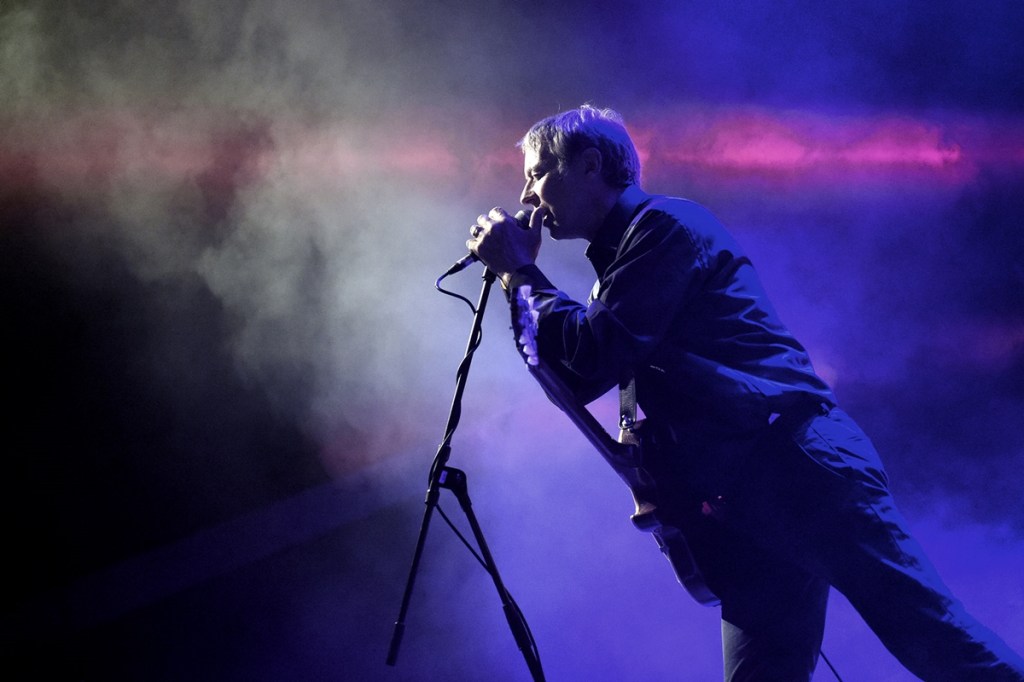
Interview: Mic Jogwer of Pink Turns Blue

Mic Jogwer of Pink Turns Blue, photo by Daniela Vorndran

Pink Turns Blue is one of the foundational bands of modern darkwave. When the group formed in Berlin, Germany in 1985 its blend of then New Wave and dark, moodier post-punk was in line with the fusion of those elements one heard in The Cure, The Chameleons, Comsat Angels and The Sound. The group’s first two albums If Two Worlds Kiss (1987) and Meta (1988) had a spacious and dusky vibe with undertones of emotional urgency giving expression to the on the brink tensions of that decade when the world seemed in a tenuous and conflicted state. Pink Turns Blue split in 1995 for several years before coming back together in 2003 after the post-punk revival was well under way and ahead of the darkwave resurgence of the 2010s and in some ways benefited from both as a cult band that had influenced connoisseurs of adjacent styles of music. In 2019 respected experimental and more or less darkwave label Dais reissued If Two Worlds Kiss and Meta and introduced a new generation to one of the still extant legends of German post-punk. In 2021 Pink Turns Blue released its latest record TAINTED with its decidedly political content as a critique of a human civilization bringing to bear a completely and utterly inadequate response to anthropogenic climate change and the political and economic systems in place that ensure future destruction to the world we took for granted in a kind of feedback loop of escalating devastation. The future climate scientists have warned about for decades is now here. But it’s not all doom and gloom and the music of Pink Turns Blue isn’t a nihilistic analysis of world events, the new record, as with previous efforts, offers poignant personal portraits of love and loss and the life experiences and connections to others that give our existence its essential meaning beyond our utility in some economic context.

Pink Turns Blue performs at the Hi-Dive on Thursday, September 15, 2002 with Radio Scarlet and Redwing Blackbird (doors 8 p.m.) and ahead of that date we were able to pose some questions to founding vocalist/bassist/synth player Mic Jogwer via email about the band’s origins, background, the content of its music and the challenges of operation as a band from Europe in the USA.

Queen City Sounds: Before forming bands what kinds of things did you see or experience that prompted you to pursue making music? Was Rockpalast a part of your youth in getting exposed to some of the more adventurous music as well as more mainstream faire?

Mic Jogwer: I have to honest and say that my love for music began very early when I was 8 years old. And also that my first heroes were The Rubettes, Sweet, Abba and the likes.

I started with trumpet at 9 and changed to guitar at 12 (Genesis, Pink Floyd), then bass with 14 (Santana). And so on. Blues, Rock and then Punk. It wasn’t before I started Pink Turns Blue when we got compared to The Chameleons and The Sound and we got listen to those bands a lot. On Rockpalast you would not find up to date bands very often. Rather the classics. Still watched and liked it a lot.

QCS: When Pink Turns Blue was starting out in Köln you won an award from WDR. As a fledgling band in what ways do you feel that the German government and local arts groups supported music?

MJ: Definitely not. At that time, if you were a German band you had to sing and sound German. Ideally not too serious. The WDR in Cologne was a rare exemption. The was this one guy who was very much into new music and was excited to find bands that were daring enough to reach an international audience.

QCS: Early in your career you toured with Laibach. How did that come about? How did you smuggle Western studio equipment across the border?

MJ: We were lucky that our label FunFactory! released an Laibach album in Germany and also booked a tour for them. Also, we were lucky that we were the only band in its roster that Laibach were ready to take on tour with them. They didn’t like our name or our appearance but very much loved our music. Also, because were quite intrepid bigmouths they offered to produce our next 3 albums if we smuggled studio gear across the iron curtain. We nearly got caught but were lucky again and they were really impressed and started to like and support us.

QCS: I read Burning Down the Haus by Tim Mohr a few years ago and as you may know it’s an account of the punk and underground music scene in East Berlin. Did you have interactions with and/or were you familiar with artists from that scene in the early days of Pink Turns Blue? If so how did you facilitate perhaps bringing those bands over or play shows there if that was even possible before the fall of the Berlin Wall?

MJ: No, sorry. Until 1989 it was impossible to get in touch with any of this East Germany bands. The first contacts were made in the late 90s. Some of them became famous in different formations (Rammstein) others vanished. And yes, we know some of them but there never was a common scene.

QCS: People who weren’t there might assume you were part of a scene and friendly with the likes of Xmal Deutschland, Malaria! and Einstürzende Neubauten. Did you feel like you had a sense of community with other German bands? How did that look for you in terms of operating and touring and supporting one another? If not, why do you think not?

MJ: We had a strong bond with Einstürzende Neubauten, because they were daring and innovative. We also had a loose relationship to Nick Cave and the Bad Seeds (then living in Hamburg and Berlin) and Gun Club, The Sisters Of Mercy, again because they were based and working in Hamburg and Berlin were spent a lot of our time. The relationship was more like: we are the kids and they were the grown-ups.

QCS: Pink Turns Blue split in about 1995 and reunited in 2003 before the resurgence of a fairly widespread interest in post-punk and “darkwave.” Did the “post-punk revival” of around the turn of the century play a role in helping to relaunch the band?

MJ: The relaunch was more like a short romance with your ex-wife. The post-punk revival brought a lot of fresh and very talented musicians and many of them liked Pink Turns Blue very much. Then we became the “originals” (the old guys), and they were happy to have us around. So we got invited to many festivals and tours where we met quite a few of them and were both impressed and encouraged to write new songs that were our version of the post post-punk.

QCS: Dais Records reissued If Two Worlds Kiss and Meta. How did it come about that you connected with Dais and what ideas were presented to you to approve making those records available again for potential new fans?

MJ: Drab Majesty was supporting us in Barcelona and mentioned that their label surely would be interested in signing us. So we got in touch with Gibby [Miller] and proposed that they released our first two albums as vinyl to support our US tour in 2019. We also planned to co-release TAINTED but Covid and the vinyl production disaster made everything too difficult. Hopefully, when everything kind of has come back to normal we can follow up on this.

QCS: Some people may be surprised by some of the very direct political content of Tainted but that’s been part of your music since early on. But in those lyrics there is both a challenge and a personal touch. Why do you feel it is important to address issues of climate change, inequality, global conflict in terms that seem so immediate and grounded?

MJ: Well, I think that topics like climate change and equality have become a really important issue for everyone. The last 5 years and especially the Covid years have put most of us in a state of disarray. And if you write songs that describe the world as you see and feel it it is only natural that those topics find their way into your songs. I guess – at least for us – those times where you were singing about your first drug experiences and feeling like an outsider as a young white male university student are over. Well, hopefully.

QCS: German artists have had a tough time touring for a variety of reasons. What might be helpful in facilitating this in the future other than imponderables like the world coming to its collective senses and addressing the aforementioned with reason and compassion? Are there practical things that maybe people can do to ease your journey touring North America?

MJ: I guess I have no idea. I guess we Europeans have our own insanity to get on top of. Not a good position to give advice to others. What I find encouraging is that many Americans and Europeans are able to make jokes about themselves. Wish it would be more of them. Still hoping that we all can inspire each other to try harder.
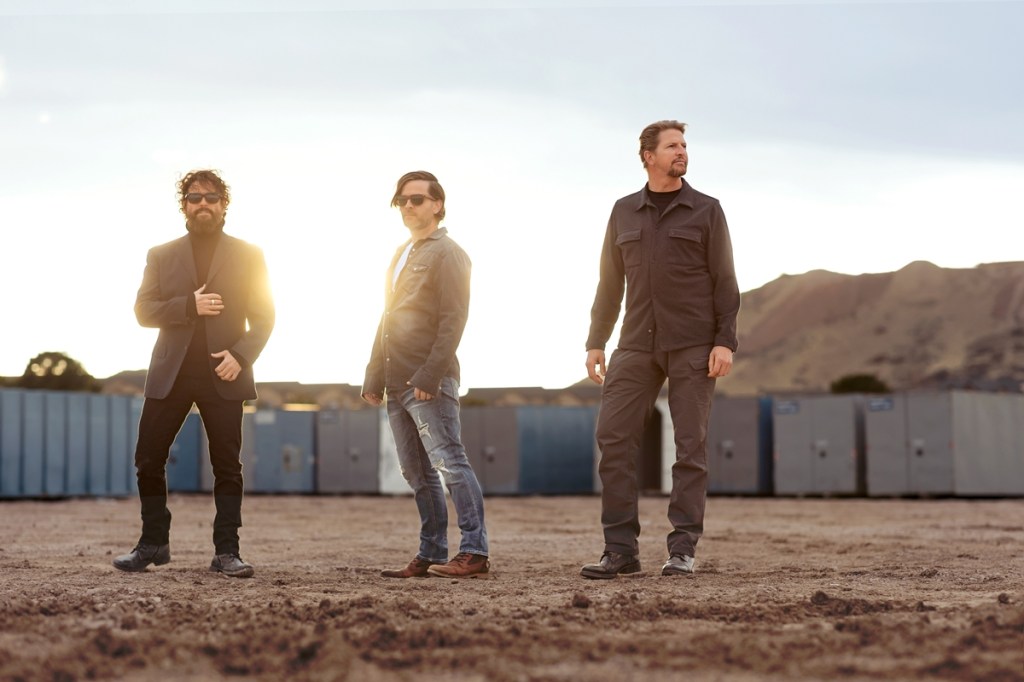
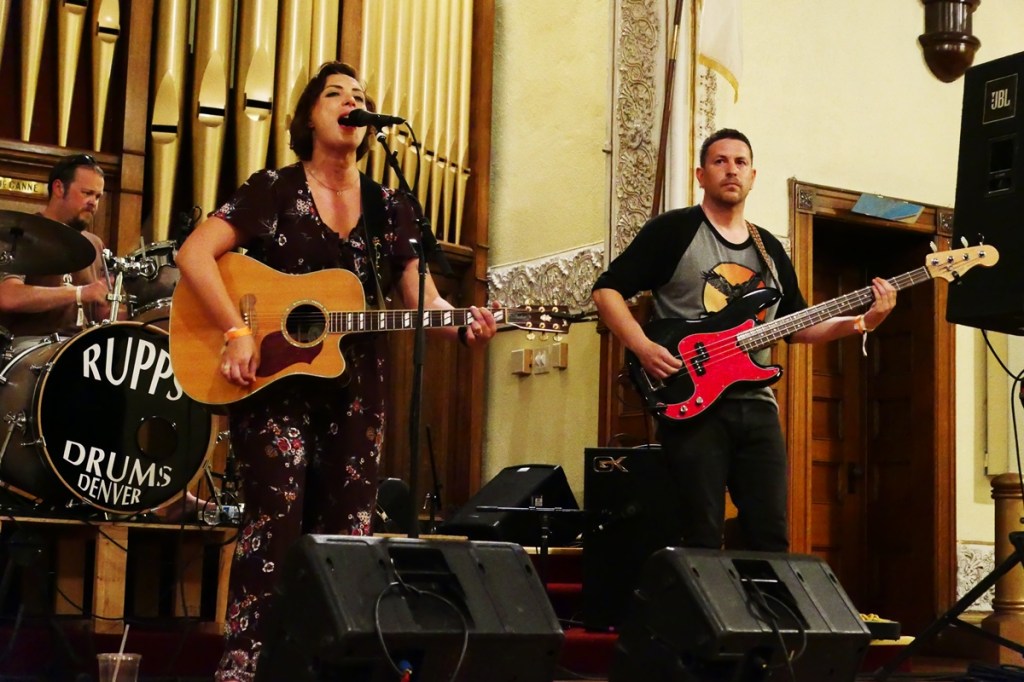
Queen City Sounds Podcast S2E2: Grayson of i.O. Underground

i.O. Underground, photo by Staci Zohlen

Boulder-based i.O. Underground is a modern rock trio that formed in 2018 and released its debut EP The Wonderside in 2020 around the time when all bands had their career in most meaningful senses put on pause much less a fairly new act like i.O. Underground. But the group came together among a group of veteran musicians looking to branch out of musical styles that had defined and limited their range of creative expression and the shutdowns of live music during the early part of the pandemic allowed for some woodshedding of songwriting and development of ideas and material for the 2022 EP The Underside. Lead singer/guitarist/bassist Grayson had come up through the New York underground blues and jazz scenes of the 1990s and 2000s having played the subways before one needed a permit to do so. Guitarist/keyboard player/bassist/vocalist Casey Kannenberg was part of the Chicago music scene before moving to Colorado and drummer/vocalist Beau Harding, from Boulder, was a touring musician with singer-songwriters like Jeff Brinkman and Lee Nestor. There is coherence to the way the musicians work together that speaks well to their use of cultivated chops in crafting affecting atmospheric rock songs that are clearly as informed by current sensibilities and production techniques as they are classic pop songwriting. There is some grit and some dark moods on the new EP as suggested by the title but it never gets mired in melancholic angst, more a catharsis after a prolonged period of feeling hemmed in by circumstances beyond one’s control and otherwise. The group has a practice space and occasionally performs at non-profit arts space Roots Music Project in Boulder where it had the EP release in July 2022, a fortunate circumstance these days when practice spaces aren’t so easy to come by and for Boulder having a place to showcase your music.

Listen to our interview with Grayson on Bandcamp linked below the video for “What U Do” and for more information on i.O. Underground and to give is music a listen please visit iounderground.com.

iounderground.com

Queen City Sounds Podcast Ep. 50: Chella & The Charm

Chella & The Charm at UMS 2018, photo by Tom Murphy

Michelle Caponigro grew up in La Crosse, Wisconsin where she honed her singing skills in school choir and moved to Denver in the late 90s after getting involved in the jam band scene. As a member of Purple Buddha for seven years she performed shows and on stages in that then and now very active musical world. But as is often inevitable personal differences arise and Caponigro parted ways with the band and learned to play guitar and write her own songs and found a bit of a niche on the indie and Americana end of the singer-songwriter milieu in Denver performing as Chella Negro. There are plenty of singer-songwriters in every city playing guitar solo or with a band in every city that has a music scene but Chella’s performances had an exuberance that was compelling on their own. But whatever the subject matter of her compositions there was a depth of thought and complexity of sentiment that brought a philosophical quality to her love songs and her songs commenting on culture and society. When Caponigro put together a full band and dubbed it Chella and the Charm around a decade ago the intelligent and heartfelt lyrics continued as the sound palette broadened. The most recent offering from the band is 2019’s Good Gal but look for a new EP by 2023.

Listen to our interview with Michelle Caponigro of Chella & The Charm on Bandcamp linked below and go see the band at Down in Denver Fest on Sunday, 8/21/22 at 9:30 pm on the Further Stage. For more information on the festival and on Chella & The Charm visit the links beneath the interview.

Chella & The Charm on Facebook

Chella & The Charm on Twitter

Chella & The Charm on Instagram

Queen City Sounds Podcast Ep. 49: Kurt Ottaway of Emerald Siam

Kurt Ottaway of Emerald Siam, photo by Tom Murphy

Emerald Siam has been running for nearly a decade in the Denvoid. The band was been lead by vocalist and guitarist Kurt Ottaway from the beginning but reflects a lifetime of influences and inspirations drawn from its collective membership. So the sound has a deep mood and melodies that are woven in with emotional expressions cast in poetic expressions in the lyrics and songwriting. To call it post-punk gives a potential listener a touchstone for what they’re in for with swarming and swimming atmospheres, fluid musical structures that burst in cathartic release orchestrated to dramatic effect minus pretense. Since the late 80s Ottaway has been part of some of Denver’s most vital rock bands beginning with Twice Wilted who were steeped in the creative energies of Killing Joke, Joy Division and the Jesus and Mary Chain as well as 60s psychedelic garage rock. Its colossal sounds and DIY ethos garnered a large following and the band had a brush with being signed to a major label before establishing its own Gift Records imprint with which it released the 1993 classic Ice Hex Fix. And the way of many of Denver’s best bands at the time, Twice Wilted split in 1996 with Ottaway headed to the Bay Area only to discover he didn’t quite belong there and he returned to the Denver area and founded Tarmints, a band stylistically drastically different from Twice Wilted but not in terms of intention to put together something of quality and originality. If you were fortunate enough to see Tarmints during its eleven years of existence you saw a band that defied easy classification and which demanded being taken on its own terms. Yes, blues, sure mutant punk Birthday Party and Gun Club sounds and attitude with some of the grizzled Laughing Hyenas-esque intensity and immediately enthralling songwriting with shows that lasted exactly as long as they needed to be meaning no drawn-out, self-indulgent sets. Tarmints hit the stage hard with incredibly energy and focus and left before you could ever be weary of being sonically grabbed by the throat and brought along for an irresistible emotional ride that felt like a mutual purge of the dark corners of the psyche where the anxiety and nightmare fuel of your mind dwell. During most of this musical journey Ottaway ran a number of DIY spaces going back to the 1980s in Upper Larimer, RINO, what is now the Santa Fe Arts District, downtown and Lower Colfax and encouraging people in the local scene to make something that could be mutually inspiring. In this interview we do not talk about Emerald Siam much at all but rather the early days from his youth in the 1970s up through about the early 90s when Twice Wilted was in high gear. Perhaps in future conversations to be shared in this podcast we will get into other stories of which Ottaway has hundreds and thousands.

Listen to our interview with Kurt Ottaway of Emerald Siam on Bandcamp linked below and go see the band at Down in Denver Fest on Sunday, 8/21/22 at 6:30 pm on the Further Stage. For more information on the festival and on Emerald Siam visit the links beneath the interview.

www.downindenver.com

Emerald Siam on Facebook

Emerald Siam on Instagram

Queen City Sounds Podcast Ep. 48: Gila Teen

Gila Teen, photo by Tom Murphy

Gila Teen is Hunter Wood and Aidan Bettis. They went to the same middle school in Lakewood but really met in high school when they started being in the same friend circles and formed their early bands at that time. After a bit of a hiatus and while in college the two musicians reconnected and started projects that some may have seen in and around Denver in the DIY scene and elsewhere like the folk punk groups Bear Face and Burgundy Church Wagon. But they started Bert Olsen in around 2017 though the roots of the songwriting for the band go back to 2011. In 2018 one could see Bert Olsen at a variety of venues and even early on it was obvious it was something different seemingly threading together disparate stylistic elements and creating something that has felt unique. One hears in its music the influence of emo, shoegaze, post-punk and electronic music. They played their final show as Bert Olsen in June 2019 opening for Church Fire, Rabbit Fighter and Natural Velvet at Lost Lake. Changing the name to Gila Teen and utilizing a drum machine, Wood and Bettis have leaned into any idiosyncratic style choices for the stage that occurs to them as well as songwriting instincts that have kept its sound fresh and unpredictable not fitting neatly into a specific genre. Its most recent release is the 2021 album Pain Vacation.

Listen to our interview with Gila Teen on Bandcamp linked below and go see the band at Down in Denver Fest on Sunday, 8/21/22 at 6:30 pm on the Further Stage. For more information on the festival and on Gila Teen visit the links beneath the interview.

www.downindenver.com

Gila Teen on Instagram

Queen City Sounds Podcast Ep. 47: Shadows Tranquil

Shadows Tranquil, photo by Tom Murphy

Shadows Tranquil began shortly after guitarist/vocalist Doran Robischon parted ways with indie rock/post-punk band Gauntlet Hair in 2012. Evolving musical ideas for the band over a few years and going through various incarnations of the band by 2018 and the group’s earliest shows Shadows Tranquil emerged as the kind of band that sure had its roots in atmospheric guitar work akin to shoegaze and post-punk but with an edge and deep and nuanced emotional expression that also brought together its members background and interest in extreme metal and progressive rock. What you see is a band that isn’t cookie cutter in style with layers of musical ideas that seem orchestral in conception but with an air of the spontaneous in execution. The elegance in composition and the tiniest of sonic details is impressive. The band’s forthcoming album Downward Flowers engineered by Erik Ryan at Decibel Garden is both melancholic and defiant, introspective and exuberant, reconciling a full range of human emotional instincts.

Listen to our interview with Shadows Tranquil on Bandcamp linked below and go see the band at Down in Denver Fest on Sunday, 8/21/22 at 4 pm on the Howl Stage. For more information on the festival and on Shadows Tranquil visit one of the links beneath the interview.

Shadows Tranquil on Bandcamp

Shadows Tranquil on Facebook

Shadows Tranquil on Instagram

Queen City Sounds Ep. 46: A Strange Happening

A Strange Happening, photo by Tom Murphy

A Strange Happening formed after Jake Adamson and Elisha Cox moved to Denver from Casper, Wyoming around a decade ago. In their new home city the couple became more immersed in the local music scene they had been able to witness in their trips down south to visit and catching some shows. Their musical project came together when drummer Matt McNiff moved to Denver from New York in 2014 and was introduced to Adamson through their then boss. They bonded over a mutual appreciation for Mr. Show. At the time Adamson was already recording bands and the musicians began their initial forays into making music before officially choosing a band name (one considered was Dirt Wizard, but A Strange Happening is not in fact a psychedelic doom band) and being prepared to play live shows in 2018. The group didn’t have a lot of time to get things off the ground before the pandemic took hold and hasn’t played many shows since those started being a thing again so if you haven’t had a chance to see them in Denver that’s a part of the reason why. But A Strange Happening did release its self-titled debut album at the end of 2021. It’s an indie rock concept album of a sort meant to reflect the aesthetics of 1940s and 1950s radio dramas with interludes and introductions to give context to the more modern sounding music and it includes a cover of “Snake Goddess (cover)” by Denver’s Zealot. The blend of noir and horror/thriller themes on the album lends itself well to an album that is creatively different from a lot of indie rock these days.

Listen to our interview with A Strange Happening on Bandcamp linked below and go see the band at Down in Denver Fest on Sunday, 8/21/22 at 1:30 pm on the Further Stage. For more information on the festival and on A Strange Happening visit one of the links beneath the interview.

www.downindenver.com

A Strange Happening website

A Strange Happening on Instagram

Queen City Sounds Podcast Ep. 45: Polly Urethane

Polly Urethane, photo by Tom Murphy

Polly Urethane is the performance moniker of Amber Benton. She started performing under that name in 2021 and garnered some attention in certain Denver underground music circles for her performance art style shows in which she breaks the stage and audience barrier pretty much every show at this point. Her music combines classical music in her piano work and operatic vocals, electronic composition, musique concrète and industrial soundscaping. In 2021 Polly Urethane released her collaborative album Altruism with Rusty Steve who some may know from his work in futuristic hip-hop glam project N3PTUNE. It showcased a shared knack for pop songcraft that fused darkwave, hyperpop, industrial and R&B. Though Polly Urethane’s presentation can be confrontational the intention is to shake up expectations and arbitrary norms of the performer and audience relationship and is informed by a spirit of humor and the absurd in the intensity and mysterious aesthetic of the performance.

Listen to our interview with Polly Urethane on Bandcamp linked below and go see the band at Down in Denver Fest on Friday, 8/19/22 at 9:45 pm. For more information on the festival and on Polly Urethane visit one of the links beneath the interview.

www.downindenver.com

Polly Urethane on Instagram

Polly Urethane on YouTube

Queen City Sounds Podcast Ep. 44: Pleasure Prince

Pleasure Prince, photo by Tom Murphy

Pleasure Prince is a soulful synth pop duo from Denver comprised of Lilly Scott and Will Duncan. The latter had been part of the Americana scene from Denver performing in Oblio Duo and other projects. Scott as a teen had spent time going to shows at DIY spaces and house shows seeing noise, other experimental music and the wide array of bands that performed at such places. In 2010 she auditioned for and appeared in the ninth season of American Idol and lived in Los Angeles for eight months before returning to Denver and forming Varlet, a jazz and Americana inflected indie rock band in which Duncan played drums. But that group parted ways around a decade ago and Scott and Duncan moved to New York City where they played clubs and other show opportunities throughout the city before deciding they wanted to be back in Colorado, returning at the end of 2019 just in time to discover how much the city had changed both culturally and in other ways that impacted being a musician in the Mile High City. Then the pandemic hit and Pleasure Prince had some time to incubate its creative impulses. While in NYC the band had acquired a number of synthesizers that shaped its current songwriting and while the duo’s gorgeously lush and evocative current music is a bit of a departure from Varlet and previous musical endeavors it reflects the core of strong songwriting Scott and Duncan have cultivated across several years as evidenced by a recent performance in which the songs had to be translated to a more or less non-electronic form. In 2022 Pleasure Prince released its new album Numbers.

Listen to our interview with Pleasure Prince on Bandcamp linked below and go see the band at Down in Denver Fest on Sunday, 8/21/22 at 8:30 pm on the Further Stage. For more information on the festival and on Pleasure Prince visit one of the links beneath the interview.

pleasureprince.com

Queen City Sounds Podcast Ep. 43: Moon Pussy

Moon Pussy, photo by Tom Murphy

Moon Pussy is a noise rock band from Denver. The trio met in and around the DIY/house show scene in Denton, Texas around a decade ago. Drummer Corey Hager had been in various bands including the Unwound-esque Last Men (a play on the title of the classic graphic novel series Y: The Last Man). Vocalist/bassist Cristina Cuellar lived in a house that threw shows but wasn’t an active musician until picking up bass to play with Moon Pussy. Ethan Hahn is from Denver and had played in various noise rock/art rock bands over several years before the personal and creative chemistry came together with Hager and Cuellar. After moving to Denver around a decade ago, the band didn’t fully get off the ground until a few years back when Moon Pussy made a strong impression among connoisseurs of music that might be challenging to people who would probably hate Big Black and The Jesus Lizard too. Cuellar’s eruptive vocals and the more intuitive rhythms and sonic textures that flow freely between band members and into the music sounds and feels like a catharsis of the anxiety, frustration and outrages that have become an ambient aspect of life in the modern world.

Listen to our interview with Moon Pussy on Bandcamp linked below and go see the band at Down in Denver Fest on Sunday, 8/21/22 at 2 pm on the Howl Stage. For more information on the festival and on Moon Pussy, visit one of the links beneath the link for the interview.

downindenver.com

moonpussy.band