Moscow Youth Cult’s Single “Low Vision” from Brutalist Evokes The Mystery and Strangeness of Sinoia Caves and Arthur Machen

MoscowYouthCult_Brutalist_cover_crop
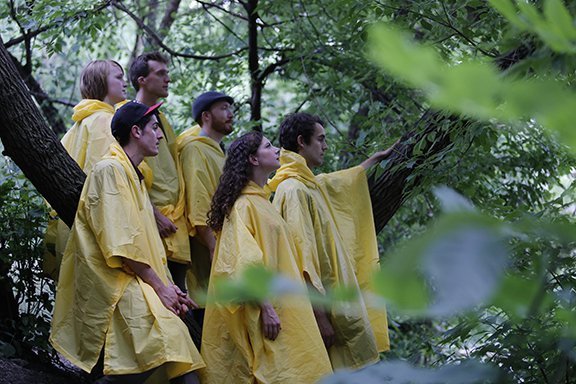
Moscow Youth Cult Brutalist cover

London-based Moscow Youth Cult’s music has been making its way into your subconscious through various routes including placements in Portlandia and the video game Saints Row IV. Its deep soundscape pop with unusually dynamic ambient elements more than captures the moment perfectly, it takes you on a journey through a psycho-tonal-emotional space that cleanses the dark places of your mind by the end. The duo’s third single “Low Vision” is like so much of the material found on the 2018 album Brutalist an engulfing listen that puts you through so many of the feels of this modern life from the peaceful to the intensely disorienting. Much as the architecture movement after which the album was named the music reflects the mood of looming totalitarianism that is more than creeping across the world and the utterly natural instinct to resist that tide with spirited creativity. Apparently the song was inspired in part by the writing of Arthur Machen, the literary figure whose fantasy and decadent fiction of the late 1800s proved influential on Lovecraft, Clark Ashton Smith and Stephen King. In the rush of sounds after passages of sonic reverie one perhaps hears the musical cognate of Machen’s epochal The Hill of Dreams. Fans of Boards of Canada and Sinoia Caves will truly appreciate the imaginative use of layered atmospheres and informal beats as well as the heightened sense of otherworldliness grounded in the ineffably familiar that informs this track in particular but also in the work of Moscow Youth Cult in general. Listen for yourself and delve further into the band’s compelling body of work at any of the links below.

soundcloud.com/myc
moscowyouthcult.bandcamp.com
facebook.com/MoscowYouthCult
instagram.com/moscowyouthcult

Ryan Jantz’s “Younger” Is a Refreshing Blast of Raw and Exuberant Indie Noise Pop

RyanJantz1_sm
Ryan Jantz, photo courtesy the artist

Ryan Jantz’s “Younger” is raw and lo-fi and a bit ramshackle but it suits the effusive spirit of the song and the sense of mild confusion. That there are a couple of major changes in tone and pace in a song less than a minute and a half long is interesting on its own. The song shifts twice in mood from one of a kind of Beat Happening-esque inspired amateurism to a Siltbreeze-period Times New Viking frantic, fractured melody. Which is to say it might be off-putting to someone looking for their bedroom pop to sound safer and more conventional but anyone with a taste for the indie pop noise punks from around the turn of the last decade will find this a pleasant surprise at a time when a lot of bands are trying to sound pro, imitating a popular production style rather than aiming to sound utterly like themselves.

Sonia Stein’s “London Used To Be So Cool” Shows How to Move On With Grace

“London Used To Feel So Cool” is a song most people can relate to, especially anyone who has moved to a new city or become part of a new social circle where the charm and magic of the new setting for significant experiences is intermingled with new friendships and a new intimate relationship that put their stamp in your mind about what the new place represents to you. And the feeling of clouded associations when that relationship ends and friendships change thereby. Written as a paradoxically melancholy and upbeat R&B song, “London Used To Feel So Cool” seems to articulate those mixed feelings with a clarity that anger and despair would warp. Stein doesn’t sound resigned to the reality so much as conveys the sense that she’s choosing to feel it all and move on even if the specter of the past may linger. To follow Stein’s work further click on any of the links below.

soniastein.com
open.spotify.com/artist/5ct2WFb5gFMXAntFsAwA0y
facebook.com/soniasteinmusic

“Tensions” by Jess Spahr is an Upbeat, Downtempo Song About Confronting Misogyny

JessSpahr_1
Jess Spahr, photo courtesy the artist

Jess Sparh’s song “Tensions” is upbeat and has an unconventional momentum and energy with fantastic textural elements in the percussion all buoyed by Spahr’s bright and expressive vocals. Fans of Goldfrapp will find much to like about this song as it has a similar ear for sonic detail and architecture. It’s also a song about Sparh’s experience with sexual harassment and a poetic and sensitive treatment of a subject that though very much in the news after years of not being treated with the appropriate level of seriousness it deserves. But with the help of producer friend Luke Cara or Caravana Sun, Spahr channeled those feelings into a song in the grand tradition of taking a negative experience and making it relatable and palatable without trivializing the real life events and their emotional consequences for the artist and far too many people who share memories of similar transgressions and worse. Listen below and follow Spahr at any of the links after.

facebook.com/jessspahr12

instagram.com/Jess.spahr

youtube.com/channel/UCPwoA2agohseUydXUw9NIpQ

open.spotify.com/artist/5W6qtqPHwrSmG5RbCiFeUQ?si=6xSVi_k0RjWgDWmTJbkAcQ

itunes.apple.com/au/artist/jess-spahr/1326029219

soundcloud.com/user-802252136

triplejunearthed.com/artist/jess-spahr

With “G-d knows what” Nervous City | Nervous Self Strikes a Charming Note of Hope in Uncertainty

NervousCityNervousSelf1_sm
Nervous City | Nervous Self, photo courtesy the artist

David Josephson may want to be Sweden’s own Leonard Cohen—quite a lofty goal. But with his debut English-language release “G-d knows what” as Nervous City | Nervous Self he does strike soft tones of articulating a hopeful uncertainty. With some self-deprecating poetry and lush production he sounds like an indie folk New Order including some nice mini cascading drum line to accent a song transition and melodic, expressive bass lines and lonely piano. With the song it would be misplaced to say Josephson is on his way to being the Swedish Cohen but he is a songwriter of note who might be on his way, for now, to being the Swedish John Grant. Check out his amusing and utterly fitting video below and follow Nervous City | Nervous Self at the links following.

soundcloud.com/nervouscitynervousself
open.spotify.com/artist/2qpVMtQelQapuqa7jY1I0j
facebook.com/nervouscitynervousself
instagram.com/nervouscitynervousself

Kepa Lehtinen’s “Helsinki in November” is a Haunting, Intimate and Cinematic

KepaLehtinen2_sm
Kepa Lehtinen, photo courtesy the artist

“Helsinki in November,” the title track from Kepa Lehtinen’s new album, has a spare elegance that one senses from the films of Ingmar Bergman and Carl Theodor Dreyer combined with an otherworldly, haunted quality one senses in German expressionist cinema. The use of Theremin as a compositional instrument hovering on the edges of the piano melody and contrabass enhances these impressions of starkly and strikingly beautiful black and white imagery and a time when most human communication was done face to face. The latter suggested by an intimate tenor to the song as well. With years of experience composing for film, television and commercials, Lehtinen brings his talent for setting a mood quickly and effectively with his work for the new album and especially its titular song. Listen below and follow Lehtinen on his Facebook page (link after the song).

facebook.com/helsingin.aaniraita

“What If” by BERG Tells Us That it is Better to Live in the Present Tense Than in a Shroud of Wishful Thinking

Berg1_sm
BERG, photo courtesy the artist

“What If” by Swedish songwriter BERG (Alexandra Berglöf) sets a wistful, nostalgic mood with ethereal harmonic layers that seem to drift with and over each other to serve to highlight vocals that seem to wander through a hazy dreamscape. Produced by The Horrors lead singer Faris Badwan, “What If” sounds like an attempt to escape into the reverie of times past but instead serves as a reminder that doing so can be poison to the psyche however sweet and soothing the feeling at first. The seduction of an imagined better past or future while ignoring the present is a common maladie of the current era with the world more than seemingly rushing into destructive disarray. “What If” tells us in its subtle ways that the present is good enough and that the work to address our bad habits individually and collectively, with compassion and conviction, will feel better in the long run. The song is part of BERG’s new collection of songs called “Fake Love” and you can listen to the single below and follow the artist’s work at the links at the bottom.

www.thisisberg.com
soundcloud.com/thisisberg
www.facebook.com/isthisberg
http://instagram.com/berg

Josie Dunne’s Alternate Version of “Same” Displays a Gift for Using Simple Elements to Express Complexity of Feeling

JosieDunne_Same_Image_sm
Josie Dunne, still from “Same”

The ukulele can be a played out affectation these days but Josie Dunne has made it into a vehicle for setting the perfect sonic accompaniment to nuanced, mixed emotions. It helps to render the melody luminous alongside her gentle vocal cadences and taste synth like a breeze one imagines the figure in the video would encounter on her ride to sort out her thoughts and feelings on a nice day when peace of mind allows the room for exploring your real feelings rather than what you think they should be or what you’re told they should be when you can take the luxury of getting outside your usual contexts and confines. The simple elements come together so well including the video in which nothing seems to happen that it highlights Dunne’s tenderly thoughtful lyrics. The original is a solid pop song but this alternate version of “Same” is striking. Watch/listen to the video below and to keep up with Dunne you can visit her website josiedunne.com and find her through the usual social media channels.

Mazeppa’s “Storm” Evokes the Grandeur of Maurice Jarre’s 1960s Soundtracks

Mazeppa1_sm
Mazeppa, photo courtesy the artist

From the opening strains of “Storm” by Mazeppa you can tell you’re in for something different from the realm of modern psychedelic rock. The instrumentation and sweeping dynamics is cinematic in a way reminiscent of Scott Walker’s solo albums Maurice Jarre’s soundtrack work for Lawrence of Arabia and Doctor Zhivago. It is not in that long form but the creative vision behind the track is aiming for something more than just a four minute fifty-six second psych rock song. The rich emotional colorings and the impression that you’re getting a glimpse into more mythical human experiences. Side note: Maurice Jarre is the father of synth pioneer Jean-Michel Jarre. The Israeli band named itself after a Lord Byron poem about the Seventeenth Century Ukrainian leader Ivan Mazepa so there’s bound to be a bit of myth making and grander than average storytelling. That and the fact that singer/musician Michal Perez Noy started the group to write songs by Rainer Maria Rilke. None of these details and speculations are necessary to appreciate the lush gorgeousness of the song that seems to sound timeless in a period when there is a lot of imitation in psychedelic and modern progressive rock and few as orchestral as Mazeppa. The group is planning for a debut album release in September 2019 but for now you can sit back and let your imagination engage with “Storm” below. Links to follow the band its goings on below the song embed.

youtube.com/channel/UCDvEt7UN4sSojx_UKyqiVpw
mazeppa.bandcamp.com
facebook.com/MazeppaBand

Prudence’s Elegant Melancholy Incandesces in the Emotional Fog Through “Sound of Your Voice”

Prudence1_crop
Prudence, photo courtesy the artist

Tom Crandles (also of Au.Ra) has been writing music under the moniker Prudence of late. The new single “Sound of Your Voice” from the Major Tom EP has an utterly entrancing decadent, world-weary quality reminiscent of pre-post-rock Mark Hollis with Talk Talk and Mindbomb period The The. The subtle bass line works to accent the downbeats in a way that gives the song a heaviness that could be gloomy but instead accentuates the emotional complexity of a song that seems to be about resignation at thwarted yearnings and a rare admission of male vulnerability in a rock song. The rest of the EP has a similarly beautifully melancholic quality but an undeniable crackle of energy underneath a layer of introspective moods. The Major Tom EP recently released as a cassette and digitally through prudenceprudence.bandcamp.com/album/major-tom. If you’ve been a bit jaded by the wave of same-y darkwave and minimal synth-laden post-punk but looking for something that satisfies what the best of that music supplies, listen to “Sound of Your Voice” below and then give Major Tom a good listen. Its richness of layers, textures, tones and modes will not disappoint.