Adult Programming’s “YR FAULT” is a Frantic Yet Light-Hearted Rebellion Against the Excessive Demands of Late Capitalism On All Aspects of Our Lives

AdultProgramming_YR_FAULT2_crop
Adult Programming, photo courtesy the artist

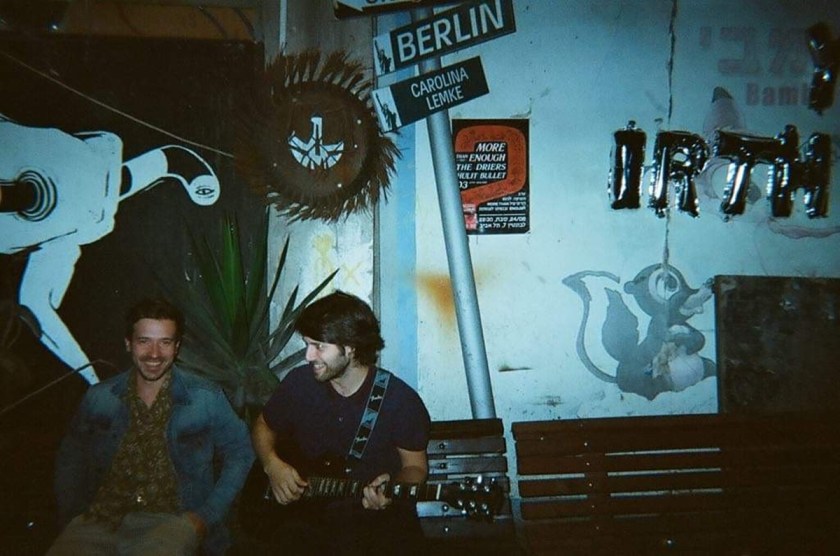
The frantic pace and splayed dynamic of Adult Programming’s “YR FAULT” captures the demands of modern life in their seeming ability to pull us in all directions. Nothing we do is enough, no sacrifice is too much for a job or being an adult (or a kid, let’s be real), no effort is too much and if you want some time to yourself or falter in the avalanche of your responsibilities then you only have yourself to blame who cares if the structure of society, its culture and its economic system grinds you under as a mere human. When the information economy and technology can permeate and reach you in all areas of your life, when you are accessible and essentially on demand, most of your day, it wears thin and it’s natural to want to rebel against this turning of self into product. The music is a mix of hectic Faint-esque post-punk and 80s synth pop fueled by nervous energy. Best of all, the song commands but doesn’t demand too much of your time at two and a half minutes. Watch the video for “YR FAULT” on YouTube.

“Cerro” by TROVA Smooths Out the Angst and Apprehension in Your Mind With its Flow of Cool and Tranquil Drones

TROVA_Cerro1_crop
TROVA “Cerro” cover

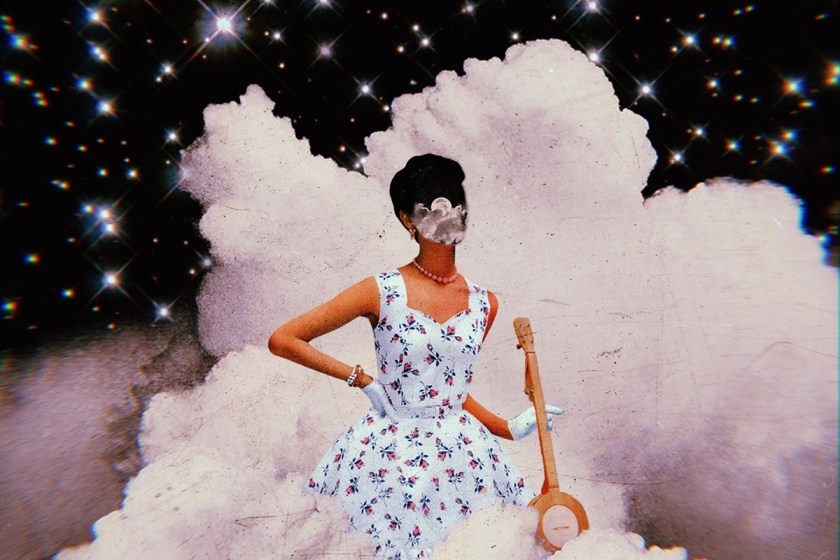
TROVA’s first single of 2020 “Cerro” rewards your patience as the song develops from a quiet flow of melodic drones like the fingers of the sun through fading storm clouds at dawn. The strands of sunlight poke through breaks in the cloud cover as the orb climbs into the sky while the world remains still from nocturnal inactivity. But the sun doesn’t compete with the clouds, rather works with and through them as the skies rain down intermittent sprinkles through the day to bring with it a sense of peace and tranquility accented by moments of sunshine to signal the storm system of the night before is moving on and the promise of a bright day ahead sets in. The mix of shadow and light as embodied in this song puts one in a reflective mood as its tones and textures flow through your mind to smooth out angst and apprehension to make way for clarity and resolve to go into the future with a clear head. Listen to “Cerro” on Bandcamp and follow TROVA at the links below.

music.apple.com/us/artist/trova/59287114
soundcloud.com/user-487741800
open.spotify.com/artist/5pOnm9kSmgcipVGbvyVknv
twitter.com/TROVAOfficial
facebook.com/TROVA.Ambient
instagram.com/trova.official

Sarah Jackson-Holman’s Un-Self-Conscious Love Song “Candy” is Like an Indie Cinema Homage Early New Wave Music Videos

SaraJackson-Holman_Candy1_crop
Sara Jackson-Holman, photo courtesy the artist

Sara Jackson-Holman shot the video for “Candy” on an iPhone in the hotel room in Yucca Valley one evening with her husband to give the making of the video the same intimate quality of the song. From the visual effects of the title and color bars to the visual tones the video looks like a far better than average home movie shot on VHS. Jackson-Holman’s breathy vocals are reminiscent of a mix of Emma Ruth Rundle and Julee Cruise. Lush atmospheres hang around the edges of the melody, swelling with the cadence of the lyrics, accented by minimal percussion. There is an off-the-cuff quality to the editing of the video in how it begins more traditionally but ends without a resolution of the action like a lot of early 80s, New Wave music videos. That aspect of the video and the song sync well as this song is like one love song in what could be a larger narrative but works well on its own. Watch the video for “Candy” on YouTube and follow Jackson-Holman on Spotify.

Anil Macwan’s Jubilant, Synth Pop Anthem “Champagne Problems” Honors Everyone’s Everyday Struggles

AnilMacwan3_sm
Anil Macwan, photo courtesy the artist

Anil Macwan draws heavily on a broad swath of 80s synth pop music for his single “Champagne Problems.” Using that palette of sounds from synths and drum machines with processed guitar Macwan gives us a song about how everyone’s problems probably seem quaint to someone who has it relatively worse but how we all live our own lives and our everyday struggles are unique to our life circumstances and it’s just inhumane to expect people to have to imagine someone else’s life experience in daring to have an emotional reaction to events in their own. It’s a song that in the end encourages people to live in the moment regardless of what their life might be like and to feel in that moment and live through it and honor one’s feelings. Sure, Macwan sounds like he is dipping into the vibe of early Talk Talk, Depeche Mode and Howard Jones but what elevated all of those artists beyond disposable pop was an inventiveness in composing electronic pop songs with a root in richness of feeling and that is true of Macwan’s song as well. Watch the video for “Champagne Problems” on YouTube and follow Macwan at the links below.

anilmacwan.com
soundcloud.com/anilmacwan
open.spotify.com/artist/2aFUr2oavY5SKWwi3X1rsY
youtube.com/channel/UC94XxJ2D4a06IYwGbBDNSiw
instagram.com/anilmacwan

Rachael Sage Explores What it Really Means to be a Person of Integrity and Quality on “Character”

RachaelSage_Character1_crop
Rachael Sage Character cover

The title track to Rachael Sage’s 2020 album Character comes in with a mild sense of menace established by strings and distorted guitar and an inquiry about what it means to have character and what goes into establishing that quality with any meaning. The minor chord progression on the guitar is reminiscent of Bauhaus’ “Bela Lugosi’s Dead” and with the violin arcing over the top and giving the song a touch of elegant moodiness. All while Sage’s strong, breathy vocals delve further into the subject and how people can put on what they like to project as character to hide their sharp edges and cruelty and when maybe empathy and sensitivity is more integral to having character than being willing to harm and being what some might think of as being tough but is in the end more like sadism. Maybe character, in this song, is being able to weather the harm and remaining a good person in a real sense rather than in the more performative aspect. A dazzling blend of grittiness, soulfulness and atmosphere, “Character” like the rest of Sage’s record sticks with you long after the song is over. Listen to “Character” no Spotify and follow Sage at the links provided.

rachaelsage.com
soundcloud.com/rachaelsage
open.spotify.com/artist/7EedWEoxpzbiPNkqkDp3Vw
youtube.com/user/rachaelsage
twitter.com/rachaelsage
facebook.com/rachaelsagepage
instagram.com/rachael_sage

“Vampire” by Laya Laya is a Song About Wallowing in Abstract Fantasy Pining For a Love That Will Never Be

LayaLaya_Vampire1_crop
Laya Laya

Laya Laya’s “Vampire” is written from the perspective of a Vampire waiting for love. Its bright, rising tonality and luminous tone swells give the track a lush quality in which the vocals sit well fantasizing about a love that exists in the heart as a vague quantity to aspire to the way someone will crush on someone they’ll never talk to but build it up as this beautiful thing that could be if only. It’s a lushly gorgeous song but one that has a hermetic quality the way the aforementioned fantasies can have when there’s no reality to bring it into focus or question its validity or the fantasizer’s attempts to make it real when that would ruin the ideal of something that can never really be. Like the vampire being in love and then one day having to make a meal of that love. It’s just not going to end well without a lot of change happening from within first. Listen to “Vampire” on Soundcloud and follow the London-based duo at the links below.

soundcloud.com/layalayaworld/both-s
instagram.com/LayaLayaWorld

Jaguar Jonze’s “Rabbit Hole” is a Lively, Subversive Pop Song About Gaslighting

JaguarJonze_RabbitHole1_sm
Jaguar Jonze, photo courtesy the artist

Visual artist and musician Deena Lynch uses her creative work to enter into dialogue with others and her own subconscious mind, transforming the dynamic of the engagement of art and the creator and others experiencing the work. As Jaguar Jonze, Lynch has been making experimental pop songs with a theatrical performance element as evidenced by her music video for “Rabbit Hole.” The lyrics could be able what it’s like to be on the delivery end of a manipulative personality that works to undermine another person’s sense of self while making themselves an enticing center of attention. In the video Lynch looks like she’s in some kind of psychiatrist’s office surrounded by yellow painted walls. It recalls Charlotte Perkins Gilman’s 1892 short story “The Yellow Wallpaper” which today might be interpreted as being about gaslighting as a means of social control of women. Lynch seems to be breaking down as the lyrics progress as though she herself is singing the internalized oppression to herself. This contrasts with the fact that she’s speaking to the truth of that narrative and its effects in the context of a lively pop song that wouldn’t have been out of place in the catalog of Garbage and at times Lynch’s vocal inflections are reminiscent of those of Fiona Apple. Taken alone the song, if one takes in the lyrics, is a catchy yet unusual bit of pop songcraft but when given the visual context it takes on a greater meaning and hits a much more powerfully. Watch the video on YouTube and follow Lynch’s various creative endeavors at the links below.

Jaguar Jonze (Music)
www.jaguarjonze.com
www.instagram.com/jaguarjonze

Spectator Jonze (Visual Art)
https://spectatorjonze.com
www.instagram.com/spectatorjonze

Dusky Jonze (Photography)
www.duskyjonze.com
www.instagram.com/duskyjonze

Tomike Smoothly Makes the Case for Sticking With Your Values and Ethics on Electro-R&B Track “Need to Go”

Tomike_NeedToGo2_crop
Tomike, photo courtesy the artist

Tomike addresses an issue most people have dealt with in some fashion in their lives on her single “Need to Go.” The track, a follow up to her 2019 EP Stage of Love, is about finding yourself where you think you want to be only to find you are not around people like you, not around people who really even understand where you’re coming from or who can relate to your values. In her specific case, Tomike was inspired by her experience of being a graduate of law school with the corporate world ahead and potentially a lucrative career but one where you end up maybe using your knowledge and skills toward ends that don’t fit with your morals and ethics. The lushly electronic R&B song flows with seemingly effortless grace as Tomike’s gently soulful vocals lay out the scene and addressing issues of race in a way that honors her specific experience while universalizing the struggle with setting aside the path that would seem practical and which you’ve worked your whole life to attain only to find maybe it isn’t what you thought it could and would be. It’s a dilemma but one that Tomike makes seem not so difficult in the end by deciding to exit the scene that would force her to compromise not just her values but herself. Listen to “Need to Go” on Spotify and follow the Irish singer-songwriter at the links provided.

open.spotify.com/artist/1kETB3sIaKJ2uuC9xb6eCI
twitter.com/xoTomikexo
instagram.com/tomike_j

Carley Sunn Eviscerates Power Tripping Narcissists on “How Many Horses Do You Have?”

CarleySunn_HowManyHorsesDoYouHave1_crop
Carley Sunn “How Many Horses Do You Have?” cover (cropped)

“How Many Horses Do You Have?” finds Carley Sunn dipping into a glimmering, bass and synth driven 80s-era synth pop/new wave post-punk sound, like maybe the songwriter was taking in a lot of The Sound’s middle era, Sparks and early Wall of Voodoo. Maybe Sunn was into Echoes period The Rapture too or Les Savy Fav. What gives the song an interesting dichotomy is like all of those bands there’s the bright, melodic atmospheric element paired with an emotional intensity to the vocals. The story of the song is about a power tripping hypocrite who seems to have taken all his manufactured success symbols of proof for his validity as an authority figure. “How many damsels have you saved? How many pirates have you killed?” the vocalist asks in mockery of the faux heroics and the title of the song taking that dig even further. One only imagines the exact inspiration behind the song but we’ve all been in situations where someone in our lives seems to have so much power over us for a while, always entirely too long, and they seem to get a thrill out of their ability to control us and manipulate us thinking we don’t see through them and that their power will last forever when it never does. Listen to “How Many Horses Do You Have?” on Spotify and follow Carley Sunn on Instagram.

Ellie Moon Masterfully Walks the Line Between Exuberance and Insouciance on “Indecisive”

EllieMoon_Indecisive1_crop
Ellie Moon “Indecisive” cover (cropped)

Ellie Moon’s video for “Indecisive” looks like something she might have shot for Instagram stories post with the minimal effects and cartoon-y lettering. She looks so over it until she engages directly with the chorus of the song where her animated dancing matches the uptempo moments of a song in which she explores the myriad choices that seem to be imbued with importance and the quandary of struggling to choose between every decision for everything in one’s day with competing demand affecting seemingly everything you do. “I used to be indecisive but I’m not so sure” is the key line to the theme of the song but one thing that doesn’t seem so tentative is the way Moon seems to effortlessly blend styles from a Herb Alpert horns-inflected indie pop by way of Red Pony Clock to a relentlessly upbeat, sweeping melody and a paradoxical mix of exuberance and insouciance. The contrast between these modes and moods gives what might otherwise be a solid pop song some creative depth that isn’t common enough. Watch the video for “Indecisive” on YouTube, follow Ellie Moon at the links below and look out for her forthcoming EP Moonisms due out in 2020.

instagram.com/thisiselliemoon
facebook.com/thisiselliemoon
twitter.com/thisiselliemoon