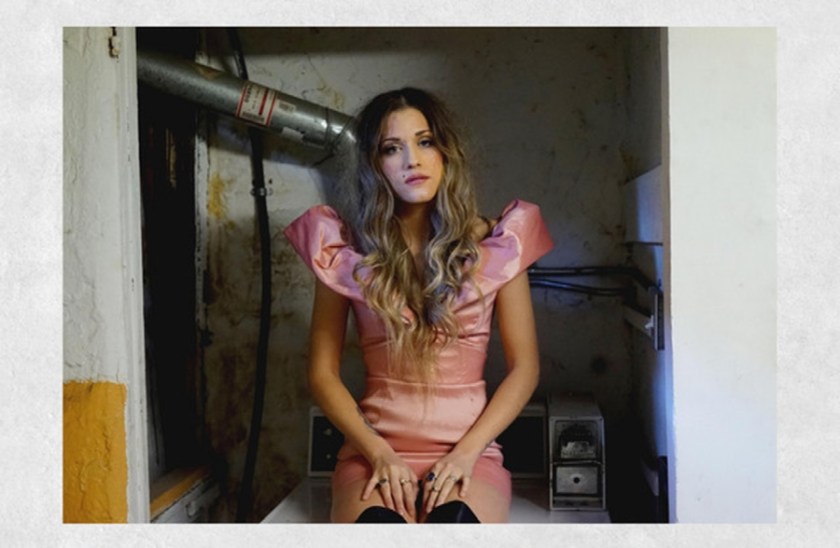

Alex Musatov layers various violin techniques, samples and a beautiful falsetto in the composition of “Deep Water.” Plucked violin traces the meter, legato violin establishes more than one drone and rapid bowing establishes an urgent dynamic later in the song—all showcasing Musatov’s imaginative command of the instrument and its possibilities. At times the violin sounds like a synth especially when it syncs perfectly with his vocal tones where the two sounds blend together in the headiest moments of the song. Another violin part all but replicates the speech of sea birds and dolphins in the background alongside the sample of flowing water. The overall effect is cinematic and a fascinating accompaniment to a song that appears to be about getting in over one’s head with ill-advised conceits and deception and being overwhelmed by the consequences thereof in the end. Listen to “Deep Water,” from Musatov’s debut solo album Songs From Another World, on Spotify and follow Alex Musatov at the links provided.
Multimedia artist Katan’s song “It” sounds like the chill outro music at the end of an epic fantasy video game or for a safe zone, save point where one can replenish and take a break from the action. Its bright synth melody and processed vocals convey a sense of wonder and tranquility. It’s a song seemingly about the search for meaning and how that meaning finds you and learning to trust your instincts. Maybe Katan didn’t use a circuit bent Famicom to compose the music but that sort of chiptune aesthetic informs the songwriting with the tones cycling from high to low in an effervescent contrast throughout with staccato arpeggios of rhythm and an almost percussive approach to the main melody. The song feels like you’ve attained something and you’re getting some time to bask in that achievement after a long series of challenges and struggles. Given the multiple crises wracking the world in this first half of 2020 “It” is striking the perfect note to untangle at least a bit of that angst. Listen to “It” on Spotify and follow Katan’s video work on YouTube.
Kate Vogel uses the metaphor of the weather for struggling through tough times on her single “Rain.” With an intricate guitar figure and a doleful tone intermittently swelling and fading in the background, Vogel sings about the conflicting internal and external messaging about where she comes up short and how that affects her sense of self and who she is. Maybe the song isn’t about being in a state of depression but it does capture the sense of how every little setback emotionally feels like a disaster and you feel precarious and tender and when you can have a period of peace you feel like maybe you can make the effort to better your life one of those setbacks will put you into a bit of an emotional tailspin. But the tenor of the song is not in one of those heightened states of anxiety, it’s in the lower point when you can remind yourself to be patient and do your best to make the best of what seems the worse. The line “Don’t know when those storm clouds will roll away, but til then I’m just dancing in the rain” embodies the fragile grace one is best served with maintaining while the emotional storm is going on and often it is just enough. Listen to “Rain” on Spotify and follow Kate Vogel at the links below.
Swedish duo Kite’s track “Tranås/Stenslanda” begins like the elevated, even majestic, music for the introductory ceremony of the ice skating portion of the Olympics. Synths like great sheets of wind flow behind the vocals, evoking images of a performer ringed in light singing to the heavens. The bright drones and tonal accents matching those of the percussion augment a sense dramatic. But the song is in the end a kind of introspective, bittersweet look back on years spent coming of age in a small, rural setting dreaming of a escaping to a life of one’s own away from the real and imagined limitations of home even as one’s personality and to some extent one’s character was shaped by those early experiences. The song seems to celebrate in its melancholy fashion that time when those dreams of transcending the context of your circumstances and yearning for things that seemed so beautiful and desirable even though maybe once you got away you find aren’t as romantic in the living of it that you once thought. But there’s no denying the attraction of having genuine aspirations and something to draw your imagination out of everyday mundanity. Listen to “Tranås/Stenslanda” on Soundcloud, watch the music video directed by Marcus Malmström on YouTube and follow Kite at the links provided.
MEYY sounds like she wrote and recorded “Common Love” in a secret hideout after two in the morning. Her breathy vocals and hazy vocal samples drift in a flow of gentle tones and drones over a shuffling beat of processed electronic percussion. It’s a dreamlike song that envelops you in a warm embrace evocative of its sentiments of love described in poetically sensual terms urging her lover to come closer and more. The song is an unabashed expression of passion and lust but one that makes it seem like something easy and natural and enticing. In another era the song might be considered downtempo but its composition bears all the hallmarks of the production style where hip-hop and deep house meet to create irresistible soundscapes that stir the imagination and the body. Listen to “Common Love” on Spotify.
Phantogram’s single “Pedestal” from its new album Ceremony finds the band reigning in the brashness of what made some of its earlier material so noteworthy. It begins with a tone of reflection that unfurls into the dramatic, sweeping, evocative soundscapes that is one of its signature songwriting dynamics. The duo has also been skillful in writing a pop song that has much more nuance and dimensionality in its lyrics than might be assumed with how elevated in tone the songs often are. With “Pedestal,” Phantogram writes what might be called a post-love song. Most love songs hit us over the head with declarations of eternal and perfect love or in those more worth listening to the struggles of being in love with someone. This song addresses what the consequence of that kind of love might have for someone once the luster has dulled. “Cause I was in love with you/Is that what you’re supposed to do/When I put you on this pedestal/Is that what you’re supposed to do,” Sarah Barthel sings in the choruses, making questioning all aspects of the union in simple but direct lines. Though there is a resigned aspect to the mood of the song and of the lyrics there is a recognition of there having been something, some passion, but that in the end without a deep understanding and existing in a similar realm emotionally that one’s idealistic view of another person is not enough to sustain the relationship. When she sings “I could walk away or stay either way I’m giving up a fight,” it seems as though Barthels, or the perspective of the song, is saying that she’s not putting any more energy into what seemed so real and powerful but was an illusion she’s ready to give up. At the start of the song there is a hint of hope if the object of the song is willing to open up and trust but try as you might you can’t change someone. And yet, “Pedestal” doesn’t sound like a downer, it sounds like a song wherein in someone finds their own light to move forward and sometimes that light comes in the form of learning to accept what is and give up struggling against it. Listen to “Pedestal” on YouTube and follow Phantogram at the links provided.
“Delete” by magnetic ghost is a song about today’s mediated world and how the digital medium has increasingly become integral to the lives of everyone with access to the technology and the internet. Whereas the latter was perhaps initially a way for people to connect with others in a way that helped some of us feel not so alone it these days has been shown to amplify a sense of isolation and self-alienation and some people suggest it is a method of mass behavior modification. The soft swells of drone and melody driven by a gently strummed guitar and nearly falsetto vocals strikes a thoughtful, comforting, tender chord reminiscent of a blend of Radiohead and Legendary Pink Dots. But the song isn’t comforting so much as seeking whether or not all of this relatively new way of being serves us, or we serve it, whether its warping our ability to imagine and thus to understand ourselves and others on a genuine and profound level rather than mistaking an accumulation of mediated presentations and experiences for an identity. Magnetic ghost offers us no answers but asks interesting questions. Listen to “Delete” on Bandcamp and follow magnetic ghost on Spotify as well.
There’s something oddly familiar to Classy Joanzy’s single “Brokedance.” Like the melody of Queens of the Stone Age’s “Better Living Through Chemistry” channeled through the lens of T. Rex and modern psychedelic pop. Some gentle guitar strumming, spare percussion, phase-y, near falsetto vocals and expertly accented, melodic bass. With the latter, though, is where this song sets itself apart because it sits in the mix with some creative, hard panning and if you listen with headphones or a decent sound system/sound card each note of the bass arpeggio hits on a different side of the stereo frequency giving the song not just a unique sonic dynamic but also an unconventional musical complexity that is intricate but not too busy. When many bands aiming to give a song a dance rhythm aim for what’s been done a million times better by other artists essentially borrowing funk and disco beats, Classy Joanzy gives us something different and dance-worthy. Listen to “Brokedance” on Soundcloud and follow Clazzy Joanzy at the links below.
There a sense of urgent menace to Violent Vickie’s “Serotonin.” The distorted synth loop, the crunchy guitar drone, the insistent beat, darkly plaintive vocals sound like something straight out of the depths of the darker corners of American urban decay of the 90s and early 2000s before developers much cared about all this future prime property and left it neglected while they expanded suburban sprawl. In moments it recalls early Switchblade Symphony and The Cranes but more industrial, more gritty and certainly drawing on more current electronic music influences and soundscape sculptors out of the realm of experimental, abstract metal and underground retro-electro—the intense, plaintive and emotionally nuanced vocals is where that resonance is strongest. The production is solid and well arranged but Violent Vickie remembered not to smooth over the rough edges that give the music some character and unflinching expression of despair and desperation mixed in with the catharsis of personal angst. Listen to “Serotonin” on Soundcloud, follow Violent Vickie at the links provided and look out for the new album, Division, due out May 2020 on Crunch Pod.
Final Days Society’s “ASKA” begins with a majestic soundscape saturated with exalted guitar that transitions to a more spacious and introspective passage. In that more quiet space the vocals come in to intone about a desire for transcendence. It manages to evoke a sense of the epic and mythological without pretentiousness. The guitars incandesce and swirl together to create a tonal wind of great momentum a bracing emotional sweep. Once the song engages again into the heights of sound and dynamism we’re given a surprise outro as the song comes to rest in a hushed calm of fading drones and distorted white noise like some great struggle has ended and either the aforementioned transcendence was achieved or some other resolution to put the colossus of sound just witnessed to rest, like a personal catharsis attained. Listen to “ASKA” on Spotify, follow Final Days Society at the links below and look for the band’s new, fourth album, Firestarter, out April 10.
You must be logged in to post a comment.