
Suzie Chism’s New Album Where Examines and Questions the Internal Narratives of Our Lives

SuzieChism_Talkers1_Crop
Suzie Chism, photo courtesy the artist

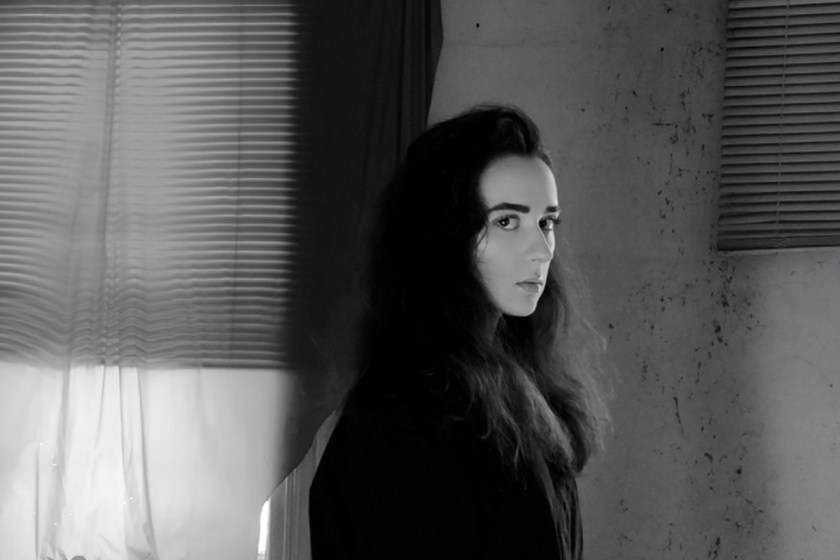
Suzie Chism’s new album Where dabbles in styles across its nine tracks but in doing so it reflects the themes of the record. Fuzzy guitar give a quality of modern garage rock or neo-grunge, melancholic synths create introspective moods and textural acoustic guitar give a sense of spontaneity. All contribute to an album that seems to come from the perspective of someone who left her home town to go to some place more seemingly glamorous until you get there no matter how streetwise you thought you were before getting there. The story arc of the album, if indeed there really is a through line, is one of a person who puts on a brave face in situations that seem to call for it and in a process of self-discovery and adapting to life in a bigger city with a culture where presenting yourself is expected one can come to lose a bit of a sense of self for a moment or for an extended period of time until you realize you yearn for real connection with people. Throughout the album you get the feeling the narrator in each song is struck with a forlorn heart. On the title track the line “If lonely is a state of mind then where am I?” speaks to the existential crisis you hit when deep down you know that so much upon which you’ve been focusing your energy is folly.

On “Something Blue” we hear that maybe the spirit of making the best of things is derailed when the subject of the some comes to the realization that in her headlong pace to reach what she thought was desirable is making her miss what’s actually good in her life and that she’s fearful of staying in bad habits that make that an inevitability. And by the end of the album, these personal insights set the stage for at least trying to make one’s actual dreams come true. “Night Walks” is like a cross of rockabilly and 60s pop and there is a vibe of 60s girl groups and the compelling melodrama of that music to Chism’s songwriting on Where but it has that sense of self-awareness that one hears in more modern times by similarly influenced music with Best Coast—the knowledge that maybe you have made some missteps in life but having an internal compass can keep you aimed toward what matters. It is a record about questioning your own assumptions about what you’re life is supposed to be about. Listen to Where on Spotify.

Emiji’s Transcendent “Mountains” Drifts Into the Intersecting Realms of New Age and Ambient

Emiji_Mountains2_crop
Emiji “Mountains” cover

“Mountains” is a bit of a new direction for Irish ambient artist Emiji. It still features well crafted, melodic drifts, drones as ethereal wind blowing through the track and a sense of a spiritual journey in sound. With Heart Singing providing non-verbal vocals that trail off into echoes that dissolve into the rest of the soundscape there is an even stronger sense of grounding in tangible emotions and a sense of wonder. With the slowly ascending arc of piano that runs through the song it suggests being at the heights of the title and looking across the landscape and its tranquil grandeur when the sun is beginning to come up, peeking through rainclouds or slowly going past the horizon toward night. The second piano figure toward the end of the song changes the tone slightly to give the ethereal song a hopeful flavor. The effect of the vocals with the organic instrumentation and electronic drones is reminiscent of the better New Age music of the 80s and 90s without the pretentious baggage attendant with some of that musical milieu. Listen to “Mountains” on YouTube and connect with Emiji at the links provided. “Mountains” is the first song from Emiji’s new LP My Journeys due out in 2020.

emijimusic.com
open.spotify.com/artist/3U5ch0tyGeTVlf3YCRY9Eq
emijimusic.bandcamp.com
facebook.com/emijimusic
instagram.com/emijimusic

Perfect Tenant’s Hypnotic Post-punk Track “D.Y.C.A.I.” is Like the Evocation of a Lucid Dream Rendered in Greyscale

PerfectTenant_DYCAI2_crop
Perfect Tenant, image courtesy the artist

Writing music under the moniker Perfect Tenant, Leon Piers found a way to reconcile his songwriting and recording with being someone who never had enough money to rent a studio space, rather having to operate living in shared houses or in apartments. The almost claustrophobic quality of his new track “D.Y.C.A.I.” nearly reflects that psychological space of reigning in your sonics or capturing them in a way that works to maintain that already challenging balance of living. The creeping bass line is hypnotic. The slowly seething guitar and its the evolving, shifting volumes makes a virtue of repetitive minimalism as dynamic, tonal textures. The vocals are not disengaged so much as resigned as they float through a song that also manages to rise to emotional peaks of the kind you reach in surreal, lucid dreams where intense situations are happening but you know you can pull away whenever you like. The production on the song is borderline lo-fi but in a way that worked for The Fall in the early 80s and on Colin Newman’s 1981 solo album A-Z by establishing a freshness, authenticity of emotion and grit that slick production makes impossible. It also has a similar otherworldly quality that makes it difficult to pin down to any specific stylistic period other than under the broad umbrella of post-punk though this is obviously on the more experimental end of that. Listen “D.Y.C.A.I.” on Spotify.

Trav B. Ryan Deconstructs Received Identity and Yearns for Discovering One More Authentic on “No Home”

TravBryan_NoHome1_crop
Trav B. Ryan, photo courtesy the artist

Trav B. Ryan was inspired by The Mandalorian in writing “No Home.” The song is about abandoning your belief systems in order discover your true self. There is a bit of trap production in the vocals with some light auto tune but it is couched in a sonically rich beat that combines a textural shuffle in the percussion and a descending, echoing drum line with a melancholic piano melody. It conveys a sense of taking a deep assessment of your life as though you can step outside yourself and your usual contexts and can see your life with a new perspective. The lyrics articulate a desire for independence from what you used to know and how that defines you. Its metaphors of self as weapon and reloading to put yourself in the same realm of life that limits you in ways that have never suited you. The lyric “If I fall from grace burn this place to the floor, tell them I died in war, don’t tell them I went soft” points to not wanting to have a place to return to in order to for yourself to reinvent yourself on your own terms. The chorus “I am all I own” is an acknowledgment of needing to start from the ground up in creating an authentic life of one’s own by not taking back on an imposed identity. There is something that is the opposite of bravado to the song and the way it constructs peeling back the layers and knowing that vulnerability and the embrace of doubt and not automatically knowing where everything fits together immediately so that you can come to know yourself and then other people in ways that are more genuine and so that your sense of home is within and where you would like it to be and not purely determined by what others have told you. Listen to “No Home” on Soundcloud and connect with Trav B. Ryan at the links below.

soundcloud.com/travbryanmusic
open.spotify.com/artist/4vx9ia0fGzUWKQPFjC3EbT
youtube.com/channel/UCX8ADiuxNTZEhVbhjvVo4MA
m.facebook.com/travbryanmusic
instagram.com/travbryanmusic

Erik Hall’s Brilliant Solo Interpretation of Steve Reich’s Music For 18 Musicians Preserves the Relentless Pace and Physicality of the Original With a Smaller Sound Palette

ErikHall_Pulses1
Erik Hall, photo courtesy the artist

Erik Hall recently conceived of and recorded his interpretation of Steve Reich’s seminal, avant-garde, 1976 masterpiece Music For 18 Musicians (due out May 8, 2020 via Western Vinyl). Hall’s version of the aforementioned work is only the second ever successfully accomplished by a solo artist. The lead single from the record, one of the sections of “Pulses,” was performed with muted pianos, electric guitar and synth. But as with the original, the relentless pace, the percussive and textural quality to the tones that convey a physicality like getting the raw data packets, the very quanta, of existence as expressed through a minimal flow of composed and arranged sounds that contain a diverse complexity in themselves. Reich’s 1976 performance of the music was aptly titled and used classical instruments in a unique way to almost mimic what electronic music would sound like later and in its way it must be seen as an influence on ambient music much as was John Cage, 60s avant-garde, early synth music, Krautrock and library music. Listen to a sample of Hall’s loving rendition of Reich’s music on Soundcloud and connect with Erik Hall at the links below.

twitter.com/erikhallmusic
facebook.com/erikhallofficial
instagram.com/intallbuildings

The Unabashed, Imaginatively Eccentric Video for PRIG’s “Plants” is the Kind of Weird the World Needs Now

PRIG_Plants1_lg
PRIG, photo courtesy the artists

PRIG’s song “Plants” shouldn’t work. The distorted, warbling drone, surging synth sounds and slightly off-kilter vocals and playful guitar/plinky keyboard melody is not for anyone looking for something they’ve heard a million times on commercial radio or like-minded playlists. Its eccentricity is unabashed and seems utterly unselfconscious. It’s like hearing the early Ween for the first time or The Frogs or King Missile after a lifetime of having your brain conditioned to accept more traditional and established faire. But part of your brain knows that a lot of those rules of how a song should sound are arbitrary and the sort of quirky 16-bit video game soundtrack aesthetic of “Plants” has an undeniable charm. The accompanying video for this mini-opus too looks like something someone made using 1990s graphic design software ideas in the context of a more modern video editing platform. When the flower shoots lighting and levels buildings and the guys shoot it with cans from a, yes, cannon, and bring it low before a mob of flower people come to chase them off it just seems perfect for a song that belongs on the same shelf as the aforementioned as well as The Residents and Renaldo & The Loaf. Watch the highly imaginative, animated video on YouTube and connect with PRIG at the links below.

soundcloud.com/user-634784243
open.spotify.com/artist/4D6kv0QCWdOpsIt006M5r1
youtube.com/channel/UC31ytm74SYDPGWJH1CucGEA
facebook.com/prigberlin
instagram.com/prigband

Bathe Alone Crafts a Benevolent Mirror Image of the Cyclone of Anxiety That is a Panic Attack on “Calm Down”

BatheAlone_CalmDown1_sm
Bathe Alone, photo courtesy the artist

“Calm Down” is Bathe Alone’s concept song composed to be full of metaphors for panic attacks. The vocals are soothing like the part of your mind that goes on hold during a panic attack until it has subsided enough for you to gain some control over your nervous system and the way it escalates all the urgency in your psyche. The guitar has smaller builds and descending dynamics paralleled by the percussion and the relative intensity of the vocals. In moments the guitar arpeggios heat up and dissolve quickly. The guitar lead mid-song leaps up in fiery registers to give way to impressionistic, rhythmic notes. The song dynamics are vortices of emotional peaks and dramatic contrasts much like have a cluster of panic attacks and the overarching structure of the song has its own climax and peaceful denouement. But rather than the terror, the raging anxiety and the way your breathing seems out of your control, the song is comprised of gorgeous, transporting melodies that are an analog of a benevolent form of the experience by being a heady emotionally rich listen instead of the overwhelming sense that everything is over and you can’t escape or relief from the escalating and exploding tensions inside your own mind. By being keyed into the experience, though, Bathe Alone has given us a song that can speak to where your mind takes a wrong turn with some obvious understanding of the inner dialogue and the sensations that drive it, perhaps showing how you can get ahead of the worst of it and derail its full effect. Listen to “Calm Down” on Spotify, connect with Bathe Alone at the links provided and keep an eye out for the Last Looks LP due out summer 2020.

bathealone.com
soundcloud.com/bathealone
open.spotify.com/artist/384r9G0NILqkGrQL8IPMkC
youtube.com/channel/UC9hpjK2lI9E24Y40Dl6knfA
bathealone.bandcamp.com
twitter.com/bathemusic
facebook.com/bathealone
instagram.com/bathealone

Sunbather Imbues “Winter” With the Introspective Grandeur of the Season

Sunbather_Winter2_crop
Sunbather, image courtesy the artist

The sound of wind and echoing guitar notes leads us into Sunbather’s beautifully sprawling post-rock/dream pop track “Winter.” The percussion hits softly with splashes of cymbal and a second guitar plays a companion melody while the expressive vocals sit somewhere in the middle of the shifting whorls of sound. If there was a video for the song, one imagines a figure superimposed on a sunny but windswept, snowy landscape as the day timelapses by. It sounds like the kind of song that was written to embody not just the psychology of the introspective mood of a cold winter day but also the harboring and cultivating of dreams and aspirations and exploring them in detail and give them a full fledged expression. In this case with a lush but elegantly dynamic composition that uses sweeping passages and wide spaces that welcomes the winter mood and the limitations the season imposes on many of us as a season in which looking inward isn’t seen as antisocial and the multitudes of distractions available at other times of the year don’t pull us as much in various directions out of our focus on taking stock and contemplating life. Listen to “Winter” on Soundcloud and connect with Sunbather at the links provided.

soundcloud.com/sunbatherjams
open.spotify.com/artist/6jUWj9prMfMRXyCj7PXLxw
sunbatherjams.bandcamp.com
facebook.com/sunbatherjams
instagram.com/sunbatherjams

Esbie Fonte Muses on the Perils and Pleasures of Embracing One’s Own Growth Through Embracing Sensitivity and Vulnerability on “Your Dad’s Banjo”

EsbieFonte_YourDadsBanjo1_crop
Esbie Fonte “Your Dad’s Banjo” cover (cropped)

“Your Dad’s Banjo” has a title that may lead you to think you’re in for some kind of Americana or bluegrass song. But from the beginning of Esbie Fonte’s song it’s obvious you’re entering a dreamy realm of flowing soundscapes and enveloping melodies. Nearly abstract bell tones sound throughout like sun dappled accents, ascending synth figures, minimalist and processional percussion guides us through the haze of textural drones floating through the song with vocals seeming to articulates the insecurities we all have going through life and the complexities of all our relationships with people and where our boundaries can seem fluid at certain times in our lives while we’re open to being transformed, being vulnerable to change and accepting difficult, challenging and even painful experiences as part of living a full life not fearing growth and having our cultivated notions evolve with new insights and learning. The distorted synth melodies and shifting dynamics of the song and vocals that sit in the sweet spot between confident and tender make “Your Dad’s Banjo” immediately accessible and thoroughly entrancing. Listen to “Your Dad’s Banjo” on Soundcloud and connect with Esbie Fonte at the links provided.

soundcloud.com/esbiefonteofficial/boulevard-1
open.spotify.com/artist/6Sh3ahSTQD6LqMh1wMaSLY
twitter.com/esbiefontemusic
facebook.com/esbiefonteofficial
instagram.com/esbiefontemusic

The Tapetown Sessions Video of The Murder Capital’s “For Everything” Captures the Post-Punk Band’s Powers of Collective Catharsis

Dublin’s The Murder Capital has been one of the main buzz bands of post-punk of recent years and its Tapetown Sessions video of “For Everything” gives you a little taste of why. The group builds a brooding, seething, abrasive-yet-entrancing mood. The guitar bends and stretches into disorienting shapes while percussion and bass build a tense momentum that unleashes and releases a third of the way into the song. Echoing slashes of sound flash through the song and the hollow, forceful vocals haunts the sound with a commanding critique of a political and economic system that is failing everyone. But it is not didactic, it is visceral and comes from a place of genuine pain and frustration, of disappointed aspirations that need to be channeled into something productive and emotionally fulfilling. The song is six minutes long but it’s so electrifying and compelling you forget the time and get swept along in the shared catharsis.