
“You’re Gonna Tell Me” by Roni Bar Hadas Contrasts the Uplifting With the Melancholy to Plumb the Depths of the Human Heart

RoniBarHadas_YoureGonnaTellMe1_crop
Roni Bar Hadas, photo courtesy the artist

The effervescent exuberance of Roni Bar Hadas’ “You’re Gonna Tell Me” almost makes the song’s lyrics seem like they’re out of an uplifting, lightly melodic summertime tune or a dream pop take on a 60s lovelorn ballad. The guitar melody and breezy keyboard work over a widely dynamic rhythm and Hadas’ brightly resonant vocals cutting shining throughout is a bit like trying to put your best face forward when inside you’re not so confident, when you’re processing mixed emotions and trying to maintain even as realizations about your life are crushing you just a little. And it’s that contrast of presentation and content that gives the song its depth of expression. The line that gives the song its title “You’re gonna tell me it’s over and I don’t know what to say” speaks to the very real feeling many of us have when we find ourselves in a relationship with someone we told ourselves was so fascinating and attractive in the beginning because the thought of being alone seemed so depressing. But you can’t fool yourself forever and Hadas goes through the various stages of that realization. From being able to embrace being alone despite how we’ve all been conditioned to think one is somehow lesser or a failure without being attached to someone, through overindulging even though you just can’t drunk or altered enough to run away from your feelings forever, and finally to thinking maybe the relationship should have ended long ago because the love wasn’t there, just a temporary infatuation blown up to be something bigger than it is to not feel like you’ll never be with anyone. But the biggest realization comes in the line “Don’t know what to write because I don’t know how I feel, when I don’t understand myself how can you?” And isn’t that it no matter what culture you come from? We’re pushed to become so many things in life and make important choices before we know who we are, what we really feel and to stick by those choices even when they no longer make sense. It’s what causes horrible mid-life crises and other acting out. Roni Bar Hadas seems to have figured that out in the course of a short pop song and so can we all. Listen to “You’re Gonna Tell Me” on Spotify and look out for Hadas’ full length Calm the Beast due out in spring 2020.


Barland Garnett’s Glitchy Dream Pop Song “Private Paradise” Brims With Affectionate Reverie

BarlandGarnett_PrivateParadise1_crop
Barland Garnett, photo courtesy the artist

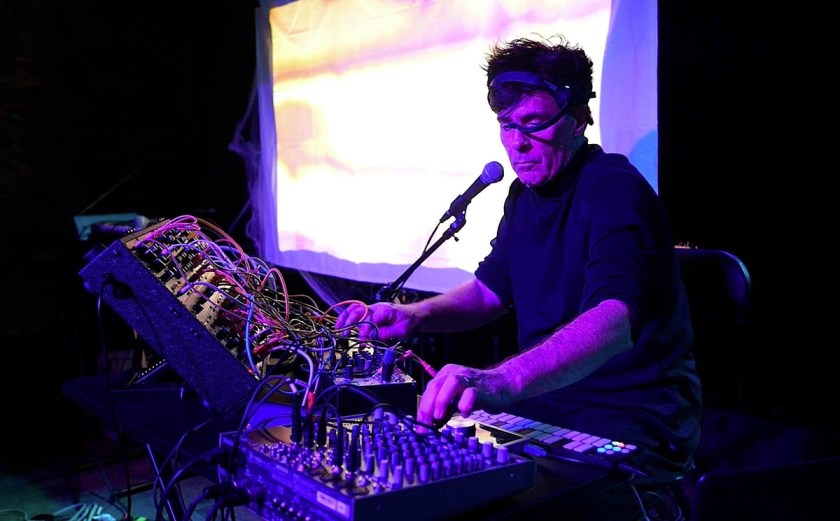
Barland Garnett utilized a bevy of synths and electronic instruments (Organelle, Arp 2600, Minimoog, MOOD, SH-101) and a touch of guitar to craft the enigmatic dream pop song “Private Paradise.” Sophie Chernin’s vocals drift from the soulfully introspective to a processed voice like she’s glitching out. Sonically it makes one think a bit of the video warping from an old VHS tape, the digital anomalies from a digital video tape and similar phenomena when there is latency in a video feed due to inconsistency in internet connection or other technical issue. There is a certain charm to that aspect of the song like we’re getting to hear a long lost virtual pop star from our own near future a hundred years hence from tinkering with old technology. Tonally it brims with affectionate reverie as it sketches for us imagery of a temperate weather hideout where you can spend countless time alone with the one you love uninterrupted by the demands of normal life. It conveys a sense of timelessness like the memory of a dream and that the production is lo-fi only enhances that mood and a feeling like you can spend some moments unmoored from the mundane world. Listen to “Private Paradise” on Spotify and connect with Barland Garnett at the links below.

open.spotify.com/artist/40Q3jsGJfPXmx5DTigFDPo
soundcloud.com/barlandgarnett

Hanna Ojala’s “Call for My Soul” is a Healing Ritual of Personal Mysticism

HannaOjala_MainPic1_Crop
Hanna Ojala, photo courtesy the artist

Every time Finnish sound artist Hanna Ojala’s releases a single you’re in for a unique experience and one that doesn’t often draw immediate comparisons with other songwriters. With “Call for My Soul” you can’t help but imagine sepia toned landscapes and a structuralist film aesthetic like Wim Wenders and Laurie Anderson collaborating on a film about a great journey to a place where you face your darkest fears and embrace your greatest dreams. Her vocals, like spoken word free verse poetry, uses repetition to emphasize the emotional experience of memory and a yearning to reconnect with one’s core and one’s sense of identity and self-value. The poem moves over a layered ambient drone and impressionistic piano as though the song was informed by a visual sense of storytelling and the vocals and music echo slightly like deeply subconscious connections lapping at the shores of your waking mind and nourishing an awareness of what might soothe a sometimes faint sometimes powerful sense of unease at being out of balance with who you are. Probably everyone has this sense of existing in a way and in a social context that does not nurture who we are but pushes us toward what seems most “useful” or efficient as if our existence is only justified by its utility to an economic system, an ideology or some other dominant belief system imposed on everyone. Ojala’s song suggests that you can harbor within you an independent sense of self-value from the cruelty and disconnectedness of the world and in doing so recognize and encourage the same in others. Listen to “Call for My Soul” on YouTube and connect with Hanna Ojala at the links below.

soundcloud.com/h_mo
youtube.com/channel/UCOciWsXO_7cDSrveFlwSmkA

Chris Ianuzzi’s “Fork” is Cybernetic Dance Ambient From the Other Side of the Event Horizon

ChrisIanuzzi_Fork1_sm
Chris Ianuzzi, photo courtesy the artist

Electronic composer Chris Ianuzzi recently released an EP, Olga in a Black Hole on March 6, 2020 with an album Planeteria forthcoming in 2020. The single “Fork” from the EP reminds one in a way of V’Ger from Star Trek: The Motion Picture. Where in the film Voyager 6 gets lost in a black hole and comes back a sentient being upgraded by an advanced alien race, Olga has returned from her trip into the black hole with the ability to draw on a an unusual palette of sounds with which to communicate. The hard and constantly evolving rhythms bleep and bloop like some kind of 8-bit dance music that might have been made by Autechre at some point in its career. But that angular, android dance pop gives way to an echoing, ambient abstraction that fades out at the end. Like maybe we’re to understand Olga’s journey through the black hole as an intense, transformative experience that altars form, function and existential orientation leaving her on the other side in a state of tranquility and grace. Maybe a journey through a black hole as a worm hole isn’t just one simply of going from point A to point B but one more like entering Siege Perilous wherein you will emerge changed in ways impossible to know or predict completely without having experienced it for yourself. Perhaps Planeteria offers an experience on the other side of that black hole processing. Listen to “Fork” on Spotify and connect with Chris Ianuzzi at the links below.

chrisianuzzi.com
soundcloud.com/i-synthesist
chrisianuzzi.bandcamp.com
twitter.com/Isynthesist
facebook.com/ISynthesistMusic
instagram.com/chrisianuzzi

Delyn Grey’s Starkly Powerful “Battle” Dispenses With Platitudes and Bravado in Depicting Depression and Neurological Distress

DelynGrey_BATTLE2_crop
Delyn Grey, photo courtesy the artist

Delyn Grey’s “Battle” addresses one significant aspect of suffering from depression and other mental and neurological disorders and that’s the fact that you pretty much never just get over it. Even if you get through a bad phase of it it’s rarely if ever something that just goes away. You don’t “fix” it the way you might repair a faulty machine. It’s more complicated than that and the specifics are individual even if there are some similarities and resonances of experience. What Grey dares to express in the song is that you may never actually get completely past that struggle. With a dynamic, minor chord piano progression and passionate vocals the song depicts the frustrations, the confusion, the search for answers that may not be there and the ability to endure even if you don’t feel like you can. That can be a heavy message but it is a pop song, albeit a dark one offering no hopeful platitudes, and its power is offering a deep sense of understanding and empathy for going through those rough life passages. There are no faux posi words of encouragement and how it’ll all be okay. Rather, that one can weather some very bad times even if it does feel like things are completely unraveling inside your head. The song does not pander, no keep your chin up or anything like that. It’s sense of hope is given with acknowledging those feelings which so often feels like the only thing that doesn’t feel like some lie or “tough love” nonsense people parrot from a culture where vulnerability and being in a stretch of weakness or powerlessness is perversely seen as a moral failing. Delyn Grey dispenses with these meaningless, arbitrary culture tropes and extends her compassion and solidarity with a dose of what it’s like to be there in the worst places in your mind. Watch the music video on YouTube and connect with Grey at the links provided. Look out for Grey’s EP The Disappointment Girl due out later in 2020.

open.spotify.com/artist/1aL7h7z850IDEqABbkFulP
delyngreyofficial.com
twitter.com/iamdelyngrey
facebook.com/itsdelyn
instagram.com/delyngrey

CocoRosie Renders in Rich Sonic Detail the Unlikely Friendship Between Ghosts and the Living on “Burning Down the House”

CocoRosie_BurningDownTheHouse1_sm
CocoRosie, photo courtesy the artists

Not to be confused with the Talking Heads song of the same name, CocoRosie’s “Burning Down The House” is a single from the duo’s new album Put the Shine On (released March 13, 2020). But the resonance with the way the Talking Heads seemed to put a unique stamp on each of its own records, CocoRosie imbues each of its offerings with its own creative identity. This song sounds like Sierra and Bianca Casady used the structure and methods of making a hip-hop beat with its use of samples and production techniques to write something that sounds very organic and handcrafted. From the unique rhythms and textures, the unconventional vocals, strings and dulcimer one gets a view into a world where the living communicate with ghosts and form a friendship and a path of freedom and fulfillment for all involved. It is almost symbolic of the way CocoRosie uses imagination and creativity to transcend the arbitrary limitations of identity and art to better express something genuine and rich from one’s own idiosyncrasies rather than adhering to a popular style. That said, listening to “Burning Down The House” is a beautiful fusion of Tin Pan Alley pop, Americana, hip-hop and outsider music but immediately accessible precisely because there is an undeniable appeal to the way the Casady sisters create something that not only honors their own creative instincts but shows some respect for potential listeners in delivering something that isn’t a drab clone of something someone else already made. Listen to “Burning Down the House” on Spotify and connect with CocoRosie at the links below.

instagram.com/eoinlyness
cocorosiemusic.com

Eoin Lyness Vividly Captures the Agoraphobic Anxiety of Crowded Public Spaces on “Mutilation of Art”

EoinLyness_MutilationOfArt1_sm
Eoin Lyness, photo courtesy the artist

Combining filed recordings at the National Gallery in London with layers of processed synth, “Mutilation of Art” gives voice to composer Eoin Lyness’ sense of anxiety in crowded public spaces. A nearly abstract background arpeggio conveys a sense of movement in the distance with a distorted synth echoing in the foreground, all seeming to weave together with the samples of nearby human movement and conversation. The weight of that stimulation all but ruining the experience of taking in art that was created largely in isolation and best experienced without the surrounding rush of interruptions. It serves as a model for abstract expressionism and minimalism itself with what seems to be constant repetition of themes with enough evolving layers to provide stimulation, in this case of the kind that suggests the low level of menace that stimulates feelings of anxiety. Which should make for uncomfortable listening yet somehow in truly capturing how one’s mind tries to push away the presence of crowds emotionally it creates a space within which one can escape the worst of those feelings by dissolving and reflecting back some of that energy through what might be described as an ambient catharsis. The way Giorgio Moroder did the same with “Chase” from the soundtrack to Midnight Express or Oneohtrix Point Never accomplished with his soundtrack to Good Time, Eoin Lyness takes an intense emotional experience and renders it in a form more accessible to the conscious mind with an intentionality of soundscaping that draws upon subconscious reactions. Listen to “Mutilation of Art” on Soundcloud and connect with Lyness at the links provided.

eoinlyness.bandcamp.com
soundcloud.com/eoinlyness
twitter.com/eoinlyness
facebook.com/eoinlynessmusic
instagram.com/eoinlyness

Ghost Stories’ “URI Track 03” is the Sound of the Subconscious Mind Expressing Inner Wellness

GhostStories_URITrack03_1_crop
Ghost Stories “URI Track 03” (cropped), image courtesy the artist

“URI Track 03” comes from Ghost Stories’ recently released URI EP. Its three songs were written while the composer was dealing with an Upper Respiratory Infection at the end of January 2020 before COVID-19 fully hit the international media. The first two tracks of the EP are more in the realm of dub-inflected post-industrial but this third piece evokes a sense of peace that comes after one has endured a great deal of pain and struggle. Anyone that has experienced a respiratory condition is familiar with that sense of panic that can take hold as if you can’t catch your breath and you’re not sure what you can do to get relief immediately. That kind of disruption to your system can induce intense moments of borderline euphoric distress where every second seems to last forever. But once those moments pass and especially when you’re in the recovery phase of a a bad flu or cold, bronchitis, a horrible allergy attack, asthma, pneumonia that ability to take in air without effort is difficult to describe to someone who has never had the worst end of that. The soothing melody of this song with faintly luminous, streaming synth akin to soft lighting early in the morning coupled with the digital cello sketching a background drone like the vibrations from the realm of dream dreams seemingly drift through to your conscious mind as a reminder of subconscious processes expressing inner wellness. Listen to “URI Track 03” on Soundcloud and connect with Ghost Stories at the links provided.

soundcloud.com/ghost-stories-official
ghoststoriesghost.bandcamp.com

The Layers of biskuwi’s Techno Track “Yoisho” is a Vivid Portrait of a Rigorous Night Journey

biskuwi_Yoisho1_crop
biskuwi Yoisho EP cover

Biskuwi builds “Yoisho” like layers of minimal techno contributing to a track of blossoming emotional urgency. Beginning with percussion, bring in menacing distorted synth swells and fades, like you’re in a giant flying machine passing others rapidly in the night. Multiple lines of melody stream by and tonal hazes shimmer like you’re hearing fog and steam clouds as you pass street lights, illuminated signs and other urban lighting. The title is a Japanese word that doesn’t translate directly easily but is said while straining to do something or after such an effort is accomplished. A self-affirmation in a way and a way to blow off some of the steam of that effort. This song might have felt like dusting off ideas and pushing forward into a new direction or experimenting with weaving together variant musical concepts but whatever the source of its titling, “Yoisho” conveys a sense of journey and the experiential details of that journey through employing sounds that work simultaneously for cinematic effect and immersive musical composition. Listen to “Yoisho” on Spotify and connect with biskuwi at the links provided.

open.spotify.com/artist/2wdY7YDYVddKtVbbgh1fCT
soundcloud.com/biskuwi
facebook.com/biskuwi.official

Wugo Contrasts the Minimal With the Ethereal to Evoke Cherished Memories on “Océan”

Wugo_Ocean1_crop
Wugo, photo courtesy the artist

Listening to “Océan” by French composer Wugo one gets the impression that it came out of a night of deep reflection. Like he took some time in re-creating the memory of a seemingly magical time in summer through selecting the tones and structure that would make that journey possible in a relatively short pop song. In the beginning “Océan” is spare and unadorned, a simple keyboard line and spare percussion with contemplative vocals that sound like a sketch of a memory. But soon enough a wave of ethereal melody runs through the song for a few moments like the trickle of vivid memories bringing a sense of elevated emotions. The contrast between the more minimal side of the song and those awash in the effervescent synth melody and the way they overlap is an effective way to express simple personal truths and imbuing them with the sense of romance a cherished memory occupies in your heart and mind whether or not it also induces a hint of bittersweet melancholy that runs through the track as well. Listen to “Océan” on YouTube and connect with Wugo at the links below.

open.spotify.com/artist/5xD0kqGGhwCVVa7HZmQRyp
twitter.com/iamwugo
facebook.com/iamwugo
instagram.com/iamwugo