The sound of a winter storm in your head is the dynamic of siera wiski’s song “moondore.” Icy synth lines echo, highly processed vocals run through like Alice Glass gone fully ambient pop. The lyrics describe being in an emotional place of stasis with seemingly no way out with time around you moving forward but you’re moored to your own low state without the wonders of the world or dreams and aspirations to pull you out of it. But the raw, ethereal sweep of the song suggests that maybe those events that seem to pass you by might bring something your way to nudge you out of your psychic quicksand in a way you didn’t seem coming and had no hope for happening. And in that dynamic of the song there is a ghost of hope and sometimes that’s enough. It is a gripping and gorgeous evocation of depression in the broad experience of it without hackneyed rhetoric and that’s exceedingly rare. Listen to “moondore” on Soundcloud and follow siera wiski at the links provided. The song is also available as a t-shirt on Bandcamp linked below.
The engimatically titled “Summer ’94” by the creatively named Pyxis Iota establishes a simple yet inviting rhythm line early on that carries you along throughout the song. But around that line tones drift and gyre, intertwined with a meditative guitar line that shimmers in counterpoint to the shimmering and glimmering synth drones that swell and fade. Perhaps it’s the title but the way the song plays out, even when the guitar drops out replaced by gentle distorted waves of synths, it sounds like the act of remembering a time in your life when things seemed less compressed, when summer seemed to last forever with amble time to play, learn, explore, discover and travel before demands of school or of a job post-college graduation demanded the bulk of your time and energy. There’s something magical about that headspace, the eternal liminal, that seems to nourish the psyche and spirit and Pyxis Iota evokes that energy with this track. Fans of early Oneohtrix Point Never and turn of the century Boards of Canada will appreciate the textures and evolving atmospheres of this song greatly. Listen to “Summer ’94” on Soundcloud and follow Pyxis Iota at the links below.
Le Big Zero chose a more than averagely clever band name and its video for “Horror Movie Pie Fight” directed by Jeanette D. Moses is a good reflection of the group’s offbeat sense of humor. It features a vampire trying to navigate an even more vampiric world of people coasting through modern life until she cuts that faux party time mingle short with an extravaganza of gore satiating her thirst for blood. But the video has that quality of the awkward comedy but one that is actually darkly funny rather than something from which to walk away partway through. The music is reminiscent of the dynamic starts and stops of what made so many of those Boston bands of the 80s and early 90s so interesting in the way the songs hit with both a forcefulness and a sense of fun—art punk with a knack for pop hooks and bereft of pretentiousness. Though, to be fair, Le Big Zero has its roots on the east coast but not Boston. It’s difficult to be funny as a band and write music that isn’t easily dismissible but Le Big Zero has accomplished that. With beautifully X-esque vocal harmonies and wiry and scrappy guitar riffs anyone into early alternative rock will find something to like with Le Big Zero. Watch the video for “Horror Movie Pie Fight”on YouTube and look out for the release of the act’s new album A Proper Mess out on April 8, 2022 through Know Hope Records.
Erika Wester’s single “Novelty” has all the hallmarks of a classic pop song: gorgeous melodies, entrancing arrangements that pull you immediately into the embrace of the song. And that’s exactly what makes it such a poignant and effective bit of musical writing in general. Webster honed in on the essential dysfunction of a toxic relationship and her own complicity therein by allowing the person bad for her having their hooks in her psyche and not quite being able to resist those charms because of some bad emotional habits she picked up along the way. It happens. But right from the beginning Wester sings “I hate the way you make me feel, I think I make up what I want to be real” as an acknowledgment of that the relationship and the connection in general is bad and that she has some issues with identifying what is real and what she wants to be real and holding on to what does feel good rather than what she wants to feel good because it’s supposed to because all relationships should be fulfilling even when they’re not, right? The rest of the song Wester paints for us some small situations that would be gutting in the experiencing but sounds not so bad with the tone of the song. And that’s the seduction of being the kind of person who hasn’t quite jettisoned these ingrained behavior from their psyche. But knowing you deserve and want better is a good first step and Webster begins with that. Is this literally about Wester’s life? It doesn’t matter. Maybe it’s something in the past, maybe it’s not, but it is an extremely relatable situation and mindset for most people at some point in their lives and laying it out there sometimes helps in getting the will to move onward from a psychological space that no longer serves you well. Titling the song “Novelty” frames the deeper sentiment of the song so well because no one wants to be that, no one wants to just have an emotional bond with someone on that basis and sometimes something or someone will appeal to us simply on that basis when we shouldn’t take it or them so seriously and make it or them part of our lives. Listen to “Novelty” on Spotify and follow Webster at the links below.
On the title track to his forthcoming EP Rabbit Feather, Jackson Hill brings extremely tactile sounds together with an electronic production aesthetic that both grounds what you’re hearing and transports you to an otherworldly headspace of pure imagination. Soft electronic drones swell and swarm while percussive sounds mark out unconventional rhythms in modulated clicks and snaps, strings resound with an unmistakably delayed and drawn out strum, bass traces downward arcs in jazz-like downtempo style. It is layers of minimalism that matches the surreal imagery suggested by the title of the song. For something so peaceful and spare there is a lot of movement and forward momentum in the song and altogether it sounds like little else unless you could vaguely trace a lineage to some of the work of Laraaji, Brian Eno’s and David Byrne’s 1981 experimental world music album My Life in the Bush of Ghosts and maybe the more avant eras of Anthony Braxton. It is a unique and rewarding listen for anyone that has an ear for the music that is somehow both tuneful and requires taking it in on its terms rather than imposing genre requirements in order for it to be enjoyed. Listen to “Rabbit Feather” on YouTube and connect with Jackson Hill at the links below. The Rabbit Feather EP is being independently released on March 18, 2022.
Peaces is no stranger to the recontextualized pop hit and cultural reference mashup and remix but with “Down To Earth” he has outdone himself with the both the audio and the unusual collage music video. Crafting a hodgepodge of a sample of Avril Lavigne’s “Sk8er Boi,” some ever so slightly warped Don Toliver flourishes and what sounds like a modified UK garage beat, Peaces invites the listener to rethink how popular music works and how it can sound. Certainly hip-hop and EBM artists have used sampling and sequencing to place sounds seemingly disparate into new contexts for a different way of creative thinking and Peaces is operating out of similar aesthetics but updating the sample base and imagining how they might work as a piece of music in the context of his own composition. Sure, DJ Shadow did that in the 90s and Girl Talk took the mashup to glorious new extremes. But with “Down To Earth” Peaces takes bits of popular music that many might dismiss as mainstream fluff and makes it into something experimental, surreal and cool. Watch the psychedelic music video for “Down To Earth” on YouTube and connect with Peaces at the links below.
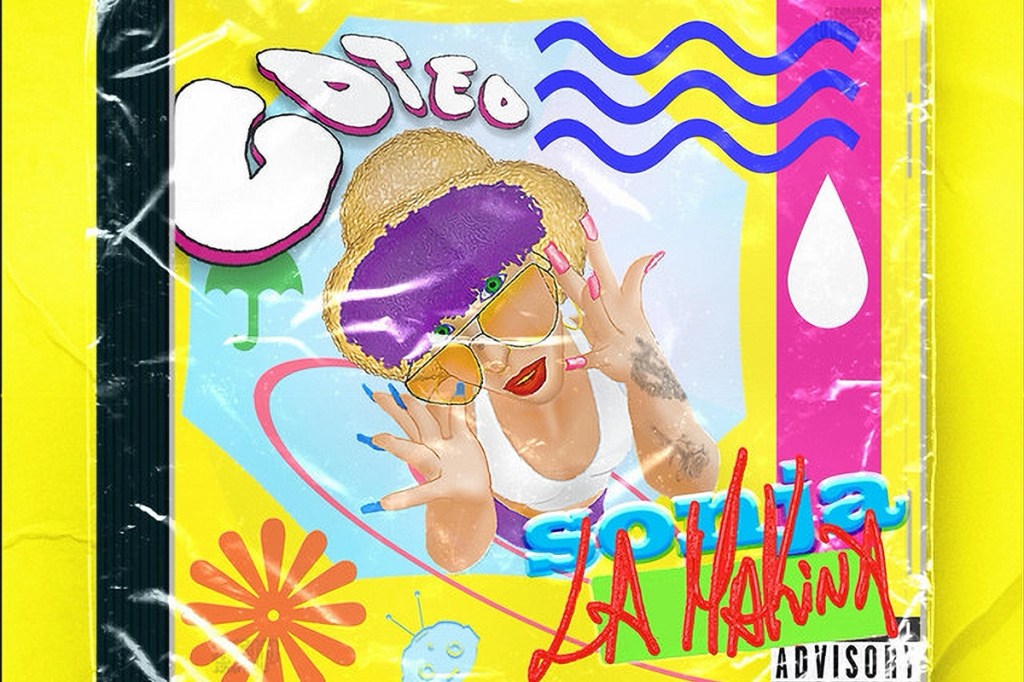
It probably helps to know some Spanish to get the most out of Sonja La Makina’s “GOTEO” but as purely a piece of music it is immediately compelling as something different. You’ll hear elements of trap, perreo and more hip-hop-inflected electroclash but it’s La Makina’s fluidity and forcefulness in the use of language that stands out in a shuffling and shifting beat that weaves in compound rhythmic lines and playful synth work that augments a sense of swagger in the vocalist’s performance. Frankly, it’s the kind of music you imagine the characters in the futuristic urban environments the Hernandez Brothers’ Love And Rockets would listen to as they drive through the neighborhood and seem cooler than people vibing to basic tunes. Fans of M.I.A. will appreciate La Makina’s musical fusion. Listen to “GOTEO” on YouTube and follow Sonja La Makina at the links provided.
Layered vocals like a sustained echo lead us into the world of Pleasure Craft’s “Dead Weight” which brings the crackling distortion that explodes into a driving, pounding industrial soundscape once the song gets going. Syncopated percussion marks measured time as if putting an exclamation point on a line. Sam Lewis’ vocals take over and then joined by Mingjia Chen, both singing about a character who seems a victim of circumstance, essentially a passive cipher who is on his way to digging something of value within him out that may set him free, a terrifying prospect when being part of the landscape is so comfortable and has its own socially sanctioned rewards. The electrifying momentum of the song suggests that the safe state of affairs is unsustainable when the currents of aggravation and resistance are already flowing freely and you’re ready to let go of your own life’s dead weight. Listen to “Dead Weight” on Bandcamp and follow Pleasure Craft at the links below.
Australian punk band Bloods packs a lot of content into the one minute and forty-eight seconds of “BOSS.” And that content is a brash and bold statement of self-assertion of intent that reclaims the pejorative description of a certain type of female expression as “girl boss” by simply going with “BOSS,” a succinct, effective and direct dispensing with niceties the same way one must stop with being a “nice girl” in a “big bad world” because if you act in the narrow constraints of being nice as conceived by an ignorant and sexist society you get run over. Bloods are having none of that because doing so means you never get what you want and deferring to other people on everything forever is not just unsustainable but no sane society or one worth living in puts people under the thumb that way. And hey, just abstract the sentiment to your situation and it works. There is of course no contradiction between being a nice person and refusing to be a doormat but sometimes you have to spell it out to people (as this song cleverly does) and insist your dignity matters in the least conciliatory way possible. Watch the lively video for “BOSS” on YouTube and connect with Bloods on Spotify.
The enigmatic title of “Pandora’s Omelette” is as mysterious as Gomddam Memory’s music itself. Are the clear vocals and the more distorted vocals both by næringssorg? Is one of them producer ade? It hardly matters as the song strikes a balance between darkly ambient psychedelia reminiscent of an unlikely blend of Legendary Pink Dots and early industrial ministry. The song draws us in with pulses of modulated bass tone as one vocal repeats “crack” and the other “don’t mind” and going on to say “the voices.” Perhaps the song is a creative and poetic exploration of the idea of the conflicting narratives, conscious and those embedded into one’s world view and cognitive framework, that swirl in our minds as influenced by the events around us and our interpretations thereof and those interpretations pushed upon us by family, friends, mass media and what we opt for in our leisure time entertainment. The blend of psychedelia and industrial music is reminiscent at times of the Love and Rockets song “Haunted When The Minutes Drag” and even more of that group’s rock and electronica fusion landmark Hot Trip to Heaven (1994) and the ways in which Love and Rockets mixed the personal with the societal with the more mythical (Gomddam Memory certain invokes the mythical and the mystical and humorous in the song title). Stamping the song with a specific genre or style tag wouldn’t be adequate but fans of the aforementioned with find something to appreciate about this fascinatingly strange track as will people who appreciate the newer darkwave that can see beyond the sometimes narrow framing. Watch the visualizer video for “Pandora’s Omelette” on YouTube and connect with Gomddam Memory at the links provided.







 Queen City Sounds and Art
You must be logged in to post a comment.