Heavy Feelings Gives Voice to a Frustration With Lack of Commitment on the Noisy Post-punk of “Light Contact”

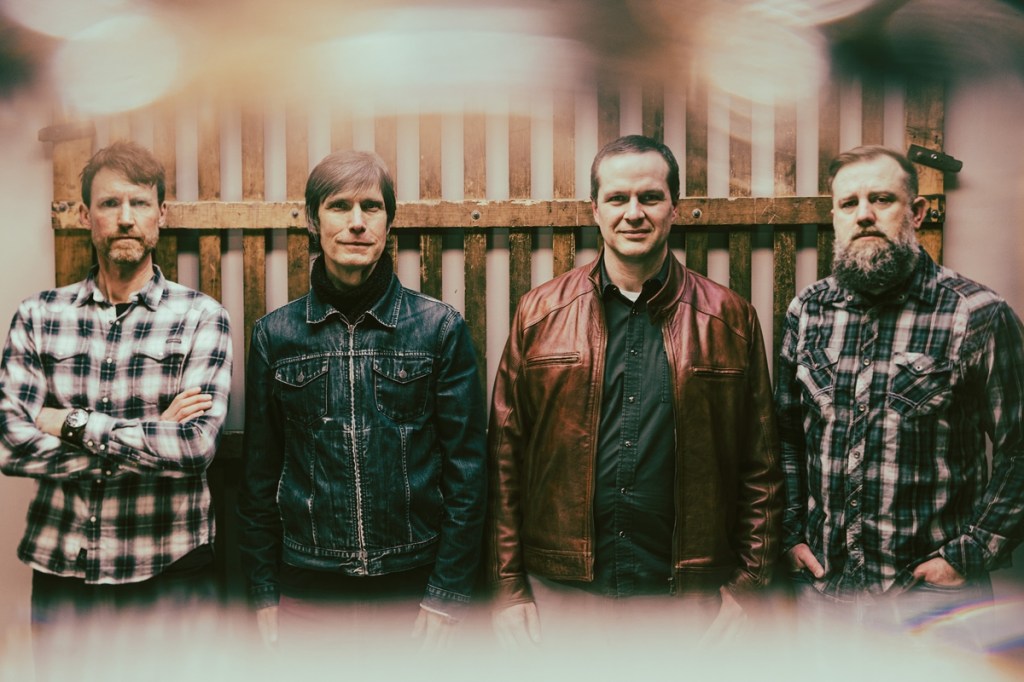
Heavy Feelings, photo courtesy the artists

Heavy Feelings is a Bristol, UK-based collaborative musical project centered around guitarist Ben Shillabeer who is a bit of a veteran of the Bristol music scene as a contributor to, among other musical concerns, Soeza, The John Parish Band and Empty Pools. The single “Light Contact” features the commanding vocals of Nadia Garofalo of the great Chicago post-punk band Ganser. Its cycling guitar riff establishes a mood of impending disaster or dissolution while Garofalo’s voice, reminiscent of PJ Harvey circa Stories from the City, Stories from the Sea, adds her own layer of grit to a song that sounds like harnessed menace and chaos. The song seems to be about, based partially on the title, the habit of many people to not commit to a course of action, a way of life, a project, relationships or much of anything hoping for the proper circumstances to come along that never really will in providing an auspicious time to take the dive into something that could be important even if for a short time. The song with its crackling and and intense energy seems to reflect an anxiety over an all too common misplaced lack of faith that can paralyze one’s effectiveness as a human or to even live a life that might be more fulfilling than playing it safe and being ready to bail when something requires more of you than casual interest. Listen to “Light Contact” on Spotify, follow Heavy Feelings at the links below and give a listen to the debut Heavy Feelings album Power⚡Reflection which released on June 3, 2022.

Heavy Feelings on Instagram

Heavy Feelings on Amazing Radio

“Pain” is Miss Torsion’s Playfully Realistic Ode to Chronic Health Conditions

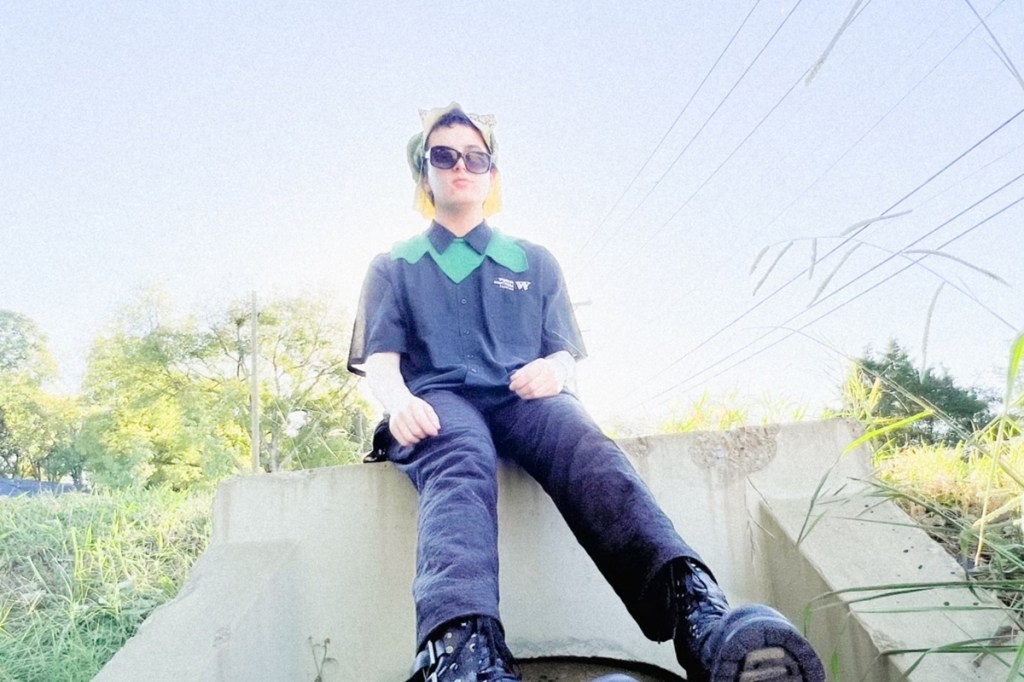
Miss Torsion, photo courtesy the artist

Miss Torsion has crafted an ode to the “invisible ailment” of chronic pain on a song titled, simply and directly enough, “Pain.” In the lyrics she expresses the frustration with the whole process of dealing with such pain and its sources and how it can disrupt your entire psychology when it hits hardest and complicates anything resembling normal life functioning that people who don’t suffer from chronic pain take for granted like walking normally, or being able to sleep well or any physical activity requiring exertion, exercise and being able to have your brain work normally rather than focus on the pain when it’s there in full force or as a dull background annoyance threatening to crash in. The source of chronic pain is wide and different and too often you can suffer from more than one form. But whatever that might be, Miss Torsion’s playfully moody, post-punk pop song captures that experience in a way that is accessible and accurate including how your mind wants to find a way to fix what’s happening even though it can be a complicated ailment and may resist an easy treatment that lasts. It’s a rarity to hear this subject matter in any song and rather than express the anguish and dark thoughts, Miss Torsion presents it all as something that many people have to live and find a way to get through the worst times even if it’s something that may or may not be a thing of the past in one’s life. Listen to “Pain” on YouTube and follow Miss Torsion at the links below.

Miss Torsion on TikTok

Miss Torsion on Instagram

Wellbeloved Evokes the World’s Collective Frustrations and Bad Communication Habits on the Psychedelic Blues of “The Values”

Wellbeloved, illustrated picture courtesy the artist

Wellbeloved brings together some seemingly disparate elements for its single “The Values” from its most recent album The Rusty. Distorted yet slightly shimmering guitar to psychedelic effect, splayed percussion tracing the edges of rhythm while also keeping the unconventional beat, Velvet Underground-esque guitar solos that burn over and through a drone of keyboards and bass holding the song together through force of while. It all sounds like its coming apart and colliding together elements that shouldn’t work but somehow do. David Wellbeloved lists a bevy of things going wrong in the world, all well familiar to anyone that has survived the past several years, and in listing them you get the feeling he is trying to make sense of these phenomena as well and all the angst that comes from having to deal with this flood of negative stimuli every day. But the line “Everybody’s yelling but nobody’s saying anything new” gets to the core of the collective psychological issue that is perhaps blocking actually dealing with the world as it is and with issues as they are and that is not questioning the dominant paradigms that seem to be running most people’s lives. The outsized faith in one’s own ideas and beliefs is a common shortcoming and maybe Wellbeloved isn’t suggesting he has the answers but there can be no doubting maybe taking some time off pointless self-assertion and taking the time to figure out if our stories make as much sense as we think is in order but with most people having to work too much to get by we’ll see if a more nurturing and sane world can emerge in spite of the failings of our crumbling worldwide civilization. Listen to the psychedelic blues punk of “The Values” on YouTube and follow Wellbeloved at the links provided.

Wellbeloved on Facebook

Wellbeloved on Twitter

Wellbeloved on Instagram

davidwellbeloved.com

Nasim Khushnawaz Delivers a Bravura Rubab Performance on the Energetically Elegant “Sahargah”

Nasim Khushnawaz is a master of the Afghan rubab, one of the national instruments of Afghanistan. It’s a stringed instrument in a range of three sizes so that the smallest has 5 sympathetic strings, the medium has 19 strings and 13 sympathetic strings and the large has 21 strings with 15 sympathetic stings. It has a widely expressive range with a dazzling array of tonal, rhythmic and textural voicings that give the instrument its distinctive sound. Khushnawaz’s father is the late Ustad Rahim Khushnawaz who is considered one of the great players of the rubab and who helped to expose the West to the instrument and its music when ethnomusicologist John Bailey in the 1970s made recordings of Rubab of Herat, Afghanistan to an audience outside that country. The younger Khushnawaz recently put out his latest album of traditional Herati pieces and three classical Afghani including the lead track “Sahargah.” Captured with beautiful sonic detail and evocative power, one hears the musician’s technical prowess but also a masterful interpretive mastery with counter melody and rhythm switching effortlessly between single note syncopation and strumming utilizing drone and rapid arpeggios that give the music a fluidity and energy that is both inviting and immediately engaging even for listners who are unfamiliar with this style and form of music. The title means “Priceless” in English, a concept that should apply to one’s cultural heritage which Khushnawaz preserves ably here and across the entirety of the album Songs From The Pearl of Khorasan. Listen to “Sahargah” on Spotify and follow Nasim Khushnawaz at the links below.

100% Contemplate Power Relations in Society on the Retro-Futurist, Electronic Post-punk Song “Prisoner”

100%, photo courtesy the artists

The shimmery, shining, repetitive synth line that runs through much of 100%’s “Prisoner” is like an analogous representation of a transmission through a landline. The other synth melodies sound like something that could have come about in 1985, 1995, 2005 or 2025. Which is fitting given the themes of the song and Lena Molnar’s vocals striking an inquisitive and low-key confrontational tone questioning the nature of power relations, justice, public safety and the habits of a society choosing to self-medicate rather than deal with serious social issues and how we deal with them or don’t in an adequate way. The song is a lo-fi, mostly electronic post-punk track but that fits these eternal themes that never seem to get resolved and though technology develops society finds a way to sweep problems that science and a current dominant form of economics, almost always in lock step with one another, doesn’t seem to be able to address to anyone’s satisfaction. Is this a song inquiring about the life of a prisoner? Who is the prisoner? Are we all of habits and ways of being and living? Does this song expand upon the meaning of “The Prisoner’s Dilemma”? This song invites the listener to contemplate these questions on a fundamental level. Fans of early Ladytron will appreciate how the song seems both retro and out of normal time. Listen to “Prisoner” on Spotify, give the rest of the album Clear Visions out on It Records now, and follow the Australian band 100% at the links below.

100% on Facebook

100% on Instagram

Get Lost in the Intimate and Mysterious Sounds of JoobieSaez’s Collage Psych on “Cramps”

JoobieSaez, photo courtesy the artists

JoobieSeaz apparently recorded the guitars for “Cramps” on “amateur” equipment a couple of winters ago and couldn’t replicate the sound on more professional gear. And there’s something to be said for laying down a mood with a unique texture and sonic quality. The completed song as it is doesn’t sound like it’s coming from any conventional realm of rock even given its psych aesthetic. Like the band took the aforementioned guitar work that sounds like Cranes and Bardo Pond had an acoustic jam session and sketched out some delicate passages that couldn’t help but be unusual and mysterious and built the rest of the song around it with a framework of a loping, descending bass line, soft percussion and vocals that whisper with an intimate, diarist quality that both ponder and seem to beckon. Really JoobieSeaz’s song doesn’t sound like much else except it has a feel like something that could have come out on a 1990s American underground label that was home to unique and some would say eccentric artists like a K Records, Kill Rock Stars or early Matador. Listen to “Cramps” on YouTube and follow the German band JoobieSaez at the links below.

JoobieSaez on Instagram

Fox Fagan Brings Us on a Psychedelic Funk Adventure Into a Realm of Desert Cowboy Rock and Roll Mystics in the Video for “Let’s Get Lost”

Fox Fagan, photo by Jon Delouz

The video for Fox Fagan’s “Let’s Get Lost,” directed by Jon Delouz begins inauspiciously enough with the songwriter lost in the desert carrying a plastic gas can when he stumbles across a trio of what look like desert cowboy mystics. But the simple, distorted shimmer of the guitar riff keeping up an almost hypnotic melody alongside Fagan’s direct yet hazy vocals gives the whole scene some thematic direction as it is given a funk flavor with the synths and subtle bass. This colorful and fanciful soundtrack we follow our hero out of being lost into an enclave of the aforementioned mystics and joins them in a set like a jam space out of a 1970s road adventure movie. But is it all a wonderful dream? You’ll have to watch the video to find out. But the song is kind of an ear worm in its simplicity and Fagan’s inviting energy to go along on the journey of its jaunty pace and gently infectious energy. Watch the video for “Let’s Get Lost” on YouTube (featuring cameos from Orenda Fink of Azure Ray and Todd Fink of The Faint) and connect with Fox Fagan at the links provided.

Fox Fagan on TikTok

Fox Fagan on Facebook

Fox Fagan on Twitter

Fox Fagan on Instagram

London Plane Tries to Coax Disaffected Visionaries and Creatives From Self-Imposed Exile on “Come Out of the Dark”

London Plane, photo courtesy the artists

London Plane employs a lo-fi sensibility on its psychedelic post-punk single “Come Out of the Dark.” With the imaginative music video for the song one gets a taste of what feels like a more humanized science fiction concept album that is its new record Bright Black (which released on June 17, 2022). It’s not really comparable sonically or songwriting-wise to Failure’s 1997 masterpiece Fantastic Planet. But conceptually and in terms of how some of the imagery and language used makes for a more colorful storytelling and the ability to tell stories of human psychology and relationships in ways that don’t seem hackneyed or trite. “Come Out of the Dark” deftly incorporates electric and acoustic guitar with synths, drums, bass and poignant vocals for an effect like Siouxsie and the Banshees’ “Dazzle” but repurposed as more modern indie pop space rock song. The easy sweep from major chord progression to minor and back throughout the song at unexpected points enhances the emotional impact of its layered melodies. The message of the song encouraging a specific person or the generalized you for whoever needs to hear the words to stop being disengaged, jaded and above it all when you can “be cool” and “come out of the dark” and “be adored,” “Be a defender,” “be a hero.” Yet the tenor of the song is one of understanding of a desire to disconnect with the world and events and community because of how it can wear you down or alienate but if you have some great personal qualities and skills and knowledge it’s wasted in wallowing in cynicism and bitterness when you can enjoy putting that all into the world in a productive way. Even if only a little. The music video is like something that Panos Cosmatos would make if he were in the business of such things and really captures a desire for isolation when the human community needs people of creativity and imagination more than ever. Watch the video on YouTube and follow London Plane at the links below.

London Plane on Facebook

London Plane on Twitter

London Plane on Instagram

Big Empty Zero Expresses the Spirit of the Future Smart Cities on “Push”

Big Empty Zero, photo courtesy the artist

Listening to “Push” by Big Empty Zero one hears a softly industrial beat like something that might have been conceived in experiments with 8-bit sounds and early video games but paired with luminously moody synth lines and an abstract, extended melody that gives a sense of being pushed along through a near future cityscape where automated processes see to the maintenance of urban spaces and can thus seem like living in an MMO or the world of an old cyberpunk video game but without the menace, just the sense of ambient and steady movement. The track has momentum but it never reaches the point of urgency, just a solid sense of energy and place that continues on day and night often unnoticed unless you take the time to be aware of those things around you that make your way of life flow more efficiently than it would be otherwise. Listen to “Push” on Spotify and follow Big Empty Zero at the links below.

Big Empty Zero on Twitter

Big Empty Zero on Instagram

bigemptyzero.com

Shintaro Sakamoto Invokes Early Forms of Popular Entertainment as a Path to Joy in a Time of Troubles on the Psychedelic Folk Song “Like a Fable”

Shintaro Sakamoto, photo by Takahiro Wada

Shintaro Sakamoto was the vocalist and guitarist for Japanese psychedelic rock band Yura Yura Teikoku (“The Wobbling Empire”) for 21 years from 1989-2010 when the group amicably split. Since then he’s embarked on a solo career with music that has gone stylistically well beyond that of his former project. The title track for Sakamoto’s new album Like A Fable (which released in June 2022) finds the songwriter sounding like he’s making music for relaxing at a seaside resort in the evening. But as with the earlier parts of his career the lyrics are more existential and this time around speak to an anxiety that emerged perhaps unbidden and mysterious in origin. He sings about taking a trip back in time the way stories were told in the kamishibai style where illustrations were used on cards to give the stories a visual component and it was a form of storytelling most popular in the 1930s but of course when the art form was taken on by future manga artists like Shigeru Mizuki it was a direct predecessor of what would become manga. Sakamoto is invoking going back to roots and falling in love “like in a fable” as a way to figure it all out or at least to connect with the spirit of a time and place that seemed free of being “Plagued by terrible thoughts.” And all to get to where one can feel an excitement for life instead of the wave of despair that sits like an ambient energy on a lot of the world by reconnecting with older forms of popular entertainment. With this blend of psychedelic folk, lounge jazz and that era of Japanese folk rock embodied by Happy End’s 1971 album Kazemachi Roman and the strange, otherworldly yet playful music video Sakamoto is creating a passage to a headspace that may make it possible to have a respite from the stress of dire world events and sometimes that’s what you need to get through it to be able to face what has to be done. The video looks like something that was shot on a Betamax machine yet benefits from modern video production while maintaining the aesthetic and there’s an undeniable charm to this eccentric visual presentation of the song. Watch the video for “Like A Fable” on YouTube and connect with Sakamoto at the links below.