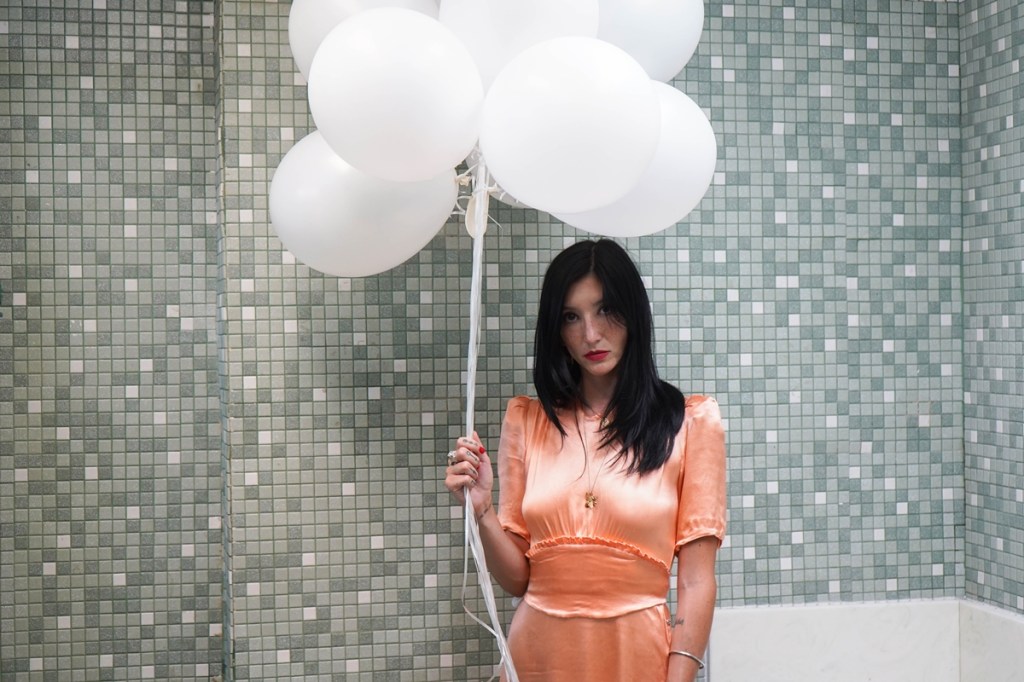

Porcupine Exuberantly Hits Rock Bottom as a Path to Self-Awareness on “The Way Down”

Porcupine, photo courtesy the artists

Porcupine from Minneapolis could be easily picked apart for obvious influences in forensic manner upon a quick listen to “The Way Down.” Like how its use of fuzzy guitar and dramatic but not melodramatic vocals cast over and syncing with an unconventional rhythm is reminiscent of Queens of the Stone Age. Though named as a reference to the great 1983 Echo & The Bunnymen album the way the song is arranged there is a kind of late 90s alternative rock groove with melodies in a slow roller coaster dynamic and sway like you’d hear in an early Swervedriver song. But what sets this song apart from being defined in those ways are the touches of bell chimes, the quiet pauses in the song like moments of clarity from the narrative of the song in which it sounds like someone trying to cope a life of fooling himself and trying to play the same games on others in order to be liked, even loved, or even just given some attention—the subtle details that give the song more musical dimensions beyond simply being a solid rocker. And it all sounds like a mantra of bravado that you say to yourself so you don’t have to feel how things really are because it’ll bring you down. And yet at the end of the song as so well accentuated in the music video by Paul Thompson there is a self-awareness in the songwriting as though written from the perspective of someone who tries a bevy of coping mechanisms for not dealing with a personal issue like addiction or a mental health issue and tries to divert other people noticing these things with actions and charming words but he can’t fool himself and suspects he isn’t fooling anyone else either. This epiphany is made more palatable through the exuberance of the song and because of that “The Way Down” doesn’t hit so much as a tragedy as a chance to start over without humiliation. Watch the video for “The Way Down” on YouTube and follow Porcupine at the links provided.
Porcupine on Facebook

Porcupine on Instagram

The Fair Attempts Deconstruct the Mythologizing of One’s Self-Destructive Behavior on the Orchestral “Dark Star”

Finnish darkwave band The Fair Attempts inject some beautifully cold tonality into its single “Dark Star.” Fitting for a song seemingly about a person who has become disconnected from their core identity and sense of self. Like a song sung to oneself as a vehicle for confronting aspects of one’s personality that might otherwise be easy to ignore at one’s peril. The lyrics “The shadow cast I see right through” in the early part of the song articulates a deep sense of how a person is so far beyond stretched out past who they are they are even more insubstantial to themselves than a shadow. The minimalist piano melody and keyboard generated drones flow through the song in regretful tones and in moments the vocals echoing in a touch of reverb sounds like it was recorded in a cathedral. In moments it’s reminiscent of some of the more dark and mournful side of Sarah McLachlan’s 1993 album Fumbling Towards Ecstasy in that quality of tapping into an orchestral sound in miniature but perfect for enhancing the vulnerable side of the song and an undertone of aching past self-abuse lingering into the present. Listen to “Dark Star” on Spotify and follow The Fair Attempts at the links below.

The Fair Attempts on Facebook

The Fair Attempts on Twitter

The Fair Attempts on Instagram

The Fair Attempts LinkTree

Sea Glass and Misty Boyce Transform Soul Pop Classic “Get Ready” Into an Otherworldly Downtempo Ode to Desire

Sea Glass, photo courtesy the artist

Sea Glass completely transforms the 1966 hit song by The Temptations “Get Ready” with vocals from Misty Boyce. There is a lurking bass line in the background that swims in the shimmery synths and simmering percussion and soft-shuffling beats. Touches of lingering guitar haunt the edges of the melody. It might even be a borderline creepy song but Boyce’s sweetly melodic vocals sit in the mix to elevate the mood a bit. At times the synth drone recalls the underlying sultry and mysterious sound of Talk Talk’s music from The Colour of Spring (1986). Overall this treatment taps into the core melodic vibes of the original but rather than earthy affection of the original this one offers an ethereal and otherworldly expression of desire that suits its more downtempo aesthetic. But in the end it reaffirms the high quality of the songwriting that Smokey Robinson put forth some six decades ago with an clear resonance with the sensibilities of the present. Listen to “Get Ready” on YouTube and follow Sea Glass at the links provided.

Sea Glass on Facebook

Sea Glass on Instagram

When Humans Had Wings Aims to Break Out of Pedestrian Existence With the Art Pop Song “The Madness of the Saints”

The name When Humans Had Wings and a song “The Madness of the Saints” are promising enough, suggesting imaginative music to be heard. The spacious piano work and introspective vocal in the first third of the song lead us into expansive spectral organ that sounds like having wandered through a large building of enclosed passages and emerging into an outdoor courtyard with a clear view of a night sky rich with a vivid starfield. Then the song brings us back with the lonely piano figure and a companion piano part that serves as a moody drone. The song from the 2022 album Run Rabbit Run! is a meditation on the ability of imagination and dreams to work through subconscious oppression and personal liberation. For this track the symbol of saints who during their lifetime were and are often perceived as insane but who are in contact with a higher truth that is out of step with prevailing thoughts and ways of being. Which is an aspect of being an artist driven to create work that resonates beyond the immediate dopamine shot of a great hook or riff or banger moment. The complex structures of this song and other tracks on the album a filtered through a pop song format but in that gives an unexpected dimensionality to songs that often often veer off the map of alternative pop into a modern version of art rock. Listen to “The Madness of the Saints” on Spotify and follow When Humans Had Wings at the links provided.

When Humans Had Wings on Instagram

When Humans Had Wings on YouTube

Secret Shame Explores Breaking the Cycle of Self-Harm as Self-Defense on “Color Drain”

Secret Shame, photo courtesy the artists

Secret Shame’s new album Autonomy releases on October 28, 2022 and the single “Color Drain” reveals new dimensions to the group’s songwriting. It’s material for the 2019 album Dark Synthetics were well within the realm of the death rock wing of post-punk with songs that shed great insight into the nature of trauma, addiction and mental illness and the struggles in coping with aspects of human behavior that are often fairly normal reactions to the pressures of living in a dysfunctional society. “Color Drain” finds the group in a more warmly melodic phase of its songwriting but one whose tenderness is not used to cover over the raw emotions expressed. It is a vivid portrait of living with the instincts of having suffered prolonged abuse, emotional and likely physical, and how those ways of surviving the experience can cause you to shy away from things that might be good for you suspicious of the motivations of everyone around you because you’ve had to live with the possibility that any act of kindness or tenderness might be the prelude to getting in deeper into your mind to elicit responses long lost to the emotional calluses built up from becoming accustomed to abuse. But the song dares to ask after the ways in which one might come to see this level of toughness, of learning to survive as romantic and how that pain becomes the way in which you know you can still feel in recalling it as a source of dignity when real dignity can be found beyond that dynamic. And that clinging to that dynamic even after you’ve somehow left the abusive situation can be a way to reinforce the pattern in anticipation of its recurrence. When your mind is focused on that pain to the near exclusion of experiences that can better define your life can be a difficult prospect to face and maybe that method of coping served its purpose. This song questions the boundaries of that way of being and living and in the end suggests the possibility of being open to help from those who don’t have a selfish agenda in a path of disrupting this circle of self-oppression. Listen to “Color Drain” on YouTube and connect with Secret Shame at the links below.

Secret Shame on Facebook

Secret Shame on Twitter

Secret Shame on Instagram

Nighdrator Gives Form to a Love Both Elemental and Vulnerable on “Scarlet Tendons”

Nighdrator opens “Scarlet Tendons” with the sound of water flowing and a mysterious keen in the distance before a distorted drone introduces clashing riffs and hanging rhythms that open a space for the vulnerable and introspective lyrics to follow. The music provides the sonic framework for an epic exploration of the nature of a kind of love that can engulf both people involved and the sensitivity and strength it takes to even try to make a connection that is so potentially deep work rather than getting lost in it. The metaphors of a love like the sea and the visceral image of scarlet tendons per the title and how tendons connect bones and thus a symbol for the core of your being and the motivating fibers that hold it all together. The heavy shoegaze sounds is a bit like the collaboration between Midwife and SubRosa that never happened but Nighdrator proves across its new four-song, self-titled EP that it’s primal, darkly psychedelic atmospherics stretch well beyond narrow genre definitions. Listen to “Scarlet Tendons” on YouTube and follow Nightdrator from Hattiesburg, Mississippi at the links below.

Nighdrator on Instagram

Queen Kwong Creates a Vivid Portrait of the Emotionally Stunted Wannabe Musician Male We Have All Suffered Ungladly on “Sad Man”

Queen Kwong, photo by Laura-Mary Carter

Queen Kwong really nailed an archetype of a man of stunted development trying to maintain a veneer of cool in the lyrics of her song “Sad Man” from her ambitious pop noir album Couples Only. But the video for the song has Johnnny Knoxville of Jackass fame playing the part of a figure like Havey Keitel circa Bad Lietenant. The lurid and gritty scenes while Kwong’s vibrant and dusky voice and haunted keyboard melody with Christian-Death-circa-Only-Theatre-of-Pain-esque guitar histrionics trace the edges of angst and agony on screen. Kwong herself plays a nun that serves as the conscience and reminder to Knoxville’s character of who he once was before he allowed himself to hurtle down a path of self-hating self-destructive hedonism and corruption. It’s all a powerful combination that anyone that has been part of any music scene in any city of size recognizes immediately but the specificity of Los Angeles is something we’ve all seen in movies and heard stories about for years except Queen Kwong puts the spotlight on the so not glamorous but much more common story of lack of success and clinging on to a myth and image of fake rock and roll romanticism rather than make an honest go of it with integrity. Watch the video for “Sad Man” on YouTube and follow Queen Kwong at the links below where you can also give a listen to the rest of Couples Only.

“VALE” is mirrored fatality’s Futuristic, Mystical Deconstruction of Late Capitalism’s Unraveling of a Sustainable World

mirrored fatality, photo courtesy the artists

The layers of image and sound represented in mirrored fatality’s “VALE” is the kind of glitch collage style mashup that pushes aesthetic boundaries. There’s no formal structure but that of the project’s own. It is a recursive flow of textures, tones and raw noise assembled as a reflection of the constant barrage of information to which we’re subjected daily. Except mirrored fatality in the video presentation of the track gives context of the erosion of our infrastructure and eco-system through neglect and the hubris of late stage capitalism. To someone conditioned completely to seek out only sound art in the form of conventional music might see and hear this stuff and think it’s just shy of random recordings of abstract internet memes placed together and that might in some ways not be far off the mark but it misses the point entirely. But people who have been tuned into what labels like Orange Milk and other forward thinking labels have been releasing in the realm of glitch-infused electronic music and artists like Giant Claw, Darren Keen, Goo Age and Andy Loeb will find that mirrored fatality’s aesthetics and arrangements not to mention the visual style much to their liking as the duo deconstructs the dubious virtues of our post-industrial society partly by creating music beyond the conventionally accepted zones of creative endeavor. Watch the video for “VALE” on YouTube and follow mirrored fatality on Bandcamp.

“Jangle med,” the solo offering from Orions Belte Drummer Kim Åge Furuhaug is a Refreshing Exercise in Free Jazz Lounge

Kim Åge Furuhaug, photo courtesy the artist

Orions Belte drummer Kim Åge Furuhaug puts in his solo offering in the band’s forthcoming set of solo albums from each member of the band (due November 18, 2022) with the lead single “Jangle med.” The song drifts along like a mellow boat trip down a tranquil stretch of river. Lap steel guitar stretches out a tone languidly as brushed drums trace a rhythm. Then piano runs replace the guitar in an offhand jazz style both urgent and following a simple chordal structure, in the background subtle upright bass thrums and provides a through line as orchestrated sounds swell and sax notes flutter and harp-like sounds chime in the middle distance. It sounds like a late 60s jam session but with modern instrumental choices in the palette but with the same freshness of improvisational composition that gave that music and this a compelling spontaneity of spirit that keeps you hooked until the end to see where the song ends up. Listen to “Jangle med” on Spotify and follow Norwegian avant-pop trio Orions Belte at the links below.

Orions Belte on Facebook

Orions Belte on Twitter

Orions Belte on Instagram

Ways Of Seeing Captures an Adult Sense of Heartbreak on the Hazy and Nostalgic “Walk Through The Crowd”

Ways of Seeing, photo courtesy the artist

The waves of repeating sound that course through Ways of Seeing’s “Walk Through The Crowd” flow like the ripple of memory that echoes through your mind when you’re reflecting on significant periods of your life. The touch of sultry saxophone in the song, the minimal percussion and impressionistic guitar work alongside the introspective vocals makes for a song that has a deep sense of nostalgia and regret accented by bell tones. One imagines a music video for the song in sepia tones and soft imagery. In the end it’s a sad song about letting go of cherished memories that bring you pain so that you can live in the present with what time’s left for you in this life. It’s a complex emotional expression and a depiction of heartbreak one doesn’t often hear in popular music outside of maybe something by The Church or another band that has managed to get well into adulthood and written music from an adult perspective and the giving life to the experiences that don’t fit neatly into the adolescent framing of a great deal of rock and pop. Listen to “Walk Through The Crowd” on Spotify and follow Ways Of Seeing on Soundcloud.