Obi Blanche’s “kry4m3” is a Haunting Yet Vulnerable Song About Heartbreak and a Hesitant but Inevitable Reconciliation

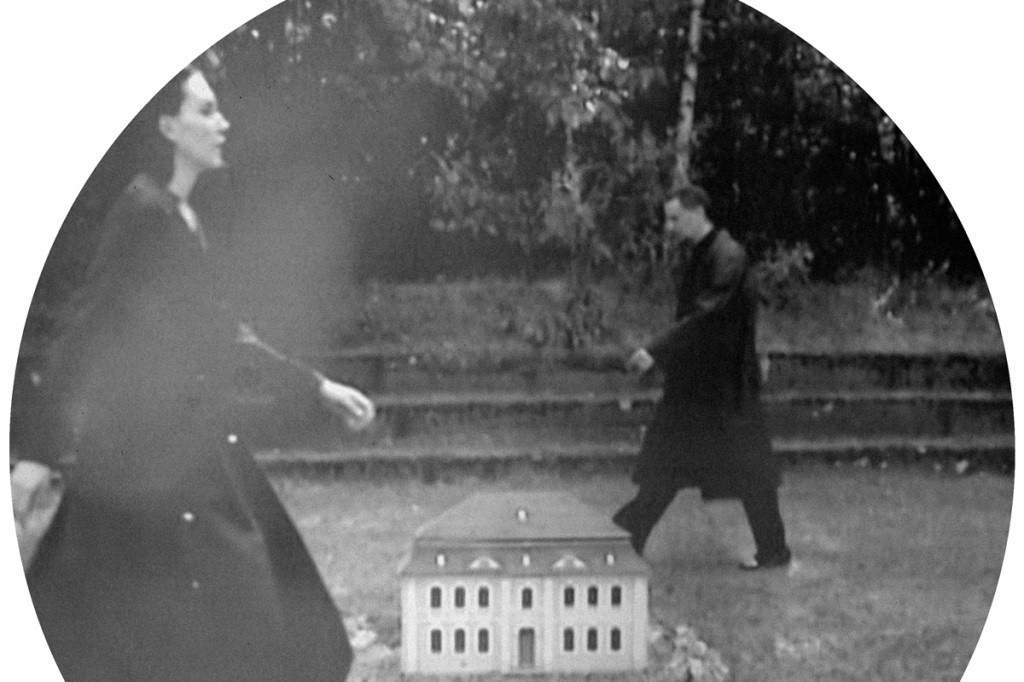
The music video for Obi Blanche’s single “kry4m3” has the quality of a cursed film or Uncanny Valley territory. In black and white we see a figure walking through a rather large diorama of a city in partial ruins, a giant strolling through the abandoned remnants of human civilization with figures set out taking a break from reconstructing a society. It’s an apt metaphor for a song about heartbreak and perhaps exploring ways to reconcile. We see teeth speaking the lyrics sung in both male and female vocals. A woman in a long black coat is scene walking among the same diorama and toward the last part of the song the two figures walk by each other seemingly unaware of the presence of each other, a model for the disconnect we hear in the song whose refrain is “I cry because I want you to feel better, I don’t cry for me.” The hovering tones, hazy drones and spare percussion create a truly otherworldly atmosphere like the action of this healing separately before the hint of coming back together in the end is possible. The aforementioned lyric is like a mantra and a reminder of a path to returning to a more normal frame of mind and hearing it from both voices is a subtle way of conveying the time for suffering in silence over some slight that isn’t a dealbreaker in the end has ended. The female figure who we see crying in earlier parts of the video is shown smiling and looking into the camera rather than looking forward to where she’s walking, an unmistakable symbol of how the mood has changed and the hypnotic tenor of the song fades out. Watch the video for “kry4m3,” made by Obi Blanche and Isotta Acquati with art direction from the latter, on YouTube and follow Obi Blanche at the links below.

Obi Blanche on Instagram

Sin Cos Tan’s AI Generated Video for “Endless” Helps to Show How the Agony of a Breakup Doesn’t Have to Be Neverending

Sin Cos Tan, photo courtesy the artists

Sin Cos Tan used an AI to generate the video for its song “Endless” and the resultant animated visuals are like a rapidly flowing mix of imagery somewhere between manga and MC Escher but in full color. It just looks so illustrative and otherworldly it suits the song well. The measured pace of the song allows its sounds to soar, welling up with heartbreak. The dual vocals seem to dance in tandem with an uplifting rhythm and soft synth tones, a bell tone carrying the melody. The net effect is a little like an retrofuturist update of the video for the song “Take On Me” by A-ha (1985) but with a modern synth pop sound that draws on a sense of nostalgia to enrich its emotional impact. You hear in the lyrics those dreaded words “It’s time we talk, I promise it won’t take long” that inevitably lead to the breakup, one that leaves you confused and cast adrift like it’s never going to end. The lyrics “endless coming down” and “broken coming down” expresses that feeling so well, the way it can feel like being pushed into a dissociative coping state that puts you in a spiral of experiencing that moment of heartbreak over and over again until the ache of the experience is exhausted. And yet the sound of the song is one that seems hopeful because at least there is an ending and the bittersweet agony can last only as long as a song if you want it to. Watch the video for “Endless” on YouTube and follow the Finnish synth pop band Sin Cos Tan on Spotify.

Lori Goldston Infuses the Grief of “We Miss You and Wish You Well” With Grace and Elegance

Lori Goldston, photo courtesy the artist

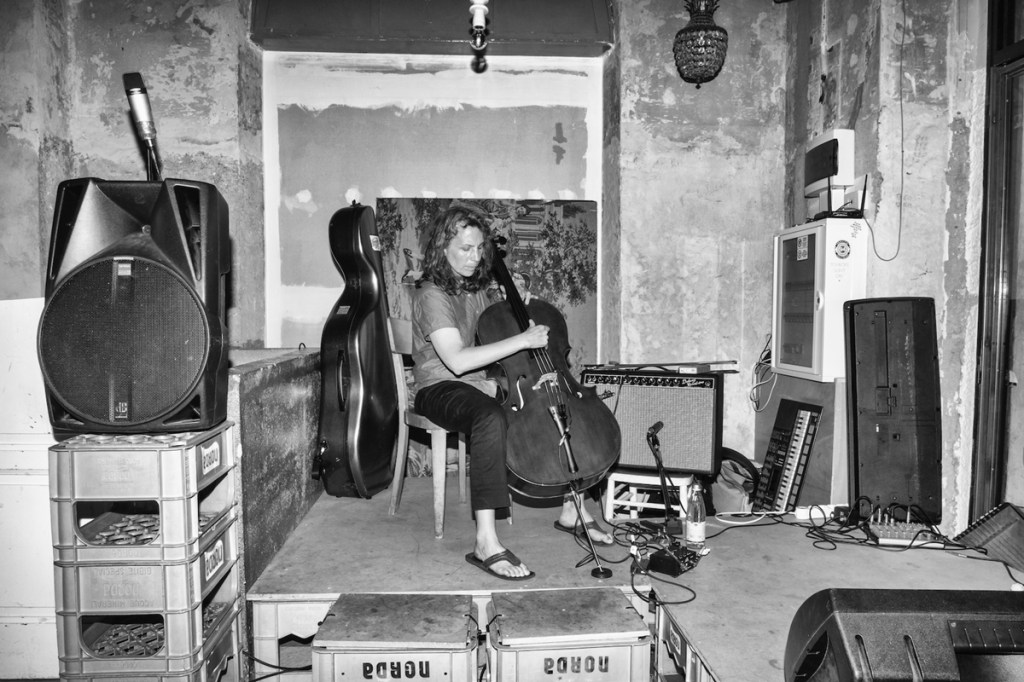
Lori Goldston expertly elicits a textural tone to bring us into the open spaces of “We Miss You and Wish You Well.” The video by transgender filmmaker Clyde Peterson gives us shots of clouds in real time and views from above snow enshrouded mountains as if from a plane taking off from the winter climate for parts as yet determined. Goldston’s string work on the cello feels like both the ties that bind us to the environs we know and the pull to new places and experiences. The ascending lines soar and level out with the music trailing off and returning with greater force and energy only to float off into the distance again. In the last minute of the song Goldston’s bowing brings forth a sound of conflicting forces reflecting feelings similarly at odds within one’s own mind but in the end settling into the tranquility of acceptance of a decision made. The title of the song says much for the instrumental piece and as part of the new album High and Low, with the “High” part of the album being a series of solo improvised pieces as memorials for Goldston’s friend and Canadian artist-musician the late Geneviève Elverum it expresses well the fragile intensity and delicacy of feeling and the inner turmoil that can strike you when you think on your friend again in bursts that seem manageable if you don’t allow yourself to be crushed by the immensity of it all at once but how that never quite works out. But Goldston tries and gives that expression of heavy emotion some grace and elegance in the execution. Watch the video for “We Miss You and Wish You Well” on YouTube and follow Goldston at the links provided. High and Low is available now via SofaBurn.

Lori Goldston on Facebook

Lori Goldston on Twitter

Lori Goldston on Instagram

KIN CAPA Puts an Existential and Cinematic Spin on a Classic Question With “Who Needs Love?”

KIN CAPA, photo courtesy the artist

KIN CAPA is back with his signature glam rock and pop sound on “Who Needs Love?” On the surface it’s simply a catchy song asking the perennial question people often ask when things go wrong in dramatic fashion in their love life, asked almost ironically to purge the hurt feelings while desperately wanting the thing being rejected. Then there is the existential phase of this consideration in the song where the unspoken answer hangs in the air because clearly everyone needs love on some level in so many areas of their life in different forms and some of them even not particularly personal which can feel confusing if you have a monodimensional understanding of the concept and how it manifests in your lived experience. The simply guitar riff that runs through most of the song coupled with Lee Capa’s uplifting and spirited vocals is reminiscent of T. Rex but the structure of the song, even though it’s just three minutes twelve seconds long, feels like a short film in three acts and to set these sections apart. Shortly after the first minute there is a moment when little flitters of what seems to be a sound effect like the part of a movie where something random happens to move the plot along in a new direction. Around the two minute mark there is a bit of a musical interlude where the tone and the melody and rhythm itself shifts and then toward the end of the song back into the main riff. A lot happens in the span of roughly the average length of a modern pop song but that’s been Capa’s gift as a songwriter, putting more content into his compositions than one might expect keying into his undeniable hooks. Listen to “Who Needs Love?” on YouTube and follow KIN CAPA at the links provided.

KIN CAPA on Facebook

KIN CAPA on Instagram

kincapa.com

Yedi Kat Yabancı Aids us in Appreciating the Process of Becoming Who We Are Rather Than Be Trapped by It on Retro Synth Pop Single “DEVON”

Yedi Kat Yabancı, photo courtesy the artist

The title track to Yedi Kat Yabancı’s 2022 EP DEVON employs sequenced loops and distorted synth washes to draw you into a song about reconciling conflicting emotions and uncomfortable memories as a means of processing the ways those wrinkles in the psyche can trip up your full development as a human. The nostalgic tones are entrancing and hearken to educational videos of the early 80s in which the filmmakers used then new modes of making music to craft the soundtrack often unwittingly making melodies that suggest an open future of expansive possibilities. Think a more beautifully haunting version of the Cannon Pictures theme music but drawn out like a musical path to a better tomorrow. That’s the vibe of “DEVON” and the music video for the song is a visual map of the flow of thoughts and imagery in the mind that you mull over in moments of calm when you can feel relaxed enough to revisit memories that may have seemed painful and complicated at one point but which now you can look back on and appreciate the layers of those memories and the people that were a part of making them and appreciate the context more and how it’s helped to shape the person you are today in the positive and not so wonderful sense but in the process of attaining that perspective one also acquires the ability to accept a process of becoming rather than being trapped by it. Watch the video for “DEVON” on YouTube and follow the Istanbul-based artist Yedi Kat Yabancı at the links below.

Yedi Kat Yabancı on Instagram

Yedi Kat Yabancı LinkTree

Asbest Seethes Against Society’s Perpetual Cycle of Self-Consumption on “Autodigestion”

Asbest, photo courtesy the artists

When “Autodigestion” begins one might expect a more straightforward, noisy post-punk song from Asbest with the repeated guitar figure and the menacing bass. But when the vocals come in with Robyn Trachsel sounding a bit like Will Shatter in terms of desperation and on the verge of breaking through in some random emotional direction from the internal pressure and Judith Breitinger carrying an ethereal melody alongside it giving the song a quality both visceral and otherworldly. Jonas Häne’s drumming seems to cascade down, accenting the dire pronouncements with a tribal conviction. When the song ends abruptly it’s like a faucet has been turned off to the caustic tones and depiction of a civilization consuming itself, giving greater weight to the metaphor in the lyric “We are trapped in the body of a snake” that opens the and closes the vocal section like the endless cycle of the Ouroboros but casting it like a never ending cycle of disappointment, oppression and low key self-destruction. But in expressing such pain and sorrow at this state of affairs one hears a will to break the pattern. Listen to “Autodigestion” on YouTube and follow the Swiss post-punk band Asbest at the links provided.

Asbest on Facebook

Asbest on Instagram

“I Only Wonder” by S M O T R I T v L E S is a Gentle, Deep Dream Pop Song About the Importance of Moving Beyond Your Bitterness Before You Get Old

S M O T R I T v L E S, photo courtesy the artists

S M O T R I T v L E S puts a lifetime of introspection and regretful wonder in just over two minutes with the single “I Only Wonder.” A slow breeze of acoustic and electric guitar and keyboards trace a flow of emotions while vocals that set a scene rooted in the kinds of sensory experiences that trigger deep memories buried over by the detritus of life in forward motion. It’s dream pop and has that kind of airy and spacious quality that allows emotions to open up in a way that makes the potential pain put away easier to process. But the song for all its expansiveness has a density of musical ideas from the instrumentation and the way each stream works in sync with each other in a loose dynamic that makes a song that seems to be about wishing one could go back to a time in a relationship when things didn’t get convoluted, a desire to perhaps travel back in time and live in that moment knowing that you can only live in today. And acknowledging that somewhere in your hear you’re stuck on some ridge, some wrinkle of emotional turmoil that makes it hard to move on from that moment where things headed in the wrong direction but knowing that one must find a way to lift oneself off that thorn in the psyche before you get old and aren’t as concerned with these trifles because so much of your life has been bled off holding onto something that someday won’t have as much significance. It’s a deep song about letting go but feels gentle and uplifting. Listen to “I Only Wonder” on YouTube and connect with S M O T R I T v L E S from Belarus at the links below.

S M O T R I T v L E S on TikTok

S M O T R I T v L E S on YouTube

S M O T R I T v L E S on Instagram

S M O T R I T v L E S on V Kontakte

Rapt’s “Last Night In Exile” is a Gorgeously and Tenderly Unsettling Atmospheric Folk Depiction of a Haunting Homecoming

Rapt, photo courtesy the artist

In setting the hushed vocals, some lines in falsetto, in an elegantly detailed series of repeated acoustic guitar lines and the ghost of synths in the background, more prominent later, Rapt craft a bleak yet deeply evocative scene with “Last Night in Exile.” It’s reminiscent of an even more pastoral and desolated Fairport Convention of solo Richard Thompson in using intricacy to weave a mood more than simply an unconventional melody. Jacob Ware’s vocals complement well Demi Haynes’ leads and both serve as a guide through a song that appears to capture the conflicted feelings of coming back to a place that was once your home and the sense of displacement changes can impose on your memory as memories of all the good times and bad come drifting back in waves that can feel too intense to take in all at once and threaten to overwhelm your heart not with the most poignant of feelings but the kind that haunt and linger and erode your sense of an identity you built outside your old contexts. But the song’s gentle spirit in the end suggests how this is merely a feeling no matter how powerful it seems and that you can wade through its shadowy energy and face the way the world you once knew has changed and take it on its own terms and on your own new sense of self. It is a song that is the inversion of nostalgia and the warm feelings that come with it and it is precisely that which gives it a depth beyond the obvious masterful composition and nuanced atmospherics orchestrated to tug at the parts of the mind we often try to avoid. Listen to “Last Night In Exile” on Spotify and follow Rapt at the links below. On Bandcamp the very limited edition of the full album Wayward Faith vinyl (with a section called “Diaries” that is a copy of a two part diary/journal that Ware kept during the making of the album) and cassette are also available shipping from Slovakia or France in early 2023.

Rapt on Facebook

Rapt on Instagram

SeepeopleS Return With the Urban Folkloric Examination of Our Habits of Psychological Self-Abuse in the Video For “Shame”

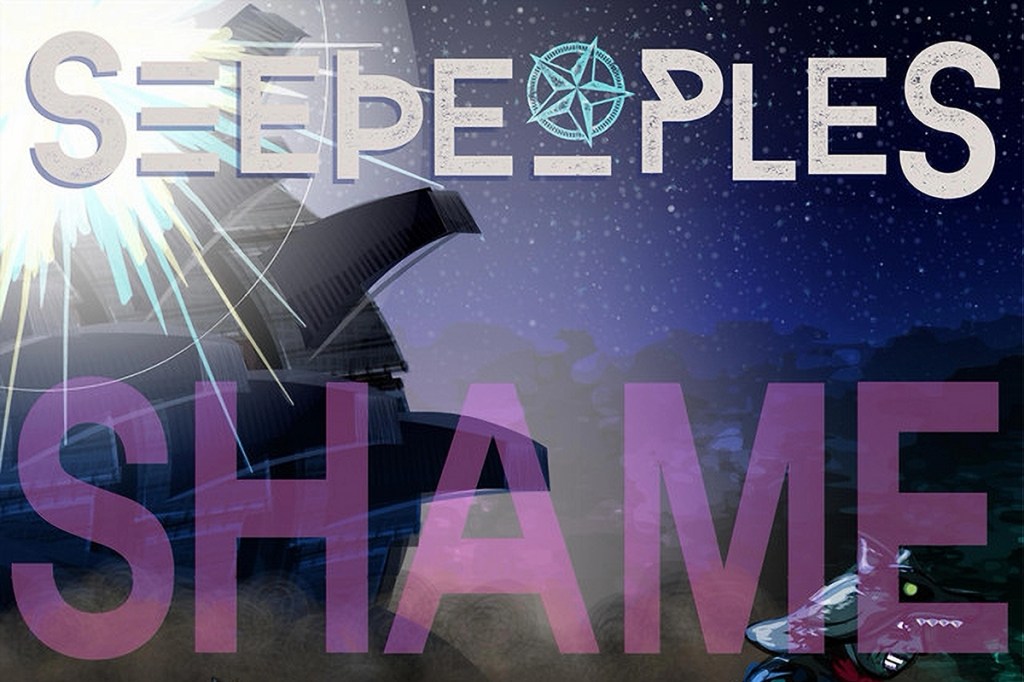
“Anti-genre” indie rock tricksters SeepeopleS (which includes Tim Reynolds of Dave Matthews Band and members of Mophine, Paliament/Funkadelic, Spearhead and Lynrd Skynrd) are back with a video by Pete List for the song “Shame.” In the melancholic colorings and tone of the song and the situation of what’s clearly a family splitting up. A father is shown arguing with a mom with the child looks on, fire bursting from the father’s mouth depicting the kind of heated rhetoric that happens sometimes when a relationship splits in the not at all amicable way. A tender guitar riff runs through even as the song reaches an almost orchestral climax. The song unfolds in slow blooms of melody and the vocals are regretful and introspective spelling out the ways one can become disheartened. Lines like “with every passing moment I struggle to believe in love” and “someone’s always crashing the bus, you get used to the horror, the pain” hit hard but then there are them moments of realization such as “Life is not a game or a labor, living isn’t waiting for an angel or a savior, it’s insane.” And the choruses that include the word “shame” use the word as a mantra as a reminder that being able to feel how you know things don’t have to let fear or the heartache color every moment of your life even when it all feels like a chain of misfortune and tragedy. One could take the line “Don’t be afraid because you’ll be dead soon anyway” as a resigned, cynical but the video puts it in a different kind of context. The kid seems to have absorbed the angry ghosts that had gathered around him and turned into an animal that goes on the run from his troubles only to find himself facing down an armored military faction from which he and others of his have to run but only escapes by turning into himself and witnessing what looks like his own funeral but it’s a meta moment as the animal spirit waves goodbye to the kid as if setting him free from the shackles of his own anxieties after a dream conflict of epic proportions. It fits a song that really is a journey through dark, existential realizations that seem to hit us as the absolute truth in those low periods in our lives when everything seems to pile up and seem completely insurmountable. But the song with this video shows us how we can build the monsters in our minds better than anyone else and dissolve them as well and we can take on the real world as it is once the internalized melodrama fades. Shame in this song serves many rhetorical and symbolic roles including our conscience, our ability to take on psychological baggage because of our cultural conditioning and an assessment of the world we see and what it shouldn’t be but too often is. It’s a catchy pop song but has unexpected depths. Watch the video on YouTube and follow SeepeopleS at the links below.

SeepeopleS on Facebook

SeepeopleS on Twitter

SeepeopleS on Instagram

seepeoples.com

Richard Orofino’s Use of Contrasting Textures, Tones and Melodies Lends Complexity to His Unorthodox, Dream Pop Love Song “Johnnycakes”

Richard Orofino, photo courtesy the artist

Richard Orofino employs a deft use and contrast of texture and more ethereal guitar tone on his song “Johnnycakes.” There is a more distorted rhythm guitar part that serves as a grounding element in the song as more ethereal guitar melody floats over the top accented by keyboard and synths that sprinkle the song with a bell tones like the glimmer in a stream in bright direct sunlight, and all of it giving off an aural haze that lends the track an otherworldly, dream-like yet uplifting quality. Difficult to say what the song might be about but it does draw upon nostalgic imagery including the johnnycake which is a cornmeal flatbread that was an American breakfast staple and in some parts of the country it still is, a bit like pancakes but of a specific variety. The song invokes the image of steaks and “mom’s gravy” and contrasting that with the ideas of being expected to act like someone is in love with an actual human with flaws and limitations rather than the idea of that person. But that the narrator in the song will miss that person when they leave. It’s that ambiguity that lends the song a variety of interpretations regardless of specific inspirations. But where it hits the most poignantly is in the layered musical elements that make it feel like it exists out of a specific time and context which is something one doesn’t often hear in a pop song. Listen to “Johnnycakes” on Spotify and follow Richard Orofino at the links below.

Richard Orofino on TikTok

Richard Orofino on Instagram

Richard Orofino on YouTube

Richard Orofino on Bandcamp