

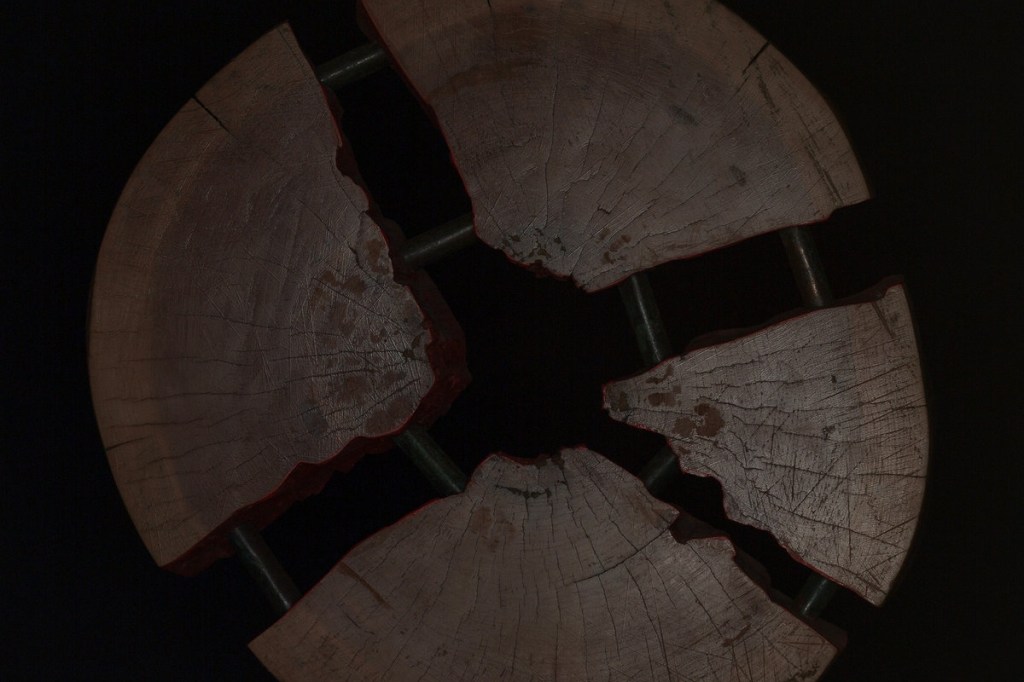
The video treatment that Guillaume Vallée & Larissa Corriveau brought to the impressionistic ambient and musique concrète composition “La nuit renait tourjours” (trans. “The Night Is Always Reborn”) by Montreal-based musical ensemble Ce qui nous traverse takes us through an arc from sunrise to nightfall. Drawn out guitar drones, long-bowed notes on strings, the samples of early morning bird song and accented percussion soundtrack what looks like a road trip throughout a day, mountainous bluffs in the distance, fields at hand out the window, filmed on Super 8 or 16 millimeter. It’s reminiscent of what a Stan Brakhage vacation film might look like with the layered, processed and treated images with the glitches, textures and decayed and damaged bits of film left in. The action of the song sneaks up on you and takes you along for an emotional ride through moments of afternoon reverie and on into a tranquil yet dramatic sunset with the instrumentation reprising for a whirling of elements into a a climax of activity before a fadeout with resonating keyboards. Cinematic post-rock to ease the tensions of a tumultuous year. Watch the video for “La nuit renait toujours” on YouTube, listen to the new album Le sacre de Sainte-Barbe on Bandcamp and connect with Ce qui nous traverse at the links below.

 Queen City Sounds and Art
You must be logged in to post a comment.