The title of Sweet Fellas’ song “I’m More Afraid to Lose My Job Than I Am of Dying” is a poignantly bleak summation of life for many living under late capitalism. When the piece begins its bleak drones have a textural and tonal sweep, drift and flow that expresses what sounds like social bonds and one’s own psychology eroding and dissolving. In that haze of sounds there is a slowly evolving melodic figure, perhaps a piano processing minimal chords and faintly resonate like the flickering embers of hope in a devastated landscape. It has an emotional resonance with Tarkovsky’s 1979 existential and beautifully bleak masterpiece Stalker and Eduard Artemiev’s film score as a cutting through of values and aspirations we’re often told matter when deep down we know that life should be more than fulfilling the third rate technocratic goals of an oligarchy whose demands are baked into the social fabric. Listen to “I’m More Afraid to Lose My Job Than I Am of Dying” on Spotify and follow Sweet Fellas on Instagram.
“Tarkovski” is the lead single from BODEGA’s forthcoming album Our Brand Could Be Yr Life (due April 12, 2024 via Chrysalis Records). Of course the title is a reference to the great Russian filmmaker Andrei Tarkovsy but also snow skiing. Guitarist and vocalist Ben Hozie noted that he was taken by Tarkovsky’s book Sculpting in Time and its rules and guidelines for filmmaking often broken by Tarkovsky in actual practice even while those principles are still useful. It’s a testament to how art is actually made and how any actually interesting artist has to reconcile inspiration and intuition with concepts and technique without being strictly limited by any of it. As the band has been playing the song live it has improvised the middle section with words selection considering their efficacy as a sound in the music more than the literal meaning. The song engages in a bit of genre and style time traveling as well with strong melodies in a fashion reminiscent of 1980s power pop and New Wave. The middle instrumental section sounds a bit like what might have happened if The Replacements did a cheeky, off the cuff tribute to both The Velvet Underground and The Clean with hypnotic, noisy, inexplicably beautiful and moving riffs. BODEGA as always finds a way to make a catchy song that goes off center into unpredictable territory and brings you along for the ride even if the person addressed in the song doesn’t really want to go on that ride despite asking to be taken to the zone whether as a deft reference to Tarkovsky’s deeply existential 1979 masterpiece Stalker and in the more cosmic sense or being in the area and headspace where the action happens or both. It’s a promising peek into the art punk heights BODEGA will take us to when the new record drops just over a week after Tarkovsky’s April 4 birthday. Watch the video for “Tarkovski,” a visual and thematic nod to the films of the director in a fog enshrouded forest, on YouTube and follow BODEGA at the links below.
The black and white noir aesthetic of El Morabba3’s video for “El Wuhoosh” with its use of animation techniques and visuals give it the aspect of an experimental science fiction movie. The song is about struggling with the forces of hostility, strife and oppression that exist within and between nations. And the haunting and unsettling imagery of the video is reminiscent of a darker corner of the Zone from Tarkovsky’s Stalker or one of the pockets of Hell in Can Evrenol’s Baskin. The figures in the video look like they’ve been smeared with the spirits of the battlefield and shaking off that psychic poison. A spectral drone serves as the backdrop to the lyrics with the swells of human voices drifting into a spiral of tones and distorted washes of sound and flickering noises. That is until the song blossoms into an expansive dynamic that breaks through the silence and the dark boundaries of the bleak nighttime forest setting. It’s the sound of hope against hope, against an extremely challenging present. For some the song may be reminiscent of some of the more unusual experiments in sound and conceptual songwriting that Peter Gabriel did early in his career, to others more in the realm of modern masters of dark yet colorful moods like Laurel Halo and Grouper. But El Morabba3 presents us with its own unique vision and expression of a conflicted world and an attempt to come to terms with how to transform these situations through creative acts. Perhaps in a way that more blunt action in the world has yet to accomplish. Watch the video for “El Wuhoosh” (which in English is “Monsters”) on YouTube and follow El Morabba3 at the links below.
The sonics of Spirits of Leo’s single “Solaris” are so vivid and detailed it’s easy to get lost in its ethereal drift of vocal and guitar melody guided gently by the accenting rhythms. The way the elements of the song synergize gives a sense of intuitive composition, an organic feel in how well everything syncs up. In the studio and perhaps in the songwriting it’s Ryan Santos Phillips (vocals, guitars, bass and synth) and Alex Lichtenstein (drums) but that can turn into an exercise in self-indulgence but you can tell the musicians considered the place and role of the instrumentation and the possibilities of expression when reinforcing and complementing each other. The processional pace and elegant dynamics of course recalls the likes of The Cure and Cocteau Twins but Spirits of Leo has clearly taken that inspiration and crafted its own musical character. The song though invoking the title and themes of both the Stanislaw Lem’s 1961 novel and Andrei Tarkovsky’s 1972 film uses that poetic imagery as a vehicle for song about the meaning of one’s life and its direction and getting back into focus after feeling adrift for too long. “Sift core from ether/Lest I forget what I’m made of” is a beautiful image of rediscovering one’s essence and the line “This is my time now/Retake my Solaris” speaks to reclaiming one’s power and engaging in the activities and habits of mind that make life feel worth living. Listen to “Solaris” on Spotify, connect with Spirits of Leo at the links below and look out for the full length album Gossamer Blue available August 12 on á La Carte Records.
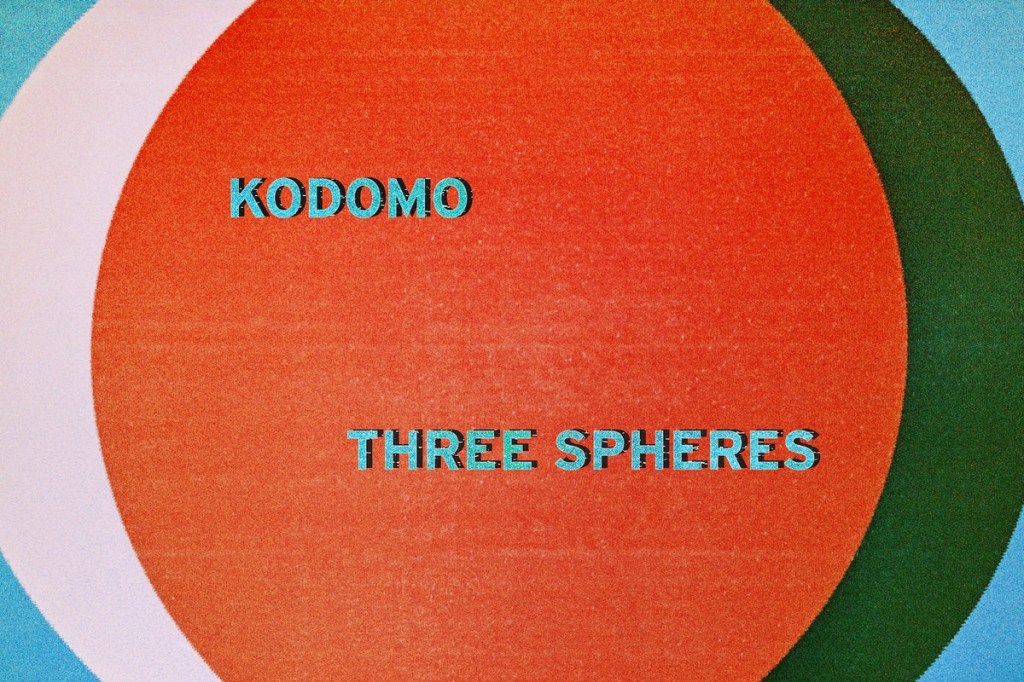
This fourth Kodomo album emerged from the isolation of the early pandemic of 2020. Plenty of uninspired and unfocused creative work came out of the chaos and uncertainty of that time. But there’s a focus to these meditative slices of IDM techno. Perhaps titles like “A Meditation On Anxiety,” “Invisible Lines” and “Radio Bursts” immediately recall the era of lockdown. But the gorgeously orchestrated drifts of tone carried along on shifting/shuffling flows of percussion are transporting in a way that is hard to achieve unless your imagination is allowed to be unmoored from the demands of everyday life as we usually know it with the pressures to deliver on the most mundane tasks that a properly functioning, technological society would automate with the capacity of humans to create spontaneously and to use our emotional and intellectual capacity for more engaging and mutually nurturing purposes. Maybe Chris Child, aka Kodomo, had some time away from life the endless grind of “normal” life, the one we’ve come to expect and to which we’ve become accustomed even though it’s been eroding society from within for decades. These songs are unhurried but do not feel self-indulgent. They combine a classical music sensibility in the Twentieth Century sense of combining minimalsim, the avant-garde and modal experimentation. But nothing feels academic here. Rather, it feels spontaneous and in the moment though clearly produced and composed.
Child seems to tap into the images and emotions that struck him poignantly, the dark thoughts in the most challenging psychological spaces and channeled that into compositions that express the sublime moments taken from days when we were all forced to reconsider what kind of world we were living in and the world we wanted and could have if we had the collective will. And the days when everything felt like it could collapse and the pandemic would never end (and it has not as of the time of this writing) and if it did, what horrible new pandemics we know about lurking on the edge of civilization would burn through our institutions and lack of defenses both medically and socially and make COVID-19 seem mild by comparison. These anxieties hover at the edges of these songs intermingling with a perhaps foolish hope that we’ll get through this with minimal destruction.
What is most striking from the perspective of imagining the worlds the sounds on this album conjure in your mind. The synth sounds are like something out of one of those post-apocalyptic or post-disaster 1980s science fiction movies where most humans are gone as in The Quiet Earth or abandoned places normally forbidden access like The Zone from Tarkovsky’s Stalker. There is a sense of wandering empty streets and taking note of how the world exists minus as much of the footprint of humanity as there had been has been since lockdowns have largely been lifted. Child’s ability to recall these experiences for the creation of the sonic equivalent of that sense of mystery and wonder in familiar places that makes this album transcend something as predictable and as obvious as a “pandemic record.” His mastery of ambient drones and almost generative electronic streams of sound combines an 8-bit video game aesthetic and clear tonal lines with layers of atmospheric textures and flowing vistas of minimal melody. Science fiction is always a commentary on the the present projected into the future and Three Spheres took the mood of the time and extrapolated upon a perhaps near future when the capacity to use one’s imagination to process confusion, raging anxiety, uncertainty and isolation to survive the disasters we already know are coming down the pike as world governments still refuse to address climate change which impacts the coming of pandemics, the distribution of resources, our ability to produce food, our capacity for sourcing clean water and the effects all have on political stability crucial to having a coherent and effective response. Certainly an album isn’t going to solve those problems but it’s good to be able to imagine a future when despite challenges we can find ways to not completely collapse if we need to.
If ever there was a title to the current season of human civilization, endless collapse is it and this collaborative album between Denver-based experimental electronic/ambient artist bios+a+ic and Seattle-based avant-garde soundscaper noisepoetnobody (under the name Entropic Advance) is a musical analogue to what seems like a pervasive feeling that just when we think we’ve hit a new low as a species we keep showing ourselves that we haven’t seen anything yet. There are no grand political statements or observations on this album, just that mood of seeming to be caught up in the flow of society’s static as institutions, norms, formerly generally agreed to beliefs about what constitutes truth and a reliable path to knowledge and so much of what makes up the world as we know it erodes into insolidity and an ambient white noise of what can only be described as not just future urban decay but the kind of prolonged collapse Edward Gibbon described in his colossal 1976-1789 masterpiece The History of the Decline and Fall of the Roman Empire but this time a global, interconnected civilization, the collapse of which will spare no one in the end. Humanity will probably survive but the successors to the Roman Empire never had nuclear technology, advanced biological weapons and so many of the other fun stuff awaiting us if and when global hegemon’s fragment and pass into history with a massive power vacuum filled by groups and leaders we can’t yet imagine.
This album seems to have been based on contemplating the dark future that even the most cynical and dystopian cyberpunk never really considered and how realistic it is for a collapse to not feel like one until it’s well under way. The sheets of processed white noise, the organic yet fragmented rhythms and distorted drones of the title track and “behind the projected” is reminiscent of a dark negative image of Tangerine Dream’s “Thru Metamorphic Rocks” from Force Majeure Those familiar might even flash back to the stark, gray, deeply haunting imagery of Andrei Tarkovksy’s 1979 film Stalker and it’s air of mystery and yearning for dream fulfillment in the face of existential peril. The titles of the songs tell a tale of a similar voyage of waking up one day (“sunrise”) and becoming aware that you’re living in apocalyptic times except it’s not as dramatic or as sudden as science fiction and mythology has lead you to believe (‘endless collapse”) and you try to figure out a way to preserve your sanity while reconciling yourself with the tragic reality and envisioning what it might be like to exist on the other side of this time (“a bridge between worlds” and “from the ashes”) only to hit upon the oddly comforting idea that we all go through these shorter cycles in life as part of bigger trends and often only get a brief period of respite that we should treasure (“catch a breath”). Despite these heady themes it is a soothing listen and one that also perfectly embodies the melancholic yet faintly hopeful mood of the world today. Who knows where we’ll end up in the next year or ten but this album is also a reminder that being paralyzed by those concerns isn’t going to derail the worst possibilities and that creative work can be a cathartic way to break that psychological freeze.
Listen to endless collapse on Bandcamp and also, if you’re so inclined, give a listen to noisepoetnobody’s excellent 2021 album Insanity Mirror on Bandcamp as well. Connect with Entropic Advance at the links below for more information and to stay appraised of Wesley Davis’ various creatie endeavors.
There was a time in the 2000s and early 2010s when horror movies and thrillers had truly enigmatic soundtracks and deeply evocative sound design that was as much a part of the cinematic experience as the visual elements. Oftentimes that side of the movie was more compelling than what was on the screen or just edged it into the haunting and affecting. “Devotion” by dpe0 comes from that lineage whether formally or otherwise and it sounds like it was written after a marathon of listening to old Hearts of Space broadcasts alongside watching the entire works of Andrei Tarkovsky and Bela Tarr. It is spare and simple in its composition but its low volume puts your listening focus in the distance as it evolves slowly with hazy, melodic drones that echo through a cycle that never quite resolves and because of that it holds your attention with a vague sense of anticipation like something mysterious and transformative is on the horizon. It brings to mind when the “Stalker” character from the Tarkovsky movie of the same name leads “The Writer” and “The Professor” into the “Zone” and towards the “Room” where it is said the wishes of those who step inside are granted. Listen to “Devotion” on Spotify.
Fatima Al Qadiri Atlantics soundtrack cover (cropped)
Senegal born, Kuwaiti raised composer Fatima Al Qadiri brings the gravity of her experience with war and post-colonial history to her darkly evocative soundtrack for the critically acclaimed 2019 movie Atlantics. The movie, marking the directorial debut of Mati Diop, is the story of a woman in a suburb of Dakar, Senegal who falls in love with one of the construction workers that have been building a futuristic-looking tower although she is betrothed to another man. The track “Boys in the Mirror” is imbued with that sense of melancholic longing, conflicted emotions and portents of tragic endings. The linger keyboard melody is reminiscent of Eduard Artemiev’s beautifully brooding and desolate work for Andrei Tarkovsky’s Solaris (1972) and Stalker (1979). The depth of tone, the suggestion of texture and an organic flow that courses through your mind, haunting it long after. Listen to “Boys in the Mirror” on YouTube, stream Atlantics on Netflix from November 29 onward and follow Al Qadiri at the links provided.





 Queen City Sounds and Art
You must be logged in to post a comment.