
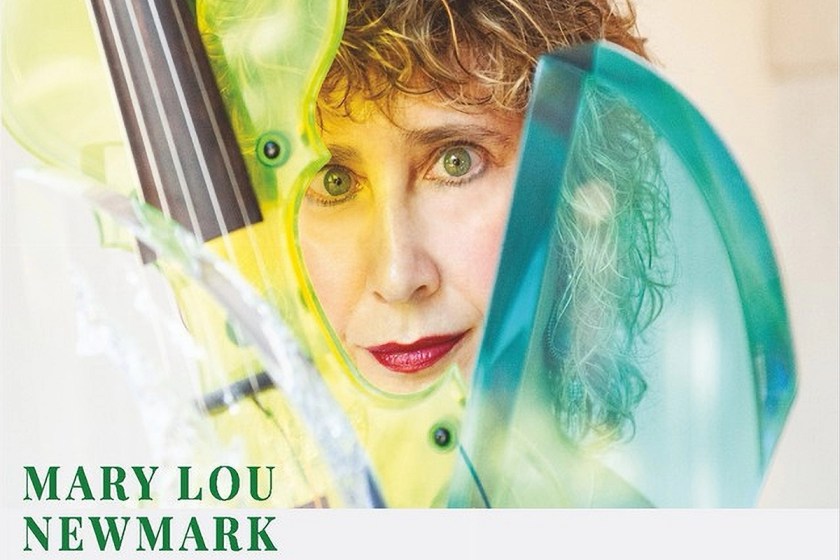
Mary Lou Newmark’s “Stitch” is a Delightfully Accessible Mashup and Collage of Classical Violin, Field Recordings and Electronic Beats

Mary Lou Newmark’s “Stitch” from her 2022 EP A Stitch in Time could be considered to be in the same realm of music as early The Art of Noise. What genre is a song that pulls together the sounds of classical violin in a modern pop mode, impressionistic percussion accents, the sound of a train horn, shakers, little glitches and pointillistic beeps and a jaunty dynamic that ties it together into a coherent whole? And then for the song to have an interlude of sampled clicks, water flowing, teletype machine running and video game-esque noises before heading back into violin led sections like a post-modern interpretation of Aaron Copland’s “Hoedown” that shifts seamlessly between all of these soundscapes for a song unlike much of anything anyone else is doing now. Listen to “Stitch” on Spotify.
Mary Lou Newmark’s Soundcape Tone Poem “Horses of Grace” is a Poetic Expression of Horsekind

Mary Lou Newmark dispenses with rules of how a song should begin and conventional structure as “Horses of Grace” begins with a string of couplets of what horses are doing or their status and how that is an example of a form of grace. Then sweeping, moody strings over textured samples and distorted synths, sounds of horses neighing, percussion that sound like something out of a 1980s Art of Noise song. What are we hearing? If you don’t think about it too much this composition offers a dreamlike experience of the essence of a horse as perhaps created a far future AI based on ancient literature, art forms and the fossil record and casting that expression of horsekind in all its glory in this sonic form that could be a style of sound art that would readily be recognized as music crafted on principles very different from notions of music we now possess. Listen to “Horses of Grace” on Spotify where you can listen to the rest of Newmark’s December 2022 album A Stitch in Time, comprised of pieces that Newmark calls “Music for the quantum age” in that the music moves across time sometimes all at once and utilizing a broad palette of sounds including live violin. It sounds like little else out there unless you’re listening to an old Laurie Anderson record.