The acoustic guitar strums keep “heaven to you” by Dead Boyfriend centered like a looped mantra giving its fluid melodies a kind of outline and structure. Violin hovers at the edges of the song like a hummingbird. The spectral keyboard tones flow about in cool colors adding melancholic and introspective hues to a spare soundscape. All while the vocals seem to convey impressionistic images of sense memories attached to feelings shared with the smallest of circles. Listening to the song feels like getting a glimpse into a secret, deeply personal world with vulnerabilities laid bare in safety. Something about its combination of textural rhythms and ethereal tones works itself into your mind with a spirit of therapeutic calm that lingers with you long after the song’s conclusion. Listen to “heaven to you” on Spotify where you can listen to the rest of the it’s just bad news EP and follow Dead Boyfriend at the links below.
Spectral shimmers of faint melody haunt the background of “Сквозь Тернии к Страху” (“Through Thorns to Fear” in English) by Голос КАА (The Voice of KAA). Like ghosts of former human activity in abandoned buildings just out of sight. When the vocals come in its like firmly whispered commentary on the state of things like a narrator for the Russian equivalent of The Twilight Zone. But the hovering buzzing sounds that zip in and out of the soundscape and swells of icy sounds lend it an aspect of a more supernatural science fiction especially when the vocals become distorted and mutated going into a more darkly ethereal passage as if we’re hearing mourning for a better time that will never be again. Musically it’s reminiscent of an especially spooky part of a song by The Legendary Pink Dots had the band been tapped to score Brandon Cronenberg film in its shadowy, industrial, ambient psychedelia. Listen to “Through Thorns to Fear” and follow the now Singapore-based experimental artist with roots in Saint Petersburg The Voice of KAA at the links below.
Daraa Tribes is a musical troupe from the oasis town of Tangounite in the Daraa River Valley of Morocco, each member hailing from a different tribe but all bring together various musical traditions of ancestral tribal sounds. It’s single “Bshara” (meaning “Good News” in English) is an energetic and intricate flow of strings, percussion and voices in panoramic choruses and lively solo performance orchestrated as a celebration of pastoral living and community with imagery perhaps drawn from Bedouin culture and daily practices that give context and continuity to existence and identity. The richness of detail in the song though one that feels so foundational and organic in execution is entrancing and hypnotic in the way of a great deal of Arabic music rooted in traditional forms. Yet the song has the spontaneous flavorings of Saharan Blues giving it an undeniably modern resonance. Watch the lyric video for “Bshara” on YouTube and connect with Daraa Tribes at the links provided.
Ronins Musik’s “Radio” begins with the sonic conceit of tuning a radio to find some more suitable music for the moment. What the dial settles upon is a stream of music that is equal parts lounge jazz, downtempo beats and the sounds of distant street noises blending into the flow of life. When the vocals come in we hear the line “All you left me was a radio,” and then relating that how every time he presses play he hears the person who left him and “every single song tells me we’re through, but I can’t turn it off because it’s the truth.” And there is a melancholic vibe to the song but also a spirit of acceptance. It’s a bit of the opposite of one of those songs in which everything reminds the singer of their lost love. This song comes from the perspective of being past that point yet maybe haunted a little by the ghosts of memories of what once was. Musically it’s reminiscent of a super chill, minimalist Was Not Was song with roots in jazz but written with pop sensibilities yet not beholden to a narrow style. Listen to “Radio” on Spotify and follow Ronins Musik at the links below.
The way the guitar tones unwind in Astral Bakers “Beautiful Everything” is redolent of Sonic Youth circa EVOL and Sister in a more drifty and wispy dynamic, daring to break from straight ahead notation in favor of expressive flourishes. The sound might be described as psych-noise-jangle. The layered rhythmic arrangements and finely accented melodies move with a gentle urgency. There is something spidery about the guitar work and fragile about the delicate percussion and a sensitive inflection to the vocals that reflects well a song that seems to be about someone who has tried so hard to do everything by the book to fit in with some mainstream image of success and acceptability and falling short repeats to themselves sentiments as those in the chours, “It’s a beautiful life, it’s a beautiful everything.” It’s an image that recalls Annette Bening’s character in 1999’s American Beauty where she’s so tightly wound and no one is fooled and she insists everything and everyone conform to her image of her life until little by little it can’t and the image is shattered and maybe she’d have been better off not trying to live up to unrealistic standards and images. This is a song about that. Living with immediacy and in acceptance of human frailty. In some regards the sentiments resonate with the sorts of things Jarvis Cocker was singing about on the 1995 Pulp album Different Class and how life would be so much easier if people could be real and not limited by internalized, arbitrary social conventions. It’s a subtle and poetic exploration of a complex emotional reality that many of us have experienced ourselves or witnessed in others. Watch road trip-themed performance video for “Beautiful Everything” on YouTube and follow French rock band Astral Bakers at the links below. The track comes from the group’s debut album The Whole Story set for release on February 9, 2024 via Sage Music.
The sounds of a pursuit in a cybernetic alien landscape is what emerges out of the sounds of strings/robotic sinews being stretched at the beginning of Petruccio’s “Lektr.” An urgent, dramatic melody cycles through while percussive sounds and flowing textures bubble along with pulses of distorted sound. The melody gives way to harmonic arpeggios that loop frantically at headlong pace toward a seemingly unknown destination but trusting that the path ahead won’t give out. The sound palette of the song evolves as it goes and in the last roughly third of the song all melody seems burned out and echoing metallic, scraping tones in a tunnel take its place yet the sense of motion persists though an unmistakably close up, almost claustrophobic feeling accompanies these noises that become a constant wail of squealing metal kicking up sparks of sound until the sudden end. We’ve been on a ride through harrowing spaces in the song in an place perilous and strange but you kind of want to get back on for that ride again. Listen to “Lektr” on Spotify and follow Petruccio on Bandcamp where you can listen to the rest of the Electrocephaliya album which released on October 10, 2023.
Springworks takes a bit of a turn toward the retrofuturistic with “Faraday Eyes.” It’s a song about the ways sophisticated technology can at first seem like a convenience before it can become obviously a tool of control. When too much is in the control of a central authority or a corporation or two it becomes too easy to systematize oppression in a coordinated way that potentially affects all areas of life with network effects. Technology reporters including Corey Doctorow have reported extensively on aspects of how big tech through monopoly and monopsony have impacted so much of our daily lives and aim to stretch further at first to seem like a convenient boon but locking everyone into an economic pathway that isn’t necessarily in everyone’s best interest unless you’re the company profiting. The song itself and the music video make use of vintage yesteryear technology imagery to make this point, including referencing the godfather of electromagnetic science Michael Faraday in the title, with playful creativity and with sounds that one would normally hear in a more vintage psychedelic rock or pop song to comment on a modern problem with the aesthetics of a previous era. But this time the band sounds like its channeling 90s Britpop and psych garage at once into a modern New Wave and post-punk fusion, an apt sound for a song examining complex modern issues from a different angle. Watch the video for “Faraday Eyes” on YouTube and follow Springworks at the links provided.
The suburban crime plot at the heart of Ethan Larsh’s “The Last Big Score” takes on the element of epic, self-deprecating farce in the music video. Larsh and band (assuming it’s his band) perform in a basement and the song is fine, like an 80s ballad in the vein of a power pop take on Bruce Springsteen about blue collar life. But this one is more like something out of a Cohen Brothers film or like the eye-rolling fantasies of delusional glory in the band practice scene in Sling Blade. But in this video Larsh waves about a sparkler like it’s a torch in the climax of the song brimming with dramatic saxophones and impassioned choruses. The imagery of stealing everything in sight and then evading police for the unalloyed thrill of making off with what might be as much as six thousand dollars at best like it’s the D.B. Cooper heist is admittedly hilarious but it suits the dryly absurd and melodramatic tone of this earnestly solidly written rock and roll fairy tale told in tribute to at least trying to pursue modest dreams. Watch the video for “The Last Big Score” on YouTube and follow Ethan Larsh at the links below.
The layered rhythms of Pallmer’s “Carbon” reflect the themes of the song around identity and humanity and recapturing the feeling of being alive rather than that of someone going through the motions of what it would look like to be a living person. The rapidly plucked cello figure that runs through much of the song as a loop is like being acutely aware of the flow of blood in the body while the bowed melody is like the warmth and wakefulness of conscious human existence, the cycling, bubbly tone a little like a focus on the pattern and sensation of breathing. Emily Kennedy’s vocals are reminiscent of an old folk and jazz style that lends itself well to expressing authentic human emotion and experience, at times even hearkening to a more folk-inflected Suzanne Vega song. In the music video directed by Jordan Anthony Greer we see Saint John-based dancer G.C. Grant moving about freely in a wintry forest landscape shot along the Nashwaak River but it’s not random, it seems more like a ritual designed to re-center and reconnect with oneself, to exult in the sensations of living in a body and in being present rather than living as a presentation. The latter being something we’ve come to internalize as normal in too many areas of life and the song explores the feeling of that imposed and adopted dissociation and a path back to actual normalcy. Watch the video for “Carbon” on YouTube and follow Pallmer from Fredericton, New Brunswick, Canada, at the links below. Pallmer’s new album Swimming released on January 12, 2024.
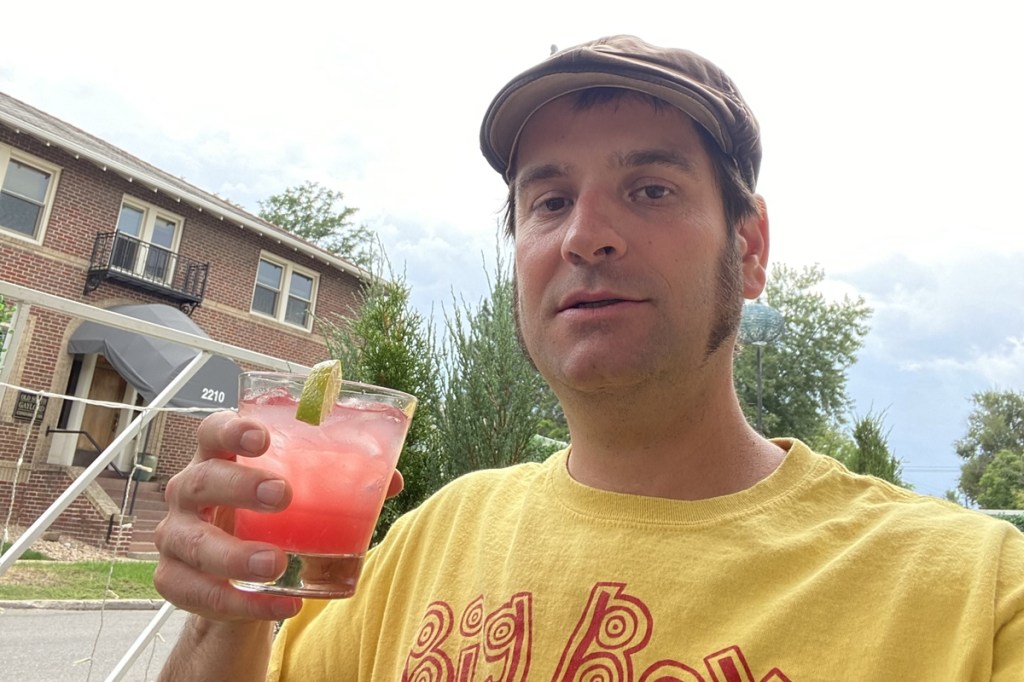
Brian Polk has been a fixture of Denver’s local music and literature scene since the 90s. From early punk bands to current projects like the politically-charged art punk bands Joy Subtraction and Elegant Everyone to the deeply personal and sharply humorous, long-running ‘zine The Yellow Rake, the defunct but culturally significant magazine Suspect Press and his fiction (including novels Turning Failure Into Ideology (2007) and Placement of Character (2017)) , Polk has brought a level of craft and intellect to the local scene that frankly we could stand to see more of around the Mile High City. In 2023 Polk released his latest book a bit of a memoir of his time going to see music and becoming involved in the punk subculture called A Lifetime of Ephemera: 25 Years in Punk Told Through Ticket Stubs, Flyers & Memorabilia. It’s an engaging document of Polk’s becoming immersed in punk as related through anecdotes about live show’s he has attended with ticket stubs as they were available, flyers and other memorabilia linking the shared memories to a physical link to the event itself. It was an inherently great idea for a memoir and Polk simply put the work in and present it in a highly accessible manner with insightful commentary about the significance of punk in his life even beyond the music and a subculture in which he could become involved at young age. Perhaps especially significant is Polk’s documentation of the local music scene and venues and the experience of being in a place like Denver and of a time that isn’t otherwise well covered in any other source in one place. In some ways it picks up where Bob Rob Medina’s important 2019 book Colorado Crew: Denvoid Part 2 – A Collection of Tales & Images from The Colorado Punk Scene 1988-1996, his sequel to the also crucial 2015 book Denvoid and the Cowtown Punks: A Collection of Stories From the ’80s Denver Punk Scene. Polk connects the line from that era of the local punk scene to the current era, filling in a critical gap in the narrative of Denver’s underground music scene in a form and style that’s accessible and illuminating.







You must be logged in to post a comment.