Shinji Kaneko’s lyric video for “No Music No Peace” works so well in its simple charm and explicit spelling out of its message of how music connects and bonds people. Kaneko also talks about how at the root of human psychology and well-being and international understanding is that bond of music that can transcend the usual barriers of language, politics and culture. Kaneko is based in Japan but the lyrics are in English and not the awkward variety one sees on t-shirts in markets in the Ginza. Rather, the kind of language that may seem quaint to some but which speaks to universal truths in a relatable way that requires no knowledge of hip references or familiarity with the rich American and Japanese folk traditions to grasp. It’s simply a refreshingly earnest and catchy pop song aimed at bringing people together through a shared appreciation for music. Watch the video below and follow Kaneko at the links provided.
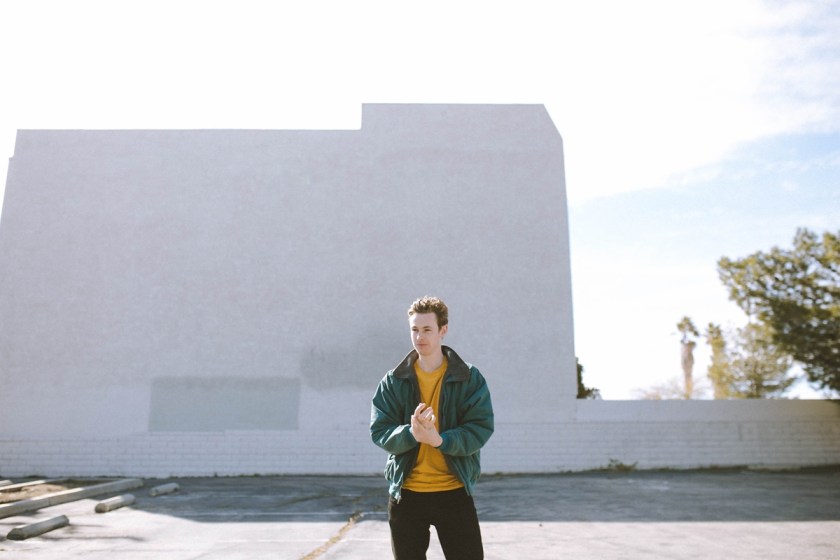
Hayden Everett’s debut single “Color” ebbs and flows with clouds of melody that wrap themselves around his brightly resonant vocals. He sings about the ephemeral rewards he thought he was supposed to chase only to find attaining them not as fulfilling as he had once thought. And that often when we reach a place we think we need to be or reach a goal that seemed so important it’s never enough and the bar is raised even higher. It’s a song about the folly of that rat race and letting go of the habit of the chase without considering if any of it’s what you really want out of life. Everett recognizes the difficulty of breaking those habits because they are so ingrained in us from a young age and this song is written in compassion for the struggle of freeing oneself of psychologically harmful patterns. Listen on Soundcloud and follow Everett’s future musical endeavors at his website below.
Many artists with good intentions aim to use their art in an attempt to illuminate the plight of an assailed minority group or a worthy cause or both and end up making a work that is, if not bad, wack. Flagship Romance, fortunately, uses its talent for warm, relatable folk rock to bring a level of detail and basic human understanding to the song “Julie Wants To Go To War.” The key lines in the song talk about how the main character Julie struggles with her certainties about her own gender but not so much with her ideas about wanting to serve her country in the way her grandfather did with honor and sense of service. But only to have such aims thwarted by the recent Trump administration ban on transgender people serving in the military. The latter of which inspired the writing of the song and the donation of 100% of the streaming royalties going to benefit the Trevor Project which provides counseling and support services for at-risk youth and teens in the LGBTQ community. Listen on Spotify and follow Flagship Romance at the links below.
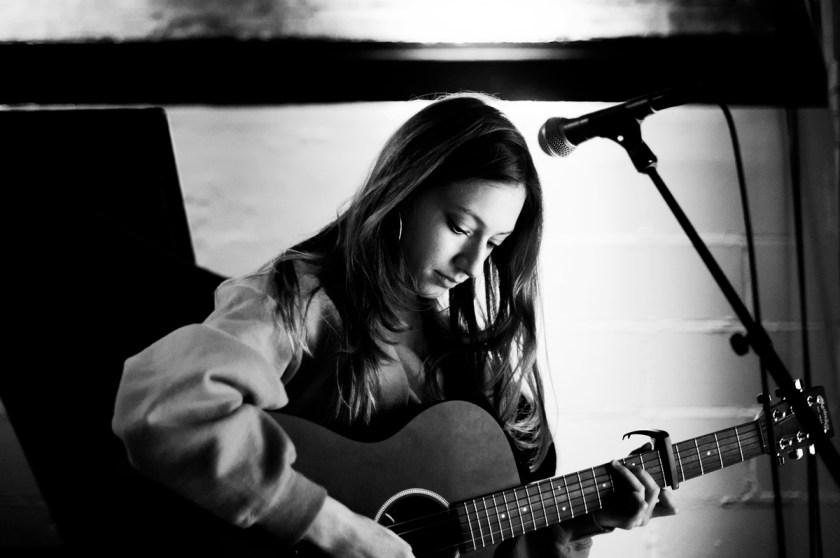
Gina Brooklyn sounds like she’s singing from some distant sea shore to a love far away on “Amo Solo Te.” One needn’t understand Italian to take in the emotional tenor of the song which is that of day dreamy yearning and longing. The simple guitar melody is ethereal like something out of a Cocteau Twins song and the sample of water flowing conveys a sense of the tide coming in. The short song works as both a gentle folk ballad and as a sense memory giving it more dimensionality than the song, already compelling enough, would have on its own. Listen to “Amo Solo Te” on Spotify and follow this promising young songwriter at the links provided.
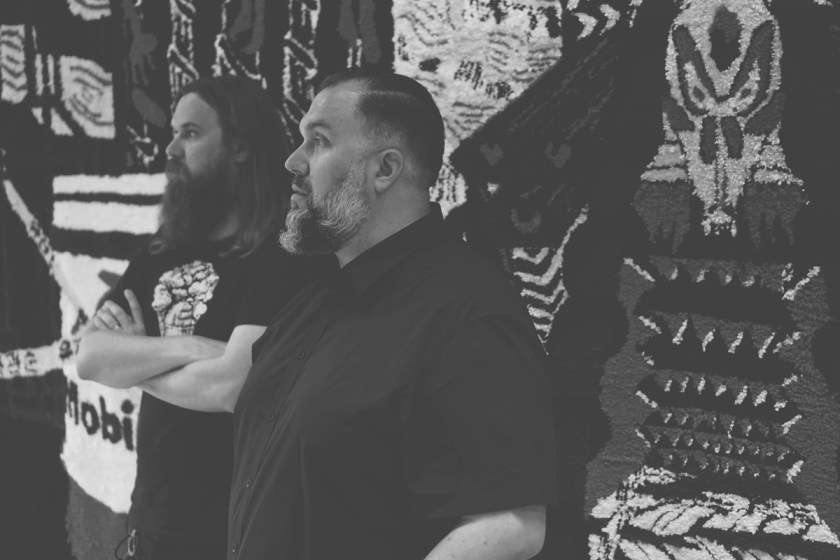
High aura’d and Josh Mason, photo courtesy the artists
Inspired by the between times between songs at shows from old post-hardcore bands like Portraits of Past and Clikatat Ikatowi, “Silver,” a collaboration between High aura’d and Josh Mason is an ambient interpretation of a faded sonic photograph of a time and place, relatively short lived, when bands on labels like Ebullition and Gravity were making some of the most exciting and challenging music of the era. The processed textures and raw noise is a tribute to those between actual song interludes that those bands would issue forth while getting ready to hurl themselves into the fury of the next song. The track is like a compilation of memories of everything but the actual songs themselves and a reminder that post-hardcore wasn’t just the screaming, not just the angular guitar and jolts of electrifying musical fire, it was also the times when you got a break from the pure catharsis to enjoy a moment to perhaps reflect and take in the signficance of the experience between being caught up in it completely. These sounds assembled are an expression of the silver linings of the storm clouds of the shows of an era and milieu now largely forgotten but still so significant for the hidden history of American indie underground. It is a record of times you will never forget but of those moments that are often forgotten. Listen to the track on Soundcloud and watch its video at the Bandcamp link below where you can also purchase a vinyl of the piece.
With an admirable sonic economy, Anna Wiebe has in “I Felt It In The Wind” crafted a simple melody that almost works as a three part harmony but between her warm, unaffected vocals, spare rhythm guitar and synth shimmering in the background. She remarks upon how subtle signals give us a read on a situation if we’re willing to be tuned in and present. Switching between tonal inflections through the short song, Wiebe brings to the song a broader emotional and thematic element than is immediately obvious as though she is dropping those subtleties about which she sings to interpret and read between the lines of meaning and to invest oneself in the song’s delicate sounds and structure if only for its short duration. Wiebe’s album All I Do is Move is due out later in summer 2019 but until then give “I Felt It In The Wind” a listen below and check Wiebe’s Facebook page for more details on the album release and live performances.
Drooligan’s “The Weather” is a fairly upbeat, somewhat whimsical song considering its subject matter. The lyrics thoroughly and near completely send up every day wishful thinking and the superstitions backing them. It mocks the whole notion of prayers and hopes solving anything including stopping inclement weather. With the accompanying music video the band demonstrates how silly it all is even if certain forms of magical thinking are relatively harmless as a pathology that gets so many people to think their ego (as, dare we say, manifested as nonsense like The Secret/the “law of attraction” and positive visualization as more than a method to focus the mind in addition to the faith in a supreme being or the universe intervening directly on the behalf of any particular human) will have an actual direct impact on their lives. Even as Drooligan is taking the piss the playfulness of the video takes off some of the edge as, after all, social critics who take themselves too seriously end up like low rent Robespierre in the end. Watch the video below and follow Drooligan at the links provided.
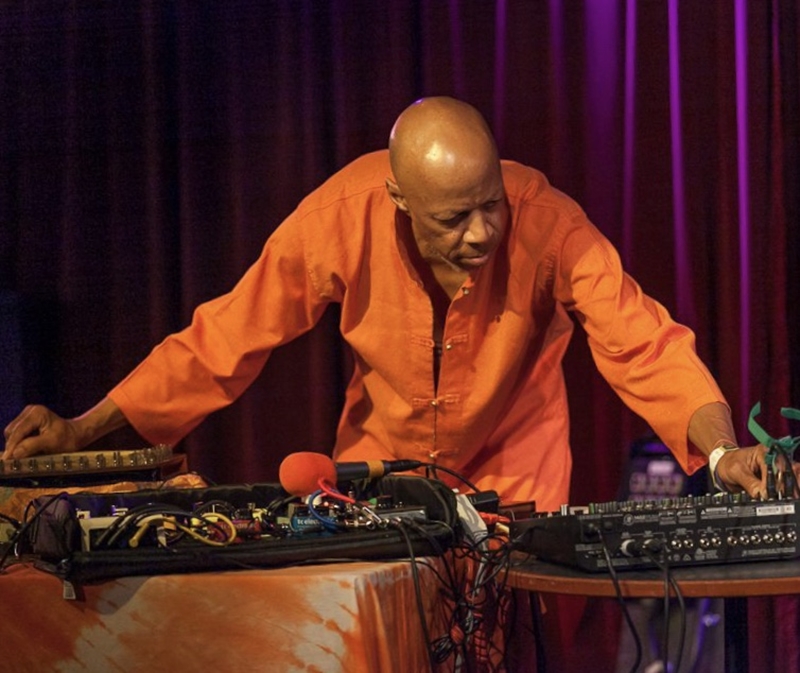
Laraaji was born Edward Larry Gordon and as a youth he learned to play a variety of instruments and did voice training before going to college at Howard University. In the 70s Gordon was living in New York City and studying Eastern spirituality and mysticism when he picked his first zither in a pawn shop. From there he modified the instrument to be electronic and performed and composed with the zither in unconventional ways. He was busking in Washington Square Park when he met Brian Eno and the two came to work on one of the first several albums in the “Ambient” series released by Eno in the 70s and 80s. 1980’s Ambient 3: Day of Radiance was markedly different from other entries in the series as the zither as processed through effects was still fairly organic and brought endlessly fascinating textures to the collaboration.
Laraaji has gone on to have quite a prolific and varied career as an artist and spiritual practitioner. He has done albums with Michael Brook, the inventor of the “infinite guitar,” with Roger Eno, Bill Laswell, Jonathan Goldman (a practioner of healing through sound) and avant-garde noise folk sculptors Blues Control. In the mid-80-s Laraaji released recordings collectively called Vision Songs and broadcast on his public access television show as a practice and example of raising spiritual consciousness through music. He also holds workshops in Laughter Meditation worldwide. Laraaji will perform at Rhinoceropolis on Saturday, July 12 with Free Music, J. Hamilton Isaacs, Goo Age and Fragrant Blossom.
We recently interviewed Laraaji via email and discussed his blending of music and spirituality, the aforementioned Vision Songs and Laughter Meditation as well as his more high profile collaborative projects.
Tom Murphy:When you were studying Eastern mysticism did you find any connections between what you learned that route and the music around you at the time? How would you describe those connections?
Laraaji: I observed that drone music at that time reflected the sensation of eternal present time which is emphasized in eastern philosophy—the continuum of consciousness. Also deep yogic level relaxation and meditation as reflected in the music of Stephen Halpern. The heightened sensation of bliss and ecstasy as reflected in the music of Iasos at the time in the late 1970’s. Terry Reilly.
How did you turn a zither into an electronic instrument? Was anyone doing anything comparable at the time you started doing that? Did you process those sounds early on or was it more for amplification?
My first autoharp/zither was acoustic. And after exploring alternative tunings I investigated ways to amplify it. [I then purchased] an electric pickup made especially for autoharps. I dove into amplified autoharp/zither research and decided to add sound treatment with the MXR 90 Phase shifter. After recording the album Day of Radiance with producer Brian Eno my interest in other [effects] pedals expanded to include chorus, delays, flangers and reverb.
How did you meet Brian Eno and as a producer how involved was in shaping the sound of Day of Radiance?
Brian introduced himself to me while I was playing Washington Square Park [in New York City in] 1978 and extended the invite to join him in his Ambient album productions. His suggestions to depend more on live studio microphones and Eventide effects, mixing as well as overdubbing a second zither helped to shape the Day Of Radiance sound.
You’ve worked with Michael Brook. How did you become familiar with his music and what lead to that collaboration?
Michael Brook was involved in my initial collab performance tours with Opal Evening, a tour project in the late 1980s to mid 1990s. Michael was a performer as well as sound engineer for the tour. As a result his live recordings of all the shows contributed to eventual record releases.
Tell us about Laughter Meditation and why you think it is beneficial to people in practicing it.
Daily Laughter as a mindful practice treats our energy presence to heightened functioning. Included in this is our immune system, our blood flow, our hormone flow, our breath flow. The reduction of stress and emotional tension through mindful laughter prepare us for meditative relaxation and stillness. In this practice our focus is not to find something funny at which to laugh but to explore self-willed laughter as a force for therapeutic recreation and and inner spiritual self connection.
Vision Songs seems like a further expansion of music and art as spiritual practice. Did you broadcast performances of that music on your public-access show in New York? Why were you drawn to that way of putting the music and those ideas out there? What about performing Vision Songs in the live show format do you find interesting and powerful now?
Vision Songs is where I was at the time in the early 1980s seriously investigating spiritual consciousness and sharing my awakening through [spontaneously] inspired songs and music with an expanding spiritual community in the USA. Sharing the songs in live show allows me to free sing the themes and lyric contents of these songs into fresh listening.
Certainly artists like John Coltrane and Alice Coltrane have had their music described as spiritual in philosophy, practice and in the impact of the music itself. Nusraat Fateh Ali Khan and others have been practitioners of Qawwali as part of their fusion of musical and spiritual practice. Who are some artists now that you feel are operating in those modes that you find compelling?
Artists who seem to be performing in these deep intentional spiritual modes [include] Don Conreux, Gong Master, Jon Serrie, Constance Demby, Stephen Halpern and Pauline Oliveros to name a few.
Czita comments on standards of beauty and how we value other people tied to such considerations on her song “Pretty Eyes.” There is an unsettling but strangely alluring quality to the song as it sketches the ways people dissect the flaws of others and then decide what they find attractive and in the end discard the same people who can never, as real life humans, live up to the image, the fantasy, another person forms in their mind. The minimal bell tones and even more spare percussion, Czita’s darkly whimsical vocal delivery, the buzzy background melody and touches of synth give a spaciousness that feels like an emotional distancing connected to a paradoxical desire for the object of attraction. The song has a creepy edge but also otherworldly like a pop song for a Lucky McKee film. It’s Czita’s first single and promises a future of decidedly different, imaginative and boundary-pushing pop music. Listen on Soundcloud and follow Czita at any of the links below.
Though the tone of the new Inner Oceans single “Saturday’s Eyes” is one of melancholic nostalgia it’s misty melodies are anchored in early morning mind-wandering. The way the song builds into a gentle flow of emotions and imagery suggests indulging moments when you can look back fondly on a time when you had a love or a time in your life that retains that kind of feeling when things seemed bright and easy and open. But it’s more. The song also expresses how even if that time and those relationships are gone you can revisit them and honor the experience and allow it to illuminate your life in the present rather than surrender to the conceit that things were always better way back when. The accompanying music video was shot on an iPhone during the final year of songwriter and singer Griffith Snyder’s marriage which brings to pairing of song and image a poignancy and presumably a refreshing generosity of spirit and not just the ache and hurt feelings that are in many songs made in the wake of the dissolution of a relationship. Snyder has been writing affecting and adventurous pop music for years and this is the latest in a string of worthwhile releases. Watch the video below and follow Inner Oceans at he links provided.







 Queen City Sounds and Art
You must be logged in to post a comment.