warm nights Take You on a Journey to the Deep Places of the Heart on “cave dawnings”

warm_nights1_sm
warm nights, image courtesy the artists

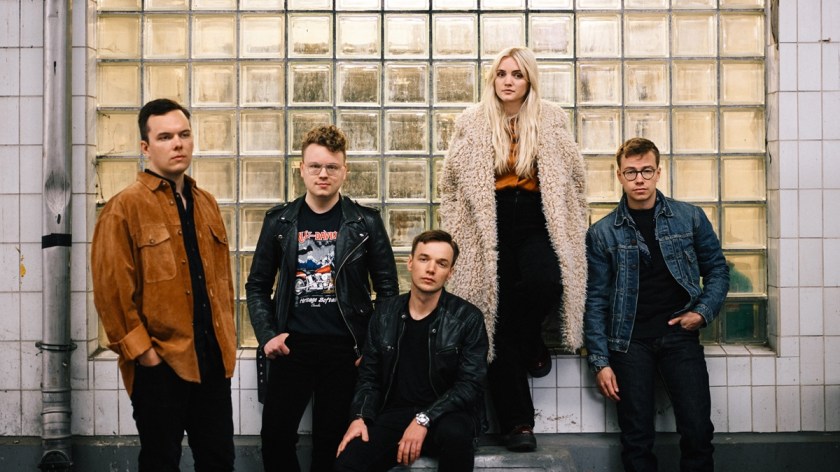
Is “cave dawnings,” the title of the single by Los Angeles experimental rock band warm nights, a reference to Plato’s “Parable of the Cave” in a way? Because it certainly seems to be about coming to realizations from a place of personal darkness with hushed tones to impassioned heights a more active pace before ending on a not of streaming off into the distance having reached the escape velocity of one’s own personal gravity of emotional funk. The realization also comes in the form of self-honesty in admitting love for another despite the inevitable complexities that lay ahead of the initial, simple, non-logical impulse to love. In the end the narrator of embraces the totality of the experience as something shared. It is, refreshingly, not a simple love song where the act of falling in love is a redemptive experience that always seems to place the burden of things not being ideal the whole time on one person or another with a need to place blame or find fault as a pretext for splitting and going with someone “better.” It is a song that is both melodramatic and realistic at once, a rarity in rock music or any music. Sonically, fans of early 2000s post-emo indie rock will appreciate the expressive guitar work and dual vocals complimenting and providing counterpoint but warm nights is an inherently adventurous group of songwriters and its recently released album all inside takes you through some fascinating changes. Listen on Spotify and follow warm nights at the links provided.

open.spotify.com/artist/59XKrXxXIRhsWfGFkETnjv
warmnights.bandcamp.com/album/all-inside

Maya Beiser’s Cello Driven Interpretation of “Moonlight Sonata: Adagio” Brings a Modern Avant-Garde Sensibility to the Beethoven Classic

MayaBeiser1_crop
Maya Beiser, photo courtesy the artist

Maya Beiser’s actual heartbeat was recorded and used as the pulsating beat heard in the distance in her interpretation of the Beethoven classic “Moonlight Sonata: Adagio” from her forthcoming album delugEON due out August 30 on her own impirint Islandia Music Records. The layered cello rather than the original piano brings an especially sonorous tone to the piece. She expands, restructures and extrapolates throughout but returns to the iconic figure at the center of the composition on a recording that sounds like it was captured for an old 78 of music meant to be played during screenings of a Theodor Dreyer or F.W. Murnau film. Yet the subtle changes reflect a modern classical and avant-garde sensibility and knowledge of sound design and digital production processing that is used to give the song a wide sonic range as well as an intimacy with the original to give it a slower pace (and thus “Adagio”) when the original goes into its faster section. The effect being to give this version of “Moonlight Sonata” an emotionally weighty denouement to the outro of the nearly echoing heartbeat. With the deep level of immersion, skill with impromptu tonal inflection and sonic imagination it’s no wonder Beiser has worked with the likes of Brian Eno, Phillip Glass and Steve Reich, to name a few, over the years. Listen on Soundcloud and follow Beiser at the links provided.

youtube.com/user/islandiamusic
twitter.com/CelloGoddess
facebook.com/TheCelloGoddess
instagram.com/thecellogoddess

Zahn | Hatami | McClure Capture the Sonic Architecture of Life Inside of a Quantum Optical Circuit on “Prysma”

ZahnHatamiMcClure_crop
Zahn | Hatami | McClure, image courtesy the artists

“Prysma” is an international collaboration between German sound design/electronic music composer Uwe Zahn, Iranian ambient/field recording producer/musician Porya Hatami and Irish textural ambient/synthesizer/production artist Darren McClure. The artists collective called Zahn | Hatami | McClure are releasing an album on July 12 called Ypsilon, from which this track is taken. There is a deep sense of space and distance conveyed here perfectly with volume control and dynamics in the track. Like what it would be like to live inside a giant, quantum, optical circuit outside of standard space-time as beams of light travel overhead and in the near and middle distance carrying data along nearly invisible pathways and directed automatically to the appropriate exits while processed to whatever mysterious purpose. From the melodic to the textural all the sounds seem incidental in creating a coherent musical as well as environmental experience in the listening and because of this seemingly effortless and natural quality the brilliance and chemistry of the collaboration is obvious. Listen on Soundcloud and follow the trio at the link below.

n5md.com/artist/Zahn-%7C-Hatami-%7C-McClure

Ecce Shnak’s “Velociraptor Swayze” Transforms Despair Into an Inspirational and Surreal Flight of the Imagination

EcceShnak2_sm
Ecce Shnak, photo by Averie Cole

Ecce Shnak is a seven piece art pop band from New York and its new single the eccentrically titled “Velociraptor Swayze” virtually overflows with musical ideas that might not otherwise work together if not for the group’s unique musical imagination. The rhythms are compound and free flowingly evolving throughout with dynamics suiting the emotional mode of the moment. And it’s a song about someone who broke the narrator’s heart with the prescription to go after the perpetrator like the titular velociraptor but in heroic and dramatic fashion like Patrick Swayze in, say, Road House or even Dirty Dancing. One of the lyrics is, “Bring me his head on a birthday cake.” There are no words minced here but it is couched in an upbeat and bright song with a lot of sonic color filling out the minimal percussion. Through that bit of creative legerdemain the band transmogrifies despair into an absurdist flight of fancy without dishonoring the feelings that inspired the song. Fans of of Montreal and Bitte Orca-period Dirty Projectors will appreciate the idiosyncratic songwriting sensibilities on display here.

The group will release its new album Metamorphejawns on July 19 through Records, Man Records. Following that Ecce Shnak will celebrate the occasion with a pay-what-you-can event called Shnakfest at 267 Wyckoff St. in Brooklyn on July 20. The proceeds will benefit the grassroots climate change organization Extinction Rebellion and the New Sanctuary Coalition. Only the incredibly unperceptive, delusional and invested-in-fossil-fuel-industry types are refusing to recognize that human caused climate change that will destroy all economies and most all life on earth is a thing right now and not after we’re all dead. Also, basic human rights recognize no boundaries and the inhumane system of detentions and deportations existing in the USA is neither moral or effective. The festival will include, according to the press release, several “rishankulously love other bands from NYC and beyond” as well as aerlists, clowns, flame eaters, sword swallowers and other such refinements. But if you can’t make that you can check out the single below and follow the septet at the links provided.

ecceshnak.com
twitter.com/EcceShnak
facebook.com/ecceshnak
instagram.com/ecceshnak

Soulful and Stark, Safer’s “All My Life” Single Combines Grittiness and Musical Sophistication

Safer1_lg
Safer, image courtesy the artist

Mattie Safer is perhaps best known up to this point as the bass player for The Rapture during its early heyday writing songs for and playing on its early albums including the 2003 classic Echoes. Since departing the band he’s played with Poolside and now his self-named band Safer. The single “All My Life” is almost an homage to the stripped down post-punk and art punk of New York with some guitar licks resonating with those of Television and the wiry yet tuneful quality that was one of that band’s signature sounds. “All My Life” is accented and driven partly by a strong, melodic bass line as would any song by one of the classic post-punk bands of yore. In the breakdown second around halfway through with Casey Butler on sax the song takes on the lush and majestic quality one might associate with some art glam band like Roxy Music. Mixing soulfulness and starkness, grit and sophistication, this debut single from Safer is promising indeed. You can catch Safer live at Alphaville in Brooklyn on Friday, July 12, 2019 with No Swoon, Campo Formio and Monograms. For now listen below and follow Safer at his website.

mattiesafer.com

Paso Viejo Take Us on a Post-Rock Journey With a Trickster Spirit on “Kitsune”

PasoViejo5_sm
Paso Viejo, photo courtesy the artists

Paso Viejo is an Argentinian band that mixes shoegaze soundscaping with post-rock structure and the textures and sensibility of native folk music styles. The result, at least in the “Kitsune” single, is music that sounds like it’s embodying elements of a landscape with branches of trees and grass blowing in a gentle wind—that level of detail that you take in but do not individually dissect yet intuitive understand. “Kitsune” is the Japanese word for fox and as the song progresses into moodier realms for tone and minor scale progressions it drifts further into more direct sonic movement like a fox meandering its way through a landscape shifting shape to suit its trickster goals as the animals are attributed with getting to in Yokai folklore. Later in the song the music becomes more intense and distorted perhaps representing the climax of one of the kitsune’s many caprices. Whatever the direct inspiration, the song is evocative and cinematic and goes beyond the usual tropes of the instrumental rock and post-rock genre by being more than pretty sounds and some conventionally solid musicianship. Paso Viejo are, after all, sonic storytellers whose language is the emotional content of their compositions. Listen below and follow Paso Viejo at the links provided.

open.spotify.com/artist/1NsKzt4PshyIXyw8lwgpZ2
pasoviejo.bandcamp.com

Charles Hamilton’s “Ralph Nader” is a Dreamlike Trip Down Memory Lane to Self-Liberation

CharlesHamilton2_lg
Charles Hamilton, photo courtesy the artist

Charles Hamilton’s lays out a litany of disrespect and nonsense blown his way from all corners on his new single “Ralph Nader.” In that way he has a self-deprecating pose like a low key, hip and jaded rap equivalent of Rodney Dangerfield. Except that Hamilton concludes that he doesn’t “give a fuck about what people say” and “neither should you.” As in not giving too much weight to the negative energy of anyone that only has time to chisel people down by picking them apart and trying to kick down their dreams because they have no real aspirations of their own. Cradled in an IDM-esque beat of ethereal bell tones the lyrics form a song that sounds day dreamily introspective and defiant at once. It should be mentioned that Hamilton has been through his fair share of ups and downs personally and professionally including struggles with bipolar disorder, being signed to two major label deals and losing both, encounters with music industry big wigs like Jimmy Iovine who he mentions in the song in a positive light. Those experiences, good and bad, are bound to leave you a little skeptical but it’s apparent Hamilton has been able to spin those tales from his real life into something as captivating and real as “Ralph Nader.” Watch the video and follow Hamilton’s new adventures in music at the links below.

soundcloud.com/charleshamiltonmusic
twitter.com/charleshamilton
facebook.com/charleshamiltonmusic

“Delivery” by Ducks! is Like a Puzzle Montage of Tone, Texture and Rhythm

Ducks1_lg
Ducks!, photo courtesy the artists

Lani Bagley and Craig Schuftan have been writing their idiosyncratic dance music together since 2014 as Ducks! Their new single “Delivery” comes with a collage art animation video worthy of the duo’s imaginative and eclectic compositions. The song sounds out of time like it could have been composed any time in the last fifty or sixty years except that some of the technology to process the track probably didn’t exist in quite the same form in the 1950s. The playful and organic percussion and buoyant melody sounds like the duo sequestered themselves somewhere and took in only a whole lot of bossa nova, Raymond Scott, Rubblebucket, David Byrne and some Anne Dudley soundtrack work as well as her recordings with her old band The Art of Noise. It sounds like music put together like an adaptive puzzle wherein the songwriters plucked sounds and ideas that would sound good together and whimsical yet not perverse. Not unlike Tim Klein’s puzzle montages in which he uses the pieces from the same manufacturer to create alternative images, “Delivery” is a pop song from the left field application of the musical imagination. Watch the video and follow Ducks! at the links below.

ducksmakemusic.com
soundcloud.com/ducksmakemusic
open.spotify.com/artist/0espCQxUrldKBF5bYMdULj
youtube.com/channel/UCQdwJP-_yD4XxQKnkzZcSQg
ducksmakemusic.bandcamp.com
twitter.com/Ducksmakemusic
facebook.com/ducksmakingmusic
instagram.com/ducksmakemusic

Birthday Boy’s “Fool’s Paradise” is the Catharsis of an Imploded and Dysfunctional Relationship

BirthdayBoy1_sm
Birthday Boy, photo courtesy the artists

The descending bass line that drives Birthday Boy’s “Fool’s Paradise” is what pushes it out of post-hardcore into something more introspective and ultimately more expressive. The effervescent and melodic guitar riffs flow forth not with force so much as an impressionistic fountain of sparks with the guitars playing off each other in complimentary rhythms. The way the vocals emote place it well within the realm of post-hardcore except that the more impassioned parts are coherent and evoke the desperation and pain of feeling powerless in the face of an imploded, dysfunctional relationship. Watch the video below and follow the Philadelphia-based band at the links provided.

linktr.ee/bdayboyofficial
bdayboy.bandcamp.com

“Re-Cover-Re” is KIN CAPA’s Musical Feedback Loop Out of Complacency and Stagnation

KinCapa_Re-Cover-Re_cover_lg
KIN CAPA, Re-Cover-Re cover (cropped)

For the interval phase of the upcoming KIN CAPA album, THE AMERICAN OPERA Act Two, Lee Capa wrote and recorded “Re-Cover-Re,” a song that sounds like a lot of pent up energy being held in check to feed back in on itself. The circular surging main riff ripples responsively to Capa’s vocals and the guitar sounds like it was recorded in a giant can with the sounds bouncing back to double the impression of feedback and, indeed, of a feedback loops. Also known as “The Scream,” this song includes a feral scream on both ends of the song as if the narrator of the larger story is burned by the feedback just a little. The title suggests the process of recovery through music with “re” being both the repetition and the second note in a major scale. Like actual recovery maybe you end up trying the same old tricks to get a fix of what gave you pleasure initially but now brings only pain, going at this music thing only to find yourself following familiar pathways rather than creative growth and being pained by how well you’ve trained yourself into musical complacency. But there is momentum behind the song in spite of its clever, recursive construction and that promises liberation from the stasis of artistic and personal stagnation and, given the name of the album, a social and even spiritual place of stale, outmoded and self-destructive patterns. Listen below on YouTube and look for the new album sometime this summer on the KIN CAPA website (link following song).

kincapa.com