Caracol’s new track “Flooded Field” was written in collaboration with Illa J, the brother of J. Dilla. The song’s structure has well-arranged complexity with downtempo flavor and a reggae cadence with electronic steel drum accents. Its rich synth piano flourishes and splashes of rapidly expanding tonal wash suggest a sound palette drawn from 80s hip-hop production. When Illa J comes in the song exits the ethereal undertones and comes down to earth for a nice passage of vivid imagery to reinforce the message of the lyric “Your heart is a flooded field” and the sense of isolation the narrator of the song feels for the object of her love and a desire to bridge that emotional barrier. It is as though Illa J gives the critical clue to solve the emotional conundrum. The dynamics of the song as it shifts between vocals, moods, rhythmic flavors and an effervescent melody keeps it an interesting and rewarding listen beginning to end. Check out “Flooded Field” on Soundcloud and follow Caracol at the links below.
With “Kalemegdan,” Typewriter takes the language and sonic palette of current EDM and left field dance music generally to create a soundscape with saturated atmospheres and lush orchestration. As the track evolves it fuses a stretched pop melody and introspective moods to create an extended reflective moment like watching a section of a dream spool out behind you in slow motion for you to take in impressionistically and in vivid momentary details of peak significance as motes of memory and emotional attachments swirl about you to give context to the way your subconscious mind reveals to you and important bit of information, perhaps even a lesson, that cannot be conveyed with mere language. The song operates on that sort of dream logic as familiar elements of song are used in ways they often aren’t. To call it a dance track or a simply electronic pop song would miss the point of the way Typewriter is aiming for a synthesis of the two and more. Listen to the song on Soundcloud and follow Typerwriter at the links below.
Rolling Stones perform at Mile High Stadium on August 10. Photo by Dave Hogan.
Friday | August 9
Jay Aston’s Gene Loves Jezebel, photo by Ian Collins
What:The Alarm, Modern English and Jay Aston’s Gene Loves Jezebel When: Friday, 08.09, 7 p.m. Where: Oriental Theater Why: In the 1980s all three of these bands embodied the kind of highly melodic post-punk that articulated both the bleakness of an era and the hope that they and the rest of humanity would endure writing songs celebrating life and love and honoring the uncertainty, tentativeness and sometimes, yes, even gloominess that cast a pall over society with the impending threat of nuclear holocaust. Over thirty years hence we’re all in another period of doom hanging over the planet from, once again, the threat of nuclear war but also the collapse of our ecosystem and the rise of another wave of aggressive fascism throughout the world. Since these three bands have reconvened each has also been writing some of the best music of their careers and commenting on the times with songs that aren’t trying to capture past glory so much as writing music worthy of their legacy of not getting stuck in a rut. Modern English’s 2016 album Take Me to the Trees, Jay Aston’s Gene Loves Jezebel’s 2017 record Dance Underwater and The Alarm’s 2019 offering Sigma reflect not just the strength of the respective band’s original creative vision but also their growth as artists valid in the modern era.
What:The Yellow Rake 15 year anniversary night 1 w/Simulators, Moon Pussy, Charly Fasano, Brian Polk and Karl Christian Krumpholz When: Friday, 08.09, 8 p.m. Where: Mutiny Information Café Why: The Yellow Rake is a Denver-based literary and culture magazine that is celebrating a remarkable fifteen years in existence with performances from local bands Simulators and Moon Pussy and writers and artists Charly Fasano, Karl Christian Krumpholz and Yellow Rake founder Brian Polk. The celebration will run two nights beginning tonight at Mutiny Information Café.
What:Martin Atkins DJ sets and spoken word When: Friday, 08.09, 9 p.m. Where: Tracks Why: Martin Atkins who has been a major figure in post-punk and industrial music going back four decades (i.e. Nine Inch Nails, Killing Joke, Ministry, Public Image Limited) will do a DJ set tonight and perform some spoken word, possibly reading from his own body of work.
Saturday | August 10
This Will Destroy You, photo by Veronika Reinert
What:This Will Destroy You w/Brin When: Saturday, 08.10, 8 p.m. Where: Oriental Theater Why: This Will Destroy You is one of the better ambient post-rock bands. Mainly because its dynamics aren’t limited to the predictable builds and then inevitable catharsis like Sigur Ros without all the alien light and energy that imbues that band’s music. This Will Destroy You’s 2018 albums New Others Part One and Part Two finds the band further developing its textural elements giving its new set of soundscapes a depth of low end it didn’t lack but one that highlights the more ethereal melodies with a a evocative contrast in tone.
What:Rolling Stones: 2019 No Filter Tour When: Friday, 08.10, 6:30 p.m. Where: Mile High Stadium Why: Anyone not know who the Rolling Stones are? Use your search engine and learn about the iconic rock and roll band that fused a gritty, heavily blues influenced rock music and evolved it in various and fascinating ways for years with lyrics that often indulged in unusual, offbeat subjects and really a broad spectrum of human experience making their songs long term engaging and influential. Keith Richards’ autobiography Life is one of a handful of essential books written by a musician.
What:GYES: Arc Sol, Mainland Break, Slugger When: Friday, 08.10, 8 p.m. Where: The People’s Building Why: This edition of Get Your Ears Swoll brings to Northwest Aurora, Colorado experimental rock bands with a psychedelic loose edges.
What:Glasss Fest Day 1 When: Friday, 08.10, 12 p.m. Where: Rhinoceropolis Why: This two day event spanning roughly twelve hours each day brings together some of the most interesting of underground bands that often do not get much play at the clubs or more commercial venues. Which makes it an event worth attending to catch a slice of what you’re missing out on if you only go to venues that don’t book experimental music. Most of this stuff isn’t particularly challenging unless your idea of genius is mainstream pop music that is bland but has the veneer of quality or if you’re mainly only into one genre of music not represented. It’s an eclectic booking in a way that needs to happen in Denver and elsewhere more often. Schedule below. All times p.m. as if you needed to be told.
12:30 – DJ Zombie
3 – Grrrl
3:30 Kah Li
4 – Nothing is Everything
4:30 – MYTHirst
5 – Adam Selene
5:30 – Bios+a+ic
6 – Elle Green
6:30 – Sliver
7 – Bianca Mikahn
7:30 – Denizens of the Deep
8 – House N Complex
8:30 – Pearls & Perils
9 – Princess Dewclaw
9:30 – Abeasity Jones
10 – R A R E B Y R D $
10:30 – Catdog
11 – Techno Allah
11:30 – Savage Bass Goat
Sunday | August 11
Umbras Animas, photo by Tom Murphy
What:Glasss Fest Day 2 When: Sunday, 08.11, 12 p.m. Where: Rhinoceropolis Why: See above for Glasss Fest.
1 – Sobremarcha/Hepster Pat DJ Sets
3 – Umbras Animus
4 – Galleries
4:30 Wngdu
5 – Disposal Notice
5:30 – Sumguy
6 – Bowshock
6:30 John Gross
7 – Venus305 / DCC
7:30 – Lady of Sorrows
8 – Pythian Whispers
8:30 – Dead Characters
9 – Soulless Maneater
9:30 Sadbug
10 – Joohsup
10:30 – $addy
11 – Hepster Pat DJ set
Tuesday | August 13
Plume Varia, photo by Tom Murphy
What:Quits, Multicult (MD), Sliver and Equine When: Tuesday, 08.13, 12 p.m. Where: 3 Kings Tavern Why: Basically a noise rock show except for Equine who is probably doing a noisy guitarscaping sort of set. And Sliver who are basically a grunge color-by-numbers act. At least when it comes to their Layne Staley wannabe singer/guitarist. But they’re pretty alright in spite of all of that. Multicult is a Baltimore-based noise rock band in the vein of Shellac and The Unsane. Quits is a Denver band with a similar aesthetic and one that doesn’t skimp on the raw emotional outbursts.
What:Pure Bathing Culture w/Plume Varia When: Tuesday, 08.13, 7 p.m. Where: Larimer Lounge Why: Pure Bathing Culture started with Sarah Versprille and Daniel Hindman who are also members of experimental folk band Vetiver. PBC is more in the realm of dream pop but with a more organic base with vibrant and sparkling guitar work amid lush synths as well as Versprille’s warm vocals. The group’s 2019 album Night Pass is its first since being dropped from Partisan Records. And rather than a darker than usual album to reflect the process of the experience, Night Pass sounds like a band that kept going its previous creative trajectory of introspective, upbeat yet downtempo pop songs. Opening the show is Plume Varia who share a similar sensibility but whose sound palette is a little more dusky and with singer Cheri Cobbs’ vocals soulful and deeply evocative.
What:Matt Weston (Albany), Ryan Mcryhew and Ryan Seward When: Tuesday, 08.13, 7:30 p.m. Where: Rhinoceropolis Why: This will be something of an experimental improvisational show including locals Ryan Mcryhew better known for his work as modular synth and beats composer Entrance and avant-garde percussionist Ryan Seward. Both will join Matt Weston whose own left field percussion and electronics has brought him into collaborative spheres with the likes of Roger Miller (of Mission of Burma), Jim O’Rourke, drone legend Kevin Drumm, free jazz saxophone player Charles Gayle and Jack Wright, another master sax improviser.
Wednesday | August 14
Kamasi Washington, photo by Durimel
What:Herbie Hancock and Kamasi Washington When: Wednesday, 08.14, 7:30 p.m. Where: Mission Ballroom Why: Herbie Hancock probably needs no introduction as one of the most important artists in modern jazz as a composer, pianist and band leader. He played in Miles Davis Quarter, he was a pioneer of jazz fusion and funk, he has composed soundtracks, he had a 1983 pop hit with “Rockit” which fused jazz and hip-hop. His accomplishments are, frankly, to massive to list. Also on this bill is Kamasi Washington whose own role as a master saxophonist (he’s played on records by Kendrick Lamar, Thundercat, St. Vincent and others, no big deal), composer, band leader and producer parallels Hancock’s own. As a live performer Washington orchestrates the show with a subtle mastery that feels relaxed and informal due to the songwriting and the years of work already put in but which feels like watching a grandmaster at work. So go early to catch Washington and stay for one of the few living legends of jazz demonstrate his own musical magic.
Bernard Fowler is a singer and musician who grew up in New York City who has been a touring member of the Rolling Stones since 1989 when he was asked to come on board as a singer for the Steel Wheels tour. In fact, Fowler will join the Stones on stage at Mile High Stadium on Saturday, August 10 for the No Filter Tour . But by the time Fowler became involved with the Stones, he had already been hired to do backing vocals on Mick Jagger’s first solo album, 1985’s She’s the Boss through the auspices of his friend and professional associate musician and producer Bill Laswell. Prior to that Fowler had worked with Laswell on the 1982 Material album One Down as well as various other of Laswell’s projects including the 1985 Compact Disc by Public Image Limited and, later, avant-garde composer Philip Glass’s 1986 record Songs from Liquid Days. Fowler’s power, versatility and taste has made Fowler an in demand talent in music for decades and his discography also includes performances on records and live with artists as diverse and respected as Herbie Hancock, Yoko Ono, Sly & Robbie, Ryuichi Sakamoto, James Blood Ulmer, Alice cooper and Bootsy Collins. Fowler has been around.
In 2019 the singer released a project that has been in the works for a few years now as an idea that had to become a reality and that is the album Inside Out comprised of Rolling Stones covers. But it isn’t merely a covers album. Fowler went through the Stones’ catalog and selected songs whose words struck deep and resonated with issues of racism, political corruption and class that were in the forefront of public consciousness at the time of their writing and the ways in which those cultural issues are very much at the heart of political discourse today not just in the United States but in the world generally. That approach to finding the songs with the appropriate words went hand in hand with doing the music in an almost entirely different style in the form of jazz and the spoken word and jazz fusion that was embodied by the East Harlem, New York City collective, The Last Poets. But unlike one of the other progenitors of hip-hop, Gil Scott-Heron, The Last Poets’ music wasn’t as widely accessible.
“Gil Scott-Heron, lucky for him, he was one of the spoken word artists that actually got played on the radio,” says Fowler. “So I heard him on the radio like everybody else did. But The Last Poets was a different story. The Last Poets was not something we heard on the radio. People learned about The Last Poets by word of mouth and the music played on the street. My older brother brought those records home. So we played The Last Poets at my house.”
Fowler was just slightly to young to have seen The Last Poets when he was coming up but in later years he met and hung out with Jalaluddin Nuriddin, one of the founders of the group before he passed away in June 2018. The collective still operates today with a 2019 album Transcending Toxic Times produced by Philadelphia-based bass player Jamaaladeen Tacuma. For connoisseurs of rap, The Last Poets are some of the founding fathers of the art form starting as spoken word poetry with a backdrop of percussion until 1973’s Hustler’s Convention where other instruments were added and gave the group’s music a more jazz and funk vibe. But the whole time, The Last Poets wrote sharply observant songs about life in the inner city in ways that hadn’t quite been articulated in the arts the same way up to that time.
“The things they were talking about were the things we were going through in the black community,” says Fowler. “Things are rough now but it was even rougher back then. And they talked about those things—poverty, corrupt government and children being hungry. It is also part of what influenced me to do this record. I just wanted to do something different. Someone wrote a comment about it being a vanity project. A vanity project? What’s so vain about doing something different? When I saw that the first thing that came to my head was ‘Fuck you, you don’t even know what you’re talking about.’ It’s like telling an artist known for abstract painting to not do portraits. Don’t paint portraits because we only want to see you doing abstract painting. People just want to put you in a box and if you step outside that box, oh, it’s a vanity project. This record is important for a lot of reasons, I think. It’s important because it mirrors the time we’re living in now and more important than that it shows how strong a songwriters that the [glimmer] twins are.”
Give Inside Out a listen and discover the real impact of the words written by Mick Jagger and Keith Richards. Fowler stayed away from most of the big hits and chose songs that maybe some fans glossed over but whose lyrics struck Fowler deeply. In the liner notes of the album Fowler writes “Could it be that the Stones are actually some black guys disguised as English gentlemen?” And why so?
“Because the lyrics could have been written by a black cat from the inner city of New York,” offers Fowler. “Those lyrics were that strong. Obviously to be able to write and relate the way that they wrote they had to be going through something similar where they were. We didn’t have the internet back then so I’m sure they had an idea what was happening here but didn’t see it first hand. When you think about it, they did go through some shit. That’s where Exile On Main St. came From.”
Perhaps the only radio friendly song Fowler chose for Inside Out is “Sympathy For the Devil,” which is an oddity in radio play due to its length alone. It’s also the only song for which Fowler used the original chord changes and played by keyboardist Mike Garson. Otherwise the songs are rhythm driven and performed by some ace players in the jazz world including Ray Parker Jr. who many people really only remember for the 1984 hit song “Ghostbusters,” a song he also wrote and produced. Parker Jr., though, has had a storied career worth delving into including writing with Marvin Gaye, session work with Aretha Franklin, Stevie Wonder, Jean-Luc Ponty, Tina Turner and Herbie Hancock, to name a few. Parker Jr.’s guitar chops and creativity have graced numerous records including Inside Out and brought the jazz sensibility Fowler was looking to create in homage to The Last Poets’ style. So he also brought in other Midwestern jazz musicians like George Evans, Vince Wilburn Jr. and Darryl Jones – the latter two of which performed with Miles Davis – as well as jazz horn players like Keyon Harrold and Tim Ries. The result is an interpretation of Rolling Stones songs unlike any you’ve ever heard and which highlight the heft of the poetic clarity and heft of the lyrics of The Glimmer Twins. What do the Rolling Stones think of the album?
“They love the record,” says Fowler.
Catch Fowler on the road now with The Rolling Stones but keep an eye out for live performances of tracks from Inside Out when Fowler takes that music on the road to perform live beyond his home town of New York City.
ALM featuring Sofree and Luzmira Zerpa “Le Canto” cover (cropped)
“Le Canto,” the ALM track featuring Sofree and Lizmira Zerpa masterfully combines modern electronic dance music with Latin pop for a song that sounds like music from a science fiction movie made as a collaboration between Pedro Almodóvar and Jaime and Gilbert Hernandez. It begins with a sense of mystery and takes us into the thick of a story rich in romance and intrigue with strong female characters and the impression that local mythology and culture and technology are not so distinctly separated. The dynamic dub bass serves as an interest contrast and compliment to the organic, Latin rhythms and vocals and lending a dimensionality and depth to the track worthy of the imagery and ideas it inspires. Listen on Soundcloud and follow ALM at the links below.
“Figure 8” by Kendra & The Bunnies comes in like impressionistic sketches of a melody that is given context when the vocals come in about a free spirited girl who doesn’t want to be penned in my conventional notions of how to be. The guitar work can be challenging at first but its own logic and improvisational style, given to going off the rails here and there, makes perfect sense in the entire arc of a song that feels like free verse poetry set to a folk song written by someone who had to figure out how to write one having read about that music and having access to a guitar without ever hearing it before making some of her own. It’s not outsider music but has a similar appeal because Kendra Muecke’s approach to songwriting seems to be one as immersed in poetry, biographical storytelling and constructing expectations of identity as a path to healing the trauma of the identities and values imposed on us by a culture that values efficiency and material value over humanity. Maybe when you hear the song you won’t find it so very different but in the realm of folk-inflected singer-songwriter music the subtle and distinct differences are striking. You may even dismiss it as a bunch of hippie nonsense but it is exactly those kinds of left-field ideas we need in a world filled with turmoil. The song comes from Kendra & The Bunnies new album of Vinyl and you can listen to the single on Spotify and follow Kendra and the band at the links below.
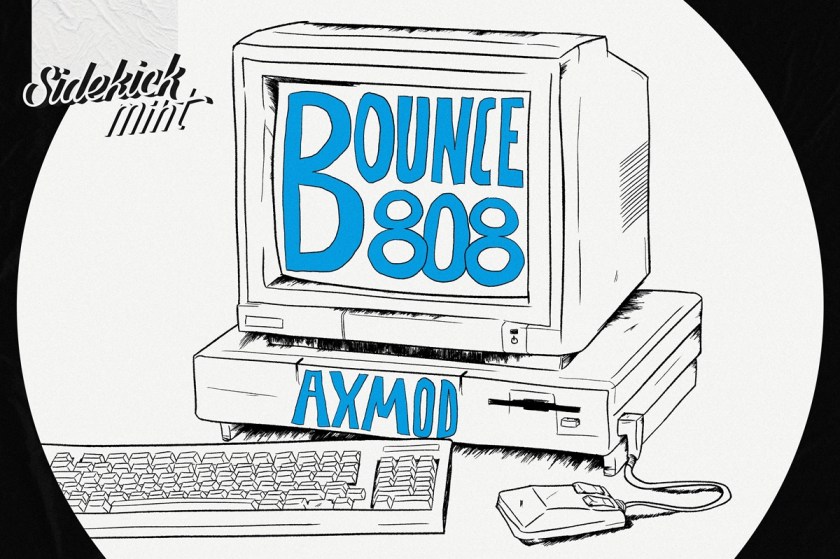
AxMod pays tribute to Norwegian nu-disco star Todd Terje on “Bounce 808.” Referencing the classic drum machine, the Roland TR-808, that has been a staple of house music and hip-hop since the 80s the song is simple in its beats but that aspect of the composition allows the other elements to shine more as the track evolves from a basic melodic synth line into expansive arpeggios and bubbling flourishes of tone. AxMod brings in synth swells as an element to indicate urgency and give the song some momentum with tones while ever so slightly bringing up the BPMs before tastefully bringing things back without an abrupt drop as happens all too often in electronic music. The orchestration of elements is what is most impressive with the song as AxMod employs atmosphere, texture, dynamics, rhythm and melody to craft a song that works as a not so minimal synth tune and as a dance track. Listen to “Bounce 808” on Soundcloud and follow AxMod at the links below.
“The Cause,” Inner Oceans’ latest single, finds the band going off its usual map of dreamily transporting pop into noisier territory. Griffith Snyder steps in and out of a near falsetto seemingly singing to his higher self for guidance to almost whispered darker passages in self-comfort as though in debating with himself about what path to take in an existential conundrum. The layers of sound, white noise, disorienting tones, melodic drones shimmering like steam down a dark alley and the phased percussion reflect an internal confusion while also working as an unconventional, intuitive guide through a maze of options. It’s impossible to say if there’s a definitive resolution by the end of the song but that’s the point—life rarely presents you with a clearly defined route through to where you want to be in your heart and in life. Not only that but maybe you don’t even know anymore where you want to be because your internal compass of your dreams and desires has shifted as well. Yet the song is oddly comforting in its inconclusiveness. It’s a signal post in Snyder’s evolution as a songwriter who was inventive and talented to one confident enough in his ability to take chances with more challenging aesthetics.
The Alarm is currently touring North America with Modern English and Jay Aston’s Gene Loves Jezebel with a stop in Denver at the Oriental Theater on Friday, August 9. All three bands came up at around the same time and were on even mainstream radio in the early 80s. At that time post-punk bands of various stripes were enjoying varying degrees of popularity and commercial success. In addition to the above groups like U2, Simple Minds, Echo & The Bunnymen, The Cure, Bauhaus and Siouxsie and the Banshees helped to define the sounds and look of that style of music for decades to come.
The Alarm’s roots in music go back to Wales where singer and guitarist Mike Peters cut his teeth as a live band playing in the punk band The Toilets in 1977. Peters says the fledgling group played with bands like The Clash, The Buzzcocks and Sioxsie & The Banshees. The band would go to London’s now legendary The Marquee Club, where the Rolling Stones played their first live show in 1962, to see bands including Chelsea whose James Stevenson once drove original Alarm guitarist Dave Sharp home one night because he’d had a bit to drink. Stevenson now plays in The Alarm as well as Jay Aston’s Gene Loves Jezebel. The same social milieu meant that Peters went to a clothing store on London’s King’s Row where Billy Duffy worked before the latter joined The Cult. At that time The Toilets had dissolved or rather evolved into a group called Seventeen. “That was fairly directionless in a way and we experimented with echo, power pop, rockabilly and we got lost in the learning curve,” comments Peters. “But we got a tour with the Stray Cats by pretending to be a support band at gigs and we played The Marquee Club and the guy who ran the club thought we were horrible.”
That club manager refused to book Seventeen from thereon out from one of the premier venues of the era. But a year later Peters and company had reconfigured and focused its ideas into The Alarm. And still the guy at the club recognized the members from being Seventeen. “[He] said, ‘I’m not gonna have them play,’” recalls Peters. But Chelsea Singer Gene October offered to get The Alarm a gig as a support band but needed an alternate name so The Alarm played The Marquee Club for the first time as The Black Sheep and the club manager said, “That band’s going places.” At that The Alarm’s manager quipped “That’s the band you wouldn’t book. That’s Seventeen!” And from there The Alarm became a popular band throughout the 80s even though savaged by the English music press. It’s 1983 single “Sixty-Eight Guns” broke into the top twenty in England and it’s 1987 single “Rain in Summertime” cracked the American top ten Mainstream Rock chart, the latter remaining a staple of college and Modern Rock playlists for decades.
Though known for unabashedly positive up-sweep to its music, The Alarm’s catalog runs the gamut of emotions with luminous songwriting that sounds like the band is striving to connect with something bigger than themselves. By 1991 in the wake of the then new album Raw, The Alarm called it quits. Peters went on to a respectable solo career but also engaged in a short-lived project in the late 90s with his previous acquaintance and now then friend Billy Duffy—Coloursound. The group recorded demos, no official releases, but it did perform live. “Pardon me saying so but those recordings have a kind of cult status for fans of the bands,” jokes Peters. The band sounded like a fusion of the great sounds of mid-80s post-punk and Peters says that in the audience of that first show were Ian Astbury, The Cult’s singer, and Eddie MacDonald formerly of The Alarm.
“The next morning the phones were ringing off the hook, says Peters. ‘Let’s get The Cult back together! Let’s get The Alarm back together.’” By the turn of the century or so both groups were back and active.
But by then Peters had already recovered from a bout of lymph cancer only to discover in 2005 that he had chronic lymphocytic leukemia. He formed the Love Hope Strength Foundation shortly after to support people suffering from cancer and leukemia. Peters and The Alarm continued to write and perform music perhaps more actively than in its previous iteration and in the wake of Peters’ wife/band mate, keyboardist Jules, diagnosis of breast cancer in 2016 The Alarm has put out four albums in three years beginning with Blood Red and Viral Black in 2017, Equals in 2018 and Sigma in 2019. It wasn’t just the urgency of health issues that has inspired this flurry of creative activity either. Peters took on the challenge of his creative legacy as well and not to just rest on past laurels like a band celebrating live a kind of museum.
“I think a lot of that stems from arriving at that point in 2010 or 2011 and an era of fortieth anniversaries for The Alarm,” says Peters. “And I like to look forward so I took that as an opportunity to re-present ourselves as a modern band even given the dynamics of who we are, our age, and even though we have active and inactive members but all part of the family—you become a history of the band. You go away but you never really leave. So I wanted to re-establish the band in the modern era given the weight of our history and make music that can stand up to that and live up to that and represent itself through itself against that history. With the new records it challenged us to re-establish ourselves. That’s a stronger calling, I think, and that’s what’s fueled all the new music we’ve made. And more the will to survive, my wife diagnosed with breast cancer and my leukemia relapsed. There was a lot of reason in the air and to make music that could be a soundtrack for us not just as human beings but as a band as well.”
With the new configuration of the band Stevenson, a versatile instrumentalist, has taken on a greater role playing bass pedals as well as guitar as Peters plays a special guitar called The Deceiver which looks like an acoustic guitar but has greater capabilities than the standard instrument. Peters also has microphones set up across the stage so he can move about and in general the music can be presented in ways that had not been possible previously. To perform live for the anniversaries of their respective releases, the first two albums 1984’s Declaration and 1985’s Strength have been revisited and reinvented given the new live format and not hemmed in by the technological and creative limitations of the time of their original release.
In 2017 The Alarm performed on the Vans Warped Tour side by side with much younger bands but earned the respect of musicians and audiences who, given the era, shared The Alarm via social media platforms and giving the group a new audience that only truly knows the modern band and not influenced by expectations of years past. And the younger audience is having an impact on The Alarm’s older fans through social media.
“That’s re-invigorated our old audience and they see younger people talking about the music in social media. And they can say this band is making music today and it validates their reason to like the band in the first place. As long as we’re enjoying it and our success isn’t getting number one on the Billboard charts but maybe to still be there. It’s about longevity and creating a life in music. We’re still learning what we’re capable of. In the 80s we had big hair and western clothing but that’s only one facet of our history and people can discover other facets of us and doors open for us as we play and opportunities arise when we stay true to the core values of the band which is to to be restless, never be happy with what you’ve be created, make things better, make it around the next musical corner, live for the day to find that chord and keep on dreaming and the thrill of the music.”
Modern English and Jay Aston’s Gene Loves Jezebel have also been releasing some of the best music of their careers with 2016’s Take Me to the Trees with the former and the latter’s 2017 album Dance Underwater. Modern English in particular has always made interesting and moodily haunted post-punk but most people probably only remember the band for “I Melt With You,” which was commercially beneficial but has perhaps eclipsed its other fine offerings.
“A lot of bands can get overshadowed by a massive hit,” comments Peters. “I remember playing with Radiohead in Albany, NY in 1995. They were massive Alarm fans and struggling with the weight of ‘Creep.’ It became a sleeper hit in a way and they’d just released The Bends. And they were saying no one wants to hear The Bends, ‘They only want to hear ‘Creep!’ And it was killing them. Thom Yorke was really struggling and I talked with Jonny Greenwood and told him you’ve got to put your arm around this guy and stick to what you believe in and keep playing your music and it will come out from under the shadow. They stopped playing ‘Creep’ for awhile and I admire them for that because that’s what bands have got to do sometimes. That’s what’s great about seeing Modern English on this tour and spreading their wings and playing the music they love and playing ‘I Melt With You’ at the end of the night. It’s great seeing them and Jay and James playing songs from Dance Underwater. It’s as good as anything they’ve done. What’s good about this tour is that all three bands are as much about tomorrow and we’re all bands that have survived but the ethic of the band has stayed intact and that’s what people are experiencing when they come and see the tour.”
Drifting in on clouds of billowy drone, Haruhisa Tanaka’s “1110” from his album Gone sounds like what patterns of ripples from drops of rain impacting each other endlessly might sound like if abstracted into sound. Or of the aforementioned clouds passing into and over each other in the night. The interference patterns that result from natural, everyday phenomena that we experience and note but rarely take conscious note of is what Tanaka embodies in this composition. The louder, distorted sounds are those interference patterns as the frequencies intersect in the track. By giving voice to these cycles of the natural world Tanaka’s “1110” is like the musical equivalent of a Zen garden capturing the simple and comprehensible nature of the universe if only we can quiet the mind enough to take it in in its proper measure. With the tranquil mood of this song that openness to the sort of revelation the Buddha believed could be had if one could look properly into a blade of grass and attain a deep understanding of all things and their interconnectedness might just be possible. Listen to “1110” on Soundcloud and follow Haruhisa Tanaka at any of the links below.






 Queen City Sounds and Art
You must be logged in to post a comment.