Abduction by an Aquatic Cryptid, Lovecraftian Mutation and the Power of Psychedelic Surf Rock Can All Be Found in Sea Fuzz’s Video for “Sand Monster”

SeaFuzz1
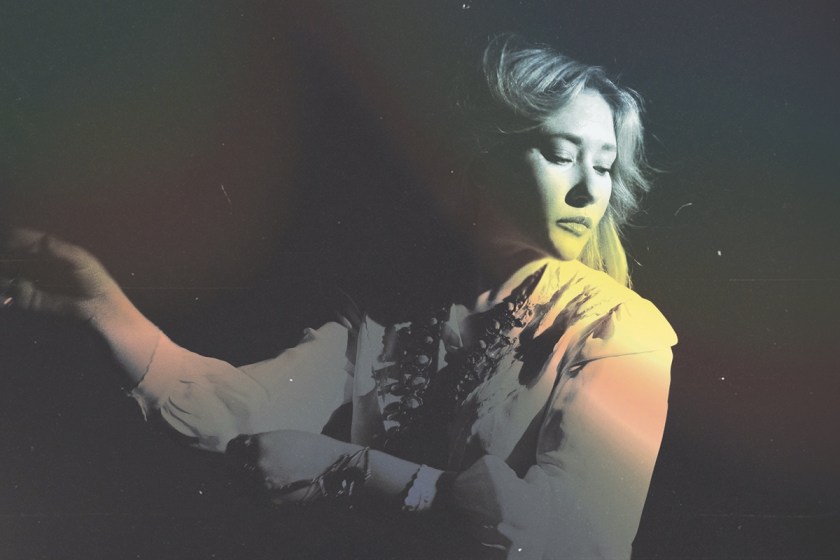
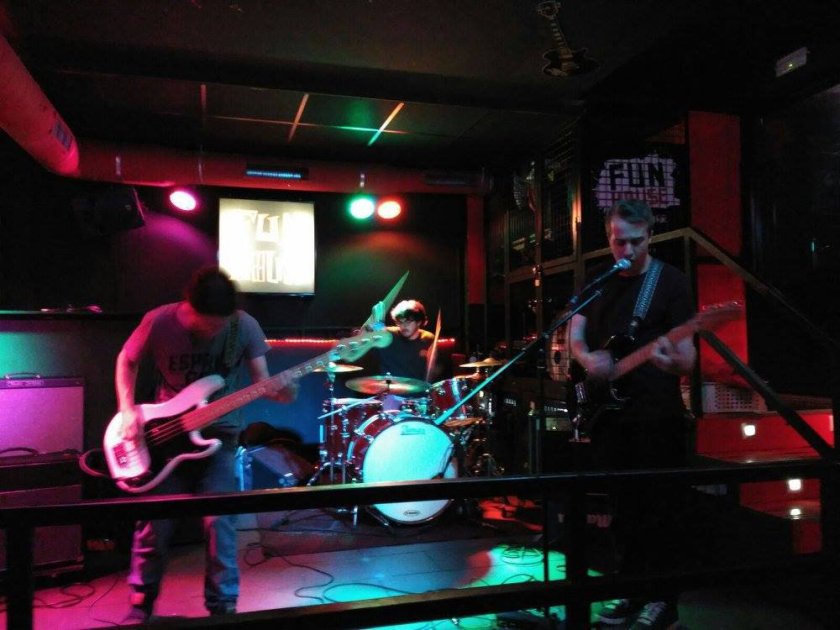
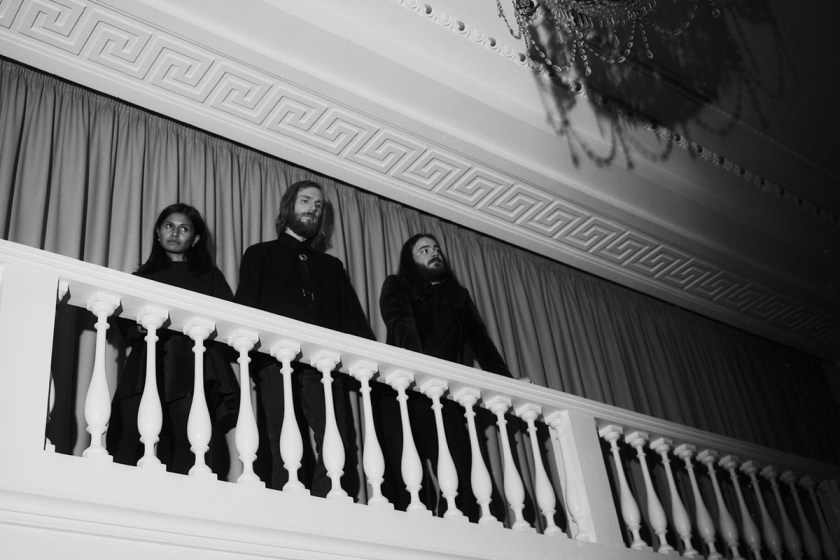
Sea Fuzz, photo courtesy the artists

“Sand Monster” is the first in a series of video releases from Portland, Oregon’s Sea Fuzz. The action is a psychedelic dream sequence in which the lead character is abducted by a creature that looks a bit like a kelp-fringed Creature From the Black Lagoon who takes him to a secret cave where it uses magic to induce a trance while under the care of three beach witches who humorously torment him in various ways before he ties to effect his escape. It’s a plot in miniature right out of a Troma movie with a similar execution. Except our plucky hero defeats the monster and the witches with the power of fiery psychedelic surf music. He has, in effect, turned the spell and other magics back on the monster and his minions who turn on the creature. In the end the guitar hero wakes from the experience not knowing if it was real and instead of walking off into the sunset he walks toward the camera where it focuses close to his eye where we find out his pupils have turned into a spindle shape at an angle. What could it mean except that monsters and magic are real, at least in the context of this ongoing story. The song, too, is a step forward for what has become a bit of a tired genre as Sea Fuzz plays with the parameters and pacing and dynamics of the music with some imaginative performances and tasteful exuberance. Watch the video on YouTube and follow Sea Fuzz on their Soundcloud account.

soundcloud.com/seafuzz

Rohne’s Remix of Henry Green’s Heartfelt Dream Pop Song “Stay Here” Highlights The Grounding Elements

HenryGreen1_crop
Henry Green, photo courtesy the artist

Keenan Branch (aka Rohne) brought to his remix of Henry Green’s dream pop song “Stay Here” an ear for expanding the range of the atmospherics while making the song’s organic elements (percussion, strings/guitars and Green’s vocals) more distinct. Like firm lines drawn on a water color, light distant lightning against an inky stormy sky at dusk. The atmospheres seem to ripple out and run longer ever so slightly enhancing the ability of the song to feel like you’re lost in the feelings of longing Green conveys so poetically and with his unique emotional nuance. Listen to the Rohne remix of Henry Green’s “Stay Here” on Soundcloud.

The Languid, Dreamy Haze of Jaguar Moon’s “Ostrich” is the Bittersweet Sound of the Epiphany That Your Relationship Never Really Stood a Chance

JaguarMoon1_crop
Jaguar Moon, photo courtesy the artists

The languid pace of Jaguar Moon’s “Ostrich” makes its use of space all the more evocative with lingering tones providing a backdrop for the texture of the instrumentation and the vocals to stand out even more. The song uses the metaphor of an ostrich with its head in the sand as standing in for our ability to steadfastly not see what we choose to ignore whether it’s institutionalized social injustice, economic inequality eroding the entire society from within or how you and someone you love don’t share the same ideals, goals and personal vision and how, really, the relationship is over before it’s had a chance to really get off the ground and before one or both parties are willing to admit it. The song is bittersweet and resigned and not aggrieved or disappointed because from the perspective from which the song was written the agony is over and an acceptance and peace with the situation has come to pass even though a certain sadness lingers. It’s tough knowing a relationship that felt good for at least a little while was never meant to last. Look out for Jaguar Moon’s debut EP due out later in 2019 or early 2020. Listen to “Ostrich” on Soundcloud and follow the Danish band Jaguar Moon at the links below.

soundcloud.com/jaguarmoonshine
facebook.com/jaguarmoonshine
instagram.com/jaguar_moon

H.A.R.D.’s Sarcastic Yet Exuberantly Humorous “Thank God There Are People Like Me” Punctures the Central Ethos of the Party Culture

HARD3_sm
H.A.R.D., photo courtesy the artists

Surface level take, H.A.R.D.’s “Thank God There Are People Like Me” is an exuberant song about being a moderately functional, but not consistently, drunk and romanticizing that lifestyle a bit. The chorus of “Thank god there are people like, people like me who relate when I drink,” in sing-a-long fashion seems to to give a pass to self-destructive behavior with an expression of how cool it is and the consequences for others is fine as long as you get away with it. But the song goes into the downside of living your life drinking like there’s no tomorrow because you’ve set your life up to stay wasted as often as possible. A lot of garage rock in recent years and the their ilk that seemed to say it can go on forever if you have the guts. The moment of truth, though, for this song is in a few lines toward the end of the song: “I say I’m a musician but I mainly sell drugs/I spend my nights drinking thinking I should give up/And I just keep talk, talk, talking and I never shut up.” Some of us have known people on that death spiral that romanticize being an unaccountable fuck-up because of some dubious cool factor to never being what you dream of or accomplishing the things that would do something toward legitimizing your cool status. Those people in “bands” who play for beer every week or less but can say they’re a musician and think that makes them an outlaw when their music isn’t legit enough for outlaw status. This song is about that and while it doesn’t condemn it does throw some humorous sarcasm because we either know those people or we’ve been those people but that maybe celebrating loserdom isn’t all its cracked up to be. Bill Hicks once said something about how your friends will christen your dumpster. This song has a similar message. After all, no one wants to be Dwight Yoakam’s character from Sling Blade even minus the domestic violence. Listen to “Thank God There Are People Like Me” on Soundcloud and follow H.A.R.D. at the links provided.

soundcloud.com/havearadday
facebook.com/abandcalledhard
instagram.com/have.a.rad.day

Fake Dad’s Video for “What’s Wrong? Pt. II” Demonstrates Hope for Triumphing Over Self-Alienation

The video for “What’s Wrong? Pt II” by Fake Dad looks like we’re in store for a horror movie scenario going through a boat ride through a realm of fake dinosaurs. Singer Andrea de Varona looks impressively unimpressed while Josh Ford seems to take some amusement from the fake dinosaurs, unaffected by the lit “EXIT” signs and de Varona’s blasé reaction to the odd sights. Visually the video matches the spirit of the song that seems to be about pondering a state of ennui or even existential stasis despite the wonders all around you in which to be engaged and take pleasure instead “chasing after something I don’t believe.” The song articulates well the way we become alienated from ourselves when we convince ourselves we want something because we think we should want those things or to be with those people or in situations we intellectualize a little too deeply we should want even if they don’t suit us. So instead of chasing our actual dreams, we put our energy after what we don’t and then wonder why we’re dissatisfied and jaded. The song sounds like it’s about these sorts of things and yet it has a classic pop sensibility to it and there is inherent in the lyrics and de Varona’s vocal delivery a self-awareness that in itself is hope for change. The passage through the tunnel is an obvious symbol of personal transformation but that there is no dramatic change at the end is a tacit acknowledgement that it’s going to take some work. Follow Fake Dad at the links below.

soundcloud.com/fakedadtheband
facebook.com/fakedadtheband
instagram.com/fakedadtheband

“19 August 2019” From Cat Tyson Hughes’Daily Improvisations Project Evokes a Sense of Melancholy and Mystery

CatTysonHughes1_crop
Cat Tyson Hughes, photo courtesy the artist

Cat Tyson Hughes has been engaged in an Instagram-based project called Daily Improvisations (cleverly adapting the title from the concept of “daily affirmations”). It involves improvisational music created with field recordings, vocal loops and electronic sounds that are informed by the serendipity of daily encounters and composing those bits of inspiration in the form of a type of sound collage. Beginning on July 29, Cat has presented pieces significantly different from one another but unified by her sound palette proving that you can create broadly and with great diversity within the relative limitations of your tools as they inspire creative uses of what might normally be familiar elements. Each piece invites us into a unique iteration of everyday experience with tone, texture and informal yet organic rhythm. Each is short and economical in conjuring the essence of a moment or of the day. In particular, the piece titled “19 August 2019” employs a repeating synth figure and ghostly vocals for a song reminiscent of The Knife circa Silent Shout with its evocation of melancholic alienation. It also brings to mind the mysterious quality of the first half of Aphex Twin’s Ambient Works Vol. II the way it uses beatless repetition to establish a sense of psychological intimacy. Cat Tyson Hughes will release a full length album called Gentle Encounters with Things on October 31 so maybe these daily creative sketches and explorations will inform the fully developed work or give us a taste of a different side of the artist’s songwriting. But what has come forth so far is a fascinating string of sonic snapshots delivered with an admirable level of discipline and engaged imagination. Listen to “19 August 2019” below and follow Cat Tyson Hughes at the links provided. On her Soundcloud account you can give the other completed items in the series a listen. Not a huge commitment and rewarding to trace her developments across time.

soundcloud.com/cattysonhughes
instagram.com/cat_tyson_hughes

Anna Rose Finds the Dignity and Beauty in Human Flaws on “Broken is Beautiful”

AnnaRose_BrokenIsBeautiful1_crop
Anna Rose “Born is Beautiful” cover art (cropped)

The descending, spidery melodic figure in the beginning of Anna Rose’s “Broken is Beautiful” feels like the musical connecting tissue between the more fiery passages of the song. Rose herself transitions seemingly effortlessly between the introspective and the impassioned and bold. The contrasting moods and modes serve well a song about the recognition of the imperfection and frailty in human life and the complexity of everyone’s psyche. She sings about how some of the strongest people are those who know they’re fractured and even broken who yet continue to struggle and strive to have as good a life as possible and maybe help others to do so as well. Rose gives voice to the struggle with inner demons and the negative patterns of thought that can haunt you when anxiety strikes and the resultant worries about being exposed as a human who can get stretched then and whose emotional and psychological reservoirs are not endless. The delicate and the triumphant aspects of the song both celebrates and commiserates with those broad sweeps of the human experience. The single comes from Rose’s new album The Light Between, which is what she seems to find on “Broken is Beautiful” – that is to say she draws out and draws attention to the bright side of what might otherwise be considered flaws and weaknesses and finds the beauty in what makes us mortal and human. Listen to the song on “Soundcloud” and follow Anna Rose at the links provided.

annarosemusic.com
soundcloud.com/annarosemusic
open.spotify.com/artist/3fnDSaurPwPiGssbcrUnuB
youtube.com/annarosemusic
twitter.com/AnnaRoseMusic
facebook.com/annarosemusic
instagram.com/annarosemusic

The Agonized Soulfulness of Ainsley Farrell’s “Dark Spell” Evokes the Complexity of a Troubled Relationship

ainsley-farrell-cover-2_crop
Ainsley Farrell, photo courtesy the artist

Ainsley Farrell’s “Dark Spell” is overflowing with strong emotions barely reigned in. At times the singer’s normally confident, husky vocals break ever so slightly with the force of feeling as she reaches into her upper registers. But this works to humanize the vocals and renders them more powerful and relatable. Her words paint a portrait of a fractious and maybe dysfunctional love wherein the two people have hurt each other deeply as if under each other’s dark spell. She vividly describes the moments of the initial attraction and the anticipation of the moments of unforgettable connection. Then, enigmatically, “He wants me weak and under your dark spell” and “You know I’d never leave you with a heartache/so break me and tell me what hurts.” It’s as though Farrell is describing the kind of situation where you’re in a relationship with someone who wants to infiltrate every fiber of your being and then tell you what you feel even though you know better. Thematically its reminiscent of the mysterious quality of Peggy Lee’s “Is That All There Is” in that you know something dark and twisted went down somewhere but whose details elude easy analysis. In that way it’s also akin to the short fiction of Shirley Jackson where the prose is beautiful and powerful but speaks to a pain rooted deep in the psyche. Whatever the song is really about, Farrell’s powerfully expressive voice against a backdrop of textural and minimal music rightfully puts the agonized soulfulness of her singing at the center of the song where it belongs. Listen to “Dark Spell” on Soundcloud and follow the Australian artist by way of California at the links below.

soundcloud.com/ainsley-farrell
ainsleyfarrell.bandcamp.com
facebook.com/ainsleymusic

Wesley West Perfectly Captures the Feeling of an Un-rushed Day While in the Presence of Your Beloved on “All The Time”

WesleyWest4_crop
Wesley West, photo courtesy the artist

The genre of the artist writing a song for their lover and the process is nothing new. But South African songwriter Wesley West brings to his third single “All The Time” an evocative multi-layered melody from spare guitar, warm vocals, textural percussion, synth figures and atmospherics to give the track a hazy uplift and sub-bass that seems to not only provide a strong backbone for a song with such a delicate emotional sensibility but the current of primary rhythm as well. West articulates in wistful fashion the feeling of having all the time in the world while in the throes of love without it seeming like a pop cliché. We get lost in the moment with him in the rich but subtle backdrop of music that feels like the embrace of the emotion as well. Listen to “All The Time” on Soundcloud and follow Wesley West at the links provided.

soundcloud.com/wesleywestmusic
open.spotify.com/artist/0Lsgt1lP2vsV5nbenqhahz
youtube.com/channel/UCBfRrwVEuYRxU83I3pukVmw
facebook.com/wesleywestmusic
instagram.com/wesleywestmusic

Wes Fowler’s Tender and Bittersweet Ballad “Time Machine” is the Remorseful Portrait of True Love Lost

WesFowler1_Crop
Wes Fowler, photo courtesy the artist

Wes Fowler uses a familiar conceit in his song “Time Machine.” The whole wishing one had a time machine to go back and fix all his mistakes with a loved one. Weaving in samples from an answering machine, it feels like Fowler is revisiting the kind of personal pain that a guilty conscience will not let you leave behind. But there isn’t a perverse obsession expressed in this song, just a gentleness of spirit, genuine contrition and a deep sorrow with which he’s just now coming to terms. While we’re never told in the song what happened to the subject of the song whether maybe they have passed or whether the song’s narrator has damaged the former relationship beyond repair. But the love he realizes he lost comes through strongly in his vocal inflections and through the spare guitar melody. So much so that the final line of the song hits strongly, “You were the love of my life and I never even let you know.” Listen to “Time Machine” on Spotify and follow Fowler at the links provided.

wesfowlermusic.com
instagram.com/wesfowler_