KIN CAPA’s “Queen of the ‘Niles” is a Brilliant Use of the Metaphor of Human Civilization as Celebrity Diva on the Subject Ducking Addressing Climate Change

KIN_CAPA2_crop
KIN CAPA, photo courtesy Lee Capa

The new KIN CAPA single “Queen of the ‘Niles” from The American Opera: Act II might be too clever for its own good. Couched in a sort of sound design production style, the song feels like an experience presented as much as well-crafted pop song with no short measure of creative ambition. The rousing choruses outline the various ways our civilization has failed to grow up (the “Queen of Juveniles”) and the multiple ways its been in denial about its direct role in the destruction of the planet and the consequences that have been crashing into our lives for more than a few years now while America and other world powers are busy telling themselves how great they are and that they can put off the impending disaster for some future date that never seems to come. Capa’s use of the diva, the kind that can’t be bothered with the petty, everyday concerns of “regular” people lacking extreme privilege, as metaphor for the attitude our societies take toward Mother Nature’s not so gentle warnings is brilliant and clever taking what could be a bluntly topical song about climate change to the level of art without blunting the message. Listen to “Queen of the ‘Niles” on Spotify and follow KIN CAPA at his website linked below.
kincapa.com

Lochie Earl’s “Superyacht Party” Is a Gloriously Self-Aware Pop Song About Income Inequality and Social Injustice

LochieEarl2_crop
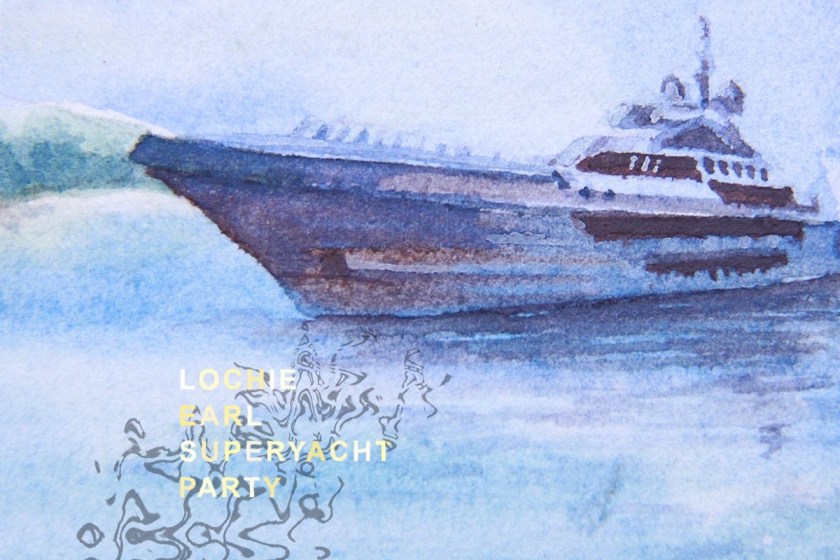
Lochie Earl “Superyacht Party” cover (cropped)

“Superyacht Party” is a bit of a different flavor for multi-instrumentalist, producer and drummer for Gypsys of Pangea, Lochie Earl. It was inspired by his having taken an Uber home one day with a Pakistani driver who had an engineering degree that wasn’t considered valid in Australia so he worked in retail and drove Uber with the rest of his time so that he could bring his family over to Turtle Island and hopefully a better life. The song starts out like an odd but evocative 80s lounge pop song written after having your mind blown by a bummer story, as it happens to be, and your mind aswirl with the hard realities so many people face and the opportunities they never have due to class and legal status. They have to take jobs that more privileged people would never countenance, deal with horrible work situations that make one think things like the Simpsons quip where Homer once said, “Kill my boss? Do I dare live out the American dream?” and otherwise settle for extremely diminished expectations. While some get to go to those superyacht parties of the song title and worry about things like Tinder matches. From the initial lounge sound the song kicks up in sound and dynamics like the end of The Beatles’ “A Day in the Life” before Lochie offers the line about Tinder matches as if throwing out such a trivial concern when compared with hustling and grinding away in a society that generally treats you like trash. Not only does Earl address the immigrant situation but also the lingering injustices suffered by Australia’s Aborigines population. It is a rare sensitive take on a sensitive subject and a great pop song to boot. Listen for yourself on Soundcloud.

Wax Heart Sodality’s Rousing Post-punk Anthem “Alphas” Calls For Cutting Out the Marketing Culture-Driven Generational Conflict

WaxHeartSodality1_crop
Wax Heart Sodality, photo courtesy the artists

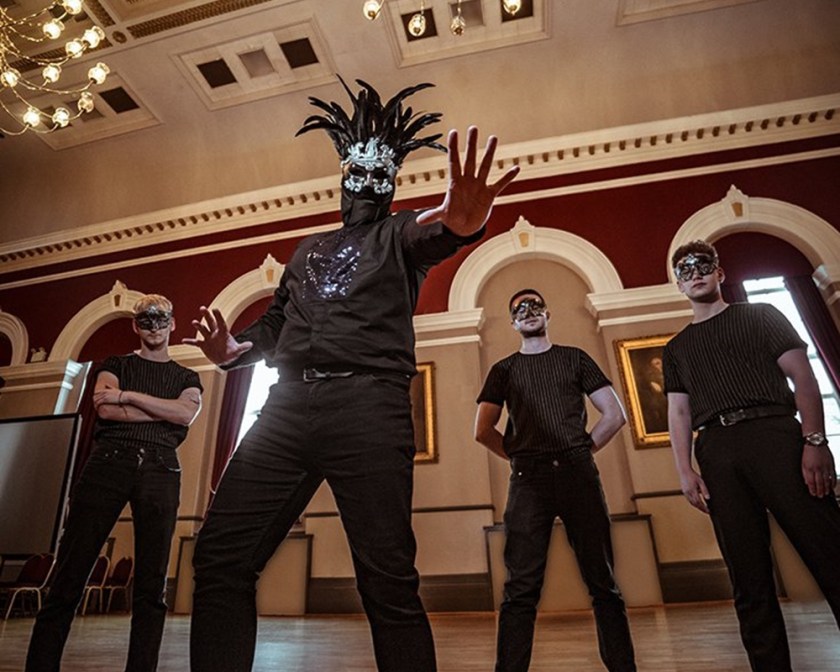
The concept of Wax Heart Sodality is that of a secret society against despair and more, to take those down low and take them to their potential heights. Or at least that seems to be the aim outlined in the sort of short origin story video below the Spotify player below. The group’s debut single “Alphas” is the story of a frustration with the kinds of bully alpha males many of us grew up knowing and who grew up to be authoritarian personality types who think Brexit or Donald Trump or Jair Bolsonaro are perfectly fine. But also with the mentality of “generation alpha,” the children of millennials who are tech savvy and imagine themselves more informed and thus superior in some ways to previous generations but due to the inescapable realities of age and lack of life experience do not possess the knowledge and perspective to be aware of their own blind spots just like all previous generations in their youth and the myriad social and psychological problems not yet understood, acknowledged or dealt with in a humane and productive way. On the surface the driving pace of the song and its melancholic tone seems to be a both sides critique but in the end it’s really a call to cut with the praise of generations as the clear tool of marketing and the oligarchy to flatter and divide. Which is a much more nuanced perspective than self-congratulations on not being a “Boomer,” an apathetic “Gen X-er” or smugly vitriolic casting aspersions on “millennials” and “Gen Z” and their supposed laziness and subpar taste in music and so-called culture. But even if one doesn’t want to engage in the finer points of the song, it’s a rousing post-punk anthem with momentum and splintered yet brooding melody delivered by a band intentionally keeping its identities under wraps for the moment at a time when there’s not a lot of mystery in the world of music, art and culture. Listen to “Alphas” (recorded by Steven Bardgett of Mouses) on Spotify, watch the Anonymous-esque origin story video below and follow the band at the links provided.

Origin story

twitter.com/WaxHrtSodality
facebook.com/waxheartsodality
instagram.com/waxheartsodality

The Sensuous and Hopeful “Krill” by shi offline is a Minimal Techno Pop Song About the Uncertain Feelings of a New Relationship

shi_offline1_crop
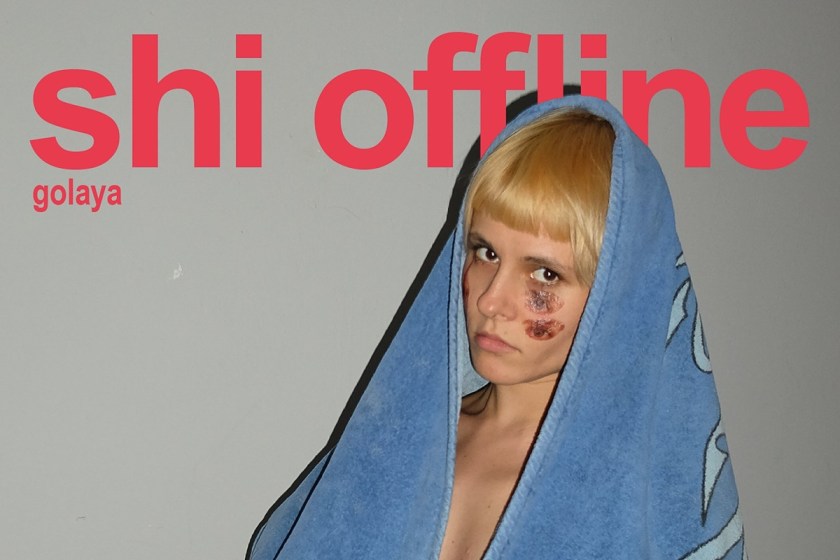
shi offline Golaya cover (cropped)

The new shi offline single “Krill” uses minimal synth swells and an evolving rhythm scheme to convey a sense of a fragile love in the early stages of its development. There is a tentative quality to the music that is somehow also evocative embodying the uncertain feelings and caution of someone who isn’t sure if committing to the feelings welling up in her is a good idea or if the potential heartbreak she senses possible is worth the risk. Akisa Tsybina’s vocals are reminiscent of a more contemplative Alice Glass while Gordian Gleiß’s production mixes a chillwave sensibility with the tonal scheme and rhythmic cadence of 1980s New Order for an effect that manages to make the song sensuous and hopeful rather than fearful of an unknown future with the object of one’s attraction and affection. The track is from the duo’s new album Golaya (released on October 18, 2019) and you can listen to it, and likely the rest of the album, on Spotify. Also below you can watch the official music video and follow shi offline ONLINE at the project’s website.

shioffline.com

South African Producer Mark Akol and Ivorian Rapper Andy S Strike an Exciting New Sound and Style of Hip-Hop on “Nouvelle Vague”

MarkAkol3_crop
Mark Akol and Andy S “Nouvelle Vague” cover (cropped)

South African producer Mark Akol collaborated with Andy S, a rapper from Côte d’Ivoire on “Novelle Vague.” The term originally referred to the French New Wave cinema of the late 50s and 60s that involved experiments in narrative and visual style, editing and subject matter. For this song it references a new era of African hip-hop that has emerged in recent years. It starts off with a mix of menacing synth sound and laughter before Andy S goes directly into things with his energetic rap in French which one does not need to fully understand to appreciate how the rapper’s momentum and wordplay and tones jibes with the warbling/rapid swelling synth and creative samples and electronic percussion accenting and giving texture to every line, backing vocals echoing to the side. The track manages to combine an unconventional playfulness with swagger and a mood that draws you into a moment that feels like a snapshot of the future and a glimpse into the present of modern African music innovating in soundscapes much as did artists out of the Highlife and Afrobeat movements and the sort of funk Walias Band got up to with contributions from Moog/organ player Hailu Mergia. “Nouvelle Vague” sounds like it could come from anywhere on the production end because of the internationalization of software and gear and methods of recording being attainable to anyone with access to technology and the internet. But its sensibility and vocal cadence is refreshingly different and new beyond specific cultural context and thus represents a fascinating innovation in the world of hip-hop in general and thus worthy of the song title and its connection to a wider movement. Listen to the song on Soundcloud and follow Mark Akol there as well.

soundcloud.com/markakol

“A.I.A.” by War You Lost is an Urgently Melodic Indictment of the Misdeeds of American Intelligence Agencies

WarYouLost2_crop
War You Lost “The Gadget” cover (cropped)

War You Lost takes us on a tour of sounds and ideas across time on its video for “A.I.A.” The aesthetic is like something from the early 60s or mod-70s crossed with something from an Alex Cox film. With lyrics name-checking the alphabet soup of American spy agencies and words about ways these organizations have been used to carry out government repression within and without the country with nods to prominent conspiracy theories and unethical actions undertaken in the name of national interest and sowing fear, instability and misinformation to keep the public in a constant state of background flux making it easier to manipulate. Musically the swirling, edgy melodies are reminiscent of Straightjacket Fits circa Hail and 90s Hoodoo Gurus with a tuneful jangle like a darker R.E.M.. In doing so, War You Lost taps into an 80s sound without going for the obvious touchstones that have informed a broad swath of modern music while not being hemmed in with a specific movement or scene and bringing to it a vitality that makes the single repeatedly listenable. Check out the single and video on YouTube and follow War You Lost on Facebook.

facebook.com/waryoulost

Jaelee Small Explores the Complexity of Heredity and Identity on “TicToc”

JaeleeSmall1_crop
Jaelee Small, photo courtesy the artist

The spare piano progression at the beginning of Jaelee Small’s “TicToc” leads you to believe you’re in store for a simple but emotionally urgent song. But the song progresses into a more full sound in the choruses with horns, and a richer array of percussion than the metronomic time keeping when the song starts off. Along with the broadening of sound, Small’s vocals ring out and harmonize, drawing out notes and the swelling of emotions. The song is about Small’s having first been in touch with the father she never truly knew growing up and the complex emotions and confusion regarding what she was hoping to get out of the relationship before he passed away. The song also sounds like one of learning to be patient with yourself and kind about your insecurities and accepting that personal growth isn’t a step-by-step, liner process of progression for anyone and that identity is never as simple as discovering your roots, your genetic background or connecting with a subculture or any other demographical facts. Although a short song at two minutes thirty-one seconds, Small’s song seems to evoke that complexity alongside the deep human yearning to know. Listen to “TicToc” on Soundcloud and follow Jaelee Small at the links provided.

jaeleesmall.com
facebook.com/JaeleeSmallMemoirs
open.spotify.com/artist/6ScuxjqJN66wQ8uzDdBnAD

“Hands” by Seatkickr is a Song About Needing Someone Who Will Stand by Us Through Times of Trouble and Not Give Up

Seatkickr2_crop
Seatkickr, photo courtesy the artist

Sofie Milito as Seatkickr creates the perfect combination of sense memory imagery with a wistful melody and rhythms on her new single “Hands.” What begins as impressionistic thoughts evolves into a yearning and urgently melancholic declaration of what is so missing from our lives and past relationships. Those we wanted to have, those we thought we had, those that didn’t satisfy our deep needs but we wanted them to so desperately even if we couldn’t acknowledge that desperation within our own hearts but we sure felt what was lacking in a tactile if subconscious way. In singing “We just want someone to fight for us,” Milito articulates a need that we don’t often get to put out there that is someone in our lives close to us who isn’t passive about their love and concern for us beyond their immediate needs and consideration for their own comfort. Because sometimes we need someone who will fight for us whether that’s in standing up for us or to us or getting through times of struggle and not just giving up. Listen to “Hands” on Spotify and follow Seatkickr at the links below.

open.spotify.com/artist/4GaxIb7k4cF4wTxlsMj0Zx
seatkickr.bandcamp.com/releases
instagram.com/stkickr

Divide and Dissolve’s “Prove It” is the Droning Rumble of the Edifice of International White Supremacy Crumbling

DivideAndDissolve2_sm
Divide and Dissolve, photo courtesy the artists

Divide and Dissolve aim to “decenter and destroy” white supremacy with their music. And “Prove It,” the lead single from the forthcoming 2020 album Gas Lit, sure sounds like it’s shaking the foundations and destabilizing norms. Fans of The Body, Lingua Ignota and Echo Beds will find much to like about the crushing industrial drone and the abstraction of social criticism into the very sound and structure of the music itself. The thundering, echoing drums in a kind of menacing dance with writhing, collisions of heavy guitar sound like a great edifice being torn down from the capital of an ancient, empire that has long ago lost its sense of mission and dominance, whose corruption is already cracking its own edifice and which must be cleansed from the world beginning with the symbols of its power. This is an expression of the fractures that have been exposed from within that power structure in our own world of white supremacy, racism, misogyny and all the forces that are maintaining an abusive and oppressive international system that is hurting everyone and the very environment we inhabit. Watch the video and listen to the song on YouTube and look out for Gas Lit due out hopefully in early 2020. The duo of Takiaya Reed and Sylvie Nehill has already been championed by the likes of Unknown Mortal Orchestra (whose Ruban Nielson produced the album) , Deafheaven, Sumac, and Poliça with opening slots on tour so with any luck we’ll all get a chance to catch the project live soon as well.

“Heart Talk,” the Title Track to Alex McArtor’s debut EP, Demonstrates the Importance of Goodbyes Over Ghosting

AlexMcArtor1_sm_crop
Alex McArtor, photo courtesy the artist

The title track to Alex McArtor’s debut EP Heart Talk, Vol. 1 is part goodbye letter and and acceptance that the romance isn’t going to work out. She outlines the positive aspects of the relationship and what sparked an initial connection but then all the details of how those connections didn’t run wide or deep. That McArtor couldn’t fulfill a role expected of her that wasn’t her own identity. The song is a gentle refusal of warping her heart and psyche for a love that isn’t suitable. With finely textured acoustic guitar rhythms and soaring electric leads, a doleful synth melody and McArtor’s dynamic and passionate vocals, the song brings you into that moment when you cast off your own personal illusions about someone you love and are ready to walk away while acknowledging your own feelings in the process and recognizing your own part in how things went down, which is the harder realization to swallow for a lot of people, especially when you’re young and don’t have as much life experience. McArtor makes it sound not just melancholic but a necessary part of stepping away and that is actually saying so rather than ghosting. Listen to “Heart Talk” on Soundcloud and follow McArtor on Spotify.