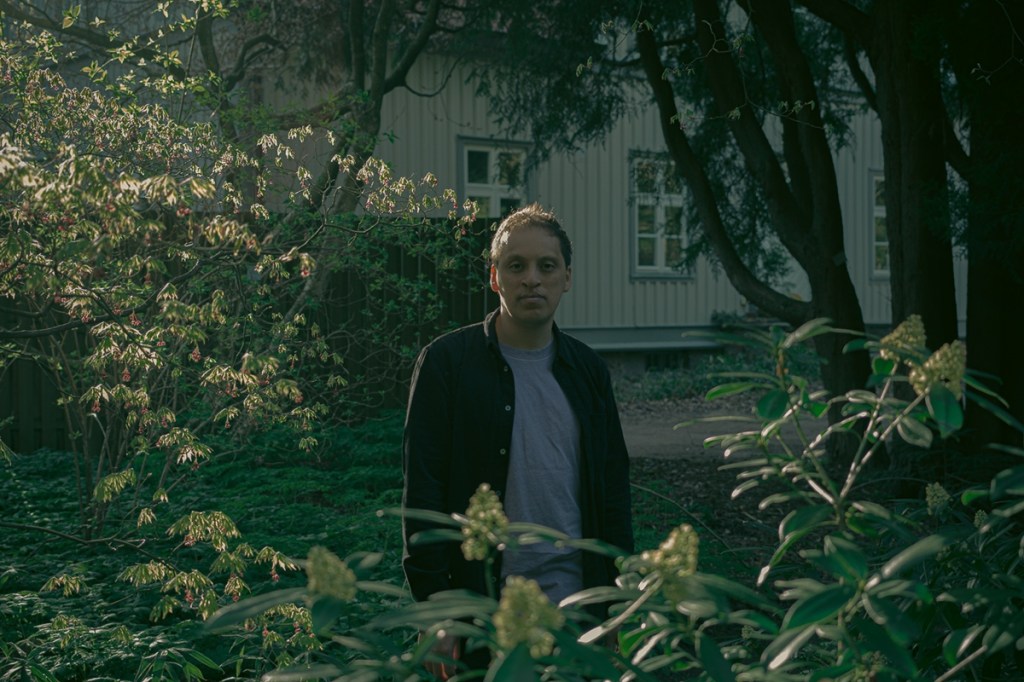
Tobias Karlehag’s “ORQUIDEA” progresses from hazy white noise background to bell tones struck and textural sounds of physical objects used to create the incandescent melodies to a place where the sound waves create a natural distortion on the recording. It grounds a reflective mood with a tangible presence of sound that conveys an organic tranquility that expands beyond the initial tonality as the bell sounds resonate out to create what sound like interference patterns droning onward and decaying into the distance as though approximating an abstraction of the dynamic of the flowers invoked in the title (orchids) as it opens up with its first bloom. It’s sounds like a meditation on delicate and often unseen natural processes that can seem mystical in real time and symbolic of the cycles of the universe. Listen to “ORQUIDEA” on Spotify and follow Tobias Karlehag at the links below.
The gentle psychedelia of “Pocket Theory” by Springworks has a refreshing energy that has the quality of feeling like waking up from a good sleep. The effervescent tones like several tiny belltones twinkling in the mix and the production on the song with an ever expansive dynamic is reminiscent of Thomas Newman’s music for Real Genius and his older brother David Newman’s score for Heathers. Which is to say it’s cinematic and conveys a tangible sense of place and projects a mood that can suit whatever visual environment to which it’s put. In the case of the video for the song it’s a collage of old science videos and psychedelic images like content pulled from a box of VHS tapes found at a thrift store and repurposed to breathe new life into its potential meaning and significance when combined with “Pocket Theory” and its Madchester-esque good vibes and seemingly endless uplift until the song fades out into a tranquil drone over sampled industrial video speech. Watch the video for “Pocket Theory” on YouTube and connect with Springworks at the links below.
September Stories employ a spoken word element for the lyrics to “I’VE BEEN THINKING ABOUT DYING TOO MUCH” while the music itself is stark to match the intense and unadorned vocals. The lyrics repeat and in the second iteration the drums come crashing in and the vocals raise in an amplified sense of desperation uttering words of abject alienation and the realization of being doomed by one’s own psychology and feeling trapped by a hopelessness so deep it turns into a self-reinforcing cycle of emotional self-sabotage that feels with great certainty inescapable. Though very different sonically fans of Big Black, Slint and OXBOW will appreciate the bleak imagery and poetic evocation of confronting one’s own worst enemy within one’s own mind. Listen to “I’VE BEEN THINKING ABOUT DYING TOO MUCH” on YouTube and check out the rest of the new September Stories EP I STAND IN AWE OF THE GREAT UNKNOWN on one of the streaming services below and follow the group at the links provided.
“Eveningside Decks” opens Warning Light’s latest album Inner Spaces with a an air of mystery and trepidation. Imagine walking home alone in the twilight and you take a trip down an unfamiliar street with houses of unusual shapes with doorways opening directly onto the sidewalk and you see one open with a flickering light illuminating a darkened alcove because it’s near the end of fall. Your curiosity gets the better of you and you look inside and find an empty living room with no windows and a television screen tuned to, unusual these days, to the static of a channel off broadcast. Then a figure comes on the screen and welcomes you to sit and you do and you are invited by this stranger to help with a mission of great importance and great reward if you so choose to come on board for what promises to be the adventure of a lifetime but one that has to remain hush hush. The distorted synth drones and hovering tones set to a meditative, accented beat suggests the air of futuristic film noir with the vibe of Tangerine Dream’s 1980’s soundtracks, like music for a film inspired both by Murakami and Ridley Scott. Listen to “Eveningside Decks” on Soundcloud and give a listen to the rest of Inner Spaces on Bandcamp.
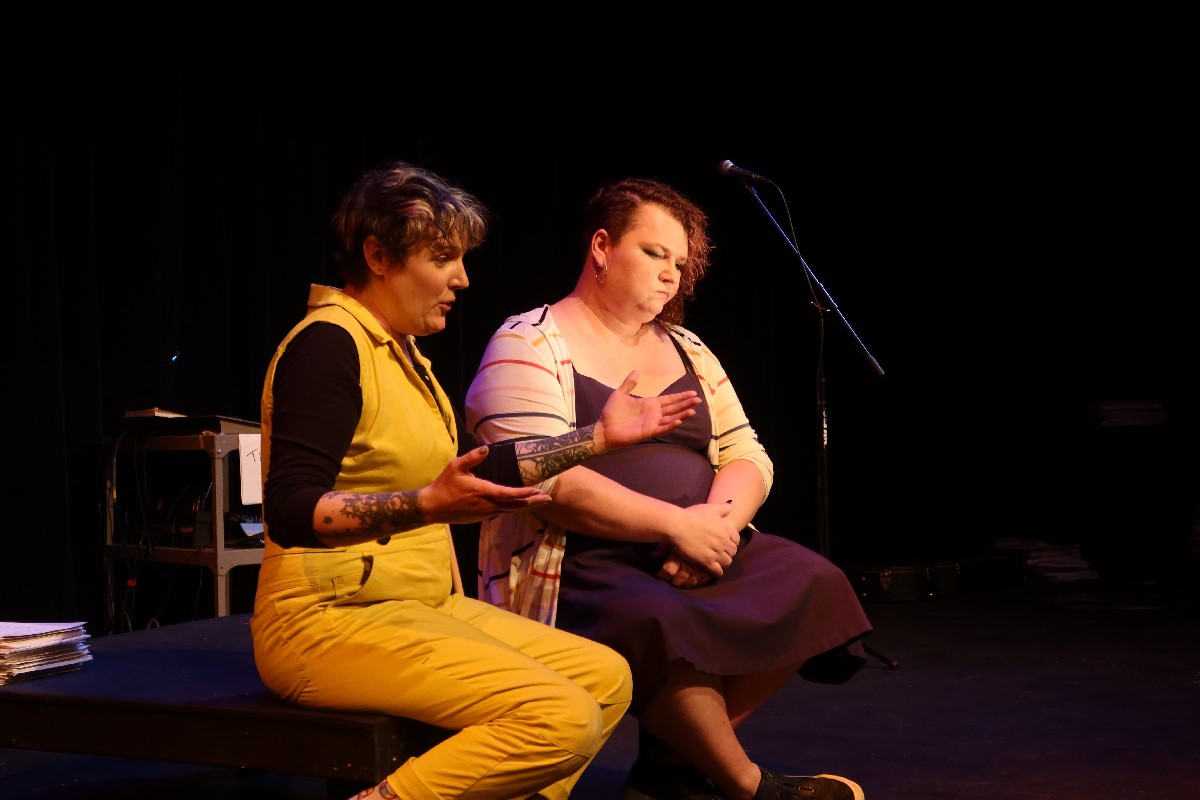
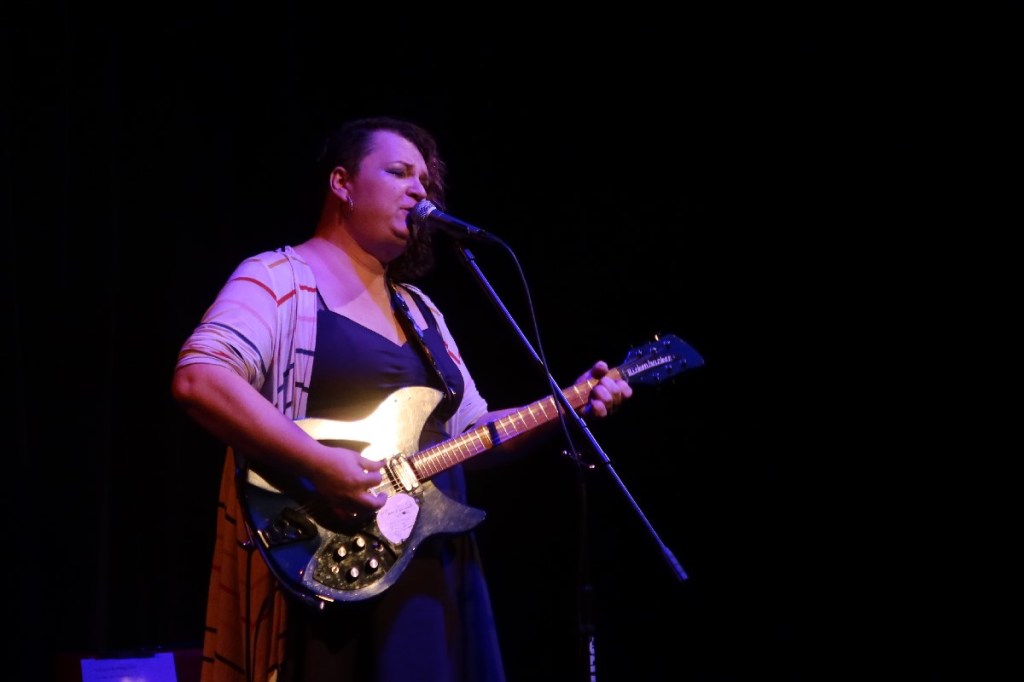
Miriam Suzanne and Josie Cool in Pity+Fear (a travesty) at Buntport Theater 5/27/22, photo by Tom Murphy
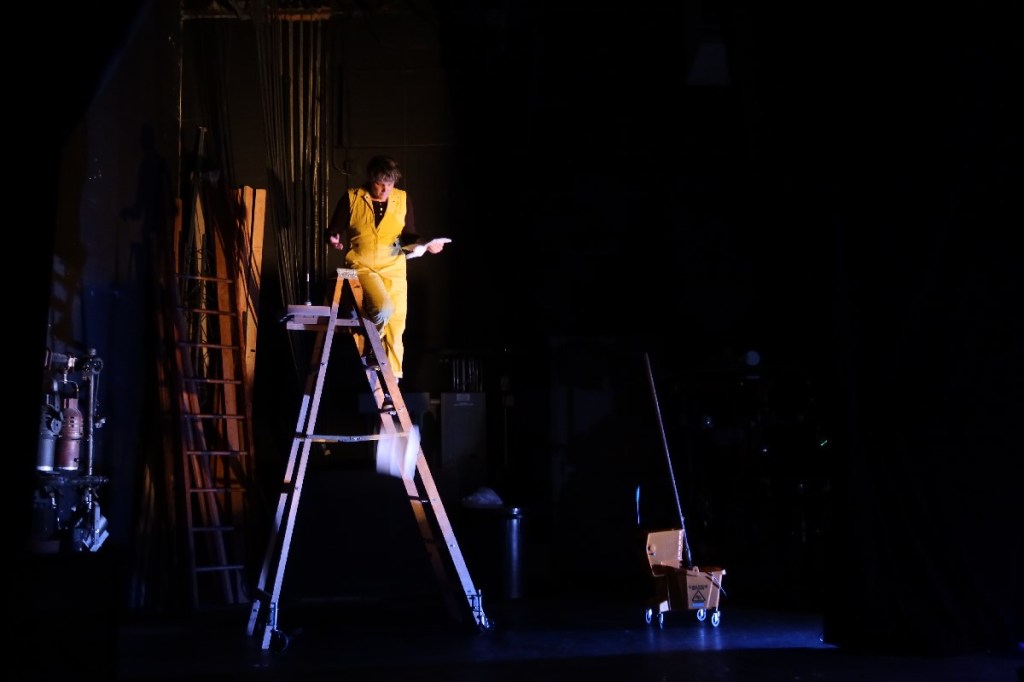
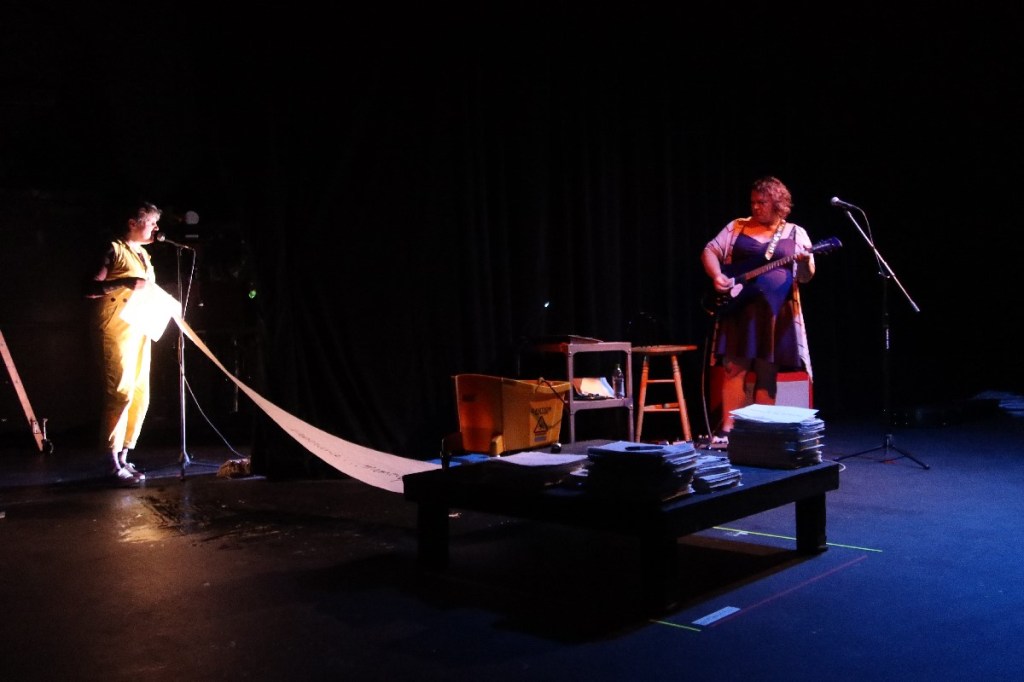
Pity+Fear (a travesty) was the latest original show from Grapefruit Lab and in general it might be described as a darkly comedic Greek tragedy that per the press release for the production explores “what it means to be alive, to tell the truth, and to change over time.” The set was in the modest setting of the Buntport Theater with some lighting, a low stage, a ladder, reams of documents that the characters use to consult for information and little else. One immediately thinks of Samuel Beckett’s 1953 existential play Waiting for Godot with its own minimalist set and two characters engaged in witty and conversational dialog about the significance of existence as well.
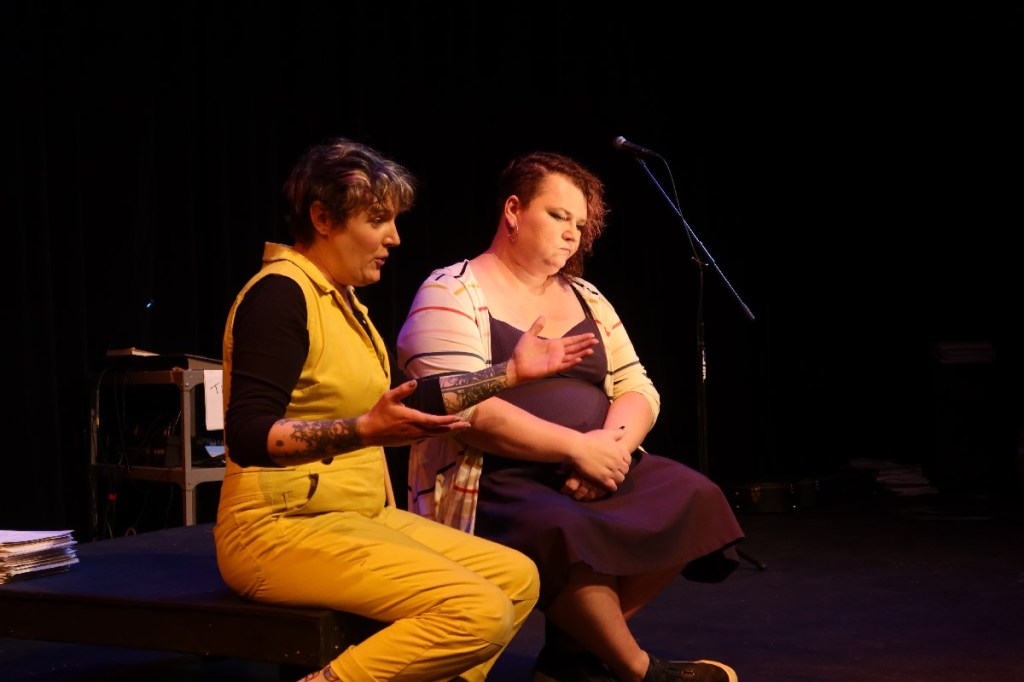
Pity+Fear (a travesty) at Buntport Theater 5/27/22, photo by Tom Murphy
The two leads for this play, Miriam Suzanne and Josie Cool (who also performed music at various points to accentuate and complement the themes of the play), use the vehicle of delving into both the fraught mythology of the Greek mythological figure Agraulos in parallel with foundational stories from their own lives. There are three myths about the death of Agraulos, all contradictory, but all of which reveal something significant about the Greek view of women and identity with one myth saying how Agraulos and one of her sisters opened a box containing the monstrous offspring of one of the gods and going insane and throwing themselves from the Acropolis (in Athens) or off a cliff; another that Agraulos sacrificed herself for the good of Athens and in the third that Agraulos stood in between Hermes and her sister and was turned to stone for her trouble. All stories that extol blind obedience and sacrifice. But Suzanne goes deep into Greek theater history and in unraveling stories that serve as the foundation of our culture and to a large extent our own identities and relationships with one another between that mythological framing and deconstruction Suzanne and Cool examine and deconstruct the seemingly arbitrary rules for how we learn and build our own identities.
Pity+Fear (a travesty) at Buntport Theater 5/27/22, photo by Tom Murphy
What made that exploration of myth and personal anecdotes from life that included stories of figuring out confusing and emotionally traumatizing situations and others finally illuminating and life affirming so poignant and effective is that Suzanne and Cool are both trans women. Suzanne’s story about how her mother had a dream of having a boy before her brother was born and not having a dream of gender for Suzanne beautifully illustrated how we subconsciously know we can know truths about ourselves before we have the language for them. Juxtaposed with the myths that represent cultural norms that often impose identity and mores even when they serve little but ritualized tradition.
Pity+Fear (a travesty) at Buntport Theater 5/27/22, photo by Tom Murphy
Both Cool and Suzanne made the material which could have been perceived as academic or theoretical seem immediate with an obvious gentleness and awareness of how these subjects impacted their own lives in a very real and direct way. Maybe it was a reference or a quote from another thinker but when Suzanne said “The body has little regard for theory” it hit with the ring of truth because humans often have all these ideas that they insist are the truth merely because there is a consensus of the moment based on incomplete information and stating that one point in an evolving comprehension of a matrix of interrelated phenomenon and existences is static and eternal. Science is catching up to a non-binary view of gender in DNA as a spectrum but of course that’s been a fact that theory has taken a long time to account for and thus Suzanne’s aforementioned quote seems even more relevant.
Pity+Fear (a travesty) at Buntport Theater 5/27/22, photo by Tom Murphy
With the right wing trying to erase the existence of transfolk or trivialize that identity as a choice like what clothes to wear, a play like this bypasses that analysis and offers real insight into the nature of how we construct identity whether you’re trans or not. It challenged, without aggression, the very stories we learn and internalize from culture going back centuries and in doing so suggests a more compassionate and human way to understand the personal, familiar, societal and religious stories that inform who we are and we who can be and chart a path to embracing are true selves beyond rigid categories as everyone has multiple identities they navigate every day of their lives whether or not they are conscious of that fact. Pity+Fear (a travesty) was, beginning to end, incisive, insightful, sensitive and at keen times humorous without trivializing anyone’s struggles and challenges.
Pity+Fear (a travesty) at Buntport Theater 5/27/22, photo by Tom Murphy
“Things Fall Apart” starts off by placing the song in a mood of mysterious nostalgia with the rising and warping tone like something from a latter day soundtracking of a silent movie. When Alyssa Midcalf’s vocals come in it’s like something from the edge of daydreams as they seem to be lit up from within amidst the luminous fog of the layers of synth melody and the wash of melodic drones. It feels very orchestrated and given the title and some of the enigmatic lyrics it has the effect of bandaging oneself from a traumatic and overwhelming experience that leaves you on or over the edge of emotional collapse without much relief so your mind creates the kind of music that feels like gauze on the psyche as a comfortable shield that allows for the processing of the pain and to heal as best you can when depending on the specific experience maybe you feel like you never can. The song sounds like it’s about the loss of an important person in one’s life and the complicated and messy feelings that can come about from something so final. Maybe you put some distance from yourself and those feelings within yourself, maybe some dissociation as a method of coping through the act of creation and to make things that remind one of better times emotionally the way sound can tap into the nostalgia centers of your mind and redirect the crushing and poignantly painful feelings that won’t go away, the memories that can haunt you for a lifetime. Midcalf seems to have used her most recent album Incubator as a vehicle for restarting her life through creativity while honoring her experiences and maybe that can be a helpful thing to hear for anyone that has been through a rough patch. “Things Fall Apart” certain exemplifies the project. Listen that song on YouTube and follow Primer at the links below where you can explore the rest of Incubator on Bandcamp.
Shady Baby turns confusion and melancholia to a joyful burst of nervous energy and despair channeled directly into catharsis on its single “Come to Life.” The music has that kind of driving, angular, urgent quality akin to some of the more upbeat tracks from The Dandy Warhols’ 2000 album Thirteen Tales from Urban Bohemia. Rosettes of guitar riff pausing before charging forward. Early in the song we hear about some of those half-measure attempts to stave off appearing human and denying one’s vulnerabilities without being aware that some of the aspects of our personalities suppressed are normal and that having normal feelings and being able to get hurt are not weaknesses unless you’re really dedicated to that premise as conditioned by society. Also to perhaps see that aspect of one’s psyche as a personal villain threatening to everything you hold dear. But the chorus of “I feel it coming, it’s the darkness I’ve been fighting come to life” points out how this nightmare of psychological reconciliation with one’s shadow side can feel like a welcoming and thrilling experience when you stop trying to resist your feelings and instincts and that welcoming them into a whole personality isn’t that scary and in fact expands how much of life you can experience and yes feel that the stoic block of conventional society, Western and non-Western, makes impossible until you ignore the repression and come into your full powers as a human. Listen to “Shady Baby” on Spotify.
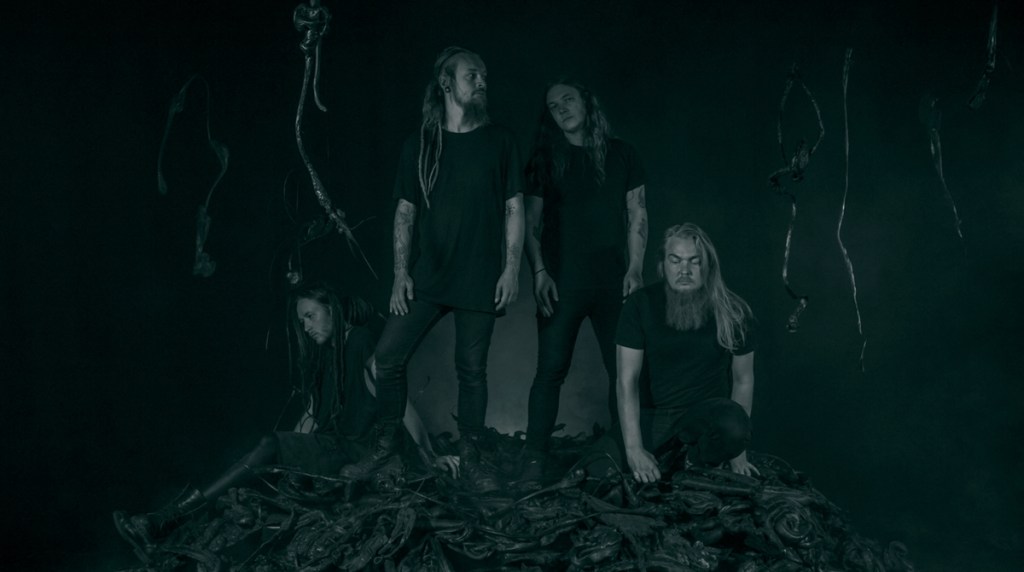
ENPHIN’s new album End Cut came out on Pelagic Records in June and it is a fine representation of the Finnish band’s cinematic, psychedelic doom. The single “Communion” flows with menacing synth washes and processional percussion giving a ritualistic cast especially in the sections where a voice echoes in distorted ripples like an announcer giving direction to an assembled crowd gathering to depart the earth to mysterious destinations in other parts of the universe. Something about music taps into the same, complex emotional and sonic realms as Orbit Service or Dead Voices On Air with that dark form of deeply atmospheric psychedelia that delves deep into the lost recesses of the psyche for inspiration. Listen to “Communion” on YouTube and follow ENPHIN at the links below.
Gus Englehorn is a songwriter who now resides in Quebec City, Canada. He grew up in Alaska and Hawaii with parents whose lifestyle meant jobs in both states and as a youth got into snowboarding and turned it into a career. During that stretch of his life Englehorn became exposed to genuine underground and otherwise non-mainstream music partly through skateboarding and snowboarding videos which often showcase cutting edge artists. Though Englehorn didn’t fully grow up playing music he started picking up guitar toward the end of his tenure as a professional snowboarder and he realized at one point that he couldn’t spend the rest of his life in such a physically demanding sport and around a decade ago he started to make the transition into more creative endeavors. While many people who come to music later in life than usual often latch on to a musical style of their younger years or something more trendy at that time. Englehorn instead leaned into his creative instincts and personality and has produced a body of work striking for its uniqueness and creativity. The songwriter’s first album Death & Transfiguration released in January 2020 right before the still ongoing COVID-19 pandemic, possibly the worst time to release and promote a new album in recent memory. The record nevertheless had the hallmarks of what has made Englehorn’s music stand out. Though it could be considered a truly idiosyncratic indie pop that fans of Half Japanese and Daniel Johnston might appreciate, Englehorn is clearly tapping into some musical ideas of the 90s but stripped back the sonic excess to allow the songs to hit with a charming vulnerability in its unusual character studies and stories that should form the basis of a future, more benevolent Harmony Korine film.
With that first album and its 2022 follow up, Dungeon Master, Englehorn has performed the music with his partner in life and drummer Estée Preda who also does the artwork for both records. Her visual style akin to children’s mythical storybooks and manga both is a perfect analog of the music within. Dungeon Master finds the duo exploring the inclusion of synths and an even more surreal sensibility in the lyrics and blending of musical elements. The album sounds like a great collection of stories you’d want to see as a Jim Jarmusch anthology film. Fortunately music videos for “Exercise Your Demons” and “Tarantula” at a minimum exist and both reveal even more layers of the wonderful yet highly accessible weirdness of this album. We had a chance to speak with the charming and engaging Englehorn about his life and his art and with any luck we’ll see a more extensive set of live shows in the near future. Apologies for not getting this posted in time to let people know about Estée Preda’s art show in May 2022.
Listen to the interview below on Bandcamp and to get a copy of Dungeon Master or Death & Transfiguration digitally you can visit the artist’s own Bandcamp and for the physical media (cassette/CD/vinyl) you can visit Secret City Records.
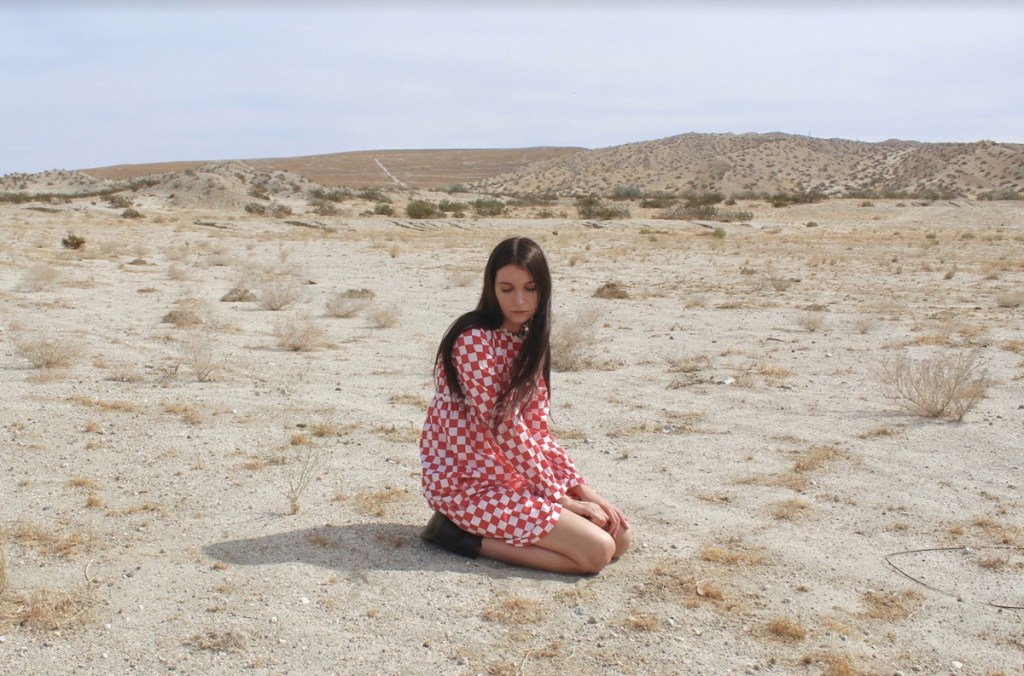
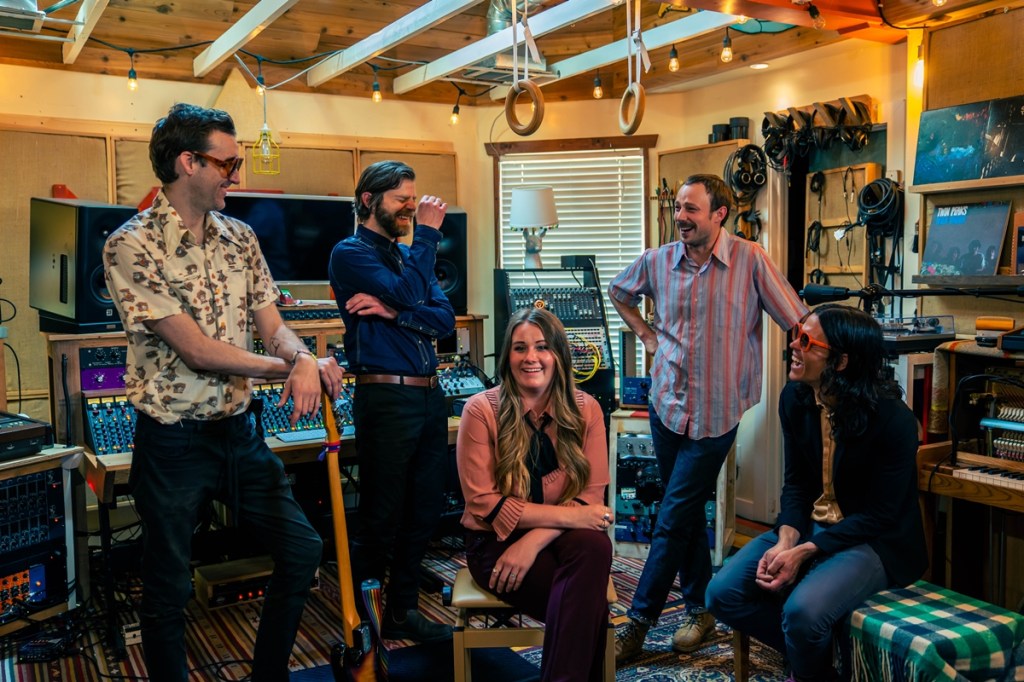
Courtney Cotter King and band, photo courtesy the artist
Courtney Cotter King’s the simple yet evocative piano figure that runs through her song “Conversation” is like a comforting and reassuring presence. That melody along with ethereal strings and soft percussion accents set a gentle and patient air around King’s soulful, vulnerable vocals sounding like she has given up on the ego drive to power through life’s challenging situations. In the lyrics it sounds like she feels like she has made some unspoken transgressions felt deeply, the kind that are difficult to discard and purge from your psyche. And guilt from these acts, however minor yet felt in the core of her being, seems to weigh her down with a kind of numbing effect as suggested in the line wanting her hand held “’til I can feel again.” Feel as in feel normal and whole and not burdened by the weight of conscience and seeking to move beyond it. Could be King is calling upon a higher power to aid in this time when it all feels so poignant and inescapable and oftentimes this is what people need to do because their rational mind and its habit of needing linear logic to think things through isn’t always enough because we depend on our own current faculties which may be inadequate to guide us through in the conventional modes of understanding we consciously possess. King articulates this process in the language of a more traditional faith but the emotional impact of the song and the core human experiences expressed transcend specificity of culture. Listen to “Conversation” on YouTube and follow King at the links provided.







 Queen City Sounds and Art
You must be logged in to post a comment.