When you listen to the beginning of “Ocean – Intro” by Lonely Lions of Alabama (a project based in Minsk, Belarus) it’s not like listening to a song per se but a soundtrack to an epic and mysterious adventure. The sound of birds by the seashore lead to wind sweeping in from the coast and a spiraling sound in the distance like a beacon, the pulse of a lighthouse in the night. Then streams of distorting synth and a more atmospheric sheet of tone before the action of the song begins with whorls of bright and then ethereal sounds over a touch of percussion. In moments it recalls Carmine Coppola’s work for the soundtrack to Apocalypse Now in stimulating the imagination and sense of wonder with the promise of something engrossing and transformative ahead. Listen to “Ocean – Intro” on Spotify where you can listen to the rest of the album Синдром отрицания (in English, the suggestive and provocative title Denial Syndrome) and follow Lonely Lions of Alabama at the links below.
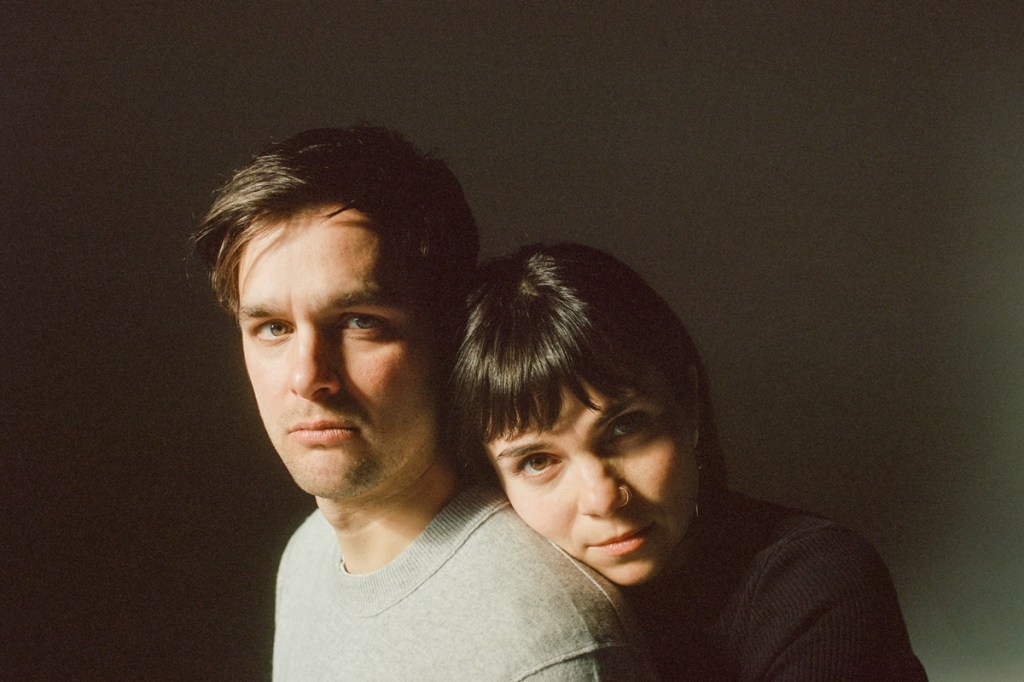
On the single “Burning Building” Lucy Kruger & The Lost Boys tell the tale of a person who is living with a dysfunctional situation but yearning to escape. Across the song we learn that our narrator rationalizes to him or herself the normalcy of living inside the closing walls of an unsustainable mode of existence as evidenced by the lines “I’m watching the world from a burning building” and “It’s the only home I know.” When the precariousness of life is always threatening to you and you learn to survive and are always in survival mode it can do a number on your head and your ability to function outside of that context without trying to recreate it even when you don’t need to. The angular and even mechanical dynamics of the song are reminiscent of a Lene Lovich song gone industrial and it suits perfectly the ritualistic and maddening manner of knowing things aren’t right but not seeming to be able to do something to remove oneself from a way of life that will, yes, crash and burn and maybe take you with it. But that nugget of an impulse to change is there and it’s kind of the hook of the song. Listen to “Burning Building” on Spotify and follow Lucy Kruger & The Lost Boys at the links below.
Grocer sound a little like a modern version of Steinbeck by way of Pixies on its single “Downtown Side” from its newly released EP Scatter Plot. The playful melody has a discordant quality and unraveling edges that reflect a quiet desperation that boils under the surface of much of American society and everywhere else in the world where people are coming to the realization that grinding to get by is really no longer the delusion that it can lead to getting ahead which was a fiction twenty-five years ago and a completely fraudulent prop to late capitalism. What Grocer expresses so well to address this reality of modern life is the massive self neglect into which we’ve talked ourselves: “I could be bleeding from my head on the side of the curb/Am I dreaming that I’m even waiting for a desert?” That image and so many of the other poetic and clever metaphors that are in ever stanza of the song’s lyrics zero in on an inability to keep fooling oneself when reality the reality of life is punching you in the face every day whether you want to acknowledge it or not. The whistles and off the cuff percussion at one point in the song is almost like a mockery of engaging in that pantomime of healthy productivity. A slide whistle would have really been over the top but Grocer kept it to a lean and efficient gesture because “I guess it’s not that funny anymore/Maybe I lost that light, and it’s a heavy way forward.” Indeed. But this burst of self-awareness placed so well in a song that erases a boundary between pop, post-punk and psychedelia hits in exactly the right way without overstating the direness of a situation we could overcome if we had the collective will to do so or understating the challenge of reaching an easily attainable better world if society wasn’t so hypnotized by the illusion of mythologized and culturalized success. Listen to “Downtown Side” on YouTube and follow Grocer at the links below.
Animator Julie Seaward brings to Pink Sky’s single “False Aralia” a real embodiment of the deep sense of isolation and loss one hears in the song. And as with the ethereal, dreamlike music and almost childlike hopefulness in the lyrics we see a a young woman who spends time walking alone in the rain and staring into clouds, yearning and hoping for the kind of reconciliation that can feel out of reach when you feel like you’ve lost someone because of some actual or perceived transgression and your mood spins off into a spiral of desolation that feels melodramatic later but because of the strength of the bond you felt seems so significant can feel so overwhelming. But there isn’t anger here, just echoes of melancholia. In the chous of “I am here don’t feed the fear I am here don’t feed the fear” we hear the reassurance needed to avert the hypnotic narrative into personal darkness. Watch the video for “False Aralia” on YouTube and follow Michigan-based dream pop duo Pink Sky at the links below. Its new album Total Devotion released February 17, 2023.
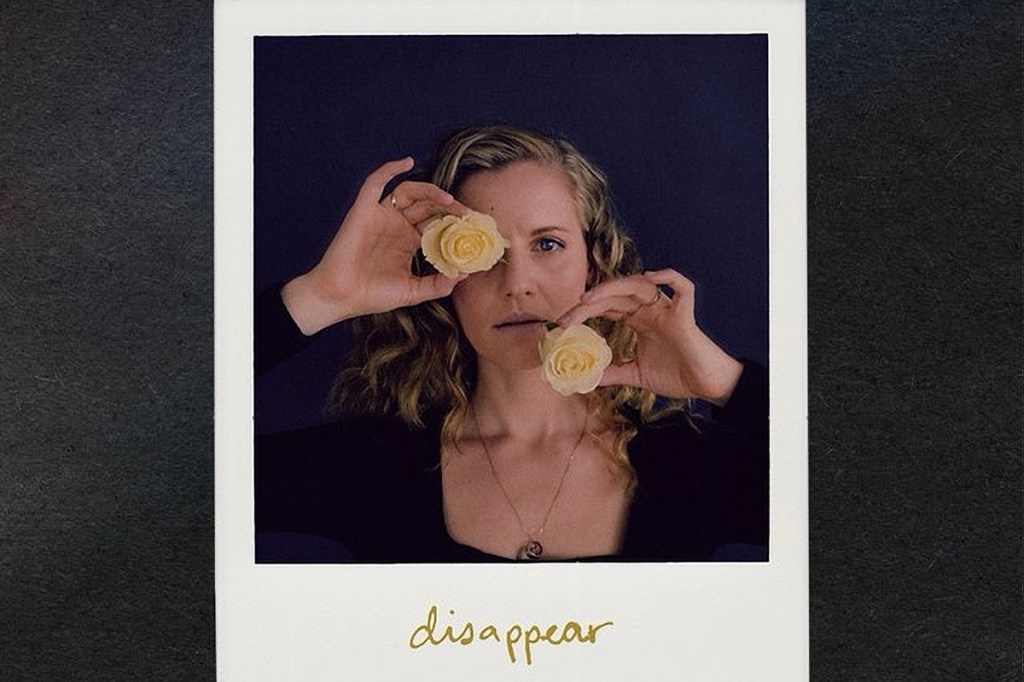
Elly Kace’s versatile voice is at the center of “Disappear.” The rhythmic deployment of guitar and bass early in the song, returning like a theme later on, frame Kace’s widely emotive vocals processed to enhance a sense of a centered focus and of introspective expansiveness. Vocals lines are layered upon one another in a gently cascading flow of melody like leaves falling from a tree and swirling slowly around, facets of emotion that express a tapestry of expressive complexity in a manner that feels organic even if planned and executed with an impressive display of skill in production and performance. And for a song that seems to be about the acceptance of the impermanence of life and the folly of clingy attachment it manifests the shedding layers of ego in the way the song goes from a clarity and jazz-like informal structure to a haze of elements dissolving into a tonal brightness. If it’s a pop song it’s more like something avant-garde electronic composer Laurel Halo or ambient folk auteur Julia Holter might do. Watch the video for “Disappear” on YouTube and follow Kace at the links provided.
Within the rush of granular haze of Project Icarus’ “WITHIN THE FLESH” one hears the faint metallic sounds of unidentifiable mechanical processes going on in the distance. It sounds like what it might like to be blindfolded and set to wandering in the back corners of a giant factory that manufactures hydraulic pipes or a smelting plant that has a wing that does industrial welding. But as the track outros the distorted sounds gives way to higher pitched metallic resonances that fade into silence like you’ve been carried free of the kind of kinetic presence of sound that can seep into your psyche after prolonged exposure and and create a vague emotional pressure that when gone feels like liberation. Listen to “WITHING THE FLESH” and take some moments to experience this passage into what it might be like to live near a factory in the mid-to-late twentieth century or more precisely what it might be like to work in one and feel the everyday weight of the industrial world on human consciousness and consider how we might improve the lives of people by giving them regular time away from that insistent, ambient presence and stimulus moving forward as a species that employs technology and allow it to make us aware of ways in which that subtle demand on our psyches are happening now that we accept as a condition of participating in civilization as we know it.
Whenever hip-hop artist Dax releases a song and video you know you’re probably in for something remarkable both musically and visually. His single “PTSD” begins with credits like a short film and the production on the song is like a street rap piece with trap style beat but of course Dax injects it with elements that elevates it beyond musical tropes and even the touch of auto tune elevates the sense of despair and desolation appropriate to what’s being presented. In the video we see Dax looking like his mind has been shattered by a shocking experience and then we a privy to the story of a young man being sexually assaulted by his priest. Before that narrative begins image of Dax stumbling forth in the present tense as the beat pulses seemingly causing the visual frame to pulse along in its low end wake as he repeats the refrain of “I was walking home on a Sunday,” which we later learn is an emotionally anchoring mantra of sorts to attempt to hold himself together. As the song progresses we hear a wave of emotion that captures the mixed and intense feelings of violation, rage, confusion, sadness, sorrow coupled with conflicted thinking that happens with victims of sexual abuse. That and the way memories of a traumatic experience can come crashing into your mind with an unexpected suddenness and painful clarity. And later in the video we witness a twist in the expected plot as Dax is in church when the victim of the priest comes in with a rifle to inflict retribution,on the priest. Dax makes eye contact with the killer when he kills himself after the vengeful rampage and in that moment it seems obvious Dax finds himself identifying with the victim while knowing the act of violence can never truly bring justice and in turn traumatizes others. The song outros with wind and Dax walking with the sunset at his back as he falls to the ground with the weight of what he has just seen, the sheer and inexplicable heaviness that leaves you changed forever. In the end there is a message about where victims of sexual abuse and/or those that care about them can get help. A devastating and beautifully executed treatment of an all too common experience that seems to touch the lives of us all. Watch the video for “PTSD” on YouTube and follow Dax at the links below.
“Get Your Mind Right” and its underlying hints of bass with drifty melodies floating over the top sound like something that might have been on the soundtrack of a 1980s thriller. When the vocals come in one can all but envision the Miami Vice-esque fashion coupled with a dusky mood, the song hitting the same thoughtful emotional resonance of a more brooding but equally epic mid-1980s Simple Minds. But the theme of the song about getting your head together and on the path of pursuing habits leading to positive outcomes after a period of maybe straying from the path you know is right for you because life has jostled your instinctive trajectories into survival mode for long enough that perhaps you adopted a new normal that having the time to mull these things over reveals was a diminished state of things you came to accept because it made sense for a time but now no longer serves you. The song is definitely a mood piece and despite its retro style it’s absolutely of the moment when we’ve all had to reassess and come to terms with what we’ve accepted to merely get by. Listen to “Get Your Mind Right” on YouTube and follow 100DAYS at the links below.
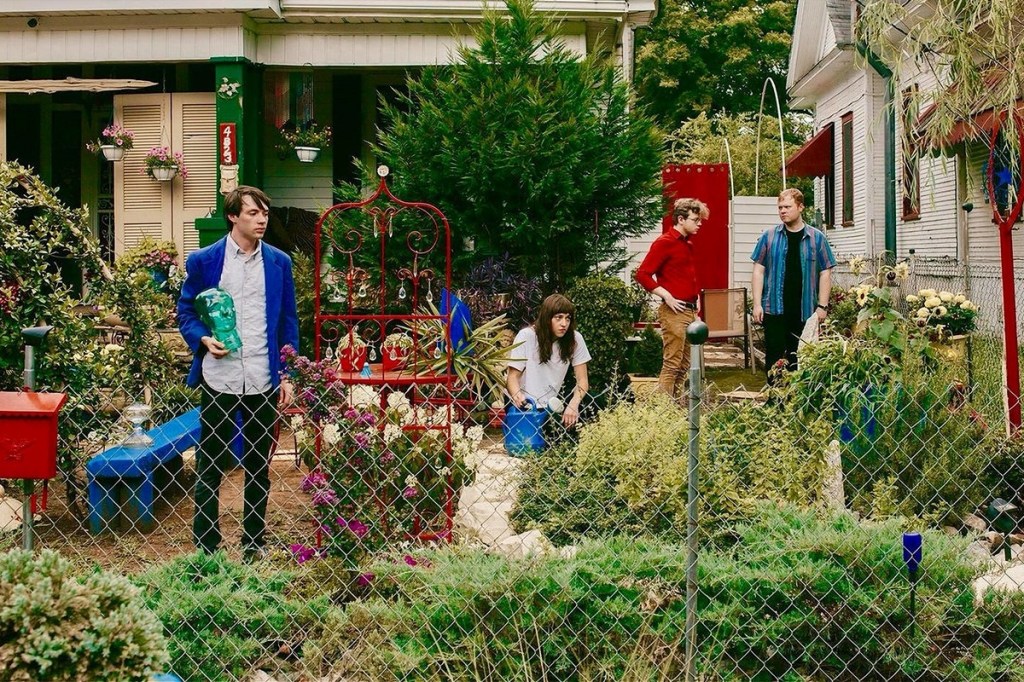
Perhaps Earth Libraries is reissuing Captain Kudzu’s 2018 Arboretum or just the single “Drag On” by the Birmingham, Alabama based indie rock band. The song has a gentleness of spirit in its psychedelic flavors and the intricacy of its soundscapes in the bell tones and arpeggiated strings that lend an air of dreamlike introspection as the song wends toward a bright, uplifting passage to give an emotional palette cleanse in a song seemingly about a conflicted reconciliation that may or may not take because the conversation has already happened time and again with the same results. But in the song’s uptempo and ascending structure there is a hint that even if it doesn’t work out in the usual ways maybe there has been an internal shift that has moved beyond any hurt feelings in a meaningful sense. Listen to “Drag On” on Spotify and follow Captain Kudzu at the links provided.
David Holmes took hold of the title track of Don Letts’ forthcoming, debut solo album Outta Sync (due out in April 2023) and gave it a psychedelic edge. The vocals echo slightly and vibrate, the dub reverberation is narrowed and spun out a bit and it’s like a space rock AM radio hit and spoken word piece. Yet both versions highlight Letts’ uniquely commanding voice and his commentary on his own life and his keen awareness of world events and how when you’re coming up and aging into the age of a pensioner you might take on the old chestnut of how with age comes wisdom. But Letts seems to know that the world changes even if you’re caught up in old habits of living and mind and one’s ideas of “forever” quickly become obsolete when history seems to be accelerating around us. Yet it’s a song brimming with hopefulness and acceptance and this mix of the song sounds like a great fusion of an old Adrian Sherwood-inspired treatment and a modern bedroom dance pop hit. Listen to the David Holmes remix of “Outta Sync” on Spotify, watch the video of the original mix on YouTube where you can find links to pre-order the new record from one of the legends of the 70s and 80s punk, reggae and post-punk era when it drops next month.








 Queen City Sounds and Art
You must be logged in to post a comment.