Sloome begins the title track to it’s latest EP Wonderful Nice with a sweeping drive and jangly guitar. But the song goes off this course in unexpected ways with a slowdown and wind back up to full flight. Like the song is breaking down periodically and losing momentum. But inside these cracks in conventional structure give the song some room to breathe and to shift tone from the urgent to the reflective and in the end reconciling these impulses as the guitar tones soar and shimmer, warping like a structure getting misshapen in the heat of the headlong passages. The relatively lo-fi production lends the song the feel of something recorded in another era weaving together the delicacy of a C86 dream pop band and a more modern shoegaze/art pop band like Wombo or Blushing. At least fans of those things will appreciate the way Sloome seems to effortlessly incorporate strands of influence and creative impulse on this song and the rest of the EP. Listen to “Wonderful Nice” on Spotify and follow Sloome from Modesto, California on Instagram.
Sonny & the Sunsets has certainly written one of the most charming and spare pop anthems of the current period of human society with “Waiting.” Few frills, just a repeated jangle guitar melody, some hovering, very basic, classic keyboard tone that one might associate with garage rock but more like something The Kinks might have done if they were a twee pop band recording demos and emerged in the early 90s. More like the 90s indiepop bands the Davies brothers and company influenced out of the Elephant 6 collective and associated scenes. Sonny Smith sings about waiting for someone to come and sewing an outfit while in bed for the inevitable trip away from all this paradoxical chaos, stasis and peril of the pandemic era. He sings of having an outer space radio and waiting upon “my UFO” to take him away after the manner of the Calgon commercials of the 70s and 80s minus the consumerist angle. The song isn’t complicated, intricate, it is all but unadorned and that’s what makes it so effective and why it stays with you. Listen to “Waiting” on YouTube and follow Sonny & the Sunsets at the links provided. Look for the new album Self Awareness Through Macrame due out August 25.
“Sleeping Land” by FiRES WERE SHOT begins with the faint sounds of children at play like an enigmatic reel-to-reel recording found on a machine acquired at a thrift store. No date, no identifying information, simple the raw audio and the question mark hanging there as to why someone would make such a recording with limited fidelity. But then the song drifts into a flowing drone of bright sound sitting in a fog bank of white noise. A faint pulse of the remains of a melody looped like another fragment tape of a recording from the dregs of a public emergency broadcast signal. The effect as the title suggests are like the dreams of a neglected phase of human occupied territory over which our current environs were built and the song is something like urban exploration through the ambient spirits of that place not so long ago rendered irrelevant by a superficial sense of progress and an unrelenting need to redevelop and transform every bit of earth into something of use to the current economic mode of operation where something not turning out a profit is considered a waste. The rest of the Siberia EP, which FiRES WERE SHOT released on June 23, 2023, has a similar vibe but different specific flavors of real time, sonic, urban archaeology. Listen to “Sleeping Land” and follow FiRES WERE SHOT at the links below.
When K.ZIA looks over a photo booth strip at pictures of a better time in a certain relationship in the video for “Kintsugi Heart” one might expect that a story of agonized heartbreak is ahead in dramatic musical fashion. But instead there are delicate string melodies, soulful vocals treated to warp in moments to sound like a memory transforming and passing out of active, conscious memory and a beat that is like a heartbeat combined with the kinds of rhythms you keep with your hands and feet in their organic and informal way though seemingly programmed. The lyrics take on a much more original metaphor for mending a broken heart with the image of “kintsugi” or “golden repair,” the Japanese art of repairing broken pottery with lacquer dusted/mixed with powdered precious metals like gold, silver or platinum. It is a practice that embraces imperfection and flaws and finding value in the new form. K.ZIA takes this concept and humanizes it and in the video shows her own methods and practices for reassembling her own heart and psychology in a way that honors her experience and resilience as a person who learns from her experiences rather than brushes them aside like even an unpleasant experience never touched her, rather folding those changes into her life in a way that enriches the story of her life. It is a quietly thoughtful, elegant and thoroughly effective expression of a different way of thinking and dealing with grief, loss and heartache and one that is more creative cast as a pop song that itself expands what pop songcraft can be. Watch the video for “Kintsugi Heart” on YouTube and follow the Belgian songwriter now based on Berlin at the links below.
“天華 (Tenka)” means “a beautiful flower that blooms in the heavenly realm” and it seems to fit the song of the same name by omocha privacy from Japan. The song is impossible to place into an existing and narrow genre as a point of reference because its sounds and style bring so many elements together. There are acoustical audio sounds like perhaps piano, strings, some guitar, percussion and of course vocals. But it is arranged as a flowing cluster of sounds that create a sense of otherworldly place with synth gleaming and running through its bright tonality. One imagines the members of the project dancing through a luminescent landscape with twinkling snow falling and resonating with the melodic tones of the song. As the song progresses one hears perhaps a touch of the influence of Japanese classical and folk music in the organic arrangements and vocal style giving the whole piece a feeling of introspection and emotional expansion. Listen to “Tenka” on Spotify and follow omocha privacy at the links provided.
“Year of the Rat” is a single from the forthcoming debut full-length from Portland, Oregon’s Plastic Cactus. It’s sound is a mix of late summery surf rock and dream pop with choice distortion giving the psychedelic flourishes some grit. But it also has some refreshing twists and turns including an almost prog rock bit of ascending passages that give way to melodies in direct motion. It is partly whimsical and partly otherworldly like music for a semi-benevolent, haunted amusement park. Fans of La Luz, Dum Dum Girls and Best Coast will appreciate the fusion of retro pop aesthetics with the eclectic genre bending of a more modern band including a riff or two that recall something The Olivia Tremor Control might have done in its own trick of pop songcraft misdirection. And yet this song seems to ultimately be about braving the dark waters of your own psyche to encourage one’s authentic self to emerge in spite of the forces that have driven it into hiding. Listen to “Year of the Rat” on Spotify and follow Plastic Cactus at the links below.
This is a Revolver really nails a sense of desperation and hopelessness on “Stir Crazy.” The song reflects members of the band’s recent experience with COVID-19 and having to quarantine for a few weeks but takes that a step further into existential territory and injects that immediate mood with a touch of dark euphoria that seems to come with knowing you’ve tried all the solutions presented to you by experts and friends. When the lyrics mention “barely getting by” and being “busted from the brain down” that could be modern life in general and a very understandable and relatable reaction to a situation that doesn’t look like it’s getting better and the generalized anxiety that extends from there. In the music video the band’s vocalist looks to be meeting experiences in a prolonged state of duress while pointing out how she’s “seen a doctor” and “seen a priest” and read the kinds of books people say are going to fix what ails you, tried to use magic of the naturalistic kind of otherwise and taken the pills that are supposed to put things right. But there are situations that our culture and society hasn’t done so great at addressing including the pandemic as we pretend it’s over when you hear about people in your circle of family and friends getting COVID for the first time even now. And the sound of of This Is A Revolver’s psychedelic and borderline deathrock song is the embodiment of that agonized malaise. Watch the video for “Stir Crazy” on YouTube and follow This is a Revolver at the links below.
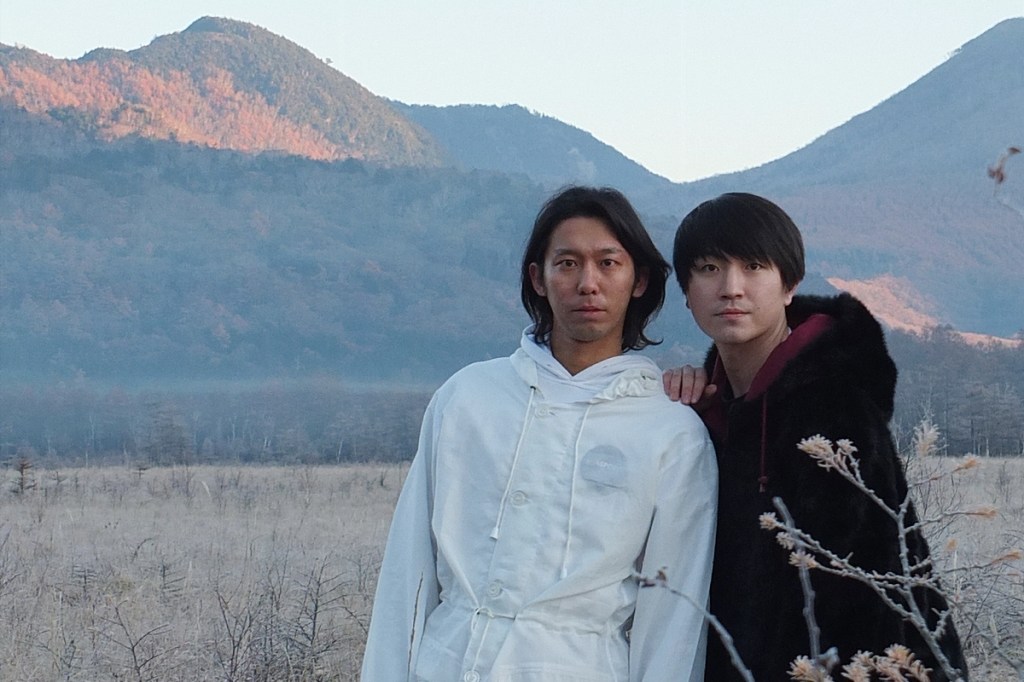
Bipolar Sunshine and Elliot James Mulhern, photo courtesy the artists
Elliot James Mulhern and Bipolar Sunshine seem to be hanging out in alleys and near aging office buildings in London in the video for “I Quite Like It (A Lot).” They look disinterested or at least disengaged in contrast to the title of the song. And the song itself finds the two vocalists sounding anything but enthusiastic over a steady beat and minimal synth melody. Yet somehow it works. Like a minimal synth pop song with no small amount of cheek like a Sleaford Mods track but with even less aggression. It’s reminiscent of an old Aphex Twin video but with the colors washed out and the surreal factor comes from the sheer mundane aspect of two guys dressed too well for hanging out in a random location like they’re hitmen in a Guy Ritchie film. And that’s the vibe, the way the grind culture of modern life can leave you feeling a little dissociated in moments when a more engaged reaction is expected and you can even feel all but intellectually disconnected from your desires and motivations until the shock of that realization propels you back into your senses. Watch the video for “I Quite Like It (A Lot)” on YouTube and follow Mulhern at the links below. The new Elliot James Mulhern album Agony of the Never Ending Fantasy became available on vinyl, CD and digital on June 30, 2023.
Isaac Watters brings a downbeat, noir mood to “Coconut In The Street.” In the live video version below we see what looks like black and white with some blue tones allowed in the color palette enhancing the cool, late night feel of the song. It sounds like a brooding blues song with a touch of urgent and shimmery synth around the edges. And of course Watters relating a story of tensions between the moneyed and the down and out and how both seem to exist not so far apart in the streets of Los Angeles where it’s not like a sanitized version from a movie but a city with as much grit and desperation as one might find in a city with more of a reputation for that, just with generally better weather unless it’s wildfire season. Watters’ imagery captures these contrasts well and sure early in the song you hear the ghost of Leonard Cohen haunting his style but as the song progresses and his wailing bursts in singing the late song chorus gives it a different flavor, one more imbued with an immediacy that elevates the song beyond a merely good singer-songwriter in the bluesy folk vein of today into something more mysterious when paired with the vivid poetry of the song’s lyrics that make it feel like watching one of William Friedkin’s Los Angeles movies do or if Jim Jarmusch did an entire movie set in the City of Angels. It hits as unexpectedly cool and uncommonly observant while giving you the language to describe social dynamics in fresh and creative ways. Lines like “You were so angry at the laughing stock downtown/Stumbling zombie on the edge of the freeway/You call the police, they say they’re on the way/But you can’t pull over” and “Double back flip off the new glass tower downtown/Is that you they found? Is that your enemy?/Is that the friend you always meant to be?” capture such a specific emotional space while grounding it in a specificity of place it invokes the familiar while inducing new ways to think about places you’ve been physically and psychologically. Watch the video for “Coconut In The Street” on YouTube and follow Isaac Watters at the links below.
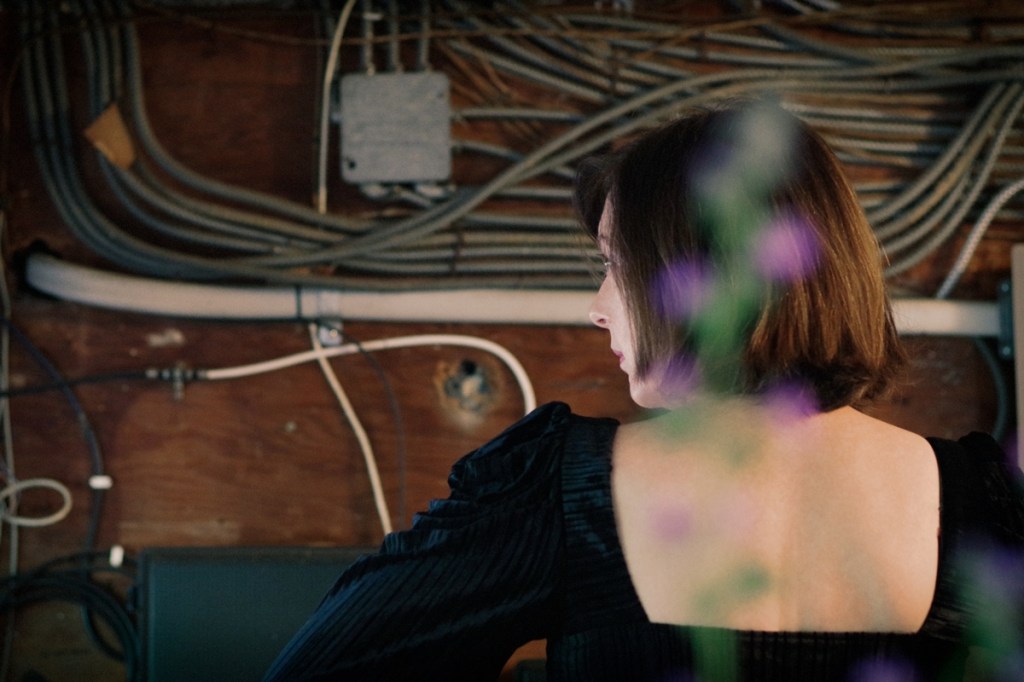
Suzy Callahan speaks for everyone that has experienced a prolonged period of anxiety in her song “Out of Proportion.” The delicate and detailed guitar work help to soften the impact of some of the most poignant and painfully familiar scenarios of self-sabotage ever heard in a song without downplaying the experience. Nothing too brutal just the sorts of things that can happen when you’re expressing your truth and maybe it’s a little too intense for people and maybe you have a hard time gauging when it is in the expression of your feelings. And yet, how many of us have had to go through life feeling like we’ve had to exist in social spaces where you can’t be real and you have to be tightly buttoned up like you’re a character on some TV show where everyone is prim and proper and life isn’t like that and sometimes you can be a wreck or a mess and just need the understanding to get through that and the leeway to be human because not having that is often what leads to neurotic behavior to begin with. When Callahan sings the lines “Didn’t know what to say/So I said something strange/Soon as it came out of my mouth, phew/Everything went south” and then into the chorus of “Blown out/out of proportion/out of proportion” it truly captures a moment most of us have experienced at one point or another because when you have to bottle it all in sometimes it comes out all wrong even if it’s honest yet maybe it had to be said. Listen to “Out of Proportion” on Spotify and follow Suzy Callahan at the links below.
Suzy Callahan, photo courtesy the artist
Suzy Callahan speaks for everyone that has experienced a prolonged period of anxiety in her song “Out of Proportion.” The delicate and detailed guitar work help to soften the impact of some of the most poignant and painfully familiar scenarios of self-sabotage ever heard in a song without downplaying the experience. Nothing too brutal just the sorts of things that can happen when you’re expressing your truth and maybe it’s a little too intense for people and maybe you have a hard time gauging when it is in the expression of your feelings. And yet, how many of us have had to go through life feeling like we’ve had to exist in social spaces where you can’t be real and you have to be tightly buttoned up like you’re a character on some TV show where everyone is prim and proper and life isn’t like that and sometimes you can be a wreck or a mess and just need the understanding to get through that and the leeway to be human because not having that is often what leads to neurotic behavior to begin with. When Callahan sings the lines “Didn’t know what to say/So I said something strange/Soon as it came out of my mouth, phew/Everything went south” and then into the chorus of “Blown out/out of proportion/out of proportion” it truly captures a moment most of us have experienced at one point or another because when you have to bottle it all in sometimes it comes out all wrong even if it’s honest yet maybe it had to be said. Listen to “Out of Proportion” on Spotify and follow Suzy Callahan at the links below.









 Queen City Sounds and Art
You must be logged in to post a comment.