“Hear Me” is Dominic Sen’s Reconciliation of Pop Star Ambitions and Being a Science Fiction and Fantasy Nerd

DominicSen2_crop
Dominic Sen, photo courtesy the artist

You probably don’t need to know that Dominic Sen is something an alter ego of Alexandra Lily Cohen and the seventh only surviving child of the black hole at the center of the galaxy called M64 who barely survived being swallowed by the event horizon and made their way way to Earth where pop music, fandom and the mythology of stars (movie, music etc.) proved enduringly fascinating to appreciate “Hear Me.” You probably don’t need to be immersed in a ton of nerdy lore to appreciate the signifiers in the retro-futurist science fiction themed music video. You don’t even need to have read John Christopher’s The Tripods, A.E. Van Vogt, Octavia Butler, Ada Palmer, Ann Leckie, Yoon Ha Lee, Jy Yang or Samuel R. Delaney to understand the song or its video, though that knowledge helps contextualize how deep the creativity and conceptualization runs with the song. But none of that would matter as much of the song itself wasn’t an emotional journey written as a charming dream pop song with unconventional percussion to give it exotic highlights. The song is a evocation of the experience of being objectified rather than being heard and appreciated as a full human being. That the song is upbeat and bright more than hints that Dominic Sen isn’t interested in being so defined by other people and free to let go of attempts to pen them in. In a way it’s symbolic of Cohen’s writing songs as Dominic Sen as a reconciliation of a writer of cool pop songs and nerdy pursuits and interests from a young age. Watch the video for “Hear Me” below and follow Dominic Sen at the links provided.

dominicsen.com
youtube.com/channel/UCOZdo1EKiddN4QAyqgp__bQ
twitter.com/dominics3n
facebook.com/dominics3n
instagram.com/dominic.sen


TROVA’s Single “CAER” Suggests the Mystery and Allure of Mythological Welsh Castles

TROVA1_crop
TROVA, photo courtesy the artist

“CAER” was TROVA’s first single in 2017 but we’re featuring it here on Queen City Sounds and Art in the context of the project’s “Elements” series in which TROVA took a concept and the ideas inherent to that element to craft an evocative ambient composition. “CAER” is under two minutes long but its nimbus of phased, streaming melody suggests the imagery of a mysterious, mythical place. Those familiar with The Chronicals of Narnia will know the name Cair Paravel, derived from the same word in Welsh, as the seat of power for the characters who come to Narnia in The Lion, The Witch and the Wardrobe to cast down the wicked regime to rule with benevolence and wisdom. The legendary Welsh king Arthur similarly ruled from a castle, a caer, Camelot and later perhaps reigned in absentia on the mysterious island of Avalon in a similar setting. C.S. Lewis and earlier storytellers used this imagery to suggest a place that represents the best of human ideals and achievements. This song, though short, suggests a glimpse of such a place we might attain if we have the imagination and will to decency to try. Listen to “CAER” on Soundcloud and follow TROVA at the links below.

music.apple.com/us/artist/trova/59287114
soundcloud.com/user-487741800
open.spotify.com/artist/5pOnm9kSmgcipVGbvyVknv
twitter.com/TROVAOfficial
facebook.com/TROVA.Ambient
instagram.com/trova.official

Sir Woman Evokes the Great Roller Disco Anthems of Yesteryear on Her Funk-Inflected Pop Song “Making Love”

SirWoman1_sm
Sir Woman, photo courtesy the artist

Kelsey Wilson of Wild Child and Glorietta uses a sort of funk sound palette to craft a 70s A.M. radio R&B-inflected pop on “Making Love,” her second single with new project Sir Woman. The insistent electronic tambourine, warbling, Worrell-esque synth and fluid, soft-edged bass line sounds like the kind of disco song you wish you would have heard at skating rinks in their heyday in the 1970s. Wilson deftly navigates that aesthetic with lyrics that reflect a modern sensibility on the nature of gender and relationships. The swagger expressed in the song is framed in a way that inverts the misogynistic viewpoint of a lot of music of the era it’s invoking while casting no judgments as there is something about that vibe and that way of songwriting that has resonance for the present. Listen to “Making Love” on Soundcloud and follow Sir Woman on Spotify. Look for the debut Sir Woman album Party City out soon.

open.spotify.com/artist/3H03S3ZtyYLdzsk6EYndUL

“Fit To Heal The Devil” is Mariami’s Stirring Clarion Call to Heal From Abuse in the Music Industry and Beyond

Mariami5_crop_sm
Mariami, photo courtesy the artist

Mariami reveals her own experience of managerial abuse in the music industry in her song “Fit To Heal The Devil.” With drifts of moody atmosphere and bright, melodic vocals Mariami outlines how so much of that abuse is internalized as she felt she had to bury her pain and sense of having to hide what was going on under the idea that maybe that was what everyone had to tolerate in order to have a real career in music. Fortunately Mariami found pretending that everything was okay intolerable enough to part ways with her manager but the poignancy of the tone of her vocals evokes the time before she had the impetus to seek better for herself. Sure, the song is specifically about the music industry, which was revealing itself to have more than a few pockets of shady behavior before the #MeToo movement got off the ground for example when it was revealed that a well-known PR company representative turned out to be an abusive creep, but it could be relatable to anyone who has been suffering abuse and exploitation in any context. The power and clarity of Mariami’s voice in the song shining through the haze and downtempo beat of the song, even as they compliment and highlight the message, is stirring stuff. As the title of the song suggests it’s not a moment to sink into despair but a starting place of reconciliation, holding the violators to account and to heal from the effects of abuse. Listen to “Fit To Heal The Devil” on Soundcloud and follow Mariami at the links below.

mariamisound.com
soundcloud.com/officialmariami
open.spotify.com/artist/6EmYrvwNj5HqzWVQfMMkQP
youtube.com/channel/UCZv5lUOei3NB3duVyONQO0Q
facebook.com/MariamiOfficial
instagram.com/officialmariami

Blarg Engages in Culture Jamming Time Travel With the Bizarre Psychedelic Pop Song “Suburban Lawn (Su, Where Are You Now?)”

Blarg1_crop
Blarg, photo courtesy the artists

Blarg, which is a name many of us wish we had thought of before these guys did to express our contempt and disgust for so many things in the world and to put a humorously on the nose name on the project, really take us to strange places in space and time on its new single “Suburban Lawn (Su, Where Are You Now?).” It slips effortlessly in and out of a kind of psychedelic surf rock song but not the kind that got so played out between 2009 and 2018. It’s far noisier and Blarg seems to have no time for staying on script as there is an aspect of the cut-up method to the songwriting. At the end it sounds like someone just turned down the delay on the whole track and then a sound like someone ejected the VHS tape that was the source of the recording with the audio version of visual glitches mixed in with the song. Somehow Blarg wrote and recorded a song that sounds paradoxically futuristic and retro at the same time partly by grounding itself on a classic rock and roll structure and then dispensing that entirely when it goes into the tripped out section where most of the instrumentation drops out and extended synth blips convey a sense of being in outer space then back into a garage rock at the drive-in-theater-to-watch-campy-horror-movies vibe. But across the song there are sonic anomalies like bits of trap beats dropped expertly and perfectly into choice moments. Like some songwriter from the future who fell in love with various eras of past music and culture and didn’t see any reason why it couldn’t all be reconciled. Kudos to the nod to Su Tissue of weirdo post-punk band Suburban Lawns. Maybe VH1 can revisit one or more of its old series to answer the question in the song title. Listen to the track on Soundcloud and follow Blarg at the links below.

blarg.biz
open.spotify.com/artist/47SInqfKJkSvShd7MxyWi4/about
twitter.com/blargmusic
facebook.com/blargmusic
instagram.com/blargmusic

Blood Culture’s New Single “No Favors” is a Left Field Pop Song That Encourages Embracing Uncertainty in a World of Flux

BloodCultures1_sm
Blood Cultures, photo courtesy the artists

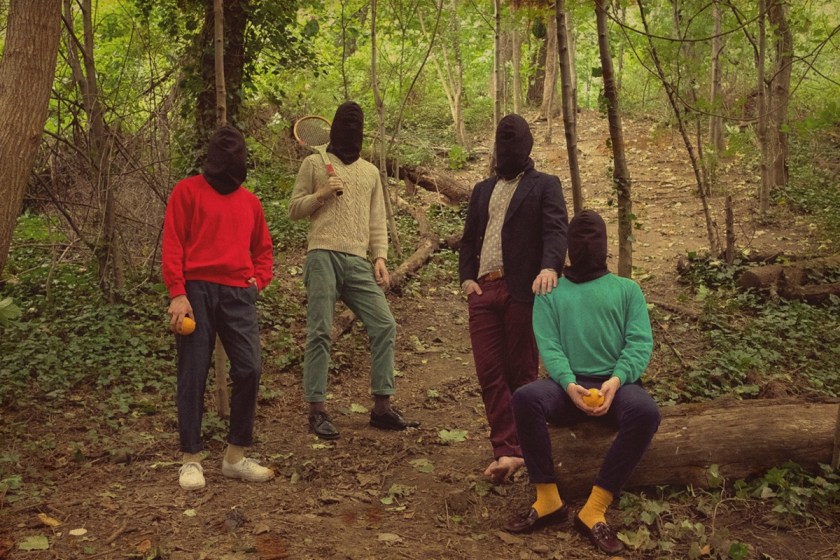
The beginning of “No Favors” by Blood Cultures sounds like someone is sampling the instrumentation from a heat warped record and the vocals like they’re coming from an AM radio broadcast. But then the electronic bass comes in and the bright, melodic synths to make a flow of upbeat yet, organic pop but with interruptions in the flow like a set of frames clipped from a film. As the track unfolds it passes in and out of styles of music while maintaining a dream pop/chillwave-esque sound. The song disorients expectations in order the cleanse your brain of predispositions and then aims to fill in that blank with comfort in ambiguity as the vocalist admits to not knowing what to say or do in a life and world of flux but leaving implied that we have the ability to work through the moment without having to have a firm operating framework and that often we must act or at least feel the moment without the convenient certainty most people naturally crave—a world that makes sense. This song plays on those tensions of knowing and being okay with not knowing and to be off the map a little. In the end the song, as a coherent pop song, suggests we’ll be okay even if we never really get our footing if we trust in our ability to handle what comes our way. Listen to “No Favors” on Soundcloud and follow this anonymous, enigmatic band called Blood Cultures at the links provided. Look for the group’s new album Oh Uncertainty! A Universe Despairs out on September 13.

soundcloud.com/blood-cultures
open.spotify.com/artist/1kDqy7SpqyJ7aZi7cqSBis
youtube.com/channel/UCVjZzRo8TXwKxCKe_ArhWBw
bloodcultures.bandcamp.com
facebook.com/Blood-Cultures-1394152320915156
instagram.com/bloodcultures

Bella Paton’s “Colours of Gold” is a Nostalgic and Wistful Song About a Neglectful Love

“Colours of Gold” begins like a tape or a film getting up to speed as if replaying a nostalgic memory from an analog format. The melody is wistful and the lyrics knowing as if from the perspective of someone who has moved on from a former love but a chance encounter brings back memories. Such as how that person likes to see themselves in gilded hues and their life as glamorous but whose reality is neglect of self and of the relationship. The line “You’re never here, lights on no one’s home” speaks much to how the subject of the song isn’t present and more focused on keeping up appearances rather than being a human among other real humans. With a dynamic structure, Paton’s spare yet gracefully written pop song is short at two minutes thirty-nine seconds but it truly captures a specific moment in life vividly. Follow Paton on her Facebook page and listen to the rest of her new EP Early on Spotify

facebook.com/BellaPatonMusic

https://open.spotify.com/album/6vUZVbr23X0X82RSv8zgnR

Luca Vasta’s “Old Italian Songs” Has the Emotional Resonance of a Beloved 70s Pop Song Until Now Forgotten

LucaVasta3_sm_crop
Luca Vasta, photo courtesy the artist

Luca Vasta’s “Old Italian Songs” switches between Italian and English lyrics as the sweeping dynamics of the song convey a sense of forward momentum. While it resonates with a 1970s pop aesthetic this kind of song wouldn’t have and couldn’t really have been written then as the touchstones are more modern as are the complex dynamics. Yet it sounds like something that should have been in a movie set in the mid-to-late 70s. Shades of Nino Rota haunt the edges of the song and its structure and it seems obvious that Vasta has more than a passing familiarity with ABBA and that band’s winning combination of orchestral and electronic pop. With Vasta’s vibrant vocals and the upbeat yet moody composition, this song hooks into your ear like something beloved but forgotten. Listen to “Old Italian Songs” on YouTube and follow Luca Vasta at the links provided.

soundcloud.com/lucavasta
open.spotify.com/artist/1JVjSV4iG3WPqLLkKA9bCU
twitter.com/lucavastamusic
facebook.com/VastaTV
instagram.com/lucavasta_official

Krept & Konan’s remix of “I Spy” is a Community Dis Track of the Fools Amongst Us

KreptAndKonan2_sm
Krept & Konan, photo courtesy the artists

“I Spy” by Krept & Konan, the remix including Bugzy Malone, SL, Morrison, Abra Cadabra, RV and Snap Capone anyway, is like a community dis on the do nothing “fuckboys” of the world who try their level, well not best because let’s be real that’s not happening, minimal effort to bring things down. Whether that’s with careerist climbing, turning their backs on the community in pursuit of performative dignity through phony association with celebrity and wealth. The hard beat coupled with the finely sculpted sidechain ducking gives the track a playful quality but one that reflects the amusement at the foolishness being called out. It’s a song with the fascinating contrasts and commentary on social reality that we’ve come to expect from Krept & Konan. Watch the video for the “I Spy” remix and follow Krept & Konan at the links below.

twitter.com/konanplaydirty
www.instagram.com/konanplaydirty
www.facebook.com/KreptandKonan

Working Breed’s “Turtle Race” is a Darkly Ethereal Internal Dialogue of Personal Liberation From a Toxic Relationship

WorkingBreed1_sm
Working Breed, photo courtesy the artists

“Turtle Race” from Working Breed’s new album Hieroglyphica is like a symbolic dialogue with aspects of oneself. Set to a slow, processional pace the earlier parts of the song are a prelude to when the pace picks up along with the vocal narrative. One of the aspects of personality represented sings of a yearning for not living a life in perpetual stasis and wondering when the time will come when she’s ready to act on buried wishes and if she’ll even recognize the opportunity to act. The accompanying music video reveals further aspects of the song suggesting the story of a kept woman who a wealthy man thinks he can keep under glass while he pursues other women with the promise of the privileges his status can bring her. But the triple characters of the “Mind,” “Astral” and “Real Life” Erika, played of course by Working Breed frontwoman Erika Laing, reject that value system in favor of her own dignity and finally comes to see the “brick of gold,” “country club” and “palisade” as ersatz symbols of devotion. In the end of the video Erika sheds the outer signs of her relationship to be free. It would be difficult to sum up what style of music one might call “Turtle Race” but fans of Sunshine Blind and The Dresden Dolls will appreciate the baroque pop and musical theater aspects of the song as well as its darkly ethereal mood. If you happen to be in Pittsburgh, Pennsylvania on August 24, you can catch the album release show at Thunderbird Music Hall with opening band Cello Fury. Watch the video on YouTube and follow Working Breed at the links below.

workingbreed.net
open.spotify.com/artist/1NAW00pX1DxSF7u9Q4ATXe
youtube.com/channel/UCaqBsTuf_MdYXtgRPViGoqQ
workingbreed.bandcamp.com/track/my-chimera-3
instagram.com/WorkingBreed