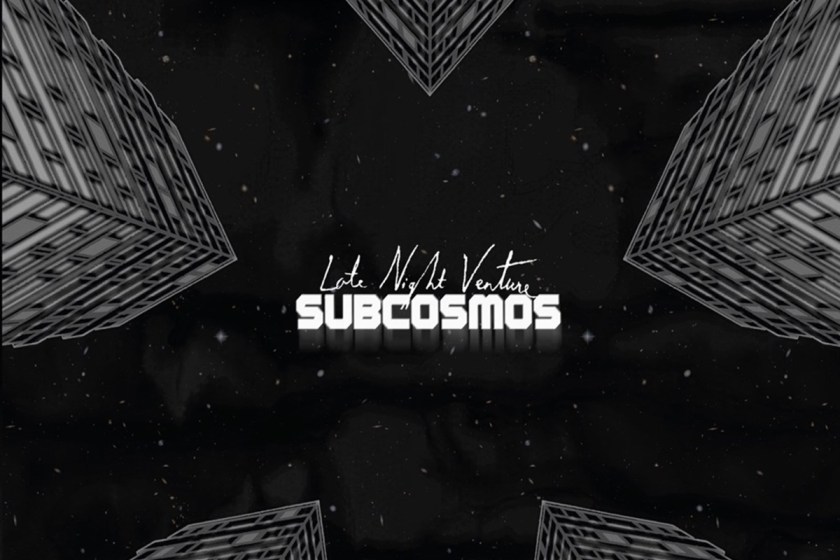
The video for “Subcosmos,” the title track to the new album by Late Night Venture, was shot in the western suburbs of Copenhagen. But the beginning of the song sounds like Deckerd is looking out on the Los Angeles of the future, whoops, November 20, 2019. But not to worry, the post-metal band quickly dives off the deep end into heavy, slow burning riffing that still somehow manages to sound like late night driving music for people into Isis and Neurosis. The guitar twirls and roils with the synth line in alternatively fiery and meditative passages in epic, upward sweeping arcs. Anyone that has spent some time exploring the urban landscape in a car knows that it isn’t just chill, quiet music that serves as the perfect soundtrack to the gritty mystery of that kind of adventure, it just needs to have a mood that feels like motion and provokes a mood and “Subcosmos” certain does that. Watch the dramatically enigmatic video on YouTube.
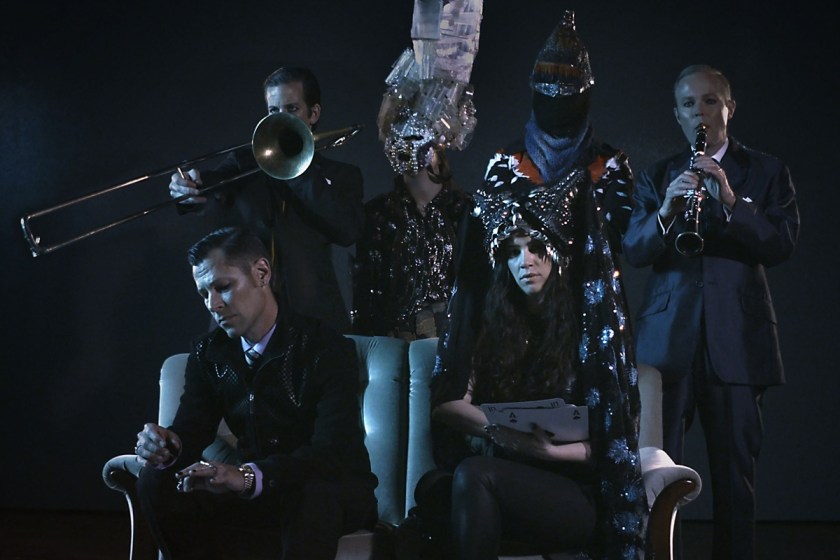
Producer and DJ Joxaren teamed up with the artist INIMA for the aptly titled “The Freaky.” It’s a mutant hybrid of Klezmer and modern electronic pop—an unlikely pairing that shouldn’t work but does so beautifully here. INIMA’s vocals wouldn’t be out of place on mainstream radio and her versatility makes the songs truly strange dynamics and tonal shifts shine. The structure of the song fits the usual pop length and dynamic but it’s there that Joxaren’s willingness to get, indeed, a little freaky with the production sets the song apart. Sure there’s a trombone but at times that trombone sound glitches out in a rapidly repeating cycle to match the image of the player doing the same. Sometimes INIMA’s vocals glitch out in that perfect timing that feels like we’re experiencing some imitation of reality having a moment when the content stumbles. But it’s intentional and it works because it embraces what might otherwise seem like an accident. It also doesn’t feel overly contrived, it simply adds an sonic and visual representation of the lyrics celebrating an appreciation for things getting a little weird and resisting being a predictable and a nicely conditioned marketing demographic. By interrupting the flow of the song, the glitches serve as a musical example of bucking the prevailing trends and patterns in life as well. Watch the video on YouTube and follow INIMA on her IG account.
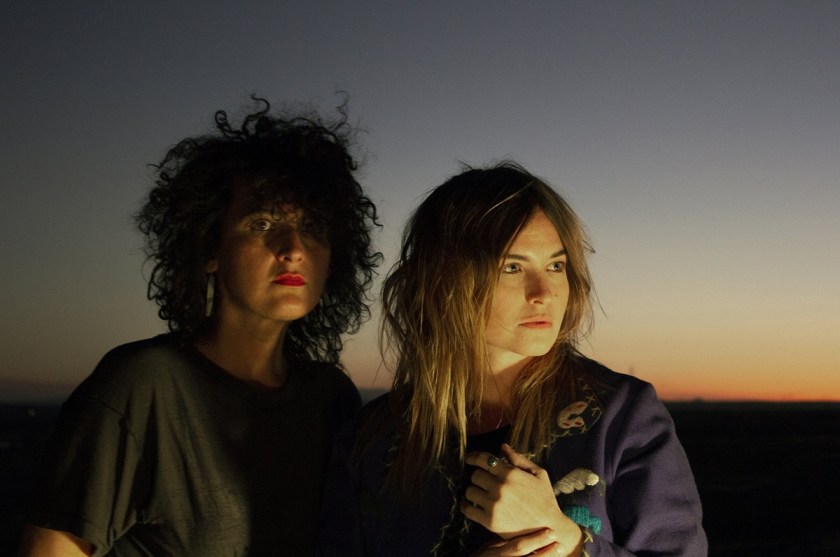
The title track to Tan Cologne’s album Cave Vaults On The Moon In New Mexico (due out February 14, 2020) pairs textural guitar with wandering vocals and ethereal guitar swells and a swaying bass line. It’s reminiscent of a more desert-y Mazzy Star, more psych folk, bendy tones and introspective reverie in the cadence of the singing like taking down stream of consciousness observations. The imagery from the music video directed by Wes Sheridan, is of long drives through the deserts of the American West, around Taos, New Mexico specificially, and stopping in at the kinds of dive bars you never see if you spend most of your time in big cities and avoid “flyover” country completely. But places where people can take it easy, have some drinks and play a little pool and talk about the life and the events of the day in relative peace. The kinds of places where everyone is welcome if you don’t make a nuisance of yourself. The tranquil quality of the song and its almost pastoral mood reflects that slower pace of life and the time and inclination to think and feel deeply but without the burden of the intensity and drive for which people from cities operating at a faster pace pat themselves on the back for keeping up even if the that isn’t always the best approach to everything in a normal human life. Watch the video on YouTube and follow Tan Cologne at the links provided.
“Kandaka” by Eastern Foreigner is proof of the inevitable synthesis of multiple musical styles that’s been happening for years anyway. The production is hip hop, the structure and percussion too but the overall sound palette is more like darkwave industrial and the vocals somewhere between and uniting the two. It’s a moody and menacing song whose hard beats and cold shimmers frame the story of a person who has had to survive in a world where everything and everyone is compromised, a dystopian near future that is really a story about today projected into a more futuristic vision. But it is also a song that suggests a place that so far is free from that compromise if you can manage to not let a broken world colonize every aspect of your life down to your subconscious and warp the roots of what you want out of life. It’s probably impossible to fully escape that conditioning without some work but the story of the song points to how your dreams, operating outside the usual boundaries of conscious and logical thought, operates outside easily controllable systems of social control, can be a place of freedom and purity and by extension, your imagination too. It is the place where positive change can happen first most easily, in your own mind, and where it is possible to envision something better even if life and the world around will always be a work in progress. It’s not a song about revolution but one that suggests that personal revolution begins in your mind and spreads by sharing and evolving ideas and ways of living and being that can be suppressed but not taken away. Cyberpunk came to be about gadgets and clandestine affairs when the early work, and the best work later, was about ideas and freedom and resistance to dehumanization this song is like a soundtrack to that aspect of science fiction. Listen to “Kandaka” on Soundcloud and follow Eastern Foreigner at the links below.
“I Don’t Wanna Be Your Friend” is a bit of a departure for Philippino songwriter Eyedress. His unusual pop songs, so fully expressed on the fantastic 2018 album Sensitive G, often have an upbeat vibe even when he sings about gritty real life situations. But this new single about the duplicitous people in your life who seem to thrive on sowing chaos and drama in their social circles. With the simple statement of the title, Eyedress calls out these people and suggests “You better say that shit to my face” instead of the way those toxic people can talk smack about people behind their backs to manipulate their associates and sometimes trying to pit them against each other. The dispassionate vocals processed ever so slightly over a mechanical beat and a bass line that sounds like it’s been put through flanger to give it an odd fluid quality like the disappointed feelings bubbling through a sense of being weary about dealing with the passive aggressive dynamic yet again. Musically it’s reminiscent of early Blank Dogs and that kind of lo-fi post-punk but not much in the world of music sounds like Eyedress and his almost outsider pop sensibilities. Listen to “I Don’t Wanna Be Your Friend” on Spotify and follow Eyedress at the links provided.
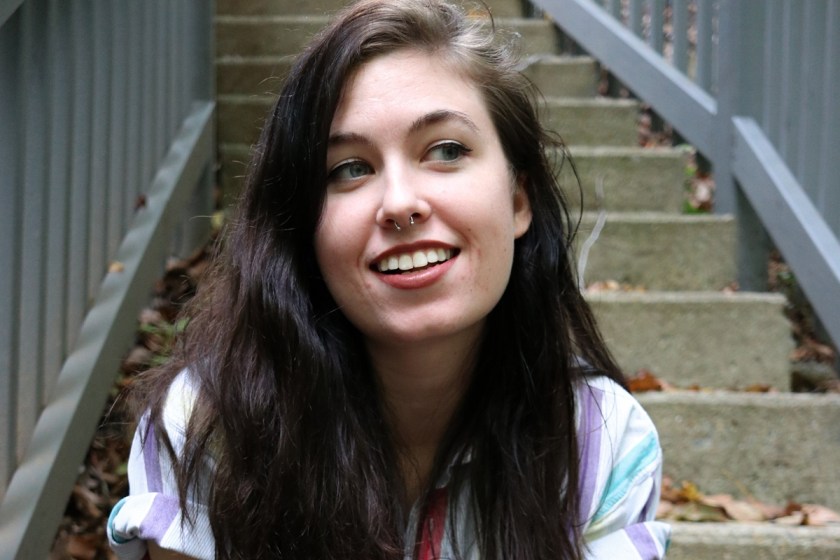
Bathe’s debut single “The Silence” was performed entirely by songwriter, singer and multi-instrumentalist Bailey Crone. That creative insularity is reflected in some senses by the quality of song that is introspective and contemplative. It’s the kind of song designed to sooth the mind when you’re left alone with your thoughts as those can sometimes wend toward places that make you question everything you’re doing and all the people you’ve lost and what is the point of anything. Its actively melodic keyboard part paralleled by a bright, harmonic drone and Crone’s breathy vocals recall the way Chromatics seemingly taps into the subconscious parts of your mind that allow the stuck parts of your memories and emotions to unclench and perhaps resolve some into a strong but tolerable mood rather than wrenching angst and agony. Listen to “The Silence” on Spotify, follow Bathe at the links below and look for the project’s debut album Last Looks in 2020.
Untitled Social Experiment (aka USE) uses an apt metaphor in its single “Sugar Rush” for the questionable appeal of party culture. The references are the world of after hours or not so after hours parties in Los Angeles in mansions rented in the name of hedonistic fun but often ended up being the kind of dystopian social milieu straight out of an early Bret Easton Ellis novel. That world seems especially surreal to anyone not indulging in the plethora of substances to be had that make such odd situations seem enjoyable to many people. The song, a downtempo, brooding pop song captures that sense of not knowing why anyone would spend their lives in such empty pleasures endlessly seeking them out for a cheap thrill, a fake rush that isn’t cathartic but purely sensorial. The song questions these experiences and situations that are supposed to be sweet but like pure sugar has empty calories and provides minimal actual nourishment for the body much less any other aspect of one’s humanity. The performative aspect of that ersatz fun that is insisted upon gets dished on with style on the song and its lushly dark melody and spaciousness are an analog of the poisonously dreamlike quality of being in that moment of disaffected wonderment. Listen to “Sugar Rush” on Soundcloud and follow USE there as well.
Somewhere between late 80s New Order and L.A. Vampires is Glass Spells’ single “Mirrors.” The bouncing melody along with the fuzzy synth pulse and Tania Costello’s well-accented vocals are reminiscent of turn of the century electroclash (think early Ladytron). Too bright and upbeat to be considered darkwave the track nevertheless has that sort of appeal as does the band’s cool, subterranean dance club aesthetic. The higher toned synth figure that runs through the song is like a fluttering mythological creature that comes to sprinkle some joy on the darker low end melody in what is already a nicely layered track. In the last third of the song or it transitions to a different dynamic for a passage or two giving anyone dancing along some breathing room before going back to the song’s dynamic drive. Listen to “Mirrors” on Soundcloud and follow Glass Spells at the links below.
The Afro Nick’s video for his single “Get There Before Noon” seems dreamlike and symbolic with the figures and instruments in a luminous, white room that seems separate from waking reality. The song sounds like it’s about being defined by others in every way down to being on someone else’s schedule. Those boundaries are represented by the chains placed on him by the more menacing figures. And in the logic of dreams another stranger helps free him with a hacksaw. The song mixes evocative synth swells with dramatic guitar work that comes in the moments where the narrative goes into the mode of breaking free of imposed and imagined limitations on one’s identity and aspirations. If at some point The Afro Nick was steeped in blues and psychedelic rock this song transcends that in a creative way that synthesizes all obvious influences. Thematically it also speaks to the power of the imagination to serve as a liberating force in our lives even if it manifests in our minds as odd, symbolic dreams like something out of a mid-80s Robert Palmer video. Perhaps the artist’s childhood in Crete and now living in Los Angeles accounts for the unusual aesthetic but it works. Watch for yourself at YouTube below and follow The Afro Nick at the links provided.
Will Samson, “Ochre Alps” cover, image courtesy the artist
The pastoral quality of Will Samson’s “Flowerbed” sounds like the echo of a memory of a dream of a place where the pains and concerns of life are lifted along with the normal limitations of your cognitive framework and intellect. Where broad vistas and gentle breezes and hazy mornings and evenings are the norm. It is there that the painful and frustrating mysteries of your life open up and unravel in your mind. Not as answers given to you but because your mind is able to comprehend for itself those things we can’t accept or otherwise reconcile in our minds and hearts with the world we want. Its effervescent middle section is like the sound of the ego dissolving of its own accord and coming to terms with those knots in our psyche that we can never seem to work through and even if the resolution brings pain we come to accept the pain of loss in a way that doesn’t feel stuck. The song, and the album Paralanguage (due out December 6 on Wichita/PIAS) was written to reflect a time in Samson’s life when, in the wake of the sudden death of his father and his own subsequent PTSD as a result thereof, he decided after some consideration and research to experiment with psilocybin as a form of treating his condition. One day he and his girlfriend went to the countryside and the music is his attempt to express his experience of that time. Impossible to say what the long term results have been but if “Flowerbed” is any indication, Samson found a place of peace in his mind after years of his own psychological hell. Watch the music video for “Flowerbed” on YouTube and follow Samson at the links provided.







You must be logged in to post a comment.