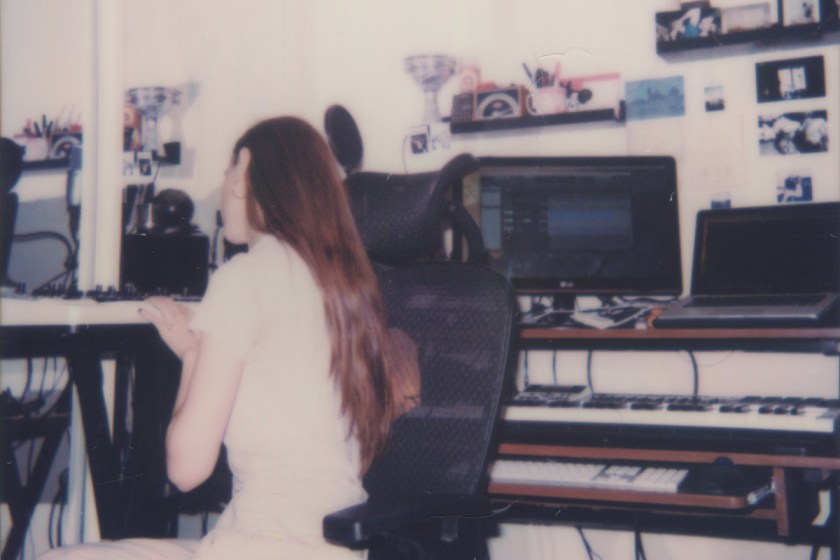
Charting a Tender Path Out of Personal Darkness, Kate Vogal Strikes a Deep Resonance With Anyone Suffering From Deep Depression on “Reasons to Stay”


The title to Kate Vogel’s “Reasons to Stay” sounds like it’s going to be about reconciling a relationship that was on the rocks or to stay someplace where you felt you no longer belonged and which seems to have changed beyond recognition but you rediscover everything you took for granted. And in a way it is about all of that. It’s about one’s relationship to oneself, to one’s learning to appreciate the things in one’s life that seemed at one point beyond your ability to perceive. It’s a song about reconnecting with the feelings and thoughts in your head that you thought were gone, driving you to dark places and contemplating not sticking around in the ultimate sense. The song is driven by simple yet evocative piano work and Vogel’s tender, resonant and versatile vocals. Her specific voicings and arrangements bring to life the struggle back from the edge and having convinced oneself that you have nothing left in a way that doesn’t feel like some faux posi pop song, it feels like it’s coming from a place close to the heart and not just because Vogel experienced the kind of anguish and darkness about which she sings, she captured perfectly how compassion, patience and sensitivity, even tenderness, with self and others are the only paths out of that place. Her focus on the small life details, listing them off from her specific experience, easily extrapolated to anyone else’s own life, that are easily forgotten in the depths of despair are also the things that seem important enough to your brain to pull back from one’s personal abyss. Listen to “Reasons to Stay”

Medium Article
soundcloud.com/katevog/sets/public
twitter.com/chips_n_kateso
instagram.com/katevogel

With Ethereal Tones and Dreamlike Textures “Don’t Worry” by Brother. Explores the Decision to Be Cool Versus Doing Right

Brother_DontWorry_cover2_crop
Brother. “Don’t Worry” cover (cropped)

The falsetto vocals, shimmering tones and sweeping sense of space in “Don’t Worry” by Brother. is apt for a song about a teenager deciding between, according to the group’s material on the single, “doing what is cool and doing what is right.” It captures the state of mind in which you have to make a choice to pursue fleeting social capital that won’t matter later in life or to choose character and integrity, which does serve at least your conscience for far longer. The bright drone phasing through the beginning of the song, the spare bass line, the lo-fi treatment on vocals gives the structure and texture of the song an amorphous quality reflective of not having settled on the trajectory of one’s life. One guitar shimmers, the other strikes echoing accents—one guitar employs a fuzzy warmth at times while the other paints ethereal, shimmering figures. Halfway through the song the dynamic changes a bit with the guitars hitting a bright riff like an extended drone as the vocals get hit with a rapid reduction of delay time to give it a disorienting, warping sound. The competing messages to one’s conscience are embodied in lines about “lying through our teeth” and the more soothing but dark, “You say don’t worry, it’ll be alright, you say, don’t worry I am on your side.” While entrancing and sitting gently in your ear the song also speaks to that critical crossroads in our lives when we decide whether to be a good person or merely an okay person. Listen to “Don’t Worry” on Spotify and follow Brother., from Provo, Utah, at the links below.

brotherofficial.net
soundcloud.com/brother-481828532
brother5.bandcamp.com

Tymoxx’s “Train” is a Melancholic Yet Effervescent Song About Leaving Behind a Life of Judgments and Limitations

Tymoxx_Train1_crop
Tymoxx, photo courtesy the artist

Tymoxx’s effervescent single “Train” starts off with a crystalline, synth tone figure like a blowing swirl of sparkling snow on a sunny winter day. And from there Kahiti’s vocals pair well with a finely accented, distorted electronic bass line as both wind through layers of melody like a slow ride on the titular vehicle toward a fateful destination, departing from a life of needing to keep a love secret from people in the lives of the subject of the story and the person being addressed. But not only the freedom of being out in the open free from judgment but of a social setting that limits one’s horizons for personal development with the temptation of falling back in line of expected roles to fulfill that no longer suit you. The melancholic yet expansive final third of the song is the sound of having already left on that train to a better life with your insecurities and worries dissolving into the rearview. Listen to “Train” on Soundcloud and follow Tymoxx at the links below.

soundcloud.com/tymoxx
instagram.com/tymoxx

Merging Jazz Vocals With the Somber Weightiness of Beethoven, Elodie Rêverie’s “Not All Bright Women Live in Bed” Makes Deep Commentary on Internalized Oppression

ElodieReverie_NotAllBrightWomenLiveInBed2_sm
Elodie Rêverie, photo courtesy the artist

Using Beethoven’s “Moonlight Sonata” as the instrumental, piano baseline for “Not All Bright Women Live in Bed,” Elodie Rêverie establishes a somber mood for a song about some weighty topics. It’s not unlike, in a completely different musical context, the way Lingua Ignota used elements of Henry Purcell’s Music For the Funeral of Queen Mary in her song “BUTCHER OF THE WORLD” from the 2019 album Caligula. Both utilize classical structure and musical allusion to make a statement on an age old and persistent ill of the world. Lingua Ignota comments on the violence inflicted on everyone by patriarchal culture, Rêverie on the diminished expectations due to diminished horizons by virtue of the fact of sexism permeating culture down to internalized oppression. Rêverie sings lines like “Life’s too big to watch it through a window,” “I don’t have to go to college, I don’t have to know,” and a lyric that contains the song title “Not all bright women live in bed but some do, and I have but I won’t today.” Which are heavy words to sing but it also points to an acute awareness of one’s internal process and a desire to not be in that state of mind. By externalizing these thoughts in song it’s like a mirror for anyone who might have similar thoughts and being able to articulate them gives one some control over how to process and perhaps overcome them. Rêverie’s jazz style vocals blended with the classical sensibility gives the whole song an unconventional dimensionality that refreshingly transcends that of a pop song or any genre consideration. Listen to “Not All Bright Women Live in Bed” on Soundcloud.

The Cosmic Drones of “Blueprint” by PRO424 Soothes Your Mind Into a Deeply Contemplative Mood

PRO424_Blueprint1_crop
PRO424, photo courtesy the artist

Assembled from field recordings and a , according to the artist, “digital, mostly algorithmic synth patch,” PRO424’s “Blueprint” sounds like what it might be like to sit out on a clear, summer night in mid-spring or fall when there is a bit of a chill so you have a campfire going that casts the vast field of stars in only the slightest of orange hazes. But you’ve hiked to the middle of nowhere away from the ambient orange of a nearby metropolis and you can hear the gentle breeze blowing through the grass and trees, carrying motes into the sky while you lay back and take in the firmaments of the heavens, noting the occasional satellite and aircraft while considering this experience is one someone might have had ten thousand years ago before the discovery of steel and wondered, even then, at the underlying patterns of the movements of stars and the moon and its connection to the design that guides the landscape and life of your own world. In the present tense, you imagine the master blueprint for the universe that one might glean from the smallest part of it the way the Buddha said one could extrapolate all of existence from a single blade of grass. The song in layering organic and digital sounds in a way that sounds like a product of nature brings out these sorts of cosmic notions as you take it in and the sounds flow through you. Listen to “Blueprint” on Spotify and follow PRO424 on Soundcloud linked below.

soundcloud.com/pro424

ZEDSU’s Emotionally Dynamic Single “Love Lies When Lust Dies” Takes You Through the Stages of Grieving a Relationship Suddenly Over

ZEDSU_LoveLiesWhenLustDies2_sm
ZEDSU, photo courtesy the artist

“Love Lies When Lust Dies” finds ZEDSU exploring dynamic contrasts in capturing the ebbs and flows of emotion in a relationship that has collapsed leaving echoes of pain in its wake. On the surface level ZEDSU uses a trap approach to production but within that loose framework he adjusts the speed and saturation of sound to match the peaks and valleys of personal anguish revisiting endlessly the feelings of desolation and confusion as one often does when it’s all over and you’re trying to figure out why and letting out that hurt by going through it in your mind until it doesn’t hurt as bad or your emotions toward the situation are exhausted. Inside the expression of those dynamics in the confines of a just under four minute song, ZEDSU richly articulates the sense of being set emotionally adrift and alone, of the aforementioned psychic torment and the letting go. Appropriate it sounds like the stages of mourning with the bargaining and pleading with an implied acceptance in the echoing of the vocals. Listen to “Love Lies When Lust Dies” on Soundcloud and follow ZEDSU at the links provided.

soundcloud.com/zaire-nashon-farmer
twitter.com/daimyozedsu
IG: @daimyozedsu

Rip Florence’s Headlong Lo-Fi Pop Single “Mumbling Rita” is an Intensely Catchy Roller Coaster Ride of Life’s Ups and Downs

RipFlorence_MumblingRita_crop
Rip Florence, “Mumbling Rita” cover (cropped)

Rip Florence’s debut single “Mumbling Rita” has all the gloriously loose dynamics of a musical collision of Camper Van Beethoven and Jay Reatard. The vocals are on the verge of cracking but somehow hold it together and manage to be intensely catchy. The piano work in the song is exuberant but also conventionally well crafted. The guitar sounds like a roller coaster of emotions that end in hanging chords off which the lyrics nearly run off the rails. The soaring synth work and bouncy bass lines anchor the song in an unconventional way before giving way during the break down section mid-song where the whole thing seems to be floating through space before landing again on those rails the song has sailed off of and we’re brought back into the hyper real situations that drive the headlong pace of the song, a litany of life’s joys, absurd moments and challenges—some all at once. And then the song ends before you’re ready yet concludes on a satisfying note. Instantly 10/10 would listen again. Check it out for yourself on Soundcloud and follow Rip Florence, who was once a guitarist for outsider pop genius Daniel Johnston, on the project’s website linked below.

ripflorence.net

BYAS’ Maximalist Techno Track “Eagle” Entrances With Bright Tones and Lush Beats


There is an aspect

BYAS3_crop
BYAS, photo courtesy the artist

of library music to BYAS’ single “Eagle” in that it’s a layered, sonically complex techno track but its natural and dynamic progression is expansive and suggestive of being paired with a visual component. Its tones are bright and warm and the arc of its melody and synth progression glides upward. There is also a tranquil gracious tone to the piece like the flight of its namesake. The twin synth lines soar over the shuffling beat and it would in fact be a great song for a documentary on the bird but also the presentation of information meant to keep you engaged by stimulating your ears and mind. There are hints of the influence of Kraftwerk and its clean tonal lines as well as the playfulness and focus of Giorgio Moroder but it’s that BYAS employs multiple streams of sound and texture as well as the sample of birds that enriches its aural spectrum and sets it apart from a lot of other techno out there that keeps things to essentials. One might think of this as a kind of maximalist techno song rather than the trend toward the minimal. Listen to “Eagle” on Spotify and follow BYAS at the links provided.

soundcloud.com/byasdj
facebook.com/byasdj
instagram.com/byasdj

Esorabla’s “Garden of Dreams” is a Multi-Layered, Mystical Act of Musical Creative Visualization

Esorabla1_crop
Esorabla, image courtesy the artist

The layered streams of sound on “Garden of Dreams” by Esorabla could be interpreted as an analogue of the lyrics in which the being singing is inviting others to take a walk inside her inner world and that “There’s a labyrinth inside me that leads you to a garden of dreams.” A piano melody is a through line as well as lilting, accented vocals but the shimmering keyboard part functions as almost a portal between worlds musical and in the context of the song between inner and outer worlds. “It’s a lucid dream, you’ll never come out” hints at the concept of creative visualization with the later line “can you see what you’ll become.” Through interweaving sounds including strings Esorabla mirrors how a rich inner life cultivated by the imagination offers us a place to escape to and from which to draw inspiration in making the outer life wondrous as well. But you could easily interpret in numerous ways even as something like a fantastical being inviting visitors to a pocket universe of delights and discovery of personal truths and transformative experiences. Maybe something along the lines of Neil Gaiman’s Sandman universe and the various dimensions existing therein. Fans of Amanda Palmer and Bread and Jam for Frances-period Switchblade Symphony will find much to like in the songwriting and performance here as well as the air of the mystical. “Garden of Dreams” comes from Esorabla’s {G O D} EP and you can listen to the track, and the rest of the release, on Spotify.

Hiromonra’s Aural Short Story “You and Me” is Like a Downtempo Dream of a Pleasant Memory

Hiromonra_YouAndMe2_crop
Hiromonra, still from the video for “You and Me”

Hiromonra’s “You and Me” was conceived as a sort of musical short story. The music video with the illustration and minimal animation, a star twinkling in the background and the figures in the foreground moving in time with the looping keyboard figure. A steady drum beat and sonorous vocals accented by what sounds like record scratching faintly in the background giving the soundscape a texture as a spare guitar melody traces the contours of the song. The image is one of a person feeding a bird in a park at some impossible time of the day with a bright blue sky as the star shines visibly. Too light to be dusk or night, though maybe early morning. But these real life temporal considerations don’t matter as the song and its soulful vocals resting ethereally in an introspective downtempo composition is not tied to a specific musical decade or style either. Rather, it asks for and is easily accepted on its own terms as the dream of a pleasant memory in your mind. Like a great short story it doesn’t try to do too much and is brilliant in its economy and expressing more than seems obvious on your first iteration going through it. Watch the video for and listen to “You and Me” on YouTube.