Ion Stream’s “New Rhea” is Melodiously Ambient Soundtrack to the Exploration of Star Systems Beyond Those We Already Know

IonStream_NewRhea2_crop
Ion Stream Outer Worlds cover (cropped)

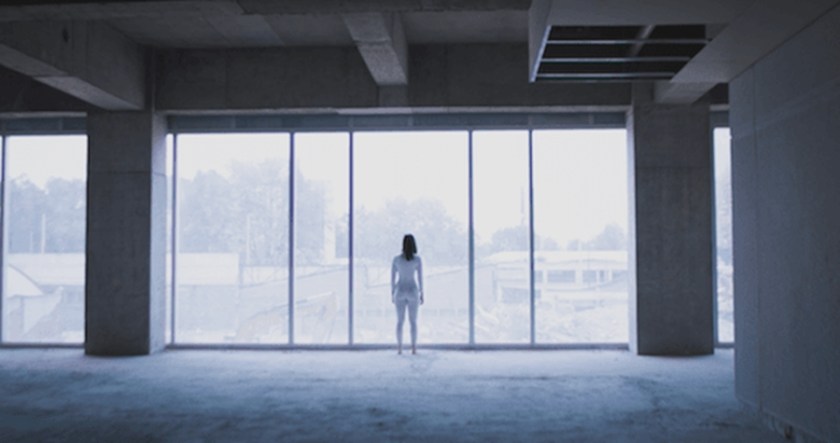
“New Rhea” by Ion Stream is flowing with twinkling, arcing melodic tones like the analog of a journey into star dense space. Rhea was the mother of the gods in Greek mythology after which the second largest moon of Saturn was named after being discovered by Giovanni Cassini in 1672. The title is perhaps not a reference to but suggests the exploration of another solar system populated by planets in homage to children of Rhea after which the planets of our own were largely named. The track opens with sweeping drones like solar wind and a melody reminiscent of the main theme to Profondo Russo by Goblin. But that melody expands into a spacious plain of sound. A dual melody carried both by strings and bright and ethereal synth tones trace the journey with impressionistic pulses of sound in drifty arpeggios while the aforementioned white noise of solar breezes washing through intermittently to give accent to the impression of movement and wonder into new vistas of human exploration and knowledge. Fans of the Hearts of Space program will find much to like here. Listen to “New Rhea” on Spotify and follow Ion Stream at the links below.

soundcloud.com/ionstreamuk
open.spotify.com/artist/69zgYsdMF1uLEN3TLhCedN
ionstream.bandcamp.com
facebook.com/ionstream
instagram.com/ionstreamuk

Jess Chalker Captures the Way Modern Life Demands of us a Brisk Pace and an Upbeat Attitude Even When We’re Not Feeling it on Her Second Single “Secrets”

JessChalker_Secrets1_sm
Jess Chalker, photo courtesy the artist

With her second single “Secrets,” Jess Chalker channels a bit of mid-80s synth pop but through a modern production lens and with a self-awareness reminiscent of Lower Dens. The electronic drums are straight out of 1985 as are the spare, clipped, clean guitar work and the bouncy dynamic and the declarations of forever love. But Chalker mixes those elements with a song structure more in line with songwriting from the current era with a moment of clarity mid-song. What this format helps to highlight is the way perhaps an 80s song, sounding shiny and upbeat, concealed an emotional nuance, complexity and ambivalence. Like you’re feeling everything at once and having to juggle it all and try to process it all with integrity. Chalker sings about how everyone has secrets but some act innocent while concealing a “monster in the back yard.” The brisk pace of the song and its bright melody reflects how these days you’re expected to put on a positive face despite dealing with a lot of stimulation and expectations even when you feel like you can’t–that we all have to maintain a secret in modern life or seem like failures, a state that feeds into one’s dark side on the regular. Listen to “Secrets” on Soundcloud, connect with Chalker on Spotify and look out for her LP due out late 2020.

open.spotify.com/artist/3fBjKfBNe9rqMlg2juMryM

Anna Belle’s “Tokyo” is a Lush Piano Pop Song is a Meditation on Inspiring Yourself Out of Your Current Malaise

AnnaBelle_Tokyo1_crop
Anna Belle “Tokyo” cover (cropped)

Anna Belle is based in Nashville but her song “Tokyo” is about how she hasn’t felt like she fits in or is accepted by the local music world. The lonely, introspective piano line compliments well her fantasizing about Tokyo perhaps being a place where she would find a place. The lush production of the song imbues the song with a dreamlike quality that rims one’s fantasies that distract one from one’s place in life at the moment that dwelling on about might bring you down and make doing what’s important more challenging. There’s nothing wrong with a little fantasy to get you through a period of self doubt or other struggles and anyone that’s been a musician in any local scene or in the underground knows what it feels like to not be appreciated or understood. What makes the song especially poignant and interesting is that isn’t written to sound what Tokyo might be like and it doesn’t come off quite like someone who thinks moving to a place so culturally exotic will fix all her issues with feeling like a musical misfit. It’s the idea of that being a potential option and imagining what it might be like to be in a place like Tokyo. The reality of Tokyo, though, is that it is not a city of the future no matter what you’ve seen on TV. It moves at a fast pace but has rustic parts of the city as well. There are distinct districts and it is connected to a massively sprawling metropolitan area where an American would be shocked by how un-futuristic it is while also seeing phenomena that doesn’t often happen in America like a Denny’s being on the third floor of a tall building, quality and even healthy food at a convenience store, masses of people dressed like they’re going to an office job and then the occasional person dressed like they’re from a live action animated movie headed to Harajuku. But it all seems surrealistically mundane, just as can be seen in the movie Lost in Translation. Anna Belle apparently hasn’t been to Tokyo but in a roundabout way has intuited that Tokyo while an amazing place to visit is not indeed the land of her dream fulfillment. But, instead, it’s a place that can guide her out of a period of malaise and inspire a song that can perhaps guide you out of one of your own. Listen to “Tokyo” on Spotify and connect with Anna Belle at the links below.

up.live/profile/base/26537841
youtube.com/channel/UCuUlPcU9rYpccJ0RHh3bs4Q
facebook.com/annabelle1138
instagram.com/anna_belle_music

The Sense of Mystery and Movement on Stephen Caulfield’s “Everything is Remembered” is Driven by the Lingering Effervescence of its Omnichord Melody

StephenCaulfield_ToTheLighthouseA1_crop
Stephen Caulfield To The Lighthouse cover (cropped)

The lingering effervescence of the Omnichord that carries the melody of Stephen Caulfield’s “Everything Is Remembered” gives the song a constant, nearly even flow. When the drum loops ease in, its soothing, almost hypnotic quality is reminiscent of early 2000s IDM. Like the song “Passing Through the Town” from Caulfield’s excellent 2019 album To The Lighthouse, a deep dive into various flavors and textures of ambient music, there is a sense of movement to a mysterious destination here, perhaps as suggested by the title of the release. But that mystery is something welcoming to which you are drawn by a promise of emotional fulfillment. Not the dramatic kind after a long period of struggle, but the kind where after long searching you find a space, a place, in your mind where you can experience a deep solace before wanting to or needing to be on to the next chapter of life. Listen to “Everything Is Remembered” on Spotify and connect with Stephen Caulfield at the links below.

music.apple.com/gb/artist/stephen-caulfield/373965991
soundcloud.com/stephencaulfield
open.spotify.com/artist/195QIuEghR5Q1Sw9YaRd80
youtube.com/channel/UCx91H6ozB4oFSfQHJfjhyXQ
twitter.com/scaulfield
facebook.com/stephencaulfieldmusic
instagram.com/scaulfield

Broughton’s Earthy Yet Ethereal “Neptune” is a Shy, Sly and Gentle Enticement to Love

Broughton_Neptune1_crop
Broughton “Neptune” cover

Broughton raps with a sense of affection and hopefulness on “Neptune.” It’s a simple request and appeal, an invitation to come over and hang out and watch a movie and maybe more, listen to “The Neptunes.” The sentiments are direct but not crass, and in the song you hear the words of a person who may not have a lot materially but offers what little he does have and none of the burning intensity that might be too much to deal with. There is a gentleness of spirit at the root of the song. Musically it sounds nothing like the jazz funk of the production style one often associates with the work of Pharrell Williams and Chad Hugo of The Neptunes. Rather, it has an ethereal, intimate feel composed of simple, echoing, chill tones accented by a spare rhythm that wraps itself around and compliments well the vocals giving the use of the word “Neptune” a dual meaning of the aforementioned musical reference as well as having an experience out of this world. Emotionally it echoes the shyly come hither dynamic of the words and a fine pairing of music and vocals. Listen to “Neptune” on Spotify and follow Broughton at the links provided.

soundcloud.com/nqh-x-dbds
open.spotify.com/artist/1ZgfHlEOqu1zHd3PoK14aa
youtube.com/channel/UCFJKu3mvFZ3Pz1XeRXK2u0w
twitter.com/BroughtonNQH
instagram.com/broughtonnqh

Haruhisa Tanaka’s Ambient Track “Still” is the Aural Equivalent of Meditating at the Bottom of a Mountain Pond in Summer

HaruhisaTanaka_Still1_crop
Haruhisa Tanaka, photo courtesy the artist

Imagine yourself able to rest at the bottom of a clear, mountain pond, the liquid flowing over you in its endless variety of textures yet consistent in its calming tactile quality. Sunlight refracted through the water warming your surfaces, the intermittent interruptions in illumination from the aquatic insects skittering atop the water, fish swimming by, plants shifting in currents. Your mind mixes the natural, ambient sounds and abstracts some to tones as textural flow, melodic drones that follow no meter but resonate with its own fractal logic, soothing in the way those sounds chart natural processes with the mathematics that govern the chaos and order of the universe. Haruhisa Tanaka’s “Still” sounds like it was composed imagining that likely impossible scenario and in so doing creates a tranquil audio analog of the experience perfect for letting one’s anxieties dissolve into eternity. Listen to “Still” on Bandcamp and follow Haruhisa Tanaka at the links provided. Tanaka’s latest EP Yusura was released February 13, 2020.

purre-goohn.com/haruhisa-tanaka
soundcloud.com/haruhisatanaka
open.spotify.com/artist/4ZTlbJ3KHGs7wuvdtouuIw
haruhisatanaka.bandcamp.com
twitter.com/hhtk0
ja-jp.facebook.com/haruhisa.tanaka.758
instagram.com/haruhisa_tanaka

Ian Chang’s “Audacious,” featuring Kazu Makino, Utilizes Deep Layers of Rhythm to Gently Dissolve Emotional Barriers

IanChang_Audacious1_sm
Ian Chang, photo courtesy the artist

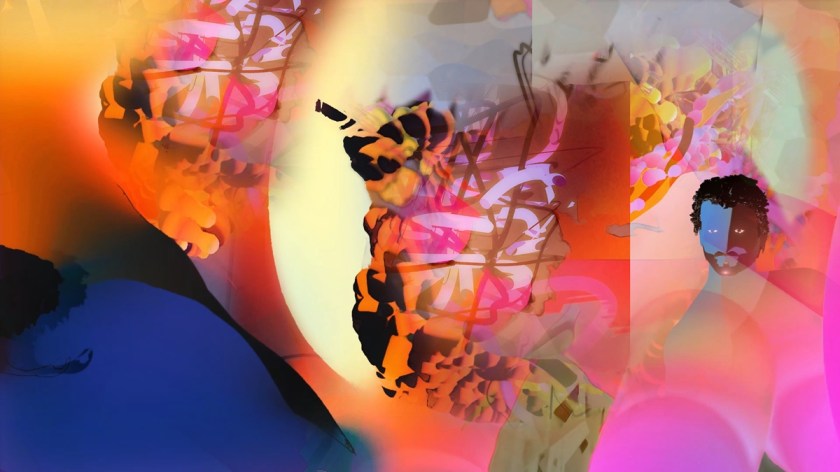
The first single “Audacious” from Ian Chang’s debut album Belonging (out April 24, 2020 on City Slang) features a keyboard line that is percussive in its cadence and synth drones floating in the background like a fog, all while Kazu Makino (Blonde Redhead) provides almost a companion beat with her vocals accenting the melody line parallel to the low end. The deep, layered rhythms of the song allow it to go well outside any pop songwriting conventions which makes Makino’s unique, breathy voice well suited to a song about not hiding behind the usual socially conditioned barriers that prevent direct and honest communication between people. The animated video directed by Qieer Wang brings to the presentation of the song the quality of a graphic novel cast in the visual language of personal mythology and the use of creative visualization to transform one’s own consciousness—it is colorful, surreal and symbolic in blurring any line between conscious and unconscious mind, dream and waking reality, abstracted cultural folklore and concrete existence. And beyond these heady conceits the song and video work as a way that makes an otherwise experimental pop song immediately accessible with its gentle melodicism and sense of coming with a fresh perspective to what might have before been a conundrum in your mind. Watch the video for “Audacious” on YouTube and follow Ian Chang, also a member of Son Lux and Landlady, at the links below.

soundcloud.com/ianchangofficial
ianyhchang.bandcamp.com
twitter.com/ianyhchang
facebook.com/ianyhchang
instagram.com/ianyhchang

Ryuichi Sakamoto’s Composition of “Dance – Ambient Version” Was Informed by the Tactile Sound of Valentino Fabric to Craft its Sense of Deep Mystery

RyuichiSakamoto_Dance_AmbientVersion1_crop
Ryuichi Sakamoto, photo courtesy the artist

In scoring the soundtrack to Luca Guadagnino’s (the director of the 2018 Suspiria remake) The Staggering Girl, Ryuchi Sakamoto wanted to incorporate the physicality of the sound of Valentino fabrics. He experimented with using fabric samples and, according to the composer, “utilizing special sensitive microphones, I experimented ‘playing the fabrics. I love the sound and how it forces one’s attention to a sound all round us, yet almost entirely ignored.” The latter quality is captured well on the song “Dance – Ambient Version.” With minimalist piano lines shifting up and down as string figures entwine their way through and background drones bring a nearly intangible lushness to a song that sounds like it would fit a 1960s period piece with underlying tones of mystery as with the beginning of an Alfred Hitchcock film with the menace not yet arrived but lurking in the hints of melancholy and introspection and a sense of new beginnings heard in the theme music foreshadowing the tragedy to come. Listen to “Dance – Ambient Version” on YouTube and follow the renowned composer at the links below. The Staggering Girl Original Soundtrack was released February 14 on Milan Records.

soundcloud.com/ryuichi_sakamoto
open.spotify.com/artist/1tcgfoMTT1szjUeaikxRjA
http://www.sitesakamoto.com
https://twitter.com/ryuichisakamoto
https://www.facebook.com/ryuichisakamoto

Lonely Gimmick’s Enigmatic Video for “BEAT 1” is a Reflection of the Collage Sonics of the Song’s IDM/Hip-Hop Synthesis

LonelyGimmick_BEAT1_A_crop
Lonely Gimmick logo


“BEAT 1” by the enigmatic Lonely Gimmick sounds like a meeting of lo-fi aesthetics and modern production methods. The lightly distorted synth, the minimal, warped, slightly clipping guitar sound and the layers of electronic percussion sounds for an effect like something that could have come out of 90s IDM, a collage of sounds and styles bridging decades of hip-hop, techno and early electronic post-punk. The music video shows a dark figure putting a seven inch on a Bush portable record player with figures intertwined sitting in the middle holding the disc down. The background is a dilapidated room in what could be a dilapidated part of the city. The visual parallels the sound of the song and finding the treasures in one’s sonic odds and ends and making it all move and dance in ways it hadn’t before. The video honestly has the same vibe as some of the stranger YouTube channels where something strange and mysterious but simple is going on and which stirs the imagination enough to draw you in but gives away little. Watch for yourself on YouTube and follow Lonely Gimmick at the links provided.

Instagram – https://www.instagram.com/lonelygimmick
Facebook – https://www.facebook.com/lonelygimmick
SoundCloud – https://soundcloud.com/lonelygimmick
Twitter – https://twitter.com/LonelyGimmick

Alex Musatov’s “Deep Water” is an Imaginative and Cinematic Display of Layered Violin and Voice

AlexMusatov_PabloMekler_DeepWater1_crop
Alex Musatov, photo by Pablo Mekler

Alex Musatov layers various violin techniques, samples and a beautiful falsetto in the composition of “Deep Water.” Plucked violin traces the meter, legato violin establishes more than one drone and rapid bowing establishes an urgent dynamic later in the song—all showcasing Musatov’s imaginative command of the instrument and its possibilities. At times the violin sounds like a synth especially when it syncs perfectly with his vocal tones where the two sounds blend together in the headiest moments of the song. Another violin part all but replicates the speech of sea birds and dolphins in the background alongside the sample of flowing water. The overall effect is cinematic and a fascinating accompaniment to a song that appears to be about getting in over one’s head with ill-advised conceits and deception and being overwhelmed by the consequences thereof in the end. Listen to “Deep Water,” from Musatov’s debut solo album Songs From Another World, on Spotify and follow Alex Musatov at the links provided.

youtube.com/channel/UCniCTT0s50hgZM4qPOGdlCQ
alexmusatov.bandcamp.com
facebook.com/musatovmusic
instagram.com/mindwarping