“Knowledge Pagoda” by Fruit Baby Finds the Sweet Spot Between Pop Sophistication and Unvarnished Earnestness

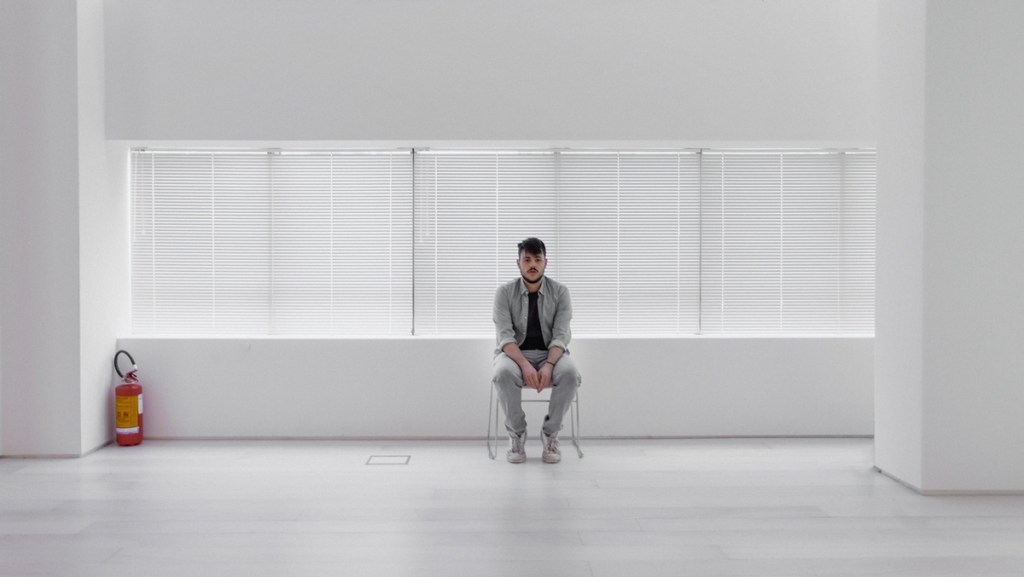
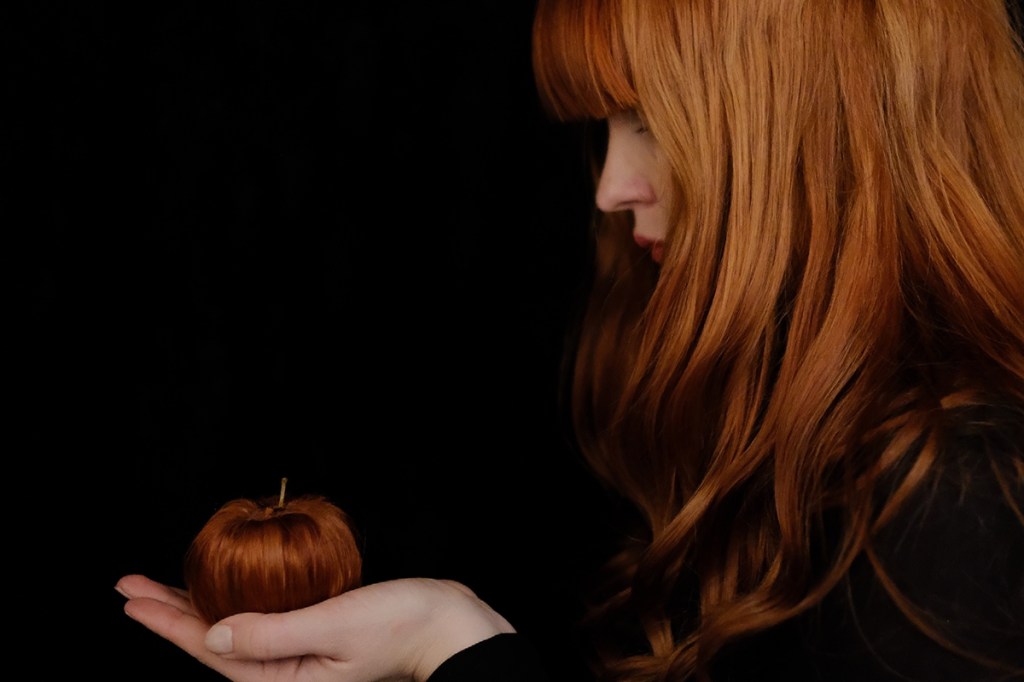
The frayed edges of “Knowledge Pagoda” by Fruit Baby from Bristol, UK suggest some touchstones in the likes of Camper Van Beethoven, 80s jangle-y college rock and, with the edgy violin a bit of the Velvet Underground. The vocals have an unvarnished quality that is masked a bit by expert and emotionally vibrant vocal harmonies and which gives the whole song a freshness and immediacy that catches your ear and doesn’t let go until the end. Not enough modern pop songs command your attention in that way that doesn’t seem to have come out of imitating a popular style. Frankly, the world needs more music that makes an unabashed virtue of what makes the artist unique. Listen to “Knowledge Pagoda” on Spotify, connect with Fruit Baby at the links below and look out for the group’s Huddle EP which released February 12, 2020.

soundcloud.com/fruitbaby
fruitbaby.bandcamp.com/releases
facebook.com/fruitbabymusic

Bloods Turn Broken-Hearted Angst Into Irreverently Humorous Fuzz Pop Confection on “I Hate It”

Bloods Seattle cover

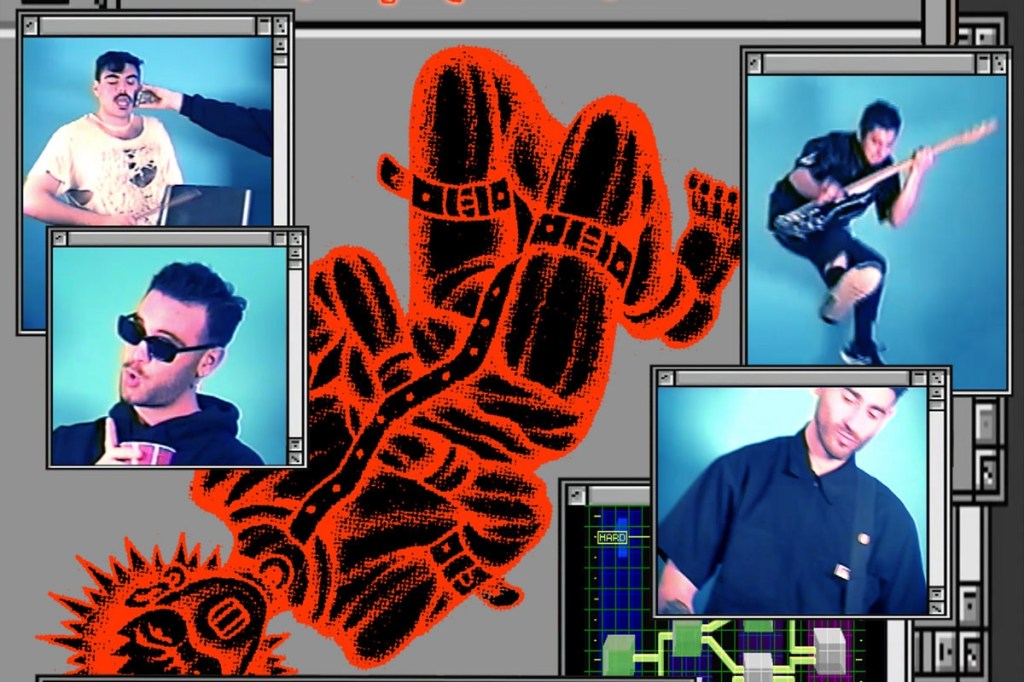
Bloods really nailed the feeling of hurt, anger and disappointment of a recent break-up with someone you’re coming to terms with was probably not good for you on the group’s single “I Hate It.” But instead of centering that agony, Bloods cast it into an upbeat, incredibly catchy, fuzzy pop song whose lyrics are a laundry list of the main points of contention expressed with a charming frankness and humor that turns aggrievement into something fun and not something to sink your psyche into for the rest of your life. The music video is a collection of vignettes as good-natured send-ups of familiar internet video culture tropes: unboxing videos, beauty tip demos, the “Blape Nation” piece, cooking shorts, Tik Tok dance vids, hip-hop groups posing out and the standard, if simple and self-aware rock band video. Sure the words talk about hating how the person to whom those emotions are directed has an impact on your still and how their commitment to you was overestimated but the way Marihuzka Cornelius delivers the lines it feels like all those considerations are so whimsical now and ready to be written into the past by the very act of putting those feelings into words in a song as fun and appealing as “I Hate It.” The Australian group recently recorded its new Seattle EP (out now on Share It Music) with Steve Fisk at Jack Endino’s Sound House to give the recordings some of that cachet of honest and heartfelt angst and irreverent humor that was the hallmark of the best of the Emerald City’s music and certainly that spirit is present in this track. Watch the music video on YouTube and connect with Bloods at the links below.

bloods.bandcamp.com/album/seattle
open.spotify.com/album/6xc1uhgbkZBx7CnSzPDczX

Mazoulew and Bonnie Wylde Soothe the Wounded Heart Now Free of a Cycle of Abuse on “Circles”

Mazoulew “Circles” cover

Mazoulew reveals a gift for putting you into a reflective mood with his single “Circles.” It begins with the sort of downtempo techno beat maybe you’ve heard before but it quickly but smoothly pulls you into a hazy emotional space with Bonnie Wylde’s vocals singing a tale of heartbreak and healing, soulfully expressing being in a place of sensitivity and vulnerability and embracing that rather than hardening one’s heart in the end. The fluttering whorls of tone convey the impression of travel, in fact a trying journey of the heart where you seem to go round and round with the same hurtful experiences with a partner who wants to carve their abuse into you in a way that is supposed to feel like love and devotion but before those scars set in your find yourself able to break free of their grip on your psyche with the gaslighting and on to better things. The gentle but strong spirits and currents of the song sound like something designed to help you get through that dark early period of personal liberation. Listen to “Circles” on Soundcloud and connect with Mazoulew at the links provided.

open.spotify.com/artist/2FXIGKBu3oLpuZkXq6bMgj
soundcloud.com/mazoulew
twitter.com/MAZOULEW
facebook.com/mazoulew
instagram.com/mazoulew

Atroxity’s “Children of Voodoo (ambient version)” is the Soundtrack to Future Urban Decay

Atroxity, photo courtesy the artist

The ambient version of Atroxity’s “Children of Voodoo” uses drones, floaty dynamics and tonal washes to set a dark and enticingly enigmatic mood. It is reminiscent of “Tal Coat” by Brian Eno from his 1982 album Ambient 4 (On Land). It and this composition evoke a sense of place albeit one you’ve never visited and its pervasive tranquil mood drifts into your consciousness. Whereas “Tal Coat” has no vocals, in “Children of Voodoo” we hear the voices like conversations whispering abstractly from an unknown distance in the night. At times some of the voices sound cybernetic like an automated attendant for a mass transit station or vending machine. The song makes you feel like you’ve entered a neglected part of a town where the vegetation has reclaimed parts of the landscape and streetlight illumination is patterned by the shadows of foliage. It is the sound of a future where technology has lost some of its campaign of conquest over all things or simply become a part of the ecosystem in ways we have yet to predict. Listen to “Children of Voodoo” on Soundcloud, connect with Atroxity at the links provided and look out for Atroxity’s new album Outdated And Unpatched due for release November 2020.

open.spotify.com/artist/5WMiD3emycGsMIXC3kW9Vy
youtube.com/channel/UC9JQRHPMD17U39r12rZnNCQ
atroxity.bandcamp.com
facebook.com/Atroxity
instagram.com/atroxity

Dax Dives Into the Psychological Anguish of Prolonged Self-Neglect on “I Can’t Breathe”

Dax “I’ll Say It For You” cover

Dax roams about his living space prowling with a tortured conscience in the video for “I Can’t Breathe.” A lightly flangered guitar figure, like a sample out of a song by The Cure, runs in the background giving the song a dreamlike quality but Dax’s commanding vocals keeps you centered on the psychological agony at the heart of the song. He articulates with emotionally gritty poetry the struggle of someone who had to grind hard to get to where he thought he wanted to be in a place he thought he wanted to be, in this case Los Angeles, only to have achieved so much but at the cost of things you had before any level of professional success that you took for granted and the self-neglect and the lack of self-maintenance it took to climb to what it was you assumed embodied your deepest aspirations. The image in the video of Dax writing in a notebook in blood, soaking the pages is the perfect symbol for that process. As a creative person or any kind of professional you accept sacrifices and lay so much of yourself out there and often at the end of the day you have nothing left for yourself and long term it leaves you feeling empty and desperate even if you are to the outside world a success. That hollowing out to the very strands of your psyche is how we lose a lot of people in the world even when we think they should probably be happy or satisfied with their lives. But it is that inner life that you dip into reaching for ambitious goals thinking its an endless well when it simply isn’t. Dax beautifully and evocatively expresses that terrible headspace throughout the song. And in doing so casts it into a shape with which one might actually get a handle and find a way out of it. Watch the video for “I Can’t Breathe” on YouTube and connect with Dax at the links below.

open.spotify.com/artist/5icKdCmMhNMYoAzVBAWt39
soundcloud.com/thatsdax
youtube.com/channel/UCvvVOIyaYu2l4jiH9L8_eRw
instagram.com/thatsdax

The Kraken Quartet and Adobo Stimulate Multiple Parts of Your Brain on the Intricate Art Pop Tapestry of “Backdrop”

The Kraken Quartet with Adobo, photo courtesy the artists

The Kraken Quartet worked with singer Adobo (Nay Wilkins of Hikes) on its single “Backdrop” bringing together intricate instrumental interplay with a deeply emotional, ethereal quality. The effect is like having multiple parts of your brain stimulated and transported to a better place. The vibraphone introduction leads you to think maybe you’re in for a more ambient work but it is just another layer of evocative sound as math-y guitar work brings in a wide-ranging dynamic that weaves together with the percussion perfectly. When Adobo’s winsome and reflective vocals come in the sound of gentle marimba joins in to create a rich tapestry of sounds. Fans of the more recent Rubblebucket recorrds will appreciate this maximalist approach to the composition that focuses on the emotional content rather than a display of technique as the latter speaks for itself if you want to dissect the song’s individual parts. But this song works as a whole experience with all parts seeming to contribute equally to the unfolding dramatic sweep of the song. Though clearly not stylistically beholden to classic 90s indie pop bands like Neutral Milk Hotel, Olivia Tremor Control and the Apples in Stereo nor more modern dream pop bands with similar instincts like the aforementioned Rubblebucket and Sound of Ceres, there is something about that creative ambition, attention to detail and imaginative execution that resonates with “Backdrop” as well. Listen to the song on Spotify and connect with The Kraken Quartet at the links below.

soundcloud.com/thekrakenquartet
youtube.com/watch?v=s555R_6CCA8&feature=youtu.be
thekrakenquartet.bandcamp.com

“Vertical Migration” by Mobile Steve and the Grand Slams Evokes the Dark Tranquility of a Deep Sea Realm Lit by Bioluminescence and the Faint Hint of a Distant Sun

Mobile Steve and the Grand Slams, image courtesy the artist

Mobile Steve and the Grand Slams were trying to evoke the deep sea on “Vertical Migration.” The slowly ascending drones, the sparkling melodic, crystalline tones certainly capture a tactile as well as emotional quality in a depth of sonic field that suggests slow, flowing dynamics broken periodically by unexpected flashes of activity and the way light often seems to travel in strands into the depths. The song is also reminiscent of 1980s Italian synthwave soundtracks and the way those composers often unabashedly used distorted synth lines and the creation of mood in a way itself cinematic. “Vertical Migration,” though, envelops you in its drifting, whorling rhythms in a way more abstract with no concessions to conventional genre songwriting. Because of that you can imagine yourself in a world lit mostly by forms of bioluminescence and hints of the distant sun. Listen to “Vertical Migration” on YouTube.

Wizard Death Teams Up With Easy Sleeper For the Ambient Post-Rock Chiller Track “we watched the sunset (through the window to the studio)”

Wizard Death/Easy Sleeper, photo courtesy the artists

Wizard Death is lo-fi, ambient hip-hop project of Alex Lubeck who featured his indie rock band Easy Sleeper on the song with the Boards of Canada-esque title “we watched the sunset (through the window to the studio).” The downtempo pace of the song allows its tones to ring out warmly as a simple synth arpeggio traces its own pace like like it’s accenting the overall rhythm. The guitar and bass give the otherwise ethereal song a textural grounding that works to not just create a great, languid and soothing mood but a depth of sound that is impossible to pigeonhole to a specific genre of music. It could be an ambient track, it could be a super chill hip-hop beat that would work well for a song that starts off with casual observations that follows those thoughts into deeper places. Either way, the relatively short song is evocative in its deceptive simplicity giving it repeated listenability on its own terms. Listen to the song on Spotify and connect with Wizard Death at the links provided.

open.spotify.com/artist/3jPBisnT8ejZfvxVBmfjaY

soundcloud.com/lilwzrddth

facebook.com/wizarddeathmusic

instagram.com/wizard_death

John McCabe Sets the Bar of Hope in Anticipation of Life’s Coming Storm at a Realistic Level on “Here Comes the Rain”

John McCabe “Here Comes the Rain” cover

John McCabe’s gift for the melancholic, observational ballad remains strong on his first single of 2020, “Here Comes The Rain.” The percussion on the song really helps set the mood with its expressive dynamics that accent the melody in which McCabe seems to come to terms with how life can seem perverse in its ups and downs and in the predictability of how things get better in some way eventually even when you can see the periods of struggle coming down the like. The chorus of “Here comes the rain again, I surrender / the clouds keep rolling by and I know things are going to get better” is Zen-like in its use of imagery as life circumstances and expressing a realistic hope because you’ve been through struggles, setbacks and even disasters before and even when they transform your life in significant ways you do get a reprieve regularly from the worst of it eventually. Fans of R.E.M., Green On Red and Uncle Tupelo will appreciate the way the jangle-y guitar work captures that journey from personal darkness to triumph over it with a hint of world weariness to give the song a little grit. Listen to “Here Comes the Rain” on Soundcloud and follow John McCabe at the links below.

https://open.spotify.com/artist/2Bg3CG3jKSw7QdcKkFN46w?si=4hPEF5HqSZaZ1redx2iFtQ

johnmccabemusic.com

soundcloud.com/john-mccabe

Morningless Brings Some of the Magic of Dreams to the Waking World on “Sand”

Morningless By My Fireplace cover

The soft dynamics and introspective yet vivid melodies of “Sand” by Morningless is reminiscent of XTC. The cadence of the vocal dynamics and the way it sits within a swirl and sparkle of fine layers of guitar, keyboards and percussion that seem to flow and weave together as distinct streams of sound. One imagines a walk through a forest in a dream encountering the usual surreal yet familiar settings, situations and people. In short passages of fiery, distorted guitar one hears the perils of a nightmare having burst in upon the tranquil meetings with the avatar of dream, the Sandman himself, but as the dream turns a corner on that fleeting cosmic narrative of significance that is the lucid dream the nightmares pass on. In the song our narrator discovers a place where the weight of social expectation is lifted and he can “Be myself for once in my life” and that we all can in the realm of dreams and knowing that it’s not such a huge leap to bring that state of mind to the waking world, enriching it with a bit of that nourishing sand of the dreamtime. Listen to “Sand” on Spotify.