
S. Touze Holds Up a Mirror of Hard Truths to the American Dream on “USA”

S. Touze, photo courtesy the artist

S.Touze infuses his song “USA” with a touch of Bernie Worrell-esque keyboard work and production reminiscent of 90s hip-hop. But there’s a more contemplative tone to the song even as it clearly, with rapid cadences, peels back the layers of privilege and lack of self-awareness that seems to permeate the perspectives of people who take their higher relative political and economic status in the world for granted. At times it comes across as a mirror image and cousin of 2Pac’s 1996 hit “California Love.” And yet didn’t Tupac hint at the negative side of the American empire as well even in his most celebratory songs? When S. Touze raps “Walk around with a golden spoon when you’re born in the USA, go to school and make your dreams come true if you come to the USA” he exposes the American dream for a fraud both for people who come to the country seeking opportunity and for people from the USA who have yet to realize they’re never going to achieve that dream so long as the whole thing is rigged if you’re not the right color and not of the proper economic class. But S. Touze focuses on the immigrant experience and the tragic allure of America for many at any time but especially in the last few years when it seems you can be detained and separated from your children and allowed to die because you have no legal status. S. Touze casts this situation more poetically in the song but never tries to sugarcoat it while having written a composition that holds your attention regardless of your own feelings on the issue. Listen to “USA” on Soundcloud and connect with S. Touze at the links provided.

https://www.youtube.com/user/esaietouze
https://twitter.com/sdiiddy
https://www.facebook.com/esaietouzebey
https://www.instagram.com/s.touze

ST3PH Deftly Uses the Metaphor of Interdimensional Travel and Parallel Existence for Personal Transformation on “Spaced Out”

ST3PH, photo courtesy the artist

ST3PH employs the metaphor of traveling between dimensions and becoming aware of alternate universes and existences for liberation through personal transformation on the single “Spaced Out.” With coolly luminous keyboard sounds in the beat as well as accelerating synth flourishes and percussion accents it sounds like a synthesis of dub, trap and darkwave. While it wouldn’t quite fit to compare the song to something by Danny Brown, it shares that genre bending quality in which Goth-y dance music and hip-hop compliment each other so well as to create a different flavor and mood for both in one song. The story could be just another struggle and striving song but given a different kind of musical context it takes on another dimension giving the song a greater thematic depth than expected. Listen to “Spaced Out” on Soundcloud, follow ST3PH at the links provided and look out for the TRIME Vol. II EP due later in 2020.

https://soundcloud.com/st3phofficial
https://twitter.com/st3phofficial
https://www.facebook.com/st3phofficial
https://www.instagram.com/st3phofficial

Yung Ugly Bastard’s Punk Rap Song “Sea Anemone” is an Explosive Exorcism of Personal Darkness and Self-Anger

Yung Ugly Bastard “Sea Anemone” cover

Yung Ugly Bastard’s “Sea Anemone” is a punk rap song that is design to be abrasive, to make you feel that intense sense of anxiety and desperation that comes from being angry at yourself for allowing people to take advantage of you yet again. Those pulses of rage directed at yourself as you burn out the feelings inside you rather than take it out on anything or anyone. Fans of Death Grips and Ho99o9 will appreciate the almost industrial beat that glitches out in disorienting shifts in tempo, tone and texture. It is the perfect portrait of a mindset as the messages in your mind haunt you with a blaring volume and flood your heart with all the aggressive demons of personal darkness before being exorcised by the song’s end. Listen to “Sea Anemone,” produced by MERCYKILL, on Soundcloud and connect with Yung Ugly Bastard at the links provided.

https://soundcloud.com/yunguglybastard
https://www.instagram.com/yunguglybastard

Bad Flamingo Sketches the Attraction of Rebellion Against Restrictive Culture Mores on “Bad Apple”

Bad Flamingo, photo courtesy the artists

Bad Flamingo’s single “Bad Apple” sounds like a bit of blues folklore told accompanied by percussive banjo, slide guitar flares, acoustic guitar strum accents and a touch of synth. Like a soundtrack to a tale of someone who has spent entirely too much of their life doing what’s good and proper only to find out whatever defines those things in a conventional sense aren’t very psychically satisfying. So she years to be lead astray, as it were, by someone who other people say is the proverbial bad apple. But as in real life this person’s life represents liberation from an internalized oppressive culture rather than genuinely a bad person but as anyone born to rebel against the status quo what that person represents is an element of danger too as when you learn that you have so many more options in life you don’t want to go back into the cultural corral. At times it’s reminiscent of a Kimya Dawson song or Garfunkel and Oates but without the comedy and more emphasis on the surreal and freely associating and subverting cultural myths. Listen to “Bad Apple” on Soundcloud and connect with Bad Flamingo at the links below.

https://www.badflamingomusic.com
https://open.spotify.com/artist/3Ht7Wd1qVgmFyW63bl5eKE
https://www.facebook.com/badflamingomusic
https://www.instagram.com/badflamingomusic

The Minimalist Sound Collage of Tallinn’s “At the Freeport” Questions the Inevitability of the Transformation of High Art Into a Form of Currency in Late Capitalism

Tallinn, Varieties of Exile II cover (cropped)

Tallinn is the project of Scott Whittaker who is working on a trilogy of EPs that “deconstruct the jazzy sophistication of soft rock with corroded noise and experimental textures.” That succinct description fits the track “At the Freeport” from Varieties of Exile II EP (out May 25, 2020). The song is like a collage of sound utilizing marimba as both a textural and rhythmic element, what feels like samples of sounds as quick swells of tone and drone (the latter in the form of what sounds like a disintegrating tape of an electronic organ played backward) and lightly phased vocals. The effect is reminiscent of arty post-punk band Shriekback at its most avant-garde. The percussion and impressionistic guitar work ground the song while the other elements seem like blown out ghosts that come in to haunt the song fitting its themes of questioning whether its inevitable that high can become a form of currency in the process of universal commodification under late capitalism. The song doesn’t answer the question but it does provoke contemplating to whom does great art belong and to whom do great do great ideas belong in the end. And one can easily conclude that all of it can and should benefit the greater human community and coming to that realization does that suggest other obvious parallels in how we organize our political and economic lives? That the song can prompt such a string of thought suggests that maybe art can be inherently a method of communicating and inspiring change in a way that transcends a culture that turns all activity into a transactional relationship. Listen to “At the Freeport” on Soundcloud and connect with Tallinn at the links provided.

https://soundcloud.com/xtallinnx
https://xtallinnx.bandcamp.com
https://twitter.com/xtallinnx
https://www.instagram.com/xtallinnx

Bathe Alone Reflects on the Enervating Effects of Living a Life Perpetually on and Often Over the Edge of Anxiety With “Champagne”

Bathe Alone, photo courtesy the artist

In Bathe Alone’s song “Champagne” the songwriter addresses the way anticipating the breakdowns in your mind can be an exhausting proposition that warps the way you live your life. You are always on edge about what might trigger a panic attack or a paroxysm of anxiety in general born of trauma. The title of the song apparently refers both to imagining what it would be like to trade places with someone you see randomly in the world and to the realization that even with your your own struggles that you have things about your life that are good and that part of mental health problems is feeding into them even if almost against your control, in particular by comparing your life to that of other people. But that insight does seem to take the edge off even if you’ve gone some way down the path of having having an episode as it suggests that you can often derail that procession to emotional disaster. And yet the song and its beautifully melodic dissolves and ethereal tones isn’t sitting in the moments of greatest stress, it seems to come from that time after the worst wave of it has passed and you are able to have some perspective on what it is that triggers you and amplifies the experience. What makes this thematic and musical contrast especially interesting is that though it’s essentially a blissed out, soulful synth pop song, at no time does Bathe Alone try to placate you by saying it’s all going to be okay or any of the other useless platitudes you often get from people who might have better mental health but no insights into how to make things better. Rather the song honors the experience while transforming that energy into something more introspective and reflective and thus more manageable. Listen to “Champagne” on Spotify and connect with Bathe Alone at the links provided.

www.bathealone.com
https://soundcloud.com/bathealone
https://www.youtube.com/channel/UC9hpjK2lI9E24Y40Dl6knfA
https://bathealone.bandcamp.com
https://twitter.com/bathemusic
https://www.facebook.com/bathealone
https://www.instagram.com/bathealone

Drones Que Caen’s “Condicionado” Casts a Beautifully Doleful Musical Drift Like a Montage of Your Life’s Regrets

Drones Que Caen, photo courtesy the artists

Argentinian experimental rock band Drones Que Caen from Buenos Aires is doing the soundtrack to a documentary film to be released at the end of 2020. The film is about a homeless poet who lived on the same street in Sao Paulo for more than a decade. Throughout 2020 the group has been and will release a single every month that reflects its eclectic musical interests that span the kind of intensely emotional singer-songwriter material we heard from Jeff Buckley and Elliott Smith, the production heavy industrial rock of Nine Inch Nails and the similarly-minded and musically diverse Argentinian rock band A-Tirador Láser. That said, its single “Condicionado,” written as the main theme of the aforementioned documentary, breaks from all expectations one might have of the group’s cited influences. Its drifting yet fluidly seething synth drones cast a melancholic, dream-like tone. The composition makes exquisite use of a simple keyboard figure as a kind of framework from which the other sounds including an elongated, doleful guitar drone hang like uncomfortable memories passing through your mind in a montage of regret. Listen to “Condicionado” on Soundcloud and follow Drones Que Caen at the links provided.

https://dronesquecaen.bandcamp.com
https://soundcloud.com/drones-que-caen

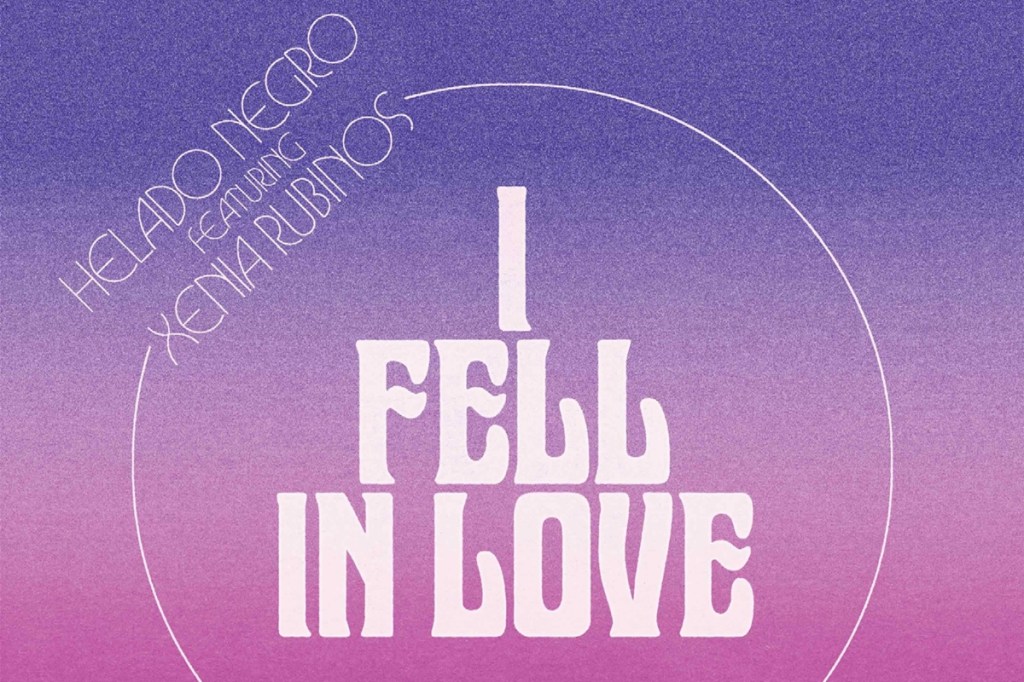
Helado Negro’s “I Fell In Love,” featuring Xenia Rubinos, is Like a Voice Mail From Your Subconscious Reminding You That in Even the Worst Times There’s Always Something to Uplift Your Spirits

Helado Negro “I Feel Fine” cover

Helado Negro’s new single “I Fell In Love” features the melodious vocals of Xenia Rubinos and its cool colored tone keyboard work and layered, echoing percussion puts the voices of both singers to the forefront. It’s comes across like a chillwave “Avalon” by Roxy Music in pacing and sentiment. Like the latter, “I Fell In Love” is an unabashed, joyously celebratory love song but one expressed with an elegance, style and sincerity that moves you because it is able to be subtle and gentle in its execution without compromising the strength of feeling. In a time of great flux the song is like a voice message from the future reminding you that even in the worst of times that there are things in life that uplift your spirits whether that is the love of another person or love of yourself. Listen to “I Fell In Love” on Soundcloud.

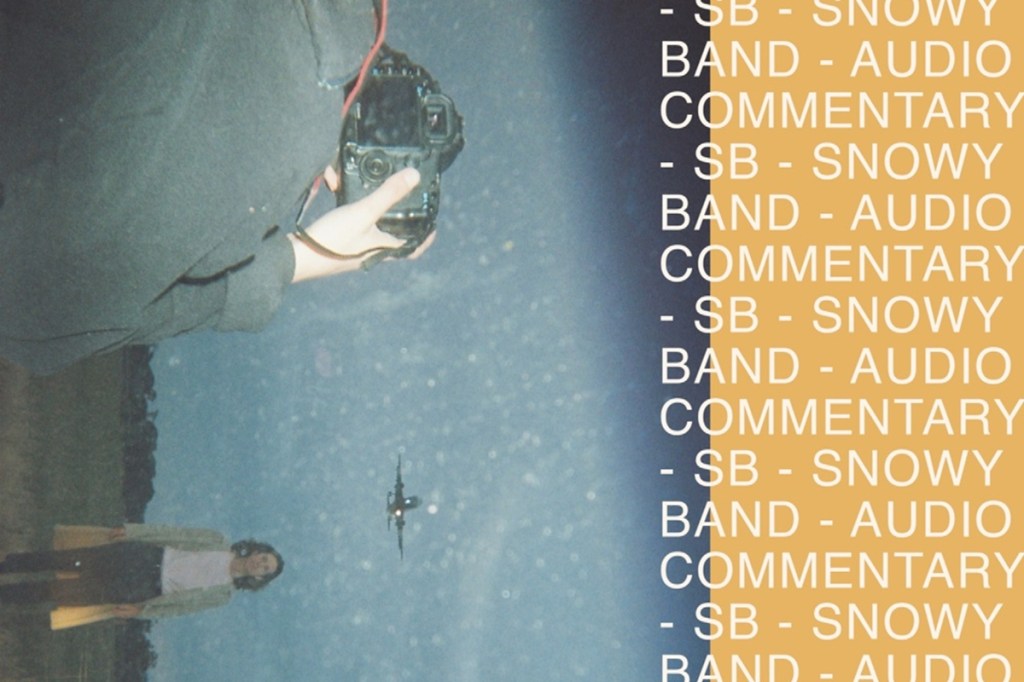
Snow Band Takes Down the Pervasiveness of Consumerist Culture on the Wonderfully Snarky “Never Change”

Snow Band, Audio Commentary cover

Snowy Band from Melbourne, Australia takes on the pervasive nature of corporate culture through the instrument of using marketing speak to process and sell back to you every strand of human experience with its single “Never Change” from its debut album Audio Commentary on Spunk! Records. The raw lead vocals and the melodic vocal harmonies pair well with warped and broken guitar lines and unconventional song dynamics to perhaps resist easy classification. Of course musically it’s somewhat reminiscent of Pavement and great Australian and New Zealand pop and alternative bands (really, those worlds blur and overlap quite a bit in so much of the music from both countries). But Snowy Band is very much its own thing with beautifully slackery and tasteful guitar solos and the ability to craft an earworm of a song without resorting to today’s tropes of pop music and production. When Liam Halliwell sings, “I don’t want a simple explanation from some viral tweet, TV, or a book I read. Don’t tell me how to grieve” it may not be a verbal Molotov cocktail to consumerism but it does strike at the heart of how so many of us don’t want to be treated like we’re stupid and only useful as a customer to whom we can be sold our own consciousness and lives as conditioned and created by a heartless set of processes and policies not designed with our cultivation as unique humans in mind. Watch the video for “Never Change” on YouTube and connect with Snowy Band at the links below.

https://snowynasdaq.bandcamp.com
https://www.facebook.com/snowynasdaq
https://www.instagram.com/snowy___________

Chillout Ambient Track “Peace” by Luiniss is Like the Soundtrack to Memories of Tranquil Lucid Dreaming

Luiniss “Peace” cover

There is that moment in a dream that many people reach where you become aware that you’re dreaming and instead of succumbing purely to ego and the limitations of your conscious mind you allow yourself to drift through events as though you are operating from a place of pure acceptance and tranquility. In that moment no matter what is happening in the dream you are able to enjoy the ride while not feeling tied to that specificity of existence, rather, as a a frequency in a larger spectrum and context of the universe. It isn’t simply lucid dreaming but the kind in which one can occasionally gain insight into your normal waking existence by being able to both experience and observe at the same time and glean what might be called spiritual insights into your everyday life because your mind is operating on a different level in a different mode wherein symbolism and concrete reality seem inseparable but which differentiate out when you wake up. Sometimes you retain strands of that consciousness and awareness and it makes life seem so very connected and not so wracked with the angst and concern that so often demands your focuses, your attention and your time. And yet memories of those moments can bring a calm to your mind in unexpected moments when you need it. The ambient song “Peace” by Luiniss is like the soundtrack to those moments with its evolving drones not in the distance so much but at the edges of your mind, accessible should you choose to plug back into it. Listen to “Peace” on Spotify and connect with Luiniss on Instagram linked below.

https://www.instagram.com/luiniss_peaceofmind