Grocer’s “Packrat” is an Anthem For the Neurotic, Controlling, Dissociative Behaviors We Adopt to Cope With the Downward Spiral of Modern Life

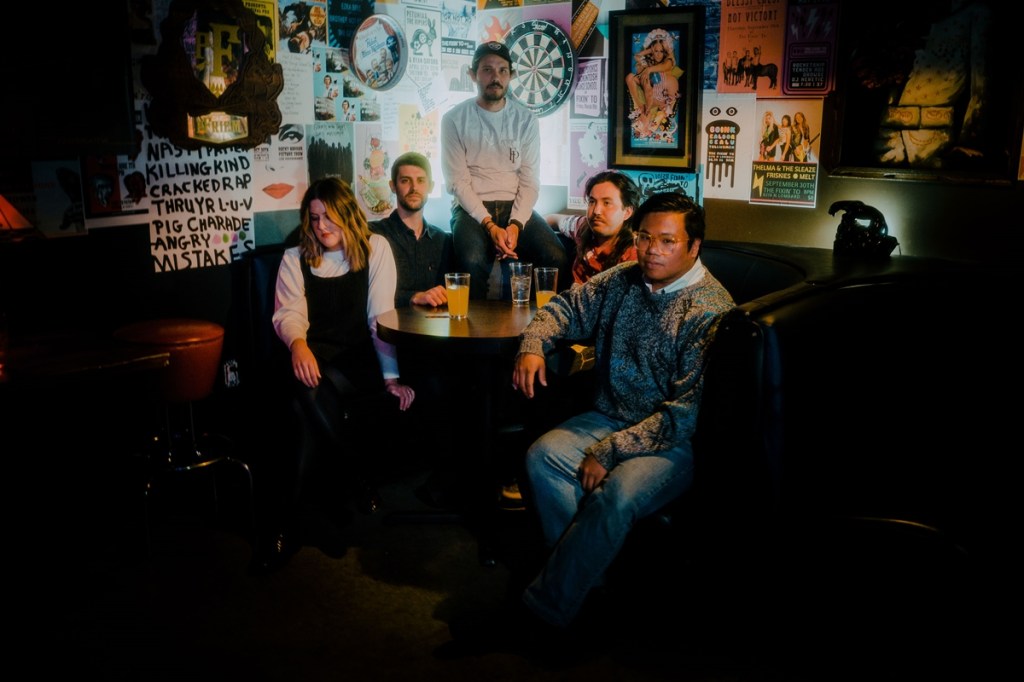
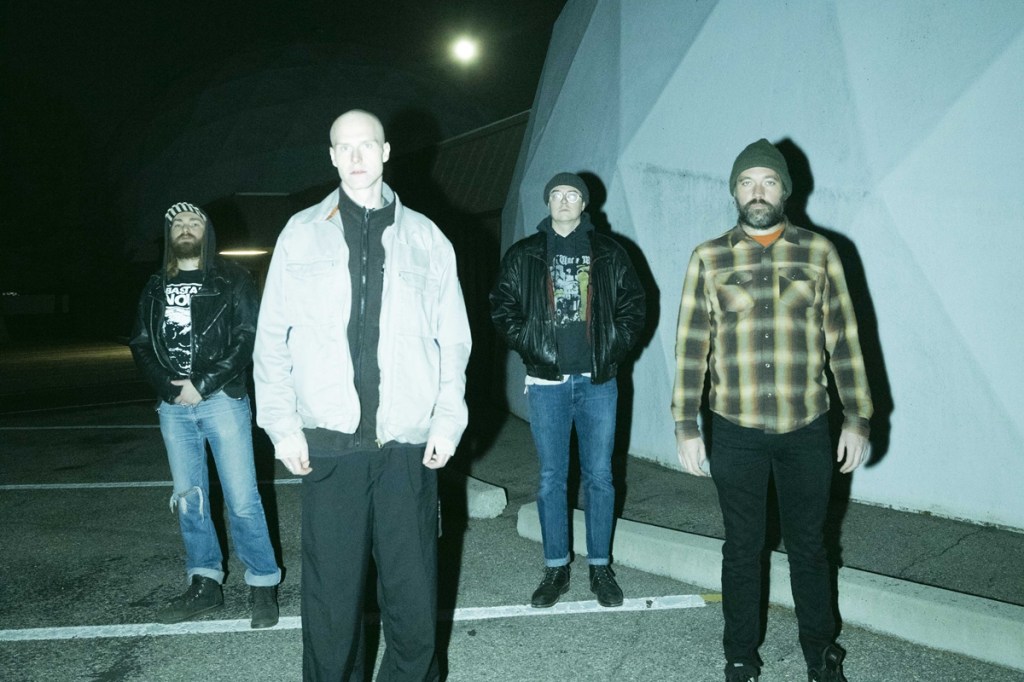
Grocer, photo courtesy the artists

On its new single “Packrat,” Philadelphia’s Grocer sounds like it has perhaps been revisiting some neglected 90s rock with it’s gigantic, melodic hooks and buoyant vocals. But like a lot of the music of that era, it’s simply emotionally raw and honest except Grocer has delivered one of the most accurate portraits of anxiety and psychological paralysis of recent times. Its snippets about the dissociative behaviors one often exhibits when your brain gets stuck on some detail rather than moving on as some odd act of delusional micro control over something rather than let it all potentially unravel along with your sense of self. The title of the song points out to one of those controlling tendencies that also give the illusion of control and maintaining. Many of us have been in those moments here and there in the past couple of decades as more and more is demanded in everyday life with increasingly little given in return for our moments, energy and dedication. The line “I’ll survive off anything/Before I live in the moment” is a painfully amusing summary of life in late capitalism and being in survival mode so often that you have to ignore that thriving isn’t often on the table nearly enough for much of anyone that isn’t already rich and even for those people that pressure on everyone else trickles up in ways the world only started to try to address with the early pandemic. But the song itself sounds like a cathartic and playful send up of those gnarled and desperate feelings channeled off into bursts of cognitive dissonance and dysfunction readily recognizable by anyone honest about the state of things. Listen to “Packrat” on Spotify and follow Grocer at the links below. Expect the group’s new album Bless Me out April 19, 2024 on digital, vinyl and CD.
Grocer on Twitter

Grocer on Facebook

Grocer on Instagram

TRAUMA KIT’s Noise Rock Epic “PLATEAU” Captures the Essence of Today’s Dystopian Times

TRAUMA KIT, photo courtesy the artists

Imagine one of the only weird hardcore bands from your hometown (you know, the one that listened to Crucifucks and Flipper coming up more than the usual suspects) gets bored with hard fast rules and were always into stranger music and the possibilities of sonic extremes in experimental industrial music and noise and makes a band you think would be good on a bill with Chat Pile, Mclusky/The Future of the Left or The Jesus Lizard. Or all three (four if you want to count The Future of the Left separately). TRAUMA KIT is that band from Boise, Idaho, a town that has a lot of secret talent. “PLATEAU” is the first song on the group’s new album TRAIN WRECKS TAKE TIME (which dropped February 23, 2024) is a caustic and seething bit of work that sounds like the story of dead end lives in dead end towns in dead end countries in a dead end civilization. It also sounds like what you do to express the pain of living through those situations and coming into the harrowing disillusion of having the realization of what you’ve inherited as a human in this time crash into you. It also comes across like the next searingly dystopian science fiction film made by Brandon Cronenberg if he teamed up with Harmony Korine for a story idea and really nailed what future looks like for most of us but the story of someone struggling to find some meaning and dignity in the detritus of world history yet not being completely hopeless and finding some glory in the struggle against the level best attempts of late capitalism to crush us into nothing. Musically you’re going to hear the aforementioned but also a bit of late 80s Voivod and maybe more than a little Shellac and a shred of Naked City. No complaints. Listen to “PLATEAU” on Spotify (Apple Music or Bandcamp) and you may recognize some of your own intrusive thoughts in the words and thrilling collisions of sound.

TRAUMA KIT on Apple Music

9T Antiope Haunts Your Dreams With the Labyrinthine Textures and Rhythms of “Shapeshifter”

9T Antiope, photo courtesy the artists

9T Antiope sounds like if Björk used classical instruments to craft a a menacing bit of dark, abstract jazz on its single “Shapeshifter.” That is if she collaborated on the songwriting with Suicide. The track from the forthcoming album Horror Vacui (due out April 12, 2024 via American Dreams) uses the plucked thrum of octave violin sounding like an upright bass to help establish a hypnotic and textural rhythm that runs throughout the song like a constant presence. While bowed strings weave a mood and perhaps plucked violin adds to the minimalistic yet intricate rhythm creates a space for the vocals to brood, mandolin bubbling up in the background alongside a haunting electronic drone with all elements seeming to release all tension at the end of a song that seems to be built on taut intersections of music. It sounds like clandestine plans kept from the prying eyes of an oppressive authority are hinted at in the song with lines about keeping it down and how it’s been a long night, perhaps the only time one can feel cautiously free for lengthy passages given the circumstances. The band consisting of Nima Aghiani and Sara Bigdeli Shamloo are Iranian expatriates and likely have some experience with having to keep full creative expression under wraps as well as learning to navigate cultures not their own. How that translates directly into this music is hard to gauge but the title speaks a lot to how when you’re required to adapt to changing circumstances beyond your control something about your psyche is always shapeshifting as a way to survive. The song is haunting yet beautiful and its inventive use of rhythm, looped figures and textures gets stuck in your head. Listen to “Shapeshifter” on Spotify and follow French experimental band 9T Antiope at the links below.

9tantiope.com

9T Antiope on Facebook

9T Antiope on Instagram

9T Antiope on Bandcamp

Amelie Lucille’s Orchestral and Downtempo “See Me” is an Emotionally Nuanced Letting Go of Toxic Relationships

Amelie Lucille, photo courtesy the artist

Amelie Lucille brings a great depth of feeling to her vocal performance in “See Me,” going from a rich alto in the verses to soaring notes in the choruses. It’s a song about toxic relationships of all stripes (romantic, familial, friendships) and how it can feel difficult to get them out of your psyche when your emotions and bonds of love and affection that tie those connections together in lingering waves. The low end pulse running throughout the song feels like the part of your mind that’s gentle and reminds you that you can indeed move beyond the terrible dynamic that keeps you attached to people and situations bad for you. The melancholic violin is like a coaxing to better places and mourning what was good about the times you shared with the associations that no longer serve your life. Musically the song is like a fusion of downtempo sensibilities and the kind of orchestral, emotional sweep one heard in The Verve’s 1997 hit “Bittersweet Symphony.” The rich production and Lucille’s commanding and vulnerable performance draws you in for a transformative and liminal moment in the heart when you’re ready to let go of the situations and people that hold you back from leading your best life while also accepting the feelings and experiences that have brought you to that moment. It’s a song of rare emotional nuance and sonic depth that will bring you back for repeat listens. Witness “See Me” for yourself on Spotify and follow Amelie Lucille at the links below.

amelielucille.com

Amelie Lucille on TikTok

Amelie Lucille on Instagram

The River Otters’ “Adshusheer” is a Psychedelic Folk Journey Into Mysterious Places

The River Otters, photo courtesy the artists

The title track to The River Otters’ new album Adshusheer (released January 12, 2024) is a song in three movements and rewards your attention. It begins with a background drone and elegant acoustic guitar figures that contain elements of Middle Easter chord structures but with a touch of pastoral folk twang. The effect is one of taking the listener out of the usual cultural referents and delivered to a journey at near the two and a half minute mark as the song goes into direct motion but maintaining most of the same tonal and textural components. The guitar bends shape the main melody as drums mark the paces until near the four minute point in the song when the sounds shift into a more psychedelic Americana flavor that more than slightly dips into country and then shifting back to a dynamic that suggests some roots in blues. It’s clearly been touched by the influence of John Fahey whose own purely instrumental work suggested grand narratives of the American landscape but a quick read through song titles from the album this song is a chapter in a work about a trek to unexpectedly fantastical places in search of the lost village that is the song’s and thus album’s title, an indigenous settlement that was abandoned in the reckless process of European colonization. By invoking that kind of created myth the song and the album is reminiscent of the fantastical works of John Crowley and his novels Aegypt and Little, Big wherein places of secret yet powerful significance beyond mundane reality exist and can be reached but not by every seeker. The River Otters seem to be drawn to that kind of deep magical realism in the crafting of this music and it will bring you along for that journey if you’re willing to give it a listen. Experience “Adshusheer” for yourself, both the single and the album, on Spotify and learn more about the band and the story behind the music at the link below.

The River Otters on arcaneamericana.com

The Fourth Wall’s Contemplative and Bombastic Post-punk Pop Single “Darkness of Heart” Explores the Personal Impact of Colonialism in Reverse

The Fourth Wall, photo by Lisa Haagen

For The Fourth Wall’s new album Return Forever (out March 15, 2024 via DevilDuck Records), Stephen Augustin has demonstrated a real gift for infusing fairly straightforward songwriting and visual presentation with complex and subversive ideas. For the single “Darkness of Heart” it starts out fairly folky and pastoral with Augustin going about some mundane home activities and having some coffee but then the song blasts out with bombastic rhythms and blaring guitar yet overlaid with vocal harmonies one might more expect to hear in an old indiepop song. The title is obviously a nod to Joseph Conrad’s classic 1899 novella Heart of Darkness but taking the theme of the novel of colonialism and imagining that dynamic in reverse with the colonized to integrate into the colonizer’s world only to find that not everything is as promised or presented. In the song we hear a contemplation of the aftermath of that experience with the lines “I can never tell/if I repeat what I repel/become the heart of darkness to quell/the darkness just to start it all again.” By going through that process of imagining a different, even parallel, history creatively, Augustin invites us to imagine a world to come that whether it is ready or not will reckon with its past perhaps not all at once in dramatic fashion but in bits and peaces, spurts and stops and as messy as our own development as people. Watch the video for “Darkness of Heart” on YouTube and follow The Fourth Wall at the links below.

The Fourth Wall on Facebook

The Fourth Wall on Instagram

Mimi Pretend Consoles the Bruised Hearted in the Loving, Late Night Dream Pop Melodies of “Smith Lake”

Mimi Pretend, photo courtesy the artist

Mimi Pretend taps into a similar emotional realm of melancholic nostalgia and hazy melodies as Chromatics and Julee Cruise on “Smith Lake.” The atmospheric low end of the bass grounds what is otherwise a fairly ethereal song but so do the lyrics that seem to be about someone who is a lost soul in the world who feels unloved by his mother being consoled by someone who does love him. Fluttering, softly distorted guitar haunts the edges of the song alongside sparkling tones that conjure images of late night conversations interrupted by shooting stars and distant sounds of the road. The imagery of the song probably represents the kind of people many of us know who bother to pay attention to what’s going on with people beyond the obvious but which isn’t too well hidden of emotional trauma and acting out trying to find love and acceptance somewhere not really knowing how and not trusting it when it presents itself in your life. All because of the rejections and low key, or not so subtle, gaslighting and emotional abuse most of us have received at some point along the way because how many people really come from a completely healthy family dynamic? Some people seem to take it harder than others and/or the hurt is deeper and more consistent. This song is a gentle touch in counterpoint to those ways of being and relating to others. It’s a loving tribute to a loved one cast in pastoral dream pop that lingers with you throughout the song and long after. Listen to “Smith Lake” on Spotify and follow Mimi Pretend at the links below. The project’s new EP Colorado 1996 released on January 5, 2024. For fans of the aforementioned as well as Mazzy Star and Low.

Mimi Pretend on Facebook

Mimi Pretend on TikTok

Mimi Pretend on Instagram


The Gorgeously Layered Textures and Melodies of Deth Rali’s “Candle in the Dark” is a Short Passage of Mystical Psychedelia Worth Getting Lost Within

Deth Rali, photo by Julianna Photography

Deth Rali’s 2021 album Light Levels felt like an ambitious dream pop album, orchestral in its composition and completely immersive in its soundscapes. The band’s latest single “Candle in the Dark” immediately feels like it’s organized organically with subtly expansive waves of tone guided gently by finely cadenced percussion. Like you’re listening to the ghost of a memory of psychedelic fantasy movies from another decade but manifesting as as song within which one also hears echoes of 90s indiepop and whatever amalgam of dream pop phase Animal Collective, chillwave and the bright and soothing synth composition of the late, great Norm Chambers (aka Panabrite, think Soft Terminal period) probably isn’t even part of the band’s musical DNA. It’s a song that gets into your brain and you feel better for having experienced its soothing frequencies. The band regularly performs live in Denver and Colorado so if you can, witness this stuff in person for the full effect. Listen to “Candle in the Dark” on Spotify and follow Deth Rali at the links below.

dethrali.com

Deth Rali on Facebook

Deth Rali on Instagram

Deth Rali on YouTube

Dinah’s Avant Folk Single “Ferns” is a Minimalistic Meditation on Finding Inspiration for Inner Strength in the Natural World

Dinah, photo by Janet Kimber

Dinah’s new single “Ferns” (from her forthcoming album Dinah! due out February 23) begins with a minimalist clarity, spare guitar work and the songwriter’s alto voice bringing to the song an air of mystery. As the song progresses we hear some simple electronic percussion and synth but all more rhythmic and textural in effect lending the song a fragile vulnerability that conveys an emotional authenticity even as the lyrics are somewhat enigmatic in their explicit meaning. Dinah employs the imagery of nature and how many of us find an emotional resonance in the natural world that we don’t often find directly in human society and the ways our true intentions can be masked or compromised by agendas that may not even be our own. The line “Gentle white pine, teach me to stand strong” is so simple and in the context of the music video it makes a powerful poetic sense the way find strength in their spiritual beliefs or in their memories or other sense of energies bigger than standard, everyday human existence. It’s like leaning back into one’s imagination for the kind of fortitude that can’t be taken away and can have a consistency where other sources of strength can falter. Fans of the more minimal, folk end of Xiu Xiu will appreciate how Dinah cuts the songwriting and the words used to their essential emotional core on this song and the other singles now available to hear from the album. Watch the video for “Ferns” on YouTube and follow Dinah at the links below.

Dinah on Facebook

Dinah on Instagram

Kidä’s Entrancing IDM Pop Song “Sand Invades Everything” is Imbued With a Sense of Cosmic Sensuality

Kidä, photo courtesy the artist

Kidä has collaborated with the likes of Yves Tumor and Gaika and her new single “Sand Invades Everything” is well within that realm of genre-bending, boundary-pushing electronic pop. Her lush, ethereal vocals are buoyed by a dynamic beat and pulsing electronic bass. The lyrics brim with images of desire and sexual themes of mythical dimensions yet rooted in visceral, earthly experiences. It’s like a pure fusion of downtempo, industrial pop and IDM. The moods are deep and expansive, engrossing. The bendy, Middle Eastern string melody and the sheer soulfulness of the song blend the exotic with a sense of immediacy. Fans of Sudan Archives will appreciate the cohesive, eclectic sound and the way it moves through your mind and takes you to a better place. Listen to “Sand Invades Everything” on Spotify and follow Kidä at the links below.

Kidä on Twitter

Kidä on Instagram

Kidä on YouTube