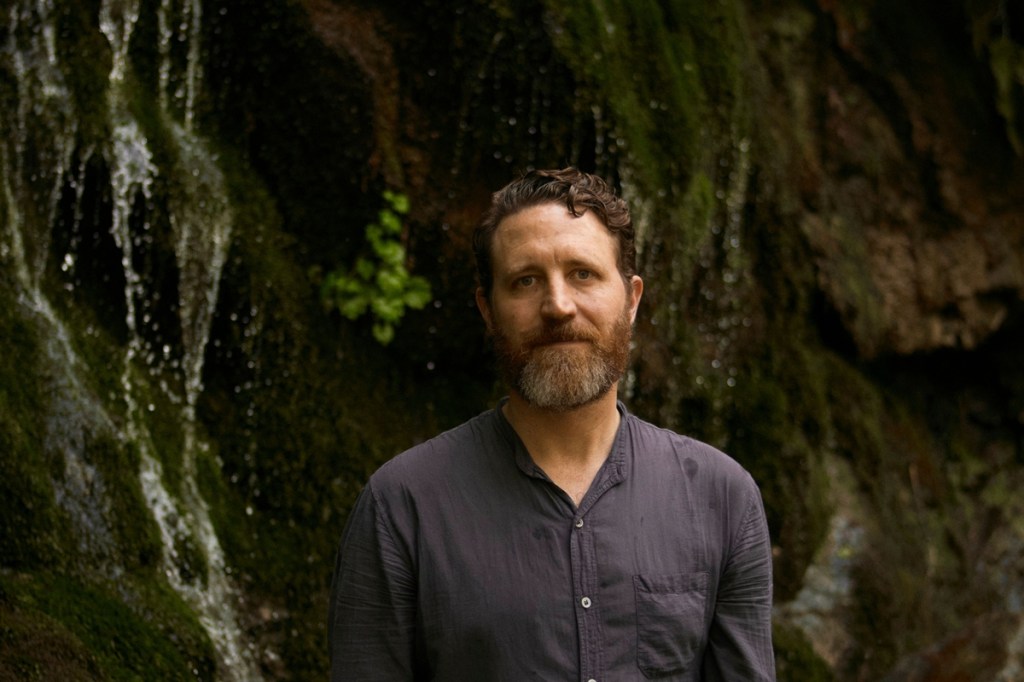

SAADI’S Synthpop and Bubu Fusion Manifests Vibrantly on “Cowboy in a Ghost Town” to Comment on the Dark Legacy of Colonialism

SAADI, photo courtesy the artist

SAADI’s new album Birds of Paradise drops September 3, 2025 but the advance singles reveal an art pop sound unique in its fusion of non-Western rhythms, creative almost lo-fi electronic production and imaginatively pointed lyrics. The single “Cowboy in a Ghost Town” is most obviously a reference to the Palestinian genocide but of course in recent events of June 2025 applies to the war being waged on Iran. The layers of percussion provide a rich foundation on which SAADI’s vocals stand out in calmly but not dispassionately describes the horrifying legacy of colonialism playing out yet again. Fans of The Knife will appreciate the way SAADI masterfully utilizes seemingly disparate sound sources to craft a song with sensitivity and urgency in equal measure and worthy of the weighty subject matter. Some may remember Boshra AlSaadi ala SAADI from her time in the great post-punk band TEEN or experimental dance pop group Looker or even her tenure playing with the late, great Bubu musician Ahmed Janka Nabay, music of the latter directly informs this song with its jaunty rhythms and sharply observed social and political commentary. “Cowboy in a Ghost Town” has a refreshingly different sound that stretches the sonic boundaries of pop music even more than AlSaadi’s previous bands did. Listen to “Cowboy in a Ghost Town” on Spotify and follow SAADI at the links provided.

SAADI on Instagram

SAADI on Facebook

SAADI on Bandcamp

Fuubutsushi’s Tranquil, Ambient Flow on “Loop Trail” is an Invitation to Take a Break From the Insistent and Persistent Demands of Late Capitalism

Fuubutsushi, image courtesy the artists

Fuubutsushi releases its new album Columbia Deluxe, a set of live recordings of the only live performance the ensemble has performed in 2021 at the First Baptist Church of Columbia, Missouri for the Columbia Experimental Music Festival. The quartet comprised of Chris Jusell, Chaz Prymek, Matthew Sage and Patrick Shiroisi, all prominent figures in the world of avant-garde and ambient music, approach the music with a punk ethos of spontaneity, commitment and diversity of approach coming from worlds of classical music, jazz, heavy music, pastoral folk, ambient and abstract indiepop. On the live record you can hear a transformed but no less gorgeously pastoral and layered version of the song “Loop Trail” originally from the project’s 2022 release Birthingbodies. The song masterfully weaves together a sense of wonder and spaciousness as the various musical voices step in and wander out of hearing like the perfect manifestation of a walk in a place of great, quiet beauty and absorbing the often missed details of the surrounding landscape and of the experience of the environment itself when there isn’t a layer of technological civilization to catch the bulk of your attention. The song conveys this sense so elegantly it’s easy to lean into its quiet energy and go along for the drift into more tranquil emotional spaces and an acceptance of the inherent value of a place and time that doesn’t completely serve the demands of violently transformative commerce. Listen to “Loop Trail” on Spotify and follow Fuubutsushi at the links below. Columbia Deluxe releases on vinyl on July 11, 2025 as well as for digital download and streaming.

Fuubutsushi on Apple Music

Fuubutsushi on Instagram

Fuubutsushi on Bandcamp

Queen City Sounds Podcast S5E06: Rubedo

Rubedo, photo by Tom Murphy

Rubedo is a psychedelic prog and pop band from Denver. The trio is comprised of childhood friends Kyle Kramer, Alex Trujillo and Gregg Ziemba whose roots in the influence of alternative rock and art rock bands like The Mars Volta has meant Rubedo would never be trend hoppers and with an interest in concepts of alchemy and how that can inform how music can be made and functions, Rubedo has had a different kind of journey through, around and out of the Denver music scene. In the early 2010s they met R. Isaiah “Ikey” Owens, keyboard player for The Mars Volta and Jack White’s band and became friends and collaborators as he produced the albums Massa Confusa (2012) and Love Is The Answer (2013). Owens became a mentor to the band influencing their ethos, their already strong work ethic as artists and their drive to continue to put out worthwhile releases. Even with the tragic passing of Owens in 2014, Rubedo has continued their friend’s commitment to community and cultivating artistic vision. For a handful of years they were involved in running the influential DIY space Unit E which has since morphed into a record label that focuses on quality local releases including their 2025 album Citrinitas which started brewing in the early days of the COVID-19 pandemic and was written and recorded across sessions at R.A.R.E. Records in Winchester, TN (co-owned by Michael McDonald) with Michael Lee, Tayler Martin, Jeremy Mason and Charlie Powell. Additional engineering at The Blasting Room in Fort Collins, Colorado with Andrew Berlin, mixed by Matt Embree (Rx Bandits) at ICS in Long Beach, CA and mastering by Tyler Lindgren (The Milk Blossoms). It’s a record that reflects the band’s community and connections local and beyond and the album is co-release with Mash Down Babylon, Embree’s label. The album is typically both a touching and personal set of songs and those that are an incisive and poetic commentary on the times in which we find ourselves ravaged by the psychopathy of oligarchs, fascists and the ways in which we’re encouraged to isolate ourselves when the opposite is what is needed.

Listen to our interview with Rubedo on Bandcamp and follow the band at the links below. Rubedo releases Citrinitas on vinyl at a show at the Hi-Dive on Friday, June 27 with RAREBYRD$ and Redamancy.

rubedomusic.com

Rubedo on Facebook

Rubedo on Twitter

Raz Olsher’s “Can’t Have What You Want” is a Haunted and Existential Theme Song to an Imaginary Cowboy Tale

Raz Olsher, photo courtesy the artist

Craters of the Lost Souls is a 2025 album by London-based producer and composer Raz Olsher. It’s music for a spaghetti western that maybe takes place simultaneously in the world of the 1960s retro-futurist TV series The Wild Wild West and that of Jodorowsky’s El Topo as designed by Moebius. On lead single “Can’t Have What You Want, harmonica echos, dusty guitar sounds shimmer, a sound like a guitar processed to sound like someone gently and slowly creating chords to sound like dragging a mallet across the pipes of a xylophone. The leisurely pace is both soothing and haunting and captures the loneliness and grandeur of being a traveler across desert landscapes to fates as yet determined but beckoned by the promise of intrigue and adventure. Listen to “Can’t Have What You Want” on Spotify and follow Raz Olsher on Bandcamp.

Dr. Rocket’s Psychedelic Pop Single “Maybe It’s Time” is a Song About Being Willing to Set Aside One’s Ego to Love Genuinely

Dr. Rocket, photo courtesy the artists

Dr. Rocket sounds like a psychedelic version of The Band on “Maybe It’s Time.” Meaning elegant, folk-rooted songwriting and nuanced and detailed musicianship and surprisingly self-aware lyrics. The song appears to be one about someone trying to come to grips with how he undermines his relationships through neglect and not committing out of a strange sort of insecurity. The kind where you think you’re doing enough to cultivate your relationships but maybe it’s all from your own perspective and not so much about the other person’s needs but your ideas of what their needs should be. But if you deal with your own anxieties you can maybe, just maybe, have the psychological space in your mind to being open to changing how you go about things. The gentle melodies and delicate vocals reflect a sincerity in that will to change that feels poignantly sincere. Listen to “Maybe It’s Time” on Spotify and follow Seattle’s Dr. Rocket on Instagram.

Welsh Electro-Punks teehin Dismantle the Least Inspiring Aspects of Music and Popular Culture on Raging Single “LARA SCOFFED”

teethin, photo courtesy the artists

The single “LARA SCOFFED” by Welsh electronic-post-punks teethin is refreshing in its subversion of any expectations one might have using genre tags to give potential listeners a touchstone. The scathing lyrics are simultaneously vulnerable and delivered with a righteous outrage at how the way the way one is “supposed” to operate as an artist in order to get attention for your music or even to get it heard and how that’s intertwined with soft power engines of oppression and capitalist psychological warfare against actual culture is engulfing and cathartic. The songwriting fuses rock sounds with electronic production methods including dub so that the song pulls you along its its heady melange of big beat rhythms, whatever Underworld was doing in the first half of the 90s and post-hardcore thorniness and a dusky and caustic sound that is pure punk spirit without fitting into some neat box as too much punk of the past 40 years has seemed to want to fit. It’s ferocious and exhilarating and calls to task some of the least inspiring aspects of music and popular culture. Listen to “LARA SCOFFED” on Spotify.

Peter Martin Vividly Encapsulates the Challenging Climate of Trying to Be a Musical Artist Today on Indie Folk Single “Trying To Break A Band”

Peter Martin really delves into the the depressing end of trying to be a musician in the modern cultural milieu on his song “Trying To Break A Band.” The old formula, or so many people thought and still think, is you play a bunch of shows however you can and someone discovers your music either at a show or these days by stumbling across your music randomly somehow or on a playlist. Then maybe you have the social skills or contacts to get an opening slot for a cool gig and that raises your profile some except it never really does. The opening lines of the song will hit some as crushingly hard in their summation of reality for most: “If a tree falls down and nobody hears it/Did it really sound like my music career?/I’m bleeding myself white paying or PR/And on top of that my laptop packed up/Intonation’s fucked on all of my guitars.” Because you can pay for PR to hopefully get someone who will pay attention to your music that might have an audience with the right kinds of people who crave what you’re giving. Maybe someone will pick up on your music on TikTok and you’ll go viral. But probably not. And with music journalism and blogs in the gutter/all but non-existent since its early 2010s peak and little or no incentive for people to champion your work it can be pretty dispiriting. Martin expresses this ennui perfectly in his delicate melodies and fragile guitar work. That sense of hitting your head against the wall of apathy and neglect for creative work that is a feature of our culture today. Yet the ability to articulate this mood and state of mind so vividly and poetically sure has to count for something and Martin’s warmth of tone is compelling and fans of Owen Ashworth and Sparklehorse will appreciate the emotional notes Martin strikes throughout the song. Listen to “Trying To Break A Band” on Spotify and follow Peter Martin on Instagram.

The Frenetic Layers of Colorful Sound and Rhythm on A Place To Bury Strangers’ “Let It All Go” Has Perspective Altering Qualities Akin to Avant-Garde Cinema

A Place to Bury Strangers, photo by Ebru Yildiz

“Let It All Go” hits immediately with the crackling and headlong energy we’ve come to expect from A Place To Bury Strangers’ more frenetic offerings. But something about the mix and production conveys an almost visual sense experienced as music. The hyped up motorik beat is insistent but guitar tones flash and fade downward and sideways like the streaks in a post-impressionist painting style lending a sense of suspended time. Oliver Ackerman’s voice echoes rapidly like a dub ghost haunting the beat, the rapid fire guitar melody both pushes to the forefront of the track and then pulls back into the rhythmic and tonal maelstrom so that throughout the focus of sonic field shifts like the musical equivalent of a Stan Brakhage film. Listen to “Let It All Go” on Spotify and follow A Place To Bury Strangers at the links provided.

A Place To Bury Strangers on Twitter

A Place To Bury Strangers on Facebook

A Place To Bury Strangers on Instagram

A Place To Bury Strangers on Bandcamp

dedstrange.com

Public Health’s Noise Rock Single “Goblets” Begins With Angular Moodiness and Ends in an Explosion of Sonic Catharsis

Public Health, photo courtesy the artists

Listening to the angular rhythms and harmonic motes of tone over the main riff in Public Health’s vibrant post-punk/noise rock single “Goblets” will remind some of DC post-hardcore, Efficies and even that band’s Chicago hardcore rivals Articles of Faith. The driving bass and the abstract guitar hanging off it while vocals hang slightly in the background When the cleaner lines in the beginning of the song head into more chaotic and intense territory you can’t help but be swept along into that catharsis. In the end the song is more reminiscent of the gnarly yet disciplined dissonance of Chicago noise rock bands of the 90s but with the dynamic swing and moodiness of a Dischord band. Listen to “Goblets” on Spotify and follow Hamilton, Ontario’s Public Health on Instagram.

LunaLight’s “Tranquility” Embodies the Calming Spirit of the Title With Layers of Luminous Atmosphere

Julia Thomsen aka LunaLight, photo courtesy the artist

The subtle depths of soothing ambiance of LunaLight’s “Tranquility” feels like easing into a universe of open spaces and gentle energy. The sound of water flowing and luminous breezes of tone alongside the minimalist keyboard melody softened into the sense of lingering, fond memories without the need for language to express that immediate human feeling is sustained throughout the song. It’s only two and a half minutes but doesn’t seem to short and the arrangement is the sort of thing you could listen to on a loop until any anxieties in your brain loosen out of your psyche. Listen to “Tranquility” on Spotify and follow composer Julia Thomsen and her projects Calm Senses and LunaLight below.

Julia Thomsen on Instagram

Julia Thomsen on YouTube