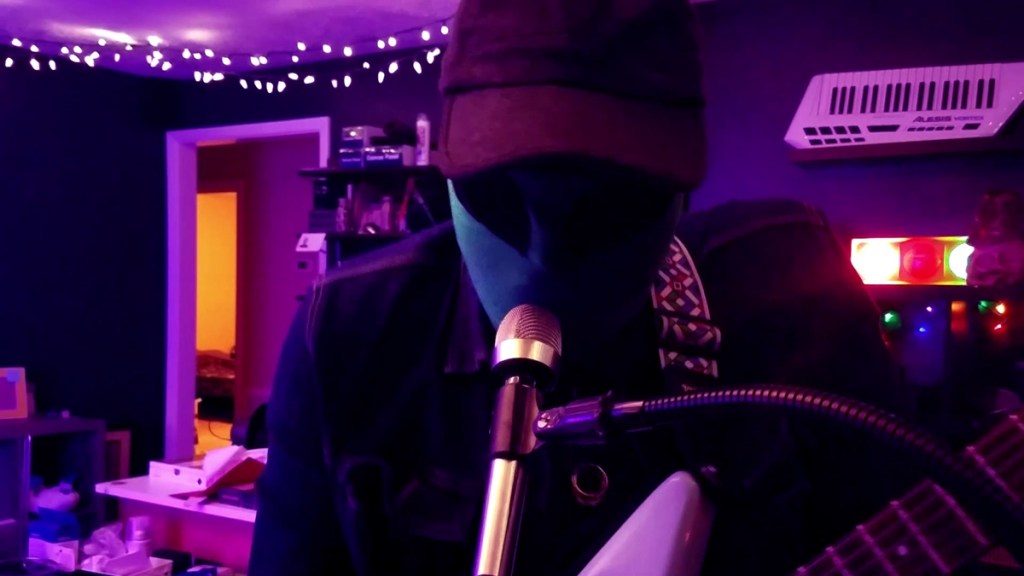

Donzii’s “Rightway Highway” is an No Wave Funk Post-Punk Anthem for Non-Conformists Everywhere

Donzii, photo courtesy the artists

Donzii is a bit of a favorite among connoisseurs of underground post-punk and its new single “Rightway Highway” with its retro style VHS glitched music video by Domingo Castillo is fine example of where the band is going with its forthcoming full-length debut (out on Grey Market Records later this year). Danny Heinze’s bent and clipped guitar lines dub style, Dennis Fuller’s minimal yet intricate and driving bass lines and of course Jenna Balfe’s nearly deadpan but theatrical and expressive vocals running through a backdrop of what looks like an amusement park in south Florida from which the trio hails. Fans of Bush Tetras will appreciate the way Donzii handles its rhythm scheme and mutant melodies as well as the poetry of the lyrics discussing a desire to escape from a wack situation where a person who wants to give back and not just take doesn’t fit in as elaborated upon and summed up with the line “if you can’t find the right way save it for another day, I’m just a runaway looking for the freeway.” It’s string of words that captures the sense that maybe until you have your plan for making your exit you can hold in your heart the sense that you are fine with being a weirdo in a place that isn’t so welcoming of them and your opportunity will come. Maybe that isn’t the actual sense of the song but music like Donzii’s resonates with that of bands like Suburban Lawns, Lithics and Ganser because it isn’t trying to fit into the confines of a narrow style and that in itself suggests it’s music for non-conformists in general with words giving comfort to their kind wherever the songs are heard. Watch the video for “Rightway Highway” on YouTube and follow Donzii at the links below.


Donzii on Facebook

Donzii on Instagram

Ellie Madeland Begins to Uncoil Memories of Childhood Emotional Trauma on “Mother Mother”

Ellie Madeland, photo by artist

“Mother Mother” was inspired by songwriter Ellie Madeland’s discovery of a collection of letters between her as a child and her mother written after her parents announced they were getting divorced. The resonating synth line that opens the track before Madeland asks “Mother, mother, where do I go?” establishes a mood of deep reflection. Gentle William’s production is reminiscent ever so slightly of Madonna’s 1986 song “Live to Tell” and its tone of resigned sorrow and loss. Madeland’s vulnerable and raw yet reflective vocal delivery helps the poetry of of lines like “black spots, regrets, I needed a friend in the end” hit harder as Madeland’s words create a powerful emotional memory of a childhood disrupted by the confusion of witnessing her parents split with seemingly not the level of emotional support she needed from someone she felt she could trust. The soundscape is gorgeous and that still doesn’t really blunt the pain Madeland evokes so well while tapping into primal memories that can linger for a lifetime but in exploring them and really feeling them and processing them creatively or hearing that ache in a song has a chance of uncoiling that knot in the psyche. Listen to “Mother Mother” on Soundcloud and follow Ellie Madeland at the links below.

Ellie Madeland on Facebook

Ellie Madeland on Twitter

Ellie Madeland on Instagram

elliemadeland.com

Ruben Pol and Matthijs Pol Have a Retro-Flavored Synth Pop Dance Club Hit About Living in Your Authentic Feelings in “Comme Ça”

Ruben Pol, photo courtesy the artist

Ruben Pol and his brother Matthijs Pol have with the single “Comme Ça” a fast-paced synth pop song reminiscent of early Depeche Mode and Re-Flex. Maybe a touch of Flock of Seagulls. The slight distortion on the main synth line and splashes of tone accented by a subtle bass line and a touch of reverb on the vocals make it sound like something from dance club circa 1984 before the music fully entered the mainstream over the following few years. Expert drum programming or sampling lend the track a liveliness that matches the emotional urgency of Pol’s vocals as he sings about not hiding from your feelings or covering them over with a pose to fit in or to conform to arbitrary standards of personal comportment and being willing to express them with a vital authenticity because it feels more right than living with a façade of cool detachment. Listen to “Comme Ça” on Spotify and follow Ruben Pol at the links below.

Ruben Pol on TikTok

Ruben Pol on Facebook

Ruben Pol on YouTube

Ruben Pol on Instagram

Alexx Artificial’s Video For Lo-Fi Hyperpop Noisegrind Single “Dorito 3D” is a Hip, Trash Culture Science Fiction Mini-Epic

Alexx Artificial, photo courtesy the artist

Alexx Artificial probably couldn’t have made the video for “Dorito 3D” in the 2000s with the same video quality and production. But the aesthetics of some of the video art of the mid-to-late 2000s is there and the song and the visual representation is ahead of the curve in tapping into that period of underground music and art. The music has distorted swells, a simple, pounding and bouncing rhythm, electronic xylophone and vocals that are both laconic with ironic distance and in the peak moments of the song distorted and delivered almost like a death metal song. But there is more than a touch of creative irony here with the main lyrics being: “I like to fill the void, I like to self-destroy, greasy powder in my veins, cheesy triumph on my brain, hooked on you 1-2-3, Dorito 3D.” We see the Doritos scattered throughout and up close being crushed by fingers and fists, animated clapping hands are punched into frame to accent the beat while Jesse St. Clair dances casually wearing mirrored sunglasses and another figure in a green, insectoid mask, presumably Alexx Artificial, playing a keyboard/synth/sampler and screaming vocals along with St. Clair. It’s a strange piece of work and somehow seems so obviously of the moment yet has the rough-edged cool of an old L.A. Vampires music video (think “Make Me Over”). Alexx Artificial cut his teeth in the Houston underground and most notably in Giant Battle Monster so maybe crossed paths with weirdos like Indian Jewelry/Studded Left, The Secret Prostitutes, Ak’chamel, The Giver of Illness, B L A C K I E and the like. But Alexx Artificial is very much its own thing in the vein of hyperpop and industrial noise made accessible. Watch the video for “Dorito 3D” on YouTube and follow Alexx Artificial at the links provided.

Alexx Artificial on TikTok

Alexx Artificial on Facebook

Alexx Artificial on Instagram

Judah Encourages Us to Look for the Treasures in Life’s Sea of Static on “Roses”

Judah’s deft wordplay on “Roses” displays a keen ear for creative rhythms and nearly granular attention to dynamics. The chill beat with the deep, evocative bass line and melancholic, resonating tones in the melody provide the perfect backdrop to a song expressing a necessary Zen-like approach to life’s struggles when you’re trying to get by and the pitfalls that try to sink you while you’re trying to make a relationship you want happen or to keep it going with someone who shares your perspective of not getting tripped up on the chaff that is just part of the deal with living in America. The line “trying to pick these roses out of all these leaves” provides the central poetic image of the song that taps into cultural references that sketch the outlines of the context for Judah’s sensitive and personally insightful verses and self-aware observations. At times his rhyming is reminiscent of something you’d hear on a Cannibal Ox song and the mood of the song overall of that time in underground hip-hop when artists embraced not just classic hip-hop beatmaking with jazz and funk samples but also crafting their own electronic music composition. Listen to “Roses” on Spotify and follow Judah to be notified when he drops his forthcoming album Judah and The Lonely Kingdom.

Grocer Celebrates a Break From the Everyday Grind on “Calling Out”

Grocer, photo courtesy the artists

Nicholas Rahn’s treatment in the video for Grocer’s song “Calling Out” presents the appropriately surrealistic mood of the song. People dressed in animal suits as a pig, a bird, a horse and perhaps a caterpillar work regular jobs as part of the usual rat race and in desperate need of some time out of that maddening and mind-dullening world as exemplified by the discordantly playful, herky jerky dynamic of the song with guitar both in staccato melody and in frantic pace with the rhythm. The vocals sound like inner dialogue diary entries sketching out the unspoken thoughts and all but shouting them like a triumph over the overwhelming mundanity of too much of everyday existence. The video ends with the members of the band sitting at a diner table being served by the caterpillar in one of the more meta music video moments in recent times and ending like we’ve just seen an outtake of an episode from Kids in the Hall, Mr. Show or Wonder Showzen with a different cast. Fans of Dehd and Lithics will probably find something endearing about the song and what Grocer is doing in general. Watch the video for “Calling Out” on YouTube, follow Grocer at the links provided and check out the rest of the group’s new album Numbers Game which released on May 6.

Grocer on Facebook

Grocer on Twitter

Grocer on Instagram

Magali, A Cult Takes Us On an Android’s Pilgrimage to Reconnect With Family Memories on “Auntie Christ”

Magali, A Cult pushes us into an alternate dimension in the future in the song “Auntie Christ.” The frenetic beats and dynamics is like a breakcore mashup of Laurie Anderson, the Butthole Surfers and Atari Teenage Riot. The narrative is from the perspective of a woman who goes on an odd trip with a friend to a place she doesn’t know but where the friend has family memories of traveling to that place. But they meet a man who doesn’t seem to know what’s going on. All of this is told in a nearly deadpan voice with a twinge of the whimsical not unlike the aforementioned Anderson in her United States Live performance recordings while a propulsive and fragmented beat carries on at a frenzied yet precise clip of tones and percussive sounds. When the voice of the friend enters the song it’s a cartoonishly robotic tenor and barely decipherable except you can sometimes hear the wonderful play on words that is the title of the song “Auntie Christ.” It makes one wonder if the friend is actually an android or if the narrator might be? Does it all take place in a strange simulation? Whatever the actual intention the imagery created in the narrative is strangely vivid and dreamlike and now brings to mind the title of that Philip K. Dick novel about androids dreaming of electric sheep except do androids dream of past family associations and go on a pilgrimage to reconnect with those memories the way K did in Blade Runner: 2049 except in this somewhat less bleak fashion? The song offers no pat answers but does provide a wonderfully strange story that has the haunted and otherworldly quality one finds in the more unusual works of Shirley Jackson. Listen to “Auntie Christ” on Spotify and follow Magali, A Cult at the links below.

Magali, A Cult on Instagram

Dax’s Video For “Dear Alcohol” is a Vulnerable and Affecting Portrait of Struggling With Addiction

You can always depend on rapper/producer Dax for a compelling video for his songs and an interesting take on the subject even when the main character is his version of the Grinch. But “Dear Alcohol” tackles a subject much more serious in a direct way. The video embodies how addiction can keep you trapped in a self-reinforcing cycle of ritualistic behavior that at one time seemed like something fun or at least which put a salve on other psychological issues borne out of challenging times in life that too often last longer than we want to admit or which aren’t going away any time soon even if our coping mechanism of choice is self-destructive habits. But Dax’s approach to the issue is one of compassion and empathy from the perspective of someone who has been there. The chorus of “I got wasted because I didn’t want to deal with myself tonight, my thoughts get drowned until I feel alright, I keep drinking until I’m someone I don’t recognize, I got wasted.” The video shows what it’s like to be trapped there in vivid detail and what it must be like for the people who love us to be looking in and not always able to help us when we’re not able or willing to help ourselves and the frustration and seeming impossibility of exiting that cycle until something breaks through that bubble from within or without that makes moving beyond that cycle possible. The strings and introspective tones give the song the level of vulnerability and openness that are probably required to be able to overcome addiction to something like alcohol so ingrained in our culture and socialized in so many social situations that in some measure can be essentially harmless. But when you live in a society that encourages and celebrates overindulging while putting a lot of pressure on everyone to work hard all the time while grinding you down if you’re not always “winning” it can be one of the one of the toughest things to give up using to excess because it can impose oblivion on you with little effort. Watch the video for “Dear Alcohol” on YouTube and follow Dax at the links below.

Dax on TikTok

Dax on Instagram

Empty Cans In Outer Space Soundtrack the Wonder and Perils of Early Space Travel on “Zabble Dub”

Empty Cans In Outer Space’s video for “Zabble Dub” is paired well with the cosmic, IDM dub of the song in its depiction in black and white what looks like training for a space program. The steady electronic percussion makes the brighter tones seem to shine brighter and the warping drones and near white noise shimmering sound drift by and flow freely with a hint of the melancholic and mysterious. When the rocket ship takes off from the launchpad the sounds go more direct. The moment where we watch someone watching the rocket launch is wonderfully meta and not long after we see the first hint of color outside the black and white with the images going red and then the images of astronauts dead with only their skulls visible through the helmets as they sit like Major Tom but in geosynchronous orbit beyond the practical effort to recover, casualties of humankind’s tentative forays beyond the earth, victims of unfortunate circumstances. There was a hint of a tragic and mournful undertone to the song and by the end of the video we find out one possible explanation and yet there is a stark yet richly realized beauty to every aspect of the video and of the music itself. Watch the video for yourself on YouTube and follow Empty Cans In Outer Space on Spotify.

Gut Czech Soothes Lingering Feelings of Heartbreak and Regret on the Slowcore/Dream Pop “Mental Inventory”

Gut Czech’s spare guitar figure at the beginning of “Mental Inventory” is a delicate invitation into a song that evolves with an elegantly organic and measured pace. The whole time the vocals and the instrumentation are gently hypnotic and though addressing issues of mental health its dynamic is one of languid drift the way you’d hope to have in your head space when trying to sort out your deepest feelings and the tangled roots of the pains and angst that linger long past the point of heartbreaking experiences and the inevitably overwhelming feelings of regret that can sink your mood if you let them. Josh Czech’s falsetto jibes well with the swell of atmospheres, the adding and subtracting of layers are dramatic without being abrupt leaving moments of tonal saturation at the perfect times to accent contemplative passages and spaciousness when you’re ready for the rush of feelings to subside for just a little while. The melodic strategy is unconventional and yet it sticks with you like a fond memory not unlike what Letting Up Despite Great Faults did on “She Spins” but with a different style of music. There is keen ear for nuances of songwriting and a sense of the ebb and flow of the psyche and pairing them together in evidence in this song. Listen to “Mental Inventory” on Spotify and follow Gut Czech on Instagram.