Borrowing elements of Chuck Berry’s 1964 hit “No Particular Place to Go” Hoagie Reignz finds a way to suffuse hip-hop bravado with rockabilly with his song “Ridin’.” In the video our hero further mixes imagery with a leather jacket with spikes and his ride looks to be a white, 1979 Chrysler New Yorker Fifth Avenue Edition. His lady friend is dressed in a red and white polka dot dress and also looks like she stepped out of the late 50s. But the lyrics are like a transposition of today’s lingo to the Chuck Berry style with a few words swapped in so it isn’t wack. And yet while there is plenty of humor underpinning the song it isn’t simply a gimmick. Hoagie Reignz makes this work and his genre bending is inspired and creative with an astute blend of visual signifiers in the video as well. Who doesn’t love a little sly subversion? Watch for yourself on YouTube and follow Hoagie Reignz at the links below.
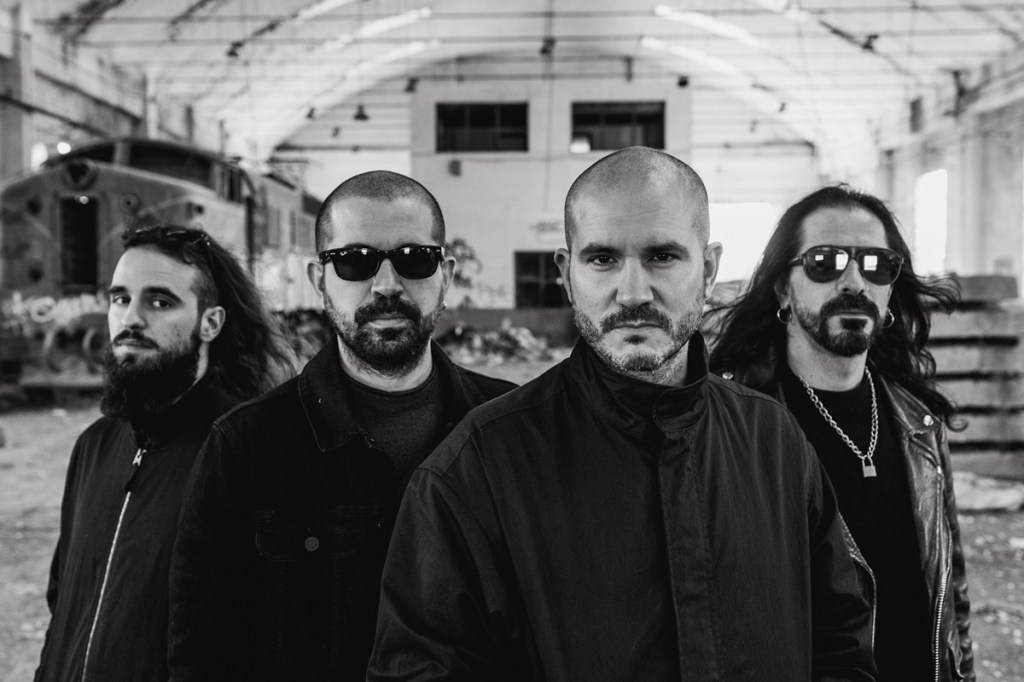
The granular distortion on the cycling electronics at the beginning and throughout Spanish post-punk band Dea Nammu’s “I Can’t Breathe” really enhances a pervading sense of dread and menace. With the measured electronic percussion and minimal guitar work and almost chanted lyrics the song is reminiscent of something Nitzer Ebb might do if it emerged today and came up through the more industrial end of darkwave. But instead of that urgent pacing, this song traces a slow and tortured path as suggested by its lyrics that seem to describe life under an authoritarian order. But it’s more complicated than that though the lyrics are very repetitive and simple. How many people being oppressed directly by state sanctioned violence have declared they can’t breathe? A simple right essential to survival and one that is threatened by air pollution. But that statement in this song and the chorus of “breathe and die” with breath as a metaphor for freedom and life works as the shouted words in Nitzer Ebb’s “Join in the Chant” where the words take on a mythological and symbolic rather than a face value significance and as such the song feels like something much bigger than its individual spare elements suggest separately. Listen to “I Can’t Breathe” on YouTube and follow the Madrid-based Dea Nammu at the links provided.
You can all but see the end credits of a moody action thriller scroll with overcast sky and gentle rainfall from the very beginning of SV’s single “How Did It Feel” especially once Ariana Celaeno’s breathy vocals drift into the song to linger such is immediate cinematic quality of the song. Celaeno’s voice is like a figure we see wandering off into the foggy distance, dropping lines like “tell me how did it feel/crushing my heart into pieces without any fear” and outlining the various hurts she’s endured from someone that supposedly loved her. Not in an accusatory way, nothing that aggressive, but almost matter of factly and in that way more affecting. Perhaps one could think of it as a summary of the movie that had just happened, though never was, and reflecting on the experience with a mixture of regret and resignation. A lonely piano figure seems to trace this path and synth drones carry an ambient melody in the background, all accented by precise, downtempo percussion lending it lush trip-hop flavor an enigmatic quality that tops off a song that ends on a more satisfying note than many movies these days. Listen to “How Did It Feel” on YouTube and follow SV at the links below.
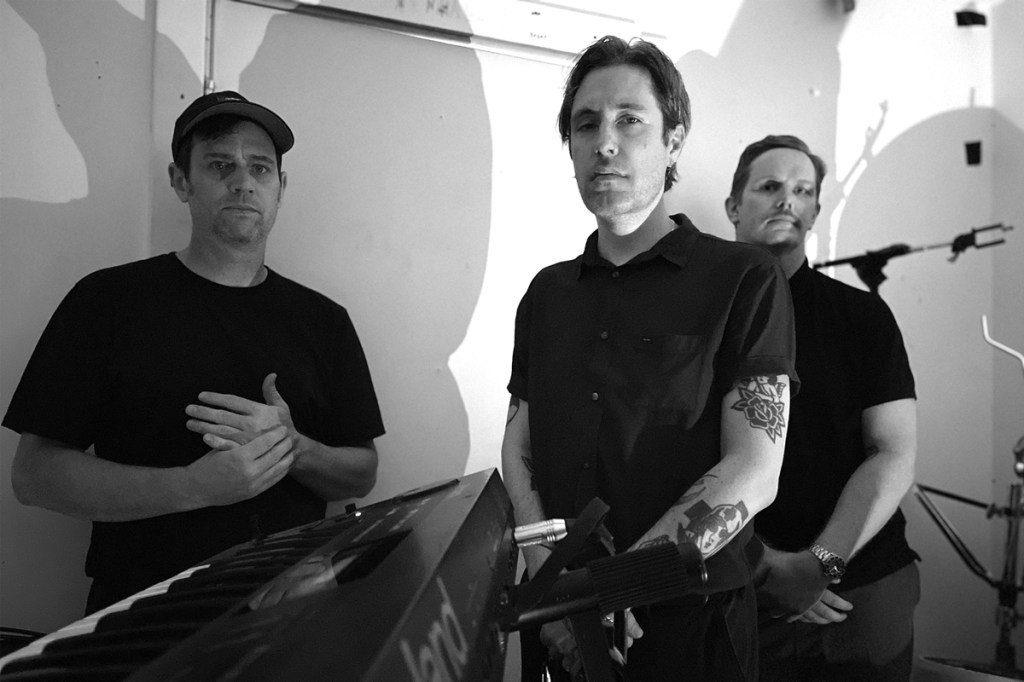
“Without Reserve,” the latest single from Sex Park’s forthcoming full length album out on Dowd Records later in 2022, showcases the trio’s elegant songwriting in the realm of post-punk. The group’s debut LP Atrium (on Denver-based post-punk band Voight’s Vacant Decade imprint 2018) revealed an ability to craft ebullient darkwave tracks with urgent guitar hooks and early No Age-esque lo-fi aesthetics. The vocal accents and layered rhythms and melodies lend the song an emotional nuance worthy of its lyrics sketching vividly a headspace of someone doing what he can to cope with the anxieties and unresolved emotional traumas that can build like a persistent specter always on the edge of consciousness. Yet the soothing sounds and energy of the song which has a flavor reminiscent of Technique period New Order and wouldn’t sound out of place on a a Future Islands record minus the guitar. As for the latter, the delicate arpeggios hang perfectly off the synth lines tracing the paces like something you might hear if Depeche Mode had guitar on Speak & Spell in that it would never be the focus of the song, just another element to create a deep mood that itself is the goal of the song as a vehicle for expressing feelings and ideas that can be heady but delivers well with a mix of minimalist elements. At a time when many modern post-punk and darkwave bands have settled into stylistic predictability, Sex Park gives us a song that reconciles its influences with a modern sensibility apt for conveying a complexity of thinking and feeling in a way accessible without downplaying struggle. Listen to “Without Reserve” on Spotify and follow Sex Park from Portland, Oregon at the links provided.
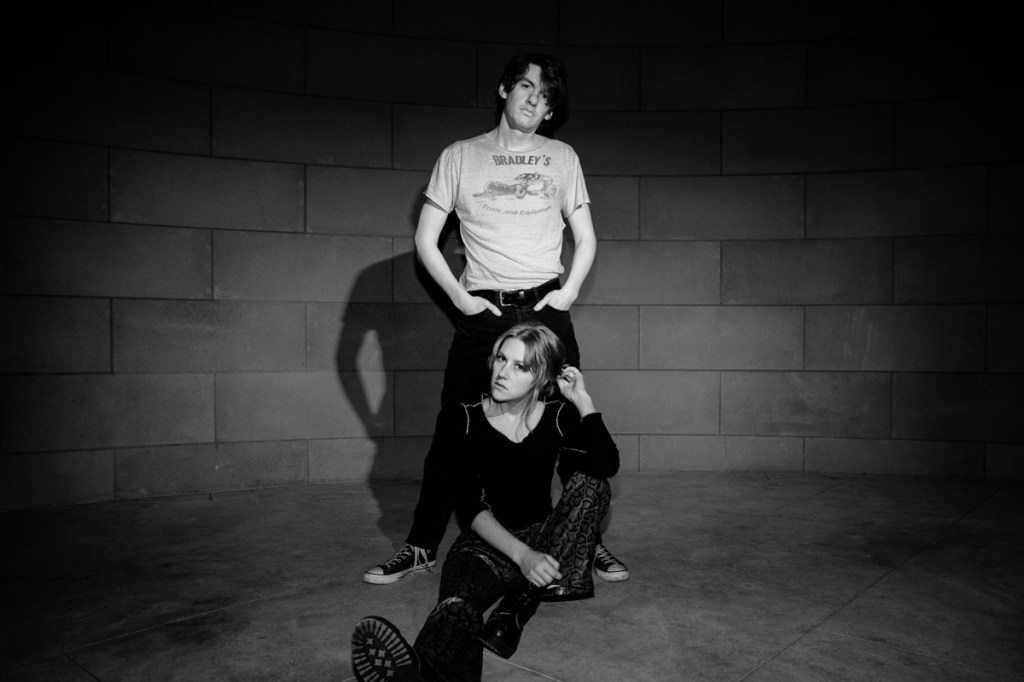
The images of the band at play and frolicking in the sunshine and the upbeat hooks of Laveda in the music video for “Surprise” serve as a great contrast to deep spirit of melacholy of the lyrics. Even the imagery of the video shows a place where not all the grass is green, where the playground equipment looks well worn and the buildings show signs of the kind of urban decay that used to be a major feature of all American cities of size and is starting to again if you’re not too dazzled by the veneer of “development.” The song’s lyrics really do get to a social phenomenon that has been at play in the USA going back thirty years when generations of students and young people in general are told to manage their expectations in the richest nation on earth and to just accept that all the lies we’re told growing up about working hard and getting educated and that anyone can be anything they want but when you get there it’s more challenging than you’ve been led to believe. “Thought I’d give away my youth/To something better used/And I need it babe/It’s just part of the day” really articulates that feeling of being beat before you’ve had a chance. “I don’t know/never talked much/Sometimes feelings not enough/There’s a deeper pain/It’s empty” later in the song maybe isn’t about how if you keep up your spirits that you’ll get through the tough times but there’s nothing on the other end of those tough times but more of the same. And “Get up/I know we just made it home/I’m not surprised that I’m not sober/Being alive is just getting old/I’m not surprised that I’m not sober” has to be one of the more poignant lyrics that addresses the fatigue, the overwork, the sudden realization that hustling may not be a temporary situation for your generation and that self-medication is one of the only ways to cope when all other paths to changing things seem to be closed to you. And yet in the irresistible haze of Laveda’s guitar work and propulsive rhythm there is a sense of hope and perseverance against the tide of history because what else are you going to do but at least do some of the things you love and not give your heart and soul to a system that will crush everyone under to perpetuate its destructive funnel of all the goods of society to fewer and fewer hands. Watch the video for “Surprise” on YouTube and follow Albany, NY’s Laveda at the links below. The band is currently on tour with a stop at Denver at Lost Lake Lounge on September 25, 2022.
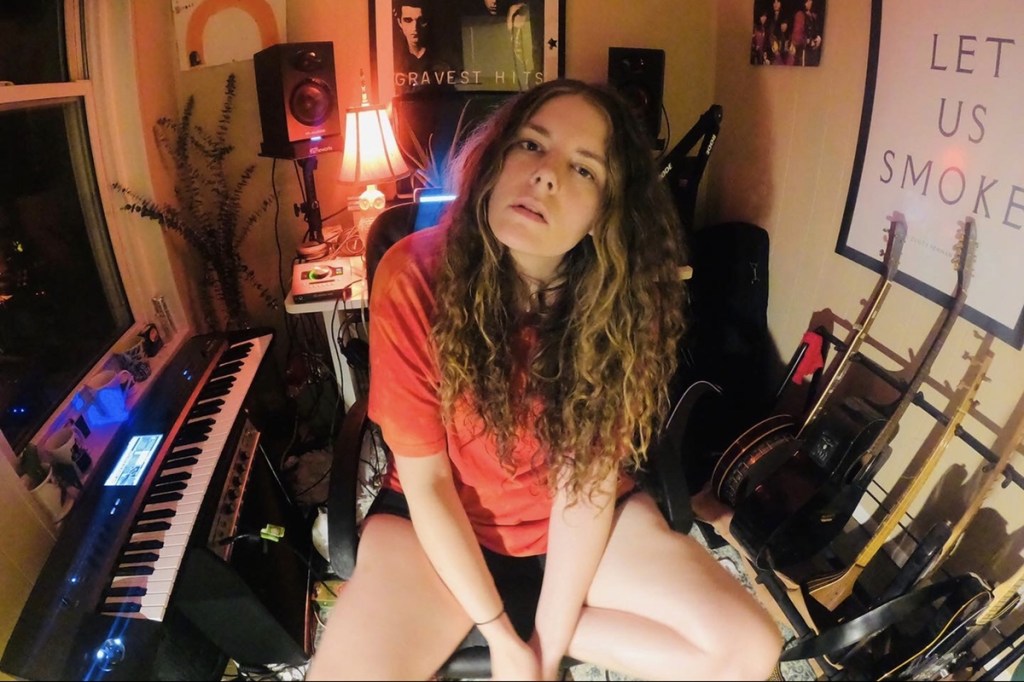
“Mist of the Teal Mara” begins with The Lunar Year sounding like a lost track by Cocteau Twins or Drab Majesty in the unconventional melodic progression but then eases quickly into more psychedelic territory as the song progresses to the halfway point. Languidly wailing guitar reminiscent of a gentler Bardo Pond get lost in the mist suggested by the title intertwine with the contemplative flecks of melodic drift that course through the song sits between vocal passages that seem to wander amid dream imagery and logic. The lyrics are a bit mysterious yet point to a yearning for focus and direction but only able to discern what that might be in symbolic language. Lines like “cat dream killed by sunshine” and at the end with “going to bed to find the thing I killed” appear to be clues to how dreams can offer answers to elusive aspects of our psychology and when interrupted we can feel cast adrift in our own minds and in perhaps returning we can rekindle that spark of psychic energy that reconciles the inner life with its disparate elements again. But even despite these attempts to make sense of the song’s resonant, impressionistic imagery it works as a condensed work of expansive, vital dream pop that feels like you’ve been on a real journey by the end of its all too brief one minute, fifty five seconds. Listen to “Mist of the Teal Mara” on Spotify and follow The Lunar Year on Soundcloud.
You can hear distant voices through the white noise and hazy melodic tones before the vocals come in like someone contemplating imponderables during those late night hours trying to follow a path from tiredness to the spiritual tranquility of dreams. The percussive bell tone loop sounds like the turning of the internal clock while the hours stretch on when you feel maybe too tired to sleep which sounds counterintuitive. But this collaboration happened between producer and multi-instrumentalist BlauDisS based in Washington DC and art pop/multimedia duo &Tilly based in Slovakia with the former experiencing perpetual sleep deficits due to being a new parent and the latter perhaps due to insomnia. And, honestly, anyone that suffers from health issues that make falling asleep difficult or a terrifying possibility before the body and the brain are in sync to make that happen and you end up being up later than you would like and during that time one’s brain and perceptions run in unusual ways, like an altered state of consciousness. This song with the ethereally melodic vocals and layered loops of rhythmic sound and drones not only parallels that unreality but serves as a musical soothing of the mind making an easing of the transition from extended consciousness into sleep seem possible rather than an ordeal as though the collaborators dipped deep into their experience with the phenomenon to craft the kind of music you’d want to hear to put your body and mind at rest at the same time. The music video (below in both forms) is like a hypnogogic fairy tale offering vivid images that are reminiscent of the kinds of situations and scenes you’d see in a dream like the faces of strangers but having an easy communion with them even in the most unusual of situations that would never likely happen in real life like wearing a diving mask to walk in the park. It’s difficult to compare this track to much else as a touch stone except for maybe the early work of High Places when the compositions were more intuitive and organic and seemingly sprung from the stuff of the subconscious mind, suffused with warm and gentle melodies and informal rhythms. Watch both videos for “3 AM Lullaby” on YouTube and connect with &Tilly at the links below.
Foyer Red’s ebullient pop single “Pickles” contains a richness of ideas and concepts both thematic and musical if you take the time to give its nearly four minutes a listen. It starts off with a spare but intricate twin guitar line and accented bass line before the vocals come in with lines seemingly sketching thoughts and observations on modern living and its attendant anxieties. But also imagery suggesting how in clinging to certain relationships and associations from those romantic, social, civic, artistic can hold us back from growth until we’re willing to let it go. When the two vocals trade off lines we are treated to a literary examination of these social phenomena as we feel them and not in some theoretical or ideological way but in how they impact us daily though at the time we can ignore how things are decaying and failing to serve our life or the function these things had for us or for anyone. The lines “torpid/standstill/what grew/shriveled/pillars of sand/are no match for tempered winds/facing the north side/you don’t get enough light” and then “huffing/slow burn/building/friction/save what/you can/watch the walls as they give” could really refer to anything but is so poignant in capturing what it’s like to be around when you’re the lifer in any situation (job, music scene, band, DIY space, school, relationship etc.) and maybe you should salvage what you care about and move on. You don’t need to carry the pressure of preserving some ideal that isn’t there anymore. It’s not a song about giving up or being cynical about what matters, it seems to be about self-care and with the aim of actually getting on with what’s important once again and maybe building something somewhere else with other people or at least not clinging past the time when all the juice and life is gone. Musically it has resonance with classic C86 bands but more contemporaneously with groups like Palm, LVL UP and Lithics with a bit of math rock and twee and the clear, yet unpretentious, artistic ambition of not just the lyrics but the dazzling array of sounds and song dynamics that are irresistible from beginning to end. Listen to “Pickles” on YouTube and follow Foyer Red at the links below.
Neil Foster establishes a sense of place at the beginning of “Summer Falls” with the sound of wind and birds in the placid moments of early morning. The way the track evolves it sounds like the composer is using piano, strings, synths and electronic sounds to track the course of the sun as it arcs slowly and peacefully to midday. The swell of sounds conveys a sense of witnessing the subtle but unignorable power of the sun and in moments when the surge of sounds subsides for it’s as though we’re getting a glimpse through Foster’s eyes of the surrounding landscape lit up by sunlight and the sparkle of the light on water going over a nearby falls to a lower part of the river rather than a steep, intense falls like Angel or Niagara. No, the kind many of us see regularly who have the privilege to live near streams and rivers that flow through changing elevations. Foster captures the various moods and textures of observing this everyday experience and the tranquil and inherent beauty to dynamics and processes that have gone on before humanity existed and will likely continue after we are gone but being witness to this simple wonder can strike one as significant in itself knowing that we can appreciate things that go on whether we’re there to bear witness or not. Listen to “Summer Falls” on Spotify and follow Neil Foster at the links provided below.
“Colder to the Touch” finds Ryder Havdale charting complex emotional territory in song that swims in ghostly urgency with faint tonal resonances with U2’s “New Year’s Day” but clearly more stylistically in tune with early darkwave. What makes the song stand out aside from its layered atmospherics and expert arrangement thereof is the vocal duet between Havdale and Teagan Johnston. It gives more weight behind words that seem to be about the phenomenon of people waiting around for someone to love them who probably never will but because of the feeling of attachment to that person. What makes that even more complicated is those linger attachments after you get your heart broken by someone who shouldn’t hold real estate in your psyche yet those habits of feeling linger. And it’s easy to forget that you can move on. The chorus of “You can love somebody else/you can love somebody now/why wait for love to call” is a reminder that even “after every heartbreak you’re colder to the touch” that you don’t have to get stuck and that doing so is perhaps understandable but it’s also a choice and you can choose to open yourself up to new experiences and relationships and doing so doesn’t mean you’re betraying your own emotions or disregarding or dishonoring what you had or thought you had, you’re choosing to live and not be entrapped by a way of being that isn’t enriching your life. Listen to “Colder to the Touch” on Spotify and follow Ryder Havdale at the links below.







You must be logged in to post a comment.