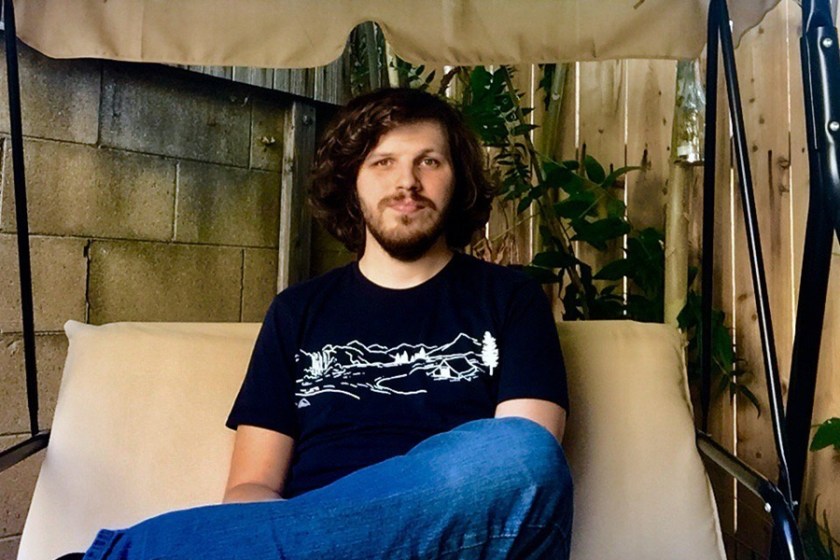
Sam Wardlaw Maps Out the Cycle of Anxiety and Depression in Vivid and Emotionally Precise Detail on “I Try To Look Like You”

SamWardlaw1_crop
Sam Wardlaw, photo courtesy the artist

Saw Wardlaw’s “I Try To Look Like You” unfolds like he’s mapping out the progress of the experience of depression and social anxiety. From the seductive power of the messages swirling inside your head to self-isolation to shield yourself from the influence of insipid conversations. To the hope of having connected with someone and the frustration of not quite being able to be as consistent as you’d like while your brain is wreaking havoc on your ability to function in ways that would make it so much easier to get things done or even be happy. The latter, something so simple, yet so seemingly out of reach if not impossible when you’re in the throes of mental illness. The song begins simply and progresses into great volume giving the impression of complexity when really it’s just more electric and louder. Which is a perfect expression of and a metaphor for the way the mind amplifies emotions to the point where the stimulation is the same but the reception and processing are what causes the problems. That is what it feels like. It feels gentle at first and it creeps up on you until it is a roaring gulf of feeling that is difficult to unravel or swim out of. That Wardlaw is able to externalize this cycle into a song without really overthinking it with such emotional precision is remarkable and while it has all the hallmarks of a solid pop song it is one with depth of content. Watch the lyric video on YouTube.


Lot Lizard’s “Ice” From Its Self-Titled Debut is the Sound of Internal Resistance to a No Future Present

LotLizard1_sm
Lot Lizard, photo courtesy the artists

Lot Lizard from Sioux Falls, South Dakota recently released its self-titled full length album on Different Folk Records. The single “Ice” is an example of how the post-punk quartet isn’t taking its cues from the most predictable influences. It’s noisy guitar work, disaffected and loping vocal style and urgent rhythms have as much in common with Iceage and Protomartyr as Scratch Acid and bands from the Amphetamine Reptile imprint. The song’s cutting, screaming guitar line is reminiscent of Rikk Agnew’s work on Only Theatre of Pain the way it spirals and incandesces. The vocals border on snotty but come off more resigned yet desperate. Maybe it’s because of the relative geographic isolation and the resultant different set of immediate cultural and musical influences on hand but Lot Lizard while bearing the hallmarks of classic, arty post-punk, doesn’t sound like it’s trying to mimic something from the 80s so much as serving as an expression of the internal resistance to the crushing social and political pressures of a culture that seems so dead set on having no future. Listen to “Ice” on Spotify and follow Lot Lizard at the links provided.

open.spotify.com/album/0GHYXpN7RQkMrkI02JY5yd?highlight=spotify:track:7LIE2Ls88YgaAE5XnKf8qt

facebook.com/Lotlizardd
lotlizardz.bandcamp.com
instagram.com/lotlizard_sf
differentfolkrecords.com

Valley of the Crow’s Effervescent Yet Reflective “Smile” is the Sound of Nostalgia for the Good Times Ahead

ValleyOfTheCrow_Smile_cover_crop
Valley of the Crow “Smile” cover (cropped)

The name Valley of the Crow gives the impression that maybe you’re in for some kind of dark folk or Americana. But it’s a trio of artists from the realm of electronic music in the UK comprised of vocalist Charlotte Little, DJ Ben Potter and producer Adam Williams. The group’s single “Smile” and its attendant music video is a lush and upbeat number that looks like something one might have seen on children’s television in the late 70s or early 80s. That aesthetic matches the music to some degree as its phased arpeggios and smooth, ethereal vocals are reminiscent of the way Broadcast, Boards of Canada and Black Moth Super Rainbow tap into earlier musical ideas and aesthetics to rearrange and recontextualize to create transporting music in a unique style that seems unmoored from prevailing trends of the day. The effervescent quality of the melody and the tonal accents suggests a carefree yet reflective tone on a day of rest when you can look back on some good times recently had that you are looking forward to again soon. Watch the video and listen to the song on YouTube and follow Valley of the Crow at the links below.

valleyofthecrow.co.uk
soundcloud.com/valleyofthecrowband
twitter.com/votc_band
instagram.com/valleyofthecrow

Yasuyuki Uesugi’s Analog Synthesizer-generated “Dusty Cellar” is the Sonic Equivalent of a Creepy Urban Exploration Video

YasuyukiUesugi_DustyCellar_cover1_crop
Yasuyuki Uesugi “Dusty Cellar” cover (cropped)

“Dusty Cellar,” the song by Yasuyuki Uesugi, sounds like exploration of an old building using a drone with a camera. Echoing blips like sonar as the drone works its way through the room, the green light of a night vision camera revealing eddying motes and the cultural detritus, old magazines, old clothes that may never again see the light of day, boxes of indeterminate contents. The way white noise and sound generated by the artist’s handmade synthesizers, courtesy JMT SYNTH, there is a mysterious psychological headspace conveyed like House of Leaves in miniature where the journey seems endless but there is a subtly tantalizing quality that draws you deeper in and in the case of this song, it keeps you listening to the end waiting for the dramatic conclusion that may never come. In effect it is like the Zen proverb, “The journey is the reward.” With this song that reward is getting to experience some moments of dark, urban mystery by going along for the ride of the song as it outros to a washout of grey noise. Listen to “Dusty Cellar” on Soundcloud and follow Yasuyuki Uesugi at the links provided.

soundcloud.com/yasuyuki_uesugi
twitter.com/yasuyuki_uesugi

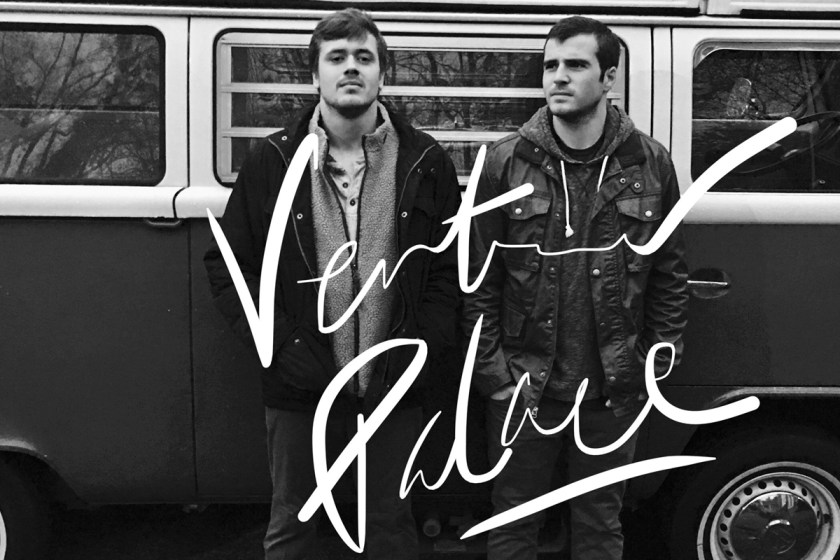
Venture Palace’s “Salt” is a Chill, Verbally Creative Hip-Hop Funk Song With a Dementedly Humorous Music Video

VenturePalace1_sm_crop
Venture Palace, photo courtesy the artists

Recently, Nashville-based hip-hop crew Venture Palace treat us to an odd and irony-infused video for their “Salt” single. Plenty of bands in the late 90s through now have borrowed a bit from Sublime to wack effect. Venture Palace, though, is so different that they’ve made the kind of laid back presentation of hard reality that Sublime did so well seem fresh and interesting. The guitar arpeggio loop and dub/funk bass line and shuffling beat with a video in which mannequins stand in as victims of street violence and exploitation interspersed with images of the band playing and a backyard barbecue in summer is certainly surreal. The tone is playful but it works in the context of maybe some social commentary on how society can normalize violence if it happens to those we don’t see as human or who we perceive to exist in the abstract. Minus the video, though, the song is a fascinating mixture of styles that recall mid-to-late 90s alternative pop bands like Len and Primitive Radio Gods and their own perhaps not fully acknowledged mix of hip-hop and alternative rock at a time when rap rock meant something more regressive and aggressive. “Salt” is chill and fun with creative wordplay. Look for a full length album in early 2020. Listen to “Salt” on Spotify, watch the video on YouTube and follow Venture Palace at their website linked below.

venturepalacemusic.com

Mielo’s “Lonely Game (featuring Dafna)” is a Cinematic Pop Song About the Woes of an Inconstant Lover

Mielo_LonelyGame_cover1_crop
Mielo “Lonely Game (featuring Dafna” cover (cropped)

Brett Stogsdill aka Mielo made a name for himself with his breakout single “Surreal” (featured in the Netlix series Atypical). With “Lonely Game” featuring vocalist Dafna, Stogsdill demonstrates a mastery of production outside the realm of electronic dance music. The song itself is a lush, dynamic electronic pop song with Dafna’s versatile vocals tell the story of loneliness in a relationship with someone who is a little flighty or not present, physically or emotionally and the ups and downs of all of that before the decision to end the partnership is made. What makes Stogsdill’s production stand out is the use of space and layers of sound in perfect balance. The elements support the emotional impact of the song and the songwriting. The bass is robust but not overwhelming, the main synth melody is vibrant but not omnipresent and Dafna’s vocals sit in the mix in a way that has the effect of a well set scene in a movie where the characters are in the foreground and important but in which the other elements provide the context in which the story unfolds. Listen to “Lonely Game” on Soundcloud and follow Mielo at the links provided.

soundcloud.com/mielomusic
twitter.com/mielomusic
facebook.com/mielomusic
instagram.com/mielomusic

DOOUX’s Darkly Enigmatic Music Video For “Gri45to” Transcends Barriers of Language and Words in Expressing Feelings Directly

DOOUX1_sm
DOOUX, photo courtesy the artists

In the video for its new single “Gri45to,” Barcelona-based duo DOOUX appear to have filmed from some night club set in the world of Beyond the Black Rainbow or the home planet of Scarlett Johansson’s character from Under the Skin. Disorienting darkness, cool colors and shifting lights with figures disembodied from distinct context as though avatars of pure emotions generating the distorted, shimmery melodies and brooding atmospheres. But there’s something immediate about the two vocals together and the way DOOUX arrange the rhythms in the beat and with the arpeggios. Even though the song is about the inadequacy of language to fully convey or discuss emotions it manages to express how those feelings are recognizable and expressible through the medium of music when combined with voices capable of communicating feelings directly. Which is why even if you don’t speak Spanish, this Spanish language song is still quite effective. Watch the video on YouTube and follow DOOUX at the links provided.

dooux.bandcamp.com/releases
facebook.com/d00ux
instagram.com/d00ux

“Rene” by Gastel Conjures Visions of a Robotic Dance Contest to Determine the Course of the Cybernetic Future


“Rene” begins like the intro them to

Gastel1_lg
Gastel, image courtesy the artist

gone sinister. The single by Gastel goes on to a hard driving dance rhythm like a synthesis of The Prodigy at their most dance abstract techno and modern EDM. But instead of a bass drop, Gastel drops out into a distorted white noise haze before dropping back in with a beat of swarming tones and that hard arpeggiation that borders on synthwave style except its dynamics are more supple and the sounds more distorted and jagged. The song’s cybernetic pulse and sense of menace makes it sound like the theme music to a robotic dance competition undertaken to determine which iteration of artificial beings will triumph into the next generation of existence. Listen to “Rene” on Soundcloud.

Moony Matelot’s “In Lieu of Flowers” is like a Lo-Fi, 8-Bit Switched On Style Bach Fugue

MoonyMatelot1_lg
Moony Matelot, image courtesy the artist

When Wendy Carlos released Switched On Bach in 1968 it was a landmark of electronic music using then very new synthesizer technology to perform classical music. Moony Matelot’s “In Lieu Of Flowers” is in a similar spirit but adding a drum machine and keeping the melody even simpler. The effect is not unlike some of the late 70s “library music” that would have inspired Boards of Canada and Black Moth Super Rainbow. It has that alien and out of time quality with a sound and an aesthetic that doesn’t suggest a specific musical movement but suggests a kind of hazy quality, of visuals, of memory, like something Errol Morris might use in a whimsical moment in one of his later films. It has the structural and tonal architecture reminiscent of one of Bach’s fugues but more lo-fi and informed by the aesthetics of 8-bit composition. Listen to “In Lieu Of Flowers” on Soundcloud.

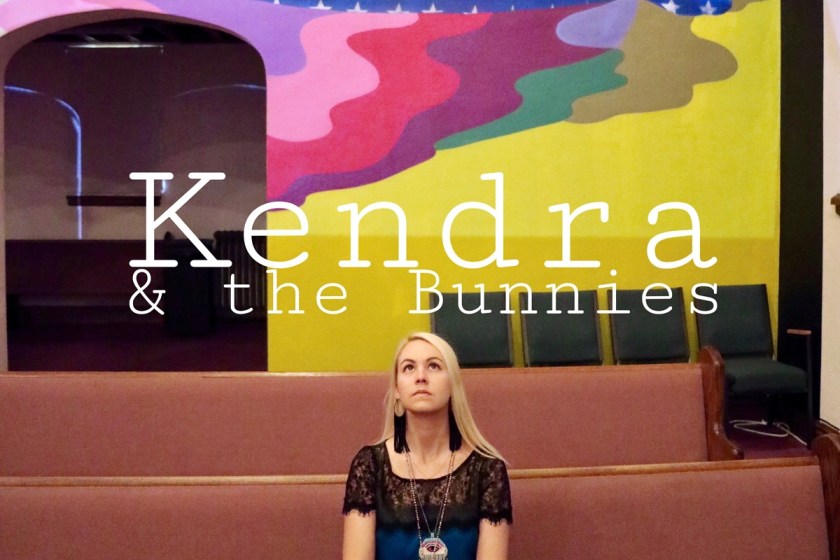
“True Blue” is Kendra & The Bunnies’ Folk Inflected Tribute to the Cultivation of Authenticity During Kendra’s Time Playing Denver’s Small Stages

KendraAndTheBunnies2_crop
Kendra & the Bunnies, photo courtesy the artist

“True Blue” was written about Kendra Muecke’s time spent in Denver on her journey of self-discovery. And appropriately enough the song’s unusual structure, more in line with spontaneous performance poetry than any standard songwriting format. Like she spent more than a little time on the informal Siege Perilous of various of Denver’s open stages performing alongside musicians putting forth the usual sort of open mic music and the Denver weirdos who don’t want to bother with getting shows the typical routes and performers whose art doesn’t fit in with any subscene and taking away some of that sense of freedom of creative expression unburdened by how it’s to be marketed. Musically it’s as though Kendra & the Bunnies was plucked out of late 70s Venice Beach after spending some years in post-Beat Denver and San Francisco with the realization that poetry and music and theater come from a common root in human culture and that all of it could be combined into a unified aesthetic driven by individual vision. “True Blue” could have come out of folk rock Southern California in the early 70s, could have come out of the burgeoning folk scene in Boulder and Denver during the same timeframe vibing with Anne Waldman’s perfrmance art songs at Naropa, could come from a standout performance at a coffee shop where many fledgling musicians are still trying to be Jack Johnson or Tracy Chapman. “True Blue” draws you in because the it seems so off the cuff yet is clearly refined and the story it tells is one that is frank, vulnerable and open with dynamics that come off like natural pauses in a friend’s telling you what she’s been up to since you last saw each other and relating some poetic truths about the essence of a town you may call home or one you’ve never been but can learn about through the lens of her interpretation as forged in the process of risking judgment on her creative work on the small stage where authenticity is respected and embraced and inauthenticity, at least on that small scale format, is revealed regardless of the intention of the performer. Listen to “True Blue” on Soundcloud and follow Kendra & the Bunnies at the links below.

kendraelisabethmuecke.com
soundcloud.com/kenbunny
instagram.com/kenbunny