“19 August 2019” From Cat Tyson Hughes’Daily Improvisations Project Evokes a Sense of Melancholy and Mystery

CatTysonHughes1_crop
Cat Tyson Hughes, photo courtesy the artist

Cat Tyson Hughes has been engaged in an Instagram-based project called Daily Improvisations (cleverly adapting the title from the concept of “daily affirmations”). It involves improvisational music created with field recordings, vocal loops and electronic sounds that are informed by the serendipity of daily encounters and composing those bits of inspiration in the form of a type of sound collage. Beginning on July 29, Cat has presented pieces significantly different from one another but unified by her sound palette proving that you can create broadly and with great diversity within the relative limitations of your tools as they inspire creative uses of what might normally be familiar elements. Each piece invites us into a unique iteration of everyday experience with tone, texture and informal yet organic rhythm. Each is short and economical in conjuring the essence of a moment or of the day. In particular, the piece titled “19 August 2019” employs a repeating synth figure and ghostly vocals for a song reminiscent of The Knife circa Silent Shout with its evocation of melancholic alienation. It also brings to mind the mysterious quality of the first half of Aphex Twin’s Ambient Works Vol. II the way it uses beatless repetition to establish a sense of psychological intimacy. Cat Tyson Hughes will release a full length album called Gentle Encounters with Things on October 31 so maybe these daily creative sketches and explorations will inform the fully developed work or give us a taste of a different side of the artist’s songwriting. But what has come forth so far is a fascinating string of sonic snapshots delivered with an admirable level of discipline and engaged imagination. Listen to “19 August 2019” below and follow Cat Tyson Hughes at the links provided. On her Soundcloud account you can give the other completed items in the series a listen. Not a huge commitment and rewarding to trace her developments across time.

soundcloud.com/cattysonhughes
instagram.com/cat_tyson_hughes

Anna Rose Finds the Dignity and Beauty in Human Flaws on “Broken is Beautiful”

AnnaRose_BrokenIsBeautiful1_crop
Anna Rose “Born is Beautiful” cover art (cropped)

The descending, spidery melodic figure in the beginning of Anna Rose’s “Broken is Beautiful” feels like the musical connecting tissue between the more fiery passages of the song. Rose herself transitions seemingly effortlessly between the introspective and the impassioned and bold. The contrasting moods and modes serve well a song about the recognition of the imperfection and frailty in human life and the complexity of everyone’s psyche. She sings about how some of the strongest people are those who know they’re fractured and even broken who yet continue to struggle and strive to have as good a life as possible and maybe help others to do so as well. Rose gives voice to the struggle with inner demons and the negative patterns of thought that can haunt you when anxiety strikes and the resultant worries about being exposed as a human who can get stretched then and whose emotional and psychological reservoirs are not endless. The delicate and the triumphant aspects of the song both celebrates and commiserates with those broad sweeps of the human experience. The single comes from Rose’s new album The Light Between, which is what she seems to find on “Broken is Beautiful” – that is to say she draws out and draws attention to the bright side of what might otherwise be considered flaws and weaknesses and finds the beauty in what makes us mortal and human. Listen to the song on “Soundcloud” and follow Anna Rose at the links provided.

annarosemusic.com
soundcloud.com/annarosemusic
open.spotify.com/artist/3fnDSaurPwPiGssbcrUnuB
youtube.com/annarosemusic
twitter.com/AnnaRoseMusic
facebook.com/annarosemusic
instagram.com/annarosemusic

The Agonized Soulfulness of Ainsley Farrell’s “Dark Spell” Evokes the Complexity of a Troubled Relationship

ainsley-farrell-cover-2_crop
Ainsley Farrell, photo courtesy the artist

Ainsley Farrell’s “Dark Spell” is overflowing with strong emotions barely reigned in. At times the singer’s normally confident, husky vocals break ever so slightly with the force of feeling as she reaches into her upper registers. But this works to humanize the vocals and renders them more powerful and relatable. Her words paint a portrait of a fractious and maybe dysfunctional love wherein the two people have hurt each other deeply as if under each other’s dark spell. She vividly describes the moments of the initial attraction and the anticipation of the moments of unforgettable connection. Then, enigmatically, “He wants me weak and under your dark spell” and “You know I’d never leave you with a heartache/so break me and tell me what hurts.” It’s as though Farrell is describing the kind of situation where you’re in a relationship with someone who wants to infiltrate every fiber of your being and then tell you what you feel even though you know better. Thematically its reminiscent of the mysterious quality of Peggy Lee’s “Is That All There Is” in that you know something dark and twisted went down somewhere but whose details elude easy analysis. In that way it’s also akin to the short fiction of Shirley Jackson where the prose is beautiful and powerful but speaks to a pain rooted deep in the psyche. Whatever the song is really about, Farrell’s powerfully expressive voice against a backdrop of textural and minimal music rightfully puts the agonized soulfulness of her singing at the center of the song where it belongs. Listen to “Dark Spell” on Soundcloud and follow the Australian artist by way of California at the links below.

soundcloud.com/ainsley-farrell
ainsleyfarrell.bandcamp.com
facebook.com/ainsleymusic

Wesley West Perfectly Captures the Feeling of an Un-rushed Day While in the Presence of Your Beloved on “All The Time”

WesleyWest4_crop
Wesley West, photo courtesy the artist

The genre of the artist writing a song for their lover and the process is nothing new. But South African songwriter Wesley West brings to his third single “All The Time” an evocative multi-layered melody from spare guitar, warm vocals, textural percussion, synth figures and atmospherics to give the track a hazy uplift and sub-bass that seems to not only provide a strong backbone for a song with such a delicate emotional sensibility but the current of primary rhythm as well. West articulates in wistful fashion the feeling of having all the time in the world while in the throes of love without it seeming like a pop cliché. We get lost in the moment with him in the rich but subtle backdrop of music that feels like the embrace of the emotion as well. Listen to “All The Time” on Soundcloud and follow Wesley West at the links provided.

soundcloud.com/wesleywestmusic
open.spotify.com/artist/0Lsgt1lP2vsV5nbenqhahz
youtube.com/channel/UCBfRrwVEuYRxU83I3pukVmw
facebook.com/wesleywestmusic
instagram.com/wesleywestmusic

Wes Fowler’s Tender and Bittersweet Ballad “Time Machine” is the Remorseful Portrait of True Love Lost

WesFowler1_Crop
Wes Fowler, photo courtesy the artist

Wes Fowler uses a familiar conceit in his song “Time Machine.” The whole wishing one had a time machine to go back and fix all his mistakes with a loved one. Weaving in samples from an answering machine, it feels like Fowler is revisiting the kind of personal pain that a guilty conscience will not let you leave behind. But there isn’t a perverse obsession expressed in this song, just a gentleness of spirit, genuine contrition and a deep sorrow with which he’s just now coming to terms. While we’re never told in the song what happened to the subject of the song whether maybe they have passed or whether the song’s narrator has damaged the former relationship beyond repair. But the love he realizes he lost comes through strongly in his vocal inflections and through the spare guitar melody. So much so that the final line of the song hits strongly, “You were the love of my life and I never even let you know.” Listen to “Time Machine” on Spotify and follow Fowler at the links provided.

wesfowlermusic.com
instagram.com/wesfowler_

The Arresting Music Video For Aish’s Lush, Art Pop Song “Joy & Sorrow” is the First Shot at Angkor Wat

Aish1_crop
Aish, photo courtesy the artist

Aish’s “Joy & Sorrow” is reminiscent of some of Peter Murphy’s solo work in the cadence and tenor of the vocals especially given Murphy’s penchant for writing music in compound time and non-Western musical structures in general. The orchestral pop and subtle blending of electronic elements with acoustic give the song a gentle texture that is complimented well by the visually stunning music video, the first shot at Angkor Wat, the ruins of the temple of the dedicated to Vishnu for the Khmer Empire in the late twelfth century in what is modern day Cambodia. Angkor Wat is the world’s largest religious structure and represents a synthesis of cultures that finds a parallel expression in Aish’s art pop song and its expansive spirit that embraces the full spectrum of the human experience as suggested by the title. Watch the video on YouTube and follow Aish at the links provided below.

en.wikipedia.org/wiki/Aish_(musician)
open.spotify.com/artist/2UkyJZs8WDTxyZOGSeV10x
youtube.com/c/aishspace
twitter.com/AishMusic
facebook.com/aishmusic
instagram.com/aishmusic

“Landslide” by Helenor is a Wry Commentary on Dispensing With Psychological Paralysis and Decorum When Your World is Turning Upside Down

Helenor2
Helenor, photo courtesy the artist

Helenor’s new single “Landslide,” from the debut album something twice, is a surreal pop parable about disaster, natural and in one’s own life and how there’s simply no roadmap to situations that are beyond anyone’s expertise. The loping bass line, the warped synth melody and the slackery vocal delivery enhance the unreality of the situations songwriter david DiAngelis lays out for us in his words. “Everyone is sloppy in the landslide,” he sings, “simply grab your things and go away. It’s not all that complicated, trust yourself if you need a lot of help today.” The line seems so dark and heartless but, really, did anyone send in the chopper to rescue Pliny the Elder when he insisted on documenting the eruption of Vesuvius? Not only no because helicopters didn’t exist then but his nephew had to be the one to preserve the account of the event for posterity in his own writings as someone who fled from the disaster and didn’t stick around in the name of science. DiAngelis suggests that in dire situations we may feel like we have a command of the situation when no one could and that there will be a time when we’re on our own. If some violent person is breaking into your home your alarm system won’t put up a force field between you and the violator and if you find yourself in a situation like The Night of the Living Dead you’re going to have to make do even if you look ridiculous doing so and not count on the authorities to act quickly enough to make a difference for you. As Bill Hicks famously joked about Reginald Denny maybe needing to put on the gas instead of stopping for the rioters who beat him up during the 1992 Los Angeles Riots, perhaps decorum isn’t always the best choice. You simply have no time to scramble or get stuck when shit goes down. There are no judgments in this whimsical pop song just a stark reality and finding the dry humor in it all. Listen to “Landslide” on Soundcloud and follow Helenor at the links below.

helenorhelenor.com
soundcloud.com/helenorhelenor
open.spotify.com/artist/48ArPjkg4eeTRFMB9abusw
twitter.com/helenorhelenor
facebook.com/helenorface
instagram.com/helenorhelenor

Jess Chalker’s Introspective But Urgent “Dance in the Rain” is a Synth Pop Critique of the Pervasiveness of Corporate Culture

JessChalker1_sm
Jess Chalker, photo courtesy the artist

With her luminous new single “Dance in the Rain” Jess Chalker uses the sounds and rhythms one might expect from a 1980s pop song, maybe something by Bonnie Tyler or Kim Wilde, to sing about a subject so resonant then as it is now. The lush synths and vividly dramatic and dynamic vocals and slap bass accents place the songwriting style well as it suits the subject matter perfectly. In the 1980s the right wing in America and the UK had turned over decades of the opposite and an era of crass materialism and commercialism reigned supreme. Fast forward a few decades and we have a corrupt international system of commerce with even more dangerous right wing regimes in power in the UK and across the pond in the USA with the international oligarchy given economic and political privileges unseen since the early twentieth century. Chalker in putting a personal touch to the subject using it as a cultural backdrop and singing to a former love about the year they spent taking chances and living by ideals and not selling off their time to a corporation that isn’t compensating adequately and thus adding one’s, as Chalker deftly puts it, “shine” to the “corporate lights” and losing sight of one’s dreams and one’s inherent dignity and that of others. The song is introspective but has a thrilling emotional urgency and delicacy that is often underappreciated in 80s synth pop. Perhaps that’s some of the appeal of that music for the past decade to a decade and a half as a kind of resistance to the prevailing politics and its resultant culture was embedded into quite a bit of that music. Listen to “Dance in the Rain” on Soundcloud and follow Chalker at the link below. Look out soon for the monochrome, stop-motion animation video out soon.

open.spotify.com/artist/3fBjKfBNe9rqMlg2juMryM

Bamboo Smoke’s “Treehouses” Conjures a Childhood Image as a Symbol for Connecting With a Nourishing Spirit of Creativity Into Adulthood

BambooSmoke2_crop
Bamboo Smoke, image courtesy the artists

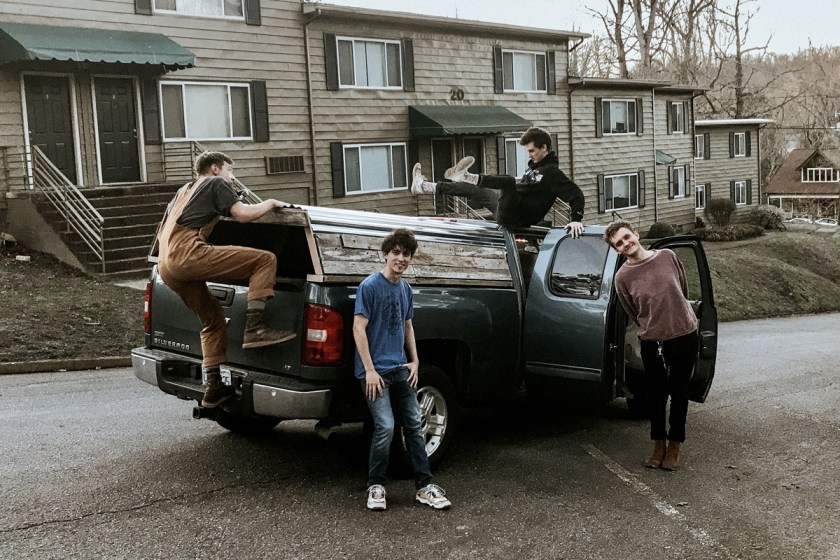
“Treehouses” by Bamboo Smoke sounds like the theme song for the project entirely. The lyrics speak of the mythical treehouses where as kids maybe you went to hang with friends and share ideas and feelings and let your imaginations wander where they will. It’s a place where you have your own kind of secret society safe from the interference of people, a world and a social setting that wouldn’t understand the inside jokes, share a spirit of acceptance but also an ability to help each other grow in a more nurturing environment of friendship, to create without having those creations need to “go anywhere.” As it turns out these are things we need just as much in adulthood but rarely get because being grown up means too often that you’re all but dead inside and have adapted to a work world that functions almost entirely for making profits for someone else and not a cultivation of you as a human. “Treehouses” is a modest pop song but it embodies a resistance to what seems inevitable as we grow up.

Musically the song sounds like a a mixture of pop songwriting nd sampling and comes off like a natural evolution and blending of downtempo, indie pop and hip-hop. Electronic and acoustic instruments, organic and processed sounds, all assembled to give a flow like a fond memory and imbued with the romance of the aforementioned treehouse of childhood but recreated for relevance as an adult, a temporary autonomous zone where you can really live, even though maybe you surrender many hours to a traditional job to be able to survive, and create new meaningful experiences for yourself through the kind of creativity that gets pushed out of most people before their years of secondary education. “Treehouses” is a charming reclamation of that psychological space, whether or not there is a corresponding physical space in which to do so, but cast in the specific context of the songwriters. But if you listen and abstract those ideas into your own life you will hear that call to bring back a little magic into your own world. Listen to “Treehouses” on Soundcloud and follow Bamboo Smoke at the links provided.

soundcloud.com/bamboosmoke
open.spotify.com/artist/7yEecGodLGVAVaOoqInaSg

In Musical Form Kyson Shows the Unity of Mind, Body and Nature on His Single “After the Rain”

Kyson1_crop
Kyson, photo courtesy the artist

Kyson wrote “After the Rain” in the wake of dealing with a “minor health scare” that required half a year of medication. But following that he experienced a period of clarity and hope. The ghost pulse of indistinct tone haunting the beginning of the song and periodically thereafter, the hazy melody of distorted synths later on and processed vocals contrasted with the clear, resonant singing and spare guitar give the song a sonic depth and undeniable emotional impact. In the words Kyson parallels phenomena in nature with human emotion and suggests how the two are inexplicably intertwined in a way we often don’t appreciate until we are confronted by that reality through illness in ourselves, in our loved ones. The mind-body-nature separation that is part of many major world religions as we know them makes this concept cognitively challenging. Though certainly not the first human or artist to do so, Kyson, in sussing out on a personal level those interconnections has given us a song that musically brings together seemingly disparate elements in a synergistic unity. Listen to “After the Rain” on Soundcloud and follow Kyson at the links below.

kyson-music.com
soundcloud.com/kyson
open.spotify.com/artist/1ysHnRqLx1sIFxUlahQftx
kyson.bandcamp.com
facebook.com/kysonproductions
instagram.com/kyson_____