

With its New Single “Unselected” New Wolves Evokes the Unease and Uncertainty at the Current Rising of Authoritarianism in the World

NewWolves6_crop
New Wolves, photo courtesy the artist

The latest New Wolves single “Unselected” seems far too poignant for the current moment with the utter defeat of Labour in the recent UK elections as the lyrics deal with the current rise of the right wing in that country and everywhere, really. The song is melancholy but not despairing. Its beats sound weary but still strong. The distorted synth melody ascends and resolves in a way suggesting uncertainty commensurate with the general mood in the world of late for those who have the luxury of merely feeling uncertain but there is a quality to the sound of the song that gives the impression of bracing for the blows to come regardless of how much you think you’ve prepared to weather the coming storm when during the reign of authoritarian regimes you can become, in a word, unselected for the benefits of citizenship and being part of society. By casting the layers of melody and rhythm in this way New Wolves puts the mood of the song into an aspect of the hazy and dreamlike as though it’s something from which we might one day awake and cast off the dire spirit. It offers no hopeful bravado but also doesn’t offer up hard, fatalistic realism. Could the mood be described as cautious ambivalence? However it might be characterized, it’s an interesting mix of moods and sounds and captures accurately how many of us feel in this current moment as the world seems to be wending in a scary direction. Listen to “Unselected” on Soundcloud and follow New Wolves at the links below. Look for a full length album from the band in 2020.

soundcloud.com/new-wolves
twitter.com/wolves_new

Mothica Bids Farewell to the Intoxicated Party Lifestyle on “Hungover”

Mothica1_sm
Mothica, photo courtesy the artist

Mothica’s new electronic pop single “Hungover” flows with vibrant tones and melodies laid out in pulses of thought and contemplation. Like a map of how songwriter McKenzie Ellis came to realize she was caught up in a cycle of self-destruction and undermining her ability to gauge what really mattered to her not to mention how to achieve anything worthwhile. It’s a rare person who in the throes of the culture of intoxication and romanticizing that lifestyle who can step back and see things for how they are and to decide to walk away before hitting the absolute bottom even with help and support. Many don’t walk away even then. But it’s not a song of judgment, but of couplets of her own illumination of the dark places of her own psyche. Ellis sings of making friends with her nightmares, fake friends and cheap gin, being a danger to herself and how should could let herself think being in that place was viable much less sustainable but now she sings goodbye to that life singing “I’ll pour one for everyone I’ve been.” In saying goodbye to the comedown of those dubious highs, Ellis welcomes a new chapter in her life with introspective decisiveness. Watch the video for “Hungover” on YouTube and follow Mothica at the links below.

facebook.com/mothicamusic
twitter.com/dearmothica
instagram.com/mothica
open.spotify.com/artist/1JhiIIXT9DWqEU3BYFZwGA
music.apple.com/us/artist/mothica/939909127

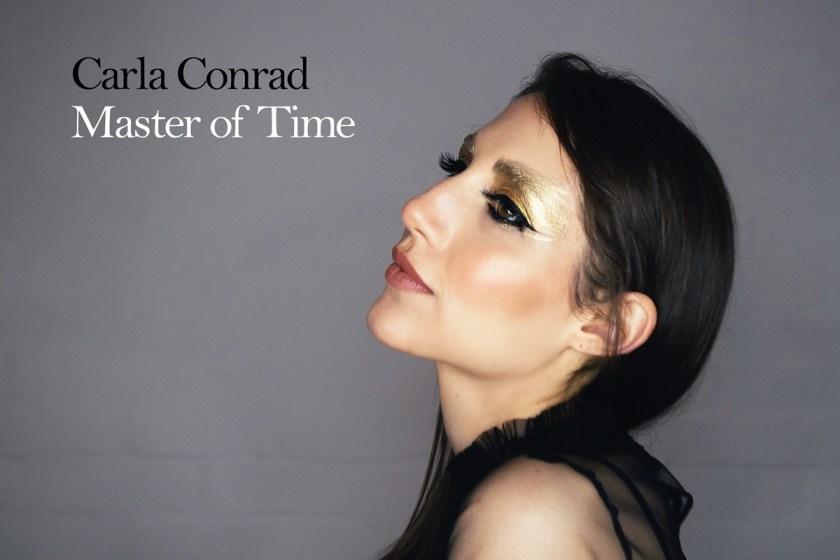
Carla Conrad’s Soaring and Sweeping “Master of Time” Encourages Us to Pursue Our Best Dreams Against the Discouragement From Within and From Without

CarlaConrad2_crop
Carla Conrad “Master of Time” cover (cropped)

Carla Conrad jumped through some hoops in order to see her single “Master of Time” through to completion beyond merely writing the song. She completed an online course with Berklee called Production Fundamentals for Singer-Songwriters on Ableton. She worked in Qatar for five months to save the funds to record the single and worked with producer Ben Ludik. None of which would mean much if the quality of the song wasn’t there. But “Master of Time” is a sonically rich pop song of grand, sweeping dynamics that augment her own commanding vocals. It’s arc is one of humble beginnings almost like the story of her own process in the journey of making the song but couched in the narrative of a relationship parallel to personal development. Through the song Conrad sheds the limitations that held her back, psychological, interpersonal, relational, to embrace her own power as a human unsullied by habits of mind and feeling that no longer serve her development as a human being who encourages others to follow their own paths against the odds of discouragement and stumbling blocks that all of us adopt at some point avoiding the “tall poppy syndrome” that so often stunts our progress as a species toward a world that cultivates everyone. Listen to the soaring and expansive “Master of Time” on YouTube and follow Conrad at the links below.

carlaconradmusic.com
instagram.com/carlaconradmusic

Dumb’s “Content Jungle” is the Missing Link Between Post-Punk, Garage Rock and the Avant-Garde

On its Tapetown Sessions recording of “Content Jungle,” Vancouver, BC-based band Dumb sounds like the missing link between Sonic Youth, Parquet Courts and the Reatards. Its brash guitar riffs indulge beautifully odd bends and fragmented melodies. The shout along vocals do little to undermine the clever lyrics that cite dated cultural references that take us out of the current era (Kool Aid and cathode rays?) while injecting more contemporary cultural artifacts like Netflix to comment on the way so much of our documented history has been plumbed and gives people the impression that it’s all accessible and understood sans proper context simply because you can pick and choose and find anything on the internet for which the title of the song, “Content Jungle,” could be another name. The lyrics neither condemn nor glorify this feature of the world now but does highlight the absurdity of thinking mediated access to culture and the world is the same thing as direct experience.

MRPHY’s Admission of Regret Over a Love Lost on “Hey Love” Demonstrates a Vulnerability and Strength That the Bravado at Claiming No Regrets Does Not

MRPHY_HeyLove2_crop
MRPHY, “Hey Love” cover (cropped)

Gabrielle Murphy aka MRPHY demonstrates gift for emotive phrasing on her debut single “Hey Love.” A simple piano line and strings frame and highlight her voice throughout the song, following her organic pacing as she sings about heartsickness at being separated from the person she loves, expressing her fears and insecurities with a tenderness and strength of feeling with an economy of style that makes her lyrics all the more striking when it becomes apparent that the sense of emotional ache comes from the fact that the relationship is over but still affects her deeply even though she is resigned to the fact that it can never be again but not without regret. At a time when too many people think they’re strong because they have no regrets, MRPHY is strong enough to admit to vulnerability and having some regrets of her own. Listen to “Hey Love” on Soundcloud and watch the song’s music video on YouTube.

WRENN’s Powerfully Expressive Vocals and Dynamic Range Are on Full Display on the Introspective and Cathartic “Craigslist Personals”

WRENN_CraigslistPersonals2_crop
WRENN “Craigslist Personals” cover (cropped)

WRENN’s vocals on “Craigslist Personals” demonstrates great range and versatility in tone and texture from the delicate on the border of fragmenting to the expansively vibrant. The songwriting matches her vocal line perfectly going from minimal, ghostly synth and spare guitar to bombastic guitar riff flourishes and pounding drums as if shifting from contemplative, hopeful musings to the intensity of disappointed emotions finally purged after finally processing and identifying the complexities of a relationship and boiling them down to the essential grievances. But WRENN somehow conveys those feelings without pointed blaming. Rather, she is deft at expressing the hurt and the healing that comes from being able to sing about the situation with honesty and conviction. Listen to “Craigslist Personals” on Soundcloud.

The Gritty and Soulful “Don’t Wait Up” by Oh He Dead is a Vivid Emotional Portrait of Life on the Edge

OhHeDead1_sm
Oh He Dead, photo courtesy the artists

“Don’t wait up on me, I won’t be going home,” is an ominous opening line but “Don’t Wait Up” by Oh He Dead goes to even darker places from there. The minimal guitar line is like a gentle companion to the grittily soulful vocals as synths swell ominously yet dolefully in the background like an ill wind. It’s a song about a person who can’t live within the restrictive standards of a puritanical culture and imposed limitations designed to reign in someone’s effusive spirit. As the song goes on that struggle and self-accountability clash as the narrator comes to terms with consequences and her own awareness of her own boundaries and the limits of her own capacity to sustain a lifestyle that seems part of her identity. The vulnerable tenor of the beginning of the song blooms into howling, bluesy rock that rages as the chorus urges for its intended listener to not wait up for the narrator who is certain of only one thing and that’s the uncertainty of where the train of a life on the edge will end up day to day. Listen to “Don’t Wait Up” on Spotify and follow Oh He Dead at the links provided.

soundcloud.com/ohhedead
instagram.com/ohhedead

Greatfruit’s Luminous and Nostalgic “Arcade Love” Contains the Purity of Cherished Childhood Memories Manifested in the Present

Greatfruit2_sm
Greatfruit, photo courtesy the artists

Greatfruit engages in a bit of musical retrofuturism on “Arcade Love.” That’s not to merely point out this lushly beautiful and romantic synth pop song is steeped in the sounds of another time because a lot of the sounds and musical ideas weren’t quite possible in the 1980s referenced in the lyrics of falling in love with seeing someone by chance at the arcade in the mall. Rather it captures the vibe of a time and a milieu that seems less cynical, calculated and artificial than the way people often meet each other these days and couched in sentiments running through much of 80s pop. It freely cross references cultural phenomena while having a clarity of sonic line that embraces the almost gaudy production of 80s pop by making a virtue of its inherent limitations compared to all the options available to electronic musicians today. It has the purity of a childhood memory of an era that is easy to romanticize for what it represents in your life today and because of that it sidesteps mere nostalgia mining through writing something that feels like it’s coming from a genuine place. Listen to “Arcade Love” on YouTube.

“Lost like Teardrops in Rain” is Like Jack Cleary’s Homage to Vangelis and the Inspiration of Works of Deep Creative Imagination

JackCleary1_sm
Jack Cleary, photo courtesy the artist

Giving the song the title “Lost like Teardrops in Rain,” Jack Cleary is more than hinting at part of the inspiration for the composition. The streaming synth suggests enigmatically alluring vistas after the fashion of Vangelis’ score for Blade Runner. But in its gently roiling dynamic one hears the sound of a warm summer night by the ocean with moonlight on the water, its reflection interrupted with the ripples of raindrops stirring in your own mind a contemplation of your own place in the world and in your own life. In the context of the album Gemini, which Cleary released on November 21, 2019, it is a vivid passage of reverie, an homage even to treasured memories of immersion in works of deep creative imagination, on a sonic journey of exploration that takes you through dark and foggy places before emerging into a musical and emotional place of clarity. Listen to “Lost like Teardrops in Rain” on Bandcamp (where you can also listen to, perchance purchase, Gemini in its entirety) and follow Cleary at the links below.

jackclearymusic.com
jackcleary.bandcamp.com
facebook.com/JackClearyMusic
instagram.com/jackclearymusic

Adam Melchor Takes the Concept of the Melodramatic Love Song and Makes it Endearingly Eccentric on “I Choose You”

AdamMelchor2_sm
Adam Melchor, photo courtesy the artist

Adam Melchor declares on “I Choose You” that if he was going to be stranded on a desert island, instead of something practical, essential or even one of those records that gets bandied about, he chooses a particular person. It is an unorthodox love song making such a statement of devotion but the song itself is a bit unconventional for a pop song. The spacey sounds and bizarre voices in the background of the simple guitar melody already sets your expectations outside the realm of the normal. Melchor’s voice contains the conviction inside a playfully imaginative song in which he indulges moments of fantastical statements like “Out of billions of people I’ve got it down to two, I choose you” to mince no words about his intentions. In doing so, Melchor takes the oftentimes hackneyed premise of a melodramatic love song and turns it into something endearingly strange and otherworldly to match the premise. Listen to “I Choose You” on Soundcloud and follow Melchor at the links below.

soundcloud.com/adammelchor
twitter.com/AdamMelchor
facebook.com/adammelchor
instagram.com/adammelchor