Broughton’s Earthy Yet Ethereal “Neptune” is a Shy, Sly and Gentle Enticement to Love

Broughton_Neptune1_crop
Broughton “Neptune” cover

Broughton raps with a sense of affection and hopefulness on “Neptune.” It’s a simple request and appeal, an invitation to come over and hang out and watch a movie and maybe more, listen to “The Neptunes.” The sentiments are direct but not crass, and in the song you hear the words of a person who may not have a lot materially but offers what little he does have and none of the burning intensity that might be too much to deal with. There is a gentleness of spirit at the root of the song. Musically it sounds nothing like the jazz funk of the production style one often associates with the work of Pharrell Williams and Chad Hugo of The Neptunes. Rather, it has an ethereal, intimate feel composed of simple, echoing, chill tones accented by a spare rhythm that wraps itself around and compliments well the vocals giving the use of the word “Neptune” a dual meaning of the aforementioned musical reference as well as having an experience out of this world. Emotionally it echoes the shyly come hither dynamic of the words and a fine pairing of music and vocals. Listen to “Neptune” on Spotify and follow Broughton at the links provided.

soundcloud.com/nqh-x-dbds
open.spotify.com/artist/1ZgfHlEOqu1zHd3PoK14aa
youtube.com/channel/UCFJKu3mvFZ3Pz1XeRXK2u0w
twitter.com/BroughtonNQH
instagram.com/broughtonnqh

Haruhisa Tanaka’s Ambient Track “Still” is the Aural Equivalent of Meditating at the Bottom of a Mountain Pond in Summer

HaruhisaTanaka_Still1_crop
Haruhisa Tanaka, photo courtesy the artist

Imagine yourself able to rest at the bottom of a clear, mountain pond, the liquid flowing over you in its endless variety of textures yet consistent in its calming tactile quality. Sunlight refracted through the water warming your surfaces, the intermittent interruptions in illumination from the aquatic insects skittering atop the water, fish swimming by, plants shifting in currents. Your mind mixes the natural, ambient sounds and abstracts some to tones as textural flow, melodic drones that follow no meter but resonate with its own fractal logic, soothing in the way those sounds chart natural processes with the mathematics that govern the chaos and order of the universe. Haruhisa Tanaka’s “Still” sounds like it was composed imagining that likely impossible scenario and in so doing creates a tranquil audio analog of the experience perfect for letting one’s anxieties dissolve into eternity. Listen to “Still” on Bandcamp and follow Haruhisa Tanaka at the links provided. Tanaka’s latest EP Yusura was released February 13, 2020.

purre-goohn.com/haruhisa-tanaka
soundcloud.com/haruhisatanaka
open.spotify.com/artist/4ZTlbJ3KHGs7wuvdtouuIw
haruhisatanaka.bandcamp.com
twitter.com/hhtk0
ja-jp.facebook.com/haruhisa.tanaka.758
instagram.com/haruhisa_tanaka

Ian Chang’s “Audacious,” featuring Kazu Makino, Utilizes Deep Layers of Rhythm to Gently Dissolve Emotional Barriers

IanChang_Audacious1_sm
Ian Chang, photo courtesy the artist

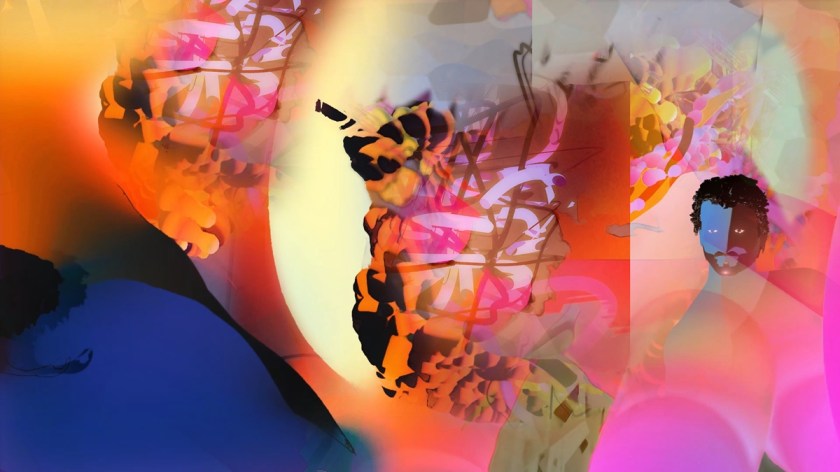
The first single “Audacious” from Ian Chang’s debut album Belonging (out April 24, 2020 on City Slang) features a keyboard line that is percussive in its cadence and synth drones floating in the background like a fog, all while Kazu Makino (Blonde Redhead) provides almost a companion beat with her vocals accenting the melody line parallel to the low end. The deep, layered rhythms of the song allow it to go well outside any pop songwriting conventions which makes Makino’s unique, breathy voice well suited to a song about not hiding behind the usual socially conditioned barriers that prevent direct and honest communication between people. The animated video directed by Qieer Wang brings to the presentation of the song the quality of a graphic novel cast in the visual language of personal mythology and the use of creative visualization to transform one’s own consciousness—it is colorful, surreal and symbolic in blurring any line between conscious and unconscious mind, dream and waking reality, abstracted cultural folklore and concrete existence. And beyond these heady conceits the song and video work as a way that makes an otherwise experimental pop song immediately accessible with its gentle melodicism and sense of coming with a fresh perspective to what might have before been a conundrum in your mind. Watch the video for “Audacious” on YouTube and follow Ian Chang, also a member of Son Lux and Landlady, at the links below.

soundcloud.com/ianchangofficial
ianyhchang.bandcamp.com
twitter.com/ianyhchang
facebook.com/ianyhchang
instagram.com/ianyhchang

Ryuichi Sakamoto’s Composition of “Dance – Ambient Version” Was Informed by the Tactile Sound of Valentino Fabric to Craft its Sense of Deep Mystery

RyuichiSakamoto_Dance_AmbientVersion1_crop
Ryuichi Sakamoto, photo courtesy the artist

In scoring the soundtrack to Luca Guadagnino’s (the director of the 2018 Suspiria remake) The Staggering Girl, Ryuchi Sakamoto wanted to incorporate the physicality of the sound of Valentino fabrics. He experimented with using fabric samples and, according to the composer, “utilizing special sensitive microphones, I experimented ‘playing the fabrics. I love the sound and how it forces one’s attention to a sound all round us, yet almost entirely ignored.” The latter quality is captured well on the song “Dance – Ambient Version.” With minimalist piano lines shifting up and down as string figures entwine their way through and background drones bring a nearly intangible lushness to a song that sounds like it would fit a 1960s period piece with underlying tones of mystery as with the beginning of an Alfred Hitchcock film with the menace not yet arrived but lurking in the hints of melancholy and introspection and a sense of new beginnings heard in the theme music foreshadowing the tragedy to come. Listen to “Dance – Ambient Version” on YouTube and follow the renowned composer at the links below. The Staggering Girl Original Soundtrack was released February 14 on Milan Records.

soundcloud.com/ryuichi_sakamoto
open.spotify.com/artist/1tcgfoMTT1szjUeaikxRjA
http://www.sitesakamoto.com
https://twitter.com/ryuichisakamoto
https://www.facebook.com/ryuichisakamoto

Lonely Gimmick’s Enigmatic Video for “BEAT 1” is a Reflection of the Collage Sonics of the Song’s IDM/Hip-Hop Synthesis

LonelyGimmick_BEAT1_A_crop
Lonely Gimmick logo


“BEAT 1” by the enigmatic Lonely Gimmick sounds like a meeting of lo-fi aesthetics and modern production methods. The lightly distorted synth, the minimal, warped, slightly clipping guitar sound and the layers of electronic percussion sounds for an effect like something that could have come out of 90s IDM, a collage of sounds and styles bridging decades of hip-hop, techno and early electronic post-punk. The music video shows a dark figure putting a seven inch on a Bush portable record player with figures intertwined sitting in the middle holding the disc down. The background is a dilapidated room in what could be a dilapidated part of the city. The visual parallels the sound of the song and finding the treasures in one’s sonic odds and ends and making it all move and dance in ways it hadn’t before. The video honestly has the same vibe as some of the stranger YouTube channels where something strange and mysterious but simple is going on and which stirs the imagination enough to draw you in but gives away little. Watch for yourself on YouTube and follow Lonely Gimmick at the links provided.

Instagram – https://www.instagram.com/lonelygimmick
Facebook – https://www.facebook.com/lonelygimmick
SoundCloud – https://soundcloud.com/lonelygimmick
Twitter – https://twitter.com/LonelyGimmick

Alex Musatov’s “Deep Water” is an Imaginative and Cinematic Display of Layered Violin and Voice

AlexMusatov_PabloMekler_DeepWater1_crop
Alex Musatov, photo by Pablo Mekler

Alex Musatov layers various violin techniques, samples and a beautiful falsetto in the composition of “Deep Water.” Plucked violin traces the meter, legato violin establishes more than one drone and rapid bowing establishes an urgent dynamic later in the song—all showcasing Musatov’s imaginative command of the instrument and its possibilities. At times the violin sounds like a synth especially when it syncs perfectly with his vocal tones where the two sounds blend together in the headiest moments of the song. Another violin part all but replicates the speech of sea birds and dolphins in the background alongside the sample of flowing water. The overall effect is cinematic and a fascinating accompaniment to a song that appears to be about getting in over one’s head with ill-advised conceits and deception and being overwhelmed by the consequences thereof in the end. Listen to “Deep Water,” from Musatov’s debut solo album Songs From Another World, on Spotify and follow Alex Musatov at the links provided.

youtube.com/channel/UCniCTT0s50hgZM4qPOGdlCQ
alexmusatov.bandcamp.com
facebook.com/musatovmusic
instagram.com/mindwarping

Conrad Clifton Urges Us to Live Out Our Best Aspirations Without Hesitation on “dreambutdontsleep”

ConradClifton-ArthurWoo_sm
Conrad Clifton, photo by Arthur Woo

The title of Conrad Clifton’s “dreambutdontsleep” is a miniature poem on its own. It encapsulates well the deep mood of daring to imagine something more interesting and beautiful than whatever drudgery might be a big part of your life. But in that imagining doing it while awake and letting your dreams go further than the way your waking mind is so focused on what seems likely rather than what’s possible. The title is also a gentle urging to not wait, to not sleep on, making what’s in our hearts and dreams an integral part of our daily life rather than surrendering every waking moment to what is demanded of us on the behalf of people and forces that enrich only the economic and political elite. The track is a collage of lush drones, playful electronic percussion, tastefully arranged samples and vocals that could be your unconscious mind speaking through to your conscious half in a way that transcends linear thinking. The breezy and relentless flow of a song that takes time out amid bell tones glittering around to contemplate is a nice touch that reinforces the song’s message. Listen to “dreambutdontsleep” on Bandcamp and if you’re so inclined, listen to the rest of Conrad Clifton’s new album IS IT YOU Beat Tape out on Full Circle released February 28, 2020.

infinitypoolrecs.com/conrad-clifton
soundcloud.com/infinitypoolrecs
open.spotify.com/artist/0V2TnfZ831UuRpUdvAF84w
twitter.com/ConradClifton
facebook.com/conradcliftonmusic
instagram.com/conradclifton

Katan’s “It” is a Sonic Oasis of Rest and Comfort in a Time of Struggle and Challenge

Katan_It1_Crop
Katan “It” cover

Multimedia artist Katan’s song “It” sounds like the chill outro music at the end of an epic fantasy video game or for a safe zone, save point where one can replenish and take a break from the action. Its bright synth melody and processed vocals convey a sense of wonder and tranquility. It’s a song seemingly about the search for meaning and how that meaning finds you and learning to trust your instincts. Maybe Katan didn’t use a circuit bent Famicom to compose the music but that sort of chiptune aesthetic informs the songwriting with the tones cycling from high to low in an effervescent contrast throughout with staccato arpeggios of rhythm and an almost percussive approach to the main melody. The song feels like you’ve attained something and you’re getting some time to bask in that achievement after a long series of challenges and struggles. Given the multiple crises wracking the world in this first half of 2020 “It” is striking the perfect note to untangle at least a bit of that angst. Listen to “It” on Spotify and follow Katan’s video work on YouTube.

youtube.com/totemworlds

Kate Vogel’s “Rain” Speaks to the State of Fragile Grace Often Required to Weather Your Own Psychological Storms

KateVogel_Rain1_crop
Kate Vogel, photo courtesy the artist

Kate Vogel uses the metaphor of the weather for struggling through tough times on her single “Rain.” With an intricate guitar figure and a doleful tone intermittently swelling and fading in the background, Vogel sings about the conflicting internal and external messaging about where she comes up short and how that affects her sense of self and who she is. Maybe the song isn’t about being in a state of depression but it does capture the sense of how every little setback emotionally feels like a disaster and you feel precarious and tender and when you can have a period of peace you feel like maybe you can make the effort to better your life one of those setbacks will put you into a bit of an emotional tailspin. But the tenor of the song is not in one of those heightened states of anxiety, it’s in the lower point when you can remind yourself to be patient and do your best to make the best of what seems the worse. The line “Don’t know when those storm clouds will roll away, but til then I’m just dancing in the rain” embodies the fragile grace one is best served with maintaining while the emotional storm is going on and often it is just enough. Listen to “Rain” on Spotify and follow Kate Vogel at the links below.

Medium Article on Kate Vogel and her song “Reasons to Stay”
soundcloud.com/katevog/sets/public
open.spotify.com/artist/2CCsLpkuXkTgniNYFWAubP
twitter.com/chips_n_kateso
instagram.com/katevogel

Kite Captures the Essence of the Bright and Majestic Dreams of Youth for a Better Life on “Tranås/Stenslanda”

Kite_Tranas-Stenslanda1_crop
Kite “Tranås/Stenslanda” cover (cropped)

Swedish duo Kite’s track “Tranås/Stenslanda” begins like the elevated, even majestic, music for the introductory ceremony of the ice skating portion of the Olympics. Synths like great sheets of wind flow behind the vocals, evoking images of a performer ringed in light singing to the heavens. The bright drones and tonal accents matching those of the percussion augment a sense dramatic. But the song is in the end a kind of introspective, bittersweet look back on years spent coming of age in a small, rural setting dreaming of a escaping to a life of one’s own away from the real and imagined limitations of home even as one’s personality and to some extent one’s character was shaped by those early experiences. The song seems to celebrate in its melancholy fashion that time when those dreams of transcending the context of your circumstances and yearning for things that seemed so beautiful and desirable even though maybe once you got away you find aren’t as romantic in the living of it that you once thought. But there’s no denying the attraction of having genuine aspirations and something to draw your imagination out of everyday mundanity. Listen to “Tranås/Stenslanda” on Soundcloud, watch the music video directed by Marcus Malmström on YouTube and follow Kite at the links provided.

kitehq.band
soundcloud.com/kitehq
youtube.com/channel/UCtwVndg5iADN5vv8Y7mv72g/featured
facebook.com/KiteHQ
instagram.com/kitehq