Leire’s “What We’ve Got” is an Elegant Reminder That Our Normally Busy Lives Rarely Give Us the Time for Much-Needed Self-Reflection

Leire, photo courtesy the artist

There are going to be a lot of songs coming out of the pandemic that started in 2019 and bloomed in full in 2020 that fall back on songwriting tropes filled with hollow platitudes. But Leire gives us “What We’ve Got.” Every line of the song offers a creative take on learning to appreciate what she and her loved one have even when they can’t be together and planning for the future when the “nightmare’s over.” There is a disarming sincerity in the song that lacks melodramatic preciousness and Leire’s vocals strike the perfect balance of tender, affectionate, hopeful yet resigned to things being on hold for the moment as frustrating as that can be. The tenor of Leire’s delivery is one that suggests that the patience and appreciating what’s good about your relationship despite the challenges will be worth it in the long run. She acknowledges moments of weakness and her own limitations as a person throughout the song and the things she’s taken for granted and letting that knowledge make her a better person by putting her energy there rather than letting it fester into something negative. The spare melody and guitar accents simple help to convey an elegance and emotional refinement that makes the song especially effective as it is a reminder to oneself that regular life rarely affords us time to reflect and grow as people. Listen to “What We’ve Got” on Soundcloud and connect with Leire at the links provided.

leiremusic.com
https://www.youtube.com/leiremusic
https://www.facebook.com/leire.music
https://www.instagram.com/leire.music

The Resonant Elegance of Spirit Informing Alara’s “Demons” Enhances its Message of Mutual Recognition of the Trauma That Exists in All of Us

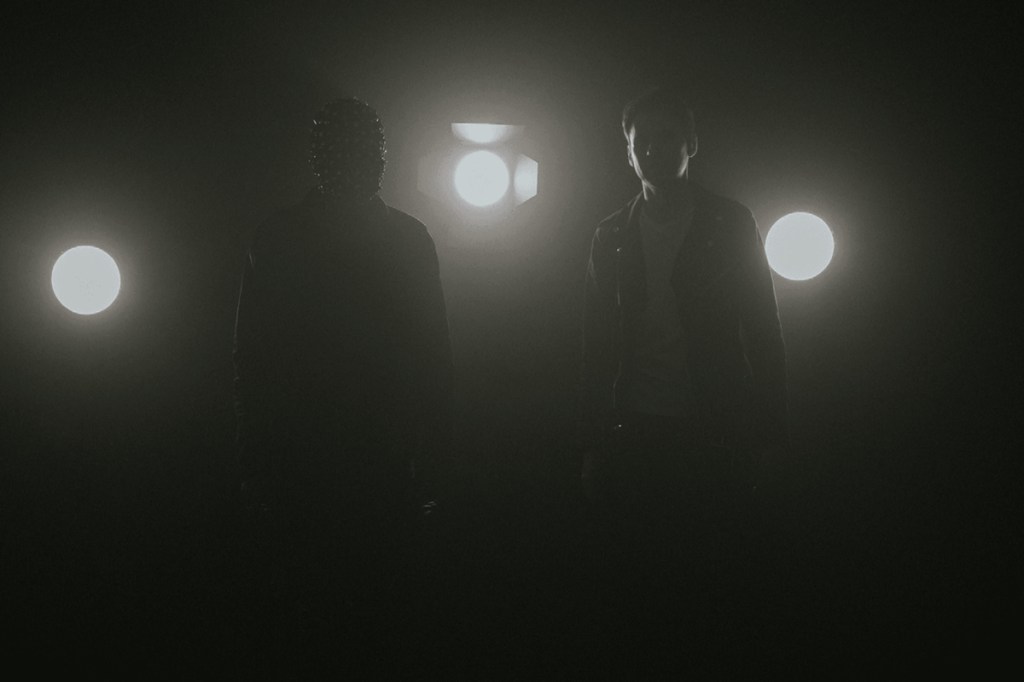
Alara, photo courtesy the artists

Alara’s “Demons” is a deep take on how pretty much everyone you will ever meet has some trauma in their past that hangs on their present and affects how they move through the world and relate to others. But Alara suggests we can reduce the power of this ambient trauma by acknowledging its existence and rather than be guided by any of its negative influences, choose to use it as a way to connect with people and foster understanding without the need to compare who has suffered worse or more. The production on the song with its subtle dynamics almost makes you forget there’s music other than Alara’s resonant yet soothing vocals but it’s this graciousness of composition and its expert use of space and atmosphere that draws you further into the song so that what could be a fairly heavy subject seem accessible in a way that directly confronting it wouldn’t. The elegance of the songwriting and the spirit with which it is executed enhances the impact of the song and its creative approach to fostering dialogue in an organic and compassionate way is striking. Listen to “Demons” on Soundcloud and connect with Alara at the links provided.

https://twitter.com/hernameisalara
https://www.facebook.com/hernameisalara
https://www.instagram.com/hernameisalara

Zac Jr Dispenses With Foolish Illusions and Conventional Wisdom on the Anti-Advice Song “Don’t Listen To Me”

Zac Jr, photo courtesy the artist

Zac Jr takes on a sardonic, self-deprecating tone on “Don’t Listen To Me.” The keyboard melody though subdued gives an undeniable air of whimsical daydreaminess that flows well throughout the song riding the crest of finely accented percussion All the while the vocals are like a monologue that suggest taking some advice while offering the opposite of advice with every line. One gets the impression that Zac is singing to his younger self or singing to his current self from the future words that could really benefit anyone who is clinging to foolish illusions and conventional wisdoms that you sometimes take the better part of a lifetime are arbitrary and not useful in real life. And the pushing forward with aspirations conditioned by social expectations rather than your actual drems. There’s the line about “Alone you’ll turn weak” taking aim at the way so many of us seem to think that individual achievement and effort is the only kind that’s legitimate and which defines our dignity as humans in western psyche. But the best line comes near the end of the song with “Faith won’t lead the fervent to mountains of god, but/Lean on your dreams when the ground starts to fall” because every foundation upon which you place your whole world will fail you at some point and living with the flexibility of being comfortable with doubt while not psychologically satisfying in a conventional and traditional value system and Western metaphysics might actually better prepare you for rolling with what may come your way. Fans of Get Lost period Magnetic Fields will appreciate Zac Jr’s command of unconventional pop songcraft in assembling the simple elements of this composition to express complex ideas in a way accessible and thought-provoking. Listen to “Don’t Listen To Me” on Soundcloud and connect with Zack Jr at the links below.

https://soundcloud.com/zacjr
https://zacjr.bandcamp.com
https://twitter.com/ZacJr
https://www.facebook.com/ZacJrJr

The Dynamic Fluidity of Kaitlyn Aurelia Smith’s “The Steady Heart” Engenders a Flexibility of Mind

Kaitlin Aurelia Smith, The Mosaic of Transformation cover

The melody and soundcapes of Kaitlyn Aurelia Smith’s “The Steady Heart” seem to follow a pattern that evolves and expands organically in a kind of recursive drift of reflective emotional tides. The music video employs images of Smith in poses replicated in quadrants, the visuals created by Sean Hellfritsch and resonant with the work of the artist Thomas Scharfenberg. The glimmering tones and mantra-like vocals interweave with a simple, textural rhythm for an effect like a multidimensional drone made to put your mind in a state where you can cast off the usual distractions and, for a few moments anyway, swim out of the anxieties that seem to be compounding with the rapid succession of crises that have dropped on to us the last few years. The dynamics of the song has a fluidity that engenders a flexibility of mind that helps to get you unstuck from static habits. Watch the video for “The Steady Heart” on YouTube and connect with Kaitlyn Aurelia Smith at the links below where you can find more information on her recently released album The Mosaic of Transformation out on Ghostly International.

https://twitter.com/kaitlynaurelia
https://www.facebook.com/kaitlynaurelia
https://www.instagram.com/kaitlynaurelia

Vinyl Williams Takes Us on a Trip We Didn’t Know We Needed to Make to Our Own Personal Utopia on “LA Egypt”

Vinyl Williams, photo courtesy the artist

On “LA Egypt” Vinyl Williams invokes the blend of classic pop, lounge and psychedelia as embodied by The Free Design (which the somewhat like-minded Stereolab invoked on its own song of the same name from 1999’s Cobra and Phases Group Play Voltage in the Milky Night) and Brazilian Bossa Nova, jazz funk legend Arthur Verocai. The colorful and hypnotic video parallels the hazy, layered aesthetic that hits you gently but is simultaneously rich in content. It offers a view into an imaginative alternative reality in which shifting between inner and outer space is effortless and offers a path to creating a kind of non-invasive Utopia that anyone can access at will. What makes the track remarkable is that while it is very rooted in a way to previous forms of music and established styles it is not trapped by their conventions. It is equally informed by the well-crafted chill of the previously mentioned artists as it is by the recent wave of psychedelia and dream pop. But you don’t hear it and immediately think it’s basically a decent imitation of Tame Impala or Sound of Ceres. The guitars swirl perfectly into the stream of keyboards, synth and ethereal vocals. There is a at times a disciplined, Krautrock-esque rhythm but one that gives way to an abstract flow into infinite horizons. It is also a fine introduction to Vinyl Williams’ latest album Azure LP which released June 5, 2020 on Requiem Pour Un Twister as Williams once again takes us on an aural journey we didn’t know we needed but glad we undertook. For the album art Williams combined over twenty-five paintings as a cognate of the attention to detail and focused creativity that went into composing the music within. Watch the video for “LA Egypt” on YouTube and connect with Vinyl Williams at the links provided include that for the interactive version of the video.

Interactive version of LA Egypt here: https://laegypt.vinylwilliams.com

https://vinylwilliams.bandcamp.com

https://www.facebook.com/vinylwilliams

https://www.instagram.com/vinylwilliams

MOLI Goes Deep On the Toxic and Warping Effects of Social Media on Our Psyches and Relationships With Each Other on “So Jealous”

MOLI, photo courtesy the artist

MOLI goes deep on the way social media has warped our culture through impacting the way many of us present ourselves online and the way we perceive others. The previously unimaginable and, it turns out, unhealthy level of access we have to each other these days minus the contexts that ground our experiences. MOLI casts that dynamic in a song about someone who sees the popularity of someone she doesn’t know who now has the attention of an ex and the psychological twists and turns that engender feelings of, as one might guess from the song title, jealousy, inadequacy, isolation, self-doubt and the projection of one’s insecurities on situations that have little to do with you. The effervescent melody and sweeping dynamics almost give the song a hopeful quality though it also mirrors the heightened sense of personal drama as well. Though the song gives an example of the toxic nature of the mediated experience of human interaction in social media it is a snapshot of the phenomenon overall and how that much access, albeit incomplete while giving a sense of totality, to others can turn everyone into a bit of a performative content creator for a data corporation and marketing tools—a sentient input to a feedback loop that rewards participation in a network with a shot of dopamine whether the quanta of experiences are positive or negative for you. MOLI, though, suggests that pulling back from being reduced in aggregate to a binary derivative of some kind might be necessary for our collective mental health. Watch the video for “So Jealous” on YouTube and connect with Moli at the links provided. https://www.youtube.com/embed/hc5PF8fWWwc

https://open.spotify.com/artist/1UytzAp8ZnC60ZAMBROqW6
https://soundcloud.com/whoismoli
https://www.instagram.com/whoismoli

AFAR Lures You Into a Brooding, Downtempo Journey Into Slow Burn Emotional Catharsis on “Lulled and Fake”

AFAR, photo courtesy the artists

There is a sultry darkness to AFAR’s single “Lulled and Fake.” The distorted, electronic bass pulses along with a brooding menace while electric bass traces the outlines of a melody that runs through the song as a compliment to the dynamic and rich vocals like one of the more dub-inspired tracks by 90s downtempo groups that crafted songs using something of a production songwriting palette and a seamless mix of electronic and electric instruments like Massive Attack and Portishead. Except that on “Lulled and Fake,” AFAR is especially reminiscent of Curve in the vocals and the way Curve could sustain a slow burn intensity without having to resort to a blowout denouement to leave a lasting impression Listen to “Lulled and Fake” on Soundcloud where you can also follow the band’s further exploits.

The Lollygags Call For an Embrace of Our Collective Imperfections in Struggling For a Better Future on “Grand Consolation”

The Lollygags circa 2017, photo by Tom Murphy

Denver-based power pop band The Lollygags recently released a creative take on the lyric video for its song “Grand Consolation.” Lyrics appear in a series of animations that illustrate themes of struggling through life despite our imperfections and the revelations of how our past, including the actions of ancestors we’ve never met whose efforts have benefited our lives, threaten to hobble our progress and development as humans as we contemplate what to do about that legacy. Life is often challenging enough and we rarely get the tools to adequately handle everyday life but the only alternative is to give up. “Grand Consolation” suggests that accepting what in typical cultural parlance is considered failure and loss is part of growth and completely normal for everyone. The chorus “The war is lost, we pay the cost, every day/We trudge along, and win, battles along the way” highlights how maybe learning to know when you’ve been wrong or in the wrong and dealing with it some maturity while also realizing that you’re not always losing just because you perceive some loss. Perhaps the subtext of the song, too, is that maybe that dynamic of winners and losers, victors and vanquished, is outmoded and a block to a better world both personally, socially and politically. Fans of jangle-y end of Guided By Voices and Archers of Loaf will appreciate The Lollygags’ gift for raw melodies and thoughtful turns of phrase in general but especially so in this song. Watch the video for “Grand Consolation” on YouTube and connect with The Lollygags at the links below.

facebook.com/thelollygags
thelollygags.com

Grace Joyner Illuminates the Foggy Corners of Doubt and Confusion in a Troubled Relationship on “Hung The Moon”

Grace Joyner, photo by Jess Spence

Grace Joyner’s second single from her album Settle In, “Hung The Moon,” attempts to map out the fraught emotional territory of connecting with someone you love. The layers of atmospheric dynamics parallel the varying levels of emotional intensity that come from being involved with someone who seems to be behaving in inconsistent and confusing ways. Are you being tested? Is being tested even really acceptable? Are you overwhelming your loved one and they don’t know how to tell you its too much right now? Joyner conveys this feeling of emotional suspension through contrasting music that sounds simultaneously melancholic, wistful and hopeful. The chorus “You’ve got me pulled in so many directions, baby/I started to think that’s what you wanted maybe/But now I am weak and I’ve got to change my tune/I thought you hung the moon” says much about how love is rarely if ever some simple process where you mix the right ingredients and always have the same results. And the subtext would seem to be that fundamental breakdowns in communication always leave everyone involved with an uncertainty that jeopardizes the relationship, sometimes beyond reconciliation. Since the song has the hallmarks of a sultry synth pop song with a soft but finely accented bass line and the intimate immediacy of Joyner’s vocals one comes away with a sense that this is a moment of doubt looming into the heart going a different direction than back toward the loved one that in singing out these thoughts maybe these wrinkles can be smoothed out in the end. Listen to “Hung The Moon” on Soundcloud and connect with Joyner at the links provided.

https://www.facebook.com/gracejoynermusic

https://www.instagram.com/gracejoyner

Ravenstorm Beautifully Weds the Epic Melodrama of Progressive Death Metal With Classic Romantic Literature on “Erlkönig”

Ravenstorm “Erlkönig” cover (cropped)

Italian melodic metal band Ravenstorm combine metal with opera in its song “Erlkönig.” The latter is a ballad written by early Romantic writer Johann Wolfgang von Goethe in 1782 and one which evidently lends itself well to the high drama of progressive death metal. The animated music video for the song tells the tale of a child who claims that he is being assailed by the titular “Elf King” but his father not being able to see the supernatural creature comforts his son with more prosaic explanations for his perceptions of this creature of faerie. The father rushes off with his son presumably to seek earthly aid only to find his child has been taken from him either by a natural ailment or through preternatural means by the aforementioned Erlkönig. The animalistic vocals suit well the narrative and the epic gallop of the music in that grand tradition that one often hears in the Gothenburg style an apt emotional soundscape for the story unfolding as well as the tragic ending. Franz Schubert set the Goethe ballad to music in his time, Ravenstorm just gave it a beautiful modern interpretation worthy of the spirit of the original ballad by one of the godfathers of melodramatic theater. Watch the video for “Erlkönig” on YouTube and connect with Ravenstorm at the links below.

https://open.spotify.com/artist/2HwkKXjcwlmQlZ71LKyhVX
https://www.youtube.com/channel/UCwprwYTO8LewO1AwCLQrOBw
https://www.facebook.com/ravenstormmmetal
https://www.instagram.com/ravenstorm_official