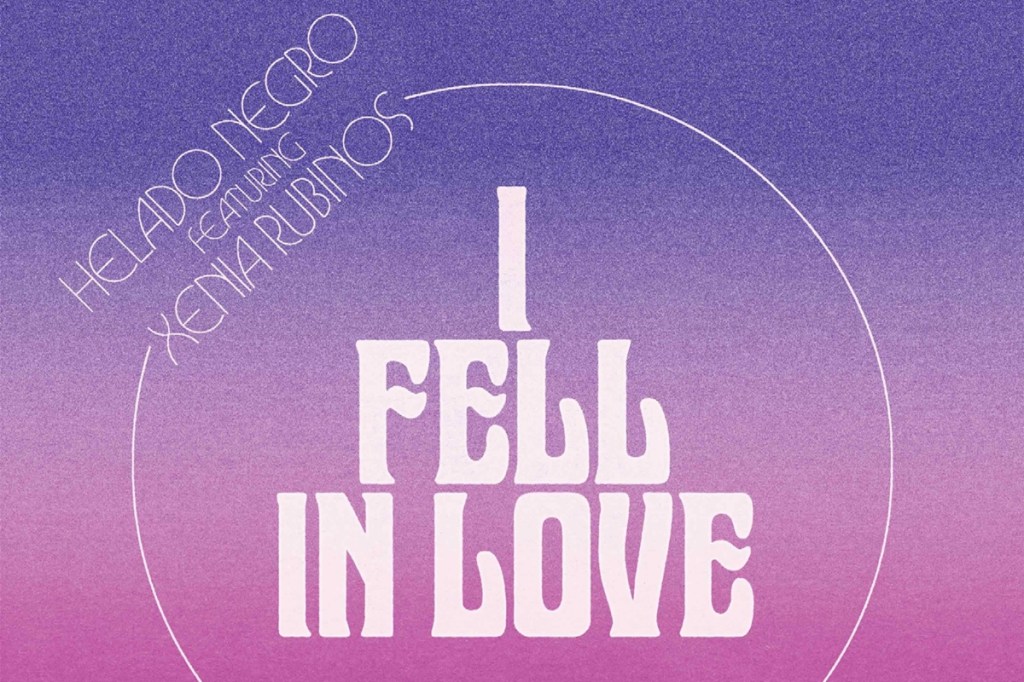
Helado Negro’s new single “I Fell In Love” features the melodious vocals of Xenia Rubinos and its cool colored tone keyboard work and layered, echoing percussion puts the voices of both singers to the forefront. It’s comes across like a chillwave “Avalon” by Roxy Music in pacing and sentiment. Like the latter, “I Fell In Love” is an unabashed, joyously celebratory love song but one expressed with an elegance, style and sincerity that moves you because it is able to be subtle and gentle in its execution without compromising the strength of feeling. In a time of great flux the song is like a voice message from the future reminding you that even in the worst of times that there are things in life that uplift your spirits whether that is the love of another person or love of yourself. Listen to “I Fell In Love” on Soundcloud.
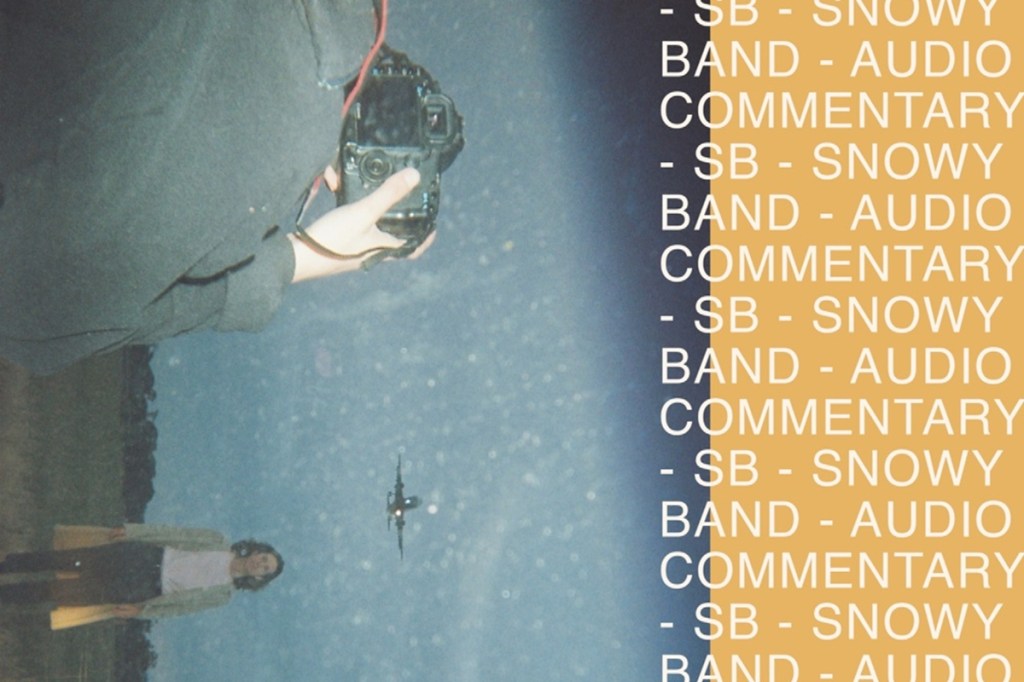
Snowy Band from Melbourne, Australia takes on the pervasive nature of corporate culture through the instrument of using marketing speak to process and sell back to you every strand of human experience with its single “Never Change” from its debut album Audio Commentary on Spunk! Records. The raw lead vocals and the melodic vocal harmonies pair well with warped and broken guitar lines and unconventional song dynamics to perhaps resist easy classification. Of course musically it’s somewhat reminiscent of Pavement and great Australian and New Zealand pop and alternative bands (really, those worlds blur and overlap quite a bit in so much of the music from both countries). But Snowy Band is very much its own thing with beautifully slackery and tasteful guitar solos and the ability to craft an earworm of a song without resorting to today’s tropes of pop music and production. When Liam Halliwell sings, “I don’t want a simple explanation from some viral tweet, TV, or a book I read. Don’t tell me how to grieve” it may not be a verbal Molotov cocktail to consumerism but it does strike at the heart of how so many of us don’t want to be treated like we’re stupid and only useful as a customer to whom we can be sold our own consciousness and lives as conditioned and created by a heartless set of processes and policies not designed with our cultivation as unique humans in mind. Watch the video for “Never Change” on YouTube and connect with Snowy Band at the links below.
There is that moment in a dream that many people reach where you become aware that you’re dreaming and instead of succumbing purely to ego and the limitations of your conscious mind you allow yourself to drift through events as though you are operating from a place of pure acceptance and tranquility. In that moment no matter what is happening in the dream you are able to enjoy the ride while not feeling tied to that specificity of existence, rather, as a a frequency in a larger spectrum and context of the universe. It isn’t simply lucid dreaming but the kind in which one can occasionally gain insight into your normal waking existence by being able to both experience and observe at the same time and glean what might be called spiritual insights into your everyday life because your mind is operating on a different level in a different mode wherein symbolism and concrete reality seem inseparable but which differentiate out when you wake up. Sometimes you retain strands of that consciousness and awareness and it makes life seem so very connected and not so wracked with the angst and concern that so often demands your focuses, your attention and your time. And yet memories of those moments can bring a calm to your mind in unexpected moments when you need it. The ambient song “Peace” by Luiniss is like the soundtrack to those moments with its evolving drones not in the distance so much but at the edges of your mind, accessible should you choose to plug back into it. Listen to “Peace” on Spotify and connect with Luiniss on Instagram linked below.
“Dirty Lie” by German hip-hop duo Slick Walk sounds like something you’d hear late night from across the room of a train station. Its beat sounds like it’s echoing in a large space but instead of that blurring out the details it makes them seem more intimate in a way. Like you’re hearing multiple sound sources synergizing: bell tones of the station, snippets of conversation that take on a more musical than verbal quality, the steady, mechanical beats that emerge out of the trains arrive and leaving and doors opening and shutting, all the ambient noises, coming together to create hypnotic and comforting rhythm. That the track isn’t musically in your face enhances the listening experience and allows for what might be disparate elements to work well together like something you might expect from an ambient or IDM project. Listen to “Dirty Lie” on Spotify and connect with Slick Walk at the links provided.
Valerie Warntz has written a song for everyone who is new to the realization that what we’ve been conditioned to want out of a relationship sets us up for a lifetime of disappointment and hurt feelings. Calling the song “The One I’ll Never Find” is more than a clue. But the song is not the typical creative melodrama one might expect in a pop song. Warntz strips back the psyche a bit more and instead of merely pointing the finger she takes some responsibility for being in a place in her mind where she succumbs to these internalized narratives that seems at the root of so many relationship issues and the way people often behave in relationships in the end and maybe themselves treat intimate relationships like a transactional affair. The songwriter doesn’t offer any easy answers because there aren’t any, just a portrait of hurt and realization that goes beyond the kind of song people often write to get over a break-up or break-ups. It’s a nuanced yet raw examination of the human condition. Musically, Warntz’s expressive vocals give emotionally direct while the background synth line have an expansive quality as though expressing that transformative moment when you realize the way you’ve been doing things, the way you’ve been, no longer serves you, even if you don’t yet know what will. Listen to “The One I’ll Never Find” on Soundcloud and connect with Valerie Warntz at the links provided. Her new EP Emotions & Sentiments, which includes this song, was released on May 8, 2020.
The title track to Annie O’Neill’s EP Wild Card is immediately striking for O’Neill’s emotionally direct vocals and ability to shift dynamics and tone on a dime. The deft but subtle chord changes lend the song a musical complexity that you’re not expecting in a bluesy rock song that’s just a bit over three minutes long. That compositional sophistication coupled with O’Neill’s confident vocals has a forcefulness and sense of mystery that one hears in the music of Heart, particularly when Amy Denio lends her vocals for the tasteful harmonies. Like many of the songs of the latter, “Wild Card” is about the contrasting emotions that happen in intense relationships, the kind that change and challenge you in various ways even if they ultimately have to end because they’re not good for you. “Wild Card” seems to be a nod to a creative partnership of some kind in which one party thinks the other is naive and foolish because she’s singer who, like pretty much everyone honest about it, hasn’t lead a 100% exemplary life because we don’t live in a world designed to reward talent and integrity while pretending to. And to make it through a world like that you often have to pretend you have no reaction to what’s thrown at you. Yet how long and how often can you pretend before you have to say something or react in a way that might make others nervous? The line “Doesn’t everybody fall from grace sometimes?” is so poignant as it calls out the way our culture holds everyone to impossible standards with no context, scrutiny without accountability from a place of humanity, understanding and compassion. Listen to “Wild Card” on Soundcloud and connect with Annie O’Neill on Spotify.
Brad Hamers and jdaugh bring their respective backgrounds in music, poetry, performance art, visual art and filmmaking to bear for their new project Through Flames. The duo released its debut self-titled LP on Apri 24, 2020 and the single “No Clothes on the Warden” cleverly makes use of the concept of “the emperor has no clothes” to deconstruct the economic and political realities we internalize and take for granted that if we’re able to break our conditioning and see things for how they are the whole thing could crumble in a matter of days or months and maybe we would be forced to simply live in a better world where there’s no techno-plutocratic agenda necessitating a police and surveillance state to smooth the funneling of most public goods to the upper one percent of one percent. In a fascinating use of call and response delivering couplets of observations on society in a way that challenges rote and familiar constructions of thought and language to almost force you to think about what’s being vocalized and in turn examine your ow thinking on the subject of our ascribed roles in the dystopian late capitalist international system that we find ourselves in now and which threatens the existence of us all and the safety of the planet. But rather than torching the edifice of such verbally and musically, Through Flames with this song dismantles the cognitive framework that keeps it in place in your brain in a playful and charming way. The accompanying rhythms, drones and spare melodies make what is a fairly radical set of propositions vis what is now for us the norm much easier to accept and that is what makes for a work of art that might help change things. Listen to “No Clothes on the Warden” on Soundcloud and connect with Through Flames at the links below.
One imagines soft lighting, filters to cast the scene in warm colors, slow swirls of fog in listening to “Give It A Chance.” The single by Paragon Cause from its new album What We Started produced by Sune Rose of The Ravenonettes started life as a lo-fi hip-hop song but evolved into something more like the the New Wave pop R&B you might have heard in the early 80s like when Sheena Easton did “For Your Eyes Only.” And there is some of that romance to the tone of the song but in the vocals there is more of an enticement than an offering, thus the title of the song. It sounds like an invitation to attempt get two people to try loving again after getting hurt in the past and being reluctant to being vulnerable and open. The effervescent synth washes, softly accented percussion and simple keyboard melody augment the melodious vocals, drawing you into a winsome vision of possibilities without being pushy or desperate about those feelings. While invoking the moods and sounds of an earlier era of music in the end the song sounds very much of the present even as it borrows, intentionally or not, from the vibe of 70s and 80s soft rock. The production places the track in the present and its use of layered dynamics and atmospheres meticulously but subtly puts you in a nostalgic and hopeful frame of mind. Listen to “Give It A Chance” on Spotify and follow Paragon Cause at the links below.
“Coffee@sea” has its roots in Anhedral’s submission to the Adam Audio Soundtrack Competition 2020. The challenge was to create a thirty second piece of music for Edward Hopper’s classic 1942 painting “Nighthawks.” Anhedral didn’t win and instead took the essence of the piece and extended it out to six minutes and eight seconds of flowing, abstract harmonics that sound distant but comforting. It was perhaps intended to reflect the way many of us have had to live during the 2020 global pandemic sometimes with the world we knew as a memory of a better time that beckons to us but to which we must be content to hold on to that memory until we can be reunited with life in full definition. Fans of The Sight Below and Seefeel’s more blissed out and hazy moments will appreciate Anhedral’s unobtrusive yet immersive soundscape. Listen to “Coffee@sea” on Spotify and connect with Anhedral at the links provided.
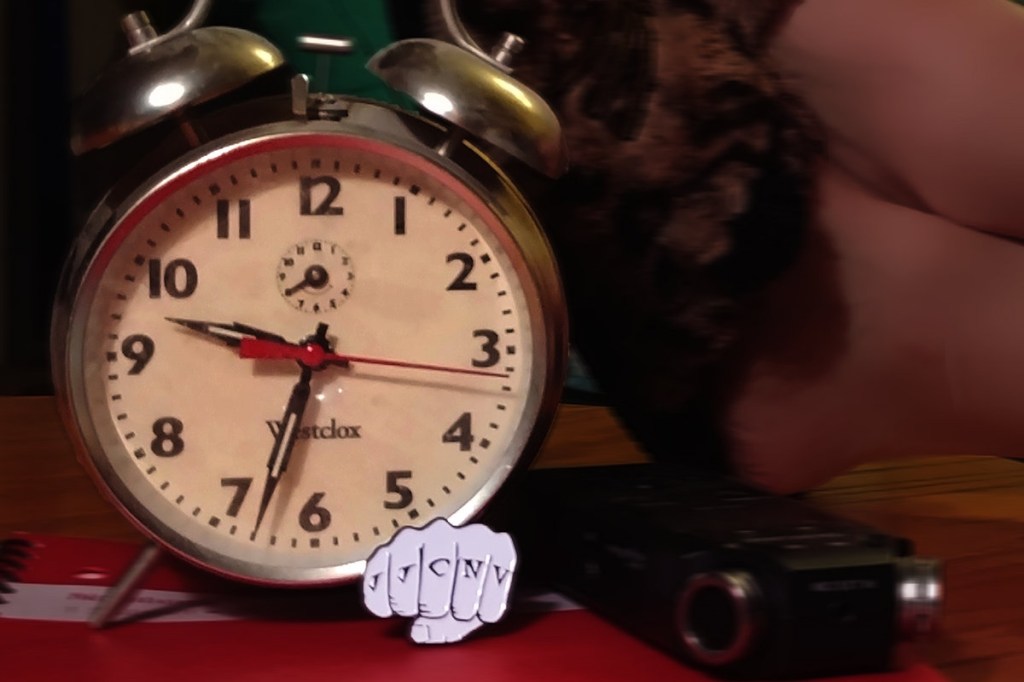
Phoenix-based art punk band JJCnV recently released its single and video “Time Machine” giving a visual side of a song that seems to be about traveling in time to meet up with kindred space aliens to take off from this often dystopian hellscape of a present world. The contrast of crunchy riffs and melodic vocals is paired well with a video that’s black and white like a cross between Repo Man and an old episode of The Twilight Zone with black and white giving way to the color of the star crowded sky in full color hanging over the black and white earth and the three members of the band walking down the road for a better life. In the beginning of the video singer/guitarist Dana Stern is indulging in a reading diet of Jules Verne’s pioneering work of science fiction, 1870’s Twenty Thousand Leagues Under the Seas, Andre Norton’s 1952 post-apocalyptic science fiction classic Daybreak 2250 A.D. and Betty Friedan’s 1963 feminist landmark The Feminine Mystique. All significant choices as each involve daring to imagine a better future and working toward one but also knowing there can be one. Heady stuff for a roughly two and a half minute punk song but it gives an added dimension of meaning to what the song and the band is about and the use of music and art as a vehicle for maybe making a more humane and vital future a possibility by creating works that embody the aspiration toward and vision of a society in which you’d actually want to live. Watch the video for “Time Machine” on YouTube, connect with JJCnV at the links provided and give a listen to the group’s new EP Stays Up Late, which includes “Time Machine,” which released on Bandcamp on May 8, 2020.






 Queen City Sounds and Art
You must be logged in to post a comment.