Lo Artiz’s “Softly Pt. 1” single sounds like something in a constant state of flux, breaking down, rebuilding, gently. Its lush arrangement of textural percussion and processed tones that sound like they’re lingering and melting off her strong yet whispery vocals. It all sounds like you’re getting to spend some time taking a casual walk through another person’s dreams as the mind processes streams of thought as motes of feeling and ideas swirl around and drift off to take on a life of their own for a bright, flickering moment before resolving into other shapes and notions and emotions. Her words come off like free verse existential poetry assembling thoughts to properly frame and consider while engaging with the will to take action on this constellation of interconnected thought patterns. It’s a gorgeous map of inner space the likes of which one doesn’t often hear. Listen to “Softly Pt. 1” on Spotify and follow Lo Artiz at the links provided.
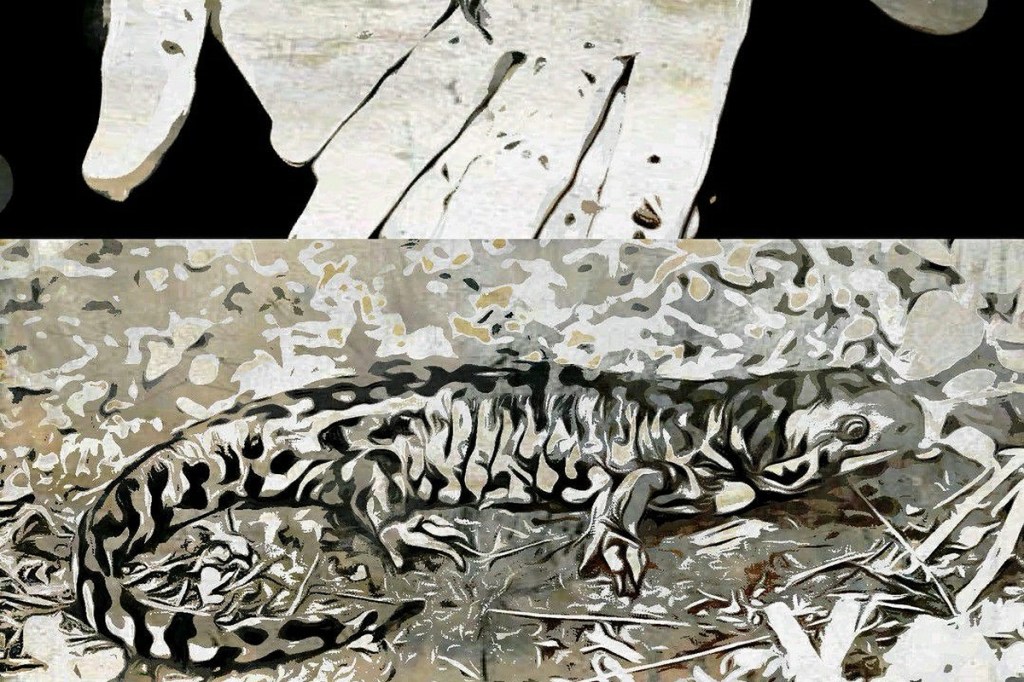
“Salamander Song” sounds like a nature preserve in the beginning. But then Kris Cherry’s song introduces an acoustic guitar that carries a real percussive and expressive rhythm as the song goes on with spare percussion often only a shaker and with backing vocals augmenting Cherry’s luminous singing. The song is like a psych folk ballad about the “salamander man” who lived among the community but had webbed feet and scaly skin and was shunned by almost the rest of the society depicted in the song because people feared his appearance even though he was soft of voice and had a “heart of gold.” He tries to assimilate but is rejected and humiliated at every turn and when he tries to secure employment merely to survive he is denied even that and he has to resort to theft to simply eat and barely get by. In terms of the dreamlike quality of the song it’s reminiscent of the kind of thing Harry Nilsson was doing on the 1971 concept album The Point! But here the obvious inference one can make is that the tale of the “salamander man” is an allegory for racism and the way it imposes limitations on so many and others them so that they have no choice sometimes but choose to operate outside society’s established rules and often on its edges and beyond its boundaries to simply survive much less thrive. This them Cherry carries on to his remarkable new experimental folk album, the cosmically gorgeous Wonderworld out now where his use of field recordings and evocative atmospherics is entrancing. Listen to “Salamander Song” and the rest of Wonderworld on Spotify and follow Kris Cherry at the links below.
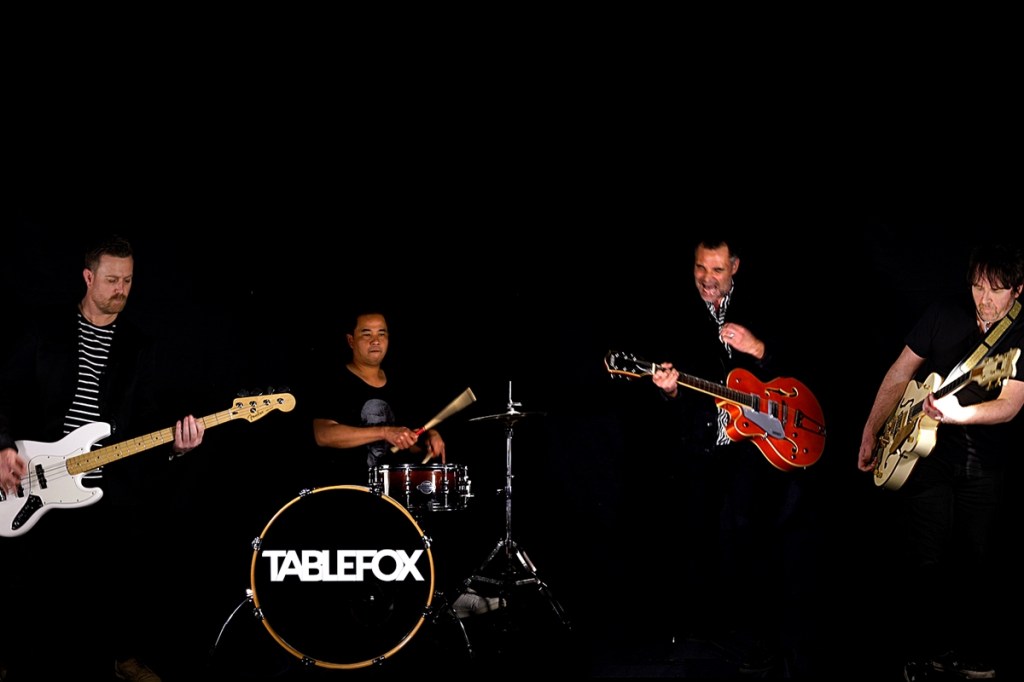
Tablefox begin “Give It All” with a delicate and contemplative plucking of guitar strings and hovering tones and vocals that sound like they’re coming through water. Then the song kicks into a slow-building momentum that swings into ever more epic circles like a pendulum that puts the energy of the song into higher levels of sonic energy with each dynamic shift at roughly one minute intervals until the end. The song’s lyrics seem to be a mantra self-affirming one’s inner voice to persevere acting in ways that undermine your goals and disappoint yourself and past the disappointments visited upon you by others. Two thirds of the way through the song the words suggest that you can hold back and settle for something lesser in whatever it is you believe in or you can do as the title of the song suggests and as seems like a natural instinct and to give it all. And that that choice is what shapes your actions. The fiery guitar lead over the flowing distorted rhythm in the final section of the song puts it over the top in expressing what the band has chosen. Fans of Swervedriver and Catherine Wheel will appreciate the drive and layered guitar work of this song. Watch the video for “Give It All” on YouTube and follow New Zealand’s Tablefox at the links below.
Springworks pairs well the song “Pulsar” with an unusual and imaginative music video. The song is reminiscent of some particularly ebullient pop tune from the 90s era of the Elephant 6 collective. A breezy pace, upbeat rhythms that sweep you along while a hypnotic shifting keyboard sequence running through the song keeps things colorful. The vocal harmonies are subtle and sweet while conveying a message of encouragement not to let your anxieties, perhaps it’s a message to the songwriters too, and momentary fears overwhelm your ability to look up and look forward. Because sometimes we really need someone, mostly ourselves, to nudge us over the hill of emotional resistance to doing the things we want to do but for some reason have lost the momentum to get going. The video includes what looks like old medical school or public programming footage of heart surgery, nothing too dire, just interesting, some 1950s travel documentary reels and all interspersed with images of the celestial objects per the song title illustrating where to keep your attention and of course a pular appears to pump light like a heart does blood making the visual metaphor more clever and obvious than one might expect. A particularly nice detail in the video is after the line about how one should “let the monkeys fly off your back” there is a bit of a film of a chimpanzee rapidly striking a xylophone. The song is like a regular chain of musical and visual Easter eggs for the attentive listener/viewer. Watch the video for “Pulsar” on YouTube and connect with Springworks at the links provided.
Taleen Kali took a fairly unorthodox path to being a performing musician. She grew up in Los Angeles and attended shows at DIY spots like The Smell and Pehrspace before moving to New York City for a few years where she lived near legendary DIY spaces like Death By Audio and 285 Kent and took in the one off house and the like. But she went to Chicago to attend art school and became immersed in the underground music scene there and regularly attended performances by the wide array of noise artists in and touring through the Windy City. Returning to Los Angeles in the early to mid-2010s Kali ended up forming her own band TÜLIPS which was a potent hybrid of punk and and shoegaze. But by summer 2017 Kali debuted her solo act. Across a handful of singles and EPs like 2018’s Soul Songs, Kali has revealed herself to be an imaginative songwriter and lyricist able to translate those concepts to a powerful live presentation with an undeniable mystique. The forthcoming, full-length debut album Flower of Life showcases the work of an artist capable of fusing styles to suit moods and to somehow be both ethereal and introspective and ferocious and gritty often within the same song. The style is very much her own and that of her collaborators but she has truly synthesized elements of garage rock, classic pop, punk, shoegaze and psychedelia to craft her own sound that suits well the heartfelt and heady subject matter of her lyrics.
Listen to our interview with Taleen Kali on Bandcamp where we discuss her roots in music and evolution as an artist. The aesthetics of her songwriting and her appreciation for the Jim Jarmusch film Only Lovers Left Alive, the title of one of the singles on Flower of Life. Connect with the artist at the links below and catch the band currently on tour in the US including at the Hi-Dive on Sunday, October 16, 2022 with Tuff Bluff, Galaxies and Princess Dewclaw.
Molly Nilsson is a Swedish born electronic pop artist now based in Berlin. Since 2007 she has been creating a rich body of work including ten albums starting with These Things Take Time (2008) which yielded her first widely recognized single “Hey Moon” and covered by experimental electronic artist John Maus on his 2011 album We Must Become the Pitiless Censors of Ourselves. The introspective sounds and luminous melodies with measured yet accented beats of Nilsson’s early work and her poetically illustrative lyrics brought to the songs a mystique that has endured throughout the songwriter’s career. Her embrace of a lo-fi aesthetic and organic noise in her songs also gives the music a sense of immediacy and intimacy that other artists at her level of accomplishment, development and influence might have chosen to edit out in pursuit of a kind of fictional purity. This core humanity to Nilsson’s work is one of its perhaps often unspoken appeal and it helps to ground some of the heady concepts she infuses into her lyrics. There is a political element in much of her music that explores concepts of power, our notions of identity and the foundation of what we aspire to achieve and do with our lives and how that is so often driven by the prevailing economic system controlled by the interests of elites until we learn to disentangle our dreams and psychology generally from the ongoing process of commodifying every aspect of our lives. This examination always seems to be carried out in a compassionate and imaginative way and never comes across in didactic fashion. Her 2022 album Extreme (out now on the artist’s own imprint Dark Skies Association) brings together Nilsson’s various impulses and instincts as a uniquely creative musician who imbues accessible pop songs with rich conceptual content that most directly yet not explicitly explores the place and role of power in the world and how it manifests in society and in our own consciousness and how we can challenge the less savory aspects of it in the world and in our own hearts. It’s a thematically deep record that works on the level of a poignant social critique and as pure pop songcraft. It is yet another chapter in Nilsson’s ever-evolving artistic journey and one worth taking in from beginning to end.
Listen to our interview with Molly Nilsson on Bandcamp, connect with the artist at the links below, check out a couple of the videos for songs from Extreme and perhaps see the artist live on our current US tour including the date in Denver, Colorado on Sunday, October 16, 2022 at Glob with Water on the Thirsty Ground and French Kettle Station.
LDN Monos takes the sound of a ritualistic chant and places it in a swim of mechanistic beats and descending bell tones in the beginning of the single “Samsara.” And in the music video we see a swim team entering into their laps, plunging into the water and creating various circles individually and together with a fluid grace paralleled with the song itself which is structured in loops and a circular dynamic of its own. As the title suggests the Hindu/Buddhist concept of the cycle of death and rebirth as reflected in great works of art and music from that region and beyond can be heard in the music and in tandem with the visuals giving it a dimensional and conceptual meaning that into and expresses universal patterns of human behavior and cognition. LDN Monos obviously wouldn’t be the first person to harness this method of using music to convey layers of meaning, his own employment of sounds in crafting what might be considered a bit of an IDM track hits as playful and uplifting like an extended jingle with only benevolent intentions and root inspirations. Watch the video for “Samsara” on YouTube and connect with the UK-based producer LDN Monos on the LinkTree below.
MAITA is a Portland, Oregon-based songwriter who released her second full length album I Just Want To Be Wild For You through Kill Rock Stars in February 2022. Growing up in Oregon sharing time in her Japanese-speaking mother’s home and the English-speaking home of her father, MAITA learned firsthand multiple forms of self-expression and culture that perhaps enhances her own personal insight and layers of observation about the American society that many of us navigate. As a youth MAITA didn’t share her songwriting in private as a bit of a shy introvert but got her start performing live as a solo artist at open mics while attending college in Portland. MAITA subsequently developed the full band as a means of more fully realizing her creative songwriting vision and did some touring before connecting with the local creative community as an active participant. And as many musicians across decades have found out once you become a part of your creative community in a real way you find that often people will support what you do in an organic way and you find ways in which you can offer the same often leading to opportunities to expand your horizons creatively, personally and in terms of the reach of your art.
The debut full-length MAITA album Best Wishes released at the peak of quarantine in May of 2020 to great critical acclaim. But perhaps the band is undertaking its first wide national tour in support of the new record. I Just Want To Be Wild For You is an astute, sensitive and nuanced commentary on how we are bombarded by communication and information daily with demands on our time and attention. Through channels like social media there is an encouragement for “engagement,” a model utilized as a route and method of commerce, monetized by tech companies and presented as a form of marketing that takes advantage of a natural desire to participate in society. But it’s a surrogate for actual connection and subconsciously we feel that disconnect and the and methods supposedly designed for us to keep in touch and maintain the illusion of having a connection to strangers and celebrities, albeit fairly passively, end up creating a dynamic of disconnection that can result in massive confusion and uncertainty because those same systems can make our interactions and ourselves feel disposable. The impact of that state of things on our psychology, aspirations and relationships, interpersonal and societal, has clearly been significant. MAITA’s songs from I Just Want To Be Wild For You comment on this phenomenon in a way deeply personal and in the language of direct experience with entrancing melodies and delicate textures with rich emotional resonance. MAITA takes complex feelings and concepts and renders them relatable with a rare immediacy.
Listen to our interview with Maria Maita-Keppeler aka MAITA on Bandcamp and find the project’s records at your local record store as well as at the Kill Rock Stars website and follow the group at the links below.
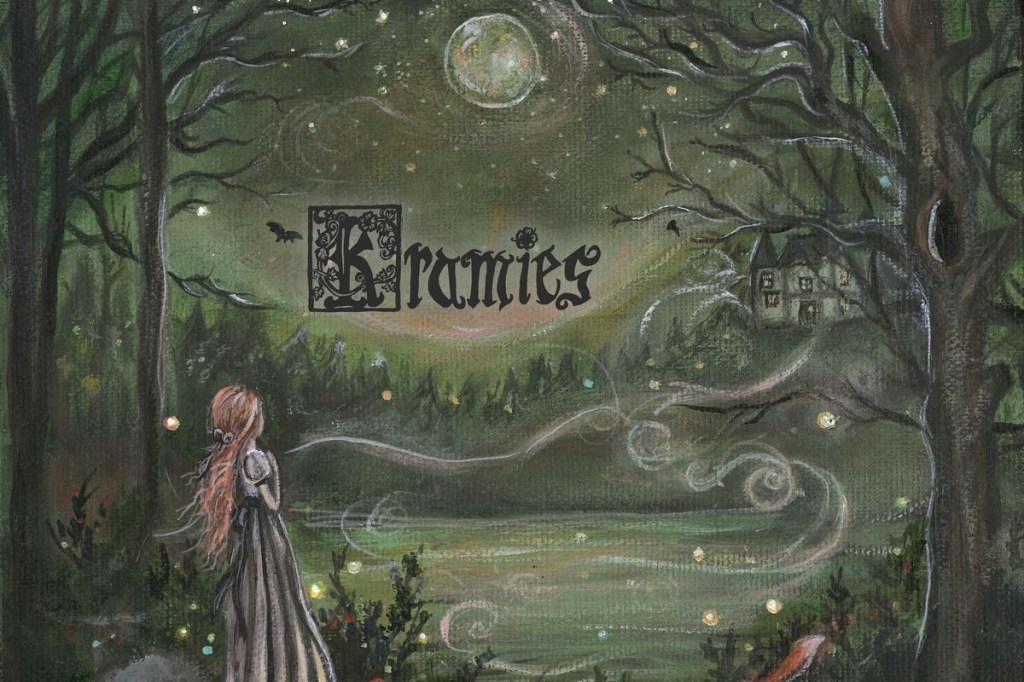
There is a fragile weariness to Kramies’ single “4:44am.” One imagines it’s the kind of song written that time of day when no one should still be up and at which time no one should be waking up unless they are working the early shift at a coffee shop or on the farm or at a hospital in some mission critical capacity. Since Kramies is a producer and songwriter by trade the coffee shop gig isn’t so difficult to imagine much less being up way too late working on music, his own or that of someone else and having a spare several minutes at the end of a long day to take stock of where his personal life has been and gotten away from him. The delicate guitar strumming and textures that accompany incredibly vulnerable and raw vocals sounds off the cuff and maybe in the initial skeleton of the song it was. Is it strictly autobiographical? Who can say but it is written and performed in a manner that suggests at least emotionally it is coming from a real place of lived experience when you reach the point in a relationship at which you must face your role in its falling into dysfunction. In America and especially in the arts it’s so easy to get into the habit of self-neglect that bleeds over into the rest of your life and get so focused on the work at hand that can stretch out and take up most of your time leaving little room for self care much less the essential activities of maintaining a healthy relationship. Kramies finds that place of regret and a will to work toward making the correction in one’s habits in order to try to make things right. But there’s a layer of nuance and realism that makes the song hit with a subtly crushing force. In singing about how he hits the ground emotionally and stays down Kramies captures that feeling of failure as a human and the sense of weakness that comes from it and in singing “While I’m gone well I’ll try not to hurt myself” and encouraging his beloved that “while you’re alone will you please enjoy yourself” then later that he’ll find his way back home but “this time I won’t lose myself, lest time gets away from me again” the songwriter acknowledges this habit that is perhaps difficult to break because of the nature of his life and bemoans the possibility while also seeking to change it but not knowing how. There’s a power in that acknowledgment that speaks volumes in a seemingly simple song. When the haze of atmospheric drones comes in mid song like how your mind can feel foggy when you’re caught up in things and swept up by the momentum of your projects it’s like an expression of the way you can get into that headspace and not be aware that’s where you’re going because it feels normal. And when that all clears out in the last fourth of the song the clarity of wanting to not be trapped in that cycle returns. It’s essentially an experimental folk song but speaks directly to how we let our lives be dictated by work and how that can warp how we relate to each other without any need for didactic political, social or psychological analysis and that’s why the song hits so hard but with a compassion and spirit of gentleness for those going through these times and definitely for those experiencing the fallout. Listen to “4:44am” on Spotify and follow the critically acclaimed songwriter and producer at the links below.
MOONBEAN taps into a strong and vivid mood on its single “rck vs ocn” as though capturing the vibe of an underground club in Berlin or its hometown of Toronto. The title suggests the immage of a rock vs. ocean per the opening line of “My heart is a wave/Your body is a rock/I splash against your skin/But you don’t let, no you don’t let/Your barrier down.” The lyrics further lay out lines that describe how people will often meet with an initial disconnect and communication challenges until they learn to be vulnerable without losing themselves and allowing their own energies to mix with that of another in a way that makes real, vibrant connection possible. The pulsing bassline and the ghostly main synth melody float over pulses of tone as the vocalist tells this story of someone trying to get past someone’s automatic emotional defenses and in these irresistible rhythms and immersive melodies one can imagine that barrier dissolving just enough. Fans of Eurhythmics, Actors and the unusual “New Wave” music at Tech Noir in the film The Terminator will appreciate the retro-futuristic techno pop style MOONBEAN puts forth in this song. It can be scary to open up to someone and let your own barrier down as embodied in this song with the mysterious tenor of the synth line but it also hints at the rewards of being willing to for the right person. Listen to “rck vs ocn” on Spotify and follow MOONBEAN at the links below.









 Queen City Sounds and Art
You must be logged in to post a comment.