

October continues to be the busiest live music month for Denver but one with few if any festivals, thank goodness. As usual here are several offerings worthy of your attention.
Thursday: October 19, 2017
Who: Din Virulent & MGNLP w/Rasmussen and Juice Up
When: Thursday, 10.19, 7 p.m.
Where: 7th Circle Music Collective
Why: This is basically a harsh noise show but one thing lost on people that either actively despise it or don’t get it at all is that most noise artists are completely unlike every other noise artist. Juice Up has some disorienting arrangements of samples and sounds that’s something like a completely unconventional rhythm but there is a humorous playfulness there. Rasmussen is John Rasmussen of Denver noise legends Page 27. Rasmussen’s solo output is so diverse in texture and tone that even his “harsh” noise sets tend to have a subtlety and nuance that suggests the serious composition and planning that undergirds sounds that aren’t trying to fit at all into a pop song format. Din Virulent sounds like what happens when you chain a few delay pedals together and have them feed back off each other while manipulating the signal for an effect like watching white noise on TV if that image was sound and occasionally felt like it was aggressively charging out at you.
Friday: October 20, 2017
Who: Tera Melos w/Speedy Ortiz, Holophrase and Meet Me In Montauk
When: Friday, 10.20, 8 p.m.
Where: Larimer Lounge
Why: Tera Melos might be one of the more misunderstood bands of the last several years because it sounds like its member spent some time playing in one of Trey Spruance’s projects: lots of unusual rhythms and dynamics requiring a precise musicianship while not sounding too in the pocket; heavy guitars, disorienting tones and an alternating driving and and hanging melodies. Its 2017 album, Trash Generator, is like a math rock shoegaze album with a touch of brutal psychedelia. In that way Tera Melos could be said to be a bit of a musical cousin to noise rock phenoms Deerhoof. Speedy Ortiz sounds like it picked up where The Breeders and Throwing Muses left off in the mid-to-late 90s with captivating, fuzzy melodic songs that take a walk out of every day mundane life while commenting on that life with with and sensitivity. Holophrase is a Denver band that has come out of being a guitar-based indie rock band (albeit one that didn’t sound much like anything contemporary and only slightly like Magazine) into being a mostly electronics-based band with deep atmospheres and Malgorzata Stacha’s layered vocal melodies serving as an emotional and sonic locus for the group’s hypnotic, chilly soundscapes.
Who: Thurston Moore w/The Diary of Ic Explura
When: Friday, 10.20, 8 p.m.
Where: Larimer Lounge
Why: It is indeed Thurston Moore of influential No-Wave-and-punk-inflected rock band Sonic Youth. His new album, Rock and Roll Consciousness, showcases Moore’s gift for writing moody pop songs bolstered by dynamic and complex yet tasteful guitar work. It’s melancholy stuff but much of Moore’s best material is yet he also manages to lend his songwriting a thoughtfulness not mired by despair. He can create a gritty image and imbue it with some future hopefulness not yet obvious in the moment he documents in his words—being in the moment but knowing that you can never fully get stuck there unless you try really hard. The Diary of Ic Explura is Toni Oswald’s ambient, sound collage experiments that she sculpts into coherent songs by adding instrumentation to elements that aren’t necessarily inherently musical. Like musique concrète with a soundtrack. Which is nothing new in the world of avant-garde music but Oswald’s vibrant and transporting music demonstrates well how noise and composition can work together.
Who: The Juan MacLean
When: Friday, 10.20, 8 p.m.
Where: Bar Standard
Why: Deep Club 3rd Fridays brings The Juan MacLean to a relatively small venue. John MacLean’s first chapter in influential music came with his tenure as a guitarist for Providence, Rhode Island-based, experimental post-hardcore band Six Finger Satellite. The band was an early practitioner of fusing electronic elements with the usual punk rock instrumentation and operating in the same musical realm as bands like Arab On Radar, Lightning Bolt and Mindflayer—though predating them all. When SFS split near the turn of the century, MacLean left music for a few years before Six Finger Satellite’s sound engineer, James Murphy (who some may know as starting DFA Records and as a member of LCD Soundsystem) helped convince him to make music again. But instead of doing the noisy punk stuff he’d been doing, MacLean focused instead on forward thinking electronic music and a mutant form of modern disco. And that’s what you can more or less expect at this event.
Who: Don Strasburg, Cuckoo, Ashley Koett
When: Friday, 10.20, 8 p.m.
Where: Denver Bicycle Cafe
Why: Don Strasburg isn’t just a clever name for a band. The Boulder-based outfit doesn’t bother to trace any lines on the punk rock spectrum but fans of modern, mathy emo will find something to like but so will anyone that is into the most genre-bending, noisy post-hardcore. Cuckoo is lo-fi dream pop that would have fit in well on the Siltbreeze imprint or so it’s 2016 album Mermaid’s Don’t Exist would suggest. For fans of stuff like early Sebadoh, Eat Skull, Times New Viking, No Age and Microphones. — update, Don Strasburg no longer on the bill, now Terremoto.
Who: Allout Helter & Black Dots FEST sendoff w/faim, The Larimers, Andy Thomas’ Dust Heart
When: Friday, 10.20, 8 p.m.
Where: Hi-Dive
Why: The Fest has been happening in Gainesville every year since 2002. It’s a mostly punk festival and this year’s festival includes the likes of Against Me!, Pegboy, Hot Water Music, Beach Slang, City of Caterpillar, Hum, Snapcase, Atom and His Package and Rainer Maria. But it will also feature Denver political punk thrashers Allout Helter and melodic hardcore band Black Dots. Sure, both bands play Denver regularly but here they are on one bill to send them on their way to one of punk’s most prestigious festivals.
Saturday: October 21, 2017
Who: Afghan Whigs w/Har Mar Superstar
When: Saturday, 10.21, 8 p.m.
Where: Gothic Theatre
Why: Afghan Whigs both predated and embodied what was great about the alternative rock era. The group started as a kind of garage rock band but infusing that sound with soul and R&B, with lyrics revealing a keen insight into human psychology, yielded some of the best records of the 90s. 1993’s Gentlemen was the band’s major label debut, after an independently released 1988 debut and two fine records for Sub Pop, and the record that was a departure from the fuzzy psychedelia of its earlier efforts. As “alternative rock” was running out of steam by the middle of the decade, Afghan Whigs continued to write and record vital music for 1996’s Black Love and 1998’s 1965 before the band amicably split in 2001. Singer Greg Dulli kept on battling his personal demons in other projects throughout the 2000s but in 2011 Afghan Whigs announced it was reuniting. A lot of bands from the alternative rock world have reunited and most of them have had respectable tours and the Whigs were no different. Dulli was and is an electrifying frontman and the band’s performance startlingly powerful overall. Currently the group is touring in support of its 2017 release In Spades. Har Mar Superstar has stylistically been all over the map from silly hip-hop early in the life of the project (Sean Tillman is also in pop band Sean Na Na) to a more Motown-esque soul and R&B sound while often performing all but nude and making an oddly compelling spectacle of himself. But the music is legit and if it’s tongue in cheek it is in the way that only someone with a deep respect for the musical style could pull off.
Who: Sound of Ceres album release of The Twin, Plume Varia and The Milk Blossoms
When: Saturday, 10.21, 9 p.m.
Where: Syntax Physic Opera
Why: When Ryan and Karen Hover started Sound of Ceres in 2015, setting aside their dreamy indie pop band Candy Claws for the time being, they seemed to be tapping into a daydream realm of freely associating ideas and sounds and something about the purity, honesty and transcendent beauty of the music translated well onto the recording of 2016’s Nostalgia for Infinity. On the 2017 follow-up, The Twin, the band is spending less time drifting through shimmering gossamer and luminous fog. The minimalist songwriting approach this time leaves enough space for greater clarity of tone and distinctness of sounds working in conjunction with each other. It is not a better record but it sounds very focused. Denver dream pop greats Plume Varia and The Milk Blossoms open the show potentially opening a vortex into some realm Lord Dunsany would have written about. At least emotionally speaking. Vampires and werewolves aren’t real either, kids.
Who: Torres w/The Dove & The Wolf
When: Saturday, 10.21, 8 p.m.
Where: Larimer Lounge
Why: Torres is an artist like PJ Harvey, Aldous Harding, EMA or John Vanderslice who are difficult to pigeonhole, whose high imaginative and powerful work cannot be reduced to a simple genre. Mackenzie Scott, the person behind Torres, doesn’t limit her songwriting to a single instrument so her sound has a layered cohesion even as it sounds like she’s going off the rails. There is an honesty, power and vulnerability to her music that comes across perhaps most vividly on her new record, Three Futures. Interestingly enough, Mackenzie got Rob Ellis, a longtime collaborator with PJ Harvey, as well as Portishead’s Adrian Utley.
Who: The Rotten Blue Menace reunion show w/Short Bus Rejects, The Beat Seekers, The Beeves and Sentry Dogs
When: Saturday, 10.21, 7 p.m.
Where: 7th Circle Music Collective
Why: The Rotten Blue Menace spent a few years being one of the most entertaining and active ska bands in Denver so it’s only appropriate that it would have its reunion show sharing the stage with a band it likely influenced, Short Bus Rejects, who are playing their final show this night. It won’t all be ska or ska punk because street punkers Sentry Dogs and melodic grunge wonders The Beeves will fill out the bill.
Who: Kitty Crimes (DJ set), Snubluck, DJ Polyphoni and Just, Kevin
When: Saturday, 10.21, 8 p.m.
Where: Fort Greene
Why: Kitty Crimes is normally a fast rapper with some explicit content in her lyrics and always pretty entertaining. For the DJ set who knows what might be in the mix because Maria Kohler, aka Kitty Crimes, has fairly diverse taste in music and the rest of the night will be some form of electronic dance music including experimental beatmaker and soundscaper, Snubluck.
Sunday: October 22, 2017
Who: Daikaiju w/TripLip, Kenaima and Chaff
When: Sunday, 10.22, 8 p.m.
Where: Streets of London
Why: Since 1999, surf rock band Daikaiju from Huntsville, Alabama, has been performing shows that are the stuff of legend. Fire, acrobatics, the kind of exuberant energy that’s impossible to not be swept up in at the show. They play in costume so you might think of them being, overall, something like Peelander Z and Crash Worship, lucha libre and kabuki. People often use the word “chaotic” to describe the show and fair enough but more like an explosion of fun. Also playing the show is TripLip, which is comprised of people who used to live at the late, great Five Points Denver DIY venue Mouth House. TripLip is more psych and prog but very much in the same spirit as Daikaiju, a band that somehow hosted Daikaiju’s wild live show more than once in a residential neighborhood.
Who: A Giant Dog w/SPELLS and Class President
When: Sunday, 10.22, 8 p.m.
Where: Hi-Dive
Why: It’s odd that Austin’s A Giant Dog hasn’t broken to a much larger audience. But for now count yourself lucky you’re getting to see the band in smaller venues in Denver for now. Its rowdy, tuneful mélange of early glam rock, punk and power pop is celebratory without coming off insincere. That’s probably because the songs are about things that anyone that isn’t living a glamorous or pampered life can relate to and delivered with an unlikely combination of vulnerability and conviction. In 2017, A Giant Dog released Toy, its most fully-realized album to date, through Merge Records. Denver’s SPELLS is cut from a similar cloth as a brash, minimalist punk band not short on melody in its own right.
Monday: October 23, 2017
Who: Daikaiju, TripLip and Today’s Paramount
When: Monday, 10.23, 7 p.m.
Where: 7th Circle Music Collective
Why: For Daikaiju and TripLip see above. Today’s Paramount is sort of a psychedelic jazz rock band with touches of carnival music and ska. But it works and Today’s Paramount doesn’t sound much like anything else in Denver except for maybe a band where the chops, songwriting and humor are blended together well and developed to a high degree like The Inactivists.
Who: Shadows Tranquil, Voight, Equine
When: Monday, 10.23, 8 p.m.
Where: Syntax Physic Opera
Why: Shadows Tranquil is a band including longtime music fan, often threatening to be musician, finally is, Doran Robischon, and this is the band’s EP release show. Knowing Robischon’s taste for noise, witchouse, dark atmospheric music and stuff on the moody spectrum of all of that, his band will probably be interesting. Voight is the post-punk band that has interwoven strong strains of noisy shoegaze and industrial. Equine is the solo project of Kevin Richards and it’s guitar soundscaping stuff that comes off like a sculpted version of ambient and musique concrète.
Who: Hissing w/SUTEKH HEXEN, Of Feather and Bone, Worm Ouroboros, Vermin Womb and Casket Huffer
When: Monday, 10.23, 8 p.m.
Where: Hi-Dive
Why: Hissing and Sutekh Hexen recently released a split record, fitting since both are more on the brooding end of death grind. Disorienting, hypnotic pummeling through sound and rhythm. Minimalistic yet loud and aggressive. Both are in good company with the rest of this bill. Of Feather and Bone is certainly the more in-your-face style of deathgrind that is thankfully too alienating for casual fans of metal. Vermin Womb is similarly-minded but has more hanging dynamics and sounds closer to the roiling chaos bordering on nasty atmospherics in some black metal. Cheyenne, Wyoming’s Casket Huffer has a flavor that still has some connection to thrash, at least in the guitar work. Oakland’s Worm Ouroboros, however, will be a bit of an anomaly with its beautifully expansive, minimalistic and melodic, ethereal metal rooted in themes of nature and humankind’s relationship with the environment. If you’re fans of SubRosa, Dreadnought and Wolvserpent you’ll probably find something to like about Worm Ouroboros. Update: Worm Ouroboros no longer on the bill, instead Un, the “Aetherical Doom” band from Seattle. Also, it appears Sutekh Hexen dropped out of the show too.
Tuesday: October 24, 2017
Who: Hans-Joachim Roedelius w/Xambuca and Dream Hike
When: Tuesday, 10.24, 10 p.m.
Where: Mercury Café
Why: Hans-Joachim Roedelius is one of the true pioneers of krautrock and synthesizer-based music generally. His diverse body of work influenced the development of the aforementioned as well as new age music, psychedelic rock, ambient and electronic music generally. He was one of the co-founders of Zodiak Free Arts Lab in West Berlin in 1968, one of the most important spots for experimental music and the avant-garde of its time. Along with Conrad Schnitzler and Dieter Moebius he formed Kluster (later Cluster after Schnitzler left the group), a band for which any idea seemed a go and its’ mixture of standard rock band instrumentation (albeit used toward unorthodox ends), cello, synths, feedback manipulation and unusual devices to use in music like car batteries and signal generators. Kluster didn’t exactly hit the charts but its legacy of experimentation and recontextualizing sounds continues to this day.
Roedelius has since then been a prolific artist whose projects (solo and otherwise) and collaborations have pushed the boundaries and horizons of experimental music and synthesizers. With Cluster and Harmonia, Roedelius took truly unusual and groundbreaking musical ideas and made them accessible. Cluster collaborated with Brian Eno on 1978’s ambient music classic After the Heat. In the next decade Roedelius’ work helped to refine and further define the aesthetic of techno. But, interestingly enough, Roedelius’ most prolific years came in his mid-sixties around the turn of the century. This is a rare opportunity to witness one of the founders of modern music and especially at a small and intimate venue like The Mercury Café.
Who: Ariel Pink w/Bite Marx
When: Tuesday, 10.24, 7 p.m.
Where: Hi-Dive
Why: Ariel Pink as much as Animal Collective and Deerhunter can be said to have been responsible for inspiring a whole generation of musicians to use reverb on their vocals and guitars in an attempt to create a dreamlike soundscape that pre-dated the full-on psychedelic rock revival by half a decade. Except that those three acts did that and pushed the aesthetic further than most of the people they influenced. AC released a few of Ariel Pink’s earlier records before he was a touring act or one that played live much at all. To his credit, like Animal Collective and Deerhunter, every one of Ariel Pink’s albums pushes his own envelope and his new record, Dedicated to Bobby Jameson, is a fitting homage to the late, great cult songwriter of transporting psych folk.
Who: Dinosaur Jr w/Easy Action
When: Tuesday, 10.24, 7 p.m.
Where: The Gothic Theatre
Why: Dinosaur Jr is the clear draw for this show and rightfully so. The band has inspired more great guitar music to have come along since the early 80s out of proportion to their level of fame than most other bands you could name. Certain an influence on shoegaze, noise rock, alternative rock in general and any kind of left field music that dares to use guitar sounds with a nod to classic rock virtuosity and punk rock’s willingness to repurpose and deconstruct rock tropes. But get there early and catch one of the greatest frontmen in the history of rock music in John Brannon of Easy Action. One, the band is like a psychedelic version of Black Flag with that kind of forcefulness and ability to write guitar riffs that also disorient the senses. Brannon first came to the attention of most people in the know with his hardcore band Negative Approach. But in the mid 80s, Brannon formed legendary noise rock band Laughing Hyenas with the late Larissa Stolarchuk, Jim Kimball and Kevin Munro. For a decade the band set a high bar for intense live performances and songs that really articulated the harrowing struggle between desperation, inspiration and dreams of a more meaninful existence. Easy Action formed near the turn of the century and alongside a re-formed version of Negative Approach it has been Brannon’s outlet for his unique vocal style that is as terrifying as it is riveting.
Who: Tei Shi w/Twelve’len
When: Tuesday, 10.24, 7 p.m.
Where: The Gothic Theatre
Why: Valerie Teicher was born in Buenos Aires and spent part of her childhood in Bogotá and Vancouver, BC. So maybe somewhere along the line her knack for gently but vibrantly soulful vocals started to develop. However it happened, her early singles as Tei Shi found an audience among fans in her then adopted home city of New York, where she moved after attending Berklee. After a string of acclaimed EPs, Teicher released her 2017 full-length Crawl Space. It is an expansive gem of a downtempo, R&B-inflected synth pop album named after a place Teicher used to go to confront her fears of darkness. An apt metaphor for the various situations (emotional, social, professional, personal and so forth) Teicher discusses with nuance and insight across the album’s fifteen tracks.
Who: Dayglo Abortions w/Serial Killer Sunday School, The New Narrative and Self Service
When: Tuesday, 10.24, 9 p.m.
Where: Streets of London
Why: With a name like Dayglo Abortions the Canadian punk band was never going to have to worry about being co-opted by mainstream music outlets. During its existence, Dayglo Abortions have been punk, hardcore and crossover but its messaging has been the same—a big middle finger of irreverence for mainstream normalcy. Read the track list to the 1986 classic Feed Us a Fetus and you might even wonder where this band is coming from except for a healthy and vitriolically humorous disdain for right wing politics and racism and other aspects of Western culture that make it a bummer for anyone trying to live an authentic life. This is also the band that named its 1991 album Two Dogs Fucking. That level of surrealistic humor and pointed political statements didn’t exactly end, thank goodness. Opening the show are Denver’s Serial Killer Sunday School, The New Narrative and Self Service, all great punk bands that aren’t just irreverently funny but who have some fairly pointed commentary on the ills of American society.
Who: My Life With the Thrill Kill Kult w/Ritual Aesthetic and DJ Ritual
When: Tuesday, 10.24, 8:30 p.m.
Where: Streets of London
Why: My Life With the Thrill Kill Kult is celebrating its 30 year anniversary with this tour so they’ll be playing a whole lot of early albums Confessions of a Knife (1990) and I See Good Spirits And I See Bad Spirits (1988) so you’ll get to see some vintage material. The show is the best kind of spectacle and it perfectly blends B-movie horror kitsch, a carnival, trash culture and industrial dance music into an inspired whole. Chances are it will be one of the most fun shows you’ll see all year even if you’re not necessarily into industrial music. DJ Ritual will spin his relatively eclectic set at the show and between bands. Ritual Aesthetic is an industrial rock band from Denver in the vein of stuff like Electric Hellfire Club and Stabbing Westward when that band is more industrial than metal.
Wednesday: October 25, 2017
Who: Arcade Fire w/Bomba Estereo
When: Wednesday, 10.25, 6:30 p.m.
Where: Fillmore Auditorium
Why: Arcade Fire quickly became one of the most popular of early 2000s indie rock bands following the release of its 2004 debut album Funeral. On that tour the band played in Denver at Hi-Dive and Larimer Lounge. By the time Neon Bible came out in 2007, Arcade Fire had become too commercially successful to play small clubs. And that’s where it cold have ended with all the pressures of the music industry guiding the band into tried and true territory. But Arcade Fire actually risked alienating fans with 2013’s Reflektor and its emphasis on the electronic side of the band’s soundscapes. For 2017’s Everything Now, the band recruited Pulp’s Steve Mackey, Thomas Bangalter of Daft Punk and Geoff Barrow of Portishead to come in and do production work and the resulting set of songs is lush and has a warm, sweeping quality that one might expect out of a 70s glam rock record. As such the live show is sure to not skimp on a visual component to aid in the elevated tone of the songwriting. It’s kind of a past time of music critics and older fans to trash Arcade Fire today but it’s arguable the band is writing the most interesting music of its career by being willing to push forward instead of sticking to what some people think is what they do best. Bomba Estéreo is an alternative Cumbia band from Colombia.
Who: KMFDM w/OhGr and DJ Ritual at Summit Music Hall
When: Wednesday, 10.25, 7 p.m.
Where: Summit Music Hall
Why: Kein Merheit Für Die Mitleid does not in fact mean “Kill Mother Fucking Depeche Mode,” per the long-running joke. The industrial band was founded in Hamburg, Germany in 1984 and has undergone numerous incarnations and stylistic shifts from its early performance art-oriented shows to its full embrace of bombastic kitsch, sardonic humor and thoughtful social critique. You can probably start anywhere to get an idea of what the band’s music is about but for beginners give 1997’s Symbols a listen. Which is appropriate enough because Ogre from Skinny Puppy will perform his solo material as OhGr as a kind of co-headliner for this show. His set lists have included a good deal of material from Welt and SunnyPsyOp. And it’s Ogre so his set will have plenty of the inspired weirdness that has made him one of industrial music’s most interesting performers and artists. And who knows, maybe he’ll join KMFDM on stage for “Torture” as he did during KMFDM’s tour for that album in the 90s.
Who: Guided by Voices
When: Wednesday, 10.25, 8 p.m.
Where: Fillmore Auditorium
Why: Robert Pollard is by now both a godfather of modern lo-fi rock and one of its most accomplished and prolific artists. Had he ended Guided By Voices after 1994’s epochal Bee Thousand he would still be a legend. But 18 albums later, Pollard is still going strong with two 2017 albums: August By Cake (Pollard’s 100th recorded album) and How Do You Spell Heaven. Not every song is a winner but even Bob’s “lesser” material is worth a spin. The live show is an unabashed flood of splintery rock and roll in an era when there’s too much emphasis on being smooth and polished or faking grit. There’s no fake grit with Guided by Voices except maybe as an inside joke with fans and the audience.
Who: Glasss Records presents The Artists of Glasss and Friends: Princess Dewclaw, RAREBYRD$, Bianca Mikahn, Gold Trash, Juniordeer, EVP, Abeasity Jones, Pearls and Perils, Super Macho and Chromadrift as well as Adam Selene and Nighttimeschoolbus
When: Wednesday, 10.25, 7 p.m.
Where: Alamo Drafthouse – Sloans Lake
Why: This is a big showcase for Denver experimental music imprint Glasss Records and it includes some of the Mile High City’s most interesting bands and guests like alternative hip-hop group Nighttimeschoolbus.This show is a great opportunity to get a taste of a lot of what the artists on the label have to offer as they won’t be playing full sets.
Who: Bell Witch w/Primitive Man, Urn and Oryx
When: Wednesday, 10.25, 8:30 p.m.
Where: Hi-Dive
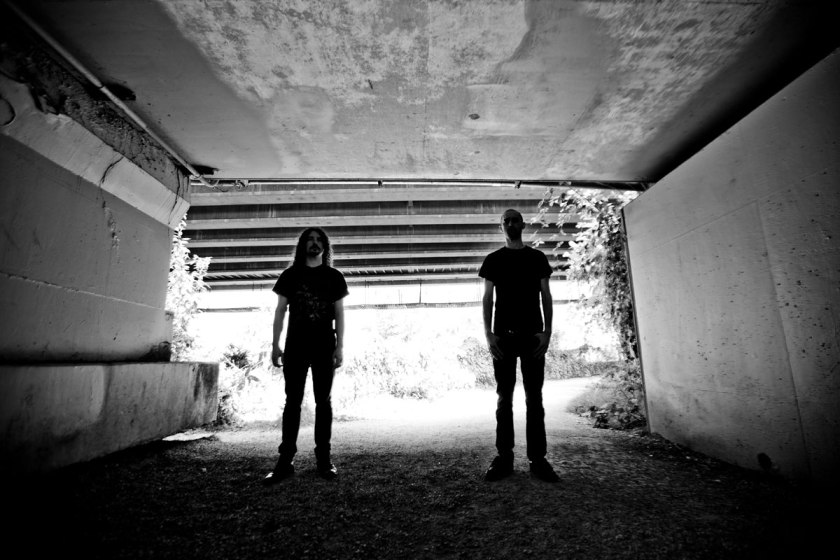
Why: Seattle-based doom band Bell Witch released one of the genre’s most haunting and crushing albums of 2017 with Mirror Reaper. The duo manage to conjure spectral horror and primal energies crying out in drawn out triumph with processed bass, drums and vocals. A perfect pairing with tourmates Primitive Man from Denver whose own 2017 album Caustic not only beyond lives up to and embodies the album title, it is an evocation of sustained despair, desperation and frustrated rage transmogrified into colossal and punishing songs that somehow also serve as a catharsis and a channel into an inner peace that are the opposite of the songs themselves. Opener Oryx is a sort of doom grind duo and the other opening act, Urn, injects some psychedelic elements into its own brand of doom. Probably the loudest show of the week outside of that Dinosaur Jr and Easy Action show on October 24 but also easily one of the best lineups of heavy music all month.





 Queen City Sounds and Art
You must be logged in to post a comment.