Wolves in the Throne Room at The Black Sheep, October 2, 2017. Photo by Tom Murphy
Wolves in the Throne Room dispensed with the usual stage lighting at The Black Sheep. The Olympia, Washington-based black metal band retired from the standard touring circuit several years back partly because the environment didn’t suit the music or the experience the band wanted out of playing live shows for itself and for fans of the earthy, transcendent beauty of its music. This time out the band was touring in support of Thrice Woven, its first full-length album not tied to a previous release since 2011. Some of us would have loved to have seen a live performance of 2014’s all-synth Celestite, the companion to 2011’s Celestial Lineage, but that will probably never happen.
Wolves in the Throne Room at The Black Sheep, October 2, 2017. Photo by Tom Murphy
At any rate, Thrice Woven is the first album following the trilogy of Two Hunters, Black Cascade and Celestial Lineage and the album, and the live show, felt like a band that had to pare back and reinvent itself using the parts it had lying around in the wake of what some critics might have called career suicide when the band announced its last lengthy tour in 2011. There’s something majestic and accessible about Wolves in the Throne Room that reached a wider audience than many of its peers—the kind of accessibility that was propelling the group to wider audiences including people who otherwise had little interest in metal or heavy music in general. The material for Thrice Woven is probably too long format for people conditioned by the brevity of pop music to find fully engaging but for this tour, Wolves in the Throne Room created a stage set like a pagan holy place with structures and patterned design work to enhance the sense of the intimate yet otherworldly with the illumination provided by lights imitating the orange of campfires and braziers burning the incense to clear the space of unwanted influences. In the background, a blue stage light cutting through oranges, reds and purples and reds like stark moonlight penetrating the haze that made the figures on stage indistinct. The latter effect seemed to hint that the band wanted the identities of the players to matter less than the music and the experience itself—a shared ritual to dissolve, for an hour or two anyway, the demands and destructive culture of the modern world.
Wolves in the Throne Room at The Black Sheep, October 2, 2017. Photo by Tom Murphy
Something about the relentless, sometimes abrasive, flood of sounds from stage was indisputably uplifting and cathartic. Like a cleansing of the mind through the tribal sounds and a sense of having participated in an experience crafted to express a mystical experience. With songs with titles like “The Old Ones Are With Us,” “Mother Owl, Father Ocean,” and “Fires Roar in the Palace of the Moon” it seems apparent that a certain meaning, not merely an aesthetic, was being conveyed suggesting a reminder of our ancient roots as a species that unite us, a connection that holds potential for a positive future. There wasn’t much stage banter but that would have just broken the spell and WITTR tends to be good at not ruining the moment.
Wolves in the Throne Room at The Black Sheep, October 2, 2017. Photo by Tom Murphy
Who:Musical Mayhem: Corey Daggers, Snaggletoothe and f-ether When: Thursday, 12.14, 9 p.m. Where: The Skylark Lounge Why: This is Musical Mayhem at The Skylark Lounge part 1 (part 2 is in two weeks) for December. Typically it’s somewhat an extension of Claudia Woodman’s Weird Wednesday meaning it’s the weirder end of Colorado live bands and occasionally an underground touring band. The night is simulcast by Hypnotic Turtle Radio. This night, zombie surf rocker Corey Daggers will be performing. As will improvisational noise rockers Snaggletoothe and experimental electronic dance legend in the making, f-ether. It’s 21+ because it’s a bar but it’s also a free show.
Who:Prayers When: Thursday, 12.14, 7 p.m. Where: Bluebird Theater Why: Prayers, the band that coined the genre Cholo Goth, return in the wake of the release of its 2017 album, Baptism of Thieves. Part industrial, part electro death rock, part synth pop, Prayers has from the beginning articulated a gritty personal vision that is both profane and philosophical, compassionate and poetic about the harshness of everyday life for many people. Perhaps the whole Cholo Goth thing is a gimmick in a way but there is no denying the power and charisma of the band in the live setting. Recently Rafael Reyes and Dave Parley collaborated with former members of Christian Death (Rikk Agnew, James McGearty and Gitane Demone) on the Cursed Be Thy Blessings EP.
Friday: December 15, 2017
The Milk Blossoms, photo by Tom Murphy
Who:Nicole Atkins w/The Milk Blossoms and Chella Negro When: Friday, 12.15, 7 p.m. Where: Lost Lake Why: Nicole Atkins is at this point a veteran songwriter whose combination of classic pop (think pre-1960s), indie rock, psychedelia and American lends her music a ring of familiarity while not really sounding like anyone else. Her clever wordplay and bright voice makes it easy to forget the brutal, yet not cruel, emotional honesty of, for instance, her 2011 album Mondo Amore. Atkins’ new album, 2017’s Goodnight Rhonda Lee, finds the songwriter finding new ways to make some fairly stark self-reflection seem hopeful and in turn helps you to find ways to forgive yourself without letting you off the hook. Atkins may be quasi-famous, and rightfully so, at this point, but she’ll be in good company with the local openers. The Milk Blossoms make fragile yet powerful pop songs with unconventional elements. Somehow the ukulele doesn’t seem like a quaint affectation as it deftly expresses the delicate emotional colorings within and on the fringes of the deeply affecting voices of Harmony Rose and Michelle Rocqet. Chella Negro has long been a singer-songwriter in Denver and the whole time she’s managed to write songs that go beyond surface subject matter. Even when one of her songs is overtly about this or that, within those stories Chella dives deeper and digs out those kernels of truth merely suggested at by most other songwriters and finds a way to articulate them in a way that’s relatable to almost anyone.
Who:Alphabet Soup #29: Rare Byrd$, Adam Selene, MYTHirst, Furble Cakes, Chromadrift, DaShwoo and Preston Safeway When: Friday, 12.15, 8 p.m. Where: Deerpile Why: This is mostly a hip-hop show with some chill vibes. Chromadrift is an ambient artist whose songs don’t sound like he just put together the money to buy a Yamaha DX-7 and a cheap drum machine to plug into an SP-404. It’s like he’s tapped into a place of true calm and solace somewhere in the recesses of his dream states and made them into songs. Rare Byrd$ is secretly in the top three hip-hop groups in Denver and the group’s songs are incredibly compassionate feminist mantras designed for anyone looking for music or art in general that is strong but has no truck with brutality. As if an old school gangsta rapper/producer ditched the violent imagery and brutal beats for a message of love in both specific and bigger picture senses accompanied by smooth beats possessed of a transcendent and transporting beauty.
Saturday: December 16, 2017
Night Grinder, photo by Tom Murphy
Who:Grotto album release w/Restivo, Moon Atomizer and Night Grinder When: Saturday, 12.16, 7 p.m. Where: Mutiny Information Café Why: Denver’s Grotto is releasing its latest album, Spring Drips, this night. Its instrumental music combines the hazy, blissed out sensibility of downtempo IDM with electro-acoustic soundscapes. The beats are both sculpted electronics and organic-sounding like something you’d hear from Bonobo or Sound Tribe Sector 9 but an aesthetic closer to the playfulness and dreamlike quality of early Björk. Also on the bill is noise/industrial artist Night Grinder. The latter is the solo project of Cribsy Gacy who some from the Saint Louis noise scene might remember for his time in various bands The Icebergs, Monster Sized Monster and Street Justice. Using bass, vocals, various electronic devices in layers, Gacy captures the sense of civic decay and economic neglect along with the accompanying desperation many of us will find familiar but not often articulated in music.
Who:Esme Patterson w/Susto and Tyto Alba When: Saturday, 12.16, 8 p.m. Where: Globe Hall Why: When Esmé Patterson was in Paper Bird her talent was clear and obvious. There was a lot of talent in that band in general. But it always seemed that she had to tie her self-expression and imagination in the context of that band to an aesthetic that while it clearly had an appeal for many people, probably felt limiting. By 2012, Patterson wrote and released her debut solo album All Princes, I. To anyone only superficially familiar with Paper Bird it might not have seemed too removed from the music of her old band. In fact, it was a stylistic leap in a different direction without ditching what made Patterson’s vocals and songwriting noteworthy—warm vocals that both sound like something very present but evoke something you might have heard on FM radio in the 70s. Her lyrics even then balance well imaginative storytelling with commenting on human relationships with other people and with ourselves.
2015’s Woman to Woman found Patterson taking even more chances as a songwriter by writing songs in response to iconic pop songs of the last few decades including Dolly Parton’s “Jolene” and Elvis Costello’s “Alison,” a song down there with “Under My Thumb” in terms of being incredibly catchy, well-written songs but with lyrics that might make you think differently of the artists in question. In each case Patterson is creative, sometimes humorous, and thought provoking. With We Were Wild from 2016, Patterson’s experiments and expansion of her musical palette from her previous albums paid off well on the new set of songs. Some of the reviews of that time talked about how unfocused the album seems to be but some of that came off more wanting to expand horizons and ideas rather than getting stuck in a rut. It also matched Patterson’s own inner experience of examining her own life, which isn’t always such a cut and dry, linear process—it’s more emotional, experiential and intuitive. The record is the embodiment of that too. If it didn’t always work at least the impulse was right. What the album, and Patterson’s newer, as yet unreleased, material revealed most vividly was that the songwriter’s guitar work with its chiming, percussive strum was more reminiscent of something like The Cramps or Jeff Buckley than the folk/Americana roots not to mention her willingness as a vocalist to embrace the wilder end of emotional expression beyond that warm, delicate strength that helped make her name.
Who:Decemburger 2017: Bongripper, Call Of The Void, Serial Hawk, Weaponizer, Abrams, The Munsens, Weeed, NightWraith and Sceptres When: Saturday, 12.16, 3 p.m. Where: Hi-Dive Why: If you’re in the mood for a broad spectrum of extreme metal tonight, get to this show at the Hi-Dive. Call of the Void blurs the line between grindcore and death metal with its stark and unrelenting songs. Weaponizer is sort of a combination of black metal and thrash so the songwriting is there but its aesthetic has that chaotic quality that makes black metal so interesting. Its latest album Lawless Age that would be a good name for the era we’re in or one that we seem to be heading into. The other bands on the bill would be worth your time too if you want to see heavy music that isn’t straightjacketed by purist genre emulation.
Sunday: December 17, 2017
Esmé Patterson, photo by Tom Murphy
Who:Esmé Patterson w/Susto and Down Time When: Sunday, 12.17, 8 p.m. Where: Globe Hall Why: For the great Esmé Patterson see the write-up above. In addition to the Charleston based alt-country/Americana band Susto, is Denver’s Down Time whose indie rock songs are really not being constructed in a conventional sense seeing as it is partly centered on the drums with Davie Weaver playing drums and sometimes bass at the same time. Alyssa Maunders sounds like a long lost member of Young Marble Giants and her minimal guitar work is more a texture than a vehicle for melody. Justin Camilli’s own guitar work matches Maunders’ for melodic textures but his keyboard work is truly standout. The richly saturated tones aren’t as obvious on the band’s excellent debut EP, 2017’s Good Luck!, but live it’s striking. Fans of Unknown Mortal Orchestra and Foxygen should probably at least give Down Time a listen.
Monday: December 18, 2017
Gary Numan, photo by Tom Murphy
Who:Gary Numan w/Me Not You and DJ Slave 1 When: Monday, 12.18, 8 p.m. Where: Gothic Theatre Why: Gary Numan has been an innovative artist in the post-punk, new wave, synth pop and industrial rock genres while being a foundational artist for the latter three. Numan made waves in his homeland the UK with “Are ‘Friends’ Electric?” with his old band Tubeway Army. But he crashed into the international mainstream with his 1979 hit “Cars.” Numan’s blending of science fiction imagery with a sound suggestive of a future neither utopian or dystopian pre-dated and yet was somewhat the aesthetic of cyberpunk, which, as with Numan, was influenced by the visionary and literate novels of J.G. Ballard. Throughout the 80s Numan further experimented with music technology and developed a sound that anticipated and influenced the production of 90s industrial rock bands like Nine Inch Nails and Fear Factory. With 2017’s Savage (Songs From a Broken World), Numan proves that twenty-one albums into his career he isn’t out of ideas or things to say or sound experiments to explore. This time out the theme of the album is the most overt in adopting the subject of the environment and its impact on human cultures whether those cultures acknowledge them or otherwise.
Tuesday: December 19, 2017
Agnostic Front, photo by Todd Huber
Who:Agnostic Front w/99 Bottles, Street Priests and Ultraviolet When: Tuesday, 12.19, 7 p.m. Where: The Black Sheep Why: Agnostic Front was one of the bands that helped establish New York as a late entry into the first wave of hardcore in the 80s. Early on the band had that more original hardcore sound of loud-fast-rules but by the late 80s, Agnostic Front was one of the pioneers of crossover. While claims of the band having been nationalistic and fascist skinheads are laughable when you look into what its songs are about, the band has always had a tough and uncompromising image. And part of that image has also been its working class politics that embrace being a thinking person in a climate where you’re encouraged to dumb down and obey. At least in its music and its presentation thereof, Agnostic Front was having none of that. Anti-war, anti-oligarchy, pro-social justice, pro-solidarity in the face of fascism, Agnostic Front may be one of the older bands in punk but like many that have stuck around, for example D.O.A. and Subhumans, its sense of political ideas have refined giving the old fire in their belly a different kind of edge.
Who:An Evening with Todd Rundgren When: Tuesday, 12.19, 7 p.m.
Where: The Oriental Theater
Why: Who can say they’ve had charting hits over decades and did production work for bands as different as Grand Funk Railroad, Patti Smith Group and XTC? Todd Rundgren’s own music has been on a steady path of evolution since first playing out in rock bands in the 60s and his more recent albums demonstrate his explorations of modern electronic musical styles, 2015’s Global being a good example, while writing music that combines a classic songwriting sensibility with newer sounds and aesthetics that don’t seem awkwardly incorporated, as on his 2017 album White Knight. Throughout most of his long career, Rundgren has adopted new technologies and methods of creating and presenting music and his tours, even for dates at a medium-sized theater like The Oriental, have long been multi-media affairs to enhance the impact of the music. This tour is billed as the “White Night Tour” with hits from across his career so who can say what you’ll hear, especially from a guy who seems averse to the rote and whose catalog is twenty-seven albums long.
Wednesday: December 20, 2017
Mandy Yoches circa December 2013, photo by Tom Murphy
Who:Agnostic Front w/Combat Force and Line Brawl When: Wednesday, 12.20, 8 p.m. Where: The Marquis Theater Why: See the entry for Agnostic Front above. Also on the bill are Denver hardcore bands Combat Force and Line Brawl. The latter released a worthwhile ripper of a record, Worse Off, in April 2017.
Who:Mandy Yoches w/CRL CRRLL When: Wednesday, 12.20, 9 p.m. Where: Goosetown Tavern Why: Mandy Yoches has done vocals for various bands over the years but in the last handful of years she’s been performing under her own name or with her band The Hell Knows. Her melodious, soulful voice and palpable sincerity are a powerful combination. Yoches doesn’t perform too often but you can sometimes catch her at the Goosetown on a Wednesday in any given month including this night when she’ll share the stage with electro-hip-hop artist CRL CRRLL. Ever since the line between hip-hop beatmaking and experimental electronic dance music soundscaping was obliterated some years back, many artists have been able to tape into a wide variety of musical ideas to craft inventive and compelling music. CRL CRRLL just happens to be one of the most interesting artists occupying that intersection of styles and you can find him playing events like Cloak & Dagger as well as hip-hop and avant-electronic shows with his accessible but forward thinking songwriting.
In a year where it seemed as though the hateful dullards of the world, especially in the USA, were puzzlingly victorious in gaining political office and influence, INVSN released a bracing antidote to all of that with The Beautiful Stories. But, as you might expect, the Swedish band followed up the album with a good deal of touring. Which one might think of as praxis seeing as the songs on The Beautiful Stories are all imbued with a humanized radical politics.
INVSN, September 18, 2017
For anyone that ever saw The (International) Noise Conspiracy and The Refused, a high bar of expectation was there. Both of those bands delivered some of the most viscerally energetic live shows of their time. Singer Dennis Lyxzén seemed almost superhuman in his acrobatic stage moves and the raw forcefulness of both bands was inspiring. That Lyxzén and INC bassist/vocalist Sara Almgren are members of INVSN promised a lot alone. Fortunately, the band brought the kind of ferocity and exuberance they would need to make a larger venue show compelling and even inspiring to Larimer Lounge, a venue with a capacity of 250. Like no one told them that they’re playing a place many locals think of as a dive bar even if it isn’t—as if they would skimp and deny themselves the joy of their own music. Not a chance.
INVSN played liberally from The Beautiful Stories and balancing musicality perfectly with a flamboyant performance style, Lyxzén wrapped the mic up over a roof beam and sang from the floor, dancing with people in the audience at one point. At various other points jump spinning off the bass drum and leaning backward to the point his shoulders touched the floor while not missing a note. He was Iggy-like in his way of not only commanding the stage but in moving more energetically than most musicians half his age.
INVSN, September 18, 2017. Photo by Tom Murphy
Theatrics aside, Lyxzén engaged the audience with words acknowledging the perilous state of things in American and international politics. There was no empty bravado. There was an admission of the level of despair that anyone with any sensitivity and cognizance of the situation must feel. But there was plenty of humor too that had little to do with the rise of fascism. The fog the band used throughout the show swirled in the wind of the air conditioner and Lyxzén observed that it made it “feel like we’re in a Whitesnake video the whole time.” It was a nice reminder that a state of constant outrage is exhausting and so is anticipating the next wave of shit coming down the pike from various sources. INVSN’s show embodied a sense of hope and humanity in a time of acute crisis and a hint that it is that route that will help give us the will and heart to turn back that tide even if many great struggles lay ahead.
INVSN, September 18, 2017. Photo by Tom MurphyINVSN set list for September 18, 2017 at Larimer Lounge. Photo by Tom Murphy
Atmosphere performs across Colorado in December. Photo by Dan Monick
Thursday: December 7, 2017
Who:Atmosphere w/Musab + Ink Well (Mink), deM atlaS, The Lioness and DJ Keezy When: Thursday, 12.07, 8 p.m. Where: Ogden Theatre Why: Though Atmosphere is all but a mainstream hip-hop act these days, Slug and Ant had their roots in underground hip-hop in the 90s. As cofounders of Rhymesayers Entertainment, the influential Minneapolis hip-hop imprint, Slug and Ant participated in that creatively rich and collaborative environment nationally that included the Mush Records and Anticon Records imprints and Slug’s participation in Deep Puddle Dynamics, the alternative hip-hop supergroup that also included Sole, Doeseone, Alias and Jel of Anticon. But Atmosphere slowly started to enjoy greater levels of commercial success after the 90s while still remaining an innovative and interesting project. By the time of 2008’s When Life Gives You Lemons, You Paint That Shit Gold, Atmosphere worked with Tom Waits on “The Waitress.” Each of Atmosphere’s subsequent albums have charted respectably on the Billboard charts. But none of that would matter a bit if the music wasn’t worthwhile. On 2017’s Fishing Blues, Slug has returned to the deeply introspective delivery style that made his early work so compelling. Except the naivete is gone but the need to express his truth from the perspective of an older person who doesn’t find some of the bravado of his youth so charming and who finds the desperation to be oh-so-clever boring. Atmosphere today doesn’t lack for the energy for which it’s become known but it is more sharply channeled. Atmosphere is performing numerous shows throughout Colorado over the next ten days or so, the front range shows shows, in addition to the Thursday, December 7 date in Denver include shows on Saturday, December 9 at The Aggie Theatre in Fort Collins, December 10 again at Ogden Theatre in Denver, December 12 at Black Sheep in Colorado Springs and December 13 at Boulder Theater in Boulder.
Friday: December 8, 2017
Ian Cook circa 2013, phot by Tom Murphy
Who:Ian Cooke The Flight I Flew album release show and Going Away Party When: Friday, 12.08, 9 p.m. Where: Syntax Physic Opera Why: Ian Cooke is moving to South Carolina in 2018 to be with his partner of the last handful of years. And when you listen to his 2017 album The Flight I Flew, you can tell he went through an extended period of emotional confusion and turmoil ultimately coming to a place where his heart and and head are in alignment and his creative music given a focus that maybe it hadn’t had in such a short span of time that it took to assemble the new record. You can hear in the album’s songs the epiphanies, the self-realizations, the accepting of forgiveness that takes real work on the part of both people, and the commitment to personal accountability that you don’t hear in a lot of pop music even when it is as thoughtful and ambitious as the type Cooke has written his entire career. Friday’s show will be the full band spanning Cooke’s catalog while Saturday’s show will focus on Cooke’s quieter songs in a solo format. Either way, here’s your chance to see one of Denver’s truly greatest songwriters perform before you only get to see him maybe once a year.
Who:Death in Space, Shawn Mlekush and Herpes Hideaway When: Friday, 12.08, 6 p.m. Where: Hooked on Colfax Why: Aleeya Wilson is a Girls Rock Denver alumna who was probably a bit different from her peers as she used her guitar to make noise and ambient music rather than whatever popular musical style was favored among teens of that time. As a musician and writer, Wilson has tended toward conceptual work with a visceral quality making few if any concessions to mainstream accessibility. Supposedly this is one of her last noise shows in Denver though she’ll probably do some more while in grad school out of state. Shawn Mlekush is one of the synth players in experimental electronic band Jackson Induced Mutant Laboratory. No, not making that up. So his set will be interesting. And of course there’s the dark ambient of Herpes Hideaway. That entity is the solo project of Patrick Urn whose contributions to industrial band In Ether, the production on some Church Fire material and his various noise, hip-hop and electro efforts over the years may not be widely known but in the underground Denver experimental scene, widely respected. Herpes Hideaway finds Urn adopting the character of a witch-like being from another dimension evoking the fears and pains of humanity and purging them from the collective unconscious. Maybe not but that’s the vibe of the live show.
Sunday: December 10, 2017
Unsane, photo by Dan Joerigh
Who:Unsane w/Plaque Marks and Pueblo Escobar When: Sunday, 12.10, 8 p.m. Where: Hi-Dive Why: Unsane crawled out of the 80s stained by the crushing, avant-garde noise rock of Swans, the organic-mystical industrial of Einsturzende Neubauten and perhaps the punishingly grinding transcendence of Flipper. So much so that the band has been often mistaken for a metal band, though that influence is probably there too through the more early doom and thrash end of that music. These days Unsane’s closest musical cousins are probably bands like Eye Hate God and the current incarnation of Neurosis. Its songs sounding like a Rob Zombie movie feels to watch in their finest moments—harrowing, unblinking in its depiction of the horrors humankind inflicts on itself, all awash in heightened emotions. Philadelphia’s Plaque Marks includes members of Creepoid, Ecstatic Vision and Fight Champ so it’s noisy post-hardcore-ish sound is beautifully disorienting. Like if Butthole Surfers had somehow emerged after the 31G imprint bands and modern psychedelic doom had their impact and its members decided they needed to push beyond their immediate influences. Pueblo Escobar is a Denver-based, metallic post-hardcore band that actually lives up to a name like that with dark, edgy songs played with an exuberant sense of fun.
Who:Ultrametal Presents: The Last King of Poland (10) w/John Gross (11), Meme Girls (11:30), Killd By (9:30), Birth (10:30), Ghost House (8:30), French Kettle Station (8) and Blank Human (9) When: Sunday, 12.10, 7 p.m. Where: Syntax Physic Opera Why: Noise tends not to get much stage time outside of DIY venues and Mutiny so this noise showcase at Syntax, a venue that often has a more open booking policy than most clubs, is a welcome change of setting for a show like this. It’s a broad spectrum of noise and not a whole lot in the way of the harsher side. John Gross of Page 27 is playing a rare solo set. Killd By will make the kind of hyperkinetic dance music that only Colin Ward could make in his manipulation of self-created samples inside his beats. Birth is as much performance art as weirdo breakcore. French Kettle Station will likely be his usual energetic post-punk/synthwave delivered with a visceral energy. Blank Human, a noisy kind of ambient. Touring through from Chicago is Last King of Poland who will bring his beat-driven ambient noise tracks. Set times indicated above in parentheses.
Monday: December 11, 2017
Hunter Dragon circa February 2007, photo by Tom Murphy
Who:Hunter Dragon birthday/going away party w/Lazarus Horse and Midwife When: Monday, 12.11, 8 p.m. Where: Syntax Physic Opera Why: Hunter Adams pushed in many different musical directions when he moved to Denver in the mid-2000s from St. Louis. You could consider some of what he did in the indie pop vein, but he also made experimental synth music that bordered on the ambient. His restless imagination wouldn’t let him settle for anything rote so some of his later music was a completely unique sort of electronic dance pop music but infused with an edgy emotional honesty that you pretty much never hear in that sort of music. Adams is a true original with a rich imagination that he expresses with his music eloquently and vividly. Now Adams is moving away from Denver yet again and celebrating the occasion, along with his birthday, with Lazarus Horse and avant-folk artist Midwife. With Madeline Johnston of the latter, Adams was involved in Tiny Amp Tapes so hopefully he can still have some involvement with imprint from afar.
Tuesday: December 12, 2017
Male Blonding, photo by Tom Murphy
Who:Panther Martin w/Couches, Male Blonding and Godchild When: Tuesday, 12.12, 8 p.m. Where: Hi-Dive Why: Panther Martin, the Denver-based indie rock band, has never suffered from a lack of strong songwriting but it’s recent Drats EP finds the band pushing past its obvious influences (The Strokes, maybe some Pavement in there as well as other tuneful purveyors of tastefully fuzzy tone). Couches from San Francisco seems to be coming from a similar place musically but more punk, more from the House of Reatard. Male Blonding may have the greatest rhythm section in Denver indie rock but one that plays to the band’s richly emotive songwriting lead in part by Noah Simons’ commanding yet melancholic vocals.
Who: Hott Mt w/déCollage and Moon Magnet DJ set lost-lake.com/event/1582575-hott-mt-denver When: Tuesday, 12.12, 7 p.m. Where: Lost Lake Why: Hott Mt apparently tracked down Wayne Coyne a handful of years ago and got him to work with them on some music and a video. He later became a fan of the band’s ethereal, synth driven pop music reminiscent of Air’s elegantly crafted nostalgia-inducing tonality and The Helio Sequence’s meshing of guitar rock and gossamery synth pop. Maybe think Black Moth Super Rainbow a bit too. Check out the band’s excellent 2017 album AU. Seems a good pairing with déCollage’s playfully colorful psychedelic music that sounds like it’s being channeled from a world where all classic children’s literature isn’t fiction but a wondrous world worth exploring.
Wednesday: December 13, 2017
Empress circa 2016, photo by Kelly Spencer
Who:Empress w/Grass and Paper Knees When: Tuesday, 12.12, 7 p.m. Where: Lost Lake Why: Empress’ 2017 album, Passion Fade, perfectly synthesizes the band’s instinct for dark, beat-driven industrial music, death rock and the heavier end of post-punk—think The Cult and early Death In June. Gritty, borderline abrasive stuff with corrosive atmospheres. In a bit of inspired pairing, Boulder’s lo-fi noise rock phenoms Grass are also on the bill. Fans of Hue Blanc’s Joyless Ones, Eat Skull and the Reatards should check out Grass.
Who:Glasss Presents: The Speakeasy Series 2017 finale When: Wednesday, 12.13, 6 p.m. Where: Hooked On Colfax Why: This will be the final installment of the 2017 edition of The Speakeasy Series presented by Glasss Records with a focus on more experimental electronic acts from Denver. The shows happened in the basement of Hooked on Colfax with Glasss bringing in a P.A. to allow the room to be awash in rich sounds. For this final show of the year in that series, Glasss will bring in various artists to perform. Some of them may even collaborate but, as with the rest of the series, it’ll be quality and interesting stuff.
Yes featuring Jon Anderson, Trevor Rabin and Rick Wakeman at Hudson Gardens, Little, CO, September 3, 2017. Photo by Tom Murphy
The environment for the show wasn’t the best. An outdoor amphitheatre that isn’t really designed for a concert. Late summer and muggy. The crowd the type that is a little comfort entitled and thinking itself know what “real” music is. Fortunately, on that night, September 3, 2017, Yes featuring Jon Anderson, Trevor Rabin and Rick Wakeman made possible getting to see an era of the band Yes that is often overlooked as well as some deep cuts from the band’s classic 70s catalog.
Though an outdoor show the sound was somehow dialed in with a vivid clarify that allowed the aforementioned band members to shine through the dense air and late twilight. Taking roughly half the set from the band’s most commercially successful 80s albums, 90125 and Big Generator, Yes ARW started the show off with the instrumental “Cinema.” The song as it originally appeared on 90125, was a nod to the short-lived band of the same name in which Rabin, Alan White and the late Chris Squire performed after Yes split for a couple of years in the early 80s. Maybe it’s reading too much into the gesture, but it was a subtle and classy way to honor the legacy of Squire to start things off with that song.
Anderson’s voice many of us have heard most of our lives and you take hearing his truly unique and musical vocals in Yes songs for granted. But live his command of his native instrument in the context of a rock band, even one as dynamic and nuanced as Yes, was impressive. Perhaps none more so than in the sprawling “And You And I.” Wakeman’s synth work on the song is breathtaking just hearing it on the radio or on the record but having those brightly colorful atmospheres envelop you with the sheer volume of the sound system had an augmented power to transport you to the spaces beyond mundane human experiences of the song.
Rabin sometimes comes off like a jazz fusion guitarist and if that’s not your thing it can be distracting. But if you allowed yourself to take in his masterful turns on “Owner of a Lonely Heart,” “Hold On” and “Rhythm Of Love,” it’s like his tone and style is something of the missing link between John McLaughlin and the more imaginative industrial and experimental metal guitarists of the late 80s and 90s in his use of texture as well as melody and the way his tone cuts through the song with an elegant precision.
A show like this could be the kind of thing you’d expect at a state fair or on the purely nostalgia circuit. But at no point did the show feel like a pander to past glory. It was a reminder of the power of imagination and how music that is truly experimental but imbued with a fusion of passion and intellect can attract a broad audience—something many musicians and record companies today would do well to take note.
Yes featuring Jon Anderson, Trevor Rabin and Rick Wakeman Set List For 9/3/17
1. Cinema
2. Perpetual Change
3. Hold On
4. South Side of the Sky
5. And You And I
6. Lift Me Up
7. Rhythm of Love
8. I Am Waiting
9. Heart of the Sunrise
10. Awaken
11. Owner of a Lonely Heart
Maria Bamford at Paramount Theatre on Friday, December 1. Photo by Natalie Brasington
Thursday: November 30, 2017
Charlie Parr, photo by Nate Ryan
Who:Charlie Parr w/Them Coulee Boys When: Thursday, 11.30, 7 p.m. Where: Bluebird Theater Why: Charlie’s stage banter is pretty much worth the price of admission. But his take on country and blues is so personal and individual that he leaps over expectations of the genre performed by modern musicians. You can start anywhere in his discography and it’ll be worth a listen. His latest record, 2017’s Dog, seems to capture this moment in American history where a lot of people are experiencing depression and despair and a need to catch a break from that wearying state of mind. In articulating that mood so well, Dog is actually a therapeutic record that actually finds a way to explore dark places without getting stuck in them.
Who:To Be Astronauts album release w/The Patient Zeros, Dead Pay Rent and Flahoola When: Thursday, 11.30, 7 p.m. Where: Lost Lake Why: To Be Astronauts is a psychedelic hard rock band that sounds like the main songwriter might listen to a whole lot of the Misfits and Clutch. Fortunately, on the band’s new album, indifferentstates, these tendencies are morphed into something more original and the songs seem to be about something substantive as in the songs “This Is Not Normal” and “Discontent.” The Patient Zeros are the kind of blues rock band that there should be more of instead those more easy to mock. Probably because CJ Kjolhede, younger brother of former Cutthroat Drifters frontman Nicolas Kjolhede, and Joe Schramm and Michael Raymond aren’t trying to be the next Dead Weather or whatever. Their songs sound more like they’re rooted in some kind of folk and country sensibility with a spooky edge. Add some grit, fuzzy melodies and excellent use of space and that’s a bit of what you get with The Patient Zeros.
Friday: December 1, 2017
SPELLS, photo by Tom Murphy
Who:Maria Bamford When: Friday, 12.01, 6:30 p.m. Where: Paramount Theatre Why: Maria Bamford spent the 90s honing her comedic craft and flew almost completely under the radar of everyone but fans of underground comedy. She got her start in stand-up in the late 80s at age 19 and by the mid-90s she had spots on various television comedy showcases getting a few minutes on screen here and there. But those sports were memorable and you could tell there was more going on with her comedy than the usual faire. During that time Bamford obviously made connections with other comedians and be her 30s she started to become known for her surreal, intelligent, thoughtful, brilliant comedy to wider audiences. Bamford has voiced various animated TV shows and films such as Stuart Little 2 and Barnyard because of her sheer versatility as a voice actor, her gift for tone, inflection and vocal texture, all features of her stand-up, a real asset for character acting. Her appearances on Arrested Development, Louie, Tim and Eric Awesome Show, Great Job!, Kroll Show and numerous others have been standouts, taking all of those shows in more temporarily unusual direction than was already the case.
The Bammer now has her own comedy skit show called Lady Dynamite. As funny as the show might be, like George Carlin, who had a short-lived comedy series on Fox from 1993-1995, Bamford shines brightest in her stand-up where she can exercise her genius for free association storytelling, her illumination of ridiculous moments in all our lives, her sensitivity to the vicissitudes of the traumatized psyche and some of the most incisive social and political commentary of our time. Many don’t “get” Bamford but one might suggest these people take too much too seriously and handle all situations in the world with a shocking lack of nuance and subtlety. Bamford expertly treats subjects with the right stresses, the right pressures, the proper intensity, the appropriate tone and with a true appreciation for the humor inherent to almost every experience without unduly diminishing what really is important by, even in joking about it, not trivializing the truly weighty on the social and especially the personal level.
Who:SPELLS, Colfax Speed Queen, Cheap Perfume and Simulators When: Friday, 12.01, 8 p.m. Where: Larimer Lounge Why: All four bands on this bill could be considered punk but also a step or more in a different realm of music from that. Cheap Perfume is a raw yet melodic punk band that minces no words about sexism, Nazis and El Presidente Cheeto. Stephanie Antillon is an electrifying and commanding front person and that is something not common enough in music. SPELLS has a motto. Something about “80% is good enough.” And sure they live up to that on average in that sometimes you see an unhinged show because Ben Roy is a madman singer and everyone else in the band doesn’t exactly hold back even in hook-driven, pop-oriented punk (though not pop punk, per se). Other times, it’s just a fun, energetic show. Sometimes you don’t need unhinged and thus, yes, 80% is indeed good enough. Stop going for broke all the time or telling yourself you need to do that with all things in life, America. It burns you out. SPELLS teaches us by example that something can be good even if you’re not giving it your all. Colfax Speed Queen didn’t get that memo, apparently, because the psyche garage act seems to play like they’re trying to set a new bar for what that music can sound and look like on stage. Simulators is a noise-punk duo that came about, in part, from wanting to get away from the ideas and sounds of the bands Bryon Parker and Brian Polk are in and have been in. But it still reminds one of Shellac as did Parker’s old band Accordion Crimes—truly no bad thing.
Who:Kacy & Clayton w/Many Mountains and Patrick Dethlefs When: Friday, 12.01, 8 p.m. Where: Lost Lake Why: Kacy & Clayton are kind of a vocal and acoustic guitar duo and while that can be one of the most boring things in the world, Kacy & Clayton are drawing upon the great British folk-rock tradition embodied by the likes of Fairport Convention. Resonant tones, spare arrangements that feel full. The duo’s latest record is 2017’s Siren’s Song, for which it is touring in support. Opening the show is Patrick Dethlefs whose own folk music is so richly developed, mastetrfully written and emotionally powerful yet finely nuanced that when you see him you kind of assume he should be the headliner.
What:Rubedo Album Release Popup Shop and Local Music Record Store Debut When: Friday, 12.01, 8 p.m.
Where: Understudy (890 C 14th Street) Why: Rubedo’s full blown album release show for Vaca is scheduled for January 6 at The Bluebird Theater with iZCALLi, Wes Watkins and El Cro. But you can pick up the band’s latest record, a tribute to and meditation on the impact of friends and community on our lives. Over the weekend there will be a showcase celebrating the opening of a popup local record store at Understudy. Friday will celebrate the release of the record, Saturday there will be performances from Rubedo, Holophrase, Entrancer and many others. Sunday will continue live music performances with artists to be announced. For more information and more up-to-date schedules, please visit the link above or here.
Saturday: December 2, 2017
Alex Lahey, photo by Giulia McGauran
Who:Pink Hawks When: Saturday, 12.02, 11 a.m. Where: Children’s Library at Denver Public Library Central Branch Why: The sprawling afrobeat band from Denver finds a way to mix humanistic radical politics with high energy performances. And this time you’ll be able to catch the band in the Children’s Library at the Central Branch of the Denver Public Library in the morning. Yes, the content doesn’t mince words but it’s also safe for kids because Yuzo Nieto and his bandmates are brilliant that way in making accessible music with deep content designed to bring you in rather than alienate you.
Who:Alex Lahey w/Dude York and Porlolo When: Saturday, 12.02, 8 p.m. Where: Lost Lake Why: Alex Lahey hails from Melbourne, Australia and over the last couple of years she’s garnered some attention for her spirited, fuzzy, pop songs. Lahey’s lyrics are tender, self-deprecating, often humorous tales of desire, angst, seemingly thwarted aspirations, and everyday struggle and misfortune. Lahey’s songs are usually upbeat but she seems to honor the downbeat emotions even as she transforms the experience into something with real fire and energy behind the delivery. Her debut full-length, 2017’s I Love You Like a Brother is brash yet sensitive and bluntly yet somehow thoughtfully honest.
Who:Rocky Mountain Low 2: United Mutation, Vile Gash, Cadaver Dog, The Pollution and Combat Force When: Saturday, 12.02, 7:30 p.m. Where: Hi-Dive Why: The second edition of Rocky Mountain Low, a mini-festival put together by Reed Bruemmer of Poison Rites and Heavy Dose Records head Brian Castillo. This time it’s mostly punk and hardcore including a rare appearance from United Mutation from Washington D.C.–a band that existed in the 80s alongside the bands on the Dischord imprint of that day. U.M. had incorporated psychedelic rock sounds into its songwriting so that it still has the bite and energy of hardcore while seeming to have learned a thing or two from Chrome and Hawkwind. Similar ethos, different side of the D.C. punk scene of the 80s. Jay Fox of United Mutation has lived in Denver for several years and his more overtly psychedelic punk band The Pollution will perform as well.
Who:Jed Kopp’s Birthday Bash: Pretty Mouth and The Sleep Escape When: Saturday, 12.02, 8 p.m. Where: Gary Lee’s Why: Jed Kopp has been lending his drumming talents to several bands in Denver over the years and his clear musical talent plus his affable nature has made him a real fixture in Denver underground music. One band he plays with these days is the alt-country/punk band Pretty Mouth whose singer Marie Litton has an otherworldly presence as a front person, giving the songs and the performances an elevated and elegant quality.
Who:Sour Boy, Bitter Girl, Savage Blush, Modern Leisure and Down Time When: Saturday, 12.02, 8 p.m. Where: 3 Kings Tavern Why: Must be the top notch all local bill weekend in Denver. For this show Sour Boy, Bitter Girl, formerly from Fort Collins, will bring its literate yet gritty folk rock. The Savage Blush’s deeply reverby psychedelic pop will illuminate the stage. Modern Leisure’s superbly crafted pop songs graced with Casey Banker’s insightful lyrics and ability to truly capture a moment in time and tell a story will be on display. And Down Time is an indie rock band but it will demonstrate, as it always does, how you can work with familiar sounds and tools and by being willing to experiment with all elements make something incredibly compelling and original. The band’s use of percussion in a way that is very tied to the vocals and the use of synths in the mix brightens the sound and augments all the melodies in a way you don’t often hear.
Who:The Lollygags, Hot Apostles, Jonny Barber and The Ghost-Towners When: Saturday, 12.02, 8:30 p.m. Where: Moe’s Original BBQ Englewood Why: Very mixed bill but no filler. The Lollygags is a power pop band that sounds like it’s listened to a lot of The Wedding Present and Elvis Costello. Hot Apostles is a hard rock band that sounds like its members worked all the obvious influences out of its sound. Like maybe the members were into 70s classic rock and glam rock of the 80s but ditched the gross trappings and held onto the solid songwriting and passion. The Ghost-Towners describe themselves as an outlaw country band, which could be more retro-mundane rip-off of better material but the band includes Dario Rosa formerly of Cabaret Diosa, his former Cabaret Diosa bandmate Kimmy Franco, Zack Littlefield who spent time playing with Supercollider, Greyhounds and Sonnenblume, Bobby Genser and Chuck Cuthill both of Slakjaw and Mark Aubie of The Jaguars. Not a supergroup, per se but the outlaw country claim is no idle boast because of that lineage.
Who:Blackcell with Solypsis, The Psybrid, DJ Hepster Pat When: Saturday, 12.02, 9 p.m. Where: Tennyson’s Tap Why: This will be a bit of a different show with Denver’s longest-running industrial/experimental electronic band Blackcell as the duo collaborates with ambient and industrial artist Solypsis. Whatever the exact nature of the set it’ll be an entrancing, enveloping sonic experience.
Sunday: December 3, 2017
Chella And The Charm, photo by Tom Murphy
Who:Chella and The Charm, Bryan McPherson and Sputnik Slovenia When: Sunday, 12.03, 5 p.m. Where: Goosetown Tavern Why: Two of Denver’s great storytellers will be playing this show. Michelle Caponigro of Chella and The Charm, can write a song about situations and experiences pretty much anyone can relate to but in the telling take aim at larger issues and while thoughtfully unpacking what are often complicated subjects. Anyone can write a trite song about relationships for the gendered fist bump of solidarity. Caponigro gives us something much more profound and anything but rote. Jim Yelenick will perform his more or less solo material as Sputnik Slovenia but you may remember him for being the frontman of Nuns of Brixton, Pitch Invasion and Jet Black Joy. Among others. There’s a very self-conscious and irreverent humor in his show and in many of his songs. Amid that, and because of that, there’s an unexpected sincerity that you get when a natural born smartass gets real even using irony as an element in the art.
Who:Punk For Positive Change—Benefit for Northern Colorado AIDS Project: Discount Price, Equine, Smashy Claw, Plasma Canvas, Teacup Gorilla, Sinister Pig When: Sunday, 12.03, 7 p.m. Where: Surfside 7 Why: Obviously a benefit show for the Northern Colorado AIDS Project, not so obvious is how, thank goodness, broad the sense of punk might be for this show. Kevin Richards, who is Equine, was once in experimental post-hardcore band Motheater even though his current project is more like an avant-garde guitar solo project that wends toward the realm of ambient. Teacup Gorilla is more like a post-punk-oriented glam band that doesn’t seem to be looking to any era or scene for inspiration and what’s more punk than that, really. If you mixed Weird Al with Dead Milkmen you might get something like Smashy Claw. Who knows what instruments they’ll use in the songs? Live, the band is probably more stripped down and will still probably confuse people who don’t get bands that don’t fit into a narrow genre. The irreverent, fuzz-fueled melodies of Plasma Canvas’s post-sludge-doom garage punk has more in common with Kyuss and Mudhoney than King Tuff. Not that this duo isn’t into King Tuff.
Who:Whitney w/Julie Byrne When: Sunday, 12.03, 7 p.m. Where: Bluebird Theater Why: Max Kakacek and Julien Ehrlich were once members of one of the most promising bands of the last several years, Smith Westerns. The breezy psychedelia of Smith Westerns resulted in a handful of releases and the group had garnered a large enough audience to tour playing mid-sized theaters across North America. But in 2014 Smith Westerns called it quits. Kakacek and Ehrlich wrote the early Whitney songs while living in Chicago. Two years later, after already a fairly busy touring schedule, the then full band released Light Upon The Lake, recorded with Jonathan Rado of Foxygen. The record sounds like Kakacek and Ehrlich spent a lot of time in Laurel Canyon or listening to records from the heyday of the musicians who lived and wrote their own classic material in that part of Los Angeles. An immediate comparison could be made with Joni Mitchel’s 1974 classic, Court and Spark. Partly because the vocals are intentionally in a different tone and pitch than you’d expect from even a 60s-and-70s-worshipping indie rock band from today a well as Mitchell’s genius for turning unusual, even experimental, guitar tunings into accessible riffs. Whitney, in making interesting musical choices, makes familiar-sounding music interesting because it is so well-crafted and sonically imaginative despite hearkening back to an older aesthetic. The band puts its own stamp on that sound making Whitney a band to watch rather than merely culture vulturing on an already established musical style.
Monday: December 4, 2017
Whitney, photo by Sandy Kim
Who:Whitney w/Julie Byrne When: Monday, 12.04, 7 p.m. Where: Bluebird Theater Why: Max Kakacek and Julien Ehrlich were once members of one of the most promising bands of the last several years, Smith Westerns. The breezy psychedelia of Smith Westerns resulted in a handful of releases and the group had garnered a large enough audience to tour playing mid-sized theaters across North America. But in 2014 Smith Westerns called it quits. Kakacek and Ehrlich wrote the early Whitney songs while living in Chicago. Two years later, after already a fairly busy touring schedule, the then full band released Light Upon The Lake, recorded with Jonathan Rado of Foxygen. The record sounds like Kakacek and Ehrlich spent a lot of time in Laurel Canyon or listening to records from the heyday of the musicians who lived and wrote their own classic material in that part of Los Angeles. An immediate comparison could be made with Joni Mitchell’s 1974 classic, Court and Spark. Partly because the vocals are intentionally in a different tone and pitch than you’d expect from even a 60s-and-70s-worshipping indie rock band from today a well as Mitchell’s genius for turning unusual, even experimental, guitar tunings into accessible riffs. Whitney, in making interesting musical choices, makes familiar-sounding music interesting because it is so well-crafted and sonically imaginative despite hearkening back to an older aesthetic. The band puts its own stamp on that sound making Whitney a band to watch rather than merely culture vulturing on an already established musical style.
Who:Grizzly Bear w/serpentwithfeet When: Monday, 12.02, 7 p.m. Where: Ogden Theatre Why: Grizzly Bear’s 2017 album Painted Ruins sounds like it’s tapping into the same emotional states of fantasy, yearning, uncertainty, nostalgia and self-examination that Joe Walsh expressed in his 1978 album But Seriously, Folks… and the wistful, deeply atmospheric soundscaping conjured by Supertramp for the songs on 1977’s Even In the Quietest Moments and 1979’s Breakfast in America. The melody is there, even the pretense of upbeat tempos and gestures of hope. But all are about anxiety in an age of fake plenty expressed with a sublime irony and compassion for all of us living through this moment. All those albums were written by relatively successful artists who may have fully indulged in the “good life,” to varying degrees, that music made possible for them but all of whom also saw the limitations of the hubris that commercial success and the privilege it provides engenders in many people and wrote existential songs to that effect. That’s not to say Grizzly Bear is “important” or that Painted Ruins is a masterpiece, certainly the other three records mentioned aren’t necessarily so for those respective artists, it’s just refreshing to hear a solid, thoughtful album that doesn’t give the impression that nothing’s wrong but also doesn’t try to offer shallow, pat advice.
Tuesday: December 5, 2017
Overcoats, photo by Anna Azarov
Who:Overcoats w/Sarah Jaffe When: Tuesday, 12.05, 7 p.m. Where: Globe Hall Why: Electronic pop duo Overcoats released its debut full-length YOUNG in 2017. It has the kind of sonically rich production you would hope for from a band of its kind but where Overcoats truly distinguishes itself is in its willingness to incorporate fairly unconventional sounds and rhythms in its songs and the subject matter of the lyrics sound more like a worthwhile country or folk artist. The vulnerability and startling frankness may not be obvious amid ghostly atmospheres and lushly smooth low end pulses but if you take some time with the songs it’s striking. And who better to tour with Overcoats than Sarah Jaffe’s whose own 2017 album Bad Baby swims in bright yet melancholic synth tones and sweeping rhythms as well as thought-provoking words that unwind some of the complexity of mixed emotions everyone seems to navigate in modern life these days. Definitely for fans of St. Vincent and EMA.
Who:Supersuckers, The Bellrays, Bombpops When: Tuesday, 12.05, 7 p.m. Where: Lost Lake Why: Supersuckers have tried on various sounds over the course of the last thirty or so years. But initially the band was kind of a garage punk band with an irreverent and ironic sense of humor. Probably too many people took their song “I Say Fuck” too much at face value, totally missing the significance of Daniel Clowes having done the artwork to The Smoke of Hell and Clowes’ own views on the lunkheads of the world. Whatever your takeaway from the band, its shows are energetic and celebratory even after it wisely progressed away from its roots a bit and became more of a gritty country rock band in recent years. Bellrays are a soulful revolution rock band fronted by the incomparable Lisa Kekaula. For its 1998 album Let It Blast, the band wrote a song called “Blues For Godzilla” and actually lived up to the title. That image should give you some idea about the live show.
Wednesday: December 6, 2017
Sheet Metal Skingraft, photo by Tom Murphy
Who:Weird Wednesday: Sheet Metal Skingraft, Robot Peanut Butter & The Shooting Stars, Universal Devils When: Wednesday, 12.06, 9p.m. Where: 3 Kings Why: For this edition of Weird Wednesday you get to witness the noise-driven beatmaking of Sheet Metal Skingraft, the sinister one-man band folk-metal of Universal Devils as performed by Tricky Dick Wickett of Little Fyodor and Babushka Band and Robot Peanut Butter & The Shooting Stars which answers the question “What do you get when a noisy, experimental funk band makes music that J. Dilla might have wanted to sample while making a song that sounds like a lo-fi version of J. Dilla’s more out there beats?” Very meta. Thus, Weird Wednesday delivers another night of some of the most interesting and unusual music in Denver.
Animal / object (Steven Gordon 2nd from left) on October 18. Photo by Tom Murphy
This is the first in a series of mini-profiles of musicians and artists, mostly from Denver for now, called The Dozens where the interviewer asks, as the name suggests, twelve questions. For the debut we posted some questions to Steven Gordon, a Denver native, and a significant local artist whose sculptures and visual work demonstrate a simple but unmistakable style and whose relatively-late-in-life immersion in improvisational music through his playing in avant-garde band Animal / object has earned fans among Reed Fuchs of Moon Magnet and Gordon Gano of The Violent Femmes who now regularly performs with the group. Gordon as a musician and as an artist seems to be someone who quietly lets the work speak for itself with a grace and humility not common enough in the arts.
Over the last few years Gordon has experienced the death of his mother and his own battle with health issues and this Saturday there will be a benefit show to help Gordon in his dealing with his illness (discussed below). The show will include performances by local and non-local musical luminaries such as Animal / object, Gordon Gano, Perry Weissman 3, David Dinsmore and Lynn Baker-Miguel Espinoza Flamenco Jazz Duo. There will be a silent auction with donations from various local artists and businesses. Those unable to attend the event and/or wanting to donate directly to Gordon as he is needing to take a leave of absence from his job for the duration can do so through his Paypal account here.
Queen City Sounds and Art:Most kids do some kind of artwork growing up whether or not they think of it that way. What got you to keep doing art beyond childhood where everyone had art classes and were more or less forced to do something they do naturally?
Steven Gordon: Honestly, mostly album cover art and drafting classes. Studying the different techniques and trying to mimic those, for instance, with markers and hair spray. Library books. Auto shows.
Being from Denver, what and where were your first experience with art and music outside the more formal (Denver Art Museum, shows at McNichols and Red Rocks etc.) context?
I’d say early MTV, then MusicLink and Teletunes. Westminster was not exactly an art Mecca.
When did you have your first art show and where was it showcased? If this has not happened yet somehow let’s make that happen. But I’m assuming it has.
Not a solo show, but it was around 1991at a Westminster gallery called Ec-Lec-Tic Art, a tiny space run by Mark Oeser.
Was there anyone in your life that fostered your love of art? Mentored you in any way? How did that person or those people do so in a way that you felt cultivated your creativity or helped you to cultivate it yourself?
After leaving engineering, before I had shown anywhere, I had a job as head artist at Ocean Pacific Childrenswear, which, with no actual experience, enabled me to develop myriad techniques and styles. What a thing to get paid for! They had some really great art directors, and I am grateful for the experience.
Pottery/sculpture by Steven Gordon
I’m mostly familiar with your sculpture and pottery (which I suppose is a form of sculpture). What about that medium do you feel appeals to you most? What about pottery do you find interesting as it is more a reproducible work as opposed to a a piece made not with the intention of being reproduced?
I didn’t get into ceramics until about 8 years after I opened my studio. Once I was surrounded by ceramicists, I absorbed their influences. I started out doing small to large-scale flat wall installations. Now, I’m fascinated with the possibilities of slip casting, though to do multiples of custom assemblages is a daunting task.
When did you start playing music? Do you have formal training in it and if so where did you get your start in terms of instruments?
I started playing around with music pretty late in life, around age 47, after a lesson in surface mic building at Titwrench. I was hooked on the possibilities of captured noise for life after that. I have absolutely no formal training in music at all. Three things nurtured me: Classical music, becoming the bass drum player in that weirdo marching band here in town, and a 4-track recorder and some Danelectro pedals to feed the surface mics through.
As a member of Animal / object you perform sometimes improvised pieces, sometimes spontaneous compositions. What do you find interesting and satisfying about that way of making music? A lot of musicians can’t really operate in that context because of its off the cuff quality.
As a self-taught musician, there’s really no other way for me to play. I don’t read music, and when I’m using homemade instruments, there are no formal rules, so I have no choice but to learn those instruments and make it up as I go. There’s a strange freedom in that pressure. Playing that way actually informs the ear in many ways the rigidity of a composed piece may never do. It causes you to listen to the space and the mindset of the other players, their timing, their intensity, that would usually be missing in most forms of composed pieces.
I’m under the impression, for whatever reason, that you had a span of years when you weren’t involved in music or making art. Is that true? What was occupying your time? If so, what brought you back to it or into getting into playing music either for the first time or again?
I had reached a point where I just couldn’t do another corporate art commission, so I kind of broke away, but that really gave birth to the whole music thing. I was still doing art, but just letting myself experiment without the pressure of showing or selling. The marching band and Animal / object really drew me back into society, which was ultimately very good for me.
I believe that after a certain age most people know what their life is about or what they want it to be about. What would you say your life is about or what you want it to be about? Do you know what made you realize those things?
Right now life is all about survival. As much as I enjoy helping other people, being forced to focus on my own well being is fairly alien, so ultimately I hope to come out of this with a renewed spirit of inspiration and giving to others.
You recently spent some time for for a serious ailment. What was the nature of the ailment and what was done to deal with it?
It’s pancreatic cancer, and it sneaks up on you. I’m in Stage 2, so we’re attacking it with chemo for now, and they will reapproach the surgery in January.
You’ve dealt with some major, life-changing experiences over the last several years. Beyond being devastating in a way that many people may not yet be able to relate to, have these experiences caused you to reevaluate aspects of your life for the better? Or at least to redirect your energies in a way maybe you didn’t think you would in years past?
After looking over my mother the last few years until her passing in February, I went in to caregiving full time. I figured it was the best way to use what I had been learning over that time. I discovered that the more I can give of myself, the more I can make a difference to others. I don’t think I can give that up anytime soon.
What is one or a few things in life that you have yet to accomplish or do or experience that you’d still like to and why so?
One major thing I want to do is a tribute album to my mother. She sang with Antonia Brico back in high school, so I’d like to hunt down a recording of her and work it together with the field recordings of her hospital machine noises and the oxygen pump sounds from her last weeks at the house.
Seraphim Shock circa 2010, performs <i>Red Silk Vow</i> in its entirety at Oriental Theater on Friday 11/24/17. Photo by Tom Murphy
Friday: November 24, 2017
Naako Deesko, members of The Sehkunts, photo by Tom Murphy
Who:Seraphim Shock 20th Anniversary of Red Silk Vow w/Euphorbia and DJ Rockstar Aaron When: Friday, 11.24, 9 p.m. Where: The Oriental Theater Why: Seraphim Shock started in the mid-90s during, despite what late-comer-commercially successful genre fiction like Twilight might seem otherwise, the height of the vampire craze in America. Anne Rice’s vampire novels with Lestat as a main character were enjoying a bit of a renaissance and Vampire: The Masquerade had become a popular role playing game (in 2018 the 5th edition of the game is due out) with a spin off television series produced by Aaron Spelling for Fox. But Seraphim Shock formed in Denver at a time when LoDo had become a thing that hadn’t dominated all of downtown and plenty of urban decay was a feature of the central part of the Mile High City. Its particular flavor of Goth-industrial music included the musicians performing as vampires with theatrical make-up and garb. What could have been silly instead came off as creating atmosphere and putting on a show rather than the image eschewing late alternative rock underground.
1997’s Red Silk Vow was Seraphim Shock’s debut album coming at a time when the mainstream music world in any sense was having zero to do with the Goth subculture so it seemed an anomaly as vocalist Charles Edward, who performed shows at that time looking Victorian vampire chic including a top hat and cloak, crooned for long lost loves and alternatively raging against cultural conservatism and against a repressive society in general—liberally using the image of Satan as not just the opponent of the Christian god but as a totem against the perverted use of religion to oppress human nature and impulse to creative endeavors.
After the 90s, Seraphim Shock’s music and image transitioned into an even more cartoonishly Satanic glam rock/Goth-industrial hybrid. Arguably the music was better and more developed it was hitting at the wrong time and long before the resurgence of the popularity of glam rock, Goth, industrial and related music of the last few years. But with this celebration of Seraphim Shock’s first album, maybe Edwards can capitalize on this moment.
Who:Sgt. D’s List, ROAC, Almataha When: Friday, 11.24, 5 p.m. Where: Chain Reaction Records Why: Early grindcore show at Chain Reaction Records. Sgt. D’s List is an S.O.D. cover band fronted by Alton Schoonmaker of Doperunner and Aberrant. So it’ll be pretty legit and you can check out one of Denver’s best record stores.
Who:The Sehkunts last show w/Smokestack Relic and The Blackouts When: Friday, 11.24, 8 p.m. Where: Bar Bar (Carioca Café) Why: The Blackouts is an all-female hard rock cover band whose members are veterans of the local punk and metal scene. The Sehkunts never played many shows but the people in the band have contributed to Denver’s local culture and music world for decades. The reason it’s the band’s last show is that singer Lisa Cook is moving out of state. Might have something to do with Denver having become a playground for the moneyed at the expense of everyone else. Sounds like all “cool” American cities these days. Cook is perhaps best known as the charismatic frontwoman and guitarist of the punk bands The Emmas and Turbo Knife Fight. In the latter she played with drummer Karen Walton who some may know from her days in the all female punk band Rabid Ragdolls. Walton and Cook played together in the short-lived punk duo Naako Deesko before playing with noteworthy punk and rock guitarist, Sherry Hern. Hern has played in various Denver bands over the years, and having guested in The Emmas now and then, including the all woman punk band Pin Downs and the hip-hop/noise rock phenoms Rainbow Sugar. Primarily an accomplished visual artist these days, Hern can still rock with the best of them. Because there are no real recordings this may be the last time you get to see or even hear The Sehkunts.
Saturday: November 25, 2017
Animal / object in 2015 (pictured: Gordon Gano on left, Kurt Bauer in middle, Steven Gordon on right), photo by Tom Murphy
Who:Steve Gordon Benefit featuring Animal / object, Lynn Baker – Miguel Espinoza Flamenco Jazz Duo, David Dinsmore, Gordon Gano, The Noise Gallery and Perry Weissman III When: Saturday, 11.25, 7 p.m. Where: Mercury Café Why: This is the benefit show for artist Steven Gordon of Animal / object, with whom we recently conducted an interview about his life in and out of art and music. Tonight the aforementioned musicians will perform including Steven’s own band. Gordon Gano of the Violent Femmes will perform a solo set, free/experimental jazz group Perry Weissman III will treat us to some of their own weirdness and an all-star case will perform as The Noise Gallery. You can donate to Steven at this link during his time dealing with pancreatic cancer pre-early 2018 surgery while he has to take a leave from his job. Because cancer is exhausting in a way that goes beyond the usual ways most of us experience.
Sunday: November 26, 2017
Synth Drone Collective, photo by Tom Murphy
Who:Textures: Synth Drone Collective When: Sunday, 11.26, 7 p.m. Where: Mutiny Information Café Why: This will be the final Textures Ambient Showcase of 2017 hosted by Wesley Davis but it’s all heavy hitters in the Denver/Boulder synth world with a collaborative set as Synth Drone Collective from bios+a+ic, Mark Mosher, Chris Sessions, Sean Faling, Kuxaan-Sum and Chris Frain.
Monday: November 27, 2017
Purity Ring circa 2012, photo by Landon Speers
Who:Purity Ring w/Oko Tygra When: Monday, 11.27, 9 p.m. Where: Boulder Theater Why: Ever since the release of 2012’s Shrines, Purity Ring has exerted an influence on pop music production with its imaginative soundscaping born out of their idiosyncratic songwriting style. While still a member of Born Gold, Corin Roddick immersed himself in the art of beatmaking during the downtime that comes with touring and asked Megan James to perform vocals on some of his initial material. The bright, ethereal music sounded like pop songs influenced by hip-hop production. Subsequently the band has worked with Danny Brown and Angel Haze, it’s done numerous remixes, production work on a Chance the Rapper record, recently co-wrote/co-produced three songs on Katy Perry’s 2017 album Witness (whether by chance or otherwise, Katy Perry performed last night at Pepsi Center). But collaborating with massively commercially successful artists aside, Purity Ring’s core appeal is that its work is the product of cultivating their own imaginations and touring with the unique lighting rig designed by Roddick and making music that seems like as great an attempt to express dream imagery as has come down the pike in recent years. Opening the show is the great Denver dream pop band Oko Tygra whose own vision of transcendent sonic beauty will fit in perfectly with what follows the rest of the night.
Tuesday: November 28, 2017
Hockey Dad, photo by Joseph Crackett
Who:Mogwai w/Xander Harris When: Tuesday, 11.28, 7 p.m. Where: Boulder Theater Why: For 22 years, Mogwai has proven that you can write highly expressive instrumental only rock songs that convey a mood, a sense of place, a non-verbal story better than many bands with lyrics. Early on, Mogwai accomplished this with guitars, bass, drums and keyboards. But following 2011’s towering epic Hardcore Will Never Die, But You Will, Mogwai has changed direction a bit of incorporated more synths and production into its sound for an effect like soundtracking an experience rather than what could be seen as cinematic vignettes on its previous albums. Mogwai were no strangers to movie soundtrack work at that point but it seemed to take that method and apply it to crafting its music independent of someone else’s creative vision. 2017’s Every Country Sun demonstrated that Mogwai’s gift for humorous, enigmatic, poetic song titles is still as strong as their ability to write evocative, imaginative music even as they no longer seem tied to having to rock.
Opening is analog synth style artist Xander Harris. His work is often compared to that of John Carpenter with good reason—his dark, brooding synth work evokes a sense of claustrophobia and menace while at the same time creating an expansive emotional atmosphere. Often his music seems inspired by dystopian, horror science fiction though in 2017 he did an alternative soundtrack to the Hoichi the Earless section of 1965 Japanese horror anthology Kwaidan.
Who:Hockey Dad w/The Frights and Vundabar When: Tuesday, 11.28, 7 p.m. Where: Boulder Theater Why: If Hockey Dad is a “surf rock” band then surfing in Australia must fit with the marketing clichés used by Foster’s in the 90s. Except that rather than some weak beer, Hockey Dad is a rock duo inspired by 90s punk and garage rock circa The Sonics and The Wailers—melodic, a little rough around the edges and crackling with youthful energy. On the recordings either Zach Stephenson or Billy Fleming must play bass so maybe live they’ll bring on a third member for the tour. The band released its debut full-length, Boronia, in 2016 and its follow-up, Blend Inn, is due out on February 9, 2018 on Kanine Records.
Who:Kanga w/Adoration Destroyed and n810 When: Tuesday, 11.28, 8 p.m. Where: 3 Kings Tavern Why: Kanga makes the kind of industrial music certain artists aimed for in the 90s but ended up making sometimes clumsy industrial rock with a short shelf life. As an artist who did music programming for prominent horror films like The Conjuring II, Insidious III and The Devil’s Carnival, Kanga DuChamp has proven to have a real ear for a hook that works in a variety of contexts. Her 2016 self-titled full-length sounds like something from that 90s era of industrial music if the limiting sonic fetishes were shed such as over processed, crunchy guitar, alienating aggression in any aspect of a song, the distorted screaming that got old immediately after Trent Reznor took it in interesting musical directions while many just settled for being monochromatic vocalists. DuChamp actually sings. Her songs are still dense, edgy and dark while not shying away from pop songcraft. Maybe you could compare her music to that of Curve. Catch her at a small club like 3 Kings before she moves on to bigger venues.
Wednesday: November 29, 2017
Corner Girls, photo by Tom Murphy
Who:Ashley Koett, The Corner Girls, Schapero and Terremoto When: Wednesday, 11.29, 7 p.m. Where: Globe Hall Why: Ashley Koett isn’t yet well known anywhere but her sophisticated, jazz-inflected, soulful pop songs are reminiscent of Amy Winehouse had Winehouse come up listening to a lot of indie rock like Modest Mouse and Death Cab for Cutie, bands that are no strangers to fully incorporating electronic sounds in their own music. The Corner Girls are a surf rock band with a feminist punk edge. Schapero’s new single “Freaking Out” sounds like a combination of flamenco guitar and emotionally fragile ambient pop—spidery guitar, echoing, ghostly cloaks of sound around the vocals. Terremoto is a band whose sound harkens to that branch of early 2000s emo and post-rock that employs slow, fragile dynamics that reflect an introspective state of mind better than a lot of abstract, chill, ambient music.
Washed Out, Ogden Theatre, 8/22/2017, photo by Tom Murphy
When Ernest Greene was touring for his 2013 album Paracosm, he looked intensely uncomfortable. He hid it with the kind of grace and aplomb one might hope for and expect. But when he tried to pump up the crowd during the show it seemed awkward because it is the sort of thing that doesn’t jibe with Greene or his music which, at its best, seems like a manifestation of yearnings, aspirations, resting in one’s personal place of peace, processing one’s experiences in doses that make sense to the human psyche if not to our industrial culture of accelerated expectations of ourselves and others. The music of Washed Out at its heart works best when it remains an invitation to take a break from that grind and take the time to reflect and feel at your own pace and in your own way. Hyping a crowd is the opposite of that type of intimacy. It came across as Greene doing his best to fit in with the indie rock world or a commercial rock world in a way that never really suited him. No surprises, Greene took some serious time off from any album driven touring. In that time it seems that Greene has taken efforts to reconnect with his creativity and his musical instincts.
Washed Out, Ogden Theatre, 8/22/2017, photo by Tom Murphy
2017’s Mister Mellow, an obvious nod to where Greene wanted to be and not where he seemed to be a few years ago, is a return to Greene’s roots in making beats with samples and synths and its release on underground hip-hop label Stones Throw is a perfect fit. For the album, and for the tour, Greene worked with Jesse Orrall on putting together the visual side of the album. That visual side on DVD was an entrancing companion to an album that seemed to be Greene’s attempt at self-healing through music and visual art. With song titles like “Burn Out Blues,” “Time Off,” “I’ve Been Daydreaming My Entire Life,” “Hard to Say Goodbye,” “Instant Calm,” “Get Lost,” “Easy Does It” and “Zonked,” Greene isn’t hiding. He’s confessing and tapping into how many of us feel in 2017 with the overtaxing demands of the world around us with not nearly enough of the rewards everyone deserves from being involved in a society and economic system that places not nearly enough value on humans in themselves and their dreams that don’t fit in with program of late stage capitalism.
Washed Out, Ogden Theatre, 8/22/2017, photo by Tom Murphy
On August 22, 2017, the Washed Out tour came to Denver at the Ogden Theatre. The show took the images from the DVD of Mister Mellow and rendered it in three dimensions. Greene and his associates made a show that felt like we were getting to see a really unusual and deeply personal and colorful film made by a friend. But a film in the modern, immersive sense with music that synched perfectly with the moving images at a volume that hits the body with all tones but especially the low end. The collage aesthetic of the video is like something you might make to chase away boredom and stimulate your mind by repurposing imagery around you. While not sampling, a similar creative instinct. It was a psychedelic hip-hop/synth pop experience and Greene didn’t indulge the “How are you doing tonight? Are you excited” platitudes of many bands. Bands that probably care but it would have taken us out of the moment and sullied what should be an experience that tries to transcend the usual concert context and conception. If there were technical errors with the set or venue, the show got back on track quickly and kept Greene’s sharing of the deep daydreaming he’s been getting back to over the last handful of years. At worst the Mister Mellow shows are an interesting and ambitious experiment, at their best, a reminder in practice of a better world to come where exercise and stimulation of the imagination are afforded their rightful place in the center of world culture.
Dega at Ogden Theatre, 8/22/2017, photo by Tom MurphyWashed Out, Ogden Theatre, 8/22/2017, photo by Tom Murphy
Dead Boys perform at Streets of London on Saturday, 11/18/17, photo by Jeff Fasano
Thursday: November 16, 2017
L.A. Witch, photo by Marco Hernandez
Who:L.A. Witch w/Honduras and Palo Santo When: Thursday, 11.16, 7 p.m. Where: Lost Lake Why: L.A. Witch’s 2017 self-titled album has a kind of post-Loaded-era Velvet Underground stark shimmery pop grit coupled with a languid psych spookiness. In the songs there is a strong, often urgent, rhythm giving the songs some oomph even when they’re introspective. Any roots the band may have in surf rock or psych garage or whatever trendy of the sounds of the past five to ten years, it has definitely moved on. “Drive Your Car” could be an updated Wipers song. Singer/guitarist Sade Sanchez has a smoky cool voice reminiscent of a world weary Hope Sandoval. Whatever comparisons seem valid, L.A. Witch has turned tired conventions on their head into an incredibly compelling sound. Denver’s Palo Santo is cut from a similar cloth in every way with haunting yet fiery guitar work and Mimi Nissan’s trance-state style vocals.
Who:Revolting Cocks (Big Sexy Land Tour) and Front Line Assembly w/CHANT, DJ Slave 1 and Ritual Aesthetic When: Thursday, 11.16, 7 p.m. Where: Summit Music Hall Why: This show signals the end of the train of noteworthy industrial bands, newer and more established, that came through Denver in 2017. Revolting Cocks started with Front 242’s Richard 23 and Luc Van Acker writing music produced by Al Jourgensen, who was often a collaborator. While clearly irreverent at its heart given the band’s name and album titles like Beers, Steers, and Queers and Linger Ficken’ Good the former of which includes a cover of Olivia Newton John’s “(Let’s Get) Physical,” the latter a cover of “Do Ya Think I’m Sexy?” by Rod Stewart, Revolting Cocks have interesting and respectable and influential original music across its spate of albums. The current lineup includes Richard 23 and Van Acker, of course, but also former Ministry and Blackouts bassist Paul Barker and longtime Cocks partner in crime, Chris Connelly whose 2008 memoir Concrete, Bulletproof, Invisible, and Fried: My Life As A Revolting Cock was a candid, amusing and revelatory account of being in the industrial and alternative music world in general from the 80s forward.
Front Line Assembly’s vision of dystopian global civilization has unfortunately borne out since it sprang to life in 1986. Up to that time frontman Bill Leeb had been a member of Skinny Puppy and his subsequent music in FLA continued that quality that’s difficult to completely nail to a sub-genre of industrial music. The samples put into the music mirrored the influence of hip-hop production on Skinny Puppy, the extensive use of electronic instruments and synths right in line with that like the EBM bands of that day as well as FLA’s imaginative blending of it all to comment on the nature of technology and its impact on human civilization and our everyday lives. Turns out it has continued to be a fruitful subject for not only FLA but science fiction writers mining that rich dystopian nugget of inspiration.
Who: Cindy Wilson (of B-52s) w/Olivia Jean and Battle Pussy
When: Thursday, 11.16, 8 p.m.
Where: The Marquis Theater
Why: Cindy Wilson is a member of influential new wave band The B-52s and her unique vocal style alongside that of bandmates Kate Pierson and Fred Schneider made for some arresting melodies amid the incredibly dance-worthy pop songs that were so idiosyncratic in the specific subject matter, no one else could have made it. And yet there was a universal quality to that individual vision that resonated with the oddball and eccentric inside of most people. Currently, Wilson is touring her solo material. Earlier in 2017 Wilson released a fairly experimental, electronic pop EP called Supernatural and on December 1st she is putting out her debut solo album Change, some 41 years into her music career. If the song “Mystic” is any indication, Wilson still has plenty of relevant and inventive music left in her.
Who:Today’s Paramount, Samvega, Alex Culbreth, Buffalo Party, Mynewt When: Thursday, 11.16, 7 p.m. Where: 7th Circle Music Collective Why: Samvega from Napa Valley, California doesn’t fit in a simple box: Its music is heavy, it’s psychedelic, it’s avant-garde and bluesy. Melissa and Mercedes Baker are unconventionally charismatic singers who sound like and come off like they spent a couple of decades touring with Heart and went on to do something weirder. The band’s 2016 album The King is Asleep was one of that year’s most interesting rock albums for its diversity and obvious care for making it a unique from the songwriting to the painting for the cover art. Also on the bill is experimental rock band Today’s Paramount. They look like they might be in a ska band, and maybe on the side some of them are, but their weirdo take on prog, jazz and psych is not like much of anything going on in Denver.
Who:Melkbelly w/Super Bummer, Princess Dewclaw When: Thursday, 11.16, 7 p.m. Where: Larimer Lounge Why: Initially, Melkbelly may sound like yet another modern rock band copping the vibe of 90s post-grunge underground music. But Melkbelly is way weirder than that and its jazz underpinnings and willingness to sculpt pure noise into something musical is what makes its 2017 album Nothing Valley so listenable to anyone looking for a band that isn’t trying to go full retro these days. One might liken Melkbelly’s sound to stuff like Magik Markers or Shearing Pinx but Melkbelly is often more melodic than that even if it sounds like it too took some cues from Unwound’s sonic fearlessness. Opening are excellent Denver bands Super Bummer with its melancholic, lo-fi, soaring songs of heartbreak and isolation and Princess Dewclaw, who seem to have found a new way to combine noise rock, punk, synthesizers and elemental vocals into something both confrontational and rivetingly fragile.
Who:Roska with Rabit, Trisicloplox, Ulmo, Rameau Contnrol, Laru and ilind When: Thursday, 11.16, 9 p.m. Where: The Black Box Why: Rameau Control you can’t really fit into a narrow category of electronic music from melodic bass, dub techno, straight techno to whatever. Calling this bill merely “experimental electronic” does a disservice to the individual artists who all come at electronic music partly from a dance perspective but also as composers of music that absorb ideas and exchange methods and sounds with like-minded artists and co-influencing each other whether from Denver or otherwise. For example, ilind is Isaac Linder who often played Denver DIY venues as a noise and performance artist but one who was into house music.
Friday: November 17, 2017
Who:Tommy Stimson’s Cowboys in the Campfire When: Friday, 11.17, 7 p.m. Where: Bruz Beers Why: Cowboys in the Campfire is Tommy Stimson of The Replacements fame (he has also played in numerous other bands including Guns N’ Roses) and Chip Roberts of Uncle Sippy playing songs together as the name suggests but usually electric. Country punk? For fans of NRBQ? Whatever it is, it’s Stimson and Roberts playing lively, fun songs in a duo format in small venues, record stores, private homes and various other situations across the country this tour. Next time you see Stimson play it’ll probably be in a large theater or bigger so hey, make it to this and you might even get to interact with the musicians, something that would probably never happen at Red Rocks or The Fillmore without paying for some kind of wack VIP access ticket.
Who:Flobots w/Wesley Watkins & Grumpy Uncle (Wesley Watkins and Kalyn Heffernan) When: Friday, 11.17, 8 p.m. Where: Larimer Lounge Why: Yes, the famous hip-hop band from Denver, Flobots, playing at Larimer Lounge. The opening act, though, is a collaboration between former Night Sweats trumpet player, and leader of The Other Black, Wesley Watkins and Kalyn Heffernan of Wheelchair Sports Camp. So expect something wonderfully weird but with solid songcraft and inspired lyrics.
Who:The Blasters night 1 w/Reno Divorce When: Friday, 11.17, 9 p.m. Where: Lion’s Lair Why: The Blasters were and are a respected blues-roots band from Los Angeles where it rubbed shoulders with the punk world, paisley underground and early alt-country acts. The Blasters’ sheer skill and energy made a big impression on everyone that saw them even if the band never quite became a household name. Reno Divorce, a rootsy punk band from Denver, opens this night of a two night residency at Lion’s Lair.
Who:Lost Walks w/Midwife When: Friday, 11.17, 9 p.m. Where: Mercury Café Why: Lost Walks is sort of a high concept Americana-esque band. High concept in that there is a prepared theatrical element to the live shows as the band collaborates with a visual arts group. Also, the lyrics, steeped in a pastoral and noir literature aesthetic, lend themselves to dramatic performance and grand, emotive gestures from the band’s various vocalists including former Bad Luck City frontman, Dameon Merkl. The band’s debut album, 2017’s Wolf, Woman, Man, is a fascinating contrast of bright, dark, moody, reflective and observational. Opening the show is avant-folk artist Midwife whose own 2017 debut, Like Author, Like Daughter, is one of the the best albums of the year for its delicate, fragile evocation of emotions so broad and deep that it always catches you by surprise with its subtle but irresistible power.
Who:Slow Magic w/Point Point and Qrion When: Friday, 11.17, 8 p.m. Where: Gothic Theatre
Why: Slow Magic exists outside of time. The interdimensional creature occasionally releases albums like 2017’s ultra-chillout pop extravaganza Float. You can witness the superstring hopper yourself tonight at The Gothic Theatre.
Who:Big Lo (Florida), RAREBYRD$, iiwii and Brett Gretsky When: Friday, 11.17, 8 p.m. Where: Tennyson’s Tap Why: An experimental hip-hop show at Tennyson’s Tap isn’t unheard of and this time it’s Big Lo from Florida whose beats include a mix of samples and turntablism to create a sense of introspection in the face of impending danger. Before and since moving from Saint Louis to Denver, Rooster Jake has been involved in various hip-hop and experimental projects over the years, his latest being iiwii. Brett Gretzky recently migrated to Denver from Saint Louis as well bringing their mixture of hip-hop and soul. RAREBYRD$ will break your heart with sincerely, deeply felt yet gentle expressions of the lowest points a person can reach in the psyche and still come back with one’s soul intact. They use drum machines, synths and sequencers but it always sounds like it’s coming right out of their imagination and plugged into the P.A..
Who:Ice Troll, Never Kenezzard, Heathen Burial and White Dwarf When: Friday, 11.17, 8 p.m. Where: Pit Stop Tavern Why: Doom shows don’t happen in far West Denver much but tonight doom orchestra Ice Troll will play Pit Stop Tavern along with sludge metal thrashers Never Kenezzard, noisy death metal trio Heathen Burial and stoner rock outfit White Dwarf.
Saturday: November 18, 2017
Warbly Jets perform at The Gothic Theatre on Saturday, November 18. Photo by Moni Haworth
Who:Dead Boys 40th Anniversary tour w/The Roxy Suicide When: Saturday, 11.18, 8 p.m. Where: Streets of London Why: For four years Dead Boys were one of the most outrageous and influential of the early punk bands. With just two albums under its belt, 1977’s Young Loud and Snotty and 1978’s We Have Come for Your Children, Dead Boys set a high bar for inventive guitar work between Cheetah Chrome and Jimmy Zero, a primitivistic yet inspired rhythm section in Johnny Blitz and Jeff Magnum and literate yet gritty lyrics from charismatic frontman Stiv Bators. The original band split in 1979 but in its wake a lot of the more interesting and scary punk bands of the 80s emerged. In 2017 the band officially re-formed and issued a re-recording of Young Loud and Snotty called Still Snotty: Young, Loud and Snotty at 40 with its new lineup including Chrome and Blitz as well as new members Jason Kottwitz on guitar, Ricky Rat on bass and frontman Jake Hout. The original record was meant as a demo and the new record is of a much higher quality if missing the genius alchemy of the original band. But you’re not getting a second rate re-tread this time around. This version of the Dead Boys may be older but it still packs a punch.
Who: Galaxy Express 555 (MN), Hippies Wearing Muzzles, J. Hamilton Isaacs When: Saturday, 11.18, 6:30 p.m. Where: Historic Grant Avenue Church Why: Galaxy Express 555 is Christopher Farstad’s project that incorporates elements of ambient music, experiential sound environment composition, sampling and loops to create music that has the effect of being a soundtrack to some non-dystopian future society of wide open spaces and minds. Hippies Wearing Muzzles is a modular synth project from Denver. J. Hamilton Isaacs is basically Dugout Canoe so you know the beats and analog synth combination will be beautifully transporting yet feel grounded at the same time. All of this is taking place in church where the natural acoustics will give otherwise electronic music a warmth it doesn’t often project.
Who:Glasss Presents: The Speakeasy Series featuring Equine w/Mondo Obscura When: Saturday, 11.18, 7 p.m. Where: Hooked on Colfax Why: This is the latest in Glasss’s Speakeasy Series in the basement of Hooked on Colfax. This time with ambient duo Mondo Obscura and experimental guitar minimalist Equine. Kevin Richards of the latter played drone guitar for years as Temples after having spent several years in weirdo post-hardcore outfit Motheater where he made strange jazz chords fit into a punk context. This show will be a collaborative set between the two projects.
Who:King Eddie – Holographic Universe Album release w/Kyle Emerson, Panther Martin and déCollage DJ set, visuals by DenVR When: Saturday, 11.18, 8:30 p.m. Where: Hi-Dive Why: King Eddie is releasing its debut album Holographic Universe and celebrating the occasion with friends Kyle Emerson (whose pastoral psych pop songs are graced with Emerson’s insightful, observational lyrics) and Panther Martin (if indie rock could have come out of late 1970s New York City, it might have sounded like Panther Martin). King Eddie’s songs sound like the band synthesized modern psychedelic rock with math rock rhythms as though assembling a beat over which the band created a colorful and transporting imagery. Reed Fuchs of déCollage will do one of his unique DJ sets and be prepared for some truly unusual and inspired images from DenVR.
Who:It’s Just Bugs, Nearby Liars, Mouthfeel, Falsetto Boy When: Saturday, 11.18, 9 p.m. Where: The Skylark Lounge Why: This’ll be a weird one for some people because few of the bands are anything alike. It’s Just Bugs is an industrial hip-hop band. Nearby Liars are somewhere between slowcore and late 90s emo with all the glitter and drifty, sweeping, swelling, dramatic emotional experiences you’d want vicariously from that kind of music to purge the Fall blues. Mouthfeel includes members of Wrinkle, Altered State and Laurium. Falsetto Boy is some post-emo, lo-fi singer songwriter type of music.
Who:The Blasters w/O.G. Country When: Saturday, 11.18, 9 p.m. Where: Lion’s Lair Why:The Blasters were and are a respected blues-roots band from Los Angeles where it rubbed shoulders with the punk world, paisley underground and early alt-country acts. The Blasters’ sheer skill and energy made a big impression on everyone that saw them even if the band never quite became a household name. Its 1980 debut album American Music really was a demonstration of how much American music the Alvin brothers, Bill Bateman and John Bazz had absorbed, learned, reinterpreted, amalgamated and reinvented. O.G. Country from Denver, opens this second night of a two night residency at Lion’s Lair.
Who:Liam Gallagher w/Warbly Jets When: Saturday, 11.18, 8 p.m. Where: Gothic Theatre Why: Oasis’ 1995 hit “Wonderwall” made way too many people think maybe they too can sing in a pop band. Part of it was Liam Gallagher’s borderline tone deaf vocal delivery. But Gallagher is a gifted, powerful singer with some charming rough edges to his voice. And to his personality, for that matter. His conflict with brother Noel was the stuff of tabloid news. But one thing we can thank Oasis for was in finishing off some real dreck in popular music by offering something better and more genuine because you knew the Gallagher brothers weren’t faking it. Endless naff covers of “Wonderwall” plaguing karaoke nights and dire YouTube videos aside, Liam Gallagher’s real legacy was not just his music but some truly amazing moments of comedy and inspiredly uncharitable bits of rhetoric over the years as well as tender and earnest expressions of appreciation for other artists even when, such as the case with The Verve in recent years, those expressions come off as a bit of a headscratcher. He probably had a good laugh about that. Gallagher’s debut solo album, As You Were, came out in October 2017. It’s a bit reminiscent of 60s blue eyed soul and David Bowie’s more R&B moments but the songwriting is solid.
Opening the show is Warbly Jets from Los Angeles. It’s self-titled debut album is a bit slick and polished for a bunch of young musicians who clearly have it in them to go full on into the kind of gritty yet tuneful rock and roll that inspired them. But that’s what happens in the music industry often enough and you just have to check out the band in their, one would presume, element, on stage. With any luck you’ll see a band that has shed the self-conscious quality of the record and even where it might be derivative, play like the band believes in itself.
Sunday: November 19, 2017
Chad VanGaalen, photo by Marc Rimmer
Who:Chad VanGaalen w/NE-HI When: Sunday, 11.19, 8 p.m. Where: Hi-Dive Why: Chad VanGaalen may not necessarily be known for this now but at some point in the future he may be more widely acknowledged as one of the most influential guitarists and producers of his generation. His bedroom recordings for Infiniheart was picked up by SubPop in 2005. His gift for articulating the anxiety and alienation of the modern era clearly struck a chord and his subsequent music has explored some dark and some merely troubling corners of the human psyche with an ear for the perfect harmonic atmospherics and texture. In 2008, Van Gaalen began his relationship with the math rock/post-punk band Women, a band now oft-cited by younger guitar bands as an influence for its creative use of tone, angular rhythms and dynamics. Members of Women are now in Preoccupations. VanGaalen’s 2017 album Light Information sounds like he’s been listening to a lot of Mission of Burma, Helium, 80s minimal synth music and various Jay Reatard projects but the alchemy of that and his own well-developed aesthetic has rendered the songs into something that sounds like something from a long time ago in a place some of us wish existed. It has the kind of vintage sheen like a Ti West film.
Chicago’s NE-HI put out one of the years most repeatedly listenable albums of the year with OFFERS. It’s labyrinthine melodies and straightforward rhythms are a winning combination because it transforms lo-fi garage rock into something extraordinary. Comparisons could be made to Palm, Pavement and Parquet Courts. But its urgent jangle is coming from a different place and that’s what sets the band apart.
Who:Tori Amos w/Scars on 45 When: Sunday, 11.19, 6:30 p.m. Where: Paramount Theatre Why: Tori Amos was one of the earliest artists to attain mainstream commercial success to sing about sexual abuse, her struggle to attain her own creative liberation in a sexist music industry that often could (and often can, truth be told) value women as objectified entities that must fit a fairly narrow mold to present to potential audiences. And otherwise just refreshingly vulnerable and honest depictions of life. Though Amos spent much of the rest of her career exploring and writing thoughtfully on these subjects, in the 2000s, Amos put more focus on more mythical expressions, giving her work new dimensions only hinted at in her earlier work. 2017’s Native Invader is about how we can heal ourselves and the world through facing our challenges and conflicts honestly—which has more or less been Amos’ core message as a songwriter since her solo debut album, 1992’s Little Earthquakes.
Tuesday: November 21, 2017
In The Company Of Serpents, photo by Travis Heacock
Who:In the Company of Serpents, Goya, Matriarch and Palehorse/Palerider When: Tuesday, 11.21, 7 p.m. Where: Hi-Dive Why: A handful of Denver’s best heavy bands are on this bill. Matriarch is a doom/drone band whose 2015 album Magnumus: The 44th Scribe and Lorde of the Hallucinauts has two tracks. And it’s not an EP. It’s also just two lengthy songs that take you on a journey of crushing epics like the soundtrack to Vikings exploring the lands of Irish legend set in South America. Blend all that imagery together and that’s the Matriarch sound. In the Company of Serpents has cracked the monolith of its own sound this past year and the result is 2017’s Ain-Soph Aur, where the band’s songwriting beyond devastating riffs emerges for some of ITCOS’ best songs to date. Palehorse/Palerider is the kind of band where people who have generally played more punk-oriented music got into the soundcaping possibilities of heavy music whether metal or the deep atmospherics of the best shoegaze and post-rock music. Its own 2017 epic masterpiece is Burial Songs.
Who:Mom Jeans. (Side One Dummy), Prince Daddy & The Hyena (NY), Kississippi (PA), Old Sport and Blue Lane Frontier When: Tuesday, 11.21, 7 p.m. Where: 7th Circle Music Collective Why: The lazy thing to do would be to say this is an emo show. Mom Jeans from Berkeley, California is unabashedly so and thus part of that band’s appeal. And more like the late 90s, borderline indie rock variety with the spidery, jangly guitar work. Old Sport from Denver is on the more math-y end of emo with intricate guitar work and song dynamics that sound like someone is thinking in terms of film editing with dramatic drop-outs and sparkling guitar melodies, emotionally charged vocals and a variety of rhythm and texture not common enough in punk generally. Kississippi from Philadelphia is fronted by singer and primary songwriter Zoe Reynolds whose lyrics possess an impressive insight into her own emotional landscape and the ability to translate that into instantly relatable songs.
Wednesday: November 22, 2017
The Zebroids in 2011, photo by Tom Murphy
Who:Git Some, Zebroids, Fast Eddie, Jane Doe When: Wednesday, 11.22, 9 p.m. Where: The Oriental Theater Why: Post-hardcore band Git Some has been around for well over a decade when it started in Chicago in the early 2000s. Through various line-up changes members of the band (Charles French and Neil Keener) have also become members of Wovenhand, bringing another level of grit and intensity to a project not short on that already. It’s essentially noise rock with a sense of humor. Speaking of humor, punk band Zebroids is essentially a ridiculous joke of a punk rock band with absurd lyrics and an equally absurd stage presence. Nevertheless, the band is a lot of fun. Jane Doe is a combination of dark, starkly intense poetry, jagged noise rock and free jazz sensibilities. Fronted by the charismatic Becca Mhalek, Jane Doe is one of Denver’s best kept secrets. For now. Fast Eddie is a hard rock band from Denver which includes Micah Morris who some may know as one of the main people behind Barf magazine. Silly name, perhaps, with some fairly absurdist content, but the magazine has provided some of the better content about Denver music and beyond of recent years
Who:Cannibal Corpse w/Power Trip, Gatecreeper and Of Feather and Bone When: Wednesday, 11.22, 7 p.m. Where: Summit Music Hall Why: Cannibal Corpse has been getting under the skin of cultural conservatives and squeamish faux-do-gooders for years with music that itself isn’t something we’re going to hear much of any time soon on commercial radio. But the lyrics, quotable by gore horror fans and metalheads for years, almost gleefully crafted to outrage with being so cartoonishly over the top, is what has landed Cannibal Corpse in some hot water with would-be censors. But the live show isn’t littered with corpses and zombies or anything like that so just go expecting one of death metal’s greatest bands. Opening the show are Dallas-based thrash band Power Trip, Arizonan death metallers Gatecreeper (whose music video for “Desperation” from 2016’s Sonoran Depravation is a harrowing depiction of violence and a bit of a commentary on what leads to that sort of thing), and Denver’s deathgrind powerhouse, Of Feather and Bone.


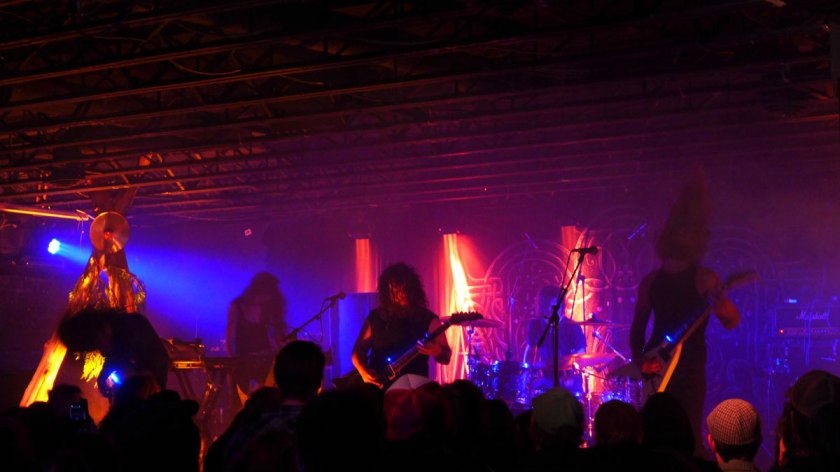
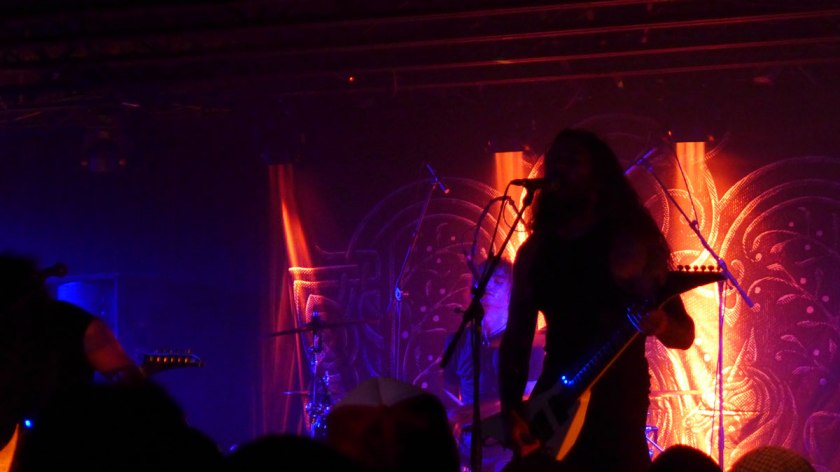
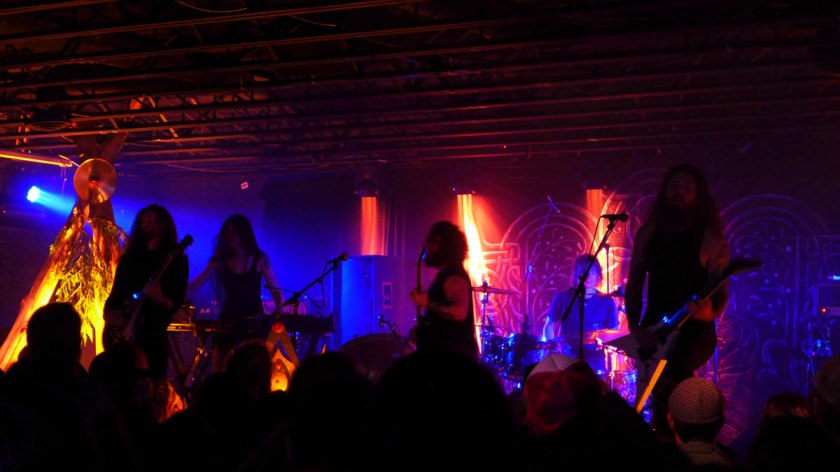
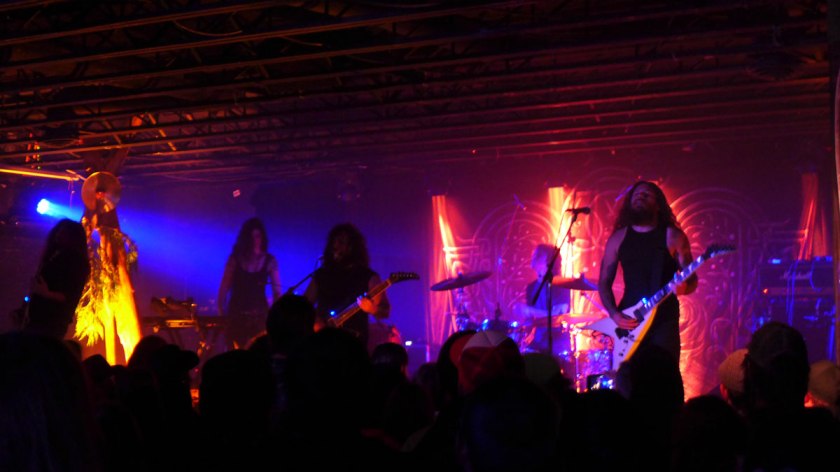

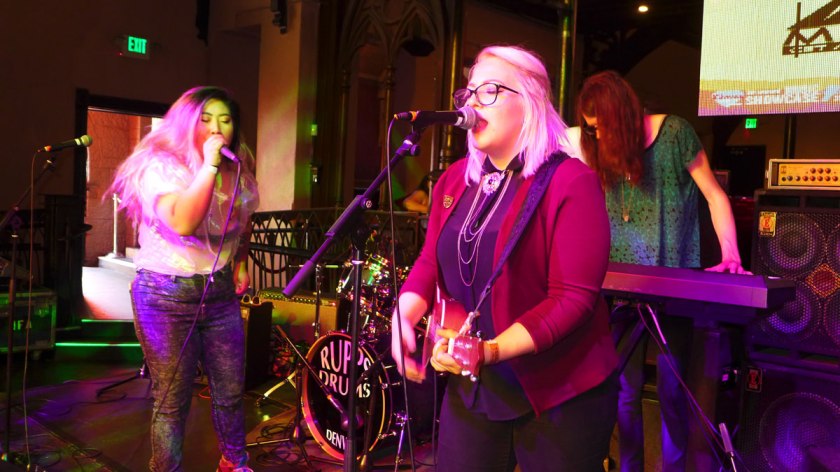

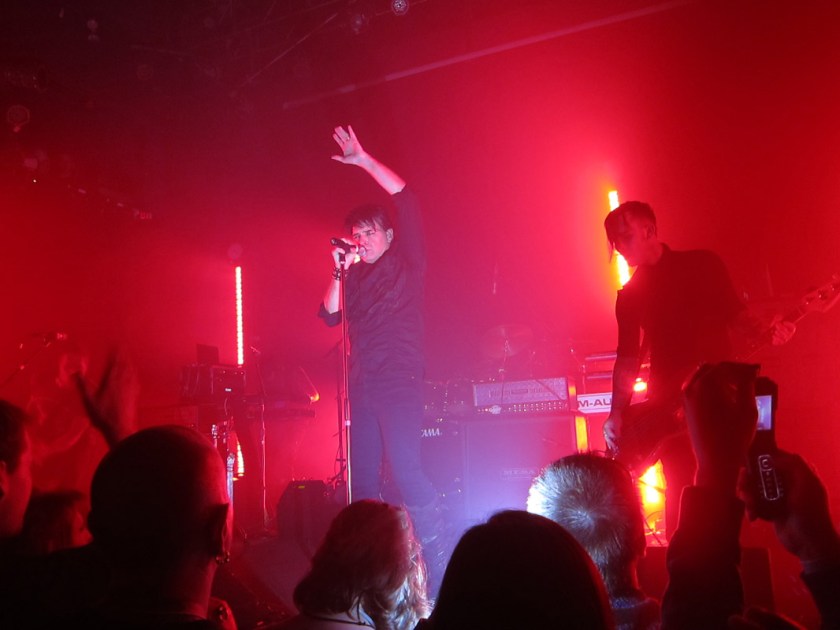

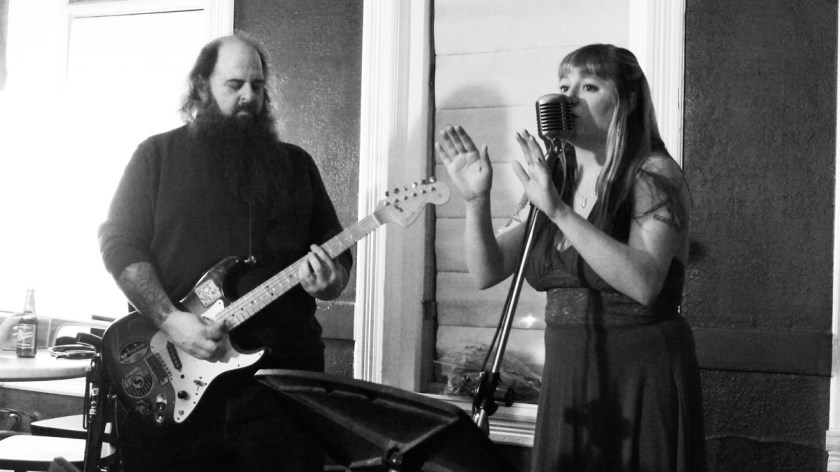
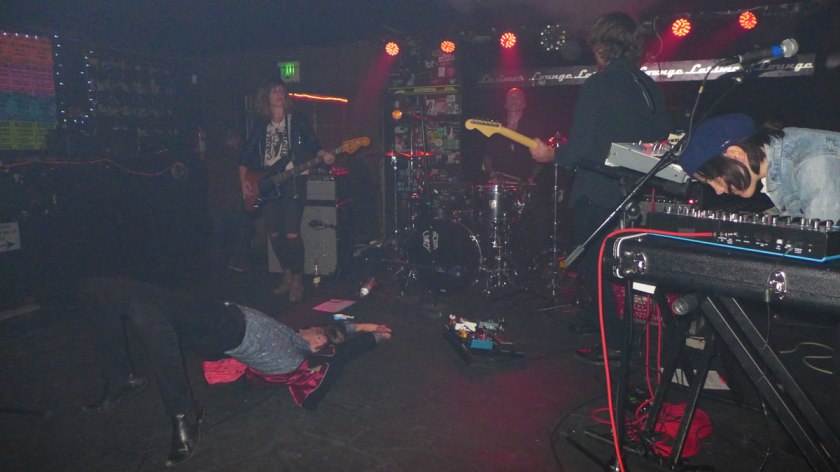

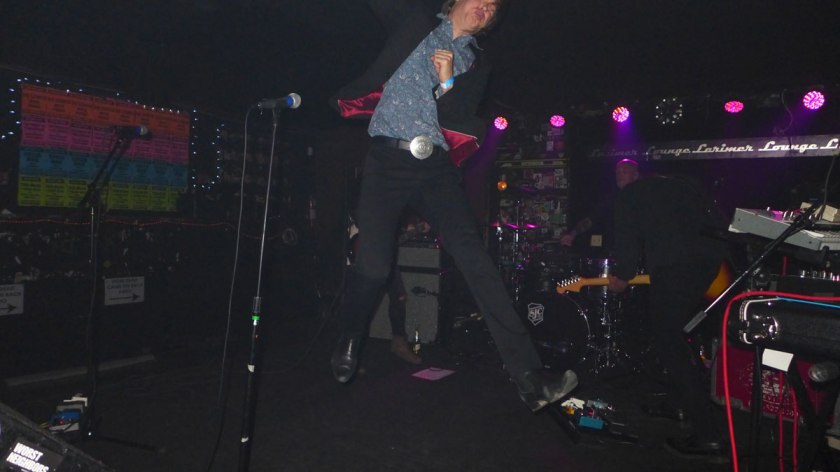

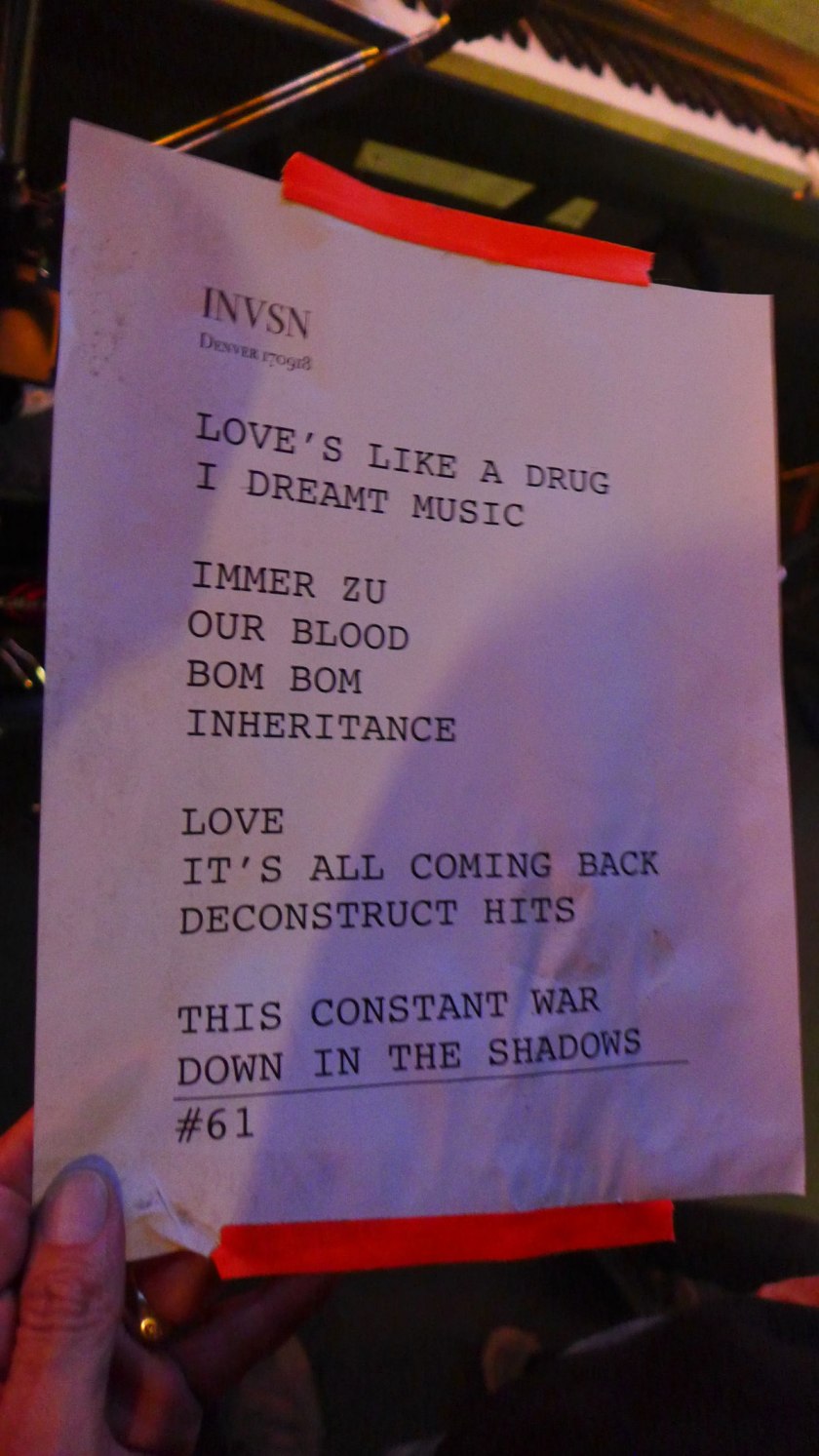
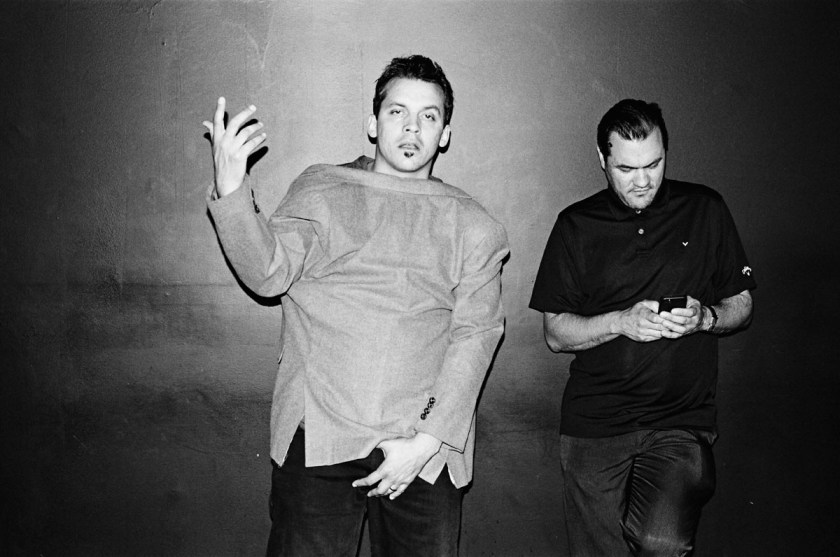

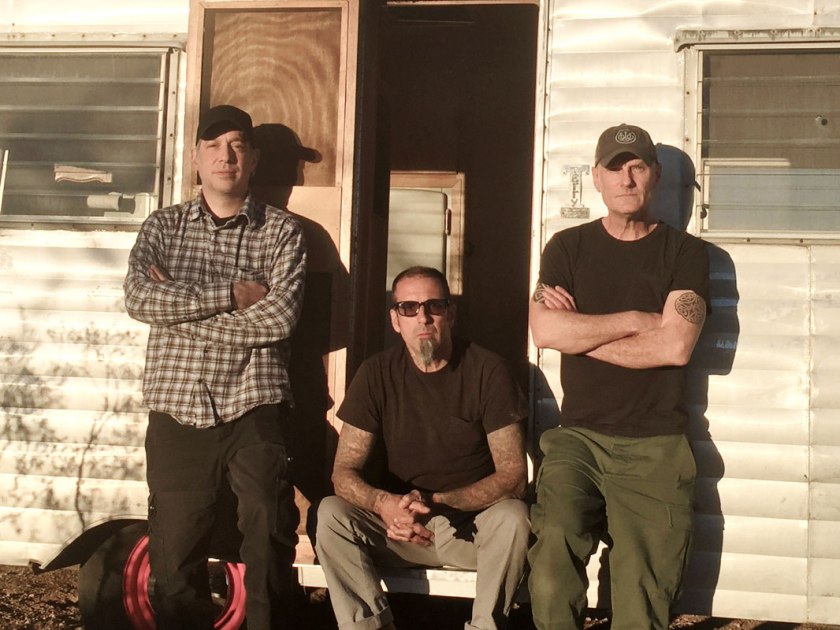

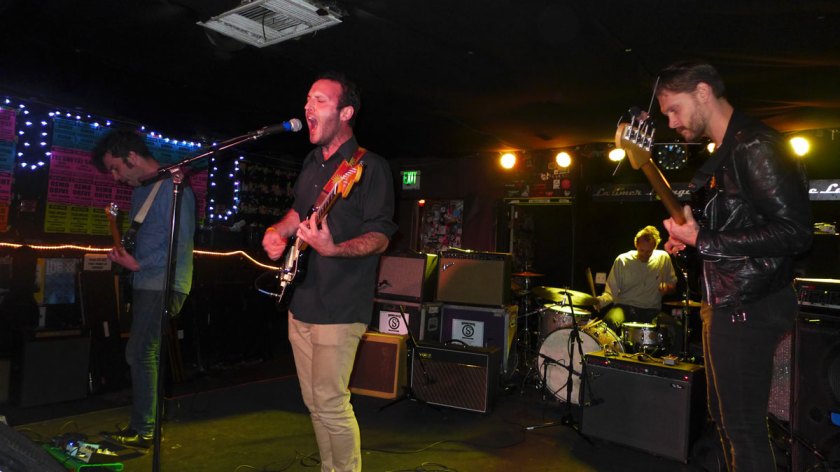
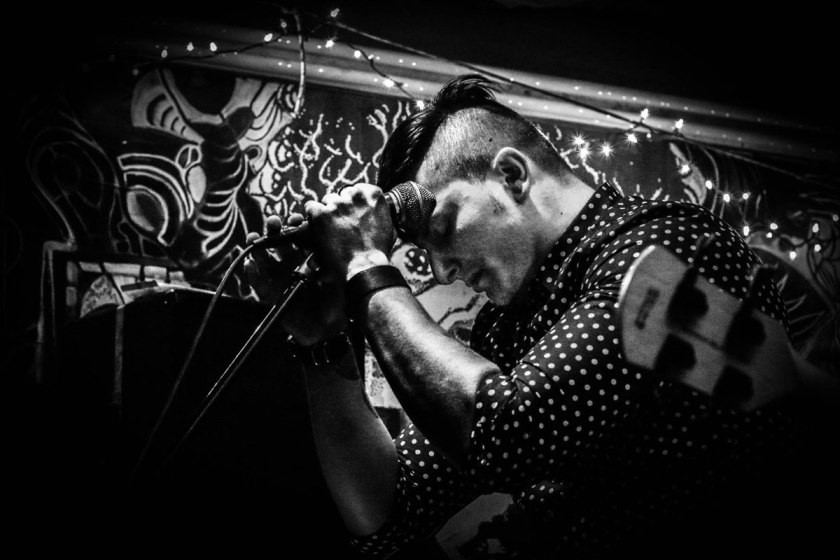
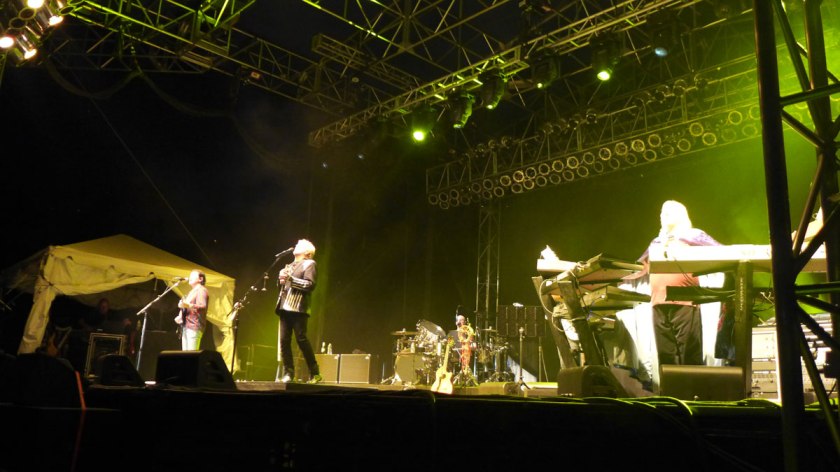
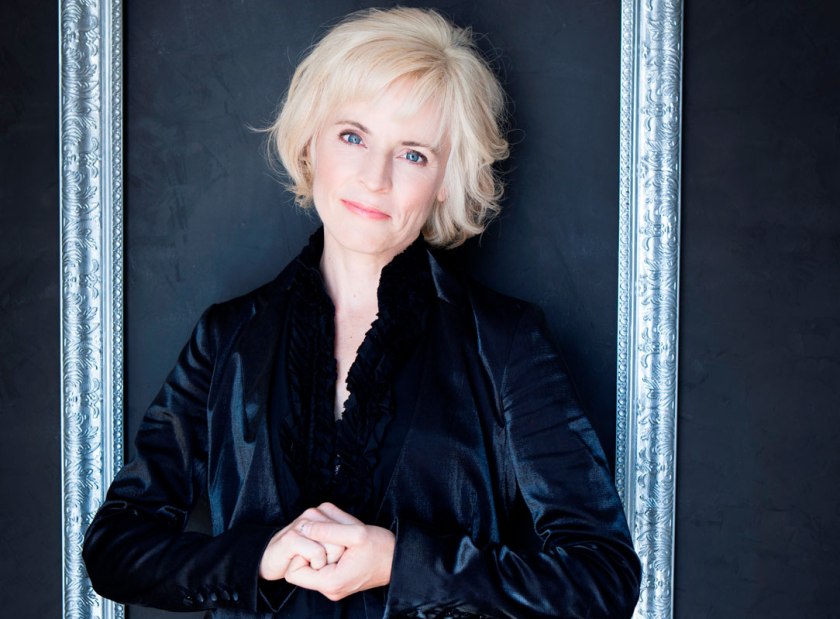


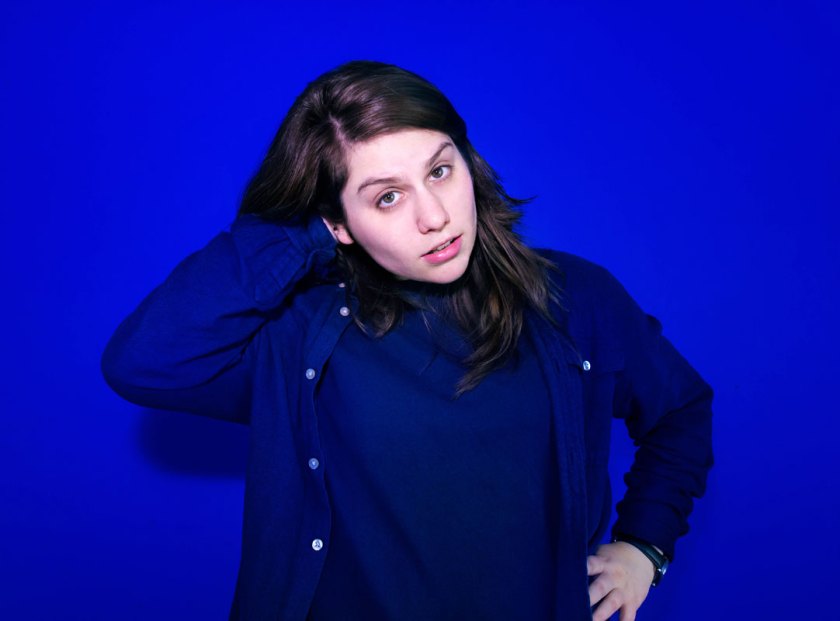


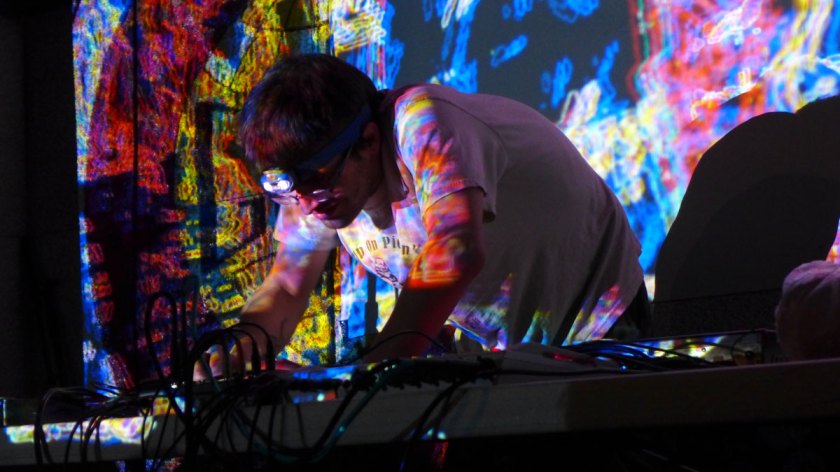
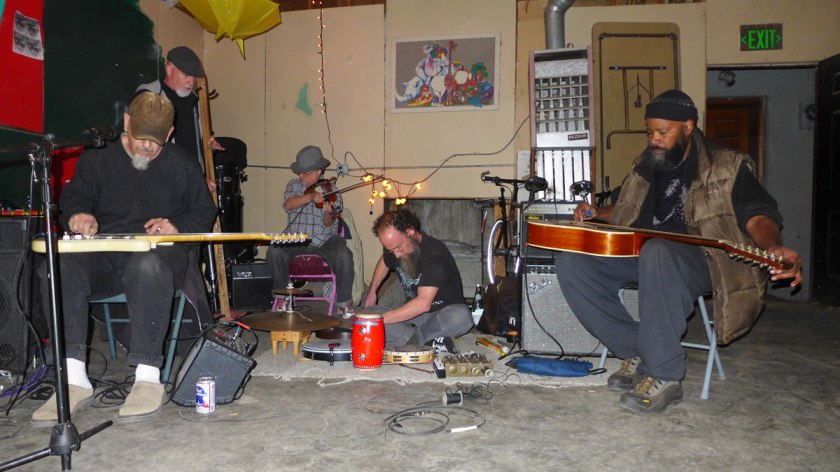

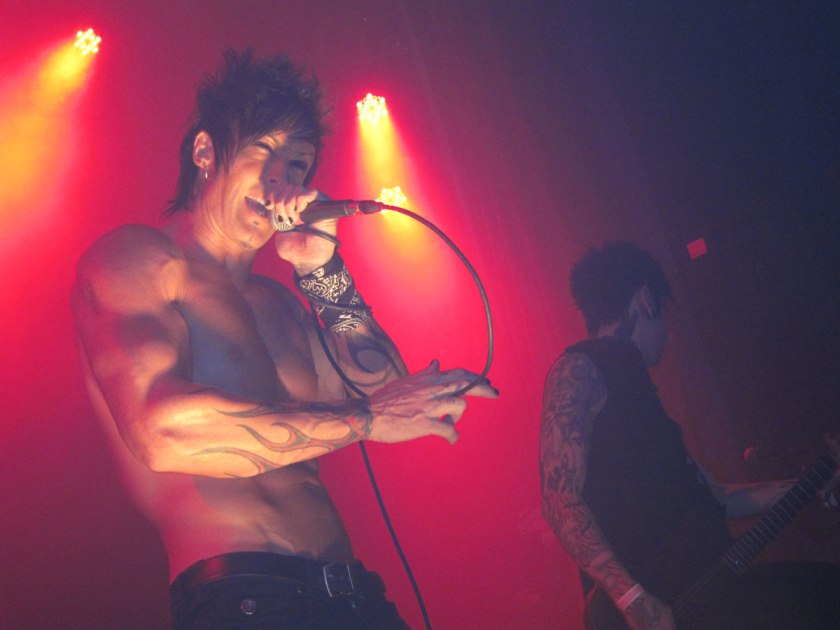
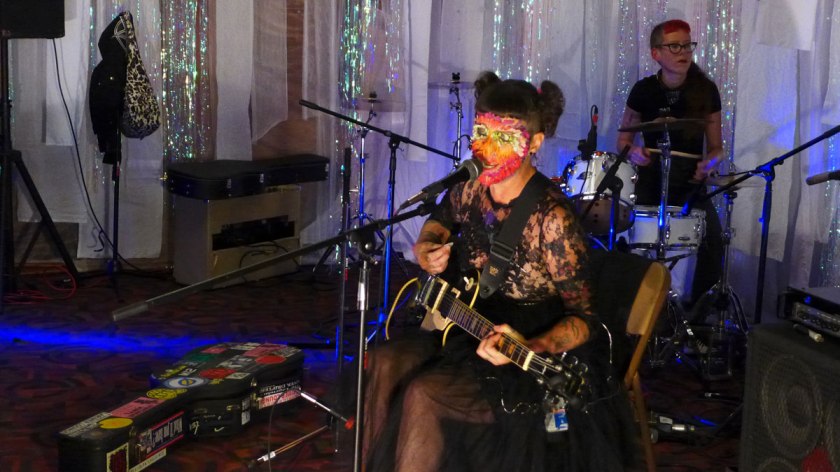
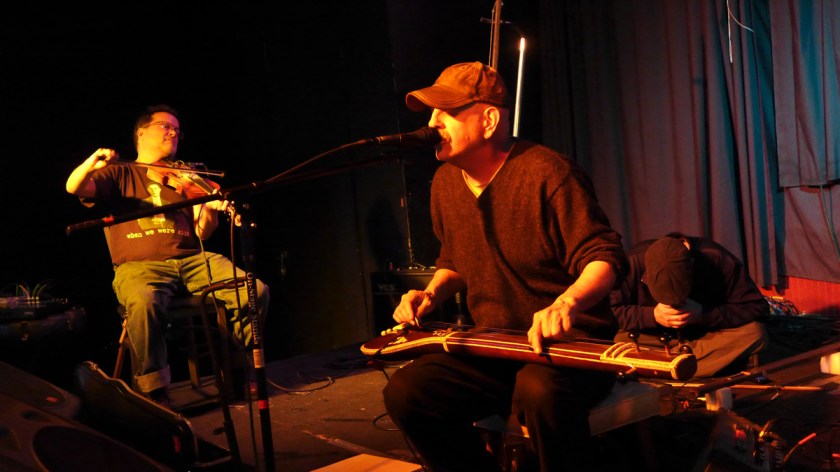

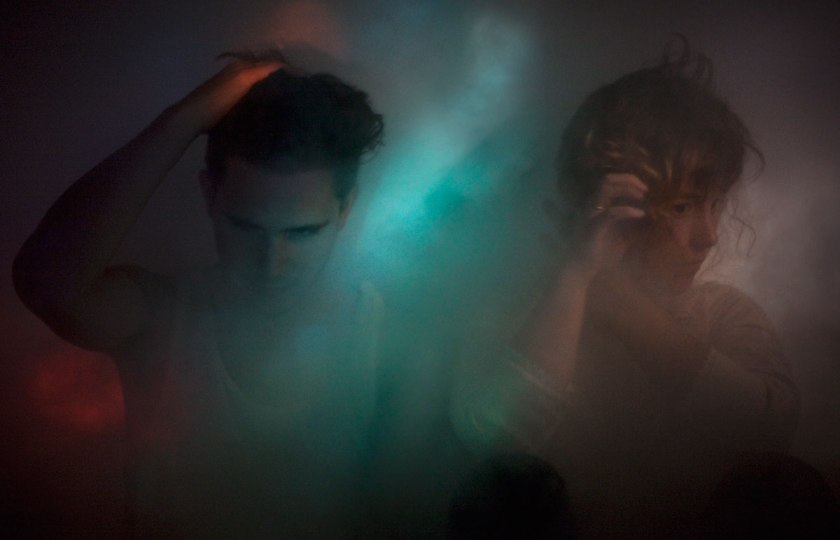
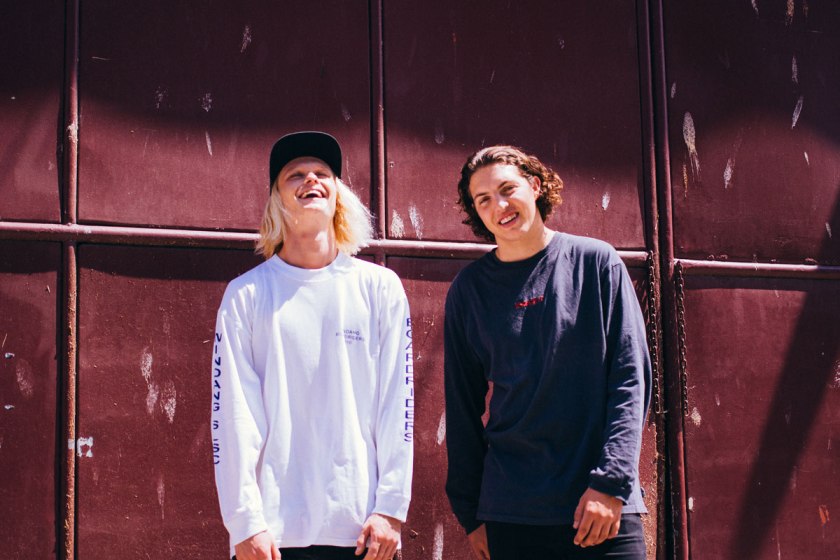
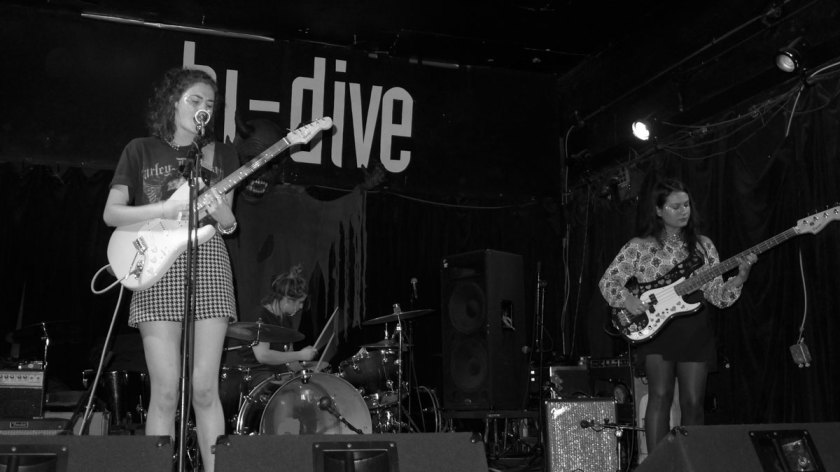
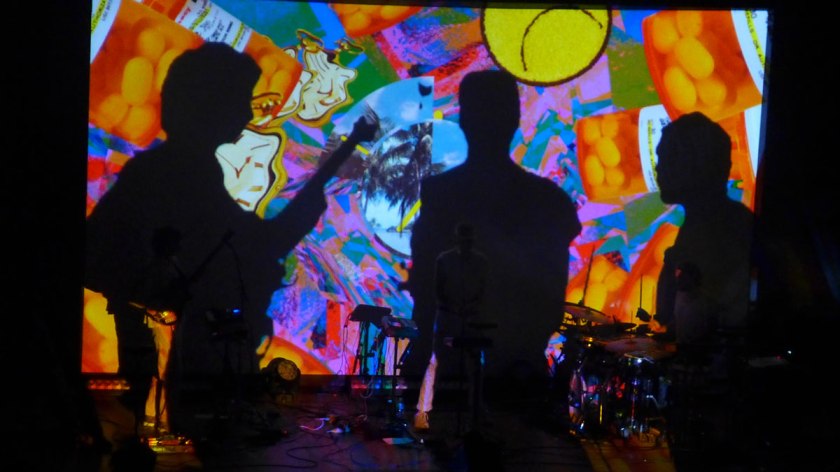

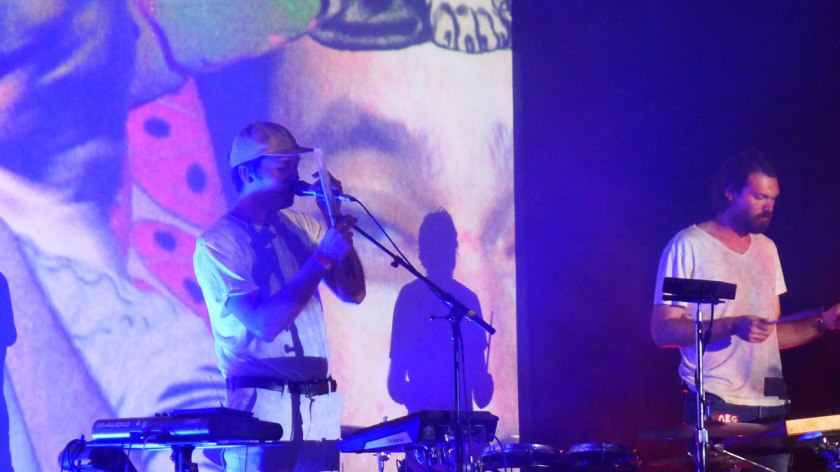

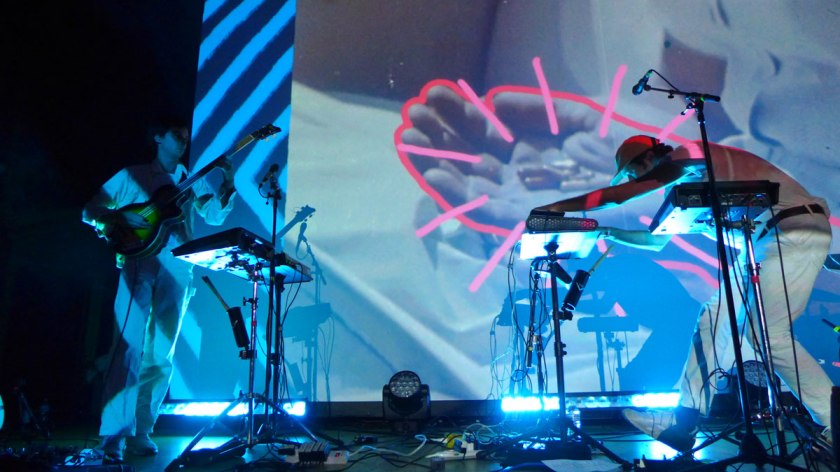
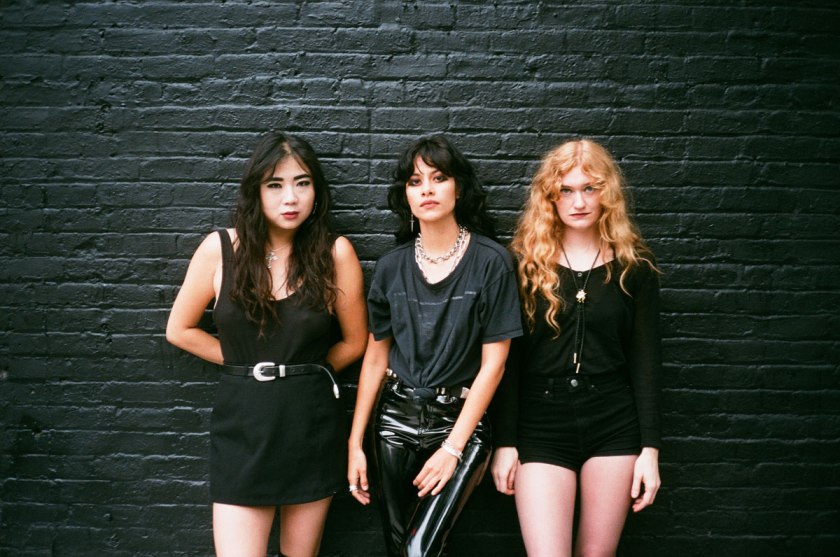
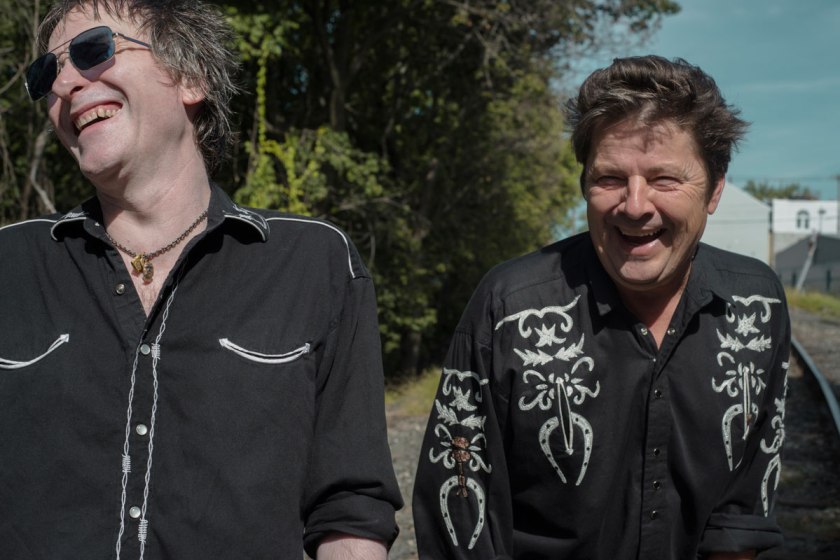

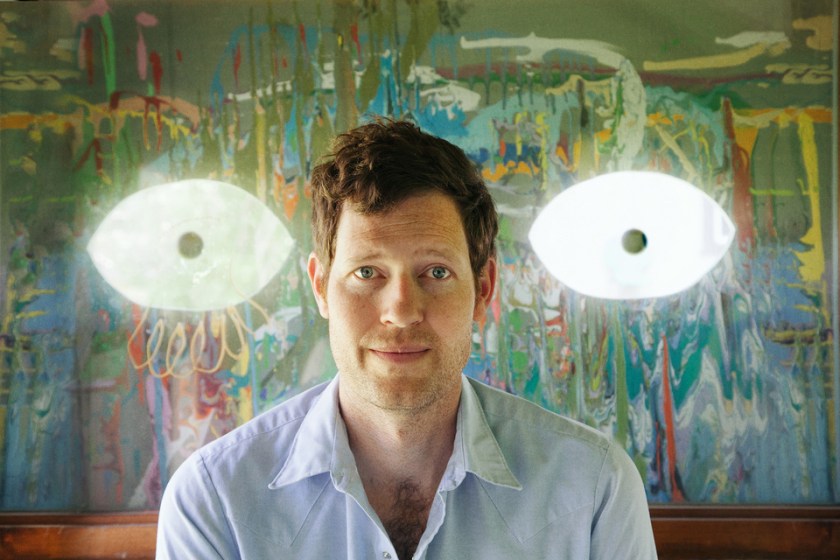

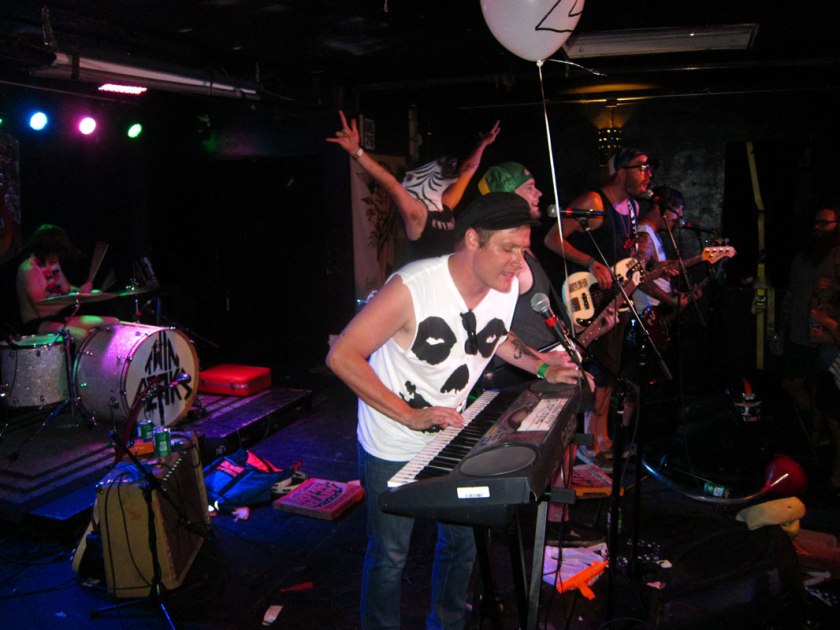
 Queen City Sounds and Art
You must be logged in to post a comment.