
La Sécurité’s “Hot Topic” is a Post-Punk Dance Anthem of Feminist Solidarity

La Sécurité, photo by Aabid Youssef

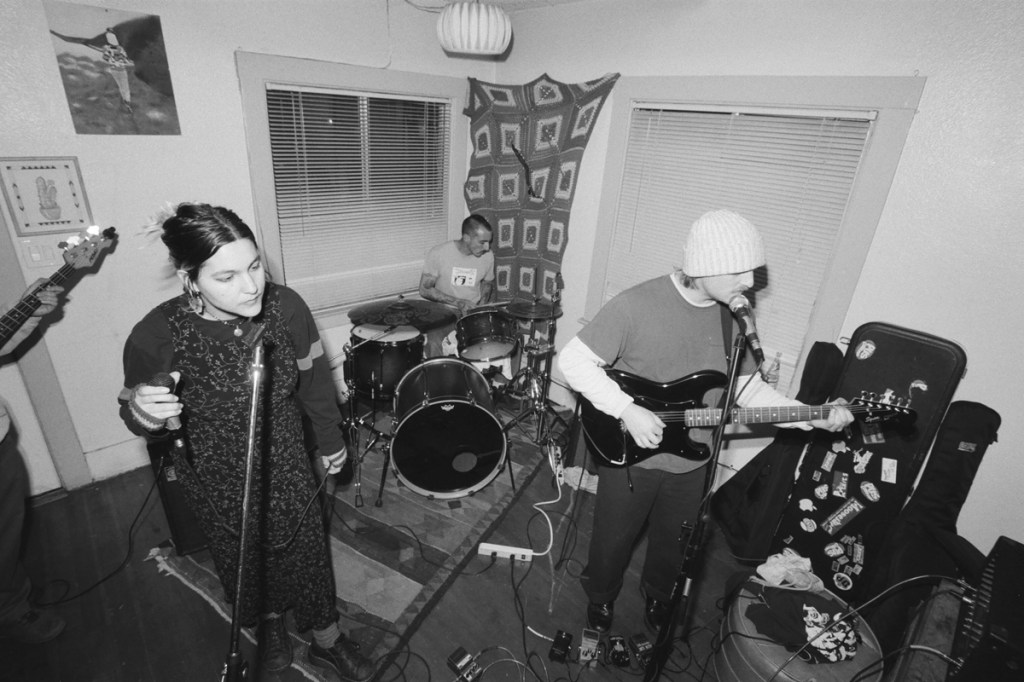
La Sécurité’s vocalist and multi-instrumentalist Éliane Viens-Synnott worked with Gabriel Lapierre to produce the music video for “Hot Topic” and give it the air of a choreographed, avant-garde dance piece. Turns out it’s an edited version of an original performance video by Viens-Synottt but it fits the angular post-punk song perfectly. Its driving bass line has a danceable fluidity like something out of a Bush Tetras song but its unconventional percussion part – an almost motorik beat mixed with a percussive keyboard figure intertwining with splashes of guitar and vocals declaring self-affirmative sentiments setting boundaries in no uncertain terms. “Is there something I can do/To make this any clearer for you?/I don’t wanna talk/I just wanna dance/I don’t owe you any answers/You can fuck off with your banter/Cut the crap, you’re not funny/I don’t need a drink/I make my own money” – those words and more in the rest of the song are the kind you wish you’d hear more often even beyond the context of a dance floor where some people, almost always men, think they can take liberties because they think the setting entitles them to doling out unwanted, often aggressive attention. This song pairs a whimsical melody like a casual dismissal of the nonsense with an edgy, pulsing rhythm and dark atmospherics for an unbeatable net effect of wit and strength. Watch the video for “Hot Topic” on YouTube and follow La Sécurité at the links below. The group’s new album Stay Safe! dropped June 16 via Mothland.


La Sécurité on Facebook

La Sécurité on Instagram

Sivan Levy Plumbs the Obscured Places of a Loved One’s Heart on the Tender Ambient Pop Song “I Thought I Heard You Call My Name While You Were Sleeping”

Sivan Levy, photo courtesy the artist

Sivan Levy brings you into “I Thought I Heard You Call My Name While You Were Sleeping” with ambient sounds of birds in the distance. You may wonder if it’s from the song or outside your window. But then her ethereal vocals come in on a steady electronic beat and resonate in drawn out repetitions at the end of a line of lyrics. The melody is formed out of those processed vocals and background drones so that the whole track has an introspective luminescence, the musical equivalent of soft lighting and fog. Which fits the song seemingly about buried and guarded emotions that Levy is trying to reach past to get to the feelings she knows are there but which life experience and socialization obscures with unconsciously adopted, expected behaviors. It’s a tender and unconventional love song in a situation that seems challenging without the sensitivity to navigate ingrained habits. Fans of Jenny Hval and Kelly Lee Owens may appreciate Levy’s command of atmosphere and nuanced emotional expressions in this song. Listen to “I Thought I Heard You Call MY Name While You Were Sleeping” on Spotify and follow Sivan Levy at the links below.

Sivan Levy on TikTok

Sivan Levy on Facebook

Sivan Levy on Instagram

Mali Hâf’s Utterly Unique Blend of Organic Textures and Electronic Pop Songcraft on “SHWSH!” is Also a Creative Statement on the Right to Express One’s Gender Identity

Mali Hâf, photo courtesy the artist

Mali Hâf not only employs a unique blend of rhythmic, textural and tonal elements to craft the song “SHWSH!” but she also sings in the Welsh language. In the music video we see her auditioning for the part of a “woman” in a dance studio and in a variety of outfits to the theatrical to those more associated with ballet. And it all represents the point of the song which is to encourage listeners to be their authentic selves in the face of cultural and social forces reinforced by media and social media images and narratives to conform to someone else’s standards. The music, which may have resonance with dream pop circa Cocteau Twins, New Age pop and IDM, invites you to take it and accept it on its own terms and for its part is imbued with an energetic dynamic and immediacy that facilitates that acceptance. In writing the music this way with this intention, in a seemingly exotic yet locally completely common language like Welsh, Mali Hâf conveys the message that these identities including gender identity is personal to the individual and that you should be free to express it because it is another facet of the human experience worthy of respect. Watch the video for “SHWSH!” on YouTube and connect with Mali Hâf at the links below.

Mali Hâf on Twitter

Mali Hâf on Instagram

Figure Eight Deliver an Epic Noise Pop and Shoegaze Single With the Splintery and Frayed-Edged “Altar”

Figure Eight, photo courtesy the artists

Oakland-based noise pop group Figure Eight has a number of self-recorded tapes and demos out in the world but “Altar” represents its debut releasing a “proper” recording. But in doing so the band didn’t bother with taming its sound or smoothing over what some might consider the rough edges of its songwriting and performance. Rather, the bendy, distorted guitar riffs and ghostly, winsome vocals, melodic bass lines and generally flooding bursts of dense yet ethereal sounds are preserved like you’re listening to a band that dangled a single wide spectrum mic over its practice space to capture the essence of what it would be like to be there and experience that while of sound and its beautifully and blissfully disorienting quality. Immediate comparisons must be drawn with My Bloody Valentine because of the dreamlike noisiness of the song and its disregard for conventional song structure in favor of a more organic flow. In doing so Figure Eight has crafted a song whose influences seem obvious but whose sonics invite repeated listens because it hits with an analog charm that seems like something that when you see it live would be a little different every time because the musicians are letting the wild nature of the way the electric instruments process the signal go off the rails a little bit with every performance. Listen to “Altar” on Spotify and follow Figure Eight at the links provided.

Figure Eight on TikTok

Figure Eight on Instagram

Manpreet Kundi’s “salvage” is a Palpably Vulnerable Song About a Relationship in Irreconcilable Shambles

Manpreet Kundi, photo courtesy the artist

The colorful urban backdrop to Manpreet Kundi’s music video for “salvage” establishes a mood of normalcy and the mundane while she walks in what looks like a park with trees in twisting shapes like she’s singing the painfully confessional song in a secret and protected haven. With a minimal piano melody and mournful strings tracing her resonant and vulnerable vocals, Kundi conveys a tender pain that comes through accepting that a relationship is over and that really it got to the point where there is no way to salvage what bond and connection there once was, even assuming there was one because in the song we hear the realization that all the real communication and genuine feeling came from one party and seemingly little from the other and somehow that hurts worse than if the split was born of a normal conflict or disconnect that develops out of points of incompatibility. What makes the song especially poignant and effective is that it comes from a place of resignation and not rancor and because of that it hits a little harder emotionally. Watch the video for “salvage” on YouTube and follow Manpreet Kundi at the links below.

Manpreet Kundi on TikTok

Manpreet Kundi on Facebook

Manpreet Kundi on Instagram

Manpreet Kundi Website

Queen City Sounds Podcast S3E21: John Gross

John Gross at Rhinoceropolis in March 2012, photo by Tom Murphy

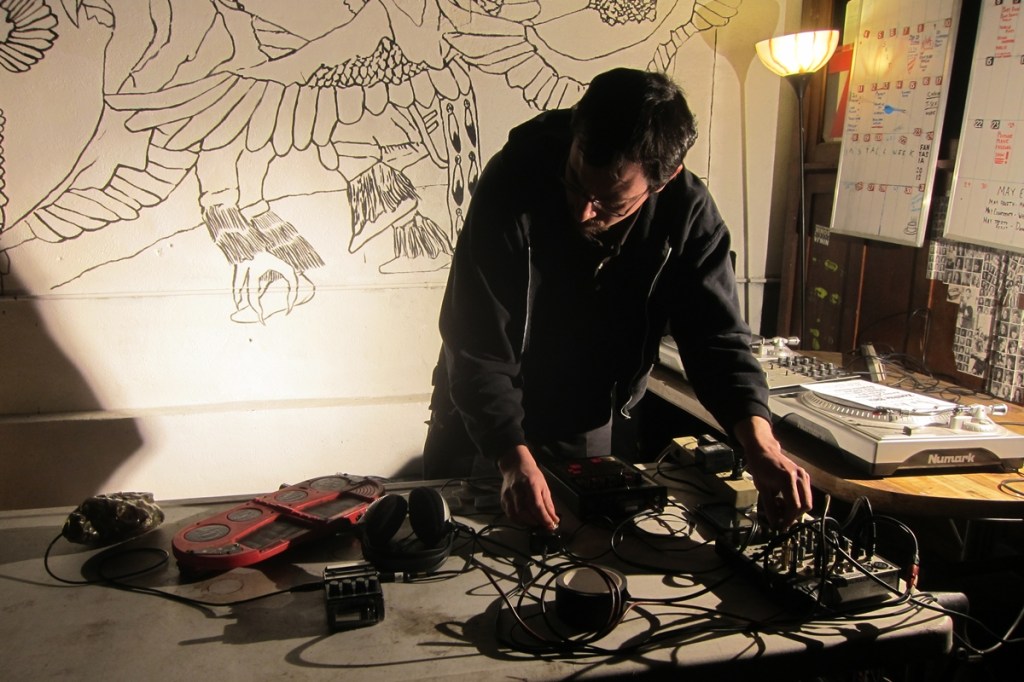
John Gross is one of the godfathers of the Denver noise scene since becoming active as a noise artist as a member of Page 27 in 1994 when he was still in high school. That project began as more of a trying a variety of sounds as a kind of live improvisational sound collage with a changing lineup and a wide array of instrumentation but by the end of the decade had evolved into the more electronic configuration for which it became known in the realm of noise. For a comprehensive lesson on what noise encompasses simply plug “Noise music” into a search engine and read the Wikipedia entry. Gross has been involved in making a variety of the forms of that music with analog and electronic devices and methods and as one of the most prominent practitioners of the art in Denver and beyond (primarily in Page 27 with founding member John Rasmussen but also as a member of projects such as Zoologist with Todd Novosad, Robot Mandala and doom band Burn Heavy among others) he has also been an advocate for other artists in noise in setting up shows and helping to organize the long running Denver Noise Fest. While his prolific recorded catalog can be challenging to track down as it’s often been on formats and limited editions that didn’t get transferred to streaming platforms you may be able to give a listen on performances uploaded to YouTube or on Soundcloud. After an extended hiatus with the onset of the pandemic, Gross has resumed performing under his own name and with Zoologist. Long affiliated with the DIY scene in Denver and elsewhere for pragmatic reasons as most venues don’t book noise as a kind of niche musical style that can alienate people with more conventionally-minded tastes, Gross lived in and helped to run Rhinoceropolis from 2010 to early 2020 and the onset of the COVID-19 pandemic.

Listen to our interview with Gross about his life and time in noise and getting into the DIY and noise scenes on Bandcamp and for more information on John Gross and his music, please visit the links below. Gross will be performing at D3 on Saturday, September 2, 2023 with Human Fluid Rot (FL), Many Blessings, Castration Pact, Whitephosphorous (TX) and Sounding and on Friday, September 29, 2023 at Seventh Circle Music Collective with Granular Breath (IA), Dead Hawk (Springs) and A Light Among Many. Doors 7pm for both shows. Typically asking $10 at door.

page27.com

Page 27 on Bandcamp

Zoologist on Bandcamp

John Gross on Instagram

Wasabi Club’s Introspective and Ethereal “Convergence” is a Gentle Song About Rediscovering and Reconciling a Troubled Romance

Rikalet de Lange of Wasabi Club, photo courtesy the artist

Wasabi Club establishes a delicate mood at the outselt of “Convergence” with the spare guitar figure echoing into a minimal soundscape. When the vocals come in they introduce an introspective element that floats in the lush haze over impressionistic beats. There is a tone in the beginning of the song that also sets up a dynamic of the melody curving back in on itself which is hypnotic and makes the repetition of themes work like the ebb and flow of memory. For a song that seems to be about people learning to relate to each other again or perhaps for the first time on a truly authentic basis and coming together to appreciate what each has to offer and reinvent and reconcile the bond with a gentleness of spirit that invites true intimacy. Fans of Beach House will appreciate the emotional nuance of the track. Listen to “Convergence” on Spotify and follow the South African shoegaze and dream pop band Wasabi Club at the links provided. The new Wasabi Club The Last of the Dreamers released on May 12, 2023.

Wasabi Club on Facebook

Wasabi Club on YouTube

Wasabi Club on Bandcamp

Wasabi Club on Instagram

El Señor’s “Dirty People” is a Noisy and Electrifying Psychedelic Punk Song About Class Solidarity

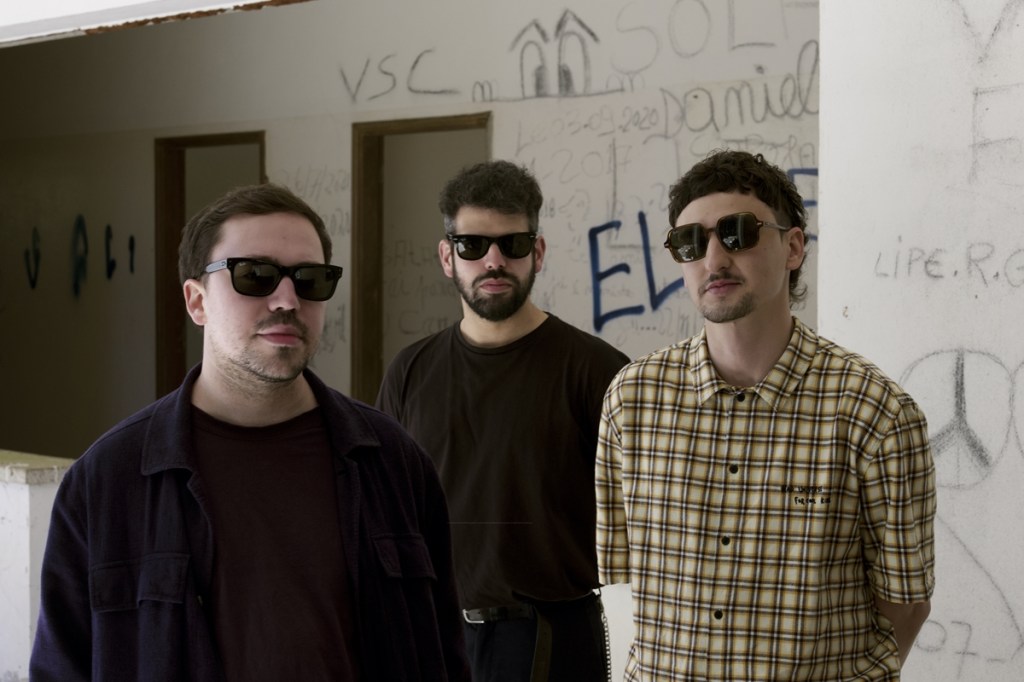
El Señor, photo by Eduardo Brito

With a seething intensity and noisy urgency El Señor brings to the song “Dirty People” an electrifying conviction to its message of compassion and class solidarity. Mid-song when the vocals hit a more defiant tone that amplifies the sentiments about having a love for the people that certain corners of society reject and declare dirty, undesirable and generally “other.” The buzzsaw guitar and dissonant and angular attack of the music somehow combines a Ty Segall-esque tunefulness with the sonic mayhem of a song by a band like The Gordons and infused with a restless spirit that gives the song an irresistible immediacy. Think a psychedelic garage rock group with the sensibilities of a hardcore band. Listen to “Dirty People” on Spotify where you can listen to the rest of the album Affection to Belong and follow El Señor at the links below.

El Señor on Facebook

El Señor on Instagram

El Señor LinkTree

TEKE::TEKE’s Genre Bending Indie Pop Funk Prog Song “Hoppe” Celebrates the Impermanence of All Things

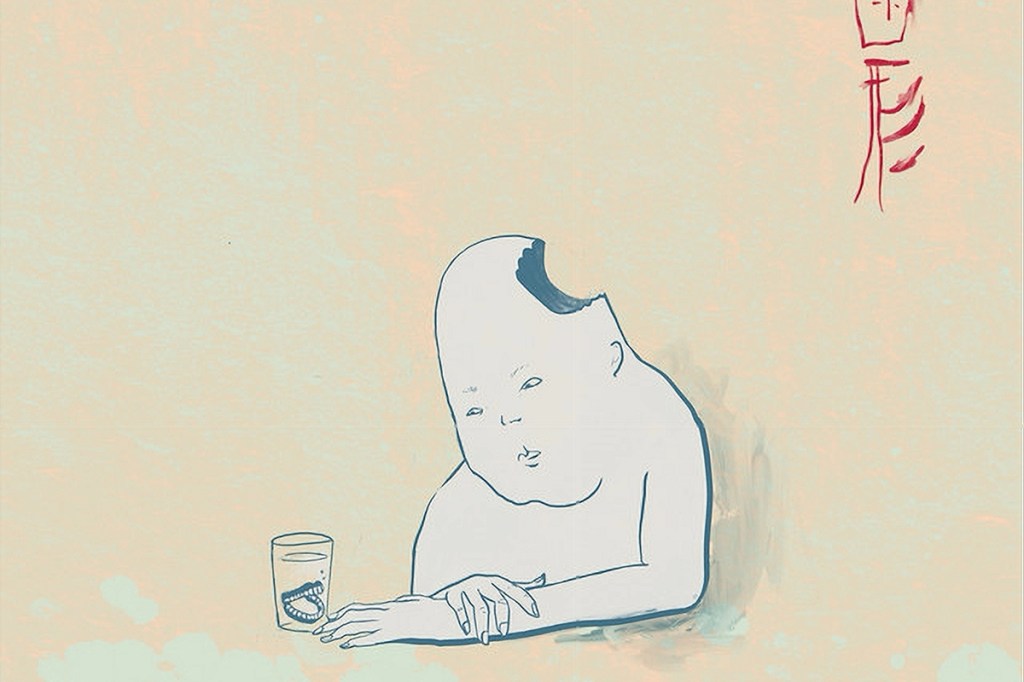
TEKE:TEKE Hagata cover

In the music video for “Hoppe,” TEKE::TEKE looks like it’s performing in the unlikely, grungy, underground club in one of Japan’s gigantic metropolises. But this just enhances the vibe of a band that seems to have amalgamated Bossa Nova, classic Japanese folk pop, punk, funk, jazz and psychedelia. But really the footage was shot at Pow Wow in Montreal, Quebec where the band is based and by Samuel Woywitka and Sei Nakauchi Pelletier with animation flourishes by Maya Kuroki. The song goes in wild directions but maintains an infectious charm. In moments the music is reminiscent of something Prince might have done had he gone an indiepop route and worked with Fishbone to get there. In others Deee-Lite but rather than electro retro disco, trying its hand at ska and ending up somewhere weirder and more original. That the song seems to be about the folly of assuming anything is permanent and not in a constant state of flux suits the style well. Multiple manifestations these beautiful and endearing hybrid pop sounds can be head throughout the group’s 2023 album Hagata out now via Kill Rock Stars. Watch the video for “Hoppe” on YouTube and follow TEKE:TEKE at the links below.

TEKE::TEKE on Facebook

TEKE::TEKE on Instagram

teketekeband.com

Second Daughter’s Darkly Lush “Love Language” is a Dream Pop Song About Accepting That the Relationship Isn’t Going to Work Out After All

Second Daughter, photo courtesy the artist

Second Daughter draws on long arcs of rhythm and lush atmospheres and melancholic, ethereal melodies to craft the weighty and processional “Love Language.” It sounds like the kind of synth pop you would use to close out an indie dance night or as the outro music of an existential and tragic love story inspired by the more romantic side of David Lynch’s cinematic career. The tone of the song is one of resigned and remorseful acceptance that someone with whom one is involved communicates love in a way that isn’t in line with one’s own, with gestures and words that don’t quite resonate though they might with someone else. And the most one can say is the person tries and that both people make the effort but it’s just not going to work out no matter how much time and energy you’re willing to put into it. Maybe there was an initial spark or attraction that brought the people together, which happens often out of circumstance or a momentary period in a person’s life and you want it to work out but deep down you both know it won’t and rather than let that disconnect spiral into something destructive you take a moment to reflect and mourn the possibility you wanted to manifest like adults. Listen to “Love Language” on Spotify and follow Second Daughter at the links provided.

Second Daughter on Instagram