Due to technical difficulties, it wasn’t possible to write up the first two dates of this show list in even remotely a timely manner. For now we present to you the rest of the week’s picks as we’re able to complete the writing.
Saturday | October 20, 2018
Megabog circa 2011, photo by Tom Murphy
Who:MC 50 with Starcrawler and The Yawpers When: Saturday, 10.20, 8 p.m. Where: The Gothic Theatre Why: Influential, even foundational, early punk band MC 5 is now on tour celebrating its fiftieth anniversary as MC 50 playing from the band’s respectable catalog that not only injected radical politics into rock music in an overt way but put an indelible stamp on the rawest version of the music post-1960s. The lineup for this tour will include original guitarist Wayne Kramer, former Soundgarden guitarist Kim Thayil, Fugazi drummer Brendan Canty, Faith No More bassist Billy Gould and Zen Guerilla frontman Marcus Durant.
Who:Dark Descent Records Ninth Anniversary When: Saturday, 10.20, 6 p.m. Where: Hi-Dive Why: Dark Descent Records celebrates nearly a decade of unleashing extreme metal from its headquarters in Colorado. For this edition of its annual showcase you can see Cianide, Krypts, Adversarial, Sempiternal Dusk, Spectral Voice and Blood Incantation
Who:Four Fists (P.O.S. + Astronautilus) w/Angel Davanport and Boss Eagle When: Saturday, 10.20, 8 p.m. Where: Marquis Theater Why: After guesting on each other’s albums for years, P.O.S. and Astronautilus finally teamed up for a collaborative project yielding the album 6666. It’s what you might expect when two titans of alternative hip-hop that know each other’s work and processes well put their heads and hearts together. Poignant social commentary and, refreshingly, a perspective that points to ways that people might take on social injustice and the world’s ills that they can handle. All while giving us tautly composed and imaginative beats that sound like a sampling of all modern electronic music going back to the 8-bit video game aesthetic the 80s as perhaps an abstract display of how culture is a continuum that can’t be truly broken by even influential bad actors. And if you’re not into the heady content aspect, the debut album from Four Fists is a collection of bangers.
Who:Mothers w/Megabog and Down Time When: Sunday, 10.21, 7 p.m. Where: Larimer Lounge Why: Kristine Leschper of Mothers and Erin Bergy of Megabog don’t fit in any easy, pat category as both have used elements of rock and folk in making their respective, boundary pushing pop music. Leschper and Bergy also both masterfully walk that line between accessibility, challenging their respective audiences and freely experimenting with sounds and song format.
Who:MAX w/Nina Nesbitt and EZI When: Saturday, 10.20, 8 p.m. Where: The Bluebird Theater Why: Max Schneider, aka MAX, has had a career in film, television and modeling but along the way he also established himself as an up-and-coming soul pop vocalist. Nina Nesbitt is a Scottish singer-songwriter/multi-instrumentalist who got a big break opening for Ed Sheeran on the European leg of his 2012 tour. In 2018 Nesbitt is set to release her sophomore album and there’s a good chance that you’ll get to see some of that material live for this tour. If you show up early you can catch EZI, aka Esther Zyskind who has roots in the singer-songwriter realm but these days, makes lush, moody, synth-driven pop songs.
Who:Blerd #2 When: Saturday, 10.20, 8 p.m. Where: Mutiny Information Café Why: This event says how Afro Punk is never coming to Denver and it, thus, shines a light on the most interesting and forward-thinking Denver artists of color. Tonight’s showcase includes two of the mightiest Denver musical acts with the otherworldly tones and transcendent hip-hop of R A R E B Y R D $ and The Maybe Sos, an experimental hip-hop duo comprised of notable Denver poets and musicians Bianca Mikahn and Jenee Elise Donelson. Also on the bill are Toluwa and Obi.
Sunday | October 21, 2018
Old Sport, photo by Tom Murphy
Who:UK Subs w/Agent Orange, Guttermouth and No Takers When: Sunday, 10.21, 7 p.m. Where: The Oriental Theater Why: UK Subs were one of the bands out of the early English punk milieu that incorporated aspects of the pub rock scene of the same era in the mid-to-late 70s. Beginning with its 1979 album, Another Kind of Blues, the group has released a record beginning with every letter of the English alphabet including 2016’s Ziezo. The Subs have also remained a vital live act since the 70s and haven’t exactly toned down the politics edge, decidedly working class left, of their body of work even when they have written songs about going concerns of youth and everyday life. Also headlining this bill is California surf punk band Agent Orange. Like most of the southern California punk bands that emerged from Orange County in the late 70s and early 80s, Agent Orange had that aggressive intensity that was key to hardcore but also an instinct for melody that gave its songwriting an accessibility that may in some ways have helped give birth to pop punk. Agent Orange didn’t really get stuck in a specific punk niche perhaps one aspect of why the band, like the Subs, has endured and evolved.
Who:Mom Jeans w/Just Friends, Awakebutstillinbed and Old Sport When: Sunday, 10.21, 6 p.m. Where: The Marquis Theater Why: Mom Jeans from Berkeley, California has been making some waves in underground music with its irreverent yet earnest songs. Over the past several years a blend of math rock, emo and pop punk has re-emerged in America as various musicians have drawn on the music of their younger years for inspiration and combined it with an interest in various musical styles that maybe they didn’t get to see firsthand when it was originally active. And then, of course, making it their own and using it as a vehicle for writing about similar frustrations and struggles but with a broader palette of sounds and cultural references. The group’s 2018 album Puppy Love is not short on meaningful songs with surreally humorous titles like “Jon Bong Jovi” and “You Can’t Eat Cats Kevin.” Also on the bill is like-minded Denver band Old Sport.
Monday | October 22, 2018
Pond, photo by Pooneh Ghana
Who:Pond w/Sur Ellz When: Monday, 10.22, 8:30 p.m. Where: Globe Hall Why: Pond isn’t a Tame Impala side project even though the group has shared members and the latter has taken on ex-members of the former as part of Kevin Parker’s live lineup. Tame Impala went in a more overtly experimental electronic dimension with its excellent 2015 album Currents. Pond’s more prolific career has taken interesting turns and it’s 2017 album The Weather was also much more electronic but very well within the realm of a psychedelic aesthetic. One might compare it to when Super Furry Animals went more off its own deep end than usual but rather than soul wending into dream pop.
Who:A Perfect Circle w/Tricky and Night Club When: Monday, 10.22, 6 p.m. Where: Red Rocks Why: On the surface this is an odd pairing of bands. A Perfect Circle is one of the projects of Maynard James Keenan of Tool and for earlier records, it was a hard rock and even metal band. For it’s 2018 album Eat the Elephant the group has transformed fully into an atmospheric pop band. The sound is so different yet not seemingly forced or brimming with try hard musical gestures it’s like it’s a new identity for the group achieved after years of development. Night Club is a darkwave rock band comprised of Emily Kavanaugh and former Warlock Pinchers and Foreskin 500 guitarist Mark Brooks. Though mostly known for his work in film and television these days (for example he wrote for and directed episodes of Metalocalypse), with Kavanaugh in Night Club Brooks has been part of a band that sounds like it mulched 90s EBM and Future Pop with the inspired industrial sleaze of Lords of Acid and My Life With The Thrill Kill Kult and made something that could make a virtue of the cheese factor of all that music without having to express the worst excesses. Night Club is more akin to modern Gary Numan than wack industrial rock and that makes all the difference. And Tricky is on the bill. As in former member of Massive Attack and downtempo pioneer with a respectable trip-hop career playing Red Rocks perhaps for the first time in decades.
Tuesday | October 23, 2018
88rising, photo courtesy the artists
Who:Windhand w/Satan’s Satyrs When: Tuesday, 10.23, 7 p.m. Where: Larimer Lounge Why: Richmond, Virginia’s Windhand has for nearly a decade refined its fluid doom soundscaping like a pagan metal Bardo Pond. The group recorded its 2018 album Eternal Return with Jack Endino, the architect of the so-called Seattle sound of the late 80s and early 90s. With Endino’s assistance, Windhand cast its gritty grandeur in sharper focus than ever before with the intricacies in tone and texture not essentially buried and blurred together in the mix as part of an unintentional aesthetic choice because that’s how doom is “supposed” to sound. Dorthia Cottrell’s vocals have also never sounded better, coming through the fogbank of sounds like a beacon in the night.
Who:88Rising: 88 Degrees & Rising Tour When: Tuesday, 10.23, 6 p.m. Where: Fillmore Auditorium Why: 88rising is a media company that is bringing some of its star artists on this tour showcasing its efforts as a management and marketing company, record label and video production service. Nothing too new there. But most of its artists are Asian pop, trap, hip-hop and R&B projects. For this tour you’ll get to see Rich Brian, Joji, Higher Brothers, Keith Ape, KOHH, NIKI and AUGUST 08.
Wednesday | October 24, 2018
Joan Baez, photo by Dana Tynan
Who:Joan Baez When: Wednesday, 10.24, 7 p.m. Where: The Paramount Theatre Why: Joan Baez has been an important figure in American popular music since the early 60s when she helped to popularize folk music to an increasingly commercial and widespread audience. She was an early advocate of Bob Dylan and helped to bring his own talent to national audience as well. Baez famously used her platform and her music to raise awareness of human rights and environmental issues, a course she has followed throughout her career up to and including “Nasty Man,” a protest song she wrote against Donald Trump in 2017. It was a viral hit and it was her first published and released piece of original material in over two decades. Baez followed this with her first studio album in nearly a decade with 2018’s Whistle Down the Wind, an album in which she puts her superb interpretations on the songs of other writers including an interesting choice with Anohni’s “Another World.” Currently Baez is on what is being cited as her final formal tour, dubbed “Fare Thee Well Tour.” If this is Baez’s last hurrah, it’s quite a capstone on the career of an artist possessed of a powerful voice and an uncommon sense of compassion and duty to her fellow creatures on planet earth.
Who:Karl Blau w/Porlolo and High Plains Honky When: Thursday, 10.11, 8 p.m. Where: Hi-Dive
Why: Karl Blau has had a rich and varied career spanning the past two decades or so. As a member of lo-fi rock band D+ he wrote songs and performed with Bret Lunsford formerly of Beat Happening and future Microphones and Mount Eerie mastermind Phil Elverum. As a solo artist and musical curator with his Kelp Lunacy Advanced Plagiarism Society musical subscription artist, Blau has been involved in making music in widely disparate styles and often hybridizing them or outright creating something that’s impossible to classify beyond maybe simply pop. In recent years, Blau has been writing songs that seem shaped by everything else he’s made up to now with bossa nova percussion, African pop vocal cadences, hip-hop-and-reggae-informed lyrical phrasing and indie/freak folk sensibilities. In the past Blau has performed solo with a loop pedal and pulled off what sounds like a full band minus robust drums so you’re never full sure what you’re in for barring that it’ll be exceptional.
Who:The Church When: Thursday, 10.11, 7:30/8 p.m. Where: The Fox Theatre Why: Australian rock band The Church is currently undertaking it’s tour for the thirtieth anniversary of its 1988 album Starfish. The band had already made a name for itself with fans of adventurous, inventive, literate and thoughtful yet heartfelt rock music. But Starfish was the group’s breakthrough to not just a wider audience but the mainstream with hits like “Under the Milky Way” and “Reptile.” While the group is justly celebrating the release of its iconic album for itself and fans that maybe didn’t get to see The Church in its 80s heyday (pardon the referential joke to the band’s 1985 album of the same name), the band’s new material is as vital as anything it has done in the past and you’ll get the best of both worlds at this show.
Friday | October 12, 2018
Ralph Gean (with Andrew Lindstrom) circa 2014, photo by Tom Murphy
What:Anxious Little Friends Fest Day 1 When: Friday, 10.12, 6 p.m. Where: Hi-Dive Why: Record labels Snappy Little Numbers and Anxious and Angry collaborated on this two day festival at the Hi-Dive with some of the better local and not local punk and punk-related bands. For this night you can see two night headliners Off With Their Heads as well as Riverboat Gamblers, SPELLS, Dirty Few, Black Dots, Hooper and Modern Goon.
What:Franksgiving 2018 When: Friday, 10.12, 9 p.m. Where: Hi-Dive Why: This yearly event benefiting the Crohn’s and Colitis Foundation of America is hosted by local connoisseur of weird music Franklin Bell. Naturally he always finds some of the best local odd yet accessible bands for the vent. As usual, Little Fyodor & Babushka Band, one of Denver’s longest running and most consistently interesting weirdo punk institutions will perform as well as not-widely-recognized-but-absolutely-a-local-rock-and-roll-legend Ralph Gean, Fyodor drummer Tricky Dick Wicket’s side project that isn’t Universal Devils, Whiskey Orphans, the “sweet and sensitive keyboard songs” of No Pants Katie with DJ Frank Bell spinning kooky kuts.
Who:Screwtape w/Potato Pirates, Noogy, World Movement and Ultraviolet When: Friday, 10.12, 7 p.m. Where: Hi-Dive Why: Screwtape’s politically-charged hardcore and dynamic live show has already made it a favorite among local fans of punk and the group is kicking off its latest tour to the south with this show sharing the bill with ska-punk veterans Potato Pirates and Colorado Springs hardcore outfit Ultraviolet. Who:Multidim Records Official Launch Party When: Friday, 10.12, 8 p.m. Where: Leon Why: Multidim Records is a new Denver-based label focusing on emerging artists in electronic and abstract music. Founded by Tommy Metz (Glissline) and Michael David King (Cities of Earth), this event will feature some of the artists on the label’s roster including the respective projects of the label’s founders as well as Andre Cactus + Ah, River and Mirror Fears.
Saturday | October 13, 2018
Shocker Mom, photo by Tom Murphy
Who:ADULT. w/Plack Blague and Voight When: Saturday, 10.13, 8 p.m. Where: Larimer Lounge Why: For twenty years, Detroit’s ADULT. has been on the forefront of mixing electronic pop, techno and industrial music with an experimental flair. In the late 90s, ADULT. helped to pioneer the sound and aesthetic that came to be called electroclash by around the turn of the century. As the duo explored sounds and performance it garnered a cult following among connoisseurs of electronic music paired with a dynamic and sometimes confrontational performance style. It adopted and mutated the sound and production ideas running through underground techno throughout the 2000s giving it a powerful and imaginative soundscape to match singer Nicola Kuperus’s emotionally-nuanced vocals. The band’s 2018 album This Behavior was the darker side of the songwriting that went into the 2017 album Detroit House Guests—both rich and dense with sonic detail and inventive rhythms.
Also on the this leg of the tour is Lincoln, Nebraska’s Plack Blague. Raws Schlesinger had been, maybe still is, involved in the Nebraska grind and extreme metal scene in various bands. But Plack Blague is a bit like a leather daddy Big Freedia but with beats that are the industrial and techno analogue to sissy bounce. On previous occasions in Denver, Plack Blague may have seemed to be a sonically abrasive spectacle but the act’s songs have taken on a compelling form beyond the spectacle without sacrificing the striking visual aspect of the band including Schleslinger’s undeniably amazing dance moves.
What:Anxious Little Friends Fest Day 2 When: Saturday, 10.13, 6 p.m. Where: Hi-Dive Why: This second night of Anxious Little Friends Fest includes performances from Off With Their Heads, The Bollweevils, SPELLS, Friends of Cesar Romero, Lawsuit Models, Great American House Fire and Bad Year.
What:KGNU Quarterly Showcase When: Saturday, 10.13, 8:30 p.m. Where: Lion’s Lair Why: This edition of the KGNU Quarterly Showcase features some of Denver’s most innovative electronic artists. Shocker Mom’s dreamy, ambient R&B is the latest vehicle from Robin Walker. As a member of Cougar Pants, walker, along with Jessica Hughes, made a particularly tender and emotionally deep yet playful type of indie pop. As a solo performer, Walker distinguished herself as a talented vocalist and songwriter whose use of sound taps into a pre-linguistic part of the human brain, communicating the vibrations of a loving, healing aspect of the universe—which she has manifested most strongly with Shocker Mom. Also catch her in excellent hip-hop duo Nighttimeschoolbus. Larians is the solo side project of Male Blonding singer/guitarist Noah Simons. His brilliant take on IDM, techno and ambient may just be getting started but it’s obvious he’s learned a few things to build beyond from Burial and Aphex Twin. Bios+a+ic is the solo project of Textures Ambient Showcase and Symbolic Insight head Wesley Davis. All of his albums with the project are different and conceptual, representing ideas and sound experiments that tickled Davis’ imagination at the time of their creation. Also on the bill are All Mask and DJ Winter
Sunday | October 14, 2018
Future Generations, photo (cropped) by Shervin Lainez
Who:Henry Rollins Travel Slideshow Tour When: Sunday, 10.14, 7 p.m. Where: Boulder Theater Why: It’s been a good longer while than usual since Henry Rollins has done one of his spoken tours. This time around he’s sharing his photography and telling stories from his travels around the world. His spoken word shows are always worth checking out and with the images to prompt his memory and engage those who show up it will be a more immersive experience when coupled with his already fantastic storytelling.
Who:Future Generations w/Zuli and Whiskey Autumn When: Sunday, 10.14, 7 p.m. Where: Lost Lake Why: Brooklyn has long been home to eclectic indie rock with artists, of necessity, trying out innovative musical ideas and strong songwriting in order to stand out. Future Generations’ 2018 album Landscape is like a stroll through a person’s day and life and composed as though the melodies and rhythms are a soundtrack with electronic, ambient textures to give the songwriting a context that connects all the music. Sure, each piece can be enjoyed on its own but the record feels like a new take on the classic album format from a time when bands felt like there were no throwaway songs and thought in terms of interconnecting themes. Probably not a concept album but one that works on a very conceptual level too.
Tuesday | October 16, 2018
A Place To Bury Strangers circa 2012, photo by Tom Murphy
Who:A Place to Bury Strangers w/Kraus and cindygod When: Tuesday, 10.16, 9 p.m. Where: Globe Hall Why: A Place To Bury Strangers is often credited as one of the bands that helped to re-popularize shoegaze in the underground. But the band’s contribution has run deeper as guitarist/vocalist Oliver Ackerman created unique guitar pedals with functionality that has helped push the sound of the instrument into new realms of noise and texture. As part of the pedal and sound equipment company/DIY space Death By Audio, Ackerman and company contributed to its creative community in a direct, pragmatic way. APTBS fused lo-fi, shoegaze, noise, post-punk and hardcore in fascinating ways. For an album or two it felt like maybe the project had plateaued even if the songwriting was still good. But the 2018 album Pinned with new drummer Lia Simon Braswell demonstrated that the band hasn’t run out of ideas for heady and disorienting soundscaping. Opening the show is Denver’s cindygod, the follow-up band to shoegaze/noise rock duo Gauntlet Hair. Now the band is a quartet with an even more exhilarating panoply of sound.
Wednesday | October 17, 2018
Gold Trash, photo by Tom Murphy
Who:Sarah Ruth Alexander, Polecat Moon Pussy and Gold Trash When: Wednesday, 10.17, 9 p.m. Where: Thought//Forms Why: [update, Shiny Around the Edges no longer on the bill] Sarah Ruth Alexander’s brooding yet luminous compositions utilizing effected vocals and acoustic instruments have made Dallas’ They Say The Wind Made Them Crazy one of the more interesting bands and critically acclaimed bands that in the past his intentionally been more or less off the internet because its music works best live. Alexander’s solo performances recall some of the most chilling moments of Nico’s solo work, The Marble Index, Desertshore and The End in particular, in its use of organic instruments in a manner suggesting an electronic music aesthetic as a way to tap into deeply rooted spaces in the psyche. One might also hear in her songs resonances with Jarboe’s more intensely tranquil performances with Swans. Moon Pussy is a noise rock band from Denver and Gold Trash could be said to be a soulful yet noisy version of an electroclash band.
Who:Muscle Beach, A Deer A Horse and Flesh Buzzard When: Thursday, 10.04, 9: p.m. Where: Syntax Physic Opera Why: Brooklyn’s A Deer A Horse is often referred to as sludge and doom and yeah, those sorts of sounds are in there. But the noise punk trio has great melodies and dynamic momentum amid the heaviness reminiscent of the likes of KARP, Melvins and Unwound. Its new 7” for “Double Wide”/”Cold Shoulder” is an abrasive, menacing, harrowing listen—a haunted, dangerous, fuzzy, psychedelic doomy blues. The New York band is paired with one of Denver’s best, equally impossible to pigeonhole punk/post-hardcore band Muscle Beach who are due for their next album to drop any time now. Flesh Buzzard, the harsh noise bludgeoners from Fort Collins, round out the bill with their own brand of sonic brutality.
Who:Lord Huron w/Cut Worms When: Thursday, 10.04, 7: p.m. Where: The Ogden Theatre Why: Lord Huron’s luminous indie pop has manifested in interesting forms across its career suggesting an unspoken goal within the band to give the era of a band represented by the albums a unified aesthetic visually and sonically. The effect being like that of a novel where images, themes and moods tie together into a whole experience rather than simply disconnected vignettes. Lonesome Dreams evoked the 70s Westerns vibe, Strange Trails has the sound of Wim Wenders’ mythical imagining of the American West in Paris, Texas. The group’s 2018 record Vide Noir is like an alternative soundtrack to an unlikely P.T. Anderson and Nicolas Winding Refn collaboration on a story of doomed romance and redemption. The imagery may be science fiction-esque this time around but the moods still grounded in heightened emotional colorings.
Friday | October 5, 2018
Suicidal Tendencies, photo by Lightbox Revelation
Who:Scream Screen: Invasion of the Body Snatchers with musical guests Little Fyodor & Babushka Band When: Friday, 10.05, 9 p.m. Where: Sie Film Center Why: Little Fyodor & Babushka Band might be succinctly described as an avant-garde punk band but its songs are as catchy and well-crafted as the best of them. The 1970s version of Invasion of the Body Snatchers is a weird science fiction classic but Little Fyodor & Babushka Band is even weirder than that. If you’re treated to a rendition of “Dance of the Salted Slug” during its short opening set, consider yourself getting the double bonus strangeness for the evening.
Who:Starjammer w/Hot Apostles, Joshua Trinidad Trio and The Noise Gallery When: Friday, 10.05, 9 p.m. Where: Goosetown Tavern Why: Squidds Madden is perhaps best known for his turns playing in Denver area ska and funk bands like Action Shot and, more recently, The Dendrites, Champagne Charlie and currently with Roka Hueka. Over the past handful of years he has developed a solo “avant-garde/dub reggae” project called Starjammer. His instruments set up in a rig (the USEV, see below) making them accessible to Squidds all have science fiction concept names and the music itself rooted in Madden’s extensive experience with improvisational composition. Until now the project’s recordings have been under wraps captured in live sessions and relatively unedited. But tonight Starjammer unveils the debut album at an event including some of Madden’s favorite musicians and peers. Witness the Universal Sound Exploration Vehicle yourself tonight or wherever the USEV lands next. If Jodorowsky ever does a futuristic epic as he had planned with Dune, the new Starjammer record should be kept in mind for part of the soundtrack.
Who:Suicidal Tendencies w/Madball and Clusterfux When: Friday, 10.05, 8: p.m. Where: The Summit Music Hall Why: Suicidal Tendencies has created pioneering music in whatever realm it’s found itself since it began in the 1980. Everyone familiar with the early, hardcore era of the band knows “Institutionalized” and its being featured in the film Repo Man. But Suicidal evolved in a more skate punk/thrash direction by the middle of the decade and its transitional album, 1987’s Join the Army, helped make punk accessible to hardcore metalheads. 1992’s The Art of Rebellion brought the band into the mainstream with Top 40 Hits “Nobody Hears” and “I’ll Hate You Better.” Since then the group has become something of a cult phenomenon when some of its members aren’t playing in the hard funk other project Infectious Grooves. These days Suicidal Tendencies don’t write as many songs about personal darkness and alienation but the anti-authoritarian messaging remains strong as does the sense of struggle that most people, whatever one’s background, feel and which founding vocalist Mike Muir seems to be able to articulate in new, relevant ways. The group’s 2018 full-length Still Cyco Punk After All These Years is basically a re-recording of Muir’s 1996 solo album as Cyco Miko Lost My Brain! (Once Again) and while energized, anthemic, uplifting punk, addresses mental illness and emotional trauma with a surprising level of sensitivity that may not be obvious at first listen.
Who:Lord Huron w/Misty Boyce When: Friday, 10.05, 8: p.m. Where: The Ogden Theatre Why: For Lord Huron see above for 10.04.
Saturday | October 6, 2018
Flesh Buzzard, photo by Tom Murphy
What: Noise Vs. Doom Day 1 facebook.com/events/1717241811677244 When: Saturday, 10.06, 4 p.m. Where: Seventh Circle Music Collective Why: This two day event showcases that is a fairly comprehensive sampling of artists from the doom and noise music worlds where there is often overlap in membership and playing of bills. Over the course of the two days are veterans like Colorado Springs-based project Clark Nova and Herpes’ Hideaway’s more dark ambient take on the same, Denver’s longest-running and active noise group Page 27, more pop-oriented acts like Mirror Fears and Church Fire, noisy guitar drone experimental metal bands such as New Standards Men, avant-garde noise punks Yardsss from Portland, Oregon and newer harsh noise auteurs like Flesh Buzzard. Not to mention whatever one might call Snails and Oysters and Night Grinder whose own music is impossible to fully categorize but who weave the aesthetics of noise into their soundscapes. Go one or both days and expect to see artists very different from one another no matter when you choose to check in.
4:30-4:50 Clark Nova (opens)
5-5:20 Sporehive
5:30-6pm Heathen Burial
6:10-6:30 Flesh Buzzard
6:40 – 7:10 Snails And Oysters
7:20:-7:35 DJ Zombie
7:40-8pm Floating Cave
8:10-8:40 New Standards Men
8:50- 9:20 Clutch Plague
9:25-9:45 Mirror Fears
9:50-10:20 Voideater
10:30-10:50 Herpes Hideaway
11pm Text ESP
Who:Zealot, Jacob T. Skeen and Rat Bites When: Saturday, 10.06, 9 p.m. Where: Lion’s Lair Why: Luke Hunter James-Erickson has left his imprint on Denver’s indie rock world with his stints in various projects like The Don’ts And Be Carefuls and Violent Summer. For a short while he said he was going to start a band called The Devil. Which was funny considering the guy doesn’t seem particularly diabolical or sinister or offensive, really, unless you count his noise projects. But no, instead he started a fuzzed out indie rock project more in the vein of noisier garage rock bands and The Mountain Goats. Joining him has been former The Outfit and Ideal Fathers bass phenom Michael Jeffrey King on drums rather than the instrument for which he’s mos well known, Nathan Brazil former singer/guitarist in Fingers of the Sun and The Pseudo Dates and Kitty Vincent, former singer and guitarist for Violent Summer. Also on the line up is Rat Bites, a like-minded band that is more punk than garage rock and includes former Sin Desires Marie and Rainbow Sugar drummer Germaine Baca.
Sunday | October 7, 2018
Yardsss circa 2018, photo by Tom Murphy
What:Noise Vs. Doom Day 2 When: Sunday, 10.07, 4 p.m. Where: Seventh Circle Music Collective Why: For Noise Vs. Doom see above for 10.6. Today’s/tonight’s schedule below.
4:30-4:50 Catdog
5:00 – 5:20 Ice Troll
5:30-5:50 ATARI
6:00-6:20 Night Grinder
6:30 – 7:00 Still Valley
7:10 -7:30 Red Side
7:45 – 8:15 Deer Creek
8:20 – 8:40 Page 27
9:50 -10:20 Yardsss
10:30 Church Fire
What:Primus w/Crown Lands When: Sunday, 10.07, 7 p.m. Where: The Ogden Theatre Why: Leave it to Les Claypool to take the genuinely populist left and environmentalist message of Ul de Rico’s 1978 children’s book The Rainbow Goblin and turn it into The Desaturating Seven a surrealistic album with relevance for the current era. The book is about a group of seven evil goblins who plot to travel around the world to steal the color from rainbows. Its critique of greed and environmental degradation is on par with that of Dr. Seuss’ 1971 classic The Lorax. The album sounds almost like an audiobook rendition of the original text but with the chapters evolving into Primus’ usual, beautifully eccentric experimental funk. So chances are the show will have a special presentation different from its usual already strange enough performances as well as selections from across the group’s career, and all the more reason to check this tour out if you’re a fan or if you just want to see something a little or a lot different.
Monday | October 8, 2018
Fickle Friends, photo by Daniel Harris
What:Primus w/Crown Lands When: Monday, 10.07, 7 p.m. Where: The Ogden Theatre Why: For Primus see above for 10.07.
What:Fickle Friends w/Bulow and Rumours Follow When: Monday, 10.08, 7 p.m. Where: Globe Hall Why: Fickle Friends are a British pop band that apparently paid attention to what CHVRCHES and Purity Ring have been doing for the last several years. The latter two have made innovative use of electronics and production as part of their songwriting process and the 2018 debut album by Fickle Friends, You Are Someone Else has a similar level of lushness synthesizing synth pop, R&B and rock. The album title, taken from the song “Brooklyn,” not unlike the name of the band, suggests, amid bright and upbeat songs, an alienation from what should be one’s community and from oneself in society that seems to push everyone to present a manufactured and commodified version of identity as one’s genuine self—the fake it ’til you make it quasi-ethos that has grossly manifested itself in the politicians that lead too many governments and the impact of corporate culture on real culture. Not that the band is aiming all or any of its songs that way but the lyrics accompanying fun music certainly seems to point out how things aren’t alright even if we often have to pretend they are to get through life.
What:Against Me! w/Ted Leo and the Pharmacists and A Giant Dog When: Monday, 10.08, 7 p.m. Where: Summit Music Hall Why: Against Me! Is performing a pair of shows in Denver this week, each night focusing on a particular album. This night the band will be performing 2003’s As The Eternal Cowboy. Something of a country/folk punk album, As The Eternal Cowboy is certainly not what was in step with much of what was coming out on Fat Wreck Chords at the time. “Cliche Guevara” sounds something like a mixture of Mission of Burma and acoustic Misfits. Whatever influences went into the music, the record holds up better than most anything by the band’s peers. Ted Leo and the Pharmacists and A Giant Dog being on the bill for both nights alone would make the shows worth attending.
What:The Vaccines w/Jesse Jo Stark When: Monday, 10.08, 7 p.m. Where: Larimer Lounge Why: The Vaccines new album Combat Sports seems apt enough considering the conflict and artistic self-questioning and self-ruthlessness that went into its making. Supposedly the songs were to sound like 70s and 80s power pop but even after switching producers partway through recording, the band ditched most of the songs and wrote new material for the new record. Nevertheless the band succeeded in capturing the mood and dynamics they were aiming for in the beginning. Additionally, singer Justin Young told the NME in 2016 that he’d listened to much more Leonard Cohen in the wake of the legendary songwriter’s death and found too much of his output lacking by comparison. Likely many songwriters feel that way but it did result in more sophisticated lyrics and musical phrasing. And yet, The Vaccines didn’t mellow out, their sound palette expanded in more interesting directions rather than getting stuck in a rut many bands get caught in when they get a taste of success.
Tuesday | October 9, 2018
The National, photo by Graham MacIndoe
Who:The National w/Sharon Van Etten When: Tuesday, 10.09, 6:30 p.m. Where: Red Rocks Why: The National is most often associated with 2000s indie rock but the band has its roots in the 90s when lead singer Matt Berninger and bassist/guitarist Scott Devendorf met as graphic design students at the University of Cincinnati. A few bands and a move to Brooklyn later, the two formed The National in 1999 with some friends from same musical circles in Ohio. Hardly an overnight success, The National nevertheless garnered critical acclaim and a fairly large national and international audience by the time of its 2005 album Alligator. Berninger’s smoothly melodic vocals punctuated by raw emotional passages alongside the group’s almost orchestrated melodies and melancholic yet expansive songs have since early on offered a coherent and ambitious artistic vision rendered with an ear for emotional subtleties and in rich sonic detail. 2017’s Sleep Well Beast may be an “adult” album but one that taps into the modern zeitgeist without succumbing to the temptation of going overtly topical. The group’s signature cool shimmer crackling, luminous melodies that would be paired well with a Matthew Frost short.
Who:Against Me! w/Ted Leo and the Pharmacists and A Giant Dog When: Tuesday, 10.09, 7 p.m. Where: Summit Music Hall Why: The second night of Against Me! performing albums (plus generous bonus material, as it were) will focus on the 2007 album New Wave. It was the group’s first record on a major label, a move inspiring some fans to cry “sellout.” As if that wasn’t a tired narrative two decades on hence aimed at bands that weren’t really changing their sound, the content of their lyrics and their ethos. Against Me!, it should be noted, never really entered the pop mainstream. But not for lack of writing some of the best power pop of the 2000s.
Soccer Mommy, photo by Natalia Mantini
What:Soccer Mommy w/Sasami When: Tuesday, 10.09, 7 p.m. Where: Globe Hall Why: Sophie Allison has had a big year in 2018 with the release of her debut full-length Clean on Fat Possum in March followed by a summer tour with Stephen Malkmus & The Jicks. Kind of a steep upward arc for a musician who played her first show as Soccer Mommy at DIY venue Silent Barn at its Bushwick location . Allison’s songs are about the usual struggles and angst of a person in their 20s but her sound seems to be some parts 70s folk rock and the edgy, color-out-side the lines guitar music of the 90s without really coming off throwback—no mean feat in modern music.
Who:Slugger, Origami Ghosts and Eyebeams When: Tuesday, 10.09, 8 p.m. Where: Lion’s Lair Why: Former Silver Face guitarist/singer Gabriel Albelo started what became Slugger as a vehicle for his solitary songwriting endeavors. Now it’s a full-fledged rock band. Seeing as Albelo grew up in Puerto Rico and had limited access to live music but not so limited access to hearing music from across decades rather than having a lot of pressure from peers imagining themselves hip but largely into music of the moment. Thus his own songwriting is fairly richly informed even if at first blush it might come off as garage rock had it spawned in the immediate wake of 1970s glam rock. But the songwriting isn’t imitative so much as evocative and sounds like some retrofuturist band that should be in an unlikely sequel to the 1983 film Rock & Rule. Eyebeams shouldn’t be a well-kept secret in Denver or elsewhere but for now the psychedelic pop band has been a little under many people’s radar despite the fact that former Fingers of the Sun and Pseudo Dates singer/guitarist Suzi Allegra is at the songwriting helm. Rather than simply an indie pop band that discovered psychedelic music in the last decade, Allegra’s sonic palette is much broader as she grew up on a lot of that music throughout the 80s and 90s. And her lyrics are incisive, poignant and thought-provoking if you choose to listen beyond the exquisite melodies. Indie psych folk band Origami Ghosts is on tour from Seattle.
Wednesday | October 10, 2018
Stella Donnelly, photo by Cooper Gordon, Gordonco Visuals
What:Soccer Mommy w/Sasami When: Wednesday, 10.10, 7 p.m.
Where: Downtown Artery
Why: For Soccer Mommy see above for 10/9 at Globe Hall.
What:Natalie Prass w/Stella Donnelly When: Wednesday, 10.10, 7 p.m. Where: Larimer Lounge Why: Stella Donnelly told Fact in March 2018 that she had been in a punk/thrash band when the humorous title of her debut solo full length Thrush Metal suggested itself to her. The album that is simply Donnelly finger-picking her guitar and singing is beautifully sparse and spacious but powerful and heartbreakingly poignant in its depictions of the struggles of women today. “Boys Will Be Boys” seems particularly relevant in the wake of the appointment of alleged sexual abuser Brett Kavanaugh to the bench in the Supreme Court not to mention the fact that the president of the United States garnered any votes despite his despicable comments regarding his own self-avowed sexual assaults. For starters. Thrush Metal is a starkly beautiful portrait of terrible things and speaks with a poetic honesty to the experience of them. Headliner Natalie Prass was once a touring keyboard player who in June 2018 released her sophomore full-length, a chill but soulful R&B inflected pop record called The Future and the Past.
What:Stones Throw Records Presents: Jerry Paper, Keifer and Stimulator Jones When: Wednesday, 10.10, 7 p.m. Where: Lost Lake Why: Jerry Paper is coming to hip-hop from many different angles having been influenced by, according to a 2017 interview with The Blaaahg, the likes of noise/drone project Growing and krautrock. His own beats are like reading what it looked like in the 1970s and 1980s and watching movies from the era with the sound turned off and making music to provide all the audio content. Paper has used all the usual technologies and methods to create music from various synthesizers and Acid to get to where he is now in his mastery of production and the intentionality of the lo-fi sound in creating a realm of soundscaping that might be best compared to indie pop lo-fi geniuses like Owen Ashworth and Karl Blau.
What:2X4 Duo Fest: Smashy Claw, Sugar Skulls and Marigolds, Gold Trash and Gort Vs. Goom When: Thursday, 09.27, 7:30 p.m. Where: Syntax Physic Opera Why: This second annual edition of 2X4 Duo Fest features four duo bands (thus the name, of course). For this edition, as with the 2017 event, organizer Logan Rainard of Gort Vs. Goom assembled a genre-diverse bill. His own band, Gort Vs. Goom would have been considered punk 40 years ago before what that was supposed to sound like got more or less settled by some codification of the genre. Bass, drums, vocals and raw power with some nods to prog and art rock. Gold Trash is part noise, part electroclash and general pop chaos. Sugar Skulls and Marigolds would probably fit easily into a broadly metal world except the band’s musical range includes their “acoustic” set which sounds more like ghostly post-punk. Smashy Claw is what would happen if a couple of very self-aware geeks decided to get into writing eccentric alternative pop songs. Only if those geeks weren’t wasting our time with filking and had a real knack for good songwriting.
Who:Too Many Zooz w/Honeycomb When: Thursday, 09.27, 7 p.m. Where: The Bluebird Theater Why: Too Many Zooz is a percussion and horns-driven jazz band that performs a style of music it calls “brass house” in that it employs acoustic instruments to make sounds that are like the use of samples in an electronic hip-hop beat. The group has performed with Beyoncé on the strength of its chops and creativity and its own albums and shows are an impressive display of what one can do with instruments you’re using to seeing in other contexts once you engage your imagination to see their possibilities in others. The group recently released a video for the single “Car Alarm” in which the trio brilliantly plays around, yes, a car alarm and makes it work.
Who:Slothrust w/Summer Cannibals and Iress When: Thursday, 09.27, 8 p.m. Where: Lost Lake Why: Boston’s Slothrust combines a kind of jazz-inflected R&B mixed with fuzzy rock. It’s sound has been compared to the 90s revival of the past few years but the structure of its songs often have more in common with hip-hop than grunge and its quieter more introspective side with soulful folk. Its new record, 2018’s The Pact, brings these sides together well in a well-sequenced album that has the eclectic musicality and depth of expression in its thoughtful lyrics that we’ve come to expect from the band.
Also on this tour is Summer Cannibals from Portland, Oregon. The band’s sound defies easy categorization beyond hard rock but it has some loose around the edges wildness akin to Babes in Toyland and L7. Except Jessica Boudreaux’s voice is both melodic while cutting through the fuzzy sparks of the band’s driving forward momentum. Some might call Summer Cannibals garage punk but it’s guitar work is much more compelling than most of that wave of music and its musical vision more coherent as well.
Friday | September 28, 2018
Denver Meatpacking Company, photo by Michelle Simutis
Who:Gary Numan w/Nightmare Air and DJ Slave 1 When: Friday, 09.28, 8 p.m. Where: Gothic Theatre Why: For those somehow not familiar, Gary Numan beyond his 1979/1980 Top 40 hit “Cars,” was a pioneer of the use of synthesizer as a compositional element in pop music. His old band Tubeway Army was a post-punk project and that sort of moody, brooding element continued on into Numan’s career under his own name. Throughout the 80s, Numan explored themes of alienation, the impact of technology on human civilization and psychology and the ways technology could be used to write and produce music. Numan also experimented with integrating other styles of music outside his perceived repertoire and his body of work and through the 90s were an obvious influence on industrial music generally and industrial rock specifically. In the 2000s Numan has delved further into conceptual work in his songwriting especially his two most recent albums, 2013’s Splinter (Songs from a Broken Mind) and 2017’s Savage (Songs from a Broken World). Numan is no stranger to using dystopian science fiction ideas or even simply examination of possible futures extrapolated from the present in his music but Savage is one wherein he posits a near future where global warming has caused a worldwide desert. In seeking answers what remains of humanity seeks answers in ancient religion rather than trying to deal with the world as it is with disastrous results. As with most science fiction a warning with some uncomfortable truths about humans contained within it and a suggestion to seek creative solutions rather than what we think is tried and true.
Guerilla Toss, image courtesy the artist
Who:Guerilla Toss w/Black Belt Eagle Scout and H Lite When: Friday, 09.28, 8 p.m. Where: Hi-Dive Why: Guerilla Toss came up through the underground/DIY music world of Boston and New York where it experimented with musical ideas and concepts, developing what might be described as weirdo electro No Wave funk. Except that wouldn’t encompass completely a sound and performance style that includes the threads of punk fury and wiry energy, noise, prog and the avant-garde. The group recently released its latest album Twisted Crystal, an album that seems to transform some of the band’s frantic, nervous energy into dense yet beautifully expansive atmospheres while using its angular dynamics straight into those more fluid. It’s a fascinating mixture of ideas and sounds that is both alien and comforting in a way that a surreal cartoon or live action show from your youth can be.
Who:Modern Goon, Luxury Hearse, A Light Among Many, New Standards Men album release When: Friday, 09.28, 9 p.m. Where: Denver Distillery Why: New Standards Men released it’s new album People Wonder digitally on September 24. But it’s celebrating the release of the record with this show with like-minded peers at Denver Distillery. The Denver-based band has been releasing some of the more interesting experimental heavy guitar music of recent years in the Mile High City but the material on the new album has as much in common with 90s, dark math rock legends like A Minor Forest and Don Caballero as it does with even an adventurous doom band of today though some of that style of deep droning is present on the songs “Tanned Womb” and “Thirteen Alaskan Islands/Pacific Blood.” But it’s the sparkle and drift over the driving fuzz that makes the music breathe and invites the imagination to project onto its soundscape.
Who:Flahoola, To Be Astronauts, Denver Meatpacking Company When: Friday, 09.28, 8 p.m. Where: The Skylark Lounge Why: Denver Meatpacking Company may hearken back to early alternative rock in the grunge vein but it does so with a charming self-consciousness that transcends any mere nostalgic kick. Flahoola as well but their sound is more like an early 2000s melodic stoner rock band that injects more energy into the rhythm.
Who:Weaponizer and Necropanther When: Friday, 09.28, 9 p.m. Where: Tooey’s Off Colfax Why: Two of the best bands from Denver that in another era would have been considered thrash but thrash already happened and today’s metal bands that aren’t going for pure throwback cachet have been influenced by a broad spectrum of music, heavy and otherwise. Weaponizer’s more gritty style is like a more menacing, grind-esque, speed metal. Necropanther’s sound is closer to melodic death metal but a little too animalistic in the vocals for all of that.
Saturday | September 29, 2018
What:Whaaat!? A Festival for Games and Experimental Interaction When: Saturday, 09.29, 9 a.m. to 4 p.m. Where: ATLAS Institute at CU Boulder Why: This is a one day event dedicated to experimental games (arcade/video, tabletop et. al.) with featured speakers on the subject of gaming and development. Mattie Brice is not just a game designer but an activist in the games industry whose work includes Mainichi, in which players take on the role of the daily life of a transgender person. Her work has also been important on the subject of diversity in the gaming world generally. Pippin Barr, like Brice, is a game designer and educator who teaches game design and programming. Barr’s games are often unconventional and challenge traditional notions of what computer games can be including The Artist is Present, inspired by and involving performance artist Marina Abramović’s piece of the same name. The event gives attendees a chance to witness and participate in cutting edge games and interact with some of the minds behind them. Those interested should register at www.whaaat.io.
Who:Ned Garthe Explosion, Oxeye Daisy and Church Fire When: Saturday, 09.29, 8 p.m. Where: Hi-Dive Why: Ned Garthe Explosion makes a good case for why modern psychedelic rock isn’t dead. Even from early on, the show itself has been chaotic and colorful enough to be worthy of the term psychedelic in not only sound, content and presentation. And yet, the songwriting has always been solid and interesting. Oxeye Daisy has seemingly leapt past 90s alt-rock nostalgia into a musical zone that, sure, bears the influences of that era, that is more energized atmospheric pop than anything throwback. Its sound is very much of the present and fans of Wye Oak and Japanese Breakfast should take note. Church Fire has secretly and not so secretly been one of Denver’s most engaging live bands for not just its irresistible dance beats but its willingness to go beyond the map of middle-of-the-road accessibility mixing in noise, industrial dynamic edge and Shannon Webber’s impassioned vocal delivery.
What:Industrial Music For the Masses Vol. 2: DJ Ed Gein and eHpH When: Saturday, 09.29, 9 p.m. Where: Milk Bar Green Room Why: Denver EBM/industrial rock band eHpH has been hitting a strong creative vein of late crafting vibrant and engrossing atmospheric electronic music shot through with a palpable emotional power. Always interesting, the duo is now starting to hit its stride as a band.
Dr. Hamburger
Who:Belly Eater, Curt Oren, Real Dom, $addy, Oxygen Thief and Dr. Hamburger When: Saturday, 09.29, 8 p.m. Where: Thought//Forms Gallery Why: Fairly broad spectrum of noise and related music at this show. Belly Eater from Ohio is sort of a noisy, Atari Teenage Riot-esque breakcore punk band. Chicago’s Curt Oren does avant-garde audio-acoustic music including processed saxophone. Real Dom from Iowa threads together synthwave and noise. $addy makes bizarro video game music for stuff way more interesting and haunting than Sad Satan and without the disturbing baggage of the latter. Oxygen Thief is true bedroom techno dungeonwave, or something. Dr. Hamburger has landed in Denver from Rochester, New York to share his processed real time environment noise. Somehow none of these acts sound anything alike and the bill is better for it.
Who:Chelsea Wolfe w/Russian Circles When: Friday, 09.28, 8 p.m. Where: Cervantes’ Masterpiece Ballroom Why: Chelsea Wolfe’s knack for making deep, dark, loud music was built on a foundation of the dynamics and sonics of acoustic, old world folk music. Along with her channeling her experiences with sleep paralysis, anxiety and other psychological trauma into her art, Wolfe’s music has an unexpected depth and emotional intensity beyond anyone trying to pen her music in as doom or Goth or neofolk or anything so narrowly defined. For this tour she’s sharing dates with instrumental metal group Russian Circles whose own music seems to come from a primordial place from which all ancient religions and rituals find their root. Although associated with metal, Russian Circles sounds like its music origins are steeped in posthardcore and, like Wolfe, ancient, certainly pre-Christian, folk music.
Who:Lyrics Born w/Indigenous Peoples, AG Flux and Bukue One When: Saturday, 09.29, 8 p.m. Where: Cervantes’ Masterpiece Ballroom Why: Tsutomu Shimura used to call himself Asia Born because he was actually born in Tokyo. But early in his career he changed his hip-hop moniker to Lyrics Born so that the perception of his work would be a product of its own merit rather than through some essentialist filter. To his credit, Lyrics Born’s fluid delivery and vocal centered, funk-driven, songs bring an experimental dimension to a style of hip-hop that sounds like something from a classic 80s era rather than something that is pushing stylistic boundaries. Lyrics Born is now touring on his first album in a few years, Quite a Life.
Who:Cuckoo, Magpies (MT), Grave Moss and Surrender Signal When: Saturday, 09.29, 9 p.m. Where: The Skylark Lounge Why: Magpies got started in Havre, Montana, close to the Canadian border, in 2006 and given its bright, introspective indie rock probably didn’t find too big an audience at home before moving to Missoula in 2012 where, like most bands that don’t have some kind of marketing budget or an influential PR team, it plays to small rooms regularly. But the band did what not every group does, it went on tour and has released multiple albums including 2017’s Annex. Brooding, fuzzy and anthemic, it’s something for fans of Rainer Maria and Eleventh Dream Day.
Rounding out the bill are three Denver bands that resist pat classification. Cuckoo may have at one point sounded a little like a math rock version of a hardcore band but now that math-y side has become more dominant with intricate guitar work in the context of a spare and simple songwriting context. Grave Moss is sort of like a death rock band if that band wasn’t brooding so much as burning with nervous energy and dynamics. Surrender Signal’s mixture of introspective moods, cool melodies peppered with atonal highlights and emotional urgency is reminiscent of acts on the Teenbeat imprint and early Merge Records.
Who:Courtney Barnett w/Waxahatchee When: Saturday, 09.29, 8 p.m. Where: The Ogden Theatre Why: Courtney Barnett’s witty, self-effacing songwriting goes beyond merely clever wordplay and a poignant observation here and there. It’s often as though she’s tapping into a modern contemporary zeitgeist or able to express her experiences, feelings and imagined scenarios in a way that is immediately relatable to anyone that has taken some time to ponder what life is all about or at least be amused by circumstances that resist immediate interpretation. Throughout her career, Barnett has been especially adept at humanizing anxiety as experienced. Barnett doesn’t treat the experience as simply a condition to be treated in a clinical fashion, rather she articulates with telling details and humor how that emotional wrecking ball affects one’s life in a myriad of ways, shining a compassionate light on its several darkened corners of in the psyche. You can pick up anywhere in Barnett’s catalog and get a record worth taking the time to delve into but her 2018 album, Tell Me How You Really Feel, is a seemingly more subdued affair sonically speaking if not so much in the words. When you call songs “I’m Not Your Mother, I’m Not Your Bitch” and “Crippling Self-Doubt and a General Lack of Confidence” you’re not mincing words and on the new record Barnett spares us the niceties in favor of personal truth.
Katie Crutchfield of Waxahatchee is no stranger to laying bare a powerful vulnerability in her own songwriting and performances. Her own storytelling has a warmth and intimacy that when coupled with the spacious, expansive quality of the music an impact that lingers with you long after the song is over. Crutchfield transmogrifies the fear, uncertainty and anxiety at the heart of the experiences of most people living today in this crumbling and increasingly demanding civilization into anthems of to soothe and comfort without sugarcoating the way things are. Waxahatchee released the Great Thunder EP in 2018.
Sunday | September 30, 2018
Waxahatchee, photo by Molly Matalon
Who:Courtney Barnett w/Waxahatchee When: Sunday, 09.30, 7 p.m. Where: The Ogden Theatre Why: For Waxahatchee and Courtney Barnett see above for 09.29.
Earthless, photo by Atiba Jefferson
Who:Earthless w/Mad Alchemy and Green Druid When: Sunday, 09.30, 7 p.m. Where: The Marquis Theater Why: San Diego’s Earthless is on a surface level a sort of bluesy psychedelic rock band akin to Mountain or Uriah Heep. Except with a modern sensibility like its members have already heard and been imprinted a bit by peers like Dead Meadow and Sleep. But Earthless’ embrace of the imagery of natural mysticism and the aesthetics of kosmische musik gives its music an air of otherworldliness even as it employs rock and roll sounds and rhythms that may be familiar to many of its listeners. Its new album, 2018’s Black Heaven, has the band following the rabbit hole of its musical intuition down paths it might not have taken if the songwriting was consciously crafted with standard song structure.
What:Textures: Chromadrift, Blank Human and Ancient Inc. When: Sunday, 7:30 p.m. Where: Mutiny Information Café Why: This latest edition of the Textures ambient showcase features dream pop/guitar drone artist Chromadrift, Blank Human’s modular synth compositions (Blank Human’s Dan Coleman is also in experimental electronic/industrial duo Luxury Hearse) and Ancient Inc., a project that uses field recordings, ancient acoustic instruments and production to create its textured sonic atmospheres.
Who: Brighter Death Now w/Theologian, Echo Beds, Page 27 and Gruesome Relics When: Sunday, 9 p.m. Where: TBA Why: As Brighter Death Now, Roger Karmanik has been a prolific and influential maker of forbidding industrial soundscapes and noise. His now defunct record label Cold Meat Industry introduced the world to some of the most innovative and challenging music of its time from 1987 to 2013. This is a rare chance to see the Swedish artist live in Denver with a handful of like-minded local acts.
Monday | October 1, 2018
Presets, photo courtesy the artist
Who:The Presets w/Blood Red Shoes When: Monday, 10.01, 7 p.m. Where: The Bluebird Theater Why: The Presets from Sydney, Australia is a duo making the kind of electronic pop that on the surface is fun, high energy dance music. But their latest album, 2018’s Hi Viz makes it more obvious the depth of influence and innovation going on underneath what seems obvious. “Beethoven” and other tracks are reminiscent of the dark, cavernous, mysterious club vibe that was an aspect of the music of Underworld in the 90s—a calming tone amid urgent rhythms. Along with fellow Sydney electronic artist Flume, The Presets helped to bring Australia’s dance music world to a global audience. Even though Hi Viz, as the name suggests, was aimed at broadening the duo’s potential fan base with a diversity of musical ideas loaded into the tracks, the experiments also made for one of the more interesting electronic albums of this year thus far.
Who:The Breeders w/Sasami and Boyhollow When: Monday, 10.01, 7 p.m.
Where: The Bluebird Theater Why: Alternative rock band The Breeders came through Colorado in the spring touring in support of its 2018 album All Nerve. While one of the band’s stronger efforts of the past twenty years it also includes an interesting pick of a cover song with “Archangel’s Thunderbird” by classic psychedelic prog band Amon Duul II. The band is also bringing along Sasami as in Sasami Ashworth, former member of Cherry Glazerrr, on her solo tour in the wake of the release of a couple of acclaimed singles.
Who:Lucy Spraggan w/The Dollhouse Thieves, Sarah Slaton When: Monday, 10.01.18 7 p.m. Where: Lost Lake Why: Lucy Spraggan is a singer/songwriter from the UK who was already making a name for herself as an artist of note before auditioning for The X Factor and, in fact, had already signed to Columbia before any episode in which she appeared aired to the public. Spraggan is an LGBTQ activist in the UK and she and her partner foster disadvantaged children and that points to the compassion and and emotional strength of her songwriting. 2017’s I Hope You Don’t Mind Me Writing is brimming with the aforementioned along with an irreverent and sometimes self-deprecating sense of humor. Spraggan’s new album is set for release in 2019 but for this tour you may get to hear some of that material.
Who:IDLES w/Bambara When: Monday, 10.01.18, 7 p.m. Where: Larimer Lounge Why: IDLES from Bristol, UK put out an album in 2018 called Joy as an Act of Resistance. A bold title and one the band was able to live up to at a time when too much of punk is fairly traditionalist in most ways. Musically it’s more experimental than a lot of punk and could be considered post-punk but the vibe is there and the critique of cultural distraction as aspirational reward, fake do-gooders, self-destruction and toxic masculinity is refreshing. Also on the tour is Brooklyn, New York’s Bambara. There’s a lot of darkwave-inspired bands and a new post-punk revival that’s been going on for nearly a decade but Bambara manages to stand out with some genuinely deep personal darkness in the vocals and sonics reminiscent of Red Lorry Yellow Lorry and The Birthday Party in post-come down mode. It’s own 2018 album, Shadow On Everything, delivers on the promise of that title.
Tuesday | October 2, 2018
at Oriental Theater circa 2018, photo by Tom Murphy
Who:<PIG>, eHpH, Offerings to Odin, and DJ n810 When: Tuesday, 10.02, 7 p.m. Where: 3 Kings Tavern Why: Raymond Watts of <PIG> has been an influential figure on the sound and aesthetics of industrial music going back to the early-to-mid 80s as a producer, an artist and a sound engineer. While touring with Einsturzende Neubauten he had to tangle with a challenging live sound situation with that band’s use of large art pieces and experiments as noisemakers as well as more conventional instrumentation. He contributed to some of KMFDM’s most interesting work and with <PIG> he was an innovator in both industrial rock and finely sculpted ambient music. For this tour it’s mostly going to industrial rock but Watts’ stage performance draws on the antics of Freddie Mercury and Rob Halford and the aesthetics of a Kenneth Anger’s 1963 film Scorpio Rising. Or if not, that’s what it looked like while he was touring with Ohgr over the summer of 2018.
Who:Vase Vide w/Patrick Hale Coyle and Housekeys When: Tuesday, 10.02, 8 p.m. Where: Thought//Forms Gallery Why: Vase Vide is yet more proof that Colorado Springs is “hiding” some of Colorado’s most interesting bands. Sure, synth pop, but too weird and inherently experimental for just that. Daniel Oglesby’s and Kellie Palmblad’s vocal layers and treatments are certainly accessible but challenge conventional notions of what forms pop music can take. Along with the music and visual presentation of the band, Vase Vide may not be so well-known in Denver but the quality of the imagination going into its music and concept should garner the group national and international attention.
Wednesday | October 3, 2018
Dr. Hamburger, photo by Tom Murphy
What:Weird Wednesday: Enji, Dr. Hamburger and Gothsta When: Wednesday, 10.03, 9 p.m. doors/9:15 show Where: 3 Kings Tavern Why: October’s Weird Wednesday will be extra weird with video game electronics/guitar looping from Enji who will probably perform in an unusual mask. Gothsta is Weird Wednesday host Claudia Woodman’s keytar band and so a bit of glam presentation and the odd but on point cover. Dr. Hamburger is Cameron Farrash from Rochester, New York whose layers of textured beats, drone, harsh noise and ambient tones creates a surreal, even otherworldly ambiance.
Who:Propagandhi w/Iron Chic and Cheap Perfume
When: Thursday, 09.20, 7 p.m.
Where: The Oriental Theater
Why: Propagandhi made leftist politics and veganism into some great pop punk songs even as its sound evolved in heavier directions later in its career. From 1993’s humorous yet pointedly political How To Clean Everything to 2001’s opus of politically pointed yet irreverent and fun Today’s Empires, Tomorrow’s Ashes, Propagandhi were one of the few relatively high profile modern punk bands that didn’t get stuck in pure entertainment and only songs about heartache and everyday life mode. Thankfully the band still hasn’t cynically cashed in with essentially content-free records. Long Island’s Iron Chic seems cut from a similar cloth writing genuinely clever songs pairing meaningful and insightful lyrics with infectiously catchy melodic punk. Colorado Springs’ own Cheap Perfume opens the show with plenty of searing social commentary for an entire evening of music packed into its set.
Who:The Voidz w/Promiseland and The Velveteers When: Thursday, 09.20, 7 p.m. Where: The Gothic Theatre Why: The Voidz released its sophomore record Virtue in March and for those uninitiated its video for “QYURRYUS” suggested some sort of futuristic weirdo psychedelic band but one that took older trash technology and made something new and interesting with it. That Strokes frontman Julian Casablancas was involved in that song and video, a seeming mutant send-up of 80s VHS mashup and modern post-punk and trap, shouldn’t have come as a surprise and yet it did. The rest of the album isn’t all quite as engagingly strange but nevertheless a sprawl of concentrated musical imagination, welcome in a time when such things aren’t in as abundant as one would hope. The previous album, 2014’s Tyranny, had some promising moments but Virtue is where Casablancas and company really want to be in creating music not just a departure from other projects but in making something that is of the moment even when it mines the past for compositional elements recontextualized.
Murder By Death, photo by Tall James Photography
Who:Murder By Death and William Elliott Whitmore When: Thursday, 09.20, 7 p.m. Where: The Ogden Theatre Why: Murder By Death’s latest album The Other Shore sounds like a band that has taken a decisive step to musically reinventing itself while preserving the core of what has made it one of the most interesting bands of the past two decades. Before chamber pop and indie Americana was really much of a thing, Murder By Death had been making that music with a high level of artistry with lyrics that skirted a fine line between the conceptual, the personal, narrative elements and the poetic without coming off as pretentious. The Other Shore, as the album title suggests, showcases a band that has been on a journey since it’s inception to explore its musical interests as an Americana band in a place and a time when post-hardcore and emo was the prevailing form of music around them, and one that wrote music about an imaginary American West with a greater accuracy and resonance than many bands actually from that part of the country. For this tour Murder By Death is joined by its friend and early compatriot in making music out of step with then trends in music. His warm, textured songwriting and singing has the ability to draw you in with the clarity and vivid imagery of his own storytelling. His new record Kilonova on Bloodshot Records is a collection of songs that truly find the great stories in everyday life better than almost anything out this year as yet.
Friday | September 21, 2018
Meat Beat Manifesto, photo courtesy the artist
Who:Meat Beat Manifesto w/C-Tec, Mondo Obscura and DJ Dave Vendetta When: Friday, 09.21, 7 p.m. Where: The Oriental Theater Why: Nine Inch Nails and huge swath of 90s and 2000s electronic music acts cite Meat Beat Manifesto as a primary influence. Jack Dangers’ production fingerprints have been all over the musical landscape from the 90s onward. Part of the reason for this is Dangers’ wide-ranging curiosity about various musical styles and technology and techniques involved in making those sounds. He didn’t just dabble in all sorts of techno, EDM, IDM, dub and more, he produced innovative work in all of those sonic realms. MBM’s 1990 album 99% was a landmark in electronic music production and composition perhaps only surpassed immediately afterward by 1992’s Satyricon. But in recent years MBM has released some of its most interesting music to date including the two 2018 albums in an especially fruitfully prolific era of the project with Impossible Star out this past January and a new full-length due out in November. Both records reveal a band that has consistently moved into new realms of sound while maintaining its unique voice in music.
Also on the bill is C-Tec, a dark EBM-esque project of some of that music scene’s luminaries including Jean-Luc DeMeyer of Front 242, Marc Heal of Cubanate, Ged Dention of Crisis NTI and Julian Beeston of Nitzer Ebb. Denver ambient/industrial duo Mondo Obscura opens the show with probably a harder edged of their more hypnotic chill out vibe. If their 2018 album Focus On Black is any indication that shouldn’t be a problem.
Who:Tribulation and Pallbearer When: Friday, 09.21, 7 p.m.
Where: The Bluebird Theater
Why: Arvika, Sweden’s Tribulation probably could have become stuck mining the melodic/Gothenburg death metal territory or hybriding that with neo-thrash or Goth-ed out black metal. But its sound is much more interesting and not trying to be all things to all fans of heavy music. Rather, it’s eclectic sound is one that has roots but uses those sonic elements to write layered music with imaginative dynamics that allow for writing songs about occult themes in 2018 without seeming corny. The group’s 2018 album Down Below is sort of to death metal what T.S.O.L.’s 1982 to album Beneath the Shadows was to hardcore.
Who:7C 6-Year Night #1: Only Echos (album release), Only Souls Die Young and more When: Friday, 09.21, 7 p.m. Where: Seventh Circle Music Collective Why: This Denver DIY space is one of the few places you can go and see something new and good you’ve never heard of on a bill of very different other music every single time. It’s also the main place where younger musicians are going to play for their peers as they develop as artists. What that means is that you can see bands grow from the ground up, which is the most exciting time to see them. Congratulations no Seventh Circle Music Collective in keeping things going for 6 years thus far.
Who:El Ten Eleven w/Tennis System and Picture the Waves When: Friday, 09.21, 8 p.m. Where: Summit Music Hall Why: El Ten Eleven is the Los Angeles based post-rock band whose music you’ve heard in television and film. Its texture and rhythm driven compositions give El Ten Eleven a bit more presence than some of its peers in the realm of instrumental rock. Also on the bill this night is another L.A.-based ethereal rock project with Tennis System. That trio takes the kind of bright, breezy melodies that Depreciation Guild had discovered in melding pure 8-bit electronic composition with dream pop. Tennis System, though, weds the sound with a sort of melancholic, disillusioned yet hopeful tone suggestive of being in a place where all aspirations can supposedly be met but the reality is much less glamorous.
Saturday | September 22, 2018
Kat Ellinger circa 2005 in Sleepers, photo by Tom Murphy
Who:Kat Ellinger tribute/benefit featuring: I’m A Boy, Toddy Walters, The Red Tack, Stereoshifter, New Ben Franklins, Doug and Liz from Sympathy F and Shindei Shashin When: Saturday, 09.22, 7 p.m. Where: Mutiny Information Café Why: Kat Ellinger was a respected songwriter and singer/musician in Denver from the early 90s until her untimely passing in June 2018. Her bands Worm Trouble and Sleepers should have propelled her into at least the tier of touring bands that plays mid-sized clubs as her knack for writing meaningful, well-crafted rock and pop songs with a strong individual vision was on par with anyone anyone could name from that same time period. Her songs were eclectic, emotionally powerful, honest and accessible. Ellinger herself was an engaging and strong live performer and this show, a benefit for her family, features Denver underground luminaries such as Ted Thacker formerly of Baldo Rex (a band often cited by DeVotchKa as an influence) as The Red Tack, New Ben Franklins playing a rock rather than country set and Doug Seaman and Liz Rose of Sympathy F performing a stripped down set.
Stonefield, photo courtesy the artist
Who:Frankie And the Witch Fingers w/Stonefield, King Eddie and DJ Ross Taylor When: Saturday, 09.22, 8 p.m. Where: Hi-Dive Why: Kind of a psychedelic party rock show with Frankie And the Witch Fingers from Los Angeles and their Colorado kin with King Eddie. Stonefield, though, is an all female heavy psych band from Australia. The group released its most recent full length Far From Earth in 2018 with a sound somewhere betwixt early solo Dio and Acid Witch and 70s hard rock bands like Uriah Heep.
Who:7 C 6-Year Night #2: David Liebe Hart, Chip the Black Boy, Whatever Your Heart Desires, Unit-Y, Shwarma, Actobog and more When: Saturday, 09.22, 4 p.m. Where: Seventh Circle Music Collective Why: Night two of Seventh Circle Music Collective’s 6-year anniversary show with an appearance by eccentric outsider pop artist David Liebe Hart who is responsible for some of the most surreal segments of the already quite strange Tim and Eric Awesome Show, Great Job! Some have speculated that it’s all an act but what you see is what you get and there is an unmistakable appeal to Hart’s utter sincerity and conviction and faith in his music and art to reach people.
Iron and Wine, photo by Kim Black
Who:Iron & Wine w/Erin Rae When: Saturday, 09.22, 7 p.m. Where: The Paramount Theatre Why: Sam Beam’s songs, no matter the format and line-up performing them, always come off like campfire sessions in which everyone shares stories and ideas and autobiographical musings that taking into flights of personal philosophy. That warmth and intimacy sets Bream’s work apart from many of his peers and there is a timelessness to his music akin to that of Cat Stevens or Harry Chapin. His new offering, 2018’s Weed Garden EP, follows on the heels of 2017’s Beast Epic and what many consider to be a return to the stripped down, simple style that made 2004’s Our Endless Numbered Days a classic.
DeVotchKa, photo by Jen Rosenstein
What:On Tap With KBCO featuring DeVotchKa, Cake and Calexico When: Saturday, 09.22, 12:30 Where: Breckenridge Brewery Why: This is a show benefitting Take Note Colorado, an organization dedicated to getting musical instruments and lessons to Colorado students K-12. Cake is the alternative rock band that had wry 90s hits like “The Distance” and “Rock and Roll Lifestyle.” Calexico is the excellent Americana/dream pop band with a bit of Southwest flavor. DeVotchKa, the hometown heroes, released its latest album This Night Falls Forever in August. That it’s the group’s first release of an entire album of new material since 2011’s 100 Lovers suggests a period of deep self-doubt, assessing oneself as an artist and as a person and a reinvention without discarding everything. The new record has all the hallmarks of DeVotchKa’s best material—depth of sound space, intricate sonic details that never seem cluttered and excessive and a haunted quality that hints at accepting one’s regrets if not gladly, of loss and calm and grace in the face of an uncertain future. Frankly, it’s music for the current era and comfort in a time of trouble and chaos as DeVotchKa has a gift for tapping into one’s sense of nostalgia and triggering a gentle catharsis.
Monday | September 24, 2018
Who:The Charlatans UK w/Reyna When: Monday, 09.24, 7 p.m. Where: The Bluebird Theater Why: The Charlatans UK were one of the bands whose mix of soul, acid house and psychedelic rock was early associated with the Madchester aesthetic of the late 80s and early 90s. And, thus, what became known as Britpop. The Charlatans were a step removed from Madchester coming from the relatively nearby Western Midlands but were clearly musically kindred spirits. The group’s 1990 debut full-length Some Friendly was recorded when the band had been together for around a year and can be a bit uneven but it yielded an iconic hit with “The Only One I Know.” Throughout the 90s The Charlatans evolved in interesting ways as its members stayed engaged with new sounds and ideas and in growing as artists themselves rather than rest on past laurels. The result has been a string of albums with a familiar element to the songwriting because of Tim Burgess’ strong yet emotionally chameleonic voice, Martin Blunt’s subtle yet fluid bass style perfectly accenting the song dynamics, the late Rob Collins’ (and now Tony Rogers’) ebullient but tasteful keyboard work and Mark Collins’ gift for playing to the song and taking on a broad variety of roles as a guitarist—lead, rhythm, texture, accents.
The Charlatans released a 2017 album called Different Days which is both a reminder that maybe the more recent world of rock and pop has caught up to what The Charlatans have done all along quite well in threading psychedelic rock, classic songwriting about perennial themes and listening to the new music for ideas to not get stuck in one’s own rut and inspiration for the future. In 2018 the Totally Eclipsing EP, comprised of material recorded during the time of Different Days, was released on limited edition 12” green vinyl as well as for download and as a second CD with a deluxe edition of the full-length.
Who:Dr. Montgomery Maxwell, Joohs Uhp, $addy and Shamwow When: Monday, 09.24, 7 p.m. Where: Mutiny Information Café Why: A good slice of some of Denver’s weirdo/experimental/industrial hip-hop. Dr. Montgomery Maxwell is more on the industrial side of that spectrum though maybe for this show he might not break as much stuff on stage as usual. But you never know. Joohs Uhp sounds like a guy who is way into nü metal and hip-hop and unabashedly all about what some might think is the trashier more ephemeral end of that but has found a way to turn that affection for other people’s supposed trash and turned it into something interesting. Shamwow sounds like, for lack of a better term “slacker trap.” Meaning, to some, it’ll sound like lazily made weird, lo-fit who-knows-what but really it’s well produced, intentional stuff that some fans of “real” hip-hop won’t recognize its quality. But, supposedly, Trev Rich is a fan so there’s that. $addy’s sound is as the name suggest—sort of a melancholic vibe but using beats that sound like they’re right out of a surreal game about being a gamer hacker destroying the horrific international economic system and unlocking achievements by dropping sick 8-bit beats rife with noise and undoubted sonic reference samples from realms of the gaming world most of us have never heard about. Or something like that.
Who:Beck w/Jenny Lewis When: Monday, 09.24, 6:30 p.m. Where: Red Rocks Why: Beck made being an utterly eccentric songwriter a commercially viable thing in the 1990s. Maybe he was tapping into the zeitgeist in a way that the alternative rock explosion of the early 90s made possible by speaking to the inner weirdo of a broad audience. There is no reason a song like “Loser,” “Where It’s At,” “Devil’s Haircut” and “The New Pollution” should have been hits to anyone but hipster oddballs except that Beck also employed elements of soul, hip-hop, R&B and interesting but odd cultural references that was a far cooler predecessor to the awkward comedy kick that got more popular in the 2000s. But Beck evolved and his genre splicing became more refined and fascinating with every album from Midnight Vultures onward reflecting perhaps a particularly focused set of ideas and sounds. Beck simply wouldn’t allow himself to be limited by the expectations of others and trusted his imagination and instincts to be his guide.
Jenny Lewis was an actress in various television shows and films before people knew of her as an actress. But her band with Blake Sennett, another child actor, Rilo Kiley introduced the world to one of the most genuinely clever, incisive and insightful commenters on personal psychology and American culture in Lewis as a lyricist. It didn’t hurt that her emotionally rich and powerful voice put conviction behind those words. Whether in Rilo Kiley, her solo albums, Jenny & Johnny or her recent work in Nice As Fuck, Lewis has consistently been an artist with something to say, singing with a poignant honesty but one informed by a sense reality and kindness.
Who:Boulder Guitar Society: Janet Feder When: Monday, 09.24, 7 p.m. Where: First United Methodist Church of Boulder Why: Janet Feder is an educator and master guitarist whose experimental compositions both extend the range and possibilities of the instrument but whose songs have an accessibility and emotional resonance that one doesn’t often associate with a musician that is both an academic and long-standing figure in the musical avant-garde. But just like the human that is Janet Feder, the music is immediately engaging and inviting into an unpretentious creativity that anyone can access.
Tuesday | September 25, 2018
Jenny Lewis, photo from Jenny Lewis Tumblr
Who:Beck w/Jenny Lewis When: Tuesday, 09.25, 6:30 p.m. Where: Red Rocks Why: For Beck and Jenny Lewis see above for Monday, 09.24.
Who:FRIGS w/Natural Violence, American Culture and Law of the Night When: Tuesday, 09.25, 8 p.m. Where: Hi-Dive Why: FRIGS at first listen might remind you of 90s angular post-punk bands like Fugazi, 2000s’ Canadian art guitar groups like Women or the English, experimental rock band Electrelane. That use of layered simple yet intricate and entrancing guitar and rhythm. All intertwined with Bria Salmena’s soulful and expressive vocals. The band’s 2018 debut full-length Basic Behavior is a raw, menacing, atmospheric wail of wiry energy unleashing and transforming the angst and anxiety of this era. The band’s live shows bring some mystery and emotionally-charged physicality to the stage in a way not many bands these days do.
Who:Gringo Star w/Turvy Organ and Shuttles When: Tuesday, 09.25, 7 p.m. Where: Lost Lake Why: Before it became too fashionable, Atlanta’s Gringo Star was perfecting its signature psych/soul garage rock sound. What seems lost in some of the assessments of the band, that is hinted at through its numerous music videos, is how the group’s music tells stories from the perspective of urban, Southern youth and its use of musical forms from other parts of the country (surf rock, California psych, Memphis soul/garage rock etc.) as the palette of its imaginative expression. The band’s 2018 album Back to the City finds it in a more wistful mood with a sense of nostalgia that is far more interesting, genuine, personal and poignant than has often been the case in a lot of music of late.
Wednesday | September 26, 2018
Ms. Lauryn Hill, photo from Ms. Lauryn Hill Facebook
Who: The Miseducation of Lauryn Hill 20th anniversary w/Talib Kweli and Shabazz Palaces When: Wednesday, 09.26, 5:55 p.m. Where: Red Rocks Why: In 1998 Lauryn Hill announced herself as a solo artist of note with the release of The Miseducation of Lauryn Hill after having parted ways with her former band, the popular and influential R&B hip-hop group The Fugees. On the strength of promotional singles and name recognition alone, the record was probably destined to top the Billboard charts. But the record struck a chord with a strong yet nuanced evocation of the experience of women’s experiences as well as Hill’s sheer stylistic range. And Hill didn’t write the album with the commercial audience in mind. Yes, it’s well-produced and written, of course, but it’s also a raw and honest record that is accessible to a broad audience because of those qualities. The record has rightfully come to be seen as a classic of neo soul but it’s also one of the greatest albums of the 90s for the vitality of its creative vision. As a bonus you get to see Talib Kweli and Shabazz Palaces. Kweli is one of America’s most important social critics and one of its greatest hip-hop artists. Ishmael Butler of Shabazz Palaces could have merely been a legendary of alternative hip-hop as a member of Digable Planets. But in Shabazz Palaces with Tendai Maraire he is exploring experimental realms of sound, noise and rhythm that is pushing the boundaries of what hip-hop can sound like, look like and be.
Who:Joe Dosik w/Moonglade When: Thursday, 09.13, 7 p.m. Where: Larimer Lounge Why: With funk band Vulfpeck, Joe Dosik is often a bit of a sideplayer on sax and keys but with his recently released solo debut full length Inside Voice, Dosik makes good on the promise of his 2018 EP Game Winner. The lush production and Dosik’s versatile, soulful vocals is like something out of the late 70s or early 80s. Like maybe Dosik sequestered himself away from most modern music and listened mostly to a lot of Billy Paul, Luther Vandross’s 1981 breakout Never Too Much and Joe Jackson’s 1982 album Night and Day. Dosik’s compositions tend to be produced with more space to let atmospherics hang and resolve in a way that great pop artists in the aforementioned era often indulged but which in modern pop seems a bit of an all too human anachronism. These days, that’s the kind of quaint touch we could use more of.
What:Turn It Around: The Story of East Bay Punk at Sie Film Center w/Aaron Cometbus and Anna Brown When: Thursday, 09.13, 6 p.m. Where: Sie Film Center Why: Aaron Cometbus’ ‘zine Cometbus has inspired generations of artists from other ‘zinesters, comics creators and musicians. His depiction of life across his body of work captured the moment, low and exciting, in a way few have. He and Anna Brown, a writer, surfer, educator and significant figure in the California punk world since the 80s, will be part of a Q&A after the screening of Turn It Around: The Story of East Bay Punk, a documentary about the punk scene in the San Francisco Bay area that brought us not just Maximum Rock ‘N’ Roll but the rich punk subculture that it documented and continues to do so including, for better or worse, the wave of pop punk that was the next major musical movement from the underground to emerge as alternative rock was splintering and co-opted by mainstream moneyed music industry interests.
Who:Musical Mayhem: Marvel West, Mean Hand, Limber Wolf When: Thursday, 09.13, 8:30 p.m. Where: Lion’s Lair Why: In case anyone missed it, Musical Mayhem, the more or less free format monthly hosted by Claudia Woodman is now at Lion’s Lair. While not mainly “weird” music, Woodman’s tastes tend to run that direction. But on this night American band Marvel West will make an appearance along with Mean Hand, a band led by long time Denver underground rock and punk legend Tom Mestnik. Rumor has it Denver’s luminous western slowcore-esque band Limber Wolf is low key releasing its album at this show as well.
Who:Rabbit Fighter, The Pretty Bones, Nighttimeschoolbus, Miss Owl & the Pull Apart When: Thursday, 09.13, 8 p.m. Where: Syntax Physic Opera Why: Touted as “Girl Power Night at Syntax” this show includes the mighty Nighttimeschoolbus, the duo of Robin Walker and Toby Hendricks who combine experimental hip-hop beat making and deeply affecting vocals. Rabbit Fighter has as its Facebook image a scene from Heathers quoting Veronica Sawyer, played by Winona Ryder, saying, “DEAR DIARY, I WANT TO KILL.” And, once in a while, who hasn’t felt that? If it really is a pop band at least it’s probably one with some attitude.
Who:Lowfaith record release w/Ridgeway, No Gossip In Braille and Voight When: Thursday, 09.13, 8 p.m. Where: Seventh Circle Music Collective Why: Dream pop/darkwave band Lowfaith is releasing its new album On Loss tonight at Seventh Circle playing with bands in a similar vein. No Gossip In Braille includes Echo Beds frontman Keith Curts and its lush, low key atmospheric rock is almost a polar opposite of his other project in tone and texture. Voight really combines the melancholy mood of a dark post-punk band with the furious energy of a noise punk project. While initially sounding a bit like a a great A Place to Bury Strangers tribute band, the duo has really brought in its more electronic side more fully, giving its already wiry yet brooding sound a calming quality in contrast to its often explosive live intensity.
Friday | September 14, 2018
Landgrabbers, photo by Tom Murphy
Who:Cyanidols, Luna Sol, Flat Earth and Landgrabbers When: Friday, 09.14, 8 p.m. Where: 3 Kings Tavern Why: For something on the harder edge of Denver’s punk world this would be the show to check out tonight. Cyanidols includes Sonya Decman (whose bass prowess and vocal power brought a good deal to Tarmints, The Symptoms and Brain Police) and Chris Kieft who has been a staple of Denver’s punk scene going back to the 80s along with Oscar Pop. Luna Sol is sort of a stoner rock band and includes Shanda Kohlberg formerly of The Swanks as well as former Supafuzz frontman Dave Angstrom. Landgrabbers is a little more countrified but it is a welcome throwback to that time in the Denver punk scene when a band could simply be good and not have to cater too much to some prevailing trend.
Who:Equine, Housekeys, Shawn Mlekush When: Friday, 09.14, 9 p.m. Where: Denver Distillery Why: Even though most of the local music and culture press is sleeping hard on it, the local experimental music scene is pretty active and sizeable. This low key show at Denver Distillery includes avant-guitar and loop maestro Equine, ambient soundscaper Housekeys and Shawn Mlekush who may be playing some entrancing abstract guitar drones and/or using synth in conjunction. Brought to you by Thought//Forms, the gallery that has been home to some of this music since starting up earlier this year. Who:UaZit, Goon, f-ether, Claudzilla When: Friday, 09.14, 8 p.m. Where: Lion’s Lair Why: UaZit from Indiana is this sort of weirdo electronic downtempo project that is as much performance art as it is music. Akin to hip-hop with beats that could work for that but also reminiscent of MC 900 Ft. Jesus. This Goon is not the hardcore band, rather the alternative hip-hop/trap producer. F-ether is somewhere in the realm of dub techno and house. Claudzilla is also an artist that blurs the line between bizarro pop and performance art. She might even do some strange covers as worthy as the originals. But for sure if you think Denver only really produces stuff for the temporary techbro colony that has occupied the Mile High City, Claudzilla is an antidote to such cultural pathologies.
Saturday | September 15, 2018
Nothing, photo by Ben Rayner
Who:Nothing w/Culture Abuse, Big Bite and Smut When: Saturday, 09.15, 7 p.m. Where: The Bluebird Theater Why: Nothing has evolved its shoegaze-y sound since its inception having come out of hardcore and other heavier music but without losing some of the dark edge that informs the lyrics. Its new album On the Blacktop seems sonically the most fully-realized of its records with gritty pop washes and burning shines over melancholic vocals. Even though Domenic Palermo still struggles with health issues and the ensuing psychological maladies that predate and have come about because of those, he still manages to find a way to make it all seem like something you can cope with and not be completely subsumed by even if it seems impossible sometimes. Pop punk has long since made a comeback but Culture Abuse makes it seem like the genre isn’t out of ideas musically and thematically. It’s 2018 album Bay Dream looks like some kind of late 90s party record with the graffiti style visuals and it could be if that party involved some deep existential examinations rather than simply melodramatic songs about love lost forever. Smut from Cincinnati sounds like its members already went through that 90s grunge revival phase and discovered more expansive sounds even if right now it is sonically somewhere in the middle in a way that seems more interesting than throwback.
Jay Aston’s Gene Loves Jezebel, photo Courtesy of Jay Aston’s Gene Loves Jezebel
Who:Jay Aston’s Gene Loves Jezebel w/Scifidelic and Radio Scarlet When: Saturday, 09.15, 8 p.m. Where: The Venue (1451 Cortez St., Denver) Why: After a bit of a legal battle between Jay Aston and his brother Michael, Jay Aston’s Gene Loves Jezebel that the band Jay leads gets to use in America while the original band name in the UK and vice versa for Michael. Jay Aston’s band put out its first album in nearly a decade in 2017 with the surprisingly compelling beginning to end album Dance Underwater. The new record gives you a real appreciation for Jay’s talent as a songwriter and musician with a broad tonal and emotional range and great nuance of expression. His band includes members of Gene Loves Jezebel going back to the mid-80s and likely the closest one will get to see the classic line-up of one of post-punk’s underrated groups. In the 80s Gene Loves Jezebel had dance club hits and proved influential on the Goth scene of the time and Jay’s songwriting has been surprisingly durable with his current crop of songs seeming timeless rather than capitalizing on past glory.
Eyebeams, black light poster image courtesy Eyebeams
Who:Eyebeams EP & Blacklight Poster release w/Kissing Party and An Antiquated Bluff (Josie Cool solo) When: Saturday, 09.15, 9 p.m. Where: The Skylark Lounge Why: Denver’s Eyebeams is releasing its latest EP and blacklight poster tonight at The Skylark. The four-piece makes music that out of having already done the indie pop and psychedelic pop thing and taking the skill set learned there to do something that’s the next step in that creative arc. Suzi Allegra and Nathan Brazil played in some of the best pop/rock bands of the 2000s and 2010s with Games For May, The Pseudo Dates and Fingers of the Sun and wrote literate, smart songs that will presumably someday be part of Denver underground rock canon. Fernando Guzman and Andrew Elkins made their own indelible mark with the experimental/weirdo art rock band Fissure Mystic, a group in which they spent their teen years and early twenties honing the use of raw sound experimentation in a pop song context even if no one would ever really confuse Fissure for being a pop band. Elkins very much brought that sensibility with his end of the songwriting. Allegra played in Fissure for a couple of years, Guzman played in Fingers of the Sun. So Eyebeams is a bit of a consolidation and progression of the musical ideas all four musicians contribute to this band. The new, self-titled, EP demonstrates Allegra’s genius for fully integrating melody with dynamics and for writing songs that have more depth and complexity than simply one emotional flavoring and color without self-indulgent clutter. There is a melancholic tone to all of the songs but also a yearning for knowledge and clarity of oneself yet an acceptance of the reality of ambiguity you come to live with as an adult that as a younger person maybe you churn into melodrama. As a bonus, the band is releasing a special edition blacklight poster of its album cover at the show as well.
Who:Cometbus: Live Reading and Q&A with Aaron Cometbus When: Saturday, 09.15, 8 p.m. Where: Mutiny Information Café Why: For more on Cometbus see above on Thursday, September 13. For this night, Cometbus is doing a live reading from his body of work with a follow-up Q&A.
Who:WOE, WVRM, Noctambulist and Scepter of Eligos When: Sunday, 09.16, 8 p.m. Where: Lost Lake Why: The heaviest show of the week, nay, the month happens tonight at the Hi-Dive. Brooklyn’s WOE may be black metal but its furious live performance feels more like seeing Neurosis combining dark, relentless grinding psychedelia with eruptive energy. WVRM from Greenville, South Carolina is on the surface more straight ahead grind but there’s something flowing underneath that suggests someone in the band is deeply into noise and industrial music. That sensibility gives the music an textural quality and vibe that brings even more an edge to the sound. Noctambulist conveys a similar unconventionality to its death metal onslaught. Like they’re crafting atmospheres to replicate those of a Lovecrafting other dimension hanging with Nodens while he sits back while the Great Old Ones bash it out amongst each other seeding the civilizations of mortal life forms with nightmarish it their darker corners. It seems as though doom is a genre that’s starting to get played out but Scepter of Eligos really challenges that notion because its own take on having roots in that music is to inject it with a healthy heaping of more interesting atmospheric and rhythmic qualities that give its songs an uncommon dimensionality in the genre.
Monday | September 17, 2018
Angel Olsen circa 2014, photo by Tom Murphy
Who:Angel Olsen When: Monday, 09.17, 7 p.m. Where: The Paramount Theatre
Why: Angel Olsen is currently on her first solo tour in four years. The songwriter spent some time as a backing singer for Bonnie “Prince” Billy and Cairo Gang before striking out on her own and making a name for herself with her powerfully evocative voice and her ability to vividly articulate a complexity of emotion through lyrics and casting the perfect tone for the song. These qualities were there from early on but 2016’s My Woman revealed that Olsen wasn’t capable of just having a creative leap forward but transforming the sonic breadth of her music. The clever and wise songs of Burn Your Fire For No Witness was a brilliant indie rock album, My Woman was Olsen coming into her own and embracing possibilities for a record that seemed to convey that one can go forward in life without letting uncertainty be a stumbling block to your progress. For this tour Olsen will be performing stripped down versions of new material as well as some of her older songs yet playing fairly large rooms. Something about that hints at Olsen’s dry, absurdist sense of humor while acknowledging that she’s probably going to have to get used to those settings for the rest of her career.
Who:Gillian Welch and David Rawlings w/Punch Brothers When: Monday, 09.17, 6 p.m. Where: Red Rocks Why: Since early in her career, Gillian Welch has performed with an ineffable gravitas and seemingly easy mastery of her voice and the voicings of her instruments. Maybe her being an orphan, albeit adopted into a musical family, put a haunting in her brain from a young age, a layer of melancholy that many musicians spend a good deal of their 20s and 30s trying to cultivate so that when they try to sing the blues or country or rock and roll it has genuine weight behind songwriting and performance. Welch had that on her 1996 record Revival and has simply evolved into being of the great artists of the modern era alongside her musical partner David Rawlings. At this Welch and Rawlings are no strangers to big format concerts but a late summer show at Red Rocks seems just about perfect for one of their shows.
Tuesday | September 18, 2018
Nine Inch Nails, photo by Corinne Schiavone
Who:Nine Inch Nails w/The Jesus and Mary Chain and Tobacco When: Tuesday, 09.18, 6 p.m. Where: Red Rocks Why: Nine Inch Nails has apparently been breaking out some material it hasn’t performed live in quite some time like all of the 1992 EP Broken at its tour kickoff. But that aside, every Nine Inch Nails tour brings one of the best live shows that anyone is doing any given year since the band broke in the late 80s. On a recent tour the group had live set changes on stage in addition to an impressive light show. And as per usual, someone in the NIN camp has great and adventurous tastes in co-headliners and opening acts. In the past NIN has brought on tour underground weirdo rock/electronic bands like Deerhunter, HEALTH and Oneohtrix Point Never. This time out for the co-headlining tour with legendary proto-shoegaze/alternative rock band The Jesus and Mary Chain, there will be Tobacco. The enigmatic electronic/psych/noise artist is perhaps more well known for his otherworldly pop band Black Moth Super Rainbow, but Tobacco is a bit of a different animal and at times could be considered a kind of avant-garde hip-hop with truly unique and mind-altering beats.
Who:Sinister Pig, Lion Slicer, Suspicious Activity When: Wednesday, 09.19, 6:30 p.m. Where: Chain Reaction Records Why: Lion Slicer is a punk band from Green Bay, Wisconsin making a stop in Denver on its “Wooly Eggnog Tour Part 2.” Does that mean it’s a little moldy? Who can say but since the show is free you have little to lose seeing it Chain Reaction Records. The band recently released its new record Lion Slicer Part 2, which if you’re into street punk, is great reminder that stuff didn’t die off into complete and utter obsolescence. Also on the bill are two of Denver’s better political hardcore bands with Sinister Pig and Suspicious Activity.
Who:The Mattson 2 and Astronauts, Etc. w/Stop Motion When: Wednesday, 09.19, 7 p.m. Where: Lost Lake Why: Anthony Ferraro of Astronauts Etc. has written a kind of downtempo masterpiece with his 2018 album Living in Symbol. Something akin to a hazy Laurel Canyon jazz record but one written on the American East Coast while spending the evenings prior to writing in a dimly lit and cozy bar hanging out with Justin Hayward and Joe Jackson. Then taking the recordings infused with all those mysterious, chilled out vibes to Jonathan Rado to put his own haunted psychedelic pop touches into the mixing and mastering. Mattson 2 is cut from a similar cloth albeit one more obviously drawing on jazz roots with real chops to augment its lounge fusion compositions.
Who:Miniature Tigers w/Jasper Bones When: Wednesday, 09.19, 7 p.m. Where: The Marquis Theater Why: Miniature Tigers came out of the mid-2000s as one of the more promising of Brooklyn’s indie pop bands. Although the influence of The Kinks and Elephant 6 bands were there, Mini Tigers also embraced the use of electronic instruments in its mix of sounds as well but with a more modern rather than retro sensibility. For its 2010 album Fortress the group collaborated on a song with Neon Indian as chillwave was reaching toward the apex of its popularity. The record that broke the band to a national, albeit still fairly underground, audience with touring to promote the album was 2008’s Tell It To The Volcano. This tour commemorates the 10 year anniversary of the release of the album but for a band that has consistently released albums since its inception, it’s a good chance to catch up with what the group is doing now.
Who:Ohmme w/Down Time and Mr. Atomic When: Wednesday, 09.19, 7 p.m. Where: Larimer Lounge Why: Chicago-based jazz pop duo Ohmme released their debut full-length album Parts in summer 2018 but the group comprised of vocalists/multi-instrumentalists Sima Cunningham and Macie Stewart had already established itself as a going concern melding technical prowess, avant-garde sensibilities and imaginative songwriting. The eclectic resume of both musicians including credits working with the likes of Richard Thompson of Fairport Convention and Chance the Rapper. The synergy of their live performances, though, prove that they’re a force to be reckoned with and not a recording project that is taking tentative steps into the live arena.
Who:Midge Ure and Paul Young w/Kayla Marque When: Thursday, 09.6, 7 p.m. Where: The Oriental Theater Why: Midge Ure is perhaps know to most for his bright and ethereal vocals and guitar work for new wave/synth pop pioneers Ultravox. With hits like “Vienna” and “Dancing With Tears In My Eyes,” Ultravox was one of the defining bands of the era. But Ure’s career has been broad, varied, lengthy and distinguished as a participant in a particularly creative era of music with stints in Rich Kids with former Sex Pistol Glen Matlock and with influential but not oft-cited early synth pop band Visage. Ure was a touring guitarist and keyboard player with Thin Lizzy during its Black Rose era and his solo career has been quite respectable with collaborations with, among others, Kate Bush and Mick Ronson. For this tour, Ure is playing from across his discography including classic Ultravox cuts.
Friday | September 7, 2018
with Sasha Grey, photo by Allan Amato and Lawrence McCarthy
Who:Killing Joke and <PIG> When: Friday, 09.7, 8 p.m. Where: The Oriental Theater Why: Killing Joke’s stark apocalyptic death disco was basically the template for industrial rock. Its fervid and unblinking depiction of an international industrialized economy destroying the planet and our humanity in the process had a great deal of appeal when the band started in 1978 and seems even more relevant forty years hence when the proof of the destructive nature of late capitalism on the entire planet, including human society, is manifest. Depending on the era of the band in which you checked in or will check in, its live act is a tribal experience with frontman Jaz Coleman a figure channeling the fears and anxieties of the moment and transforming them into inspiration through a shamanic performance. The last time Killing Joke came to Denver in November 2003, Coleman took stage dressed in an outfit that looked like he’d crafted it after ekeing out a living on a remote tundra hunting wild bison with wooden spears, two large pieces of leather sewn together with thick thread made from sinew. He carried a wooden staff like some Celtic mystic, face smeared with dark ash to emphasize the whites of his eyes. When the music started it was like primeval human experiences and those borne of industrial civilization came together. Most bands can’t pull that off. This tour is likely to be just as gloriously weird and inspired.
Also on the bill is <PIG>, the project fronted by Raymond Watts. The latter’s résumé reads like a who’s who of industrial music history. Sure, he’s been an essential member/collaborator of KMFDM since that band’s easliest days. For example, he also worked with Psychic TV in the 80s, he was a touring soundman for Einstürzende Neubauten in the 80s, and he’s worked with Foetus. Watrs’ own music has explored realms of industrial music that expands what it is and what it can sound like. Watts somehow makes music that contains elements of ambient, noise, industrial beats and guitar without sounding like he’s trying to fit in with a trend or “genre” industrial music of any kind. As an artist he’s consistently explored different avenues of sound including Japanese experimental rock band Schwein. In recent years, Watts composed music for the fashion world, perhaps most notably for Alexander McQueen. In 2018 <PIG> released the “That’s The Way (I Like It)” EP which is a small collection of remixes and the cover of the K.C. And the Sunshine Band classic in collaboration with Sasha Grey who has been making a bit of a name for herself as a maker of music and an actress beyond the adult film world. Because of the latter, the song’s video debuted on Pornhub, a first for Watts.
The Juan Maclean, photo by Tonje Thielsen
Who:Option4 and Friends w/The Juan Maclean When: Friday, 09.7, 9 p.m. Where: Bar Standard Why: Brennen Bryarly became one of the biggest independent promoters of electronic dance music in the country in the past decade. But when he’s had time to indulge making music of his own under the Option4 moniker it’s always been worth a listen. This night he shares the stage with associates as well as The Juan Maclean, the influential neo acid house/nü disco project started by John Maclean, the former guitarist for noise rock legends Six Finger Satellite. These days Maclean does his sets with collaborators Nancy Whang of LCD Soundsystem fame and Nicholas Millhiser of synth pop band Holy Ghost!
Who:Dead Kennedys w/T.S.O.L., The Dwarves, Runaway Kids and Reno Divorce When: Friday, 09.7, 7 p.m. Where: The Ogden Theatre Why: Don’t go expecting Jello Biafra fronting Dead Kennedys. Ron “Skip” Greer, formerly of East Bay punk and Wynona Riders, has been in the frontman role since 2008. Do go expecting to hear plenty Dead Kennedys classics performed by the classic lineup minus Biafra. Also on the bill are other punk greats like T.S.O.L., the band that refused to just stick with punk musical and sartorial orthodoxy when it dropped the usual hardcore imagery and sound and adopted glam and drag and moody post-punk. And whatever T.S.O.L. wanted, which is pretty punk.
The Dwarves spent a lot of years on the intentionally offensive tip in the vein of G.G. Allin minus the more unsanitary performance stunts. In 1993 the band announced that its guitarist HeWhoCannotBeNamed had been stabbed to death with a hoax that went so far as to list the HWCBN as The Dwarves’ “late” guitarist on the 1993 release of Sugarfix. That stunt lost the band its label signing with Sub Pop. Four years later the group reconvened and proved it was always more than a campaign to alienate everyone with pushing the extreme stunts envelope and has produced a solid body of garage punk including its 2018 album Take Back The Night on Burger Records. Not for everyone but if you have a wicked and irreverent sense of humor you have to appreciate a band willing to call its 1999 compilation Free Cocaine.
Who:Venus Cruz & Friends When: Friday, 09.7, 9:30 p.m. Where: Lost Lake Why: Venus Cruz is a multifaceted talent and multi-instrumentalist who on her own or in collaboration with other musicians or in an ensemble finds the sweet spot at the intersection of soulfulness, innovation and accessibility. As the host of Jazz Odyssey on KVUO on Wednesday nights 10 p.m. to 12 a.m., Cruz champions the most forward thinking artists under a broad umbrella of what jazz can be conceived of being.
Saturday | September 8, 2018
The Verve Pipe, photo by Derek Ketchum
Who:The Verve Pipe w/The Hollow and Citra When: Saturday, 09.8, 6 p.m. Where: Levitt Pavilion Why: The Verve Pipe is most well-known for a handful of singles in the mid-90s with “Photograph” and “The Freshmen” and in 2001 with “Colorful,” which introduced them to an even wider audience on the soundtrack of Rock Star. Even though the band’s songs were uncommonly thoughtful and discussed topics like addiction, suicide, sexual abuse and issues of social justice in a sensitive way one might not expect from a rock band then with radio hits. But when The Verve Pipe didn’t score a big hit its excellent self-titled 1999 album and when its 2001 album Underneath, despite its having a hit song, didn’t move millions of units either the major label world lost interest. Fortunately, fan interest remained and when the possibility of crowdsourcing became an option for a band that had ably managed its own business affairs and marketing before ever signing to a big label, The Verve Pipe returned to having a viable music career again by simply picking up where it left off when the label was taking care of everything. The result has been a fruitful second, or even third, chapter for the band including its 2017 album Parachute, which is a fine example of how a band can reconcile the idealism of its early career with evolution into adulthood without getting boring.
Who:Wovenhand w/Echo Beds When: Saturday, 09.8, 8 p.m. Where: The Bluebird Theater Why: Wovenhand was a reincarnation of David Eugene Edwards as a songwriter from 16 Horsepower into originally more familiar, Gothic folk territory but in increasingly divergent directions including the adoption of Middle Eastern musical ideas with 2008’s Ten Stones and more immersion in Eastern European and Balkan musical forms. With 2012’s The Laughing Stalk, though, Wovenhand sound was harder, darker and more in the realm of fiery post-punk. Was it his new bandmates including former Planes Mistaken For Stars and current Git Some guitarist/vocalist Charles French bringing in that sensibility or a natural evolution of Edwards’s songwriting? Likely a combination as Edwards even covered the likes of Joy Division and The Gun Club while in 16 Horsepower. Whatever the catalyst for the change in sound, Wovenhand remains a haunting and powerful live band.
Denver’s Echo Beds came together out of the local punk and experimental music scene with principals Keith Curts and Tom Nelsen having put in their time make more conventional music and crafting music on the outer edge of accessibility. As Echo Beds the duo has worked with other collaborators over the years but the core of the band has been one to explore the possibilities of unconventional percussion (organic and electronic), harrowing textural noises as compositional elements and a charged emotional delivery it metes out in small, incredibly intense doses. This past summer the group released the nightmarishly beautiful full-length Buried Language through The Flenser.
Who:1476 w/Alterity, Oblivion Her Majesty, Feigning, No Roses When: Saturday, 09.8, 7 p.m. Where: Seventh Circle Music Collective Why: 1476 from Salem, Massachusetts is fairly impossible to pin down to any narrow genre as its body of work encompasses neo-folk, post-punk and black metal without its music sounding like a song-to-song exercise in either. Fans of Neurosis, Coliseum and Wipers will find something to like about 1476, especially its 2017 album Our Season Draws Near.
Monday | September 10, 2018
Mac Demarco, photo by Coley Brown
Who:Mac DeMarco w/Noname, Free Nationals, DJ Jonathan Toubin When: Monday, 09.10, 6 p.m. Where: Red Rocks Amphitheatre Why: Mac DeMarco is a modern guitar hero to some, a retro indie punchline to others. What’s missed in the overblown fandom and uninspired dismissal of an artist one hasn’t taken the time to delve into is the fact that DeMarco has evolved significantly since his time in Makeout Videotape a decade ago. His songwriting has also been more than any easy genre designation, more sonically and emotionally rich than any movement with which he might be lumped. The songwriter has described his own music as “jizz jazz,” whatever that’s really supposed to men, but jazz is the underlying aesthetic and structure to his songwriting.
Demarco’s new album This Old Dog sounds like he spent some years brushing up on his Steely Dan-isms without ripping off the band. There is an introspective lushness to several of the songs not to mention the chutzpah of a twenty-six-year old (at the time of the songwriting anyway) writing a record filled with songs written from the perspective of looking back on what feels like a long life. And to be fair, with as much touring, songwriting, life experience and hustling that DeMarco had to have packed into his life thus far it probably does feel warranted to take stock through one’s art. This Old Dog bears that out and it’s often languid pace feels like he’s felt that in a way that only someone who is a bit world weary would know. Not that DeMarco’s been beaten up by the hammer blows that life deals you as you get toward double his age now but he’s managed to articulate the feelings of wondering what this is all signifies, the self-doubt, the realization of mortality and trying to cope with the loss of key people in your life as well as someone with a decade or more hence on him. Will this translate to a large format performance? One can hope and that Red Rocks is a place where people can take in some of this material with the thoughtfulness that went into its making.
Tuesday | September 11, 2018
Juliet Mission circa 2009, photo by Tom Murphy
Who:Dark Tuesdays: Juliet Mission with DJs St. Evil and Fernando When: Tuesday, 09.11, 9 p.m. Where: Blue Ice Why: Juliet Mission was born out of the early days of Denver post-punk/alternative rock band Sympathy F when Andre Lucero, Anthony Morales and Doug Seaman were weaving threads of inspiration from the pall of gloom over Denver’s sprawl of urban decay and post oil industry bust decades into darkly beautiful melodies. In the 2000s the band finally released a collection of songs but has more or less remained dormant, playing occasional shows, for the past decade. Now on the cusp of releasing its latest albums, Juliet Mission has been playing live including this rare appearance at Blue Ice for the Dark Tuesdays event that brings together some of Denver’s better darkwave, industrial, Goth and post-punk DJs.
Who:Acid King w/Love Gang and Keef Duster When: Tuesday, 09.11, 8 p.m. Where: Hi-Dive Why: Acid King emerged from San Francisco in the early 90s when its amalgam of heavy metal and psychedelic rock wasn’t exactly in vogue. That just meant the band could develop its sound and aesthetic without that being co-opted by any mainstream movement or corporate record labels looking to cash in on a then potentially commercial trend. The group, still fronted by guitarist Lori S., took its moniker from the nickname of a serial killer and its songs are not short on themes of the occult, and evil after the manner of a horror writer, of course, resulting in a body of work that would be a great companion to the comic art of Richard Corben and Erol Otus or a movie based on the story by Laird Barron. Long before “stoner rock” became a thing, Acid King was in there doing their own pioneering work in that realm alongside the likes of Sleep, Kyuss and St. Vitus. Yeah, all the creative descendents of Black Sabbath but also some of the best.
Wednesday | September 12, 2018
Who:Mike Krol (Merge) w/Shiii Whaaa and Super Bummer When: Wednesday, 09.12, 8 p.m. Where: Hi-Dive Why: Mike Krol’s new seven inch “An Ambulance” / “Never Know” out on Merge Records is an immediate no-brainer-love-it for fans of late 2000s lo-fi noise punk/pop stars like Times New Viking, The Reatards, No Age, Psychedelic Horseshit, Eat Skull and Pink Reason. The shitgazers, the bands that celebrated exuberance and coloring outside established lines even for punk and more consciously experimental rock with garbage distortion and pegging the needles on the recording console, the bands that found homes on forward thinking labels like, yes, Merge, and Siltbreeze. Mike Krol is from that lineage of sonics but charting his own flavor. More contemporaneously, if you’re a fan of Clarke & The Himselfs don’t sleep on Mike Krol.
Who:Warm Thoughts, Obtuse, Candy Apple, Old Haunts, Incontinuity When: Wednesday, 09.12, 7 p.m. Where: Seventh Circle Music Collective Why: Warm Thoughts from Los Angeles used to be called Dad Punchers and who doesn’t love a name like that? But Warm Thoughts is probably a better long term name for a band you want to take places where “Dad Punchers” might not read too well. Or, you know, you find yourself being a dad and you’re in the band. At any rate, the emo-inflected pop punk band recently released its latest album I Went Swimming Alone and is making a stop in Denver playing with like-minded bands including Obtuse whose anthemic lo-fi pop punk might be described as defiantly self-loathing underlined with a spirit of accepting that for many of us life isn’t exactly overflowing with glamour and validation.
Myrkur at The Gothic Theatre, February 26, 2018. Photo by Tom Murphy.
This edition of the Decibel Tour seemed to focus on bands whose aesthetic and roots are linked with a re-embrace of native cultures and a pre-Christian, even pre-Neolithic, spirituality.
Enslaved at The Gothic Theatre, February 26, 2018. Photo by Tom Murphy.
Headliner Enslaved may have been making melodic death metal for going on three decades but its songs have often taken an approach to its lyrics that attempt to reconcile oneself with the culture of its Nordic ancestry, harmony with the natural world and ethical treatment of other humans. Its music sounds like the stuff of Norse sagas.
Wolves in the Throne Room at The Gothic Theatre, February 26, 2018. Photo by Tom Murphy.
Wolves in the Throne Room’s own music and presentation as a fireside ritual aims to put the musicians and those at the show into a state of mind of a culture and spirituality in which we all recognize the interconnectedness of things and to embrace that vitality collectively. Not from any part of Scandinavia, Wolves in the Throne Room’s connection to an environment is the Pacific Northwest inspired perhaps by Native American traditions but in a way that doesn’t try to co-opt those ideas so much as envision a parallel but resonant relationship between human culture and the natural world.
Myrkur at The Gothic Theatre, February 26, 2018. Photo by Tom Murphy.
Myrkur’s own majestic soundscapes and air of ancient mystery ritual fit in well with the bill. And like the other artists the sense of otherworldly energy didn’t prevent a relatable human dimension to her performance. Strumming heavy-yet-ethereal guitar riffs and vocalizing with a uplifting, powerful, enveloping melodies, Myrkur came across like a legendary warrior poet of old. At the end of her set, though, Amalie Bruun, aka Myrkur, brought forth a hand drum that she used to accompany some traditional Danish folk music from centuries past and accompanied by nothing else but the drum and her voice, she was able to project the same kind of energy as she had with her band as if she was channeling the ancestors. It could have come across as a gimmick but Bruun’s natural gravitas carried the moment and made for an exceptional moment that night.
Myrkur at The Gothic Theatre, February 26, 2018. Photo by Tom Murphy.
CJ Boyd performs at various venues in Colorado this weekend. Photo circa 2008 by Tom Murphy
Thursday | August 30, 2018
Who:A.M. Pleasure Assassins and CJ Boyd When: Thursday, 08.30, 7 p.m. Where: Downtown Artery, Fort Collins Why: Fort Collins’ great lo-fi post-punkers A.M. Pleasure Assassins share the stage with internationally renowned avant-garde punk/folk/ambient/one-man pastoral classical artist C.J. Boyd. The latter is one of the few artists in general that has played in all fifty of the United States. For a decade, Boyd has traversed the country and collaborated with artists from every state and written some of the most accessible and evocative experimental music that defies any absolute categorization. Pick up at any point in his extensive catalog and you’re in for something interesting that will stretch your musical horizons in some fashion. Boyd is playing other shows in Colorado on this leg of his tour and if you’re not able to make this Fort Collins gig it would be worth seeking out where those other shows are happening whether in a house or a DIY space in Colorado Springs like the new Flux Capacitor.
Smokescreens, photo by Gina Clyne
Who:Smokescreens, The Molochs and American Culture When: Thursday, 08.30, 8 p.m. Where: Hi-Dive Why: Chris Rosi and Corey Cunningham were once members of Plateaus and Terry Malts having toured together during the ascent of the garage/psych revival. But by mid-decade both moved to Los Angeles where they formed Smokescreens out of a mutual love for the off-standard melodic strategy of American pop and more in the vein of New Zealand weirdo, jangle-y punk bands of the 80s on the Flying Nun imprint as well as noisier American music like The Velvet Underground and The Aislers Set. One might make a good case for some influence of The Feelies and a touch of Jay Reatard and No Age in there. All of those influences would mean nothing if the songwriters weren’t capable of doing anything interesting or original out of their own skill set. The band’s 2018 album Used to Yesterday is proof that Smokescreens is making some of the more sonically interesting, guitar-driven pop music today. Combining a tenderness and delicacy of tone and texture with great momentum and energy, Smokescreens is a band that is as idiosyncratic as its influences, which is no mean feat given Flying Nun’s catalog of unique greatness alone.
The Magpie Salute, photo by David McLister
Who:The Magpie Salute w/Brent Cowles When: Thursday, 08.30, 7 p.m. Where: Boulder Theater Why: Formed in 2016 by former members of Black Crowes including Rich Robinson, Marc Ford and Sven Pipien, The Magpie Salute is perhaps less beholden to the blues rock that was the bedrock of Black Crowes. At least if the band’s new album, 2018’s High Water 1 is any indication. Sure, some of the structure and tones are there but the sonic palette is broader with the band at this point. The title track suggests psych Americana but the album refreshingly doesn’t get stuck in a single mode, mood or dynamic. There’s a 70s feel to the record but one that gives you a greater appreciation for the details that make that songwriting style compelling even today even if you’re heard enough of that sort of thing. Robinson and his bandmates grew up with and within those musical traditions and with this band they’re giving those influences a renewed vitality that is oft-imitated and rarely manifested with this degree of credibility because it doesn’t feel forced and the highly developed songcraft born out of years playing in other bands speaks for itself.
Who:Equine, Tunica Externa, biostatic When: Thursday, 08.30, 8 p.m. Where: Mutiny Information Café Why: Depth of sound field throughout this show with the guitar drones and tone sculpting of Equine, Tunica Externa’s super minimal soundscapes with guitar and loops and biostatic’s synth, live sampled trumpet and processed sounds. None of the artists is much alike, uses very different methods of making their sounds but all have grounded in a way of making music that isn’t rooted in any particular, pre-established style, which should be recommendation enough for going to this show if you’re looking for something well outside the mainstream.
Friday | August 31, 2018
Brotherhood of Machines, photo by Tom Murphy
Who:Under the Floorboards Celebration: Midwife, Bigawatt, Brotherhood of Machines, Curta and Multicast When: Friday, 08.31, 8:30 p.m. Where: Syntax Physic Opera Why: KGNU’s Under the Floorboards program showcases music that is decidedly left field. So this show will include the minimalist, ambient folk/lo fi production of Midwife, Bigawatt’s operatic avant-post-punk paired with experimental drummer Death Pose, Brotherhood of Machines’ Popol Vuh/dub techno-esque ambient in collaboration with Jake Danna of hip-hop duo Curta. And Multicast, which has been doing ambient music in Colorado for longer than most of the people in Colorado’s quite large ambient scene. With biostatic hosting and serving as a DJ for the night.
Who:Sympathy F When: Friday, 08.31, 8 p.m. Where: Goosetown Tavern Why: Sympathy F came on to Denver stages during the early days of the alternative rock era. Early members of the band included current guitarists Doug Seaman and Tony Morales (who has also been a vocalist in the band from the beginning) and both lived in a building in the Capitol Hill neighborhood called The Blenheim, notable for its gateway looking like something from a medieval urban house, where they lived across the hall from future and current vocalist Elizabeth Rose who became fast friends with the two musicians who one day heard her singing along to the music they were writing. The band became a bit of a fixture in the local scene throughout the 90s, releasing one, self-titled album and a handful of cassette and compilation releases before the focus of the musicians went to other projects even though Sympathy F never disbanded. Over the past decade or so, the group has been more active and in 2016 releases its first album in over twenty years with its second self-titled album. It was a compilation of new and older recordings and demos that the members of the band rendered for a more modern release augmented by overdubs and a proper mixing and mastering treatment. At that time the band had intended to release a double album to get its backlog of material out into the world but that didn’t make sense and now the group is releasing what would have been the second half of the double album with a couple of new tracks that reflect new musical ideas that hint at where the group may go in the future with electronics a part of its lushly atmospheric, moody hard rock.The new album, available tonight, is The Blenheim, a nod to the band’s roots and the creative frisson that launched its fruitful and prolific, if not widely available on a recording until recently, career. See our upcoming interview with Seaman on the history of the band and its recent painstaking recording of at least one of its new songs.
Who:EVP w/Pearls and Perils and Gold Trash When: Friday, 08.31, 9 p.m. Where: BarFly Why: Glasss Records occupies BarFly for the night. EVP’s pointed personal/political commentary informing its impassioned industrial noise pop will bring some edge to the laid back environs. Gold Trash’s noise-scape-y, beats collage electroclash will demonstrate how you can keep it weird and confrontational yet fun. Pearls and Perils makes downtempo R&B with a rich emotional quality and theatrical stage presence that is impossible to ignore.
Saturday | September 1, 2018
Church Fire, photo by Tom Murphy
What:Temple Tantrum Day 1 When: Saturday, 09.1, 12 p.m., music starts 1 p.m. runs to 10 p.m. Where: The Temple Studios Why: Temple Tantrium is a two day festival that encourages attendees to arrive in costume and join in the festivities with twenty musical acts, fourteen art installations, comedy and performance art. For list of artists featured see below.
Music: Council of Word, Porcelain, F-ether, Halo Halo, Ginger Perry, JL Kane, R A R E B Y R D $, Princess Dewclaw, Church Fire, Plantrae
Visual/installation Artists: Ancient.Future, Charles Russel, Alex Anderson, Kat Nechleba, Kristina Rolander, Ryan Wurst, Izzy Jarvis, Regan Rosberg, Queen City Harlequinade, Kelly ShortNQueer, Tara Worley, Suchitra Mattai, Katine Lowe, Marsha Mack, Sandra Fettingus, Naomi Scheck, Joanne Shminke, Lori Owicz, Brendan Macleod.
Performance art and comedy: No Gods No Masters, Punketry, Gallagher Fest, Jessica L’Whor, Jaguar Morning Show
Who:Big Business w/Simulators and Quits When: Saturday, 09.1, 8:30 p.m. Where: Larimer Lounge Why: Big Business is the sludge metal/noise rock band from Seattle comprised of former KARP and Murder City Devils members Jared Warren and Coady Willis. The duo spent a handful of years playing in Melvins where its bombastic, playful and joyous sound fit in with Melvins’ sense of the absurd. For this show the duo will be joined by sharp-edged post-punk band Simulators and eruptive noise rock supergroup Quits which includes former members of Denver-based noise rock outfits Sparkles and Hot White.
Who:Pink Fuzz LP release w/Love Gang and Boot Gun When: Saturday, 09.1, 8 p.m. Where: Lost Lake Why: BANDITS from Boulder honed its hard blues rock sound for a few years under that name before adopting its new moniker, Pink Fuzz. The group releases what may be it’s first full-length record tonight. Though not a stoner rock band, fans of bands like Fu Manchu and Nebula will probably find a lot to like here.
Sunday | September 2, 2018
The Speedholes circa 2001, photo by Rebecca Bauer
What:Temple Tantrum Day 2 When: Saturday, 09.1, 12 p.m., music starts 1 p.m. runs to 10 p.m. Where: The Temple Studios Why: See the entry for this event above on September 1, 2018. The list of visual/installation artists and performance art and comedy is the same. But musical guests for this day include: Machu Linea, MEEK, Entrancer, ETERNAL, Baby Tony & The Teenies, L.A. Zwicky, Oxeye Daisy, Vic N’ The Narwhals, NEEFF, Nasty Nachos and Pictureplane.
Who:Merrick 25th Anniversary Party with debut of Rocket Dust, Vashion Seeds and Sam & Catherine from AKA Belle When: Sunday, 09.2, 5 p.m. Where: Globe Hall Why: Kelly and Dan Merrick were members of noisy garage punk band The Speedholes in the 90s and early 2000s and were active participants in the vibrant Denver punk scene of that time. Both had roots in the Seattle underground scene of the 80s and 90s and were impacted by Denver musicians who made it to the Pacific Northwest regularly or even made it a home like maybe The Derelicts but certainly The Fluid and Spell. They’re celebrating their twenty-fifth wedding anniversary with the debut of their new band Rocket Dust with this show at Globe Hall.
Tuesday | September 5, 2018
Mondo Obscura, photo by Tom Murphy
Who:Mondo Obscura and The Counselor (DJ set) When: Tuesday, 09.5, 7 p.m. Where: Chiba Bar | Colorado Springs Why: Denver futuristic new age/ambient band Mondo Obscura lands in Colorado Springs for a two hour live set followed by DJ set from local weirdo The Counselor at a Japanese themed bar. Fortunately it won’t be the “Chiba City Blues” but if some guy named Case shows up looking like he might be hyped on stims and babbles something about Molly Millions and the Panther Moderns just be glad for the distraction and ask him how Acacia Park is treating him.
Wednesday | September 5, 2018
Rolling Blackouts Coastal Fever, photo by Warwick Baker
Who:Rolling Blackouts Coast Fever w/Jo Passed When: Wednesday, 09.5, 7 p.m. Where: Larimer Lounge Why: On the strength of the material on its first two EPs, 2016’s Talk Tight and 2017’s The French Press, Melbourne, Australia’s Rolling Blackouts Coast Fever drew favorable comparison by critics like Robert Christgau and Stephen Deusner to influential Australian jangle pop band The Go-Betweens. With the sparkling guitar tone and effluvient, often urgent, dynamics the comparison seems apt. But the band never really sounds like a throwback and especially not so on its 2018 full length Hope Downs wherein the guitar play weaves hanging chords into its bright melodies to convey more fully melancholic undertones and introspective moods. Like American indie rock band LVL UP, RBCF has a real knack for writing songs with a depth of composition using dissonance, textural rhythms and percussive melodies alongside more straightforward guitar work. Live the group performs with a nervy energy that gives what might otherwise be simply solid pop songs a palpable intensity.
Who:Weird Wednesday: KRBS (from Ludlow), Bonnie Weimer, Whimsically Macabre Music When: Wednesday, 09.5, 9 p.m. Where: 3 Kings Tavern Why: This latest edition of Weird Wednesday features artists whose music doesn’t necessarily scream out “weird” but in the larger musical sense really is. Bonnie Weimer whose spare, banjo songs are reminiscent of Maureen Tucker solo or on her rare and excellent vocal performances in The Velvet Underground (particularly “After Hours”). Meaning it’s intimate, powerful and a bit mysterious. Presumably KRBS is Josh Kirby from the great Colorado folk/punk band Ludlow doing a solo performance. Kirby has an offbeat, often surreal sense of humor so that’s bound to be part of the set too. Whimsically Macabre Music is a solo piano project of Stacy Fahrion. The music doesn’t hit you over the head with its strangeness. In that sense it has more in common with how many Erik Satie pieces are haunting or various Shirley Jackson novels have an atmosphere just off enough to get under your skin without having to resort to cheap thrills.
This is the latest installment of our periodical records review column with the featured album being Them Are Us Too’s posthumous swan song Amends out on Dais Records.
Them Are Us Too’s gift to its listeners is a nearly unmatched ability to distill all the pain, disappointment and sadness of a lifetime of unrequited love and rejection by others, by society and ourselves into soaring melodies that sublimate those feelings into ethereal shadows that can no longer overwhelm us even if they can still haunt us. Amends may be the final record from the band due to the tragic death of guitarist Cash Askew in the 2016 Ghost Ship fire. But the music’s power to take gentle yet strong rhythms and couple them with intertwining melodies, luminescent and melancholy, as a vehicle for honoring genuine emotional expression is a testament to the duo’s enduring alchemical ability to soothe the spirit.
Pretty much impossible to say when this album was written and recorded post-1980. Its sensibility and aesthetic points to 80s and 90s synth pop. The guitar on “Celeste (Can You Feel It)” sounds like something out of a more ambitious New Wave band but set inside a song that could have come out in the past 10 years among artists tapping into 80s pop sounds to capture a sense of nostalgia. But NEON RESiSTANCE isn’t mining nostalgia. It is doing something more interesting and meta by using an older set of musical parameters and sounds with modern production to evoke a personal style of songwriting that looks forward as many bands of the 80s seemed to be doing but avoiding getting that all wrong by really giving the songs an unusual emotional dimensionality and nuance with nostalgia-tinged melodies as relatable self-reflection and not self-obsession. Sonically it’s difficult to compare this multi-faceted pop record to much of anything else but perhaps Nina Hagen’s 1982 experimental rock/New Wave masterpiece NunSexMonkRock. There was little like that then, there’s little like this now and every track is worth your time.
Wesley Davis seems to generate his albums around themes that express the essence of ideas that have taken up residence in his imagination. 2015’s cloudLanD has an airy, drifty feel suggesting a sense of space and peace. Vaccine’s claustrophobic drones and repeating circular phrases spawn others that intersect in ominous, dissonant patterns suggestive of one set of sounds mutually infecting another to produce a third sound that’s darker with descending tones. Not an anti-vax abstraction, but more a comment on not trusting corporations and moneyed interests to provide a cure. In that way, it’s a bit of a cyberpunk ambient album but one that doesn’t make the dystopia seem kinda cool.
Jake Danna minces no words in his critique of American culture in general and his local community in particular. From the self-appointed expertise on all things and the lives of other people due to the internet and social media (“Ghost Milk”) to the limitations of bravado to dignify one’s life and art (“Prop Comic”) and the poisonous, self-eroding qualities of unreigned-in/unexamined cynicism (“I’m Still Cool, Right? (feat. WC Tank), Danna’s observations are a cogent assessment of the root ills of modern America’s writhing cultural anomy beyond platitudes of left and right. 4Digit’s production as further brought into detail by ManMadeMadMan’s mastering is what shines just as brightly. The beats, the streaming details of sound to accent the mood, tone and texture, the vibrant atmospheres and the masterful flow of melodies to suit the moment are not subtle so much as fully integrated and you get a to take in 4Digit’s imaginative composition with the 26+ minute closing track, “The Life of 4Digit Vol. 1.”
An always engaging listen akin to an unlikely and thus refreshing synthesis of B-52s, Lords of Acid and breakcore, La vie c’est mort from Bordeaux, France’s Daisy Mortem is a sort of decadent industrial dance pop. A lot of American industrial dance groups fall back too much on mediocre 90s EBM. On this EP, Daisy Mortem taps more into mid-80s New Wave’s melodramatic emotionalism but using the sound palette of modern electronic dance music to craft songs with a giant sonic imprint. Imagine the curiously compelling upbeat and alien quality of Classix Nouveaux minus the schlock and with a sprinkling of influence from Sparks and Fad Gadget. If Fellini had lived to make a movie about Bohemian New York City in the 80s, he would have done well to have tapped Daisy Mortem to score the soundtrack because this band is that exact vibe—bombastic, lush and brimming with vitality.
Easily The Damned’s best record since Machine Gun Etiquette. But it would be more honest to say it’s the band’s best record since it’s debut. Most bands more than forty years into their career are creatively treading water. The Damned apparently found some juice in their collective imagination to write an album in the classic style of writing a cohesive record of quality material beginning to end. Most bands write a record this vibrant early in their careers. “We’re So Nice” rocks harder than but has a similarly deft orchestration of melody and harmony one might expect out of The Zombies. It should come as no surprise that Tony Visconti, one of the minds behind shaping the best Bowie records, was on board for Evil Spirits. But even the most brilliant production can’t make up for subpar songwriting. Even if you didn’t know this was The Damned, so many of these songs are striking and timeless. “Shadow Evocation” is like a long lost cousin to something The Moody Blues might have written in the 60s—a windswept, imagination stirring mini-epic. What makes Evil Spirits such a remarkable album is that The Damned prove track to track that they know that if they relied on only one trick, one tempo, one songwriting style they’d bore themselves as much as us and that should count for something in any band much less one that could easily skate along on the laurels of its older classic material. The Damned have create what should in time be considered new classics with this record.
For its final record, Frog Eyes has refined its raw noir Americana sound to a place of great clarity that brings the conflicted emotions into sharp focus. Carey Mercer still sounds like he’s shaken by the force of emotion even as he delivers his words with the confidence and quaver of a Bryan Ferry. With this album, more than previous Frog Eyes releases, each song sounds like a room, an environment, a psychological space Mercer enters with immediate, cogent commentary. At times, as with “Idea Man,” the music feels like the modern equivalent of an early-to-mid-70s Genesis record with the elegance of sonic detail, mysteriousness and grandeur. Maybe Mercer wasn’t listening to a steady diet of The Lamb Lies Down On Broadway or Foxtrot but this Frog Eyes swan song resonates with the artistic ambition and exploring the possibilities of one’s own songwriting and reach as a musician.
Somewhere in England there’s a high tech train station going to the places where it sounds like Boards of Canada songs take place and this is the gentle effervescent music to put you in the mood to be in a place of peace and disconnect from the rough and tumble everyday world. The cycling tones of “Off Grid” seem aimed to help you reprogram your brain to check out of the ambient anomy that comes with life in the twenty-first century and take a trip through a languidly melodic soundscape for nearly fifty minutes before being dropped off in a beautiful place out in the country.
With heartbreaking imagery throughout, this second album from The Milk Blossoms quickly becomes impossible to resist in drawing you in to tender yet intense emotional experiences that might be off putting to those with an aversion to psychological intimacy at this deep a level. But The Milk Blossoms never seem off putting. The band bares its alchemy of words and sounds with a brave openness borne of knowing you’re speaking truth or at least your truth—a quality that never goes out of style and which can never but completely duplicated as something idiosyncratic to the artist in question. The Milk Blossoms make pop music the way some people make something special for a loved one—with great attention to detail and with a care and affection and without expectation of anything in return. Was this written in an old lighthouse? A treehouse? A cottage in the woods waiting for the winter to thaw? Probably not but it has the feel of taking time out in isolation to allow the nuances and strength of feeling to emerge and find their perfect expression.
This is the sound of the world around us crumbling and eroding and our inability or unwillingness to reverse course. Like the manifestation of Derrick Jensen’s Endgame. Oryx could have pummeled us with some doom-y deathgrind but there is simply a greater diversity of musical ideas here than all of that. The dynamics, for one, while often insistent, leave enough space so that the crushing avalanche of sound hits harder. It also means that, unlike some bands in the realm of extreme metal, Oryx’s songs never truly feel same-y. Across this album the duo pushes the boundaries of what the music can be by fully integrating brutal sonics with atmosphere. Stolen Absolution’s long stretches feel like an intense journey but none that leave you worn out for having taken them.
Featuring what might be the album cover of the year for richness of content alone, Gentle Leader is ten songs in the noise pop vein. Upbeat, irreverent, bordering-on-twee-but-confident, Peach Kelli Pop’s songs have great melodic vocal harmonies and wide ranging rhythms. Closing track “Skylight” reveals the band’s experimental guitar edge hinted at earlier in the record confirming that Peach Kelli Pop has more to offer than the exquisite pop gems that have been a large part of its recorded catalog to date.
The retro-futurist sonic flourishes across this album are reminiscent of a sunny Laurel Canyon psych Broadcast in a pop moment. Or perhaps like Death & Vanilla in that the melodies are nostalgic but the undertones and rhythms suggest a grounding outside the English-speaking music world. As the songs on the album fuzz and incandesce one wonders if the band watched a whole lot of reruns of The Ed Sullivan Show and nailed the vibe and the aesthetic when old Ed had on the hippest guests that didn’t have to compromise and could just shine on a program where the evils of the modern music industry weren’t so firmly in place to insidiously influence and water down popular music into the lowest common denominator product, rather when taste makers had taste and a sense of adventure. Do Right may be retro and couched in a sense of nostalgia but the details on album closer “Do You Know The Place,” and throughout the record, those qualities sound surprisingly fresh at a time when looking back four or five decades and more for inspiration is so played out.
The track names on this album from Denver based synth supergroup Synth-Drone collective suggest a collective telling of life in some far flung future akin to Larry Niven’s Tales of Known Space but with the dark cloak of a minimalist, existentialist Tarkovsky science fiction film like Stalker. The name of the album doesn’t spell out but hints at the scientists of the time depicted in this album searching in earnest for the real science equivalent of the mythical first sound, the teleological ground zero vibration, that launched the universe into dynamic life because it has been discovered that the universe is dying and the only thing that can reverse the process is to discover the appropriate wavelengths to stop the impending doom of all and everything. Except someone in the scientific community knows it’s all for naught and just another attempt by sentient beings to interfere with the natural order of things with the hubristic notion that mortals can fix anything if they set their minds to it when in fact by our temporal nature and perspective we can never known enough to impact everything. Which is a downer but in the case of this album, it’s a beautifully compelling, drone-driven soundscape of a time when humans and other intelligent creatures have to learn to accept the inevitable.
There’s always been a bit of a cinematic quality to Wye Oak’s music and one might perhaps clumsily say the new album is to If Children what Fargo is to Blood Simple—not massively better but more sophisticated, more intentionally stylized with its newfound skill set and sonic palette. The melding of acoustic instruments and electronic production is so complete that the band seems to effortlessly bring to bear tones, rhythms, textures, melodies and atmospheres to craft songs as experiences. Wye Oak hasn’t ditched classic songwriting methods and models, it’s just taken those structures and filled them out with rich content. But what does Wye Oak have to say this time around? Refreshingly the band asks more questions than providing a set perspective. At a time when too many bold-yet-curiously-vapid-and-trite statements are made in the public sphere, it’s asking thoughtful questions and pondering issues about life and the world without a sense of one’s own certainty as a nod to the fact that we can’t know everything while not discrediting our own thoughts and feelings that makes this record remarkable. The title suggests chasing after goals while those goals we are encouraged to think of as ends in themselves become elusive and we are forced to really think about what it is we’re all on about and if the chase is worth it in the end. Because of that, The Louder I Call, the Faster It Runs really is the kind of record that needs to be out in the world questioning the dominant paradigm not with firebrand skepticism but compassionate curiosity for ourselves and others.



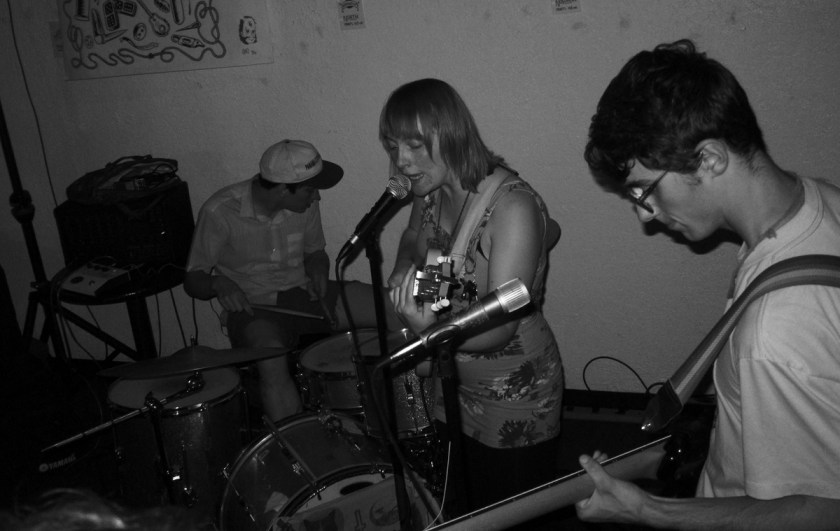

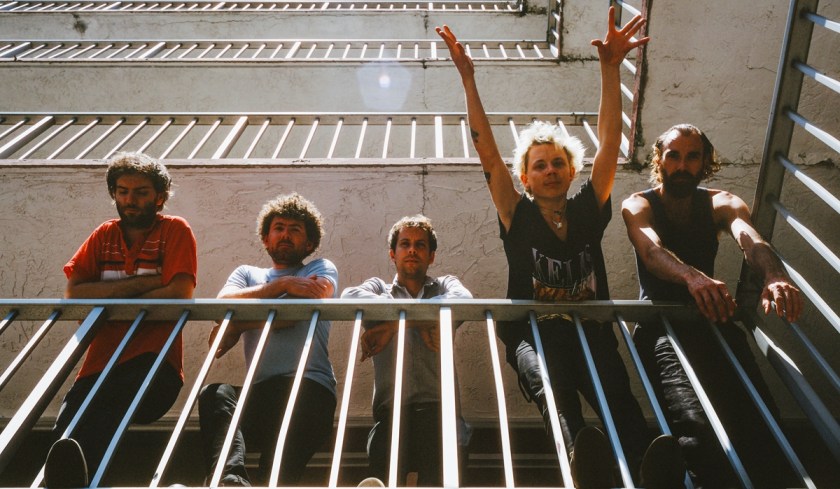
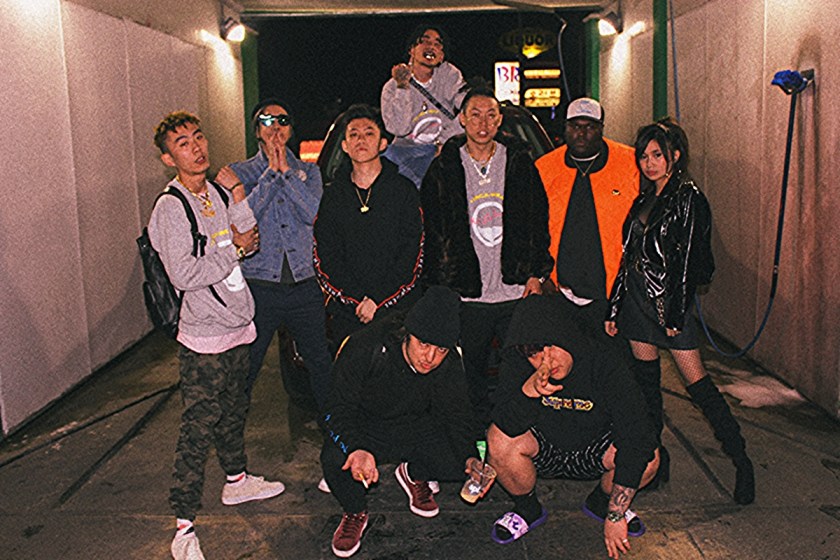

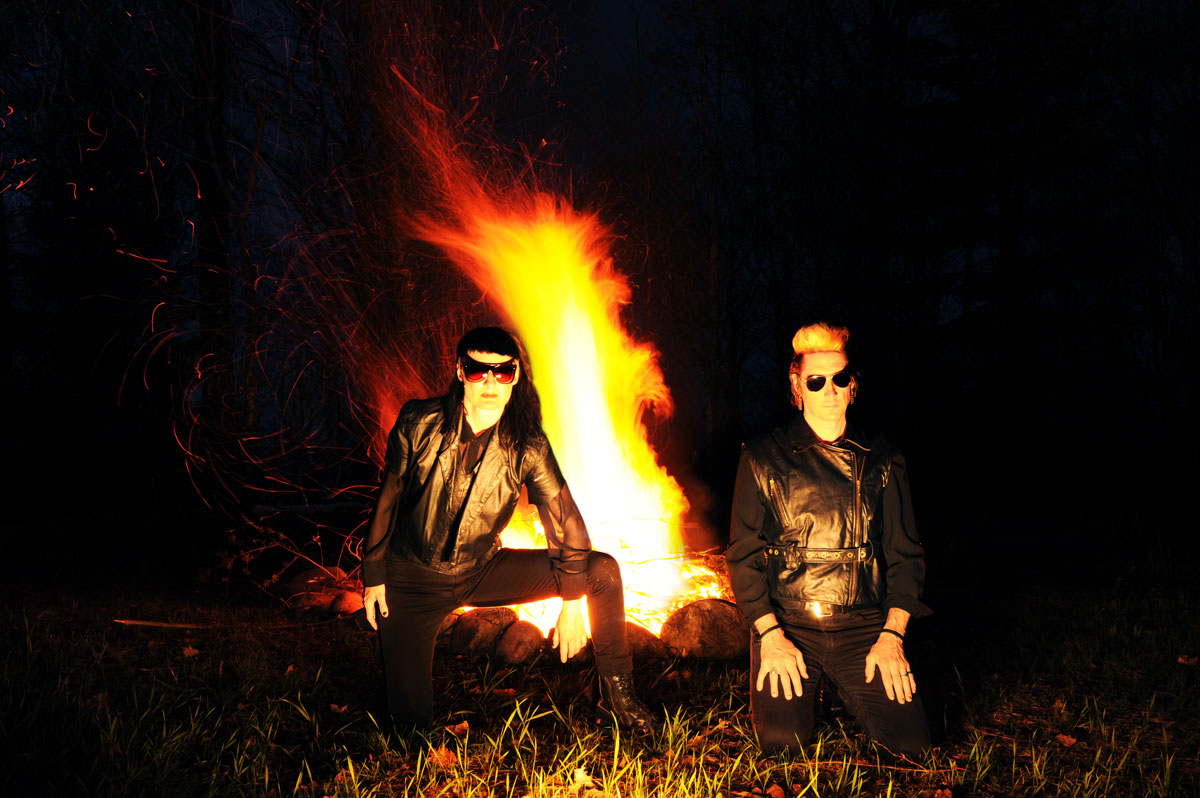
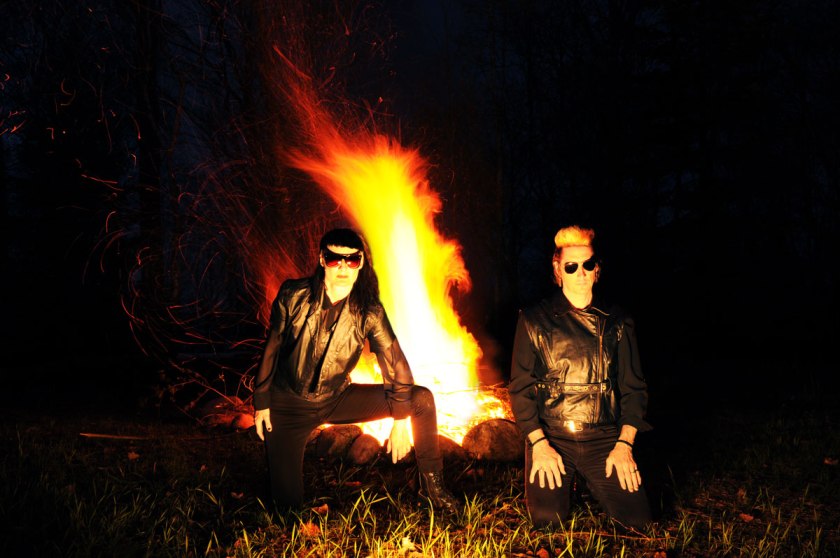
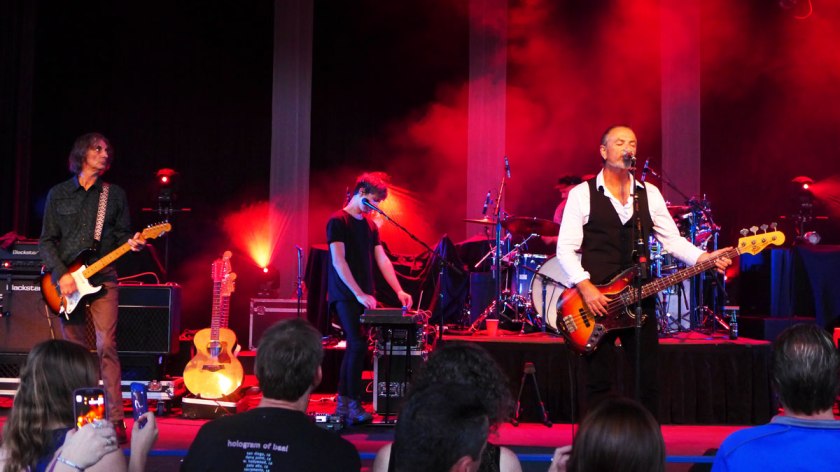
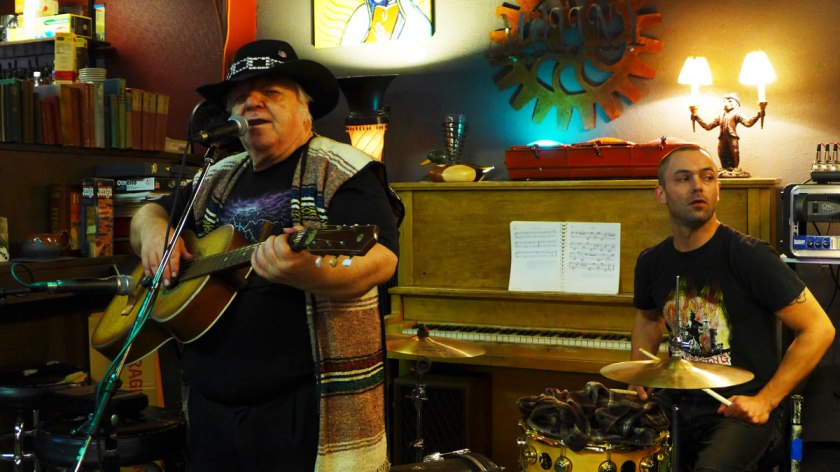
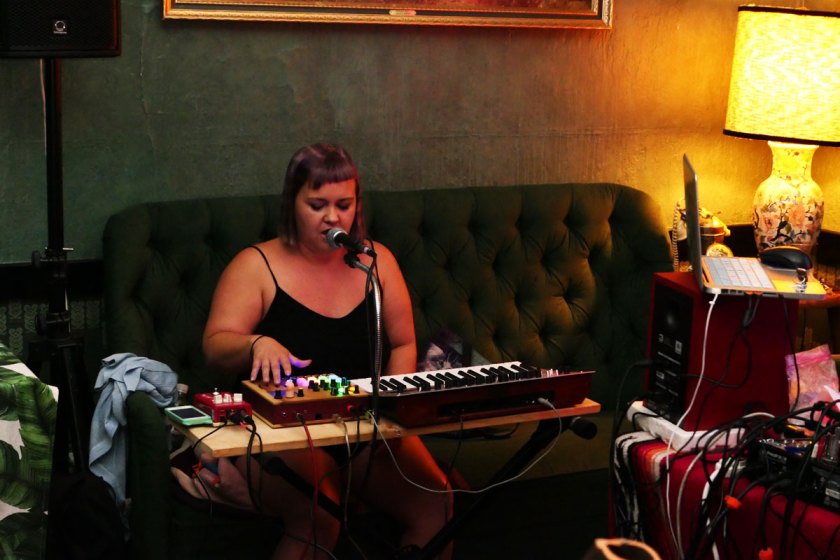


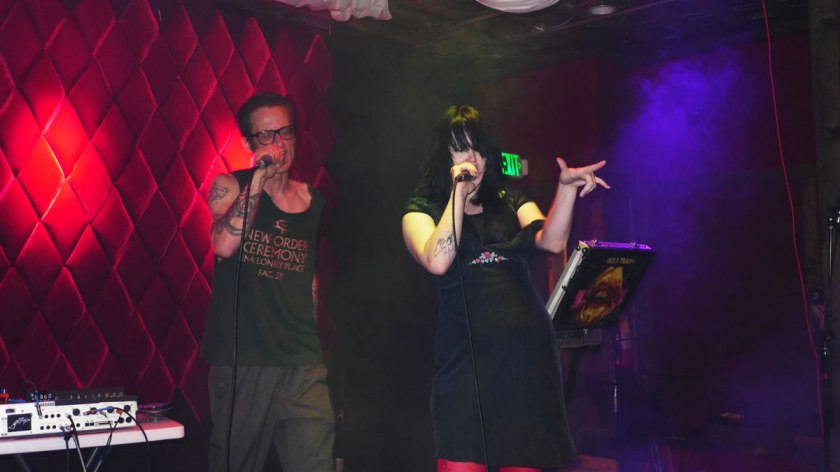
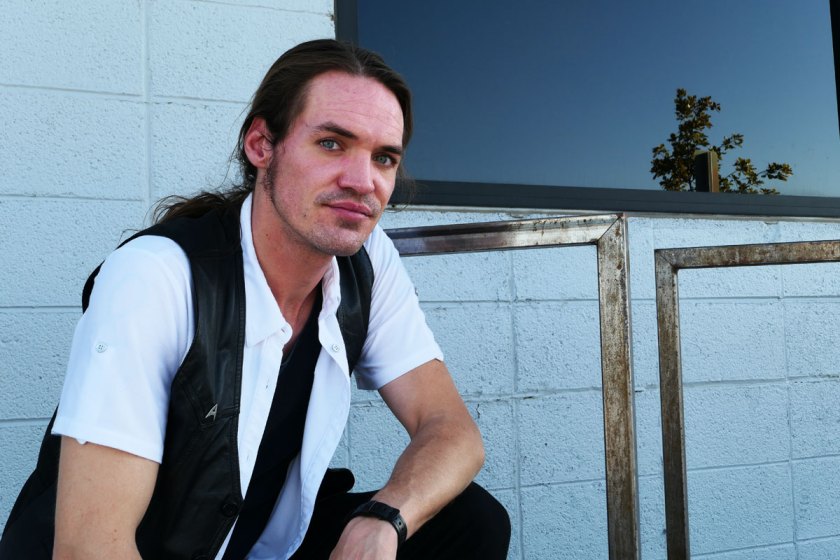


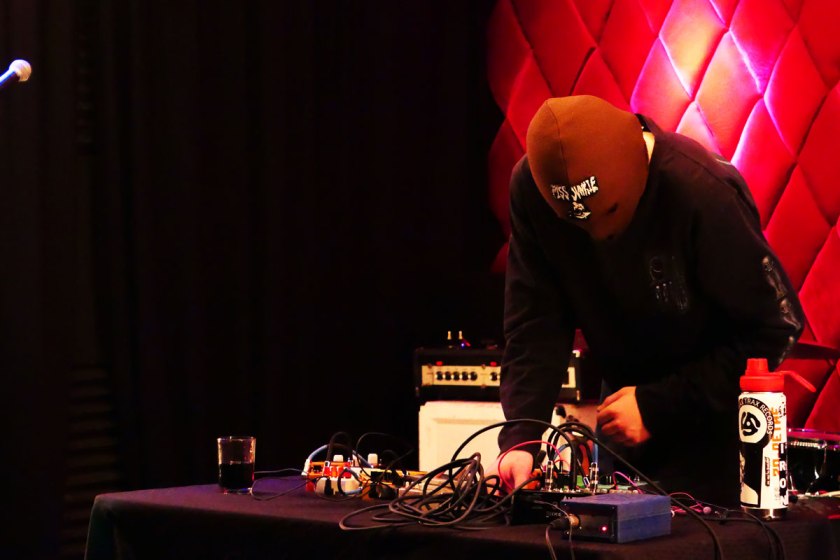
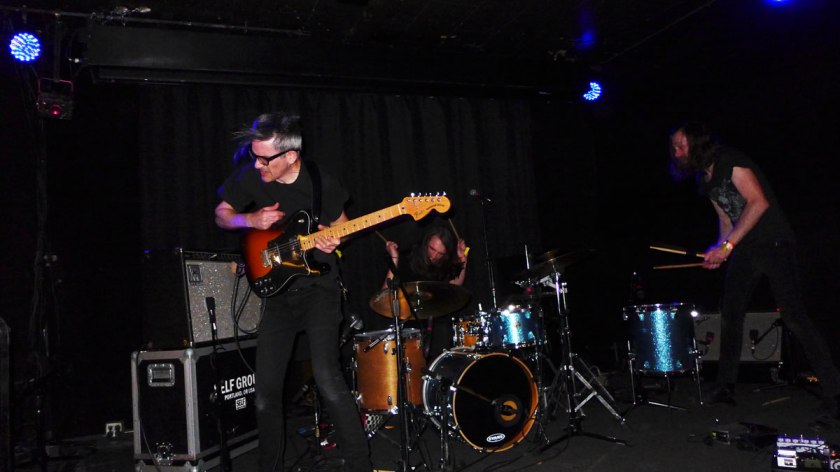


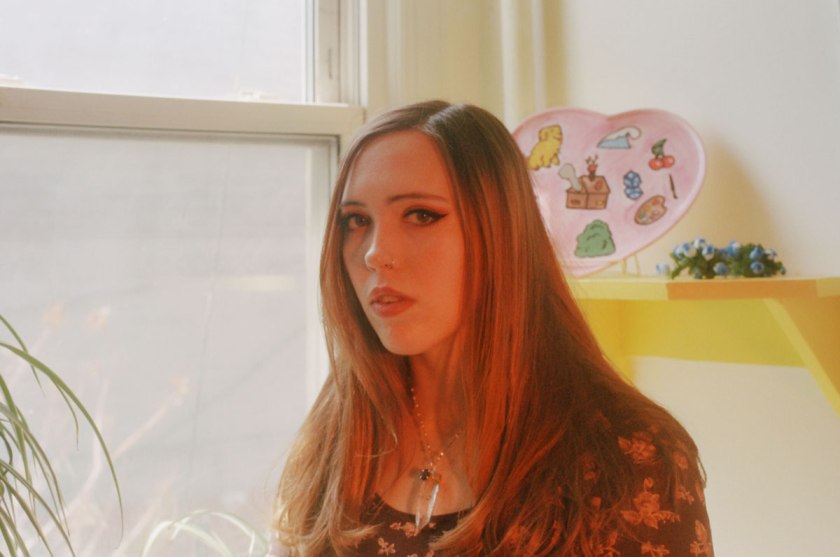
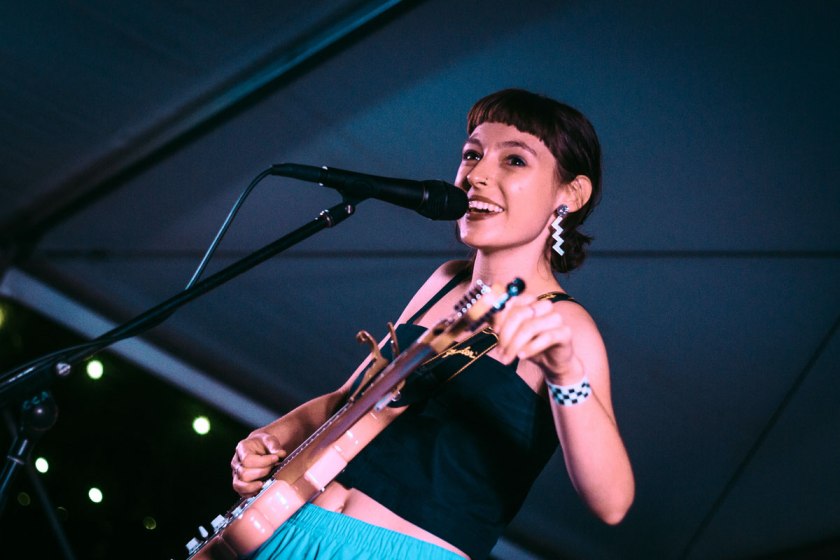
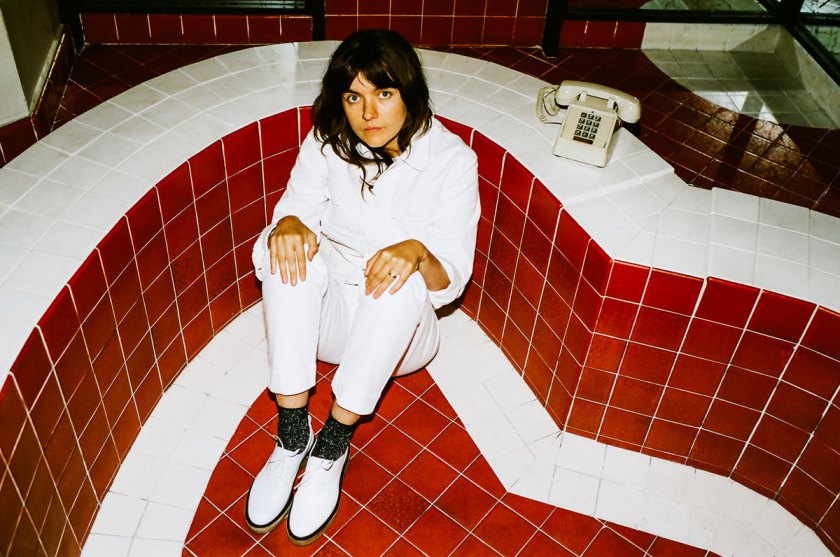


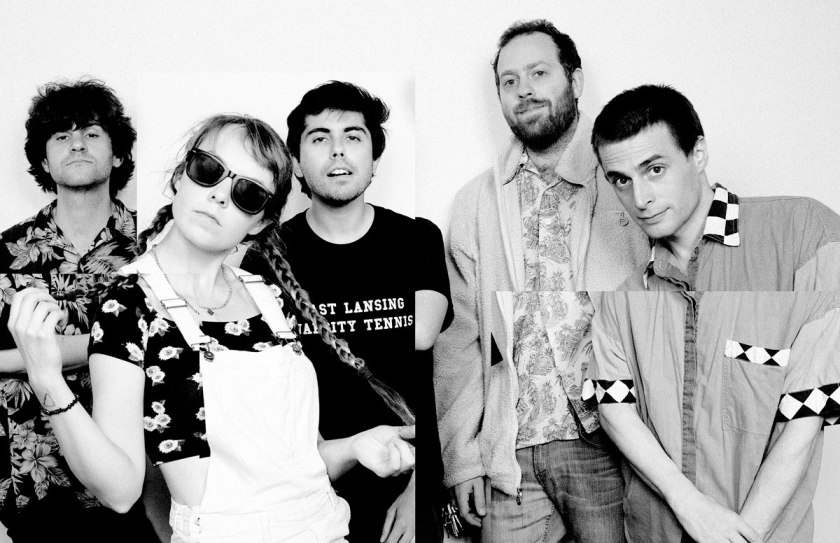

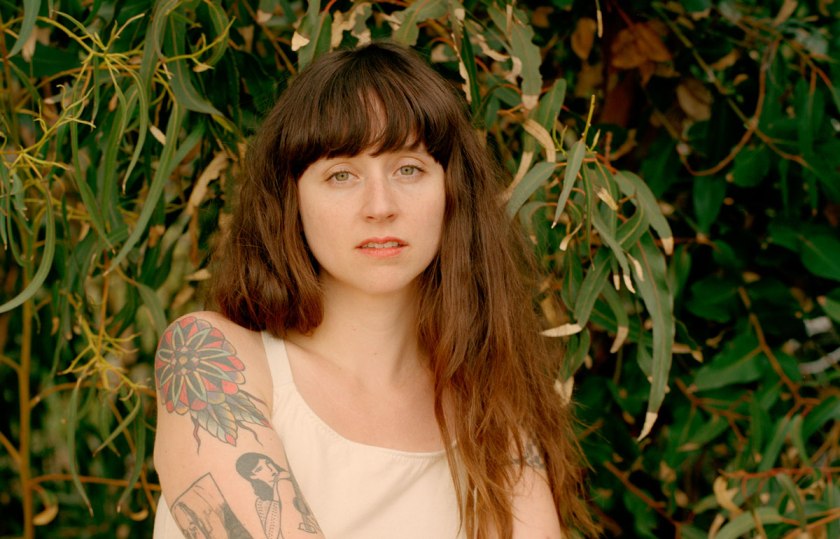

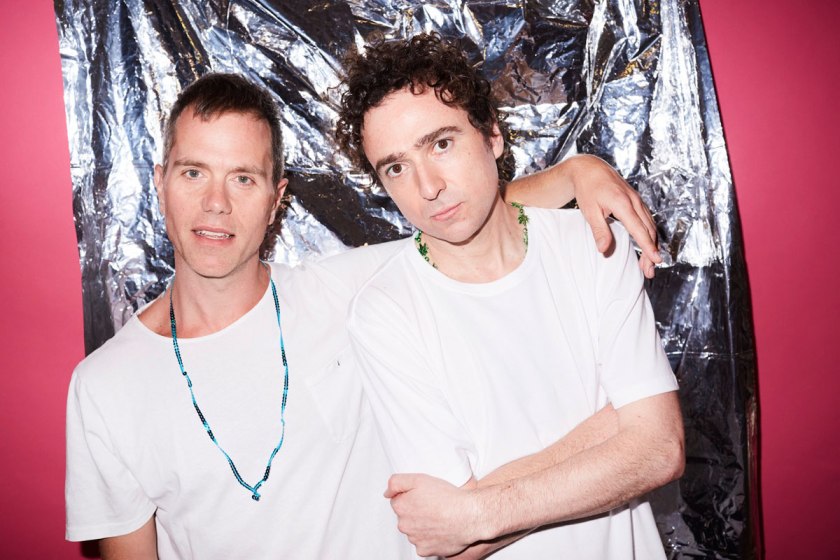
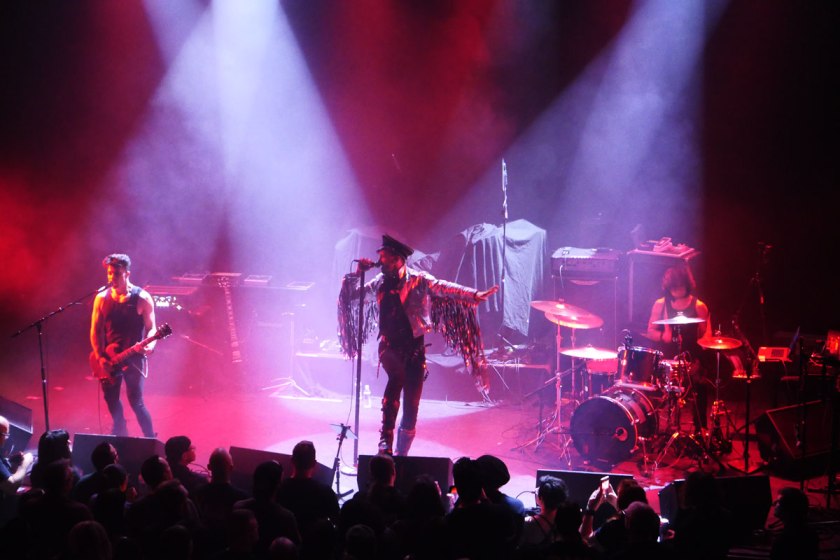
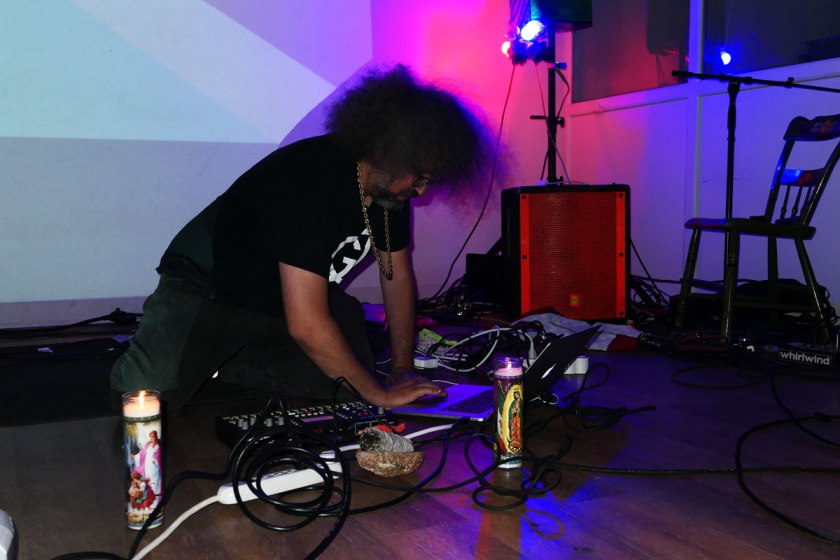
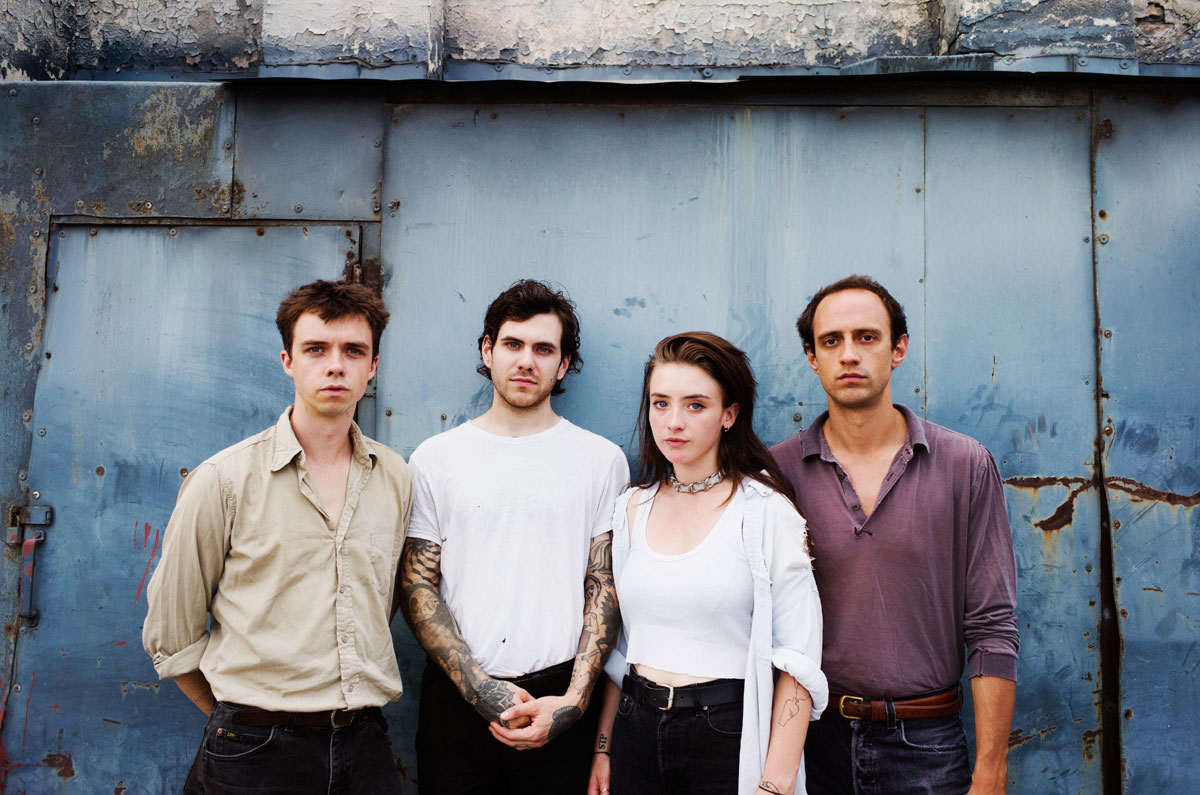


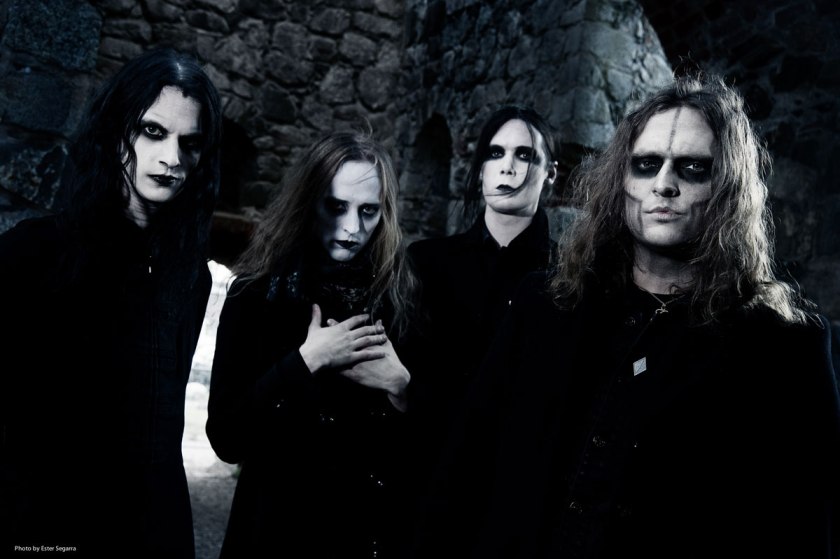
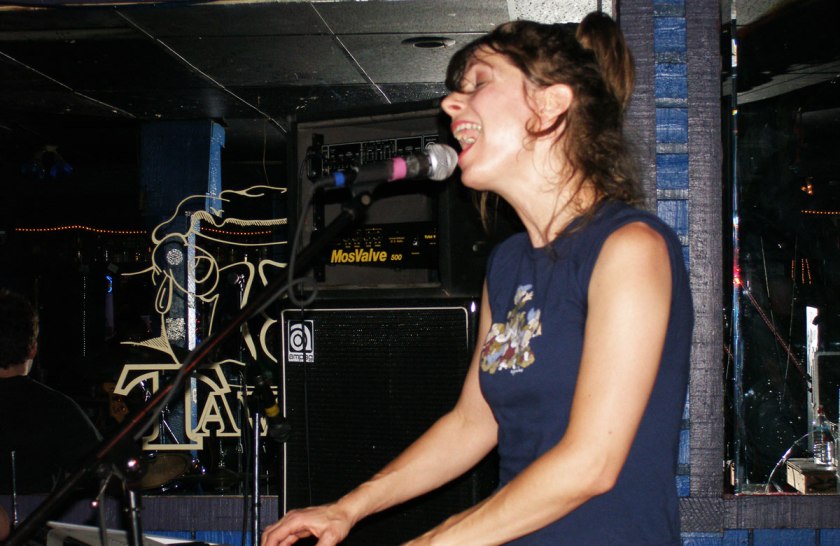


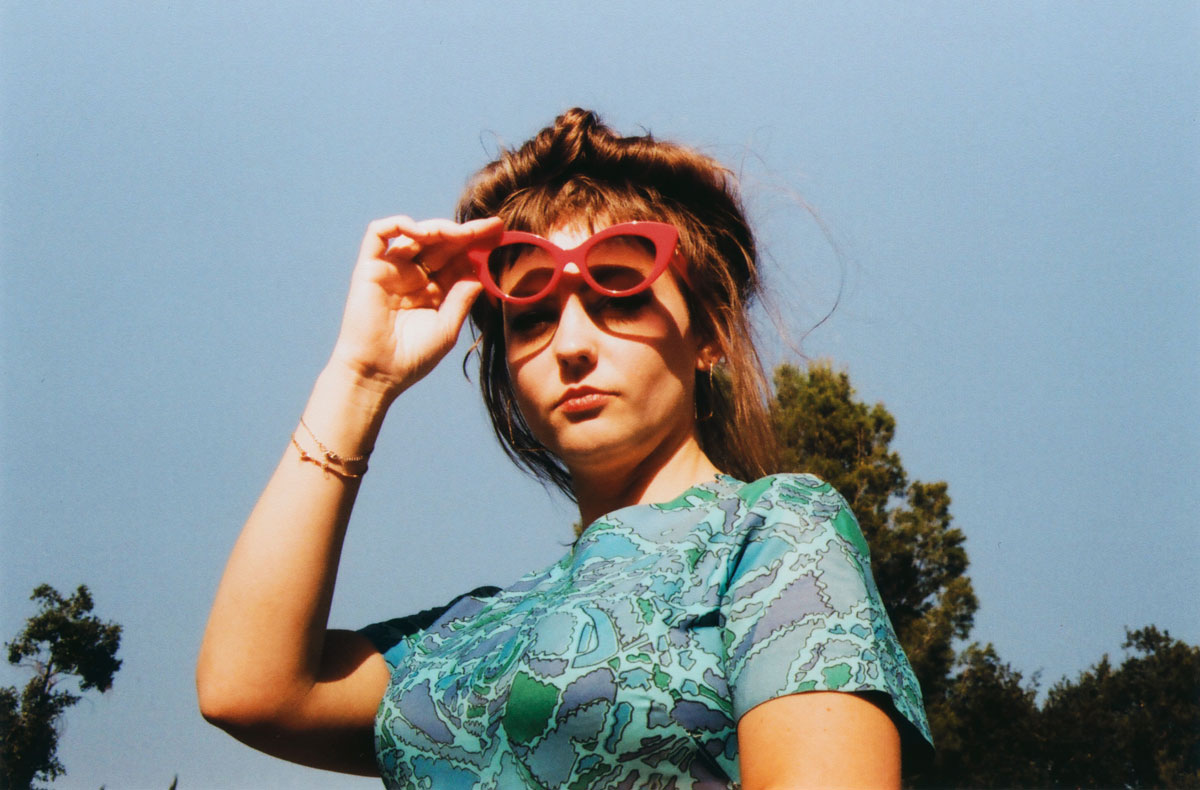

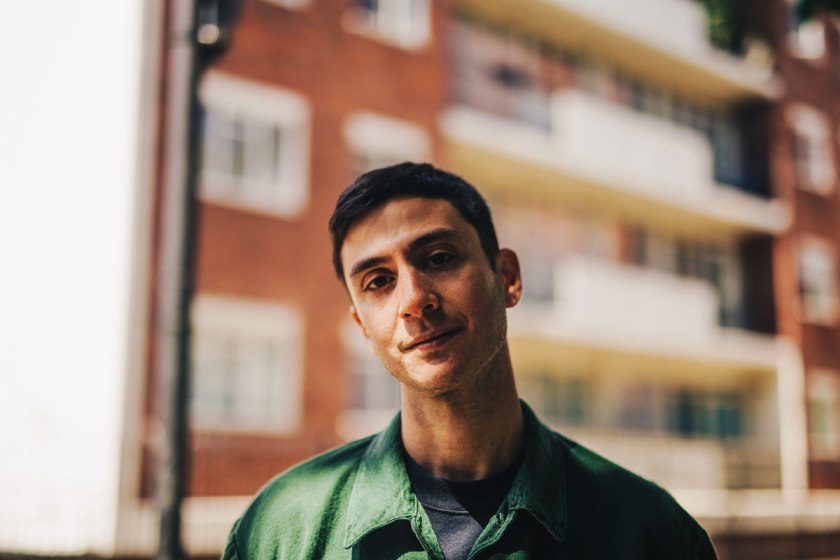
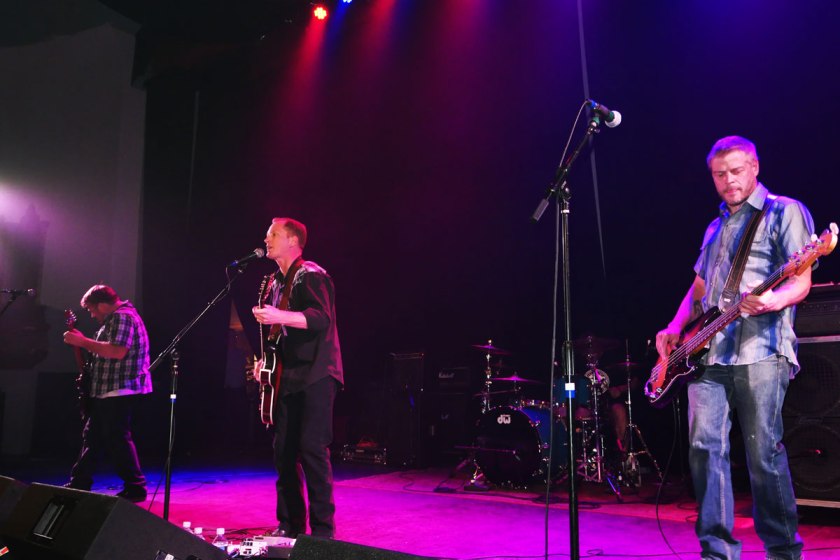
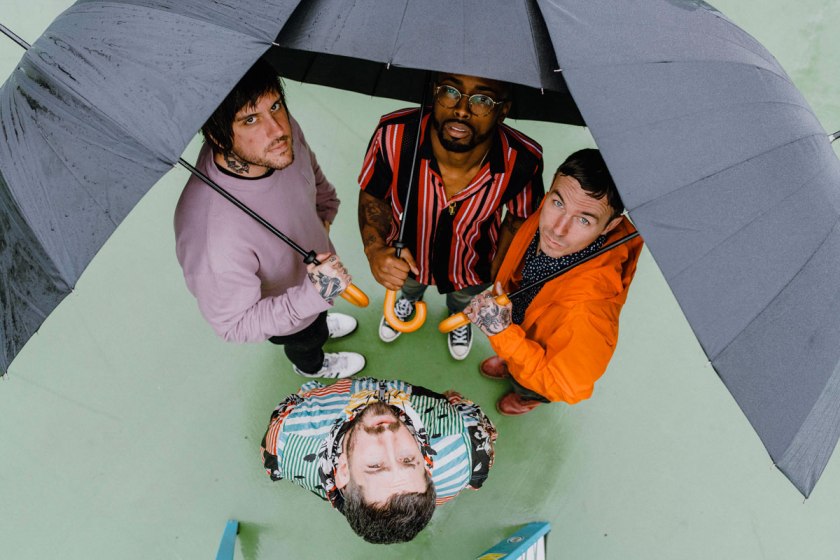
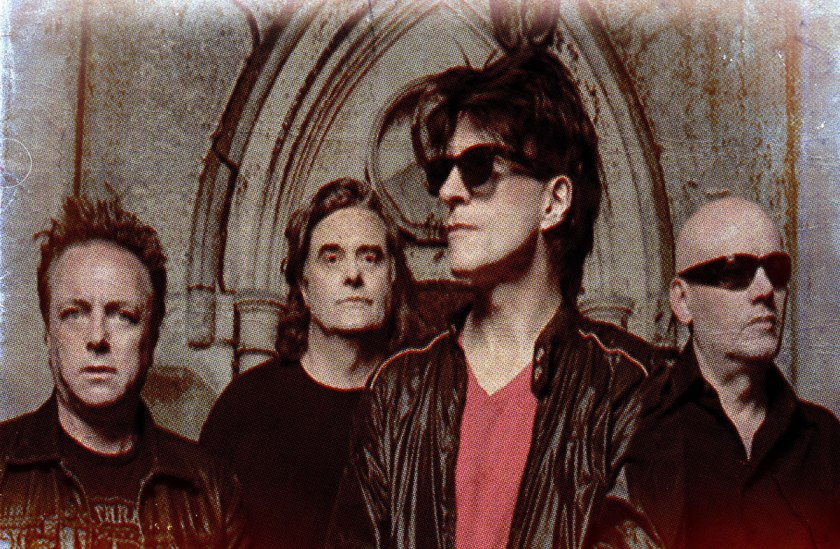


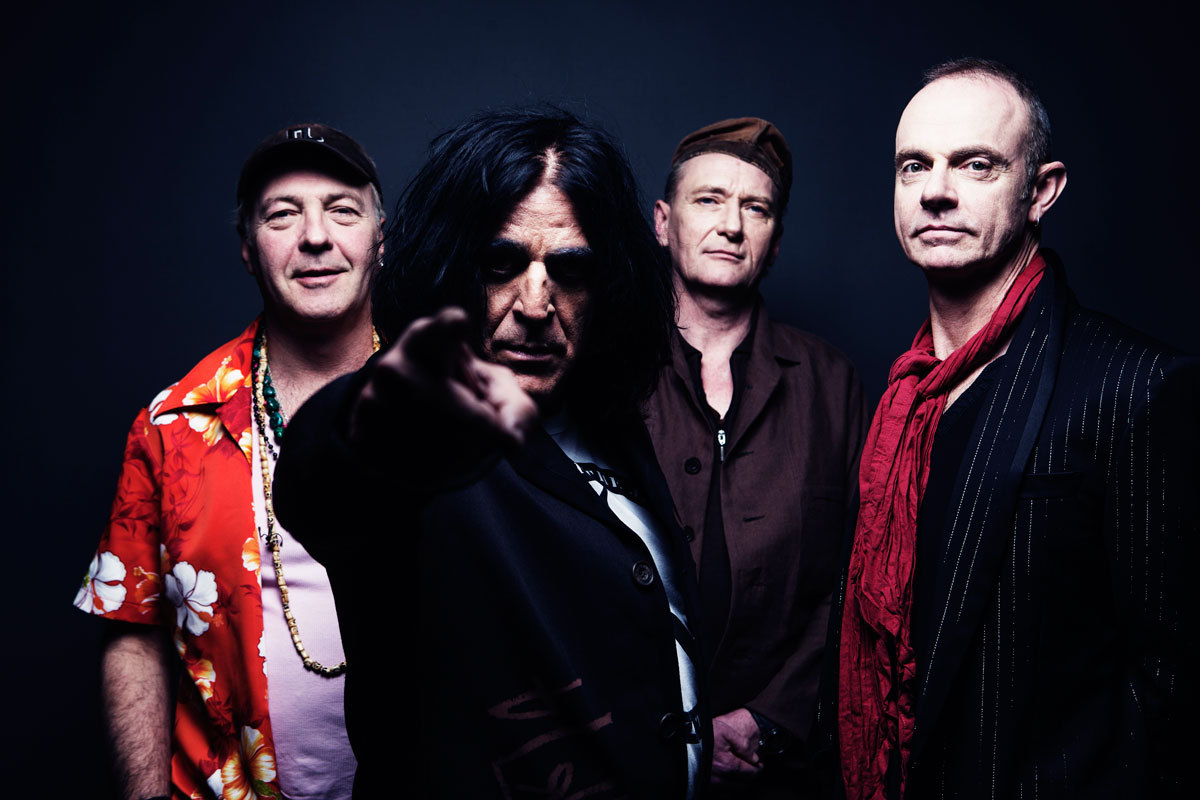

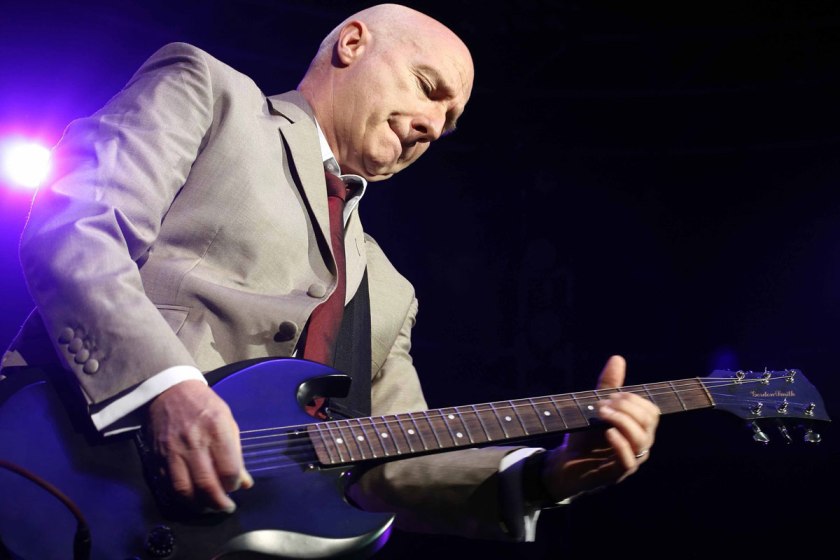
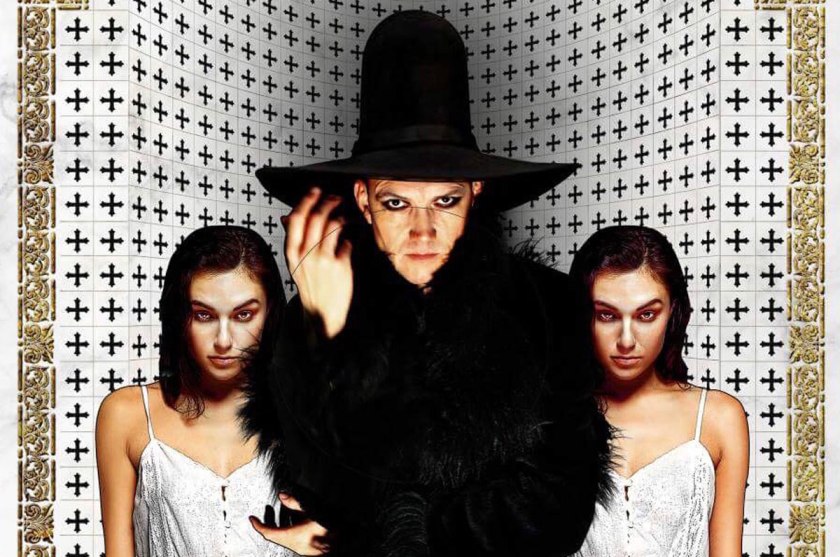
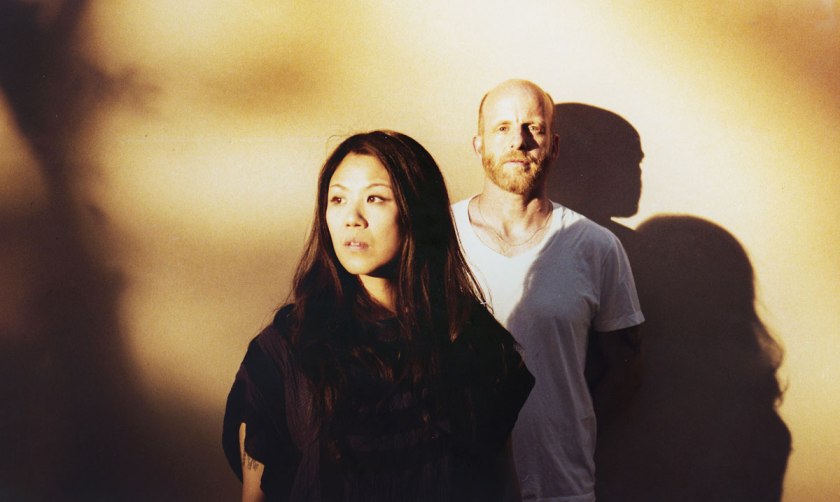

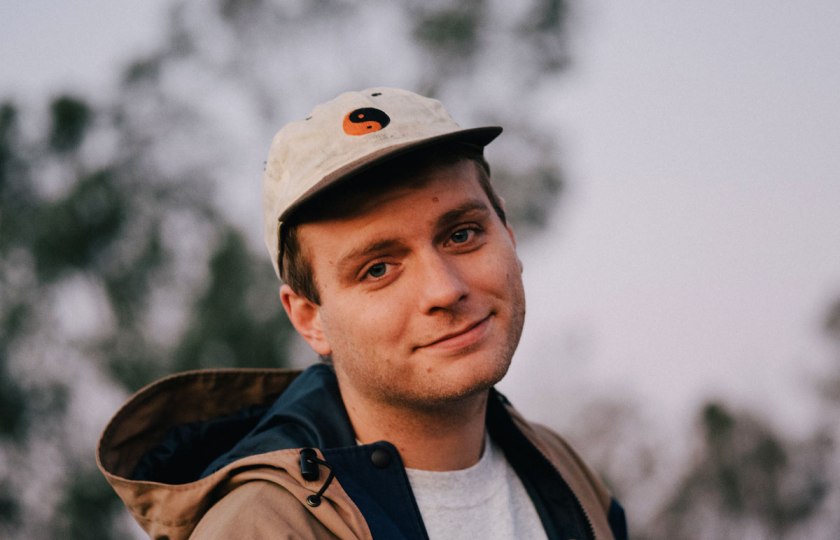


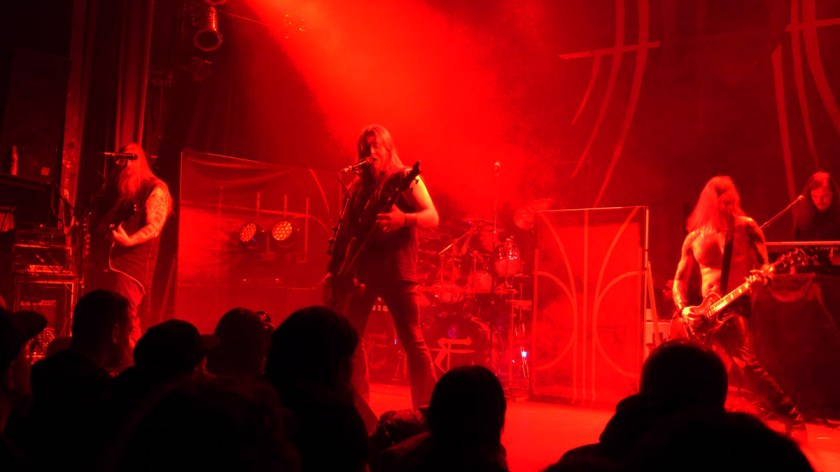

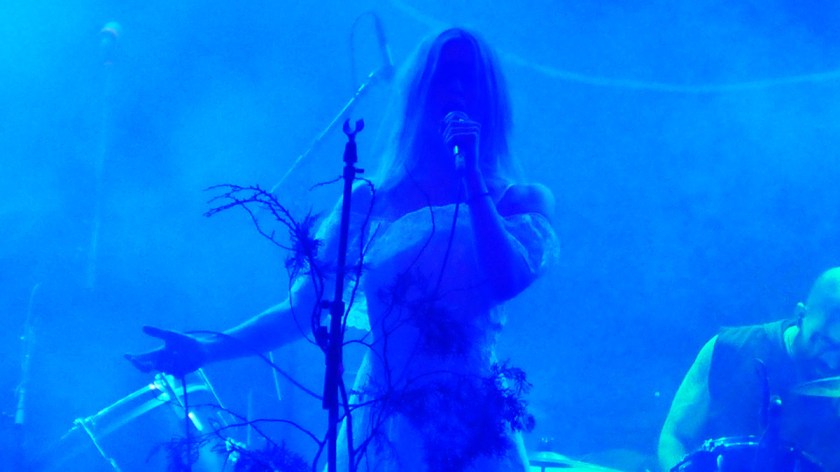
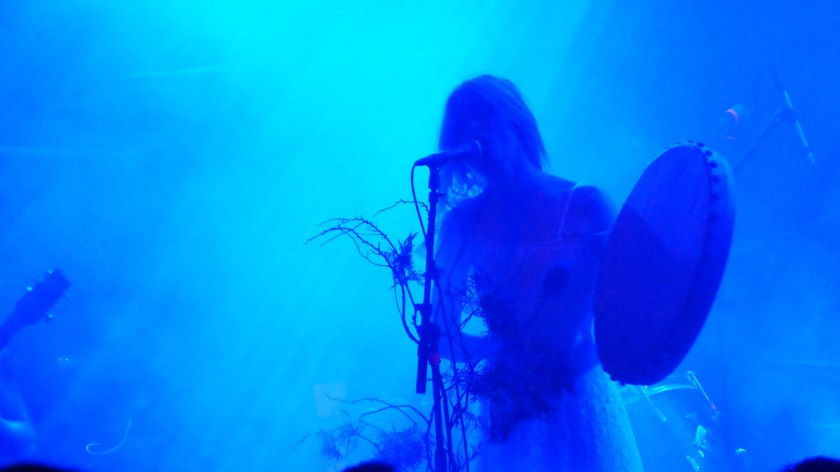

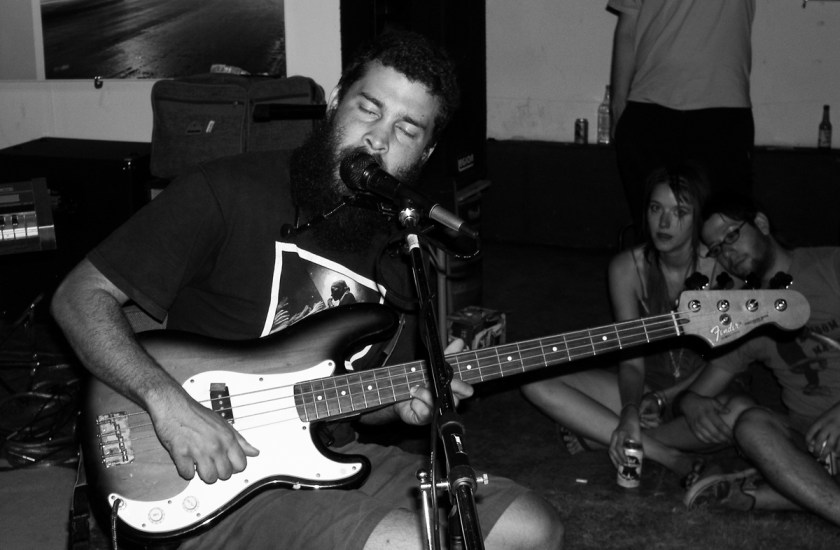
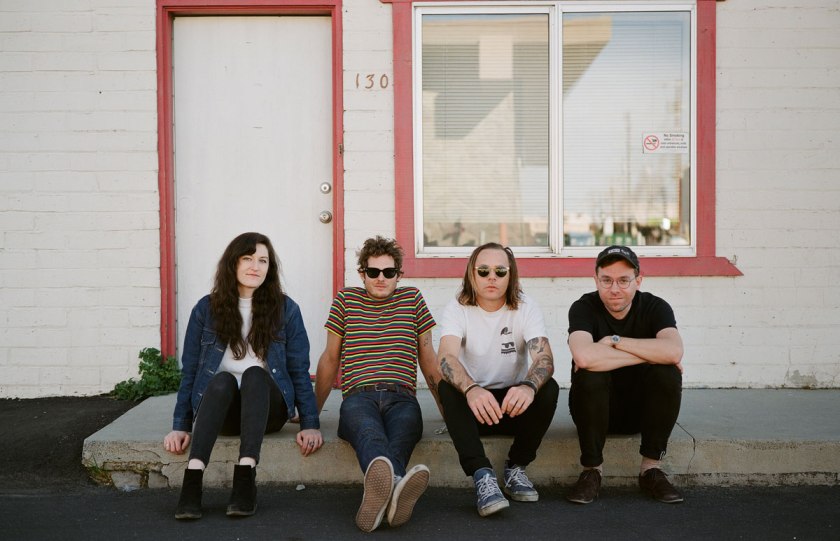
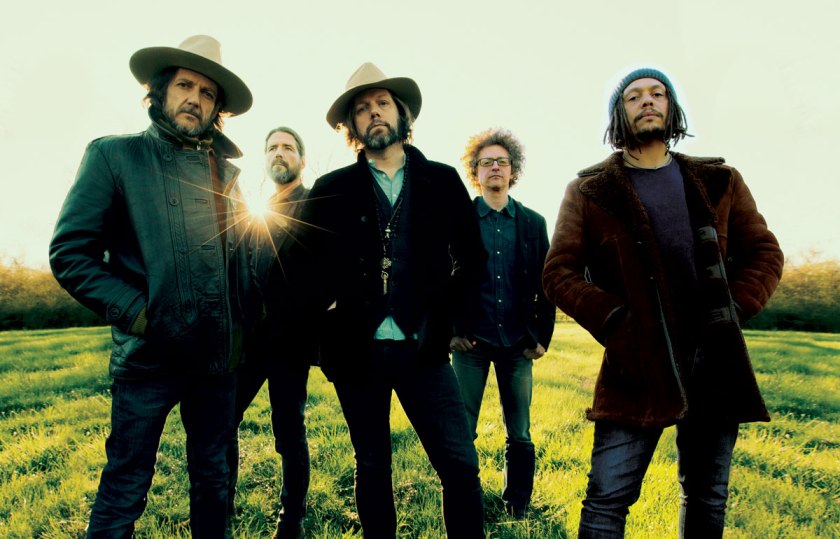


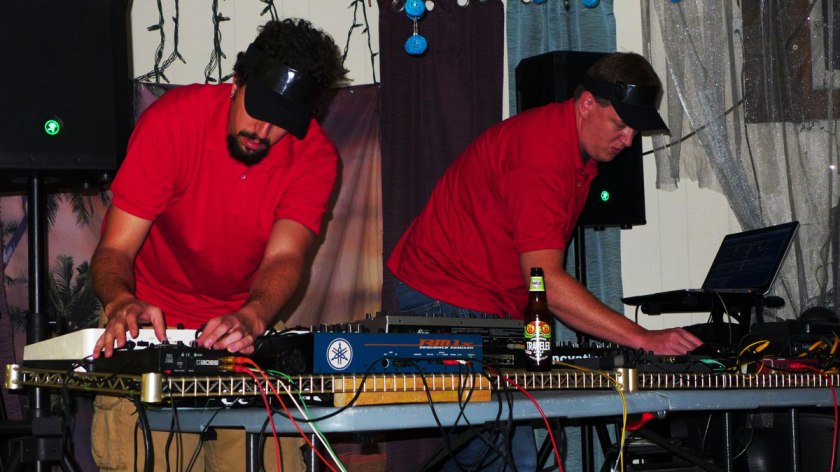





 Queen City Sounds and Art
You must be logged in to post a comment.