“Figure 8” by Kendra & The Bunnies comes in like impressionistic sketches of a melody that is given context when the vocals come in about a free spirited girl who doesn’t want to be penned in my conventional notions of how to be. The guitar work can be challenging at first but its own logic and improvisational style, given to going off the rails here and there, makes perfect sense in the entire arc of a song that feels like free verse poetry set to a folk song written by someone who had to figure out how to write one having read about that music and having access to a guitar without ever hearing it before making some of her own. It’s not outsider music but has a similar appeal because Kendra Muecke’s approach to songwriting seems to be one as immersed in poetry, biographical storytelling and constructing expectations of identity as a path to healing the trauma of the identities and values imposed on us by a culture that values efficiency and material value over humanity. Maybe when you hear the song you won’t find it so very different but in the realm of folk-inflected singer-songwriter music the subtle and distinct differences are striking. You may even dismiss it as a bunch of hippie nonsense but it is exactly those kinds of left-field ideas we need in a world filled with turmoil. The song comes from Kendra & The Bunnies new album of Vinyl and you can listen to the single on Spotify and follow Kendra and the band at the links below.
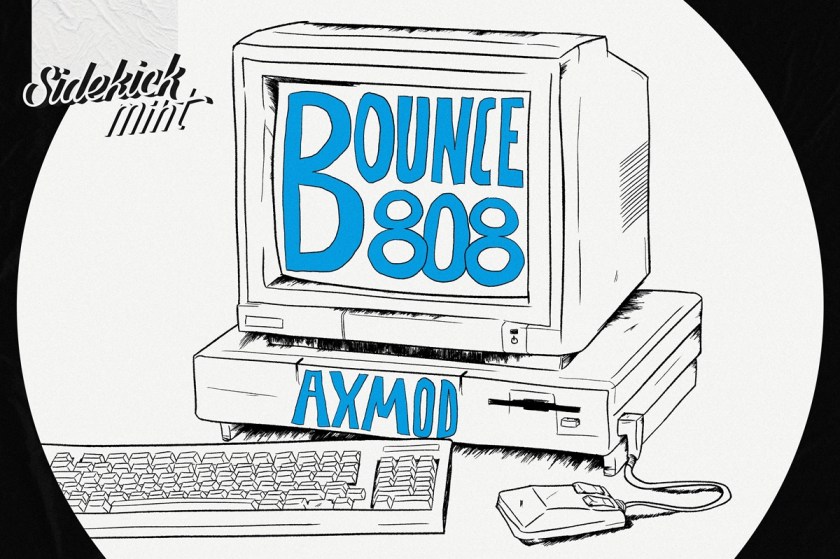
AxMod pays tribute to Norwegian nu-disco star Todd Terje on “Bounce 808.” Referencing the classic drum machine, the Roland TR-808, that has been a staple of house music and hip-hop since the 80s the song is simple in its beats but that aspect of the composition allows the other elements to shine more as the track evolves from a basic melodic synth line into expansive arpeggios and bubbling flourishes of tone. AxMod brings in synth swells as an element to indicate urgency and give the song some momentum with tones while ever so slightly bringing up the BPMs before tastefully bringing things back without an abrupt drop as happens all too often in electronic music. The orchestration of elements is what is most impressive with the song as AxMod employs atmosphere, texture, dynamics, rhythm and melody to craft a song that works as a not so minimal synth tune and as a dance track. Listen to “Bounce 808” on Soundcloud and follow AxMod at the links below.
“The Cause,” Inner Oceans’ latest single, finds the band going off its usual map of dreamily transporting pop into noisier territory. Griffith Snyder steps in and out of a near falsetto seemingly singing to his higher self for guidance to almost whispered darker passages in self-comfort as though in debating with himself about what path to take in an existential conundrum. The layers of sound, white noise, disorienting tones, melodic drones shimmering like steam down a dark alley and the phased percussion reflect an internal confusion while also working as an unconventional, intuitive guide through a maze of options. It’s impossible to say if there’s a definitive resolution by the end of the song but that’s the point—life rarely presents you with a clearly defined route through to where you want to be in your heart and in life. Not only that but maybe you don’t even know anymore where you want to be because your internal compass of your dreams and desires has shifted as well. Yet the song is oddly comforting in its inconclusiveness. It’s a signal post in Snyder’s evolution as a songwriter who was inventive and talented to one confident enough in his ability to take chances with more challenging aesthetics.
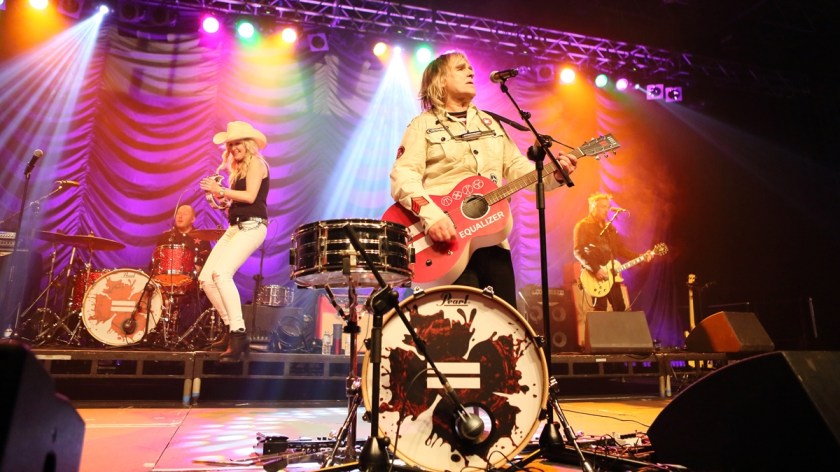
The Alarm is currently touring North America with Modern English and Jay Aston’s Gene Loves Jezebel with a stop in Denver at the Oriental Theater on Friday, August 9. All three bands came up at around the same time and were on even mainstream radio in the early 80s. At that time post-punk bands of various stripes were enjoying varying degrees of popularity and commercial success. In addition to the above groups like U2, Simple Minds, Echo & The Bunnymen, The Cure, Bauhaus and Siouxsie and the Banshees helped to define the sounds and look of that style of music for decades to come.
The Alarm’s roots in music go back to Wales where singer and guitarist Mike Peters cut his teeth as a live band playing in the punk band The Toilets in 1977. Peters says the fledgling group played with bands like The Clash, The Buzzcocks and Sioxsie & The Banshees. The band would go to London’s now legendary The Marquee Club, where the Rolling Stones played their first live show in 1962, to see bands including Chelsea whose James Stevenson once drove original Alarm guitarist Dave Sharp home one night because he’d had a bit to drink. Stevenson now plays in The Alarm as well as Jay Aston’s Gene Loves Jezebel. The same social milieu meant that Peters went to a clothing store on London’s King’s Row where Billy Duffy worked before the latter joined The Cult. At that time The Toilets had dissolved or rather evolved into a group called Seventeen. “That was fairly directionless in a way and we experimented with echo, power pop, rockabilly and we got lost in the learning curve,” comments Peters. “But we got a tour with the Stray Cats by pretending to be a support band at gigs and we played The Marquee Club and the guy who ran the club thought we were horrible.”
That club manager refused to book Seventeen from thereon out from one of the premier venues of the era. But a year later Peters and company had reconfigured and focused its ideas into The Alarm. And still the guy at the club recognized the members from being Seventeen. “[He] said, ‘I’m not gonna have them play,’” recalls Peters. But Chelsea Singer Gene October offered to get The Alarm a gig as a support band but needed an alternate name so The Alarm played The Marquee Club for the first time as The Black Sheep and the club manager said, “That band’s going places.” At that The Alarm’s manager quipped “That’s the band you wouldn’t book. That’s Seventeen!” And from there The Alarm became a popular band throughout the 80s even though savaged by the English music press. It’s 1983 single “Sixty-Eight Guns” broke into the top twenty in England and it’s 1987 single “Rain in Summertime” cracked the American top ten Mainstream Rock chart, the latter remaining a staple of college and Modern Rock playlists for decades.
Though known for unabashedly positive up-sweep to its music, The Alarm’s catalog runs the gamut of emotions with luminous songwriting that sounds like the band is striving to connect with something bigger than themselves. By 1991 in the wake of the then new album Raw, The Alarm called it quits. Peters went on to a respectable solo career but also engaged in a short-lived project in the late 90s with his previous acquaintance and now then friend Billy Duffy—Coloursound. The group recorded demos, no official releases, but it did perform live. “Pardon me saying so but those recordings have a kind of cult status for fans of the bands,” jokes Peters. The band sounded like a fusion of the great sounds of mid-80s post-punk and Peters says that in the audience of that first show were Ian Astbury, The Cult’s singer, and Eddie MacDonald formerly of The Alarm.
“The next morning the phones were ringing off the hook, says Peters. ‘Let’s get The Cult back together! Let’s get The Alarm back together.’” By the turn of the century or so both groups were back and active.
But by then Peters had already recovered from a bout of lymph cancer only to discover in 2005 that he had chronic lymphocytic leukemia. He formed the Love Hope Strength Foundation shortly after to support people suffering from cancer and leukemia. Peters and The Alarm continued to write and perform music perhaps more actively than in its previous iteration and in the wake of Peters’ wife/band mate, keyboardist Jules, diagnosis of breast cancer in 2016 The Alarm has put out four albums in three years beginning with Blood Red and Viral Black in 2017, Equals in 2018 and Sigma in 2019. It wasn’t just the urgency of health issues that has inspired this flurry of creative activity either. Peters took on the challenge of his creative legacy as well and not to just rest on past laurels like a band celebrating live a kind of museum.
“I think a lot of that stems from arriving at that point in 2010 or 2011 and an era of fortieth anniversaries for The Alarm,” says Peters. “And I like to look forward so I took that as an opportunity to re-present ourselves as a modern band even given the dynamics of who we are, our age, and even though we have active and inactive members but all part of the family—you become a history of the band. You go away but you never really leave. So I wanted to re-establish the band in the modern era given the weight of our history and make music that can stand up to that and live up to that and represent itself through itself against that history. With the new records it challenged us to re-establish ourselves. That’s a stronger calling, I think, and that’s what’s fueled all the new music we’ve made. And more the will to survive, my wife diagnosed with breast cancer and my leukemia relapsed. There was a lot of reason in the air and to make music that could be a soundtrack for us not just as human beings but as a band as well.”
With the new configuration of the band Stevenson, a versatile instrumentalist, has taken on a greater role playing bass pedals as well as guitar as Peters plays a special guitar called The Deceiver which looks like an acoustic guitar but has greater capabilities than the standard instrument. Peters also has microphones set up across the stage so he can move about and in general the music can be presented in ways that had not been possible previously. To perform live for the anniversaries of their respective releases, the first two albums 1984’s Declaration and 1985’s Strength have been revisited and reinvented given the new live format and not hemmed in by the technological and creative limitations of the time of their original release.
In 2017 The Alarm performed on the Vans Warped Tour side by side with much younger bands but earned the respect of musicians and audiences who, given the era, shared The Alarm via social media platforms and giving the group a new audience that only truly knows the modern band and not influenced by expectations of years past. And the younger audience is having an impact on The Alarm’s older fans through social media.
“That’s re-invigorated our old audience and they see younger people talking about the music in social media. And they can say this band is making music today and it validates their reason to like the band in the first place. As long as we’re enjoying it and our success isn’t getting number one on the Billboard charts but maybe to still be there. It’s about longevity and creating a life in music. We’re still learning what we’re capable of. In the 80s we had big hair and western clothing but that’s only one facet of our history and people can discover other facets of us and doors open for us as we play and opportunities arise when we stay true to the core values of the band which is to to be restless, never be happy with what you’ve be created, make things better, make it around the next musical corner, live for the day to find that chord and keep on dreaming and the thrill of the music.”
Modern English and Jay Aston’s Gene Loves Jezebel have also been releasing some of the best music of their careers with 2016’s Take Me to the Trees with the former and the latter’s 2017 album Dance Underwater. Modern English in particular has always made interesting and moodily haunted post-punk but most people probably only remember the band for “I Melt With You,” which was commercially beneficial but has perhaps eclipsed its other fine offerings.
“A lot of bands can get overshadowed by a massive hit,” comments Peters. “I remember playing with Radiohead in Albany, NY in 1995. They were massive Alarm fans and struggling with the weight of ‘Creep.’ It became a sleeper hit in a way and they’d just released The Bends. And they were saying no one wants to hear The Bends, ‘They only want to hear ‘Creep!’ And it was killing them. Thom Yorke was really struggling and I talked with Jonny Greenwood and told him you’ve got to put your arm around this guy and stick to what you believe in and keep playing your music and it will come out from under the shadow. They stopped playing ‘Creep’ for awhile and I admire them for that because that’s what bands have got to do sometimes. That’s what’s great about seeing Modern English on this tour and spreading their wings and playing the music they love and playing ‘I Melt With You’ at the end of the night. It’s great seeing them and Jay and James playing songs from Dance Underwater. It’s as good as anything they’ve done. What’s good about this tour is that all three bands are as much about tomorrow and we’re all bands that have survived but the ethic of the band has stayed intact and that’s what people are experiencing when they come and see the tour.”
Drifting in on clouds of billowy drone, Haruhisa Tanaka’s “1110” from his album Gone sounds like what patterns of ripples from drops of rain impacting each other endlessly might sound like if abstracted into sound. Or of the aforementioned clouds passing into and over each other in the night. The interference patterns that result from natural, everyday phenomena that we experience and note but rarely take conscious note of is what Tanaka embodies in this composition. The louder, distorted sounds are those interference patterns as the frequencies intersect in the track. By giving voice to these cycles of the natural world Tanaka’s “1110” is like the musical equivalent of a Zen garden capturing the simple and comprehensible nature of the universe if only we can quiet the mind enough to take it in in its proper measure. With the tranquil mood of this song that openness to the sort of revelation the Buddha believed could be had if one could look properly into a blade of grass and attain a deep understanding of all things and their interconnectedness might just be possible. Listen to “1110” on Soundcloud and follow Haruhisa Tanaka at any of the links below.
Party Favor released stylistically eclectic album Layers in April 2019 and recently issued the music video for an acoustic version of “Be OK.” The original was accompanied by trap and future bass beats but the acoustic version truly highlights collaborator EZI’s emotionally vulnerable vocals. It’s a treatment that suits a song that speaks to a sense of overstimulation and emotional exhaustion. And to being in a place where you don’t want extremes of feeling, but an easily sustainable place of being OK, or in another way, in a state you find acceptable with no complaints. It’s the ultimate state to be if you listen to a lot of Lou Reed and his songwriting for The Velvet Underground because it’s something that is often easily achievable or the best one can hope for in troubled times because it means you’re no longer at the bottom end of your life. It’s not about settling but finding internal peace and personal equilibrium. Watch the video below and follow Party Favor at any of the links provided.
Nathan Hui-Yi as The Secret Chord has tapped into a palette of sound for his single “Where You Left Me (My Lonely World).” It is downtempo with a lead piano melody tracing an impressionistic emotional sketch of a broken heart waiting for the worst of the pain to wriggle out and dissipate into the mists of time and new experiences. The soft bass line accents and propels the song in an organic progression that flows smoothly with a flare of guitar as a second melody with the piano. Like some of the most interesting music of the past forty plus years the song blurs the line between jazz, hip-hop and the avant-garde. The dusky soulfulness of the vocals speak to a soul weariness having come from dark places ready to move forward again. The track comes from the album Journey to the Soul and Back Again out March 2019 and you can listen to the rest of the album on the project’s Bandcamp page. Listen to the single below and watch its beautiful music videos comprised almost of water colors as animation. You can also follow The Secret Chord at any of the links provided.
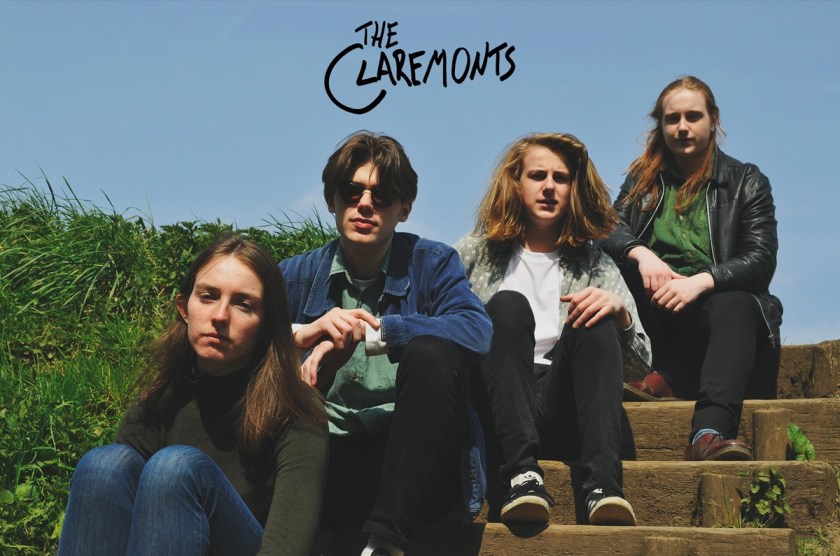
There’s more than a touch of Pills ‘N’ Thrills and Bellyaches period Happy Mondays in The Claremonts’ new single “Clearer Than Ever.” You know, the kinds of melodies and songwriting that seems, if you’ll excuse the reference, loose but undeniably appealing and accessible. Like being a blatant weirdo but likeable enough to get the pass into mainstream normalcy somehow. The jangle-y guitar and the drivingly funky bass line and just enough grit and attitude so as not to be simperingly friendly. Halfway through the song the band sends the song into a dynamic flare-up of sound and energy before letting us back down into the groove. In that way its reminiscent of Public Image Ltd. when the late, great John McGeoch was in the band. “Clearer Than Ever” makes its mark in your brain at two minutes twenty-two seconds and leaves you wanting more especially if you’re a fan of its Madchester-esque flavor. Listen to the song on Soundcloud and follow The Claremonts at any of the links below.
Catch a Dinosaur captures that perfect moment as you’re drifting off into a nap and and your mind wanders mixing contemplative reflection and a dreamstate with its single “Maybe You Just Wait.” The shimmering tremolo sound of the guitar and the vocals are reminiscent of Luna’s more chill moments and the way Dean Wareham can say so much with a pithy observation that is neither self-deprecating or aggressive in its analysis of a situation. There is a bittersweet flavor to the song once it gets into the main groove but the mood doesn’t get stuck there and brief guitar solos flare up that propel the song back into its wistfully romantic mood and again before the outro. There are angry breakup songs, this is more a hey maybe things aren’t working now and we need a break sort of vibe. Follow Catch a Dinosaur on Spotify.
Wallfly’s album Somethings has been out since April 2018 but its’ single “Bad Habits” recently came to our attention which was welcome for such an unusual and sonically challenging rock song. You never have time to get to used to a sound or a dynamic across the song so calling it “Bad Habits” is genius. Like the band or its members spent some time making music that got stuck in a rut or conforming to some style that bored them. Like when young musicians in recent years think they discovered something new and exciting with the fifth or seventh wave of garage rock or psychedelia like so many do thinking it’s adequate to sound like “Anemone” by The Brian Jonestown Massacre and that simple reverb works to be trippy because delays are for pretentious “art” bands. Wallfly seems to disregard these considerations completely. Somewhere someone cited Deerhoof as a comparison or an influence which seems apt as that’s another band that doesn’t really sound like anyone else unless someone could be said to sound like Melt Banana collided with Alice Donut and Brainiac. The fact is that this song that melds together electronic sounds with rock sounds and an avant-garde sampling aesthetic while creating a song that at its heart speaks to and articulates a desire not to be hemmed in even by one’s own internal task master. If Guerilla Toss is touring through the band’s hometown of Provo, Utah, throw these people on the bill just for weirdo solidarity’s sake. Listen to the song on Spotify and follow Wallfly at the links below.







 Queen City Sounds and Art
You must be logged in to post a comment.