“Stigande luft” (Ascending Air) is the first track from Jäverling ◇ von Euler’s upcoming album Musik för trädgårdar (Music for gardens). It draws us in by establishing a percussive tone as a beat as shimmering splashes of synth come in and the melody and textural elements blossom into a dynamic soundscape of interweaving rhythms and melody. It’s like a fusion of New Age jazz and ambient composition. Though having a bit of the vibe of an after hours techno lounge, the overall effect uplifts the mood with the sense of illumination and energy. Rickard Jäverling and Henrik von Euler have worked together on previous albums as the ambient duo Dödens Dal and this newer collaborative material emphasizes a synthesis of the organic and electronic. Listen to “Stigande luft” on Spotify and look for the project’s new album out on the Flora & Fauna imprint.
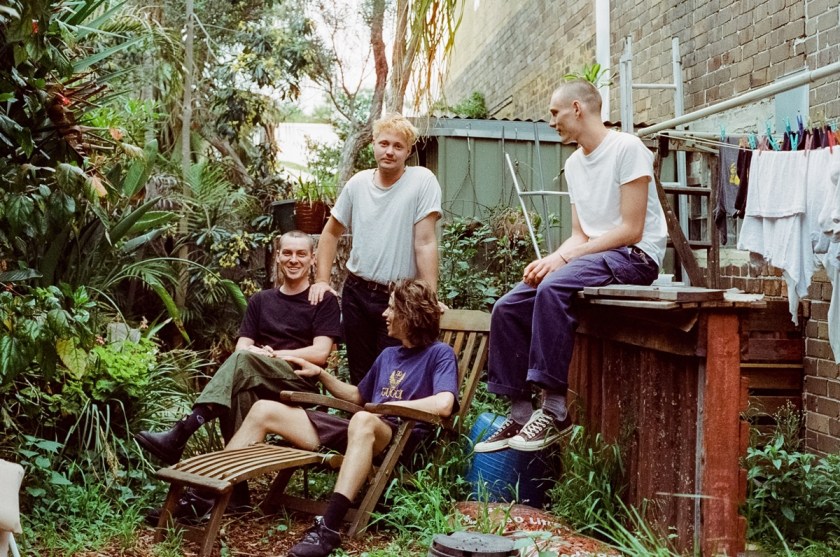
Rowen Tucker of Australian post-punk band 100 took inspiration for the writing of “Special Vision” watching from Sydney’s Hyde Park workers retiling the roof of St. Mary’s Cathedral. All that toil and outlay of resources and for what? The expansive urgency of the song charges its words with a paradoxically melancholic and angsty energy both raw and pointed and atmospheric. Its chords cut and highlight literate and thoughtful observations and introspective examinations of one’s own relationship to what some might think of as the larger issues of existence. Except that Tucker grounds it in a spirituality rooted in life experience rather than empty promises of reward in the great beyond. The line “Sacred space for the chosen few” skewers the aspect of religious faith that reinforces class differences and linking poverty with lack of morality. In singing “Spend my life making bad decisions, I do it clean because I’ve got no religion” points to a personal morality in which one acknowledges one’s own mistakes and their consequences with no need for guilt or eternal punishment for “crimes” and “transgressions” that mean little outside a religious context. The chorus, and the source of the title of the song, “No special vision” is like a non-religious chant rejecting that post-Manichaean ethos of judgment and guilt necessary in most modern Christian sects. No need for thinking you’re special and above others because of one’s special relationship with god. The immediacy and grit of the song is palpable and fans of New Model Army and Pile will find much to like about the band’s inventive guitar work and pointed poetics. Listen to “Special Vision” on Spotify, connect with 100 at the links below and look for the group’s new EP out later in 2020.
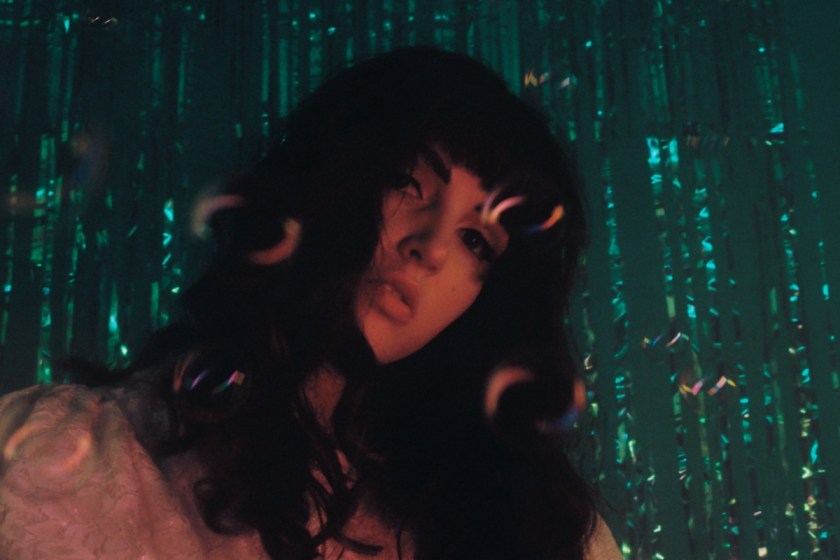
Stellie strikes some deeply resonant places in the hear with her single “How Do We Look So Good?” The shining synth line, shuffling, downtempo percussion and sinuous bass line are perfect framing music for her wide-ranging, soulful vocals. We’ve heard a lot of songs about romantic regrets but Stellie sets both a vivid settings to anchor the emotional memories and poetic explorations of working through the processing of her feelings and rethinking her own instincts before experience forced her to reconsider what she wants, why she wants it, what her attractions might be and whether they’re her own or more social and media conditioning. Throughout the song Stellie dives peels back these layers to get to the core of what feels vital and genuine while not dishonoring the path to get there. We all come to believe and value things that may have been valid or useful for a limited time and if not, life is a process of learning. Sometimes those lessons are hard and sometimes they hit us in a way that makes us reel for a moment or for years. The line “I can’t afford you at that price, I can’t afford to compromise” speaks to the way we buy into fantasies of our own construction or through internalized values we haven’t yet fully examined but in the end we come to know isn’t worth the personal cost or the deals necessary to take on something or someone that in the end erodes our insides. The title of the song, from one of the lyrics, reinforces the message by asking simply how we can look good when inside we’ve let go what we truly value in order to seem good to a culture, a social context or a world that wants us to reorient an authentic and healthy system of values and identity by rewarding compliance with a false and unrealistic standard. Listen to “How Do We Look So Good?” on Spotify.
Glutenhead’s “Naked in Toronto” places the band’s music outside any obvious current context. Its creeping atmospheric opening section, the emotionally fragmented bluster of the second act, the off-kilter acoustic slacker playfulness of the third act and the dark psychedelic emo of the fourth act that brings together the song’s varied impulses perfectly makes you wonder who this music might be for while at the same time loving the way it takes you through an emotional gauntlet that expunges the deeply embedded angst and personal darkness and the amplifies the handful of joys that make everything somehow still worth holding onto. Its almost free verse poetry with lines like “I had a winterlong daydream of the summertime smokescreen” speaks so powerfully to how we can be fooled by our own hopes into assuming everything is going to be alright when often it won’t be, at least not in the ways we anticipate. The nearly screamed chorus of “I hate my life” and the line “I’m trying my best but it’s not working out” comes from that place many of us reach of abject desperation and despair after putting in so much effort into conducting our lives with honesty and integrity or at least in the ways we’ve been told are valid only to have life in a society often warped by values antithetical to normal human life and the cultivation of a sustainably good and rewarding existence, subsuming it in the interest of some cruel abstract like “the market” and “the economy” without examining what that might be and how those things might better serve us as a collective whole. At one point the song discusses not wanting to see friends die and being afraid of the prospect of one’s own death—heavy thoughts in a raw and real way in an era when such sentiments are given a few steps removed from it being a real and immediate concern. The song is simultaneously punk, indie pop in the vein picked up by the Bright Eyes in the earlier period of unvarnished emotionalism and brooding darkwave. It’s unlike much of anything you’ll hear this year and given how it so poetically and fiercely encapsulates the current mood of most of us at this moment makes the song particularly gripping and evocative. Listen to “Naked in Toronto” on Spotify and connect with Glutenhead at the links below.
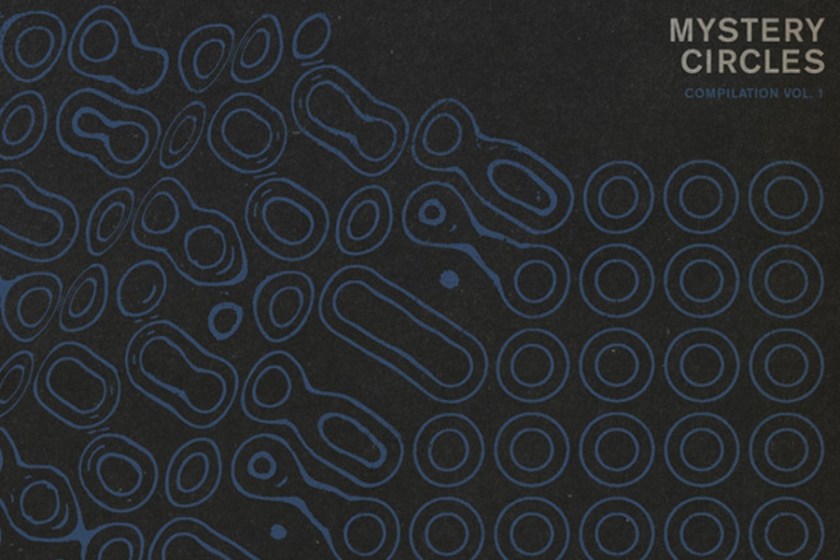
Dissolve in Sepia Mystery Circles Compilation Vol. 1 cover
“Between Violet and Green” by Dissolve in Sepia is the closing track of the new vinyl compilation Mystery Circles Compilation Vol. 1 released by the Mystery Circles Imprint. Dissolve in Sepia is the project of Brazilian composer and producer Ramon Fassina who used a Eurorack modular synthesizers, piano and other acoustic instruments to create a beatless, ambient foray into a realm of sound that feels like swimming through subtropical waters in the Pacific Ocean in late spring. The combination of pure tones swirling, bubbling around you provides the tactile sensation of being enveloped in warm, flowing waters, while, interestingly, the acoustic instruments convey the ambiance, tranquility and sense of wonder by streaming off into the horizon even after striking the notes and giving the song a natural and intuitive sense of rhythm. It is a beautiful analog of an environmental experience that fans of New Age, ambient and modern classical music will appreciate. Listen to “Between Violet and Green” on Soundcloud, connect with Dissolve in Sepia at the links below and look out for the debut album Ocean Memories on all streaming platforms mid-September 2020 as well as a limited edition cassette on Mystery Circles.
The radio edit of “Happy” by OLI sounds like a modern, lo-fi take on an R&B pop love song. The accompanying music video has a sheen of haze as OLI walks down streets in spring interspersed with shots of blooming flowers, a cute chihuahua, people frolicking about and engaged in what brings them uncomplicated joy. Echoing sax, finger snaps, subtle piano figures, wordless vocals like spring sun breaking through clouds all come together with OLI’s soulful vocals to help convey an undeniable spirit of love and goodwill toward a loved one who seems stuck in a funk. Without hitting us over the head with melodramatic professions of love forever and hackneyed, overly sentimental imagery, OLI and her collaborators on the song and video craft an emotional space that, as the song says, make it seem easy to step into the kind of happiness one can have if you’re willing to accept it. It speaks to the kind of love that’s open, welcoming and understanding rather than insisting that one loses oneself and gives up a portion of one’s identity in a conditional way. It is the rare love song that seems genuine rather than offering saccharine platitudes as meaningful. Watch the video for “Happy” on YouTube and connect with OLI at the links below.
SamXVI and Hennesy are working on a year long project to integrate photography and music with twelve pieces overall. The second of those is “(All) Tied Up.” It’s like a walk back the mid-90s and early 2000s with its blend of breakbeat, IDM and the more experimental end of trance. Vocals function as another musical component alongside the others like a processed sample to give the track an ethereal connective tissue within which seething, lightly distorted synth gyrations flow, bouncing yet clipped blips keep time alongside the shuffling percussion and sonic features streak through the track or sit in the background to suggest a sense of space and time in one’s memory but one that is coming to you from a dream. If one could go to simultaneously an acid house night late in the era of that movement at a secluded club and a deep house warehouse rave instigated by Gregg Araki, that would be the vibe of this enigmatic and engrossing song. Listen to “(All) Tied Up” on Spotify and connect with SamXVI at the links provided.
If not for the steadily flowing evolving soundscape of “At Least I’m Moving,” the touch of autotune on Tommy Strauser’s processed vocals might have be reminiscent of a lot of modern electronic pop music. But in that context it perfectly suits a song seemingly about uncertainty in life and the pressure to conform to a kind of shallow agenda of personal progress. Strauser’s vocals sit back from that treadmill of dubious and meaningless achievements and takes in the ambient sounds, the aspects of the world that are easy to ignore if you’re in too much of a hurry, impelled by someone else’s agenda at the expense of one’s own. It’s not a song celebrating self-indulgence and empty hedonism. It’s about being patient with yourself and live life at a human pace and not one pushed on to you by a social and economic context that places a premium on efficiency over quality. The line “Maybe I’m not moving fast, but at least I’m moving” illustrates the ethos here of recognizing the need to move forward with your life but while cultivating your humanity and that of others. The myriad of sonic details make the song from Strauser’s creatively produced vocals, the percussion going along at a walking pace, the synth swells, the points of tone shining in the background, the minimal keyboard work abstracted in another layer of melodic mood, the playful synth lines flitting through the song—all build slowly to a climax at the end that feels like you’ve had a chance to take a nap and wake up a little refreshed and not needing to get right to work or some chore. Though not explicitly stated in the words, it is a song about taking the time for yourself and the people and things you care about because it’s all going to matter more than another contribution to the gods of productivity and the culture that surrounds it. Listen to “At Least I’m Moving” on Spotify and connect with Tommy Strauser at the links provided.
Elli K is an artist from South Korea but her single “The Shadow of Your Smile” sounds like it has some roots in 60s and 70s French pop. The lush production with light strings and subtle bell tones, brushed percussion and K’s dynamic, breathy vocals is an aural time machine—but one that takes you out of normal reality into an alternative existence where the time to take a deep dive into the depths of where one’s memories and emotions can be experienced through the lens of having had the time to process and untangle those especially strong connections in your mind and extract what seems most important for you in the present. The effect of the track shares some of the same enveloping aesthetic, conceptualization and integrated execution of a Sofia Coppola film. This bears out especially in the music video for the song where every element, every texture, nuance and cadence builds to a powerful if gentle whole. Watch the video for “The Shadow of Your Smile” on YouTube, connect with Elli K at the links below and look out for Elli K’s latest album of vivid emotional portraits, Love Collage.
Impostor Syndrome’s video for “The Hole In Your Head” was created and filmed by the band. And somehow the group managed to nail an aesthetic like something by an independent band offering on public access television in the 90s. Musically it’s similarly eclectic and not overly beholden to a prevailing trend. With its urgency and intensity paired with distorted atmospherics the song sounds like something that might have come out of a group of musicians who listened to a whole lot of Deftones, Failure and Jane’s Addiction growing up. It’s melodic, has a shimmer but driven by an aggressive energy and seemingly willing to go outside even its own conventions with unpredictable dynamics. The song is about coming to the realization that maybe the pillars of your understanding of society and the world was always resting on a crumbling foundation of conceptualizations, models and assumptions that do little to address the needs of actual people in service to outdated ideologies. In the face of this self-illumination you can either hold on tight to what you’ve always known or dive headlong into new possibilities. Seems like Impostor Syndrome has chosen the latter. Watch the video for “The Hole In Your Head” and connect with the band at the links provided.






 Queen City Sounds and Art
You must be logged in to post a comment.