
The Minimalist Sound Collage of Tallinn’s “At the Freeport” Questions the Inevitability of the Transformation of High Art Into a Form of Currency in Late Capitalism

Tallinn, Varieties of Exile II cover (cropped)

Tallinn is the project of Scott Whittaker who is working on a trilogy of EPs that “deconstruct the jazzy sophistication of soft rock with corroded noise and experimental textures.” That succinct description fits the track “At the Freeport” from Varieties of Exile II EP (out May 25, 2020). The song is like a collage of sound utilizing marimba as both a textural and rhythmic element, what feels like samples of sounds as quick swells of tone and drone (the latter in the form of what sounds like a disintegrating tape of an electronic organ played backward) and lightly phased vocals. The effect is reminiscent of arty post-punk band Shriekback at its most avant-garde. The percussion and impressionistic guitar work ground the song while the other elements seem like blown out ghosts that come in to haunt the song fitting its themes of questioning whether its inevitable that high can become a form of currency in the process of universal commodification under late capitalism. The song doesn’t answer the question but it does provoke contemplating to whom does great art belong and to whom do great do great ideas belong in the end. And one can easily conclude that all of it can and should benefit the greater human community and coming to that realization does that suggest other obvious parallels in how we organize our political and economic lives? That the song can prompt such a string of thought suggests that maybe art can be inherently a method of communicating and inspiring change in a way that transcends a culture that turns all activity into a transactional relationship. Listen to “At the Freeport” on Soundcloud and connect with Tallinn at the links provided.

https://soundcloud.com/xtallinnx
https://xtallinnx.bandcamp.com
https://twitter.com/xtallinnx
https://www.instagram.com/xtallinnx


Bathe Alone Reflects on the Enervating Effects of Living a Life Perpetually on and Often Over the Edge of Anxiety With “Champagne”

Bathe Alone, photo courtesy the artist

In Bathe Alone’s song “Champagne” the songwriter addresses the way anticipating the breakdowns in your mind can be an exhausting proposition that warps the way you live your life. You are always on edge about what might trigger a panic attack or a paroxysm of anxiety in general born of trauma. The title of the song apparently refers both to imagining what it would be like to trade places with someone you see randomly in the world and to the realization that even with your your own struggles that you have things about your life that are good and that part of mental health problems is feeding into them even if almost against your control, in particular by comparing your life to that of other people. But that insight does seem to take the edge off even if you’ve gone some way down the path of having having an episode as it suggests that you can often derail that procession to emotional disaster. And yet the song and its beautifully melodic dissolves and ethereal tones isn’t sitting in the moments of greatest stress, it seems to come from that time after the worst wave of it has passed and you are able to have some perspective on what it is that triggers you and amplifies the experience. What makes this thematic and musical contrast especially interesting is that though it’s essentially a blissed out, soulful synth pop song, at no time does Bathe Alone try to placate you by saying it’s all going to be okay or any of the other useless platitudes you often get from people who might have better mental health but no insights into how to make things better. Rather the song honors the experience while transforming that energy into something more introspective and reflective and thus more manageable. Listen to “Champagne” on Spotify and connect with Bathe Alone at the links provided.

www.bathealone.com
https://soundcloud.com/bathealone
https://www.youtube.com/channel/UC9hpjK2lI9E24Y40Dl6knfA
https://bathealone.bandcamp.com
https://twitter.com/bathemusic
https://www.facebook.com/bathealone
https://www.instagram.com/bathealone

Drones Que Caen’s “Condicionado” Casts a Beautifully Doleful Musical Drift Like a Montage of Your Life’s Regrets

Drones Que Caen, photo courtesy the artists

Argentinian experimental rock band Drones Que Caen from Buenos Aires is doing the soundtrack to a documentary film to be released at the end of 2020. The film is about a homeless poet who lived on the same street in Sao Paulo for more than a decade. Throughout 2020 the group has been and will release a single every month that reflects its eclectic musical interests that span the kind of intensely emotional singer-songwriter material we heard from Jeff Buckley and Elliott Smith, the production heavy industrial rock of Nine Inch Nails and the similarly-minded and musically diverse Argentinian rock band A-Tirador Láser. That said, its single “Condicionado,” written as the main theme of the aforementioned documentary, breaks from all expectations one might have of the group’s cited influences. Its drifting yet fluidly seething synth drones cast a melancholic, dream-like tone. The composition makes exquisite use of a simple keyboard figure as a kind of framework from which the other sounds including an elongated, doleful guitar drone hang like uncomfortable memories passing through your mind in a montage of regret. Listen to “Condicionado” on Soundcloud and follow Drones Que Caen at the links provided.

https://dronesquecaen.bandcamp.com
https://soundcloud.com/drones-que-caen

Helado Negro’s “I Fell In Love,” featuring Xenia Rubinos, is Like a Voice Mail From Your Subconscious Reminding You That in Even the Worst Times There’s Always Something to Uplift Your Spirits

Helado Negro “I Feel Fine” cover

Helado Negro’s new single “I Fell In Love” features the melodious vocals of Xenia Rubinos and its cool colored tone keyboard work and layered, echoing percussion puts the voices of both singers to the forefront. It’s comes across like a chillwave “Avalon” by Roxy Music in pacing and sentiment. Like the latter, “I Fell In Love” is an unabashed, joyously celebratory love song but one expressed with an elegance, style and sincerity that moves you because it is able to be subtle and gentle in its execution without compromising the strength of feeling. In a time of great flux the song is like a voice message from the future reminding you that even in the worst of times that there are things in life that uplift your spirits whether that is the love of another person or love of yourself. Listen to “I Fell In Love” on Soundcloud.

Snow Band Takes Down the Pervasiveness of Consumerist Culture on the Wonderfully Snarky “Never Change”

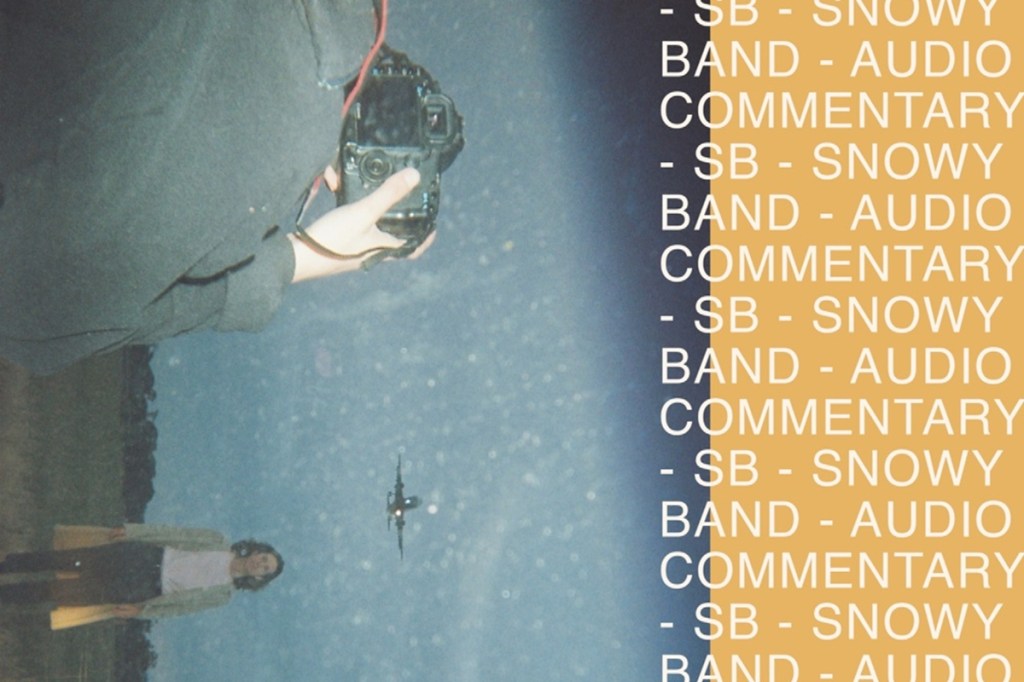
Snow Band, Audio Commentary cover

Snowy Band from Melbourne, Australia takes on the pervasive nature of corporate culture through the instrument of using marketing speak to process and sell back to you every strand of human experience with its single “Never Change” from its debut album Audio Commentary on Spunk! Records. The raw lead vocals and the melodic vocal harmonies pair well with warped and broken guitar lines and unconventional song dynamics to perhaps resist easy classification. Of course musically it’s somewhat reminiscent of Pavement and great Australian and New Zealand pop and alternative bands (really, those worlds blur and overlap quite a bit in so much of the music from both countries). But Snowy Band is very much its own thing with beautifully slackery and tasteful guitar solos and the ability to craft an earworm of a song without resorting to today’s tropes of pop music and production. When Liam Halliwell sings, “I don’t want a simple explanation from some viral tweet, TV, or a book I read. Don’t tell me how to grieve” it may not be a verbal Molotov cocktail to consumerism but it does strike at the heart of how so many of us don’t want to be treated like we’re stupid and only useful as a customer to whom we can be sold our own consciousness and lives as conditioned and created by a heartless set of processes and policies not designed with our cultivation as unique humans in mind. Watch the video for “Never Change” on YouTube and connect with Snowy Band at the links below.

https://snowynasdaq.bandcamp.com
https://www.facebook.com/snowynasdaq
https://www.instagram.com/snowy___________

Chillout Ambient Track “Peace” by Luiniss is Like the Soundtrack to Memories of Tranquil Lucid Dreaming

Luiniss “Peace” cover

There is that moment in a dream that many people reach where you become aware that you’re dreaming and instead of succumbing purely to ego and the limitations of your conscious mind you allow yourself to drift through events as though you are operating from a place of pure acceptance and tranquility. In that moment no matter what is happening in the dream you are able to enjoy the ride while not feeling tied to that specificity of existence, rather, as a a frequency in a larger spectrum and context of the universe. It isn’t simply lucid dreaming but the kind in which one can occasionally gain insight into your normal waking existence by being able to both experience and observe at the same time and glean what might be called spiritual insights into your everyday life because your mind is operating on a different level in a different mode wherein symbolism and concrete reality seem inseparable but which differentiate out when you wake up. Sometimes you retain strands of that consciousness and awareness and it makes life seem so very connected and not so wracked with the angst and concern that so often demands your focuses, your attention and your time. And yet memories of those moments can bring a calm to your mind in unexpected moments when you need it. The ambient song “Peace” by Luiniss is like the soundtrack to those moments with its evolving drones not in the distance so much but at the edges of your mind, accessible should you choose to plug back into it. Listen to “Peace” on Spotify and connect with Luiniss on Instagram linked below.

https://www.instagram.com/luiniss_peaceofmind

“Dirty Lie” by Slick Walk Uses Late Night Ambient Sound Elements to Sooth Your Brain

Slick Walk, photo courtesy the artists


“Dirty Lie” by German hip-hop duo Slick Walk sounds like something you’d hear late night from across the room of a train station. Its beat sounds like it’s echoing in a large space but instead of that blurring out the details it makes them seem more intimate in a way. Like you’re hearing multiple sound sources synergizing: bell tones of the station, snippets of conversation that take on a more musical than verbal quality, the steady, mechanical beats that emerge out of the trains arrive and leaving and doors opening and shutting, all the ambient noises, coming together to create hypnotic and comforting rhythm. That the track isn’t musically in your face enhances the listening experience and allows for what might be disparate elements to work well together like something you might expect from an ambient or IDM project. Listen to “Dirty Lie” on Spotify and connect with Slick Walk at the links provided.

https://soundcloud.com/slickwalk
https://slickwalk.bandcamp.com/album/slick-walk
https://www.facebook.com/slickwalk10
https://www.instagram.com/slick_walk_music

Valerie Warntz Sheds Culturally Internalized Notions of Love and Relationships on “The One I’ll Never Find”

Valerie Warntz, photo courtesy the artist

Valerie Warntz has written a song for everyone who is new to the realization that what we’ve been conditioned to want out of a relationship sets us up for a lifetime of disappointment and hurt feelings. Calling the song “The One I’ll Never Find” is more than a clue. But the song is not the typical creative melodrama one might expect in a pop song. Warntz strips back the psyche a bit more and instead of merely pointing the finger she takes some responsibility for being in a place in her mind where she succumbs to these internalized narratives that seems at the root of so many relationship issues and the way people often behave in relationships in the end and maybe themselves treat intimate relationships like a transactional affair. The songwriter doesn’t offer any easy answers because there aren’t any, just a portrait of hurt and realization that goes beyond the kind of song people often write to get over a break-up or break-ups. It’s a nuanced yet raw examination of the human condition. Musically, Warntz’s expressive vocals give emotionally direct while the background synth line have an expansive quality as though expressing that transformative moment when you realize the way you’ve been doing things, the way you’ve been, no longer serves you, even if you don’t yet know what will. Listen to “The One I’ll Never Find” on Soundcloud and connect with Valerie Warntz at the links provided. Her new EP Emotions & Sentiments, which includes this song, was released on May 8, 2020.

https://soundcloud.com/valeriewarntz
https://www.youtube.com/channel/UCI_n4C_0SZKdheL7I_BTJig
https://twitter.com/ValerieWarntz
https://www.instagram.com/warntz

Annie O’Neill’s “Wild Card” Boldly Embraces One’s Human Frailty and Shortcomings As Part of Authentic Living

Annie O’Neill, photo courtesy the artist

The title track to Annie O’Neill’s EP Wild Card is immediately striking for O’Neill’s emotionally direct vocals and ability to shift dynamics and tone on a dime. The deft but subtle chord changes lend the song a musical complexity that you’re not expecting in a bluesy rock song that’s just a bit over three minutes long. That compositional sophistication coupled with O’Neill’s confident vocals has a forcefulness and sense of mystery that one hears in the music of Heart, particularly when Amy Denio lends her vocals for the tasteful harmonies. Like many of the songs of the latter, “Wild Card” is about the contrasting emotions that happen in intense relationships, the kind that change and challenge you in various ways even if they ultimately have to end because they’re not good for you. “Wild Card” seems to be a nod to a creative partnership of some kind in which one party thinks the other is naive and foolish because she’s singer who, like pretty much everyone honest about it, hasn’t lead a 100% exemplary life because we don’t live in a world designed to reward talent and integrity while pretending to. And to make it through a world like that you often have to pretend you have no reaction to what’s thrown at you. Yet how long and how often can you pretend before you have to say something or react in a way that might make others nervous? The line “Doesn’t everybody fall from grace sometimes?” is so poignant as it calls out the way our culture holds everyone to impossible standards with no context, scrutiny without accountability from a place of humanity, understanding and compassion. Listen to “Wild Card” on Soundcloud and connect with Annie O’Neill on Spotify.

Through Flames Deconstructs the Dystopian Late Capitalist Conditioning in the Call and Response Dialectic of “No Clothes on the Warden”

Through Flames, GoCopless cover

Brad Hamers and jdaugh bring their respective backgrounds in music, poetry, performance art, visual art and filmmaking to bear for their new project Through Flames. The duo released its debut self-titled LP on Apri 24, 2020 and the single “No Clothes on the Warden” cleverly makes use of the concept of “the emperor has no clothes” to deconstruct the economic and political realities we internalize and take for granted that if we’re able to break our conditioning and see things for how they are the whole thing could crumble in a matter of days or months and maybe we would be forced to simply live in a better world where there’s no techno-plutocratic agenda necessitating a police and surveillance state to smooth the funneling of most public goods to the upper one percent of one percent. In a fascinating use of call and response delivering couplets of observations on society in a way that challenges rote and familiar constructions of thought and language to almost force you to think about what’s being vocalized and in turn examine your ow thinking on the subject of our ascribed roles in the dystopian late capitalist international system that we find ourselves in now and which threatens the existence of us all and the safety of the planet. But rather than torching the edifice of such verbally and musically, Through Flames with this song dismantles the cognitive framework that keeps it in place in your brain in a playful and charming way. The accompanying rhythms, drones and spare melodies make what is a fairly radical set of propositions vis what is now for us the norm much easier to accept and that is what makes for a work of art that might help change things. Listen to “No Clothes on the Warden” on Soundcloud and connect with Through Flames at the links below.

https://throughflames.bandcamp.com